

Note: This article contains affiliate links. If you click on these links and make a purchase, I may earn a small commission at no extra cost to you. This helps support my research and content. Read my full affiliate disclosure here.
Picking the right garden weeding tool changes how much time and effort you spend on upkeep. The right tool makes root removal cleaner, minimizes soil disturbance, and reduces repetitive strain when you work beds, borders, containers, or pathways. This guide presents seven shortlisted options chosen for gardeners who want dependable performance without extra fuss. Each pick was evaluated on practical, hands-on criteria like ergonomics, durability, and how well it lifts or severs roots. Read on to see which kinds of weeding tools suit different garden tasks and body mechanics before you decide which style to add to your toolset.
Top Picks at a Glance
| Best Overall The best all-around choice for most situations | Fiskars 39" 4-Claw Stand-Up Weed Puller | 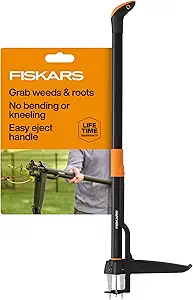 |
| Best Quality Built to a higher standard if you want something more solid | Nisaku Namibagata Hori Hori Stainless Steel Weeding Knife (7.25" blade) |  |
| Best Value The sweet spot between price and what you get | Fiskars Ergo Garden Hand Weeder |  |
| Best Budget The cheapest option that still gets the job done reliably | Linatikou Stainless Steel Stand-Up Dandelion Weeder with Ergonomic Handle |  |
| Highest Rated A top-rated pick with lots of positive feedback | Garden Guru Dandelion Weeder with Fulcrum and Ergonomic Handle |  |
| Most Popular A crowd favorite that many people choose with confidence | Grampa's Weeder Original Stand-Up Weed Puller with Bamboo Handle |  |
| Best Seller A high-volume bestseller chosen again and again | Grenebo 9-Piece Stainless Steel Gardening Tool Set with Tote Bag | 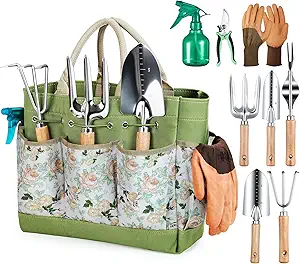 |
Fiskars 39" 4-Claw Stand-Up Weed Puller

| Head Material | Stainless Steel |
|---|---|
| Handle Material | Aluminum |
| Grip Material | Thermoplastic Elastomer (TPE) |
| Head Size | 4-claw |
| Included Components | Fiskars 4-Claw Weeder 39 Inch |
The Fiskars 39" 4-Claw Stand-Up Weed Puller is a hands-free-style weeder designed to remove dandelions, thistles, and other taproot weeds without kneeling or using herbicides. To use it you place the claw head over the weed, step on the reinforced foot pedal to drive the serrated stainless steel claws into the soil, pull back on the offset handle to extract the root, then press the eject lever to clear the head. The long aluminum shaft and ergonomic grip reduce bending and wrist strain, and the viewing window in the pedal helps you place the claws accurately. It works best in soft to moderately firm, recently watered soil where the claws can penetrate cleanly, and the strong claw design makes repeated removal quick in lawns and garden beds. Limitations are that very compacted clay or rocky ground may require pre-wetting or a different tool, and the fixed shaft length may not suit users who prefer a shorter or telescoping handle. For routine backyard weeding it speeds the job and avoids chemical use.
Best for: Gardeners who want an all-around, low‑effort solution for regular lawn and flowerbed weeding and prefer to avoid chemicals and excessive bending.
Less Ideal for: People who regularly work in heavy clay, rocky ground or those who need a telescoping handle for variable reach should consider a different weeding tool or preparatory soil loosening.
- Stand-up design reduces bending and kneeling for easier, lower‑strain weeding
- Four serrated stainless steel claws grab and extract roots for more permanent removal
- Reinforced foot pedal and viewing window improve penetration and placement accuracy
- Lightweight aluminum shaft and ergonomic grip make repeated use less tiring
- Less effective in very compacted, rocky, or dry clay soils without pre-wetting
- Fixed 39-inch shaft length may not suit users who prefer adjustable handles
Verdict: Choose this tool if you want a durable, ergonomic stand-up weeder that removes roots cleanly and makes routine backyard weeding faster and less strenuous.
Nisaku Namibagata Hori Hori Stainless Steel Weeding Knife (7.25" blade)

| Blade Material | Stainless Steel |
|---|---|
| Handle Material | Wood |
| Blade Edge | Plain, Serrated |
| Power Source | Manual |
| Special Features | Ergonomic Handle |
The Nisaku Namibagata hori hori is a performance-focused garden knife built for precise digging, planting, and root cutting. Its 7.25-inch stainless steel blade combines a straight edge and a serrated edge so you can slice roots, cut stems, and saw through tougher material without switching tools. The blade is engraved with inch markings which makes planting bulbs and setting seed depth quick and repeatable. A concave profile helps cradle soil when transferring seedlings or measuring depth, and the polished stainless surface resists rust and scratches for regular outdoor use. The wooden handle is comfortable for extended sessions and the included faux leather sheath keeps the blade covered when tucked into a belt or shed peg. This is a single-handed manual tool best suited to spot weeding, planting, and small excavations rather than large-scale digging. It requires hand washing and periodic care for the wood handle, and it is not a substitute for heavy-duty shovels or powered tools when moving large volumes of soil.
Best for: Gardeners who prioritize precise, durable hand tools and want one multiuse knife for weeding, planting bulbs, and light root cutting in beds and borders.
Less Ideal for: People who need to move large amounts of soil or perform heavy-duty landscaping should choose a shovel or powered tool instead.
- Dual-edge stainless steel blade (straight and serrated) for cutting roots and sawing tougher material
- Engraved inch markings on the blade for accurate planting depth
- Rust-resistant, scratch-resistant stainless steel construction for durability outdoors
- Comfortable wooden handle and included sheath for secure grip and safe storage
- Not intended for heavy excavation or replacing full-size shovels
- Requires hand washing and occasional care of the wooden handle
Verdict: Buy this if you want a durable, precision hori hori that combines cutting, digging, and accurate planting depth in one handheld tool.
Fiskars Ergo Garden Hand Weeder

| Material Type | Aluminum |
|---|---|
| Blade Material | Aluminum |
| Handle Material | Aluminum |
| Grip Type | Ergonomic |
| Manufacturer Warranty Description | Lifetime warranty |
The Fiskars Ergo Garden Hand Weeder is a heavy-duty hand tool built for removing deep-rooted weeds like dandelions and thistles. Its angled cast-aluminum head provides leverage to pry roots from compact soil while the contoured SoftGrip handle reduces wrist strain during repetitive use. Typical use is straightforward: push the angled head into the soil around a weed, rock the tool to loosen roots, then pull to extract the whole plant. Notable features include rust-resistant cast-aluminum construction for durability, an ergonomic grip for comfort, and a hang hole for convenient storage. In practice this weeder excels in small beds, borders, and lawns where precise, manual removal matters and where you want a tool that lasts season after season. Limitations are its short length, which requires kneeling or bending for larger areas, and the single-purpose design that is not a substitute for long-handled tools when managing large patches of weeds.
Best for: Buyers who want a durable, efficient hand tool for targeted weed removal and who value comfort and longevity over speed on large plots.
Less Ideal for: People who need to clear large areas of turf or who prefer long-handled tools to avoid frequent bending and kneeling.
- Angled cast-aluminum head delivers strong leverage for removing deep roots.
- Ergonomic contoured SoftGrip handle reduces hand and wrist fatigue during extended use.
- Rust-resistant aluminum construction for long-term durability in garden conditions.
- Short handheld design requires bending or kneeling for larger areas.
- Tool is single-function and not optimal for clearing extensive weed patches quickly.
Verdict: Choose this weeder if you want a comfortable, long-lasting hand tool that makes removing stubborn, deep-rooted weeds quick and reliable.
Linatikou Stainless Steel Stand-Up Dandelion Weeder with Ergonomic Handle

| Material Type | Plastic, Stainless Steel |
|---|---|
| Blade Material | Stainless Steel |
| Handle Material | Plastic |
| Grip Type | Ergonomic Rubber |
This Linatikou weed puller is a simple hand tool aimed at removing deep-rooted weeds like dandelions by driving its V-shaped fork into the soil and levering out the root. It is typically used for spot weeding in lawns, flower beds, cracks in patios, and around delicate plants where a powered tool would be too aggressive. Notable features include a stainless steel blade and fork for rust resistance and strength, a curved ergonomic rubber handle for a non-slip comfortable grip, and a compact profile that lets you work accurately in narrow spaces. In practice it pulls whole roots when used with a short twisting and rocking motion, reducing regrowth compared with surface cutting. The tool is lightweight and easy to store, making it handy for regular maintenance sessions. Limitations are that it is a manual tool so larger infestations require time and physical effort, and it is best for individual plants rather than clearing large areas quickly.
Best for: Buyers wanting an inexpensive, no-frills hand weeder for spot removal and routine lawn or bed maintenance who prefer simple, durable tools over powered equipment.
Less Ideal for: People who need to clear large expanses of weeds quickly or prefer motorized solutions for heavy-duty yard work should consider larger or powered options.
- V-shaped stainless steel fork extracts deep roots to reduce regrowth
- Ergonomic rubber handle provides a secure, comfortable grip for extended use
- Compact design reaches tight spaces, cracks, and around plants with precision
- Manual operation is time-consuming for large areas and heavy infestations
Verdict: A dependable, budget-friendly hand weeder that pulls deep roots and is ideal for targeted spot weeding around the yard.
Garden Guru Dandelion Weeder with Fulcrum and Ergonomic Handle

| Manufacturer | Garden Guru Lawn & Garden Tools |
|---|---|
| Material finish | Rust-resistant stainless steel |
| Item weight | 8.4 ounces |
| Product model | FULCRUMWEEDER |
The Garden Guru Dandelion Weeder is a compact hand tool built to remove weeds by levering them out from the root rather than digging large holes. Its V-shaped two-prong fork and tapered, sharpened tip slide into soil around a weed, then the fulcrum base and sturdy shaft provide mechanical advantage to pull stubborn dandelions, thistles, and similar taproot weeds cleanly. Made from stainless steel with a rust-resistant finish, the tool is lightweight but stiff enough to resist bending during leverage. The contoured soft-grip handle reduces hand and wrist fatigue and improves control for repeated use or for gardeners with weaker grip strength. Practical benefits include reduced disturbance to surrounding plants, easier removal of whole roots to slow regrowth, and a durable finish for outdoor storage. Limitations are its handheld size, which makes it best for spot weeding rather than treating large areas, and it requires kneeling or bending for low weeds since it is not a long-handled model.
Best for: Best for gardeners who prioritize a durable, dependable hand tool for precise spot weeding and want a product that lasts season after season.
Less Ideal for: Not a good fit for people who need to clear large lawns quickly or who prefer upright, long-handled weeders to avoid bending or kneeling.
- Fulcrum base and sturdy shaft provide strong leverage to extract deep taproots.
- Stainless steel construction with rust-resistant finish resists bending and corrosion.
- V-shaped two-prong tip and tapered point enable precise root-grabbing with minimal soil disturbance.
- Ergonomic soft-grip handle reduces hand and wrist fatigue during repeated use.
- Handheld design makes it slow for wide areas compared with long-handled or powered tools.
- Not suited for extremely compacted or rocky soils where the fork may not penetrate easily.
Verdict: A sturdy, rust-resistant hand weeder that reliably pulls whole taproots with mechanical leverage, ideal for gardeners who want a long-lasting spot-weeding tool.
Grampa's Weeder Original Stand-Up Weed Puller with Bamboo Handle

| Handle Material | Bamboo |
|---|---|
| Head Material | Alloy Steel |
| Head Design | 4-Claw |
| Manufacturer | Grampa's Gardenware |
Grampa's Weeder is a simple lever-style stand-up tool that uses a four-claw alloy steel head and a long bamboo handle to pinch and extract weeds by leaning the handle after pressing the forks into the soil. You use it by placing the tool over the weed, stepping on the footpad to set the forks, and then leaning the handle to close the claws around the root for a clean pull. Its main strengths are the tried-and-true mechanical design that avoids chemicals and reduces kneeling and back strain, plus the durable alloy-steel head and a natural bamboo shaft that keep the tool lightweight and easy to maneuver. It works best in softer, recently watered soil where the claws can penetrate and grip taproots like dandelions or crabgrass. The design may be less effective in hard clay or rocky ground and requires correct technique to avoid leaving root fragments. For gardeners who prefer low-tech, long-lasting tools for routine weeding, this is a straightforward, serviceable choice with a long pedigree.
Best for: Gardeners who prioritize proven, low-tech tools and want a reliable manual weeder that removes roots while protecting their back and knees.
Less Ideal for: People with mostly compacted clay beds, rocky landscapes, or those who need a tool that works without pre-wetting soil should consider a different approach.
- Four-claw alloy steel head designed to grip and remove taproots
- Long bamboo handle lets you weed standing up to reduce back and knee strain
- Simple mechanical design requires no power or chemicals
- Lightweight construction makes it easy to maneuver for extended use
- Less effective in hard clay or rocky soil where the claws cannot penetrate
- Requires correct stepping and leaning technique to reliably extract whole roots
Verdict: Choose this if you want a time-tested, chemical-free stand-up weeder that saves your back and reliably pulls taproots in softer soil.
Grenebo 9-Piece Stainless Steel Gardening Tool Set with Tote Bag
| Number of Items | 9 |
|---|---|
| Material Type | Stainless Steel |
| Handle Material | Carbon Steel, Stainless Steel |
| Unit Count | 1 Count |
| Additional Features | Rust Resistant |
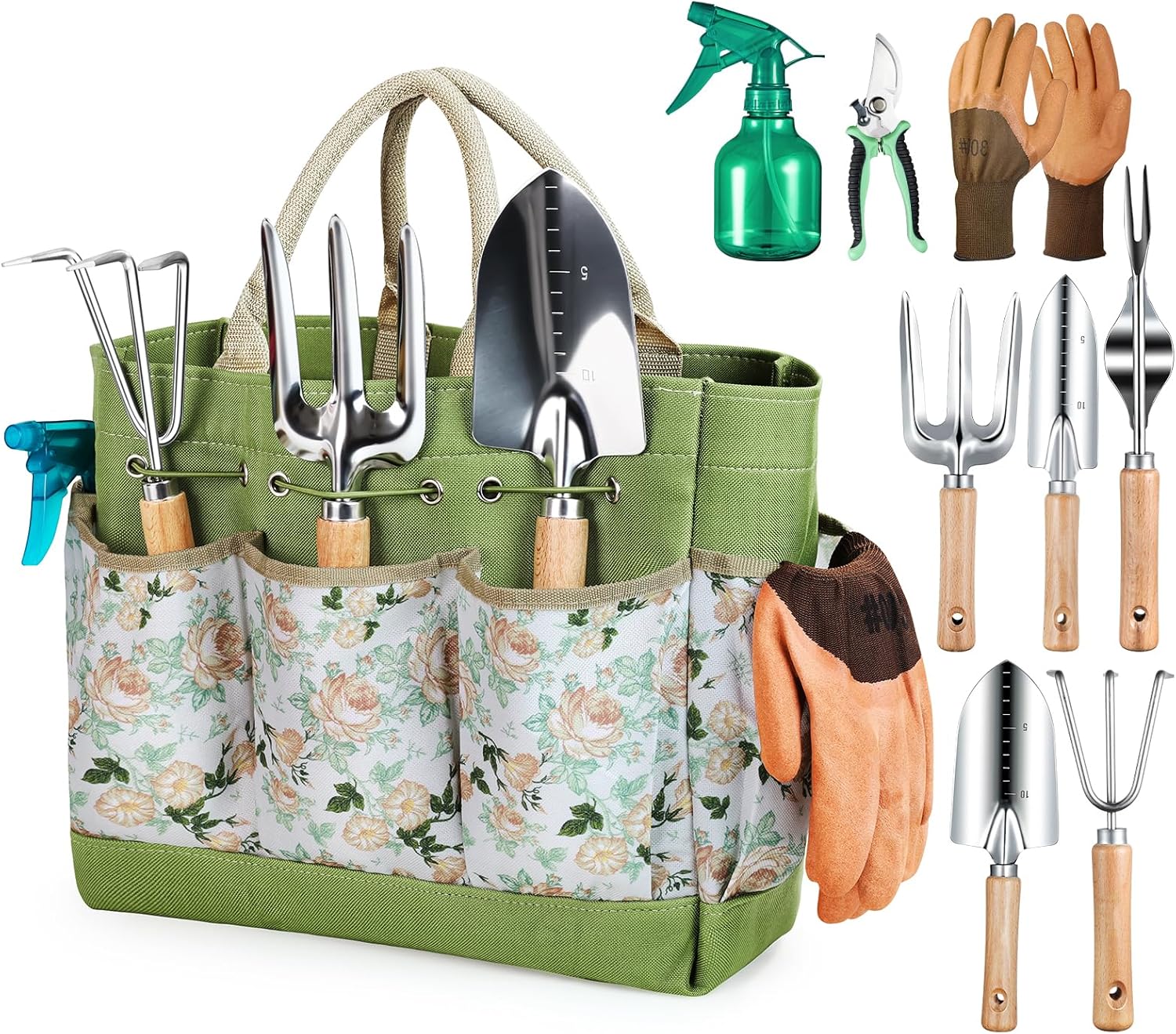
This Grenebo 9-piece set supplies the core hand tools needed for everyday weeding, transplanting and light pruning. The kit includes a transplanter, trowel, cultivator, weeder, pruning shears and other hand tools stored in a floral tote so everything stays together between jobs. Tools are made from stainless steel and marketed as rust resistant, which makes them suitable for regular outdoor use if cleaned and dried after each session. Wooden ergonomic handles help reduce wrist strain during repetitive tasks and the hanging holes on the handles make drying and storage easier. Practical benefits here are convenience and a complete starter selection for small beds, containers and borders. Limitations are that these are hand tools only so they are best for surface weeds and shallow roots rather than deep perennial roots or heavy digging, and handles are standard size so gardeners who need extra leverage or heavy-duty steel should look elsewhere.
Best for: Gardeners who want a ready-to-use, low-risk starter kit for regular bed and container maintenance and prefer tools that are easy to store and care for.
Less Ideal for: Those who need heavy-duty digging tools or long-handled weeders for large beds and deep-rooted perennial removal should consider more specialized equipment.
- Complete 9-piece set covers common weeding and planting tasks
- Stainless steel construction with rust-resistant finish for durability
- Ergonomic wooden handles reduce hand fatigue during use
- Included tote bag keeps tools organized and easy to carry
- Hanging holes on handles simplify drying and off-season storage
- Hand-tool design not intended for heavy digging or removing very deep perennial roots
- Handles are standard length and not designed for extra leverage on stubborn roots
Verdict: A complete, rust-resistant 9-piece hand tool set that reliably covers everyday weeding and light garden maintenance.
Choosing the Right Garden Weeding Tool: Key Factors to Consider
Ergonomic Design and Handle Comfort
Weeding often means repetitive motions and awkward postures. A handle shaped for a natural grip, with enough diameter to avoid pinching, reduces hand fatigue and the risk of tendon discomfort. Look for handles that provide some shock absorption and a non-slip surface so wet or muddy hands do not compromise control.
Longer-handled tools change the movement pattern entirely by allowing you to use larger muscle groups rather than bending your back repeatedly. For short-handled tools used at ground level, a cushioned grip and a head that keeps your wrist aligned will help you work longer without soreness.
Blade Geometry and Tip Shape
The cutting edge or tip determines how the tool engages roots and soil. Narrow, forked tips slide into tight spaces between plants and pry out taproots with minimal soil removal. Wide, flat blades are better at slicing creeping roots and severing stolons across a shallow zone.
Consider whether you need a pointed tip for clay soil penetration or a blade that can be wedged under deep roots. The shape also affects how much soil is disturbed; blades designed to cradle the root let you extract weeds with less backfilling afterward.
Material Quality and Corrosion Resistance
A weeding tool sees constant contact with abrasive soil and moisture. Hardened steel, stainless alloys, or quality carbon steel that is properly coated will hold an edge longer and resist pitting. Handles made from rot-resistant wood, composite materials, or fiberglass stay stable in changing weather.
Lower-grade metals will dull and corrode faster, increasing the effort needed to weed and shortening the tool's useful life. Durable construction also ensures joints and ferrules do not loosen after repeated levering or twisting in the soil.
Leverage, Shaft Length, and Mechanical Advantage
How a tool transfers force determines how much effort you apply to remove a weed. Long shafts and appropriately placed fulcrums let you pry out deep roots using your body weight rather than brute wrist strength. Short hand tools give precision but require more bending or kneeling.
Think about the common tasks in your garden. Raised beds and container gardens often benefit from long-handled, standing tools, while rock gardens and tightly planted borders may need compact tools that fit between stems but still provide good mechanical advantage.
Versatility for Garden Conditions
Different weeds and soil types demand different approaches. A versatile weeding tool works across packed soil, loose mulch, and shallow gravel without damaging desirable plants. Tools with interchangeable heads or multi-function tips can reduce the number of implements you need.
If you garden in varied conditions, prioritize designs that handle both young, shallow-rooted weeds and established taproot species. Versatile tools save storage space and simplify seasonal tasks like bed preparation and transplanting.
Ease of Maintenance and Replaceability
Simple maintenance prolongs a tool's life and keeps it effective. Tools that clean easily, that accept standard replacement parts, or that can be sharpened with accessible files are better long-term investments. Consider whether the blade can be removed or re-sharpened and whether ferrules or fasteners are serviceable.
A tool that requires uncommon parts or proprietary service will likely be retired sooner. For gardeners who value thrift and longevity, choose implements with clear maintenance paths and commonly available replacement components.
Matching Tool Styles to Garden Tasks
Different weeding styles suit specific gardening chores. Stand-up weeding tools are ideal for larger beds and pathways where you want to avoid bending. Hand-held forks and hooks excel in tight plantings and containers where precision matters.
Consider how much surface you need to cover and how close you work to desirable plants. Tools that pry and lever are efficient for deep taproots, while slice-style blades work well on runners and shallow-rooted weeds.
- Long-handled hoes and stand-up forks for raised beds and borders
- Handheld knives and forks for pots and crowded plantings
- Loop or stirrup hoes for frequent, light weeding across larger surfaces
Working Techniques to Reduce Soil Disturbance
Minimizing soil disruption preserves structure and beneficial organisms. Rather than excavating large volumes, aim to sever the weed at the root collar or pry from beneath the root mass to lift intact.
Use shallow angling strokes rather than digging deeply, and finish by tamping soil lightly to restore contact. For seedlings and annuals, a quick slicing motion near the surface often prevents regrowth without disturbing deeper roots.
- Insert the tip close to the root crown before levering up
- Use a wedge or fork to loosen compacted soil around taproots
- Clean tools between uses to avoid spreading root fragments
Caring for Weeding Tools
Routine cleaning and drying after use prevents rust and maintains cutting performance. Remove soil buildup with a stiff brush, dry metal parts, and apply a light coat of oil to exposed steel. Wooden handles benefit from occasional oiling to prevent cracks and splinters.
Sharpen edges when they start to drag instead of forcing them through soil. Tighten any loose fastenings and replace worn grips to keep the tool safe and efficient.
- Brush soil off and rinse only when necessary
- Oil steel surfaces and condition wooden handles seasonally
- Sharpen blades with a flat file following the original bevel
Using Tools Safely to Protect Plants and Yourself
Proper posture and technique keep you and your plants safe. Bend from the knees or use a long-handled tool to protect the lower back. Keep a steady hand when prying near stems to avoid accidental root or crown damage to desirable plants.
Wear gloves and clear the area of tripping hazards. When using leverage to remove stubborn roots, control the motion to avoid sudden slips that can injure your hands or knees.
- Work slowly when near desired plants and use smaller tools for precision
- Keep cutting edges away from body and fingers
- Store tools securely with tips covered or pointed down
Adapting Your Toolkit to Seasonal Needs
Weeding needs change through the year. Spring often demands quick removal of seedlings and preparation for planting, while late summer and early autumn require tackling deep-rooted perennials. Match tool choice to the season to save time and effort.
For heavy-duty late-season work, favor sturdy, long-handled tools that handle dense roots. For frequent light maintenance during the growing season, lightweight, precise tools are more practical.
- Keep a lightweight hand tool accessible for frequent quick sessions
- Reserve heavier pry-style tools for seasonal deep weeding
- Rotate tools in storage so each stays maintained and ready
How We Chose the Best Garden Weeding Tool
We shortlisted tools that perform reliably in real garden conditions and excel at common weeding tasks. Selection focused on concrete, testable dimensions: ergonomic design and handle comfort for extended use, blade or tip geometry for effective root removal, material durability against moisture and soil abrasion, shaft length and leverage for posture-friendly operation, and versatility across bed, border, and container work. We excluded single-use or disposable implements and products that rely on gimmicky attachments with no proven field advantage. Editorial filters removed items with limited real-world durability or those that require specialized maintenance. We favored tools that balance force transfer and control, that resist corrosion in outdoor conditions, and that are easy to sharpen or replace parts when appropriate. These criteria align with the scoring metrics you will see alongside each shortlisted option.
FAQ
Which weeding tool is best if I have back pain?
Tools with longer shafts that allow you to work standing up reduce bending and strain. Look for models with good leverage and an ergonomic handle profile to shift effort to larger muscle groups.
Can a single tool handle both containers and beds?
It often depends on the tool style. Some compact tools with pointed tips are versatile, but long-handled prying tools may be awkward in tight containers. Choosing one adaptable design or two specialized tools is usually more efficient.
How often should I sharpen a weeding blade?
Sharpening frequency depends on soil type and use. In gritty or rocky soil you may need to touch up edges more often. A quick file when the tool begins to drag keeps it cutting cleanly without excessive force.
Are stainless steel heads better than carbon steel?
Stainless resists corrosion and requires less surface care, while quality carbon steel often holds a sharper edge longer but needs regular drying and oiling. The right choice balances maintenance willingness with desired edge retention.
How do I remove stubborn taproots without damaging nearby plants?
Loosen surrounding soil first with a fork or narrow spade, then use a pointed or forked tip to work under the root and lever it up. Work gradually to avoid disturbing adjacent root systems.
Is it worth buying a multi-head or interchangeable weeding tool?
Interchangeable heads add versatility and save storage space, but check that connections are sturdy and do not wobble. For frequent heavy-duty work, dedicated single-piece tools may be more durable.
Final Verdict
Select a garden weeding tool that matches the tasks and posture you prefer. Prioritize ergonomics and leverage if you do a lot of standing work, or choose compact precision tools for crowded beds and containers. Balance blade shape and material quality against the soil types you face and your willingness to maintain the tool. The right choice minimizes damage to desirable plants, reduces effort, and lasts through seasons of use. Focus on the factors outlined here to pick a tool that fits your garden style and physical needs with confidence.
