

Note: This article contains affiliate links. If you click on these links and make a purchase, I may earn a small commission at no extra cost to you. This helps support my research and content. Read my full affiliate disclosure here.
Gardenias respond to focused feeding and the right soil conditions more than to general garden fertilizers. Choosing a dedicated gardenia food fertilizer affects bloom size, flower count, and leaf gloss because these plants need a specific nutrient balance and slightly acidic soil to produce their signature flowers. This guide covers the top shortlisted options for gardeners seeking reliable feeding approaches, with attention to nutrient ratios, ease of application, and how products behave in real garden settings. Below you will find practical notes on what to expect from each feeding style and the criteria we used to evaluate them.
Top Picks at a Glance
| Best Overall The best all-around choice for most situations | TPS Nutrients Gardenia Liquid Fertilizer, 32 fl oz |  |
| Best Quality Built to a higher standard if you want something more solid | Leaves and Soul Professional Liquid Gardenia Fertilizer 3-1-2 Concentrate (8 oz) |  |
| Best Value The sweet spot between price and what you get | HiThrive Gardenia Liquid Fertilizer, 16 oz (Makes 96 gal) |  |
| Best Budget The cheapest option that still gets the job done reliably | Gardenera 8-4-8 Acid-Loving Plant Fertilizer (8 oz) |  |
| Highest Rated A top-rated pick with lots of positive feedback | Eyaeyao Concentrated Liquid Fertilizer for Acid-Loving Plants (18 oz) |  |
| Most Popular A crowd favorite that many people choose with confidence | TPS Nutrients Gardenia Liquid Fertilizer, 8 oz |  |
| Best Seller A high-volume bestseller chosen again and again | Miracle-Gro Water Soluble Azalea, Camellia & Rhododendron Plant Food, 5 lb |  |
TPS Nutrients Gardenia Liquid Fertilizer, 32 fl oz

| Item Form | Liquid |
|---|---|
| Application Method | Dilute and apply to soil |
| Target Species | Gardenia, Camellia, and Rhodedendron |
| Mixing Ratio | 1:128 |
| Unit Count | 32 Fluid Ounces |
This TPS Nutrients Gardenia liquid fertilizer is a ready-to-mix plant food aimed at gardenias, camellias, and rhododendrons. You dilute it at the listed mixing ratio and apply to the soil around plants, making it suitable for garden beds and containers. The formula is designed to encourage greener leaves, reduce yellowing, and promote stronger blooms and root development for acid-loving shrubs. In practice the liquid form makes dosing and uptake straightforward compared with granular products, and it is easy to use on potted specimens where quick nutrient availability matters. The main limitations are that it is a single-purpose, gardenia-focused formula and does not replace soil pH management or broader soil amendments; plants with other nutrient needs may require a different feed. For someone maintaining flowering evergreen shrubs, it provides a convenient, targeted boost when used as part of a regular feeding routine.
Best for: Gardeners who grow gardenias, camellias, or rhododendrons and want a convenient, liquid feed to improve leaf color and flowering without switching soil types.
Less Ideal for: People who need an all-purpose fertilizer for mixed plantings or who prefer long-term granular soil amendments instead of regular liquid applications.
- Liquid form mixes easily at the specified 1:128 ratio for quick application
- Formulated specifically for acid-loving shrubs to help reduce leaf yellowing and promote glossy foliage
- Suitable for both garden beds and container-grown shrubs
- Supports root development and flowering for fuller, healthier bushes
- Targeted formula for gardenias and similar shrubs rather than a general-purpose fertilizer
- Requires correct dilution and regular feeding to see results
Verdict: A convenient, gardenia-focused liquid feed that makes it easy to boost foliage color and flowering for acid-loving shrubs.
Leaves and Soul Professional Liquid Gardenia Fertilizer 3-1-2 Concentrate (8 oz)

| Item Form | Liquid |
|---|---|
| Application Method | Watering |
| Target Species | Gardenia |
| Mixing Ratio | 1:4 |
| NPK | 3-1-2 |
This concentrated liquid Gardenia fertilizer is designed to be mixed with water and applied to the soil around container or garden-grown gardenias to support foliage, root development, and blooms. The 3-1-2 NPK ratio with added micronutrients targets steady vegetative growth and flowering cycles; the manufacturer recommends 1–2 teaspoons per 8 cups of water and feeding every 2–4 weeks depending on season. In practice the liquid format makes it quick to blend into watering routines and lets nutrients reach roots faster than slow-release granules. It works for seedlings through mature shrubs and for indoor or outdoor specimens when paired with proper light, drainage, and watering. Important limitations are the small 8 oz bottle, which will require frequent repurchasing for larger plantings, and the need for careful measurement since the product is a concentrate that should not be applied undiluted. Users should also manage overall care factors because fertilizer alone will not fix light, watering, or soil problems.
Best for: Gardenia owners who want a straightforward, species-focused feed to add to regular watering routines and who value convenience and predictable, balanced nutrition.
Less Ideal for: People managing large beds or many plants who need bulk fertilizer or a long‑lasting slow‑release product should look for larger or granular options.
- Balanced 3-1-2 NPK with added micronutrients tailored for gardenias
- Liquid concentrate mixes quickly with water for fast root availability
- Suitable for both indoor and outdoor gardenias and for young or established plants
- Small 8 oz bottle may be insufficient for multiple or large plants
- Requires careful dilution and measurement to avoid overfeeding
Verdict: A convenient liquid concentrate that delivers balanced, gardenia-specific nutrition for steady foliage and bloom support in small to medium plantings.
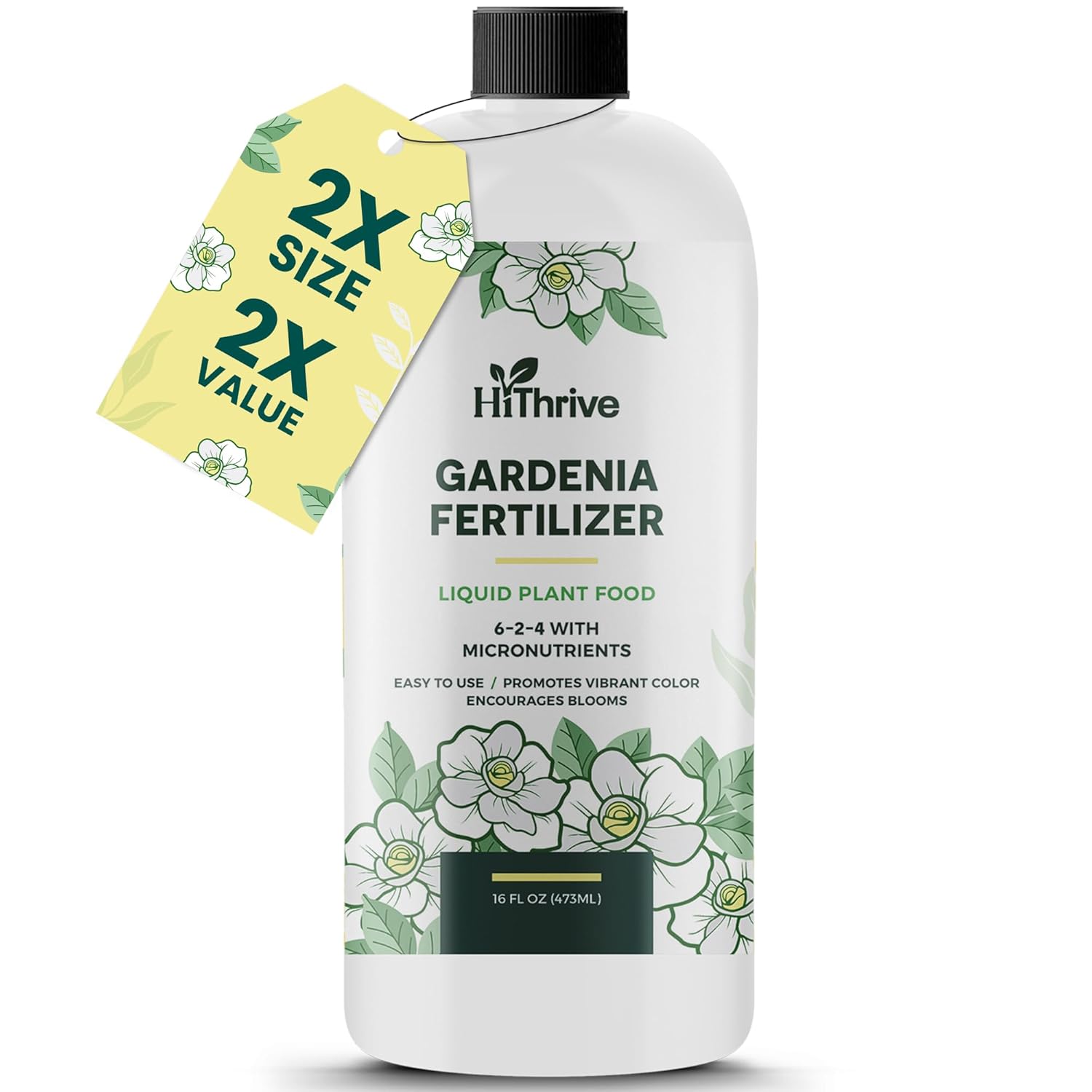
HiThrive Gardenia Liquid Fertilizer, 16 oz (Makes 96 gal)
| Item Form | Liquid |
|---|---|
| Coverage | Flowering Bushes and Indoor Plants |
| Liquid Volume | 16 fluid ounces |
| Mixing Ratio | 1 teaspoon per gallon of water |
HiThrive Gardenia Liquid Fertilizer is a water-soluble 6-2-4 formula designed for regular feeding of gardenias and similar flowering bushes. You mix the concentrate at the recommended rate (1 teaspoon per gallon for standard feeding or 2 teaspoons per gallon for deficiency correction) and apply with each watering either to the soil or by bottom-watering. The formula includes macro- and micronutrients such as calcium, magnesium, iron, copper, manganese and zinc, which helps address common yellowing and nutrient-deficiency symptoms while supporting leaf growth and flowering. The 16 oz bottle stretches to 96 gallons of feed, making it convenient for repeat applications across seasons. Because it is liquid and water-soluble, it dissolves quickly and is easy to measure for repeatable doses. Limitations are that it is a general-purpose acid-loving plant feed rather than a tailored slow-release product, so regular application is required to maintain results and users must follow dilution guidance to avoid overfeeding sensitive plants.
Best for: Gardeners who want a straightforward, measurable liquid feed to boost growth and flowering in gardenias and other acid-loving shrubs and who prioritize consistent, repeatable feeding over one-time products.
Less Ideal for: People who prefer a low-maintenance slow-release fertilizer or who only want an occasional feed; those seeking a product with built-in soil pH modification should look elsewhere.
- Balanced 6-2-4 NPK geared toward vigorous leaf growth and flowering
- Includes micronutrients (Ca, Mg, Fe, Cu, Mn, Zn) to correct common deficiencies
- Water-soluble concentrate mixes easily and allows precise dosing
- Yielding 96 gallons from a 16 oz bottle provides good coverage for multiple feedings
- Requires frequent application since it is a soluble feed rather than slow-release
- No pH adjustment information provided for particularly acid-sensitive soils
Verdict: A concentrated, easy-to-measure liquid feed that reliably promotes greener leaves and bigger blooms in gardenias when used as a regular part of feeding.
Gardenera 8-4-8 Acid-Loving Plant Fertilizer (8 oz)

| Unit Count | 8 Ounce |
|---|---|
| Item Form | Granules |
| Application Method | Sprinkle, mix into soil, and water |
| Mixing Ratio | 8:4:8 |
| Coverage | acid-loving plants |
Gardenera 8-4-8 is a slow-release granular fertilizer aimed at acid-loving shrubs and berry plants. You apply it by sprinkling or mixing into soil around the root zone and watering; the granules feed plants over time so you only need a few applications per season. The formula lists micronutrients such as iron, magnesium and manganese to help prevent yellowing in rhododendrons and improve flower and leaf color, and the product description notes added bio-solids with beneficial microbes to support soil health. Practical benefits include targeted nutrition for plants that prefer acidic soil and a convenient three-times-a-year feeding schedule for low-maintenance care. Important limitations are the small 8 oz unit size, which means it is best for a few containers or shrubs rather than larger beds, and specifics about exact application rates for different plant sizes are not detailed on the package, so gardeners should follow general fertilizer guidelines or consult local extension advice.
Best for: Home gardeners with a few rhododendrons, azaleas or container acid-loving plants who want an easy, low-maintenance feeding schedule and targeted nutrient support.
Less Ideal for: Those managing large landscapes, commercial plantings, or many shrubs at once who need bulk quantities and precise per-plant dosing.
- Slow-release granules provide long-lasting nutrition and reduce reapplication frequency
- Formulated specifically for acid-loving plants so it supports rhododendron nutrient needs
- Includes micronutrients like iron, magnesium and manganese to help prevent chlorosis
- Contains bio-solid derived microbes intended to improve soil health and root vigor
- Small 8 oz unit limits coverage for larger gardens
- Label lacks detailed application rates for different shrub sizes
Verdict: A convenient slow-release 8-4-8 granular fertilizer that delivers targeted nutrition for a few rhododendrons or other acid-loving shrubs with minimal reapplication.
Eyaeyao Concentrated Liquid Fertilizer for Acid-Loving Plants (18 oz)

| Item Form | Liquid |
|---|---|
| Liquid Volume | 18 |
This concentrated liquid fertilizer is designed specifically for acid-loving plants and is intended for regular, measured feedings during the growing season. You mix the product with water using the bottle cap measurement lines and apply to soil-grown plants at a 1:200 ratio or to hydroponic setups at 1:400, typically every 7 to 10 days. Its formulation targets plants that prefer lower pH soil, aiming to support greener foliage and, for hydrangeas, color development. Practical features include clear mixing instructions and a dosing cap that helps avoid overapplication. The fertilizer is suitable for both container and in-ground use and includes guidance on timing applications for cooler morning or evening light. Limitations are that the label gives few ingredient specifics beyond being an acid-loving formula and it may require attention to soil pH and iron levels for best results; users should monitor plants for signs of nutrient imbalance and adjust care accordingly.
Best for: Gardenia growers who want a straightforward, regularly scheduled feeding program for acid-preferring plants and prefer a measured liquid fertilizer for containers or garden beds.
Less Ideal for: Growers who need a fully transparent ingredient list or a slow-release granular option should consider alternatives better suited to low-maintenance or organic-focused feeding plans.
- Formulated for acid-loving plants like gardenias and hydrangeas
- Concentrated liquid that mixes with water for easy, measured feeding
- Includes cap with measurement lines for accurate dosing
- Works for both soil and hydroponic applications with specified dilution ratios
- Ingredients and N-P-K breakdown are not detailed on the product information
- Liquid volume reported without clear units on one field which may confuse buyers
Verdict: A practical, concentrated liquid feed that makes regular, accurate feeding of gardenias and other acid-loving plants simple and reliable.
TPS Nutrients Gardenia Liquid Fertilizer, 8 oz

| Item Form | Liquid |
|---|---|
| Specific Uses For Product | Plant Food |
| Coverage | Medium |
| Target Species | Gardenia, Camellia, Rhododendron |
This 8 oz liquid fertilizer from TPS Nutrients is formulated specifically for gardenias, camellias, and rhododendrons and is meant to be mixed and applied to container or in-ground plants. It supplies balanced nutrition suited for acid-loving shrubs, which helps reduce leaf yellowing, promote glossy foliage, and encourage more abundant blooms when used as directed. The liquid form makes dosing and foliar feeding straightforward for small gardens or patio containers, and the product description emphasizes root health to improve water and nutrient uptake. Practical benefits include easy mixing for spot treatments and suitability for both outdoor beds and potted specimens. Limitations are the small 8 oz bottle size, which means frequent repurchase or multiple bottles are necessary for larger plantings, and the need to follow safety guidance to avoid skin or eye contact when handling concentrated solution. For gardeners who prefer targeted, plant-specific feeding, this fertilizer is convenient and focused, but those managing many shrubs may prefer a larger-volume option.
Best for: Gardeners growing gardenias in containers or small beds who want a targeted, plant-specific fertilizer and prefer a liquid feed they can control precisely.
Less Ideal for: People managing large landscapes or many shrubs who need bulk or slower-release feeding options.
- Formulated specifically for gardenias and other acid-loving shrubs
- Liquid concentrate is easy to mix and apply to containers or beds
- Claims to reduce leaf yellowing and promote glossy foliage
- Supports root development to improve water and nutrient uptake
- Small 8 oz bottle may not be economical for larger gardens
- Requires careful handling to avoid skin and eye contact
Verdict: A small, easy-to-use liquid fertilizer tailored to gardenias that delivers targeted nutrition for healthier foliage and better blooms.
Miracle-Gro Water Soluble Azalea, Camellia & Rhododendron Plant Food, 5 lb

| Item Form | Powder |
|---|---|
| Application Method | watering can or Miracle-Gro Garden Feeder |
| Target Species | Azaleas, Camellias, Rhododendrons, Gardenias, Hibiscus, Hollies, Hydrangeas, Orchids |
| Mixing Ratio | 1:144 (indoor), 1:18 (outdoor) |
| Coverage | Medium |
This water-soluble Miracle-Gro formula is designed specifically for acid-loving shrubs and flowering plants and is straightforward to use: mix into a watering can or fill a Miracle-Gro Garden Feeder and apply every 7 to 14 days while plants are actively growing. It lists a broad target range that includes azaleas, camellias, rhododendrons, gardenias, hydrangeas and even orchids and hibiscus, so you can use one product across much of an acid-loving border or collection. The powder form dissolves for quick uptake and the package provides mixing ratios for indoor and outdoor use, making dose control easy. Practical benefits are fast nutrient delivery and convenience for regular feeding of shrubs and container plantings. Limits to note are that this is a soluble feed meant for routine use rather than long-term slow release so it requires repeat applications, and it assumes you will follow the specified dilution to avoid overfeeding.
Best for: Gardeners who want a reliable, easy-to-apply feed for acid-loving shrubs and mixed container plantings and who are willing to commit to regular watering-can or feeder applications.
Less Ideal for: Those seeking a one-time, slow-release fertilizer or a product they can apply infrequently over months instead of every few weeks.
- Formulated specifically for acid-loving plants like azaleas and rhododendrons
- Water-soluble powder gives fast nutrient availability when mixed and applied
- Clear mixing instructions for indoor and outdoor use simplify dosing
- Works with a watering can or compatible Miracle-Gro Garden Feeder for convenience
- Requires repeated applications every 7–14 days during active growth
- Not a slow-release soil amendment for long-term feeding
Verdict: A straightforward, water-soluble fertilizer that delivers fast, targeted nutrition for acid-loving plants when used regularly.
Choosing the Right Gardenia Food Fertilizer: Key Factors to Consider
Nutrient Ratio and Bloom Support
Gardenias need a fertilizer ratio that supports both leafy growth and heavy flowering. Look for a formula with adequate phosphorus to encourage bud set, balanced nitrogen to avoid excessive vegetative growth at the expense of blooms, and potassium for overall plant vigor. A clear N-P-K ratio on the label helps you match feeding to the plant's stage: slightly higher phosphorus during bud formation and moderate nitrogen during active growth.
Consistent micronutrients such as iron, magnesium, and manganese matter too because gardenias are prone to chlorosis when these are deficient. A fertilizer that lists these trace elements or is designed for acid-loving plants reduces the chance of yellowing leaves and helps preserve the glossy foliage that indicates a healthy plant.
Effect on Soil pH and Acid-Loving Plants
Gardenias prefer mildly acidic soil, usually around pH 5.0 to 6.5. Fertilizers vary in how they affect pH: some acidify the root zone or include sulfur or acidifying agents, while others are neutral or alkaline. Choosing a fertilizer that helps maintain or lower pH can reduce the need for additional soil amendments.
If your soil or potting mix tends to drift toward neutral or alkaline over time, pick a feeding program that either includes pH-lowering ingredients or pairs well with periodic soil acidifiers. Regular pH checks are important because iron and manganese become less available when pH rises, causing leaf yellowing even when nutrients are present in the soil.
Release Type and Timing
Fertilizer release type determines how often you feed and how steady the nutrient supply is. Slow-release granular formulations give a steady supply over weeks or months and are useful when you prefer low-maintenance feedings. Water-soluble fertilizers deliver nutrients immediately and are helpful for quick correction of deficiencies or when you need to support bud development on a short schedule.
Consider local climate and watering habits. In hot, dry conditions a slow-release product may break down faster and release nutrients sooner, while frequent irrigation can flush soluble feeds from containers. Match the release type to how hands-on you want to be with your gardenia care.
Application Method and Convenience
Ease of use influences whether you will maintain a consistent feeding schedule. Granular products are simple to broadcast or sprinkle on the soil surface and often require only occasional reapplication. Water-soluble feeds need mixing and more frequent application but allow precise control over dose. Liquid concentrates can be measured into a watering can or hose-end applicator for quick feeding.
Also consider how the application interacts with pruning, mulching, and repotting routines. A convenient product reduces the chance of underfeeding or overfeeding. Look for clear labeling on dosing for both in-ground and container-grown gardenias to avoid root burn from over-application.
Impact on Containers Versus In-Ground Plants
Potted gardenias have a smaller root volume and are more sensitive to salt buildup from frequent feeding. Fertilizers for containers should specify safe dosing and leaching recommendations to avoid nutrient burn. In-ground specimens have more buffer capacity, but soil composition and drainage still affect how nutrients move through the root zone.
If you grow gardenias in containers, prefer formulations designed for pots or reduced-strength soluble feeds. For in-ground plantings, fertilizers that slowly release nutrients into the root zone and help maintain acid conditions can reduce maintenance and the need for frequent reapplications.
Trace Elements and Chlorosis Prevention
Gardenias commonly show iron and magnesium deficiencies, especially in higher pH soils. A fertilizer that includes chelated iron or other bioavailable trace elements can prevent or correct yellowing between leaf veins. Regular feeding with a product that supplies these micros reduces the need for separate corrective treatments.
Consider whether the fertilizer lists chelated forms or soluble micronutrients and whether it pairs with soil amendments that improve nutrient availability. That is especially important in container culture where micronutrient depletion can occur faster than in-ground.
Feeding Schedules for Different Seasons
Adjust feeding frequency to the gardenia growth cycle. In spring and early summer when new shoots and flower buds develop, feed on a regular schedule that supports bloom set. Reduce or stop feeding in late fall and winter when growth slows to avoid forcing tender new growth vulnerable to cold.
For containers, consider lighter but more frequent feedings so nutrients are available throughout the season without causing salt buildup. For in-ground shrubs, a steady slow-release program in spring followed by a lighter midseason top-up is often sufficient.
- Spring: increase phosphorus-focused feeding to encourage bud set
- Summer: maintain balanced feeding through bloom peak
- Fall: taper back to avoid late flushes of tender growth
Correcting Yellow Leaves and Nutrient Deficiencies
Yellowing between leaf veins usually indicates iron or manganese deficiency, often tied to higher soil pH. Start with a soil pH check and, if needed, use an iron supplement or a fertilizer with chelated microelements designed for acid-loving shrubs.
If the issue is general chlorosis with pale overall color, a balanced soluble feed can help restore vigor quickly. Always follow label directions to avoid over-application, and re-evaluate soil conditions after a treatment cycle rather than repeatedly increasing dose.
- Test soil pH before treating for iron deficiency
- Use chelated micronutrients for faster leaf color recovery
- Rinse container soil periodically to prevent salt buildup
Using Fertilizer with Mulch and Soil Amendments
Mulch helps retain moisture and can slowly influence soil acidity depending on its composition. Pine needles, bark, and other acidic mulches help maintain the lower pH gardenias prefer, but they do not replace routine feeding. Apply mulch at moderate depth and avoid piling it against the trunk.
When adding soil amendments like compost or peat, consider their effect on pH and nutrient availability. Organic amendments improve soil structure and microbial activity, which can aid nutrient uptake, but they vary in how much they change acidity. Combine amendments and fertilizers thoughtfully to avoid counteracting your soil pH goals.
- Choose acidic mulches to support lower pH
- Match organic amendments with your fertilizer strategy
- Avoid mulch touching stems to prevent rot
Safety and Environmental Considerations
Follow label directions to prevent overfeeding, which can harm roots and lead to runoff into waterways. Use precise measuring tools for soluble feeds and apply granular products at the recommended rate. For containers, periodically flush the potting mix to reduce salt buildup.
Consider slow-release formulations in landscapes where frequent feeding is impractical, and avoid using products with high soluble salt indices near sensitive plants. Responsible application reduces nutrient loss and protects local water quality.
- Measure carefully and avoid over-application
- Flush containers occasionally to prevent salts
- Prefer predictable release types to limit runoff
Pairing Fertilizer with Watering Practices
Watering influences nutrient availability and movement. Deep, infrequent watering promotes deeper root growth in in-ground plants and reduces the risk of salt accumulation. Containers usually need smaller, more frequent watering, which can leach soluble nutrients faster and require more regular feeding.
Apply soluble fertilizers when the soil is moist to reduce root stress and follow with a light irrigation to move nutrients into the root zone. Avoid fertilizing drought-stressed plants until they are rehydrated, as uptake will be poor and risk of burn increases.
- Avoid fertilizing dry, stressed plants
- Water after applying soluble feed to move nutrients into roots
- Adjust watering to match fertilizer release type
How We Chose the Best Gardenia Food Fertilizer
We shortlisted products that are explicitly formulated or commonly recommended for gardenias and similar acid-loving flowering shrubs. Our selection filters prioritized measurable, gardener-relevant attributes: nutrient balance tailored for flowering acidophiles, pH influence and buffering capacity, release type and predictability of feeding, application convenience and safety for container or in-ground plantings, and suitability across different soil types and climates. Excluded from consideration were generic all-purpose fertilizers with no evidence they support acid-loving shrubs, specialty formulations that only supply micronutrients without adequate nitrogen or potassium for bloom development, and products that rely solely on unproven marketing claims. We looked for clear nutrient labeling, reliable release mechanisms (granular slow-release or soluble formulas with consistent dosing), and instructions that match common gardenia care routines. The evaluation emphasized how each attribute affects bloom production, leaf health, and ease of keeping soil in the slightly acidic range gardenias prefer.
FAQ
How often should I feed gardenias?
It depends on the product type. Slow-release granular fertilizers typically need application in spring and possibly a midseason top-up, while water-soluble feeds are often used every 2 to 4 weeks during active growth. Containers may require lighter but more frequent feedings.
Can I use a general-purpose fertilizer on gardenias?
General-purpose fertilizers can supply nutrients but may not maintain the slightly acidic conditions gardenias prefer. If you use a general feed, monitor soil pH and leaf health, and supplement with chelated iron or acidifying amendments if yellowing appears.
How do I fix iron deficiency in gardenias?
Confirm soil pH first because high pH limits iron availability. Apply a chelated iron product or a fertilizer that lists iron in a bioavailable form. Recheck leaf color after a few weeks and adjust pH management if issues persist.
Are liquid fertilizers better for container-grown gardenias?
Liquid fertilizers offer precise control and quick correction of deficiencies, which is useful for containers. However, they require more frequent application and monitoring to avoid salt build-up. Use reduced-strength mixes and periodically flush the potting mix.
Will mulch replace the need for fertilizer?
Mulch helps with moisture retention and can support lower pH if it is acidic, but it does not provide a complete nutrient program for prolific flowering. Continue routine feeding while using mulch as a complementary practice.
When should I stop fertilizing gardenias for the season?
Taper feeding in late summer or early fall as growth slows to avoid encouraging late-season flushes that could be damaged by cold. Maintain light care through dormancy and resume full feeding when new growth begins in spring.
Final Verdict
Choose a fertilizer that aligns with how you grow gardenias: slow-release products suit low-maintenance in-ground plantings, while water-soluble or liquid feeds give fast correction for containers and precise control during bud set. Prioritize formulas that support flowering with the right N-P-K balance and include chelated micronutrients to prevent chlorosis. Finally, match application frequency and release type to your watering habits and seasonal growth to maximize blooms without harming roots.
