

Note: This article contains affiliate links. If you click on these links and make a purchase, I may earn a small commission at no extra cost to you. This helps support my research and content. Read my full affiliate disclosure here.
A gas leaf blower vacuum is still the go-to for gardeners and homeowners who need powerful, portable debris removal across lawns, driveways, and wooded edges. Picking the right model matters because two-stroke engines deliver different real-world power, weight, and vibration levels that affect how long you can work and how clean the job gets. This guide covers the seven top options we shortlisted for home and small-property use. We evaluated each on suction and blow power, build durability, maintenance needs, noise and vibration, and how easy the machine is to handle in tight or leafy yards. Read on to see the practical strengths and trade-offs that matter when choosing a gas-powered blower-vacuum for seasonal cleanup and regular yard maintenance.
Top Picks at a Glance
| Best Overall The best all-around choice for most situations | EARTHCRAFT 3‑in‑1 26CC Gas Leaf Blower, Vacuum and Mulcher |  |
| Best Quality Built to a higher standard if you want something more solid | ECHO ES-250 25.4cc Shred N Vac Leaf Blower/Vacuum |  |
| Best Value The sweet spot between price and what you get | Goodliest 2-in-1 Gas-Powered Handheld Leaf Blower and Vacuum |  |
| Best Budget The cheapest option that still gets the job done reliably | GizmoSynth 26CC Gas Leaf Blower and Vacuum Combo (2‑Stroke, 424 CFM) |  |
| Highest Rated A top-rated pick with lots of positive feedback | NEO-TEC NTEBV260 3-in-1 Gas Leaf Blower Vacuum Mulcher |  |
| Most Popular A crowd favorite that many people choose with confidence | Husqvarna 125BVx 28cc Gas Handheld Leaf Blower with Vac Kit |  |
| Best Seller A high-volume bestseller chosen again and again | PROYAMA 29cc Gas Handheld 3-in-1 Leaf Blower, Vacuum & Mulcher (PHB290V) |  |
EARTHCRAFT 3‑in‑1 26CC Gas Leaf Blower, Vacuum and Mulcher

| Power Source | Gas Powered |
|---|---|
| Maximum Speed | 150 miles_per_hour |
| Noise Level | 78 db |
| Form Factor | Handheld |
| Included Components | Collection Bag, Shoulder Strap, Oil Can, Spark Plug Wrench |
This EARTHCRAFT unit combines blowing, vacuuming and mulching into one compact gas tool for routine yard cleanup. It runs a 26CC 2‑cycle engine that delivers strong, steady airflow—rated up to 450 CFM and about 200 MPH—so it handles piles of leaves, light snow and damp debris better than many small electric models. Switching between blower and vacuum/mulcher modes is straightforward, and the included 45‑liter collection bag keeps shredded material contained for easy disposal. The blower is handheld and relatively light for a gas model, and the shoulder strap and low‑vibration design make longer jobs less tiring. It is louder and requires fuel mixing and basic engine maintenance, so occasional tuneups and storage prep are necessary. The unit’s 78 dB noise level and two‑cycle exhaust are typical of gas tools and may be a consideration for neighborhood use. Overall it is a capable, no‑cord choice for homeowners who want the raw power and continuous runtime of gas with the convenience of a vacuum/mulcher combo.
Best for: Buyers who want a single powerful tool to handle blowing, vacuuming and mulching across a medium to large yard and who prioritize continuous gas runtime over cordless convenience.
Less Ideal for: People who need a very quiet, emission‑free solution or who prefer nearly maintenance‑free battery tools for very small yards or frequent short jobs.
- Three functions in one tool: blower, vacuum and mulcher for flexible yard tasks.
- Strong airflow (up to 450 CFM and 200 MPH) suitable for heavy leaf piles and light snow.
- Handheld, relatively lightweight design with shoulder strap and low vibration for longer use.
- Large 45‑liter collection bag captures shredded debris to simplify cleanup.
- Requires mixed gasoline and routine engine maintenance typical of two‑cycle gas motors.
- Produces typical gas tool noise and exhaust, so not ideal where emissions or quiet operation are priorities.
Verdict: If you want continuous gas power plus vacuum and mulching in one handheld unit for serious yard cleanups, this EARTHCRAFT 3‑in‑1 is a practical all‑round choice.
ECHO ES-250 25.4cc Shred N Vac Leaf Blower/Vacuum

| Power Source | manual |
|---|---|
| Air Flow Capacity | 391 cfm |
| Noise Level | 70 db |
| Maximum Speed | 165 miles_per_hour |
| Engine | 25.4cc two-stroke |
The ECHO ES-250 is a handheld gas blower that doubles as a mulching vacuum for quick leaf and debris cleanup. It uses a 25.4cc two-stroke engine with variable speed control to deliver up to 391 cfm and 165 mph, so it can move wet leaves, grass clippings, and loose debris efficiently around driveways and beds. The unit includes a collection bag and mulching function that reduces leaf volume for easier disposal. Practical benefits include strong airflow for its class, a relatively quiet measured 70 dB rating for a gas unit, and a modest fuel tank for extended yard runs without frequent refilling. Because it is handheld and described as manual power source, it is straightforward to operate and maneuver in tight spaces. Limitations are typical of small two-stroke gas tools: you will need to mix oil and fuel, perform routine maintenance, and accept more vibration and emissions than cordless electric alternatives. The ES-250 is best when you want gas-level performance in a compact, portable package and are comfortable with basic engine upkeep.
Best for: Buyers who prioritize compact gas performance for regular yard cleanup and want a handheld blower that also mulches and collects debris without relying on battery run time.
Less Ideal for: Users who prefer low-maintenance electric tools, have very large properties that need prolonged use, or who cannot or prefer not to handle gas engine upkeep.
- Strong airflow capacity at 391 cfm suitable for moving heavy or wet debris
- High maximum air speed of 165 mph for focused clearing power
- Variable speed control for adjusting power to the job
- Integrated mulching/vacuum with collection bag to reduce leaf volume
- Two-stroke gas engine requires fuel/oil mixing and routine maintenance
- Handheld format can be tiring for long sessions compared with backpack models
Verdict: A compact gas blower/vacuum that delivers strong handheld performance and built-in mulching for buyers who want efficient power and portability.
Goodliest 2-in-1 Gas-Powered Handheld Leaf Blower and Vacuum
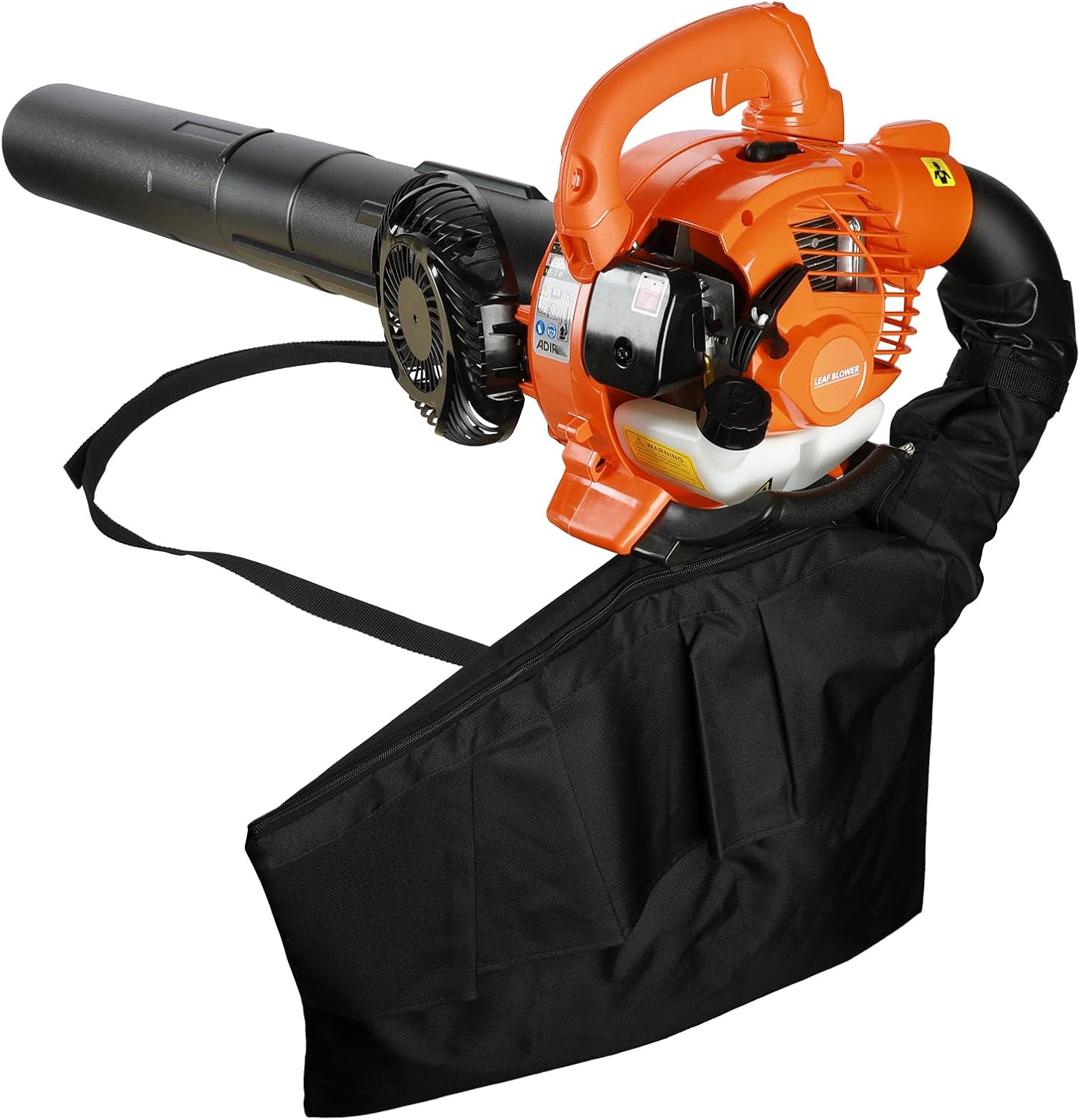
| Power Source | Gas Powered |
|---|---|
| Air Flow Capacity | 424 cfm |
| Form Factor | Handheld |
| Maximum Speed | 7500 rpm |
This Goodliest handheld unit combines a gas 2-stroke engine with a 2-in-1 blower and vacuum design to move and collect leaves, twigs, and light debris across yards and driveways. It is typically used for medium to large residential cleanup where corded or battery tools would be limiting. Notable features include a high airflow rating of about 424 CFM, multiple nozzle attachments for straight or curved blowing, an easy starter, and a collection bag for vacuum mode so you can gather material as you work. Practical benefits are strong clearing power without battery runtime concerns and the flexibility to switch between blowing and sucking tasks quickly. Important limitations are the expected maintenance of a 2-stroke gas engine, the weight and vibration of a gas handheld tool for extended use, and relatively high reported noise despite a listed low decibel figure that may be inaccurate. For buyers who want gas performance and a combined vacuum function, this offers a cost-effective option; those who need quieter, low-maintenance operation should consider electric alternatives.
Best for: Buyers who prioritize practical performance and need a gas-powered tool to handle bigger cleanup jobs without worrying about battery life, and who value a combined blower/vacuum to reduce the number of tools they own.
Less Ideal for: People who want the quietest, lowest-maintenance option or who prefer lighter electric or battery-powered tools for frequent short tasks.
- 2-in-1 blower and vacuum functionality for both clearing and collecting debris
- High airflow around 424 CFM suitable for medium to large yards
- Gas-powered engine removes battery runtime limits for longer jobs
- Includes multiple nozzles and a collection bag for versatile use
- 2-stroke gas engine requires fuel mixing and regular maintenance
- Handheld gas unit can be heavy and fatiguing during extended use
- Noise level may be higher in practice than the listed value
Verdict: A practical gas-powered blower/vacuum that delivers strong airflow and on-demand collecting power for larger yard cleanups without battery limits.
GizmoSynth 26CC Gas Leaf Blower and Vacuum Combo (2‑Stroke, 424 CFM)

| Engine | 26CC 2-stroke |
|---|---|
| Power | 0.7 kW (approx) |
| Airflow | 424 CFM |
| Fuel type | 25:1 gasoline to 2-stroke oil mix |
This GizmoSynth combo is a straightforward gas-powered option if you need both blowing and vacuuming without spending on separate tools. The 26CC 2-stroke engine puts out about 0.7 kW and 424 CFM, enough to move wet or damp leaves, clear driveways, and knock light snow off walkways. It ships with multiple straight and curved tubes, a collection bag and basic accessories so you can switch between blowing and suction quickly. The simple pull-starter and ergonomic handles make it accessible for users who want a no-frills machine that starts and runs without complex electronics. Expect the usual 2-stroke tradeoffs: you must mix fuel and oil, the engine requires periodic maintenance and it will be louder and emit fumes compared with electric models. The included collection bag is convenient for light vacuuming but capacity and mulching performance are not specified, so heavy debris runs will need repeated emptying. For buyers on a budget who prioritize raw power and versatility over low noise and zero emissions, this unit covers common yard cleanup tasks reliably.
Best for: Buyers looking for an affordable, no-frills gas blower-vacuum that provides strong airflow and immediate versatility for routine yard cleanup.
Less Ideal for: People who need a quiet, low-emission solution, or those who prefer cordless electric models with minimal maintenance and no fuel mixing.
- Combines blower and vacuum functions so one tool handles multiple yard tasks
- 26CC 2-stroke engine delivering roughly 424 CFM for strong air movement
- Includes multiple tubes and a collection bag for immediate out-of-the-box use
- Ergonomic handles and a simple starter designed for easier operation
- Requires mixed fuel and regular 2-stroke engine maintenance
- Noisy and emits exhaust compared with electric or battery alternatives
- Collection bag capacity and mulching ratio are not specified, so frequent emptying may be needed
Verdict: A budget-friendly gas blower-vacuum that delivers strong raw power and basic versatility for everyday yard cleanup.
NEO-TEC NTEBV260 3-in-1 Gas Leaf Blower Vacuum Mulcher

| Power Source | Gas Powered |
|---|---|
| Form Factor | Handheld |
| Additional Features | Leaf Vacuum, Mulcher |
| Item Type Name | gas leaf blower |
The NEO-TEC NTEBV260 is a gas-powered 3-in-1 blower, vacuum, and mulcher designed for routine yard cleanup. It uses a 25.4cc two-cycle engine that delivers up to 180 MPH air speed and 432 CFM airflow, which is useful for blowing leaves into piles and for vacuuming dry leaves, pine needles, and small twigs from lawns, patios, and driveways. The vacuum mode feeds debris into a 12-gallon collection bag while the mulcher reduces volume for easier disposal. Practical touches include a padded shoulder strap for carrying and a pull-start engine so you can work without recharging. The unit is relatively lightweight for a gas model and is best for homeowners who need dependable, cord-free power over moderate areas. Expect typical gas-engine maintenance and noise, and follow the manual for the correct fuel mix and safe operation. It is not a low-noise or zero-emission option, but it brings consistent power and multi-function convenience for regular outdoor maintenance.
Best for: Homeowners who want a reliable, cord-free tool for regular yard cleanup and value consistent gas-powered performance and multi-function versatility.
Less Ideal for: People seeking a quiet or emission-free option or those who need a heavy-duty commercial blower for large acreages should look elsewhere.
- Powerful 25.4cc 2-cycle engine provides up to 180 MPH and 432 CFM for effective leaf and debris clearing
- Three functions in one tool: blower, vacuum, and mulcher reduce the need for multiple machines
- 12-gallon collection bag with padded shoulder strap reduces emptying frequency and improves comfort
- Relatively lightweight handheld design makes it easier to maneuver during routine cleanup
- Requires gas and regular engine maintenance typical of two-cycle engines
- Not suited for very large properties where backpack or commercial-grade blowers would be faster
Verdict: A dependable gas-powered 3-in-1 blower, vacuum, and mulcher built for homeowners who need consistent, cord-free yard cleanup power.
Husqvarna 125BVx 28cc Gas Handheld Leaf Blower with Vac Kit

| Power Source | Gas Powered |
|---|---|
| Form Factor | Handheld |
| Additional Features | Leaf Vacuum |
| Air Flow Capacity | 425 cfm |
| Maximum Speed | 170 miles_per_hour |
The Husqvarna 125BVx is a gas-powered handheld blower that doubles as a vacuum/mulcher for light- to medium-duty yard work. It is typically used to blow leaves and debris from lawns, driveways and gutters and can be fitted with the included Vac-Kit to shred and collect material into a bag. Notable features include a 28-cc 2-cycle engine with up to 170 MPH airspeed and 425 to 470 CFM airflow, an ergonomically balanced inline tube and soft-grip handle to reduce wrist and arm strain, Smart Start for easier pull-starting, and a variable-speed throttle with cruise control for steady operation during larger jobs. Practical benefits are strong clearing performance, the convenience of switching between blowing and vacuuming, and a mulching function that reduces bag volume. Important limitations are that it is gas-powered so it requires fuel and maintenance and is not CARB-compliant for sale in California, and its 2-cycle engine will be louder and produce emissions compared with electric models.
Best for: Homeowners who want a powerful, handheld gas blower that also functions as a vacuum/mulcher and who prioritize reliable starting and comfort during moderate yard jobs.
Less Ideal for: People who prefer low-noise, zero-emission tools or who need a blower for very small, infrequent tasks better handled by a lightweight electric model.
- Strong airflow and speed for quick clearing (up to 170 MPH and ~425–470 CFM)
- Includes Vac-Kit with mulching knives to reduce leaf volume and collect debris
- Ergonomic inline tube and soft-grip handle reduce strain during use
- Smart Start and cruise control make starting and sustained operation easier
- Gas engine requires fuel mixing, routine maintenance and produces emissions
- Not CARB-compliant and therefore not legal for sale in California
Verdict: Choose this if you want a reliable, ergonomically balanced gas handheld blower that also vacuums and mulches for efficient yard cleanup.
PROYAMA 29cc Gas Handheld 3-in-1 Leaf Blower, Vacuum & Mulcher (PHB290V)

| Power Source | Gas Powered |
|---|---|
| Form Factor | Handheld |
| Additional Features | Leaf Vacuum |
| Engine | 29CC 2‑cycle (1.2 HP at 7,500 RPM) |
The PROYAMA PHB290V is a gas-powered handheld 3-in-1 unit that functions as a high‑airflow blower, a vacuum, and an onboard mulcher. Its 29cc two‑cycle engine delivers strong airflow (about 480 CFM at 175 MPH), making quick work of leaves on lawns, patios, and driveways. Swap between the flat and round nozzles to target gutters and tight spaces or sweep broad areas, and engage the vacuum tubes to collect debris into the included 10‑gallon bag where sharp internal blades shred material to reduce volume. Practical features include an auto‑lock cruise control throttle to cut hand fatigue during longer jobs, an easy‑start smart starter design, and reachable service points like the air filter and spark plug. The unit is portable for residential and light professional use, but as a gas tool it requires 50:1 gas/oil premix, routine maintenance, and produces exhaust and noise like other two‑cycle blowers. The 10‑gallon bag and shredding lower disposal trips, though heavier users may prefer a backpack model for extended commercial work.
Best for: Buyers who want a capable all‑around handheld gas blower that also vacuums and mulches for routine yard cleanup and occasional heavier jobs, prioritizing power and versatility over ultra‑lightweight operation.
Less Ideal for: People who need a quiet, zero‑emissions option or who will run the tool for long commercial shifts should consider electric or backpack models instead.
- Powerful 29cc engine producing around 480 CFM and 175 MPH for efficient leaf clearing
- Three functions in one unit: blower, vacuum, and mulcher to reduce debris volume
- Variable speed with cruise control reduces hand fatigue during longer sessions
- Includes a 10‑gallon collection bag so vacuumed material is contained and easier to dispose of
- Serviceable design with quick‑access air filter and accessible spark plug for basic maintenance
- Requires 50:1 gas to oil premix and regular two‑cycle engine maintenance
- Handheld form and 12.3 lb weight can be tiring for extended professional use
Verdict: A powerful, versatile handheld gas blower that adds vacuum and mulching capability for efficient, mixed residential yard cleanup.
Choosing the Right Gas Leaf Blower Vacuum: Key Factors to Consider
Suction Power and Airspeed
Suction and airspeed determine how effectively a gas leaf blower vacuum moves both dry and wet leaves, small twigs, and debris into the intake. Higher airspeed clears wide paths quickly, while strong suction helps with heavier or damp material that resists blowing alone.
For homeowners, balance matters: very high-speed blowers clear fast but can scatter debris if not used carefully, while vacuum attachments with better suction and optimized inlet geometry will collect more material into the bag. Look at how the machine transitions between blow and vacuum modes and whether the intake design prevents clogs with wet leaves.
Mulching Ratio and Bag Capacity
A good mulching system reduces the volume of collected leaves so you spend less time emptying the bag. Mulch ratio describes how finely the impeller chops material before it reaches the collection bag, which affects both how many bagfuls you carry and the effort of disposal or composting.
Bag capacity matters for the size of the property. A larger bag means fewer stops to empty but adds weight to the unit. Consider whether the unit allows easy dumping and whether the mulched output stays loose enough for composting or densifies into heavy clumps that are harder to handle.
Engine Type and Reliability
Gas units vary by displacement, carburetion, and whether they use simple two-stroke designs with mix fuel or more complex systems. Engine reliability impacts how long the unit will run between tune-ups and how it behaves under heavy workloads like wet-leaf pickup or extended clearing.
Maintenance intervals, ease of spark plug and filter access, and the availability of replaceable external components all influence long-term ownership. Think about whether you can perform basic adjustments and cleaning yourself, and how the engine handles starting in cool or dusty conditions.
Ergonomics and Vibration
Handling comfort affects how long you can use the blower without fatigue. Weight distribution between the engine and the nozzle, quality of shoulder straps or harnesses, and the vibration- damping of handles determine real-world comfort during multi-hour yard sessions.
High vibration contributes to hand fatigue and can make precise control difficult when working around beds, fences, or tight corners. Try to prioritize models with well-placed controls, anti-vibration features, and balanced weight so you are less likely to stop frequently due to discomfort.
Maintenance and Serviceability
Routine tasks like cleaning or replacing air filters, accessing the spark plug, adjusting the carburetor, and sharpening or replacing impellers should be straightforward. Machines that require proprietary tools or complicated disassembly increase downtime and service costs.
Check whether the vacuum and mulching components can be accessed without removing major parts, whether replacement bags and filters are commonly available, and how clearly the manufacturer or manual outlines routine maintenance steps. Ease of service keeps the unit reliable across seasons.
When Gas Makes More Sense Than Electric
Gas leaf blower vacuums are still preferred when you need sustained power for larger yards, heavily wooded properties, or frequent long sessions. They deliver continuous output without concerns about battery runtime or cord length, which is important if you are clearing long driveways, large lawns, or several separate garden beds in one outing.
For occasional small-patio cleanups or very quiet neighborhoods, battery or corded options may be attractive. However, if your primary need is moving heavy, damp leaves and you value uninterrupted running time, gas units give the torque and airflow many gardeners rely on.
- Better for long runtimes and heavy-duty clearing
- More forgiving for thick, damp debris
- Requires fuel handling and more mechanical maintenance
Noise, Neighborhood Considerations, and Timing
Gas blowers are louder than electric options and can be disruptive if used during early morning or late evening. Check local noise ordinances and be mindful of neighbors when scheduling cleanup. Using lower throttle settings while raking leaves into piles before vacuuming can reduce noise impact.
Plan powerful cleanup tasks for mid-morning or early afternoon when ambient noise is higher and fewer people will be disturbed. If noise is a major concern, look for models with better muffling and anti-vibration features to reduce perceived volume.
- Operate during reasonable hours to limit disturbance
- Use choke and throttle control to manage noise during light tasks
- Consider ear protection for extended usage
Routine Maintenance That Keeps Units Running
Regular maintenance preserves engine life and keeps suction consistent. Simple tasks include checking and replacing the air filter, inspecting and replacing spark plugs, cleaning the intake and impeller of debris, and ensuring fuel is fresh and mixed correctly if required.
Store the unit drained of fuel or with stabilizer if you expect long idle periods. Keeping a small toolkit and spare filters on hand reduces downtime during the busy leaf season.
- Clean impeller and intake after heavy use
- Replace air filter and spark plug seasonally
- Use fresh properly mixed fuel for two-stroke engines
Using a Blower-Vacuum Efficiently
Start by blowing leaves into manageable rows before switching to vacuum mode. This reduces the time the vacuum spends ingesting large amounts of loose material and helps the mulcher process debris more evenly. Work with the wind direction where possible to minimize scattering.
Adjust nozzle height and speed to match debris type. Lower speed and a shorter distance to the surface helps pick up wet clumps, while higher airspeed is better for dry, lightweight material. Empty bags before they exceed half capacity to maintain airflow and prevent strain on the engine.
- Blow then vacuum for large areas
- Match speed to debris type
- Empty bags regularly for consistent suction
Storage and Off-Season Care
Proper off-season storage prevents stale fuel problems and corrosion. Run the engine until the carburetor is dry or add a fuel stabilizer, remove the spark plug and fog the cylinder with a small amount of oil if long storage is expected, and store in a dry, sheltered place out of direct sunlight.
Inspect hoses, bags, and seals for wear before next season. Replacing worn seals and damaged bags during the off-season avoids being caught out when the leaf season returns.
- Drain fuel or use stabilizer for storage
- Inspect and replace worn hoses and bags
- Store in a dry, ventilated area away from heat
How We Chose the Best Gas Leaf Blower Vacuum
We focused on features and performance characteristics that matter in everyday yard use. Key evaluation criteria included suction and airspeed performance for moving wet and dry leaves, engine reliability and tuneability for consistent power, vibration and ergonomics for operator comfort during extended use, and the quality of the vacuum and mulching system for processing debris. We also considered durability of major assemblies such as housings, impellers, and intake tubes, plus how simple routine maintenance is for spark plugs, air filters, and carburetor access. We excluded electric-only models and battery-powered units to keep the comparison strictly within gas-powered machines. Extremely light-duty consumer trimmers not intended for vacuuming or mulching were also filtered out. Our process prioritized models with documented real-world performance characteristics, robust serviceability, and practical features that reduce time raking and bag handling. The scoring criteria align with these dimensions so readers can compare handling, power delivery, and upkeep needs directly.
FAQ
Can a gas leaf blower vacuum handle wet leaves?
Often yes. Gas units with strong suction and a robust mulching impeller can take on damp leaves, but performance depends on intake design and motor torque. Expect reduced throughput with very wet, heavy material and the need for more frequent clearing of clogs.
How noisy are gas blower-vacuums compared with battery models?
Gas units are generally louder and produce more vibration than battery or corded machines. Noise levels vary by engine size and muffling, so choose a model with sound-reduction features if neighborhood disturbance is a concern.
What maintenance should I plan for during the season?
Plan to check and clean the air filter, inspect and replace the spark plug as needed, clear the impeller of debris, and keep fuel fresh. Regularly empty and inspect the collection bag and check for loose fasteners or worn seals.
Are gas blower-vacuums hard to start?
They can be more challenging than electric units, especially when cold or after storage. Proper choke settings, fresh fuel, and routine spark plug and carburetor maintenance reduce starting problems. A well-tuned engine will start reliably with only a few pulls.
Will a gas model reduce the time I spend raking?
Usually yes. A blower-vacuum with a good mulching system and sufficient suction significantly cuts hands-on raking time by collecting and compacting leaves into a bag. Effectiveness depends on technique and the condition of the debris.
Final Verdict
Choosing the right gas leaf blower vacuum means balancing raw airflow with practical handling and serviceability. Prioritize suction and mulching efficiency if you need to process wet or heavy leaves, and favor ergonomic designs and accessible maintenance if you expect long sessions or seasonal upkeep. Weigh the tradeoffs between weight, bag capacity, and engine type when deciding which unit fits your yard. Focus on the criteria that match your property size and debris type so you end up with a machine that clears efficiently and lasts through multiple seasons.
