

Note: This article contains affiliate links. If you click on these links and make a purchase, I may earn a small commission at no extra cost to you. This helps support my research and content. Read my full affiliate disclosure here.
If you handle large volumes of firewood, a commercial log splitter changes how fast and reliably you process logs. The right machine saves labor, reduces fatigue, and keeps a steady output through a long splitting day. This guide covers our seven shortlisted commercial log splitters that perform well in demanding workshop and farm settings. We evaluated machines for hydraulic power, cycle speed, build durability, and serviceability so you can match a splitter to your workload and workplace setup. Read on to understand the operating tradeoffs and pick a unit that fits your wood species, daily volume, and maintenance capability.
Top Picks at a Glance
| Best Overall The best all-around choice for most situations | BILT HARD 35-Ton Towable Gas Log Splitter with 10 HP Engine and Log Lift |  |
| Best Quality Built to a higher standard if you want something more solid | 45-Ton Firewood Processor with 20HP GX630 Engine, 25" Chainsaw, 3m Conveyor |  |
| Best Value The sweet spot between price and what you get | FULL BOAR 38-Ton Gas Log Splitter with 306cc Engine |  |
| Highest Rated A top-rated pick with lots of positive feedback | Champion Power Equipment 37‑Ton Horizontal/Vertical Full Beam Gas Log Splitter with Auto Return |  |
| Best Seller A high-volume bestseller chosen again and again | BILT HARD 40-Ton Gas Log Splitter with 389cc 13 HP Engine (Horizontal/Vertical) |  |
BILT HARD 35-Ton Towable Gas Log Splitter with 10 HP Engine and Log Lift

| Splitting force | 35 Ton |
|---|---|
| Engine | 10 HP, 306cc OHV 4-stroke |
| Cycle time | 15 second |
| Maximum log diameter | 20'' |
| Hydraulic capacity | 7.4 gal |
The BILT HARD 35-ton gas log splitter is built for high-volume, heavy-duty wood processing. It uses a 10 HP, 306cc OHV engine paired with a Bucher 2-stage hydraulic pump to deliver a fast 15-second cycle time and steady 18 GPM flow, letting you split through large, dense logs efficiently. The unit accepts logs up to 20 in diameter and 24 in length and ships with interchangeable 4-way and 6-way 12-inch wedges so you can tailor split size and throughput. A powered 700 lb log lift and 5-inch hydraulic lifting stroke reduce manual handling and speed staging. The towable design, DOT tires, 2-inch ball coupler, and safety chains make it straightforward to move between sites. Practical limitations are its large footprint and over-1000-pound weight, which require a suitable vehicle or freight delivery and space for storage and assembly, and the machine’s size makes it more than most homeowners need for occasional light use. For users focused on sustained, performance-oriented splitting, it delivers power and throughput in a durable package.
Best for: Buyers who need a high-capacity, durable splitter for frequent or commercial-style wood processing and who prioritize power and steady throughput over portability or occasional use convenience.
Less Ideal for: Casual users with small yards, infrequent splitting needs, or those who cannot accommodate freight delivery and a heavy machine should consider smaller, lighter options.
- High splitting force rated at 35 tons for tackling large, hard logs.
- Fast 15-second cycle time driven by a 2-stage hydraulic pump for high throughput.
- Interchangeable 4-way and 6-way wedges for flexible split sizes and increased productivity.
- Integrated 700 lb log lift and hydraulic lift stroke reduce manual handling and speed workflow.
- Towable with DOT tires, 2-inch coupler, and safety chains for easy transport between sites.
- Very heavy and large, requiring freight delivery, a towing vehicle, and significant storage space.
- Fuel and hydraulic fluid capacities are modest, so expect periodic refueling and maintenance during long jobs.
Verdict: If you need a rugged, high-throughput splitter that can handle large logs day after day, this 35-ton towable machine delivers the power and features to get the job done.
45-Ton Firewood Processor with 20HP GX630 Engine, 25" Chainsaw, 3m Conveyor

| Splitting force | 45 tons |
|---|---|
| Engine | 20HP GX630 gas |
| Max cutting diameter | 19.6 inches |
| Conveyor length | 3M |
This 45-ton firewood processor is built for high-throughput cutting and splitting on farms, small mills, or commercial firewood operations. The GX630 20HP gas engine drives a 25" steel chainsaw that handles logs up to about 19.6" in diameter while a full hydraulic control system manages cutting, feeding, and a 45-ton split cycle with interchangeable 4-way and 6-way wedges. A 3 meter conveyor moves split rounds away from the machine and the 2.55 meter discharge height simplifies loading trailers or staging racks. Practical advantages include a heavy steel frame for durability, a protective chainsaw guard and emergency stop for safer operation, and an accessible layout that eases routine maintenance. Important limitations are the machine size and weight, which require appropriate transport and a stable work area, and the need for trained operators to run hydraulic controls and maintain the engine and chainsaw components. For performance-focused buyers this processor delivers fast, repetitive output but it is a facility-level piece of equipment rather than a backyard model.
Best for: Buyers running a commercial or high-volume firewood operation who prioritize continuous output and industrial-grade durability and are prepared to provide trained operators and site infrastructure.
Less Ideal for: Casual homeowners, weekend users, or those without space for a large processor should consider smaller, trailerable splitters instead.
- Powerful 20HP GX630 gas engine provides consistent torque for heavy-duty cutting
- 45 tons of hydraulic splitting force with interchangeable 4-way and 6-way wedges for high output
- 25" steel chainsaw and full hydraulic feed deliver fast, repeatable cuts on large logs
- Integrated 3 meter conveyor and 2.55 meter discharge height speed up post-split handling
- Durable heavy-duty steel frame and safety features like guard and emergency stop
- Very large and heavy unit that requires specialized transport and a dedicated work area
- Requires skilled operator maintenance for the engine, chainsaw, and hydraulic systems
Verdict: If you need commercial-level throughput and robust splitting power, this 45-ton processor pairs a 20HP engine with a 3m conveyor to keep a high-volume operation moving.
FULL BOAR 38-Ton Gas Log Splitter with 306cc Engine
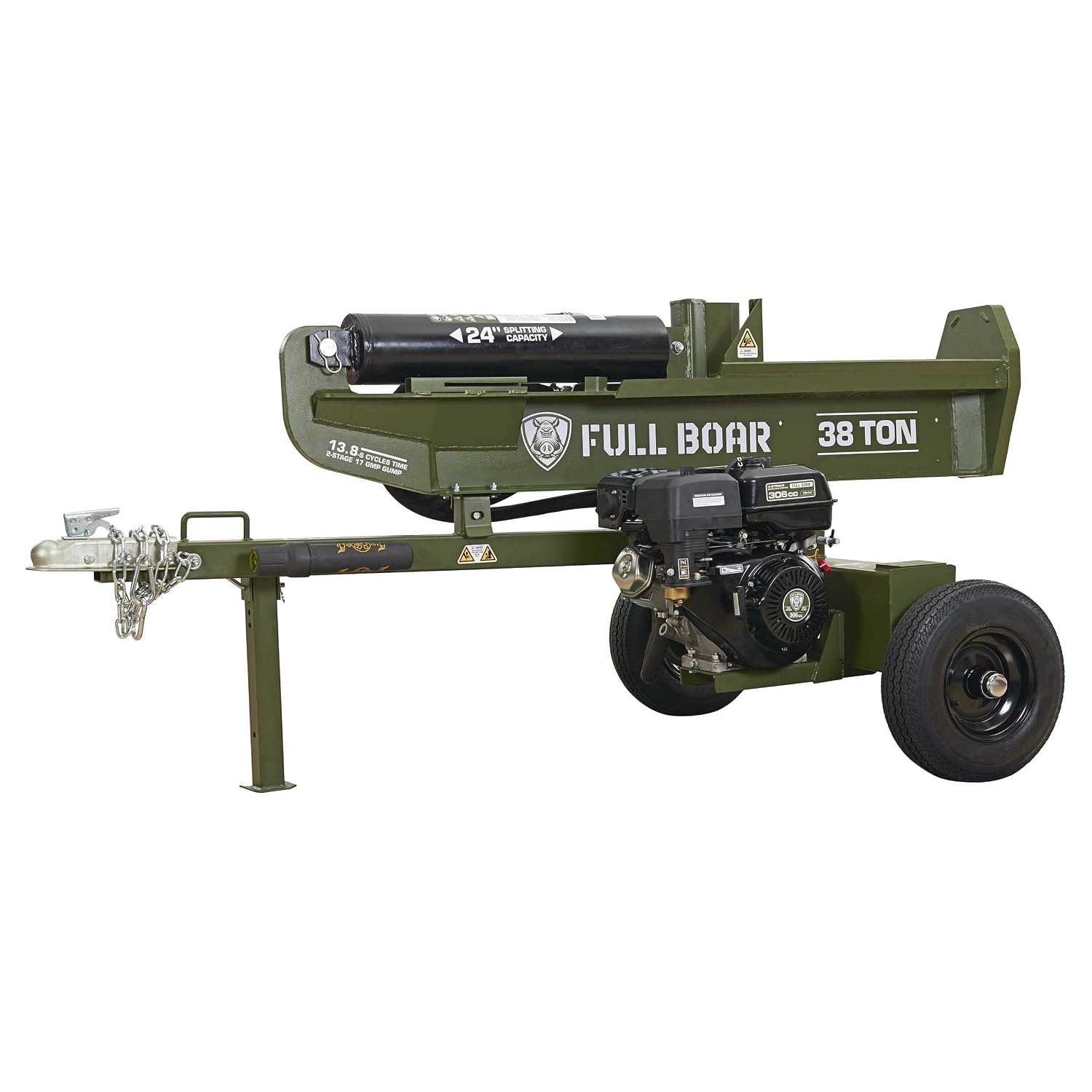
| Power | 306cc OHV engine |
|---|---|
| Splitting force | 38 ton |
| Cycle time | 13.8 seconds |
| Stroke length | 22.75 inches |
The FULL BOAR 38-ton log splitter is built for heavy, repeated use and for operators who need a portable, towable machine. The 306cc OHV engine drives a hydraulic system that delivers 38 tons of splitting force with a 13.8 second cycle and a 22.75-inch stroke, letting you process logs up to 24 inches long. The H-beam frame reduces beam deflection for straighter splits and the two-way wedge improves efficiency on different grain orientations. A hydraulic cylinder handle lets you pivot the unit between vertical and horizontal positions to make loading and moving larger logs easier without lifting. DOT-approved 16-inch tires and a 2-inch ball hitch make moving the splitter between jobs straightforward. Practical features like an internal hydraulic oil filter and an auto-return control valve with adjustable detent reduce downtime and operator effort. This is a heavy machine that requires a proper tow vehicle and space to operate safely, and its size and weight mean occasional maintenance and transport planning are necessary.
Best for: Small contractors, farms, and serious property owners who need a durable, towable splitter to process large volumes of heavy timber on site and prioritize uptime and portability.
Less Ideal for: Casual homeowners with occasional light splitting needs or anyone who cannot accommodate a large, heavy machine or provide routine maintenance.
- High 38-ton splitting force and 13.8 second cycle time for fast processing of large logs
- Heavy-duty H-beam construction reduces beam deflection for consistent splits
- Hydraulic pivot handle lets you switch between vertical and horizontal positions for easier loading
- Towable design with 16-inch DOT tires and 2-inch ball hitch for on-site mobility
- Internal hydraulic oil filter and adjustable auto-return valve reduce contamination and operator effort
- Large physical size and substantial weight make storage, transport, and setup more demanding
- Requires regular engine and hydraulic maintenance expected of commercial-grade equipment
Verdict: A robust, towable 38-ton splitter built to handle heavy commercial workloads while staying portable for on-site jobs.
Champion Power Equipment 37‑Ton Horizontal/Vertical Full Beam Gas Log Splitter with Auto Return

| Ram Force | 37 Tons |
|---|---|
| Engine Size | 338cc single‑cylinder OHV |
| Cycle Time | 16 seconds |
| Hydraulic Flow | 17 gpm |
| Fuel Tank Capacity | 1.45 gallons |
This Champion 37‑ton full‑beam log splitter is built for heavy, repetitive splitting where uptime matters. A 338cc single‑cylinder OHV engine drives a hydraulic system that produces 37 tons of ram force and a 16‑second cycle time; the auto‑return valve and 2‑stage gear pump let the unit automatically reset and deliver high flow when possible and high pressure when needed to push through stubborn logs. It converts from horizontal to vertical in seconds and includes a log catcher to reduce bending and handling. The splitter is towable with DOT‑approved wheels and a 2‑inch ball hitch so you can move it between job sites or fit it in a truck bed. Practical limits include required assembly if ordered online and the machine's large size, which means you need secure storage and a suitable tow vehicle. Champion backs the unit with a 2‑year limited warranty and lifetime technical support, which supports long‑term serviceability for commercial use.
Best for: A shop or small commercial operator who needs a dependable, high‑capacity splitter that can run long shifts and be moved between sites; ideal for users who prioritize uptime and service support.
Less Ideal for: Casual homeowners with only occasional light splitting needs or minimal storage and towing capacity should consider smaller, lighter models instead.
- High splitting force with 37 tons of ram force for large, tough logs
- Fast 16‑second cycle time and auto‑return valve for high productivity
- Converts quickly between horizontal and vertical positions to handle heavy or awkward logs
- Towable design with 2‑inch ball hitch and DOT‑approved tires for easy transport
- Large hydraulic capacity and 2‑stage gear pump that maintains flow and pressure under load
- Large footprint and weight require secure storage and a capable tow vehicle
- Units ordered online may arrive unassembled, adding setup time on site
Verdict: A rugged, towable 37‑ton splitter engineered for reliable, high‑volume splitting and backed by Champion support.
BILT HARD 40-Ton Gas Log Splitter with 389cc 13 HP Engine (Horizontal/Vertical)

| Splitting force | 40T |
|---|---|
| Engine | 389cc 13 HP OHV |
| Cycle time | 16 Second |
| Hydraulic reservoir capacity | 6 Gallons |
This BILT HARD 40-ton gas log splitter is built for fast, demanding work: a 389cc 13 HP OHV engine powers a hydraulic system that produces 40 tons of splitting force and completes a full cycle in about 16 seconds. It runs in both horizontal and vertical positions, so you can process large, heavy logs without constant lifting, and the hardened 8-inch steel wedge handles tough hardwoods up to roughly 24 inches long. Designed to be towable, it includes a 2-inch ball coupler, DOT-approved tires, and a sturdy frame for moving between sites. The large hydraulic reservoir and 14 GPM operating speed support continuous splitting with less heat and contamination risk. Expect a substantial machine that boosts throughput for homeowners or small contractors who need high-speed, heavy-duty splitting; assembly and initial setup require space and mechanical familiarity and the unit is heavy to maneuver when unhitched. Regular maintenance of the engine and hydraulic system is important to sustain cycle speed and longevity.
Best for: Buyers who prioritize throughput and power for frequent heavy-duty splitting, such as homeowners with large woodlots or small operators who need a fast, towable splitter that handles dense hardwoods.
Less Ideal for: Casual users who split only occasionally or those without space and means to handle a very large, heavy machine should consider smaller electric or lower-tonnage models.
- Very high splitting force suitable for dense hardwoods (40 tons)
- Fast cycle time (approximately 16 seconds) for high-volume firewood processing
- Dual-position horizontal and vertical operation reduces lifting and speeds large-log handling
- Towable design with DOT-approved tires and 2" ball coupler for easy transport to job sites
- Heavy and bulky which makes solo moving and setup difficult
- Requires routine engine and hydraulic maintenance to preserve performance
Verdict: Choose this splitter when you need maximum power and high-speed cycles for heavy, high-volume firewood production.
Choosing the Right Commercial Log Splitter: Key Factors to Consider
Hydraulic Force and Cylinder Size
Hydraulic force determines what diameter and species of logs the splitter can handle without stalling. Higher tonnage and larger cylinder bore help split dense hardwoods and oversized rounds. When you process mixed woods, choosing a unit with ample force reduces the number of stubborn re-splits and operator adjustments.
Cylinder stroke and ram design also affect how much of a log the wedge contacts in a single pass. A longer stroke paired with strong force gives better throughput when logs vary in length. Consider the maximum rated tonnage in relation to the wood types you plan to process most often.
Cycle Speed and Pump Flow
Cycle speed is how quickly the ram advances and returns, and it directly impacts daily throughput. Higher pump flow rates and efficient valve layouts shorten the time between splits, which matters when you need to process many cords.
Faster cycle speeds can come at the cost of increased fuel or power demand and sometimes more wear on moving parts. Match cycle speed expectations to your daily volume so maintenance intervals remain practical for your operation.
Engine or Motor Type and Reliability
Commercial splitters use either gasoline engines, diesel engines, or electric motors. Engines designed for continuous duty and higher hour ratings are preferable for long shifts. Electric units can offer quieter, cleaner operation but require adequate power infrastructure and may limit mobility.
Consider the availability of service support and common failure modes for the chosen powerplant. Ease of routine checks like oil changes, air filter access, and belt or pump inspections reduces downtime in a busy shop or farm setting.
Build Quality, Frame, and Beam Design
A robust frame and a straight, hardened splitting beam resist bending and misalignment under repeated heavy loads. Thicker beam profiles, welded gussets, and properly sized support plates extend service life when splitting large, irregular rounds.
Wedge alignment and mount rigidity matter for consistent splits. Poor beam geometry leads to uneven wear on the wedge and cylinder guides, increasing maintenance needs and reducing efficiency over time.
Safety Features and Operator Ergonomics
Commercial machines must include safety controls suited to repetitive operation. Two-handed controls, guarded moving parts, quick-stop valves, and clear operator zones reduce accident risk during long shifts. Ergonomic handle placement and reachable control panels cut operator strain and speed up cycle handling.
Evaluate how easy it is to load and remove split wood without overreaching or awkward lifting. Good ergonomics reduce injury risk and sustain productivity across extended work periods.
Serviceability, Parts Availability, and Footprint
A commercial splitter will see heavy wear, so access to common consumables and spare parts is crucial. Look for units with straightforward pump, valve, and cylinder access plus widely available replacement components. Clear service points and modular components make field repairs faster.
Also consider the machine footprint, transport needs, and whether it will be stationary in a shop or moved around a yard. A compact but serviceable layout often matters more than absolute size when workshop space and transportability are constraints.
Matching Splitter Capacity to Your Workload
Estimate the daily cord or log volume you plan to process and match that to cycle speed and hydraulic force. A machine with very high tonnage but slow cycle times may underperform for large-volume operations, while a faster lower-tonnage unit may struggle with large hardwood rounds.
Plan for peak days rather than average days. If you occasionally need to split oversized or rotten logs, pick a machine with a margin in force and stroke length to avoid frequent stalls or supplemental manual splitting.
- Calculate anticipated cords per day and translate that into required cycle times.
- Factor in operator breaks and safe loading practices when estimating throughput.
- Allow margin for tougher wood species or wet conditions that slow splitting.
Power Requirements and Site Setup
Commercial splitters may require three-phase power, high-capacity single-phase service, or heavy-duty fuel supply for engines. Confirm your workshop or jobsite can supply the required power and plan cord management for electric units.
For engine-powered splitters, consider fuel storage, ventilation for exhaust, and space for servicing. Mobility needs determine whether a towable or stationary unit is preferable.
- Check electrical panel capacity and extension cord ratings for electric models.
- Plan safe fueling and spill containment for engine-powered units.
- Consider whether the splitter will be moved frequently or stay fixed in one place.
Routine Maintenance Checklist
Establish a maintenance routine that includes hydraulic fluid checks, filter replacements, wedge inspection, and fastener torque checks. Frequent visual inspection prevents small issues from becoming service interruptions.
Keep a small kit of common spare parts and tools on hand: extra hydraulic fluid, seals, a basic wrench set, and a replacement shear pin or wedge fasteners. Document service intervals so wear items are replaced before failure.
- Inspect hoses and fittings weekly for leaks or abrasion.
- Check hydraulic fluid color and level before each shift.
- Sharpen or rotate wedges as part of a scheduled maintenance plan.
Safe Operation Practices
Train operators to use two-handed controls and to never bypass safety interlocks. Keep a clear working perimeter and use proper lifting techniques or mechanical helpers to load heavy rounds. Ensure operators know the location of emergency stops and how to safely bleed the hydraulic system for maintenance.
Use personal protective equipment including eye protection, hearing protection, and steel-toe footwear. Regular safety briefings reinforce correct procedures and reduce the chance of accidents during repetitive tasks.
- Mark a safe loading zone and keep bystanders away from the splitter.
- Use mechanical aids or team lifts for logs above safe manual handling limits.
- Turn off and lock out power before performing maintenance or inspections.
Transport, Storage, and Winter Use
If you move the splitter between sites, confirm towing ratings, hitch compatibility, and secure tie-down points. For stationary installations, plan a sheltered storage area to protect hydraulic components and engine parts from weather exposure.
In winter climates, use appropriate hydraulic fluids rated for low temperatures and consider block heaters or cold-start strategies for engines. Frozen or wet wood can change splitting behavior, so adjust expectations and maintenance frequency seasonally.
- Secure the splitter for transport and inspect mounting points regularly.
- Store in a dry place and cover exposed hydraulic components when idle.
- Switch to low-temperature fluid and keep batteries charged in cold months.
How We Chose the Best Commercial Log Splitter
We focused on attributes that matter when splitting large volumes of hardwood and softwood in commercial or heavy-use settings. Primary evaluation criteria included hydraulic force and cylinder size to judge raw splitting capability, cycle speed and pump flow for throughput, engine or motor type for reliability under continuous use, frame and beam construction for long-term durability, and maintenance/serviceability for downtime and repairability. We also considered safety features and ergonomics because standing comfort and safe operation reduce operator fatigue and accidents during long shifts. We excluded consumer-grade machines with limited duty cycles, light-frame hobby splitters, and units rated only for sporadic residential use. We prioritized splitters built for repeated full-shift operation and those with accessible parts and clear service points. The resulting shortlist balances power, speed, and durability while noting tradeoffs between portability, footprint, and routine maintenance needs.
FAQ
What tonnage is necessary for commercial hardwood splitting?
Tonnage needs depend on log diameter and species. Dense hardwoods often require higher tonnage and a more robust cylinder. Many commercial operations select a machine with a safety margin above the largest logs they expect to handle to avoid stalls and frequent rework.
Can electric commercial splitters match gas or diesel models?
Electric units can deliver steady power and quieter operation but need adequate electrical supply and may be less mobile. For shops with reliable high-capacity electric service, electric splitters can offer similar throughput, though engine-powered machines can be preferable for remote sites or where three-phase power is unavailable.
How often should hydraulic fluid be changed?
Hydraulic fluid change intervals depend on usage intensity and manufacturer guidelines. In heavy commercial use, inspect fluid condition frequently and plan on scheduled changes more often than residential use. Regular filter changes and contaminant checks help extend component life.
Are wider wedges better for production work?
Wider wedges can split logs more completely in one pass and reduce the need for follow-up splits, but they also require higher force and can increase stress on the beam. Choose wedge geometry that matches your machine's capacity and the typical wood sizes you process.
What safety features are essential on a commercial splitter?
Two-handed controls, guarded moving parts, emergency stop valves, and stable footing are key safety features. Clear labeling of pinch zones and operator training on lockout procedures also reduce accident risk in busy work environments.
Final Verdict
Prioritize hydraulic force, cycle speed, and durability when selecting a commercial log splitter. Balance those needs against power availability, footprint, and maintenance capacity to find a machine that handles your typical wood types and daily volume. Choose a unit with serviceable components and strong safety features to keep uptime high and operators protected. With the right balance of power, speed, and maintainability you can streamline cordwood production and reduce labor strain across busy seasons.
