

Note: This article contains affiliate links. If you click on these links and make a purchase, I may earn a small commission at no extra cost to you. This helps support my research and content. Read my full affiliate disclosure here.
Picking the right ground cover to start from seed makes a big difference in how quickly a patch fills in, how much weed pressure you avoid, and how well the plant tolerates your soil and light. If you want low maintenance color, erosion control, or a living mulch for raised beds and slopes, growing ground cover from seed can be the most economical route – but success depends on site preparation and seed selection. This guide shortlists seven top ground covers to grow from seed and explains the practical tradeoffs gardeners face. We evaluate ease of germination, establishment speed, and long-term maintenance so you can pick an option that suits your yard, patio planters, or naturalized border. Read on for preparation tips and the criteria we used to pick these options.
Top Picks at a Glance
| Best Overall The best all-around choice for most situations | No-Till Solutions 13-Seed Cover Crop Mix (1 lb) |  |
| Best Quality Built to a higher standard if you want something more solid | Eretz Tri-Clover Blend (Red, Crimson, White) – 5 lb Seed |  |
| Best Value The sweet spot between price and what you get | Outsidepride Perennial White MiniClover Seed (4 oz) |  |
| Best Budget The cheapest option that still gets the job done reliably | Carpet Creeping Creeping Thyme Ground Cover Seeds (18,000 count) |  |
| Highest Rated A top-rated pick with lots of positive feedback | Vitalize Seed Carbogro Fall No-Till 16-Species Cover Crop Mix, 1 lb |  |
| Most Popular A crowd favorite that many people choose with confidence | Outsidepride White Dutch Clover Seed, 2 lb |  |
| Best Seller A high-volume bestseller chosen again and again | KVITER Royal Carpet Sweet Alyssum Heirloom Flower Seeds (5000 Count) |  |
No-Till Solutions 13-Seed Cover Crop Mix (1 lb)

| Sunlight Exposure | Full Sun, Partial Sun |
|---|---|
| Soil Type | No-Till |
| Moisture Needs | Moderate Watering |
| Unit Count | 13 Count |
| Plant or Animal Product Type | peas |
This 13-seed No-Till Solutions mix is designed as a biodiverse cover crop blend for quick ground cover and soil improvement in no-till and raised-bed settings. The bag combines clovers (about half the mix) with vetch, peas, cowpeas, buckwheat, millet, lentils, flax and fenugreek to provide both rapid surface canopy (buckwheat, millet) and nitrogen-fixing roots (clovers, vetch, peas). It is inoculated with Rhizobium and marketed as GMO-free, which supports nitrogen fixation and a boost to beneficial soil fungi over time. Typical use is broadcasting or shallowly sowing in early spring or late summer, then mowing or cutting before seed set to leave a mulch layer that protects soil and suppresses weeds. Practical benefits include faster visual cover, improved soil structure and increased biodiversity of beneficial insects. Limitations are that performance depends on timing and moisture—some species need moderate watering and full to partial sun—and that a mixed blend can produce uneven dominance from the faster growers, so you may need to adjust seeding rate or management for a specific result.
Best for: Gardeners seeking a single, balanced cover-crop blend to establish quick ground cover while building soil biology in no-till beds and raised beds.
Less Ideal for: Growers who need a single-species lawn alternative or an exact crop composition for forage or seed production should look for a dedicated monoculture mix instead.
- Wide species diversity combines fast-covering plants and nitrogen fixers for both quick canopy and soil building
- Inoculated with Rhizobium to aid legume nitrogen fixation
- Suitable for no-till, raised beds, and container gardening so it fits small-scale and larger plots
- Non-GMO, nitro-coated seed from U.S. sources supports organic-friendly use
- Mixed blends can lead to some fast species dominating and reduce evenness of the stand
- Requires correct sowing time and consistent moisture to establish all included species
Verdict: Choose this mix when you want one balanced bag that establishes fast ground cover and builds soil fertility in no-till and raised-bed gardens.
Eretz Tri-Clover Blend (Red, Crimson, White) – 5 lb Seed

| Expected Blooming Period | Spring, Summer, Fall |
|---|---|
| Sunlight Exposure | Full Sun, Partial Shade, Partial Sun |
| Other Special Features of the Product | Attracts Pollinators |
| Material Features | GMO Free |
Eretz Tri-Clover Blend is a mixed clover seed formulated to establish a colorful, nitrogen-fixing ground cover that attracts pollinators and suppresses weeds. Typical uses include overseeding bare patches, establishing cover between rows in small plots, food or forage plots, and improving soil fertility as a green manure. The mix combines red, crimson, and white clovers for staggered bloom times through spring to fall, which helps keep flowers and pollinator activity present over multiple seasons. Practical benefits include quick soil coverage that reduces erosion, improved soil nitrogen for following crops, and visual interest from different flower colors. The seeds are described as non-GMO and free of weed seeds and coatings, which simplifies direct sowing and reduces unwanted volunteers. Limitations are that clover establishment requires consistent moisture until germination and may need light soil preparation for best results; it is not a long-term monoculture lawn replacement where high foot traffic tolerance is required. Seed coverage rates and timing are important for reliable stands, so follow recommended sowing densities and watering until plants are established.
Best for: Gardeners and small-plot growers who want a fast-establishing, soil-building ground cover that also attracts pollinators and provides forage value.
Less Ideal for: People needing a high-traffic lawn substitute or a purely ornamental, low-maintenance bed that must stay weed-free without reseeding.
- Three-species mix extends bloom period and visual interest compared with a single clover variety
- Nitrogen-fixing cover that improves soil fertility when used as green manure
- Marketed as weed-seed free and without coatings, simplifying direct sowing
- Attracts bees and other pollinators, supporting beneficial insect activity
- Requires consistent soil moisture for reliable germination and establishment
- Not formulated for heavy shade or very high foot-traffic turf replacement
Verdict: Choose this three-part clover mix when you want a fast, pollinator-friendly ground cover that builds soil fertility while providing multi-season blooms.
Outsidepride Perennial White MiniClover Seed (4 oz)

| Indoor Outdoor Usage | Outdoor |
|---|---|
| Other Special Features of the Product | Drought Tolerant |
| Expected Blooming Period | Summer |
| Soil Type | Sandy Soil |
| Moisture Needs | Moderate Watering |
Outsidepride Perennial White MiniClover is a small-leaved micro clover sold for use as a lawn alternative, mix-in with grass seed, or standalone ground cover in full sun. It germinates quickly, produces stolons to form a dense mat, and reaches only about 4 to 6 inches, which makes it compatible with low-mow lawns and paths. Key features include nitrogen-fixing that improves soil fertility naturally, seasonal white flowers that attract pollinators if left unmowed, and good drought tolerance once established. Typical uses are overseeding thin turf, filling bare patches, stabilizing slopes for erosion control, or creating a low-maintenance green cover where regular mowing and watering are undesirable. Limitations to consider are that it is a perennial clover rather than a turf grass so it will produce flowers and a clover texture that differs from fine-bladed lawns, and it may not match the look of manicured turf. It prefers well-drained, sandy soils and moderate watering during establishment, and performance can vary by climate and how much it is mowed or mixed with other seeds.
Best for: Home gardeners and property owners who want a low-maintenance, pollinator-friendly ground cover for sunny areas and prefer reducing watering and fertilizer inputs over achieving a formal turf look.
Less Ideal for: People seeking a traditional, high-traffic turf with a fine-bladed, uniform appearance or those with consistently waterlogged soil conditions.
- Forms a dense, low-growing mat via stolons for effective ground cover and erosion control
- Nitrogen-fixing habit improves soil fertility and reduces need for fertilizer
- Drought-tolerant once established, reducing watering requirements
- Small leaves and low height tolerate lower mowing heights compared with standard clover
- Different appearance and texture than fine-bladed turf so it may not suit formal lawns
- Performs best in well-drained, sandy soils and may need attention in heavy clay or poorly drained sites
Verdict: Choose this miniclover seed if you want an easy-care, drought-tolerant ground cover for sunny spots that improves soil fertility and reduces mowing and watering.
Carpet Creeping Creeping Thyme Ground Cover Seeds (18,000 count)

| Unit Count | 18000 Count |
|---|---|
| Brand Name | Carpet Creeping |
These seeds provide an economical way to establish creeping thyme as a low-growing ground cover for paths, between pavers, or broad landscape areas. The 18,000-count packet is aimed at filling large areas without repeated purchases. Sow indoors 6–8 weeks before last frost or direct-sow after danger of frost has passed; seeds are tiny so they are best pressed lightly into moist, well-drained soil and kept around 65–70°F for consistent germination in 14–28 days. Once established, creeping thyme tolerates drought, requires minimal maintenance, and can be mown or lightly pruned to keep it level. Practical limitations are the slow initial spread compared with plugs or mats and the need for patience during the germination and establishment phase; tiny seeds can be tricky to sow evenly and may benefit from mixing with sand for broadcast sowing. This seed option is a straightforward, low-cost choice for large-area ground cover projects if you can wait through the establishment period.
Best for: Buyers who want the lowest-cost way to cover large areas with an attractive, low-maintenance thyme ground cover and who are willing to manage careful sowing and a slower establishment period.
Less Ideal for: Gardeners who need instant coverage, prefer transplanting established plugs, or who do not want to manage fine-seed sowing techniques.
- Very large seed count suitable for covering wide areas from one packet
- Non-GMO seed sourcing indicated
- Hardy perennial in appropriate zones so it returns year to year once established
- Drought tolerant and low-maintenance once established
- Seeds are very small which makes even sowing more difficult compared with plugs or seed mats
- Establishment from seed is slower than using established plants so full cover can take a season or more
Verdict: This packet is an economical way to seed large areas with creeping thyme when budget and coverage are the top priorities.
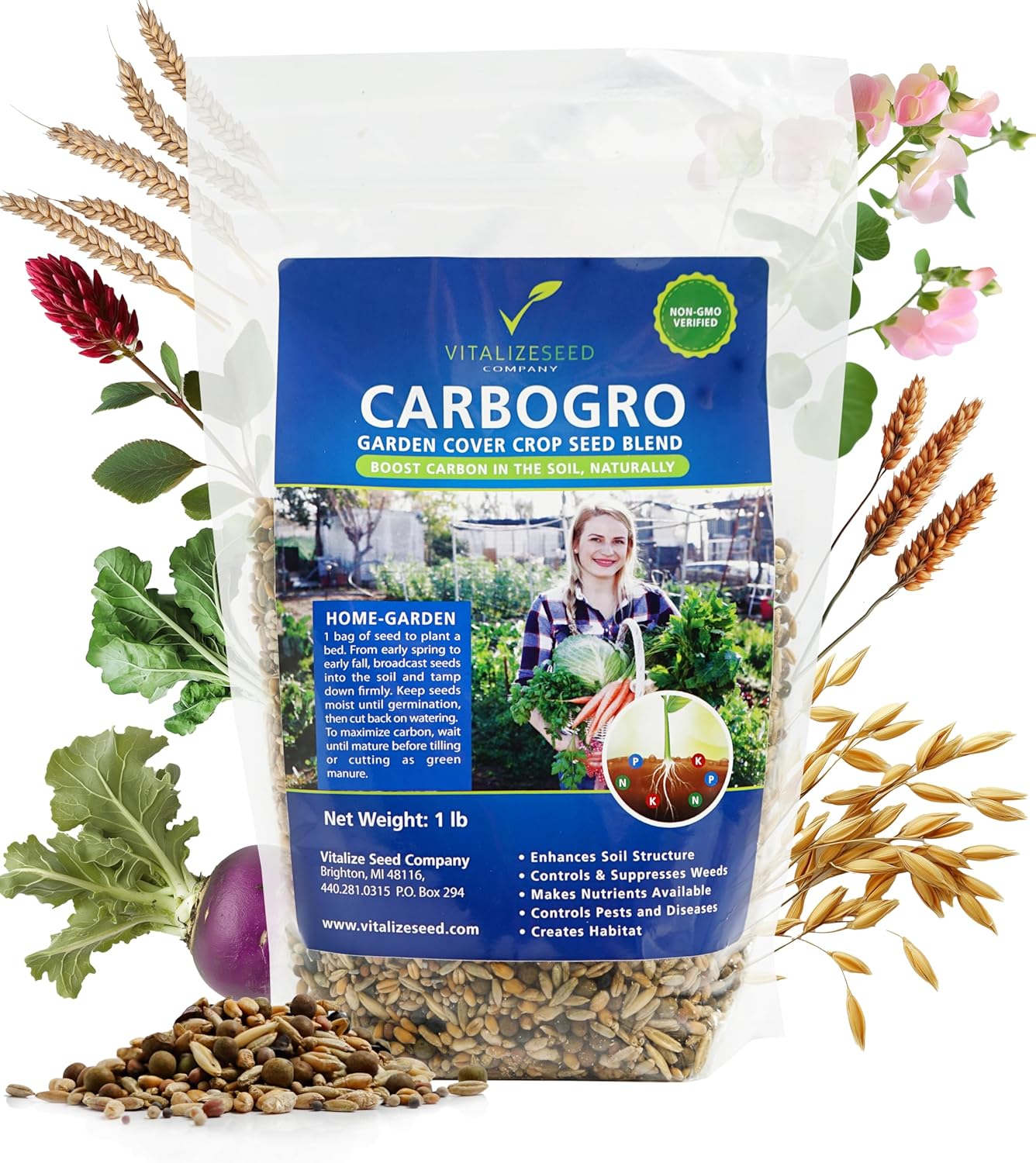
Vitalize Seed Carbogro Fall No-Till 16-Species Cover Crop Mix, 1 lb
| Sunlight Exposure | Full Sun |
|---|---|
| Item Type Name | Seed |
| Unit Count | 16 Ounce |
Carbogro is a premixed cover-crop blend designed for fall planting to establish quickly, survive winter, and produce heavy spring biomass. You sow it as a broadcast or shallowly incorporated stand to create a dense thatch for no-till systems or to grow as green manure for later tilling. The 16-species mix of grains, brassicas, and clovers promotes diverse root structures and flowering that feed microbes, capture leftover nutrients, and help reduce erosion. For gardeners and small farms focused on dependable soil improvement, it simplifies planning because the mix balances scavengers and nitrogen-fixers in one bag. The 1 pound unit is convenient for testing or smaller plots but may require multiple bags for larger areas. It is formulated for full-sun sites and best used in typical fall planting windows; success still depends on timely seeding and local winter severity. If you want a ready-to-use, research-backed option to consistently boost soil health between cash crops, Carbogro performs well when managed as part of a seasonal cover-cropping plan.
Best for: Gardeners and small-scale growers who prioritize a reliable, low-hassle cover crop that improves soil biology and captures nutrients over winter.
Less Ideal for: Large-acreage farmers or anyone needing bulk seed for many acres should consider larger-volume commercial seed options instead.
- Contains 16 species for biological diversity and multifunctional cover cropping
- Balanced mix of grains, brassica, and clovers for nutrient scavenging and nitrogen contribution
- Formulated for fall planting with good winter survival and strong spring biomass
- Versatile for no-till thatch or green-manure incorporation
- Sold as a 1 pound unit which may be insufficient for larger garden or field areas
Verdict: Choose Carbogro when you want a reliable, ready-made fall cover crop blend that builds soil biology and delivers strong spring biomass.
Outsidepride White Dutch Clover Seed, 2 lb

| Indoor Outdoor Usage | Outdoor |
|---|---|
| Other Special Features of the Product | Attracts Pollinators |
| Sunlight Exposure | Full Sun |
| Moisture Needs | Little To No Watering |
| Material Features | Heirloom |
Outsidepride White Dutch Clover is a perennial clover seed sold in a 2 pound bag and treated (nitrocoated and inoculated) to support reliable germination and soil nitrogen fixation. It is typically broadcast or mixed with grass/cover-crop seed, lightly raked in, and kept moist until established; germination is expected within about two weeks under warm soil conditions. Notable features include drought tolerance from a deep root system, attractiveness to pollinators when it blooms in summer, and an ability to form dense ground cover that suppresses weeds and reduces erosion. Practical benefits for full-sun sites include low watering needs once established, weed suppression, improved soil fertility from nitrogen fixation, and a visually pleasing carpet of small white flowers. Important limitations are that it grows low to the ground (a few inches up to a foot) so it is not a turf substitute where heavy foot traffic or formal mowing height is required, and establishing a uniform stand requires correct seeding rate and initial moisture management. This seed is best used for informal lawns, slopes, pollinator strips, and pasture mixes rather than high-traffic ornamental lawns.
Best for: Gardeners and homeowners who want a low-maintenance, pollinator-friendly ground cover or lawn alternative for sunny areas and slopes and who prioritize ecological benefits and ease of establishment.
Less Ideal for: Property owners who need a formal, high-traffic turf or a grass lawn with traditional mowing and wear resistance should consider conventional grass seed blends instead.
- Treated (nitrocoated and inoculated) seed for improved germination and soil health
- Attracts pollinators with fragrant white summer blooms
- Forms dense ground cover that helps suppress weeds and control erosion
- Drought tolerant once established, suitable for low-water sites
- Not suited for heavy foot traffic or formal turf uses
- Requires initial moisture and correct seeding rate for an even stand
Verdict: A quick-establishing, pollinator-friendly ground cover seed that improves soil nitrogen and holds sunny slopes and informal lawns with minimal ongoing watering.
KVITER Royal Carpet Sweet Alyssum Heirloom Flower Seeds (5000 Count)

| Unit Count | 5000 Count |
|---|---|
| Sunlight Exposure | Full Sun |
| Expected Blooming Period | Spring to Fall |
| USDA Hardiness Zone | 1-12 |
| Material Features | GMO Free, Heirloom |
These KVITER sweet alyssum seeds are sold in a 5,000‑count pack and are designed to create dense, low mats of fragrant flowers about 4 inches tall, making them useful for borders, containers, and ground cover. They are heirloom and non‑GMO, and each seed packet includes a step‑by‑step growing guide that helps with surface sowing and moisture management. The plants prefer full to partial sun, moderate watering, and loam soil, and they bloom continuously from late spring through early fall while attracting bees and butterflies. Practical advantages are the very large unit count for covering a wide area, broad hardiness across USDA zones 1–12, and included growing instructions that reduce uncertainty for less experienced gardeners. Expect surface sowing to be necessary since seeds are light dependent for germination, and the plants stay very short so they will not provide height or tall visual structure. If you need rapid vertical impact or a perennial hedge, this is not the right choice. For low, fragrant, pollinator‑friendly ground cover across a wide range of climates, these seeds are a reliable, beginner‑friendly option.
Best for: Buyers who want an easy, low‑maintenance fragrant ground cover for borders, containers, or pollinator beds and who prioritize predictable results and clear planting guidance.
Less Ideal for: Gardeners seeking tall flowering plants, fast vertical impact, or a long‑term perennial structural element should consider different species.
- Very large 5,000 count pack suitable for covering large beds or multiple containers
- Heirloom and non‑GMO seeds with a growing guide included to simplify planting
- Long bloom period from spring through fall that attracts pollinators
- Adaptable across USDA hardiness zones 1–12 for wide climate suitability
- Very low expected height (around 4 inches) so it does not add vertical structure
- Requires surface sowing and consistent light moisture for reliable germination
Verdict: A high‑volume, beginner‑friendly sweet alyssum seed pack that reliably produces fragrant, pollinator‑attracting ground cover across almost any climate.
Choosing the Right Ground Cover to Grow From Seed: Key Factors to Consider
Germination Requirements
Knowing a seed's germination needs changes how you prepare the bed. Some ground-cover seeds need light to germinate and must be broadcast on the surface with only gentle firming, while others require a light raking or shallow covering to maintain moisture. Temperature and seasonal timing matter: many cool-season species germinate best in early spring or fall, while warm-season options prefer warming soil. Proper soil contact and consistent moisture during the first two to three weeks are the biggest determinants of stand success.
Ignoring those specifics often leads to patchy emergence and gives weeds an edge. Plan your sowing to match the seed's natural timing and adjust irrigation to keep the shallow seed zone damp but not waterlogged for reliable results.
Site Light and Soil Compatibility
Different ground covers are adapted to sun, part shade, or full shade and will perform poorly if planted in the wrong exposure. Assess the brightest and shadiest spots where you intend to plant and choose seed suited to that microclimate. Soil texture and drainage also guide selection: sandy soils favor drought-tolerant species, while compacted clay or frequently wet areas call for plants that tolerate heavier soils or occasional saturation.
Amending soil is helpful but rarely necessary for hardy ground covers. Match species to existing conditions whenever possible to reduce establishment failures and ongoing maintenance needs.
Seeding Rate and Seed Mix Purity
Using the correct seeding rate ensures the plants will knit together without wasting seed or inviting thin stands that allow weeds. Too light a sowing can mean months of poor cover and frequent hand-weeding. Conversely, overseeding can create competition and weak seedlings. Seed mix purity matters because mixes containing weed seeds or poorly labeled percentages lead to unpredictable results. Buy seed intended for groundcover use or known species mixes and follow recommended rates for your planting method.
Calibration of spreaders and careful measurement of bed area help translate labeled rates into consistent field results.
Establishment Watering and Weed Management
Newly sown ground cover needs a different watering regime than established plantings. Fine, frequent moisture helps tiny seeds germinate, then gradually reducing frequency encourages deeper rooting. Overwatering can encourage fungal damping-off and weed flushes, while underwatering causes poor germination. Controlling weeds in the first season is crucial because many weeds germinate faster than the ground cover and can quickly dominate if unattended.
Plan short-term hand-weeding or shallow cultivation before seedlings are robust. Mulches can suppress weeds but must be chosen carefully so they do not bury seeds that require light to germinate.
Long-Term Spread and Containment
Some ground covers establish dense mats and remain where you want them, while others spread aggressively by seed or runners. Think about how close plantings are to beds, borders, or natural areas. Aggressive spreaders reduce maintenance in large, open areas but can be a liability near pathways, garden beds, or native habitats. Consider physical barriers, periodic trimming, or choosing less vigorous species when containment matters.
Balancing the desire for rapid, full coverage with control needs prevents future conflicts and preserves neighboring plantings.
Seasonal Behavior and Maintenance Tasks
Ground covers have seasonal growth patterns that affect when you mow, shear, or mow to tidy. Some bloom briefly and then decline, leaving gaps unless cut back or allowed to self-seed. Others stay evergreen or retain enough foliage to suppress weeds year-round. Understanding when the plants will look their best and when they require attention helps set realistic maintenance expectations.
Plan pruning, trimming, or light renovation at the appropriate season to rejuvenate stands without stressing plants during dormancy or peak heat.
Preparing a Seedbed That Works
Good establishment begins with the ground. Remove perennial weeds, loosen the top inch or two of soil, and create a fine, firm seedbed so small seeds have consistent contact with moisture. On larger areas, a light till or rake followed by tamping with a board gives uniform surface conditions.
Check soil pH and correct major deficiencies if necessary, but avoid heavy amendments that create a distinct layer; most ground covers prefer to compete in the existing soil. If erosion is a concern on slopes, use erosion control fabric or temporary mulch until seedlings have anchored the soil.
- Clear perennial weeds and remove debris before sowing
- Create a fine, firm seedbed for good seed-soil contact
- Use erosion control measures on slopes until plants establish
Timing Your Sowing for Best Results
Match sowing time to the species' natural cycle. Cool-season ground covers are usually best sown in early spring or early fall so seedlings avoid midsummer heat. Warm-season species should be sown after the last frost when soils are warming. If you live where winters are mild, fall sowing gives seeds a cold stratification period that can improve germination for some species.
Avoid sowing just before a heat wave or prolonged dry spell unless you can provide consistent irrigation. Short windows of ideal moisture often determine whether a seeding becomes a success or a struggle.
- Early spring and early fall for cool-season species
- Post-frost for warm-season species
- Use fall sowing in mild-winter climates for natural stratification
Establishing Seedlings Without Overwatering
Keep the seed zone evenly moist until seedlings have several true leaves, then transition to deeper, less frequent waterings to encourage root growth. Sprinkler systems or soaker hoses on a short cycle work well for larger patches; hand-watering with a fine spray is better for small beds and containers.
Watch for signs of damping-off in very wet conditions and reduce watering frequency if seedlings appear pale or collapse. As plants thicken, gradually lengthen the interval between irrigations to build drought resilience.
- Use frequent light waterings initially, then switch to deep soakings
- Avoid waterlogging that causes fungal issues
- Gradually reduce irrigation frequency as cover matures
Containment and Transition Strategies
If you need to keep ground cover inside a defined area, install edging or root barriers at installation. For seed-based spreads, plan a transitional buffer zone of mulch, gravel, or low-maintenance edging plants to stop volunteers from entering adjacent beds. Periodic trimming along borders slows encroachment without damaging the main stand.
When replacing turf or establishing a new planting, consider phased seeding so you can manage weeds and maintain access during the establishment period. Phased approaches let you stabilize slopes and pathways first and expand coverage as each section becomes selfsustaining.
- Install physical edging or buffer zones for containment
- Trim borders seasonally to limit spread
- Phase plantings to manage weeds and access
Renovation and Re-seeding Over Time
Ground cover stands sometimes thin with age or after stressful seasons. Spot reseeding thin areas in the next suitable sowing window is often enough to restore density. Light scarification and a thin topdressing of compost can help seed-to-soil contact for follow-up sowings without disturbing the established plants.
If a species tends to decline after flowering, plan an annual maintenance cutback to encourage fresh growth and reduce bare patches. Keep annual renovation minimal for large areas and more frequent for small ornamental patches where appearance matters most.
- Spot reseed thin areas in the next planting window
- Use light scarification for follow-up seedings
- Plan seasonal cutbacks for species that decline after bloom
How We Chose the Best Ground Cover to Grow From Seed
We prioritized traits that matter for gardeners starting ground cover from seed rather than buying plugs or transplants. Primary evaluation criteria included germination reliability under typical home-garden conditions, speed of establishment to outcompete weeds, and adaptability to common light and soil types. We also rated seed mixture uniformity and purity because contaminants or high weed seed counts can ruin a seeding. Long-term maintenance needs were weighed by expected mowing or trimming frequency and propensity to self-seed or spread beyond intended areas. We excluded options that require specialized greenhouse propagation, highly invasive species that risk spreading into wildlands, and varieties that need professional soil amendment or irrigation regimes to survive. The shortlist favors seed mixes and species with straightforward planting windows, clear sowing depths, and documented performance across a range of home-garden sites. Environmental fit and risk of volunteer seedlings were decisive filters in final selection.
FAQ
Can I seed ground cover under existing shrubs and trees?
Often yes, but success depends on light, root competition, and moisture. Under light tree canopies with seasonal sun, choose shade-tolerant species and prepare a shallow seedbed. Heavy root competition or deep shade will reduce germination and establishment, so consider transplanting plugs instead in those situations.
How long does it take for ground cover started from seed to fill in?
It depends on species and conditions, but many cool-season ground covers show good coverage in one growing season if sown at the right time and watered consistently. Some slower species may take two seasons to fully knit together.
Do I need to remove mulch before seeding?
Yes, most mulches should be removed or temporarily thinned because they can block light and reduce seed-soil contact. In some cases a thin layer of fine compost or very light straw encourages moisture retention without burying small seeds.
Can ground cover seeds be sown in containers or planters?
Yes, containers are suitable for many species but require more attentive watering and faster drainage. Use a well-draining, fine-textured mix, sow at the correct depth, and protect seedlings from heat stress and rapid drying.
Will seeding attract more weeds than planting plugs?
Seeding can allow a short window where weeds germinate faster than the desired plants, but correct bed prep, proper seeding rate, and timely shallow cultivation reduce that risk. Plugs have an initial advantage in competition, but well-executed seeding achieves similar outcomes at lower material cost.
Is fall or spring seeding better for most ground covers?
It often depends on species. Cool-season ground covers commonly do best with early fall or early spring sowing, while warm-season varieties are best sown after soil temperatures warm. Local climate and expected rainfall patterns should guide your choice.
Final Verdict
Starting ground cover from seed is an economical strategy that rewards careful site assessment and simple establishment practices. Prioritize species matched to your light and soil, follow germination and seeding-rate guidance, and plan for short-term irrigation and weed control to help seedlings take hold. Balance desired speed of coverage with how much spread you can tolerate. With the right selection and a modest amount of early care, seeded ground covers deliver durable soil protection, weed suppression, and season-long interest without heavy maintenance.
