

Note: This article contains affiliate links. If you click on these links and make a purchase, I may earn a small commission at no extra cost to you. This helps support my research and content. Read my full affiliate disclosure here.
A greenhouse for beginners can extend your growing season, protect young plants from frost, and make propagating seedlings less fussy. For new gardeners the right structure reduces daily babysitting and turns trial-and-error into repeatable results. This guide shortlists the top greenhouse options suited to people just getting started, focusing on ease of assembly, straightforward climate control, and durable materials that tolerate beginner mistakes. Below you will find clear evaluations of assembly, ventilation, and space planning so you can pick a greenhouse that fits your yard and skill level. Read on to see the selections and the practical criteria used to evaluate them.
Top Picks at a Glance
| Best Overall The best all-around choice for most situations | Ohuhu 3-Tier Walk-In Greenhouse with 12 Shelves |  |
| Best Quality Built to a higher standard if you want something more solid | gaildon 10 x 7 ft Heavy-Duty Walk-In Outdoor Greenhouse with Roll-Up Door |  |
| Best Value The sweet spot between price and what you get | Greengro Small Walk‑In Greenhouse with PE Cover and Zippered Door |  |
| Best Budget The cheapest option that still gets the job done reliably | Bamworld 4-Tier Portable Wooden Greenhouse with PE Cover |  |
| Highest Rated A top-rated pick with lots of positive feedback | Velway Walk-In Portable Greenhouse with 12 Shelves |  |
| Most Popular A crowd favorite that many people choose with confidence | Pure Garden 4-Tier Mini Greenhouse with PVC Cover and Locking Wheels |  |
| Best Seller A high-volume bestseller chosen again and again | EAGLE PEAK 8×6 Pop-Up Walk-In Greenhouse |  |
Ohuhu 3-Tier Walk-In Greenhouse with 12 Shelves

| Size | 3 Tier 12 Shelves |
|---|---|
| Cover Material | Green PE |
| Frame Material | Alloy Steel |
| Number Of Vents | 2 |
| Closure Type | Zipper |
This Ohuhu walk-in greenhouse is built to give hobby gardeners a roomy, protected space for seedlings, potted plants, and small vegetable beds. It uses an alloy steel frame and a reinforced PE cover to trap heat and humidity, which helps start seeds earlier in spring and extend harvests into cooler months. The unit assembles with a push-fit system and a zipped roll-up door plus two screened windows for ventilation and pest protection. Inside are 12 metal mesh shelves arranged as three tiers, each rated to support heavier pots, so you can stack trays and containers without crowding the footprint. Practical benefits include year-round shelter from light snow, wind, and frost and easy observation through the screened windows. Important limitations are that the lightweight tent-style design needs to be well-anchored in exposed sites and is not a replacement for a permanent greenhouse in very high winds or severe winters. Expect occasional maintenance of the cover and zippers over multiple seasons, and allow time for careful assembly to get a stable result.
Best for: Gardeners who want a roomy, movable shelter to start seeds earlier, organize many pots, and extend the season without committing to a permanent structure.
Less Ideal for: People needing a permanent, heavy-duty greenhouse for year-round production in exposed or severe winter climates should consider a rigid, insulated structure instead.
- Reinforced PE cover and alloy steel frame provide stable microclimate control for seedlings and small plants
- Twelve metal mesh shelves maximize vertical growing space and support heavier pots
- Roll-up zippered door and two screened windows let you regulate airflow while keeping pests out
- Tool-free push-fit assembly simplifies setup and relocation around the yard
- Tent-style construction requires good anchoring and may struggle in very high winds or heavy snow
- Cover and zipper components will likely require replacement or repairs after extended outdoor use
Verdict: A practical, easy-to-assemble walk-in greenhouse that expands growing capacity and season length for balanced home gardeners.
gaildon 10 x 7 ft Heavy-Duty Walk-In Outdoor Greenhouse with Roll-Up Door

| Cover Material | Polyethylene (PE) |
|---|---|
| Frame Material | Alloy Steel |
| Number Of Vents | 6 |
| Number of Doors | 1 |
| Indoor Outdoor Usage | Outdoor |
This gaildon walk-in greenhouse is a straightforward, no-frills shelter for gardeners who need extra season extension and weather protection. The galvanized alloy steel frame with cross bars and diagonal reinforcements gives it a sturdier footprint than many low-end pop-up covers, and the 140 g/m2 polyethylene grid cover sheds light while protecting plants from frost, wind, and rain. It is set up on the lawn, patio, or backyard and used as a sheltered staging area for potted plants, seedlings and small vegetable rows. Six mesh windows and a roll-up door provide ventilation and make it easy to regulate temperature and humidity on warmer days. Because it is a lightweight framed greenhouse rather than a rigid polycarbonate structure, it is best for protection against seasonal cold and weather rather than permanent heavy snow loads or high-wind exposure. Assembly requires some time and anchoring for stability, and long-term durability will depend on how well it is staked and sheltered from storms. For gardeners wanting an affordable way to increase growing time and protect plants, this model delivers sensible protection with clear practical limits.
Best for: Gardeners who prioritize reliable seasonal protection and inexpensive capacity for pots and seedlings and who want a larger walk-in shelter to extend the growing season.
Less Ideal for: People seeking a permanent, high-wind or snow-load rated greenhouse or those wanting rigid polycarbonate insulation and long-term structural durability.
- Galvanized alloy steel frame with reinforced cross and diagonal bars for improved stability
- 140 g/m2 PE grid cover provides light transmission while protecting plants from frost and rain
- Six ventilated mesh windows and roll-up door allow good airflow control
- Large walk-in interior suitable for multiple pots, seed trays, and small vegetable rows
- Lightweight design is not intended for heavy snow loads or sustained high winds
- Assembly and proper anchoring take time and care to achieve stable installation
Verdict: A cost-effective, reinforced-frame walk-in greenhouse that gives gardeners an easy way to extend the season and protect many potted plants and seedlings.
Greengro Small Walk‑In Greenhouse with PE Cover and Zippered Door
| Cover Material | Polyethylene (PE) |
|---|---|
| Frame Material | Metal |
| Closure Type | Zipper |
| Item Highlight | Small plant greenhouse with screened windows and 3 tiers 4 shelves |
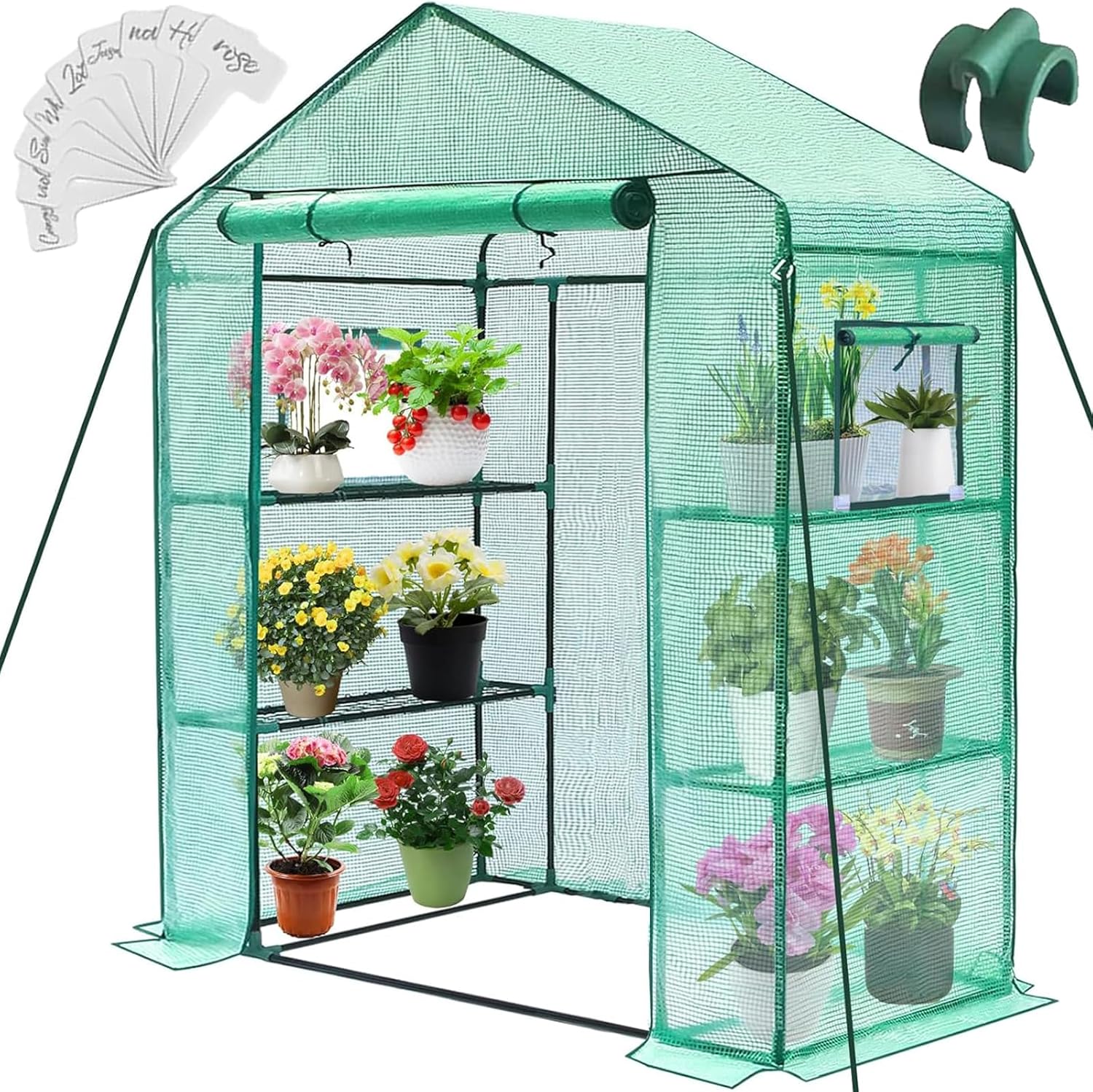
This Greengro small walk‑in greenhouse creates a sheltered microclimate for potted plants, seedlings, and small vegetable or herb batches. It uses a metal frame and a reinforced PE cover to block rain, reduce UV exposure, and moderate temperature and humidity; screened windows and a roll‑up zippered door let you control airflow. The kit includes shelves for organizing up to roughly a dozen pots and comes with ground ropes and stakes to improve stability outdoors. Setup is tool‑free and straightforward, and the lightweight, detachable design makes moving or storing the unit easy. Expect good short‑term shelter from wind and cold, but because the structure is a lightweight portable greenhouse it is best for sheltered patios, decks, or backyard spots rather than exposed high‑wind sites. Also the supplied shelving and connectors are designed for small pots and modest weights, so larger containers or heavy trays will require separate supports or a sturdier greenhouse model.
Best for: Best for gardeners who want a compact, easy‑to‑move greenhouse to extend the growing season for seedlings, herbs, and small potted plants and who prioritize convenience and space efficiency.
Less Ideal for: Not well suited for growers needing a permanent, heavy‑duty greenhouse or for cultivating large containers and heavy benches in exposed, windy sites.
- Thick reinforced PE cover offers waterproofing and UV reduction
- Tool‑free assembly and detachable design for easy setup and relocation
- Screened windows and zippered door provide ventilation control and easy access
- Includes shelving and accessories to organize multiple small pots
- Ground ropes and stakes increase stability in typical backyard conditions
- Lightweight portable frame limits suitability in very exposed, high‑wind locations
- Shelves and frame support modest loads and are not meant for large heavy pots
Verdict: A convenient, compact walk‑in greenhouse that lets practical gardeners extend the season and organize multiple small pots with easy setup and portability.
Bamworld 4-Tier Portable Wooden Greenhouse with PE Cover

| Indoor Outdoor Usage | Outdoor |
|---|---|
| Cover Material | Polyethylene (PE) |
| Frame Material | Wood |
| Size | 4 Tier Single Layer Roof |
This Bamworld 4-tier portable greenhouse is a simple outdoor shelter for seed starting, overwintering small potted plants, and protecting herbs from light frost. The kit assembles into a tall, narrow frame with four shelf levels and a zip-up roll door; the wooden frame gives a natural look while the PE cover protects against wind and light moisture. Included hardware and a small plastic hammer make setup straightforward for one person, and the vertical footprint fits narrow patios, balconies, or tight garden corners. Performance is best for seedlings and small pots rather than large planters because of the slim shelf spacing. The wooden frame is attractive but will need periodic care if it stays outdoors long term, and the single-layer PE cover provides basic weather protection rather than heavy-duty insulation. For gardeners on a budget who need a compact, easy-to-install plant shelter, this greenhouse delivers usable protection and storage without a large footprint, though it is not intended as a permanent, heavy-weather structure.
Best for: Gardeners looking for an inexpensive, space-saving outdoor shelter to start seeds, protect herbs, or overwinter small potted plants who prioritize affordability and easy setup.
Less Ideal for: People who need a heavy-duty or permanently sited greenhouse for large plants, year-round insulation, or exposure to strong wind and heavy snow should consider sturdier alternatives.
- Compact vertical footprint fits narrow patios and balconies
- Simple assembly with included hardware and plastic hammer
- Roll-up zipper door allows easy access and ventilation control
- Wooden frame offers an attractive, natural look
- Single-layer PE cover offers limited insulation and durability in severe weather
- Shelf spacing and size limit use to seedlings and small pots
Verdict: A budget-friendly, narrow-profile greenhouse that gives affordable, easy-to-install protection for seedlings and small potted plants.
Velway Walk-In Portable Greenhouse with 12 Shelves

| Cover Material | Polyethylene (PE) |
|---|---|
| Frame Material | Alloy Steel |
| Number of Doors | 1 |
| Number Of Vents | 1 |
| Indoor Outdoor Usage | Indoor, Outdoor |
This Velway walk-in greenhouse is built to give reliable, no-fuss plant protection for small backyard gardens. It assembles without tools using snap connectors and a zip-on 130g PE mesh cover, and the electro-coated iron frame helps resist rust for season-to-season use. The unit is large enough to step inside for watering and pruning while the 12 mesh shelves organize pots, trays, and tools; each shelf is rated to hold about 22 lb so it supports typical seedling flats and medium pots. Ventilation is practical: two mesh side windows plus a roll-up zippered door let you create crossflow on warm days to avoid overheating. Anchoring options include four wind ropes, four stakes, and a 4-inch skirt you can weigh down, which helps keep the structure steady in gusts. Expect straightforward benefits for extending the growing season and protecting tender plants from light frost. Important limitations are that the PE cover and plastic connectors are best for moderate weather and the shelter should be taken down or extra-anchored for heavy snow or very strong winds.
Best for: Gardeners who prioritize a dependable, low-maintenance shelter for starting seedlings and protecting small plants through spring and fall, and who want something that stands up to regular outdoor use.
Less Ideal for: Those needing a heavy-duty, permanent greenhouse for year-round use in harsh winter climates or for large plants that require rigid, load-bearing structures.
- Tool-less click-together assembly with zip-on cover for fast setup
- Electro-coated iron frame resists rust for longer outdoor life
- Twelve mesh shelves provide organized storage and each supports up to 22 lb
- Mesh cover with UV protection and roll-up door plus two vents for good airflow
- Includes wind ropes, stakes, and a weigh-down skirt for improved anchoring
- PE mesh cover and plastic connectors are not intended for heavy snow loads or prolonged severe weather
- Relatively lightweight overall so it still needs extra anchoring on exposed sites
Verdict: Choose this greenhouse if you want an easy-to-assemble, rust-resistant walk-in shelter that reliably extends the growing season for seedlings and small container plants.
Pure Garden 4-Tier Mini Greenhouse with PVC Cover and Locking Wheels

| Number of Doors | 2 |
|---|---|
| Closure Type | Zipper |
| Weight Capacity | Maximum weight: 24 pounds |
| Cover Material | Polyvinyl Chloride (PVC) |
| Frame Material | Alloy Steel |
This Pure Garden 4-tier mini greenhouse provides an inexpensive, space-saving way to start seeds and shelter small plants. It assembles without tools and uses an alloy steel frame with a clear PVC cover and two roll-up zippered doors to trap warmth and shield seedlings from light frosts and pests. Each of the four shelves is rated to hold up to 24 pounds, so it will accommodate flats, multiple small pots, or lightweight planters. Locking caster wheels let you move the unit to a sunny spot or lock it in place, and they can be removed for a fixed setup outdoors. Practical limitations include a lightweight PVC cover that will need careful anchoring in wind and will not insulate as well as rigid greenhouse panels, and the frame and cover are best suited to small-scale gardening rather than heavy pots or large vegetables. For gardeners who want a compact, movable greenhouse to extend the season or organize seedlings, this is a useful budget option; expect to secure it and monitor ventilation and wear over time.
Best for: Gardeners who want an affordable, space-efficient way to start seeds, protect seedlings from light frost, and move plants between indoor and outdoor spots without heavy equipment.
Less Ideal for: Growers who need a permanent, heavy-duty greenhouse for large plants, year-round insulation, or exposure to strong winds should consider sturdier alternatives.
- Compact four-tier shelving maximizes vertical space for seedlings and small plants.
- Each shelf supports up to 24 pounds, allowing multiple flats or light planters per tier.
- Clear PVC cover with zippered roll-up doors creates a sheltered, warmer microclimate for extending the growing season.
- Locking caster wheels provide easy mobility and can be removed for a permanent outdoor setup.
- PVC cover is lightweight and less durable than rigid panel greenhouses, requiring care and occasional replacement.
- Not designed for heavy pots or large plants despite the per-shelf weight rating.
Verdict: A portable, budget-friendly mini greenhouse that efficiently extends the seed-starting season while offering easy mobility and simple protection for small plants.
EAGLE PEAK 8×6 Pop-Up Walk-In Greenhouse

| Size | 8×6 |
|---|---|
| Cover Material | Polyethylene (PE) |
| Frame Material | Alloy Steel |
| Number of Doors | 2 |
| Number Of Vents | 2 |
The EAGLE PEAK 8×6 pop-up greenhouse is a walk-in shelter built to make season extension and seed starting easier for home gardeners. The pre-assembled alloy steel frame uses a patented center lock so one person can raise the structure quickly with no tools, and the polyethylene cover is UV- and water-resistant to trap warmth and humidity for frost protection. Two roll-up zippered doors and mesh windows let you vent on warm days while keeping out small animals, and included stakes and guy ropes help secure the structure in light to moderate wind. Because the frame is heavier than many pop-up models, it feels more stable and durable, but it is still a lightweight temporary shelter that will need snow clearing and extra anchoring in strong storms. Practical buyers will appreciate the walk-in space for tending plants and the availability of replacement covers and shelves, while those expecting a permanent, heavy-duty greenhouse should consider a rigid-frame alternative.
Best for: Gardeners who want a straightforward, low-hassle way to start seeds and extend the growing season with a pop-up walk-in greenhouse they can install alone and monitor seasonally.
Less Ideal for: People seeking a permanent, heavy-load greenhouse for heavy snow zones or year-round structural performance should opt for a rigid-frame greenhouse instead.
- One-person patented center lock enables fast, tool-free setup
- Alloy steel reinforced frame offers greater stability than typical pop-up tents
- UV- and water-resistant PE cover helps retain heat and protect plants from light frost
- Roll-up zippered doors and mesh windows provide adjustable ventilation and pest protection
- Not intended as a permanent structure and requires clearing or reinforcement for heavy snow or high winds
- Replacement or heavier anchoring accessories may be needed for very exposed sites
Verdict: A sturdy, easy one-person pop-up greenhouse that delivers reliable seasonal protection and simple setup for cautious home gardeners.
Choosing the Right Greenhouse for Beginners: Key Factors to Consider
Assembly Ease
Beginner-friendly assembly reduces frustration and the chance of errors that shorten a greenhouse's life. Look for kits with labeled parts, clear step-by-step guides, and minimal specialized tools. Simpler connections and pre-drilled holes make alignment easier and speed the build process.
Kits that break into manageable subassemblies let one or two people work without a ladder crew. Consider realistic setup time and whether the manufacturer provides support resources like video guides. If the structure requires concrete footings or complex anchors, factor in whether you are ready to add that site work or need a simpler freestanding option.
Ventilation and Temperature Control
Controlling heat and humidity is the core of successful greenhouse growing. Passive ventilation options such as roof vents, louvered side vents, or screened openings reduce overheating without electronics. A structure that accepts simple add-ons like automatic vent openers or small exhaust fans gives room to upgrade as your skills grow.
Even distribution of air and shade options matter for seed trays and young plants. Consider how easy it is to add shading cloth, install a thermostat-controlled fan, or set up evaporative cooling. Proper ventilation lowers disease risk and prevents heat stress during sunny days.
Frame and Panel Durability
Materials need to stand up to wind, hail risk, and repeated handling during maintenance. Aluminum and galvanized steel frames resist rust, while stronger plastics and polycarbonate panels resist impact and offer decent insulation. Thin polyethylene films are affordable but may need seasonal replacement, which is worth knowing before deciding.
Durable connections and corrosion-resistant hardware keep the structure aligned and leak-free. For beginners, forgiving materials that tolerate small installation mistakes are better than fragile components that require precise handling.
Interior Usable Space
A greenhouse's listed square footage does not always translate into usable growing area. Consider bench height, headroom, and any built-in shelving compatibility. Tall, narrow frames can be harder to work in than a lower-profile structure with wide benches.
Think about how you will organize seed trays, potting benches, and storage. Allow space for airflow around plants and for you to move comfortably while tending seedlings. Flexible interiors that accept modular shelving or folding benches let you adapt the space as your needs change.
Maintenance Simplicity
Routine tasks like cleaning panels, repairing tears, and replacing seals should be straightforward. Choose materials and finishes that are easy to wipe down and that resist algae or mildew buildup. Access to spare parts and simple replacement panels helps avoid costly downtime when something breaks.
Also consider winterizing steps if you expect snow or freeze events. Structures that allow quick reinforcement and easy removal of vulnerable coverings make seasonal maintenance less of a burden for new growers.
Sizing Your Greenhouse to Space and Goals
Match the greenhouse footprint to what you plan to grow and where it will sit. A compact structure can handle seed starting and a few overwintered plants on a patio. If you hope to produce transplants for several beds, choose a larger footprint that accommodates benches and circulation paths.
Measure the installation site for sunlight exposure and access. Locate the structure where it receives steady morning light and avoid deep shade from buildings or trees. Also plan for access pathways so you can bring soil, pots, and trays in and out without squeezing past the frame.
- Allow space for opening doors and vents without blocking benches
- Check local wind and snow loads before choosing a lightweight option
- Consider proximity to a water source for potting and irrigation
Placement and Foundation Options
Foundation choices affect stability and drainage. Simple gravel pads or pavers work for small, temporary greenhouses and keep the floor dry. Permanent installations may benefit from a compacted base of crushed stone or a perimeter foundation to anchor the frame.
Ensure the site is level to avoid twisted frames and misaligned panels. Good drainage prevents standing water around the greenhouse perimeter and reduces corrosion or rot risks. If local codes require anchoring, choose an option that balances permanence and portability.
- Use a level during installation to align all corners
- Add a slight grade or internal drainage channels to move water away
- Verify any neighborhood or HOA rules on outbuildings before installing
Simple Climate Upgrades That Make a Big Difference
Small, inexpensive upgrades can stabilize temperatures and reduce day-to-day chores. Automatic vent openers expand passive control by opening vents as temperatures rise and closing them as it cools. Shade cloth and reflective coatings help prevent heat spikes during hot spells.
Consider a compact fan for moving air on still days and a basic thermostat to automate it. Thermometers and a simple hygrometer are cheap monitoring tools that provide valuable feedback, helping you learn how your greenhouse responds to weather changes.
- Automatic vent openers require no electricity and are easy to install
- Removable shade cloth lets you fine-tune light without permanent changes
- Battery-powered thermostats and timers keep systems simple for beginners
Seasonal Care and Winter Considerations
Plan for seasonal shifts before you buy. Lightweight plastic coverings can perform well in spring and fall but may need reinforcement for snow loads. In colder climates, focus on insulation qualities like double-wall panels or the ability to add thermal mass inside.
Protect vents and hardware from ice and check seals in late fall. If heavy snow is typical, choose a greenhouse with a steep roof pitch that sheds snow rather than a flat top that collects weight. Seasonal maintenance, like clearing snow and checking anchors, is easier when the structure is accessible and modular.
- Remove heavy snow promptly to avoid panel damage
- Store removable covers in a dry place to extend life
- Add thermal mass such as water barrels to moderate night temperatures
Organization and Workflow Inside the Greenhouse
Design the layout around tasks. Place potting and staging benches near the entrance, seed starting on racks with good light access, and larger staging areas to the back. A well-planned workflow reduces trips in and out and keeps potting messes contained.
Use vertical shelving and stacking trays to maximize surface area. Mobile benches and fold-down worktops add flexibility when you need more floor space for large pots or staging.
- Keep frequently used tools on small wall hooks near the door
- Label shelves and trays to track sowing dates and varieties
- Reserve a small area for soil and compost storage to minimize mess
How We Chose the Best Greenhouse for Beginners
We focused on features that matter most when learning greenhouse growing. Primary evaluation criteria included assembly complexity, material durability, ventilation and temperature control, and usable interior layout. We ranked products that minimize tricky tools or advanced skills during setup, and we favored structures with clear instructions and modular parts that newcomers can handle without specialized equipment. Climate control was judged by how easy it is to ventilate and moderate temperature with passive features or simple add-ons. Durability considered frame strength, panel resistance to accidental impact, and corrosion or rot resistance for long-term use. Usable interior layout examined shelf compatibility, benching options, and how well the footprint supports common beginner tasks like seed starting and transplanting. We excluded temporary or novelty structures that lack basic ventilation or sturdy frames. Very large, professional-grade greenhouses were also left out because they require advanced site prep and systems beyond typical beginner needs. The final list prioritizes straightforward setup, forgiving materials, and flexible interior space that make learning greenhouse growing less frustrating.
FAQ
How much sunlight does a beginner greenhouse need?
Most greenhouses perform best with several hours of direct morning sun and bright indirect light the rest of the day. Avoid deep shade from trees or buildings. If sunlight is limited, use supplemental grow lights for seedlings.
Can I install a greenhouse myself?
Many small to mid-size greenhouses are designed for DIY assembly and come with instructions and labeled parts. You should be comfortable using basic hand tools and following diagrams. Larger structures or those requiring concrete footings may need professional help.
What ventilation is enough for a beginner greenhouse?
A combination of roof vents, side vents, or adjustable doors usually provides adequate ventilation. Automatic vent openers or a small fan are helpful additions to prevent overheating on sunny days. Proper airflow also reduces disease pressure.
How should I winterize a beginner greenhouse?
Start by sealing drafts, checking anchors, and removing fragile plastic covers if heavy snow is expected. Add insulation where practical, such as bubble wrap on panels or water barrels to provide thermal mass. Regularly clear snow from the roof to avoid overload.
Do greenhouses need electricity?
Electricity is not strictly required but makes climate control easier. Many beginners start with passive systems and add small solar or mains-powered fans, lights, or heaters as needed. Battery-powered or solar devices can provide simple automation without complex wiring.
Final Verdict
Choose a greenhouse that balances easy setup with the climate control features you will actually use. Prioritize assembly simplicity and ventilation first, then evaluate frame durability and usable interior layout so your daily workflow is comfortable. Expect tradeoffs: lighter, easier builds are more affordable and portable but may require seasonal maintenance; sturdier options last longer but need more site preparation. For beginners, pick the simplest structure that meets your space and light needs and that leaves room to add small upgrades like automatic vents or a fan. That approach keeps startup hassles low while giving you a reliable learning platform to improve your growing skills.
