

Note: This article contains affiliate links. If you click on these links and make a purchase, I may earn a small commission at no extra cost to you. This helps support my research and content. Read my full affiliate disclosure here.
If you garden where temperatures dip below freezing, the right greenhouse makes winter growing possible instead of merely hopeful. A greenhouse for cold weather needs to hold heat, shed snow, and survive gusty conditions while still letting you manage ventilation and humidity for overwintering plants. This guide covers our shortlisted top picks suited to cold climates and explains the practical differences that matter in a real garden. We evaluated candidates for how well they retain warmth, handle snow and wind, and how usable they are for everyday tasks. Read on for the features and tradeoffs that will determine which cold-weather greenhouse fits your plot and growing plans.
Top Picks at a Glance
| Best Overall The best all-around choice for most situations | EAGLE PEAK 12×8 Pop-Up Walk-In Greenhouse |  |
| Best Quality Built to a higher standard if you want something more solid | IDEALHOUSE 6×8 ft Walk-In Greenhouse with Polycarbonate Panels and Aluminum Frame |  |
| Best Value The sweet spot between price and what you get | Greengro Small Walk-In Greenhouse with PE Cover and Zippered Door |  |
| Highest Rated A top-rated pick with lots of positive feedback | GRAFFY Wooden Cold Frame Greenhouse with 3 Adjustable Shelves |  |
| Most Popular A crowd favorite that many people choose with confidence | EAGLE PEAK 8×6 Pop-Up Walk-In Greenhouse |  |
| Best Seller A high-volume bestseller chosen again and again | EAGLE PEAK 12×8 Pop-Up Walk-In Greenhouse with PeakPush Center Lock |  |
EAGLE PEAK 12×8 Pop-Up Walk-In Greenhouse

| Size | 12×8 |
|---|---|
| Cover Material | Polyethylene (PE) |
| Frame Material | Metal |
| Indoor Outdoor Usage | Outdoor |
The EAGLE PEAK 12×8 pop-up walk-in greenhouse is built to give backyard gardeners a quick, roomy shelter for extending the growing season into cold weather. The preassembled steel frame uses a patented PeakPush center lock so one person can stand the structure up without tools, and the included winter support pole plus guy ropes and stakes improve stability in wind and snow. The PE cover is water-resistant and UV-treated with reinforced corners to retain humidity while filtering light, and roll-up zippered doors with mesh windows let you tune ventilation to prevent overheating on sunny days. With 96 square feet of floor space and six-foot walls there is room for shelving or benches for seed-starting and overwintering tender plants. Expect a polyethylene cover to age faster than rigid glazing in very long-term sun exposure and heavier snow loads may require extra bracing or snow removal. For routine cold-season protection and flexible, easy setup, this greenhouse is a practical choice for hobby gardeners.
Best for: Gardeners who want a spacious, easy-to-assemble greenhouse for seasonal cold-weather protection and who value quick setup and flexible use over permanent glazing solutions.
Less Ideal for: Those seeking a permanent, heavy-duty glazed greenhouse for heavy snow loads or long-term year-round commercial use should consider framed polycarbonate or glass structures instead.
- One-person, tool-free pop-up setup with patented center lock for fast assembly
- Heavy duty powder-coated steel frame with winter support pole and guy ropes for improved stability
- PE cover is plant-safe, water-resistant and UV-resistant with reinforced corners
- Large interior (96 sq ft, 6 ft walls) that accommodates shelves and potting work
- Zippered roll-up door and mesh windows provide easy ventilation control
- Polyethylene cover is less durable long-term than glass or polycarbonate and may need replacement after prolonged UV exposure
- Pop-up design may need additional bracing or active snow removal in heavy snowfall regions
Verdict: If you want an easy, one-person setup greenhouse that provides roomy, winter-ready protection for hobby gardening, this 12×8 pop-up model delivers practical seasonal performance.
IDEALHOUSE 6×8 ft Walk-In Greenhouse with Polycarbonate Panels and Aluminum Frame

| Size | 6×8 FT |
|---|---|
| Cover Material | Polycarbonate (PC) |
| Frame Material | Aluminum Steel |
| Number Of Vents | 1 |
| Indoor Outdoor Usage | Outdoor |
This IDEALHOUSE 6×8 walk-in greenhouse is designed for gardeners who want a durable, easy-to-assemble sheltered growing space. It uses reinforced 720 g/m² polycarbonate panels that transmit light while blocking most UV and slide into an aluminum-steel frame with a slide-in assembly system that speeds setup. The greenhouse includes a roof vent and adjustable ventilation to help control temperature and airflow, plus a gutter-style water management feature for rainwater collection. In practice the structure provides a roomy footprint for seed-starting, overwintering tender plants, or extending the growing season for vegetables and ornamentals. Expect relatively straightforward assembly if you follow the instructions, but plan to handle heavy components carefully and allow for two shipments. The main limitations are the single roof vent for airflow control and the need to anchor the unit properly in exposed sites; the frame and panels are sturdy for typical garden conditions but may require additional bracing in high-wind locations.
Best for: Serious hobby gardeners who prioritize a robust, season-extension structure and want a relatively fast-build walk-in greenhouse for regular cultivation and overwintering of plants.
Less Ideal for: People needing a lightweight, ultra-portable tunnel-style greenhouse for quick seasonal use or gardeners in very windy coastal sites without plans to add extra anchoring or bracing.
- Reinforced 720 g/m² polycarbonate panels provide strong light transmission while blocking most UV
- Aluminum-steel frame offers solid structural support for outdoor use
- Slide-in panel assembly and clear instructions speed setup compared with conventional builds
- Integrated gutter system enables simple rainwater drainage and collection
- Top roof vent and adjustable ventilation help regulate internal temperature
- Only one roof vent limits fine-grained airflow control for larger heat loads
- Heavy components and sharp edges require careful handling during assembly
Verdict: A sturdily built, performance-focused 6×8 walk-in greenhouse that speeds assembly while providing durable protection for season-extension and overwintering.
Greengro Small Walk-In Greenhouse with PE Cover and Zippered Door
| Cover Material | Polyethylene (PE) |
|---|---|
| Frame Material | Metal |
| Closure Type | Zipper |
| Nominal Wall Thickness | 16 millimeters |
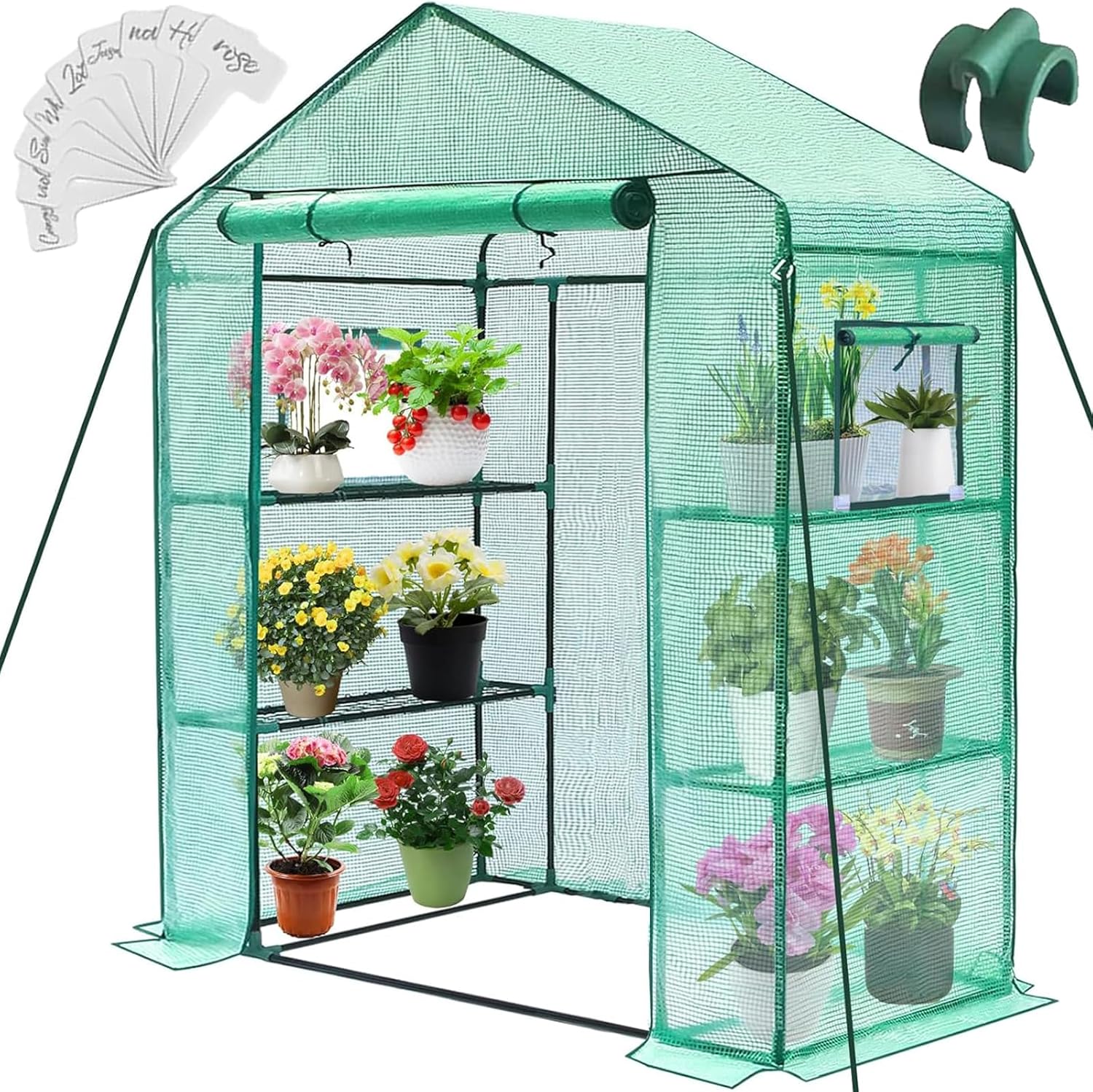
This Greengro small walk-in greenhouse creates a sheltered microclimate for potted plants, seedlings and herbs by combining a metal framework with a thick PE cover and zippered access. It is typically used on a patio, balcony or in a backyard to extend the growing season, shield plants from wind and rain, and keep pests out. Notable features include screened ventilation windows, a roll-up zippered door, four internal shelves for staging pots, and guy ropes with ground stakes for added stability. Practical benefits are straightforward setup without tools, portability for repositioning, and weather-resistant protection that lets you start seeds earlier or overwinter tender plants. Important limitations are its small footprint and modest shelf weight capacity, so it is best for small to medium pots rather than heavy planters, and the lightweight frame and cover remain less durable than rigid greenhouse structures in long-term, high-wind exposure.
Best for: Buyers who want an efficient, moveable solution to protect and organize several small to medium potted plants and seedlings without investing in a permanent structure.
Less Ideal for: Gardeners who need a long-term, heavy-duty greenhouse for large pots, full-size vegetables, or locations regularly exposed to very strong winds should consider sturdier, permanent options.
- Thick polyethylene cover with reinforced edging offers waterproofing and UV reduction
- Zippered roll-up door and screened windows provide ventilation and easy access
- Tool-free assembly and detachable design for quick setup and relocation
- Integrated shelves create organized vertical growing space for multiple pots
- Small size limits capacity to small and medium pots and seed trays
- Lightweight frame and cover are not as long-lasting as permanent rigid greenhouses
Verdict: A compact, easy-to-assemble micro greenhouse that protects and organizes small to medium potted plants while staying portable and budget friendly.
GRAFFY Wooden Cold Frame Greenhouse with 3 Adjustable Shelves

| Cover Material | Polycarbonate (PC) |
|---|---|
| Frame Material | Wood |
| Number of Doors | 4 |
| Weight Capacity | Minimum weight: 33 pounds |
This compact cold frame greenhouse shelters seedlings and small potted plants while improving light transmission and heat retention with translucent polycarbonate panels. Built from a solid natural fir frame, it assembles quickly and can be moved easily to protect plants from frost, wind, and unpredictable cold snaps. The three removable, adjustable shelves let you organize plants by height and maximize growing space in a tight footprint, and the flip‑top and hinged doors provide straightforward access and ventilation control. Practical touches include an angled roof for drainage and built‑in side supports for propping doors open to prevent overheating on sunny days. Expect sturdy everyday protection rather than heavy commercial insulation; the wood frame and polycarbonate work well for extending the season and overwintering tender plants but will not match a heated greenhouse for deep‑winter propagation. For colder climates plan to site it against a south-facing wall or add passive insulation on extreme nights.
Best for: Gardeners who need a reliable, low‑maintenance cold frame to extend the growing season and protect seedlings or potted plants through typical cold weather.
Less Ideal for: Growers who require a fully heated or commercial‑scale greenhouse for year‑round production in severe winter conditions should consider larger, insulated alternatives.
- Translucent polycarbonate panels improve light transmission and help retain heat compared with clear plastic
- Solid natural fir wood frame offers durable, repairable construction
- Three adjustable removable shelves maximize usable planting area in a small footprint
- Flip‑top roof and hinged doors allow easy access and adjustable ventilation
- Angled roof provides efficient rain drainage to protect the structure
- Not designed as a heated greenhouse so it offers limited protection during extreme cold
- Wood frame will require periodic maintenance if exposed to wet conditions long term
Verdict: A sturdy small cold frame that reliably extends the season and protects plants from typical cold weather while fitting into limited outdoor spaces.
EAGLE PEAK 8×6 Pop-Up Walk-In Greenhouse

| Size | 8×6 |
|---|---|
| Cover Material | Polyethylene (PE) |
| Frame Material | Alloy Steel |
| Number of Doors | 1 |
| Number Of Vents | 2 |
The EAGLE PEAK 8×6 pop-up greenhouse is a walk-in shelter aimed at extending the growing season and protecting plants from frost and light weather. Its preassembled alloy-steel frame uses extra steel reinforcement and a patented PeakPush center lock so one person can set it up quickly without tools. The PE cover is water-resistant and UV-filtering to help retain warmth and humidity, while the roll-up zippered door and mesh vents let you manage airflow and pest access. It includes stakes and guy ropes for added stability and a ground skirt you can weight down for windy conditions. Practical benefits include ample interior space for shelving or multiple pots, straightforward seasonal use for seed starting or fall protection, and replaceable covers or frames if components wear. Important limitations are that pop-up greenhouses are not engineered for heavy snow loads or sustained high winds so you will need to clear snow and add extra anchoring or weights during storms, and the PE cover will age faster than rigid glazing in strong sun over many seasons.
Best for: Gardeners who want an easy-to-assemble, walk-in greenhouse to start seeds, protect pots, and extend the growing season with minimal setup time and hands-on maintenance.
Less Ideal for: People needing a permanent, year-round structure for heavy snow loads or high-wind exposed sites should choose a rigid-glazed or anchored greenhouse instead.
- One-person, tool-free setup with patented center lock for fast assembly.
- Sturdy alloy-steel frame reinforced for better stability than typical pop-ups.
- Water-resistant, UV-filtering PE cover that traps warmth for season extension.
- Zippered roll-up door and mesh vents for adjustable ventilation and pest control.
- Not built to withstand heavy snow or severe winds without additional reinforcement.
- PE cover will wear faster than rigid glazing and may need replacement after prolonged sun exposure.
Verdict: Buy this if you want a roomy, one-person pop-up greenhouse that balances easy setup with a stronger steel frame for reliable seasonal protection.
EAGLE PEAK 12×8 Pop-Up Walk-In Greenhouse with PeakPush Center Lock

| Size | 12×8 |
|---|---|
| Cover Material | Reinforced Polyethlene Film |
| Frame Material | Alloy Steel |
| Number of Doors | 2 |
| Number Of Vents | 2 |
The EAGLE PEAK 12×8 pop-up greenhouse is a walk-in shelter designed to extend the growing season, start seeds, and protect plants from frost while still being simple to deploy. Its preassembled alloy-steel frame uses a patented PeakPush center lock so one person can raise the structure quickly without tools. The reinforced polyethylene cover is UV-treated and water-resistant to trap humidity and filter sunlight through cooler months. Two zippered roll-up doors and mesh windows provide ventilation and pest protection, and the kit includes stakes, guy ropes, and a winter support pole for added stability. In practice the greenhouse gives roomy access for tending plants and can accept shelving to organize pots. Limitations are typical for pop-up designs: it needs monitoring in heavy snow or high winds and benefits from extra anchoring or weights for severe weather. The heavier steel frame and included support pole make it more robust than many pop-ups, but it is still best for seasonal protection rather than permanent use.
Best for: Buyers who want a roomy, easy-to-assemble greenhouse to extend the growing season and prioritize fast single-person setup and seasonal performance.
Less Ideal for: Those seeking a permanent, heavy-duty greenhouse for extreme winter conditions or long-term year-round installation should consider rigid-frame polycarbonate or wood models instead.
- One-person, tool-free PeakPush center lock for very fast setup
- Reinforced UV-treated PE cover that retains humidity and resists water
- Alloy steel frame with powder-coated finish for stronger seasonal durability
- Zippered roll-up doors and mesh windows for easy ventilation and pest control
- Not designed to withstand heavy snow or sustained high winds without added reinforcement or snow clearing
- Pop-up construction is less suitable as a permanent, year-round structure
Verdict: Choose this greenhouse if you want a spacious, one-person pop-up that balances quick setup with a stronger-than-average steel frame for reliable seasonal protection.
Choosing the Right Greenhouse for Cold Weather: Key Factors to Consider
Thermal Insulation and Glazing
How a greenhouse retains heat is the single biggest determinant of winter success. Multiwall polycarbonate and insulated glass reduce radiant and convective heat loss compared with single-layer film. The number of glazing layers, the presence of air gaps, and the material R-value control how much supplemental heat you must supply during cold snaps.
Thermal breaks in the frame and airtight door seals also matter because metal frames can funnel heat out quickly. Consider how insulation choices affect light diffusion too; some insulating materials soften harsh sun while others reduce available light for plants during short winter days.
Structural Strength and Snow Load Capacity
Snow accumulation can quickly overload an undersized greenhouse. Frame geometry, member thickness, and anchoring determine how much weight a structure can support without deforming. Look for pitched roofs that encourage shedding and frames rated for local snow loads whenever possible.
Wind matters as much as snow. A greenhouse that tips or loses panels in high winds will expose plants to freezing conditions and require repairs. Proper ground anchoring and a continuous base or foundation reduce uplift and shifting during storms.
Ventilation and Humidity Management
Cold-weather greenhouses still need controlled ventilation to prevent condensation, fungal disease, and stagnant air. Roof vents, louvre windows, and the ability to add powered fans give you flexible ways to exchange air without letting in uncontrolled cold drafts.
Humid conditions can accelerate heat loss via wet surfaces and encourage plant disease. Materials and design that minimize cold bridging and allow for dehumidification or controlled air exchange make it easier to keep overwintering plants healthy.
Heating Options and Integration
Supplemental heat is often necessary to protect tender crops in very cold climates. Some greenhouses accommodate electric or propane heaters, radiant cables, or passive solar enhancements like thermal mass benches and insulated staging. Evaluate how easy it is to route power, vent combustion appliances safely if used, and protect heat sources from moisture.
Heating controls and thermostats that work with the structure help avoid overheating on sunny winter days while ensuring temperatures do not dip to harmful levels at night. The ease of adding insulation or temporary thermal curtains is also important for flexible winter management.
Access, Layout, and Day-to-Day Usability
A winter greenhouse is only useful if you can work in it. Door size and placement, internal benching, and the ability to move pots and equipment in and out in cold conditions all affect usability. Consider the ease of snow clearing around access points and whether doors can be propped open safely for ventilation without letting in excessive cold.
Storage for potting supplies, integrated shelving, and the ability to reconfigure the interior for different crops across seasons make the structure more useful year-round. Maintenance considerations like replaceable panels and accessible fasteners reduce the effort of keeping the greenhouse winter-ready.
Sizing for Cold-Climate Performance
Bigger is often warmer on a per-plant basis because larger internal volume reduces temperature swings, but a larger greenhouse requires more heating and careful air circulation. Match greenhouse footprint to the number of overwintering plants and the heating capacity you plan to use.
Consider headroom too. Taller structures allow heat to stratify above plant canopy, which can be helpful if you combine supplemental heat with ventilation to keep the canopy at a safe temperature while excess heat rises away from plants.
- Small hobby greenhouses are economical but can have large temperature fluctuations.
- Medium and large structures provide more staging area and thermal mass options.
- Higher eaves improve space for hanging heaters and taller crops.
Glazing Options Explained
Common glazing choices include single-layer film, multiwall polycarbonate, and glass. Single-layer film is lightweight and inexpensive but offers minimal insulation and may need replacement after a few seasons. Multiwall polycarbonate balances insulation, impact resistance, and light transmission for many cold-climate gardeners.
Glass offers excellent light quality and can be insulated, but it demands a stronger frame and careful handling. Consider how each glazing type affects light diffusion, durability against hail or falling branches, and long-term maintenance.
- Multiwall polycarbonate provides a good mix of retention and durability.
- Glass gives superior light but requires stronger framing and foundation.
- Film is low-cost but usually short-lived in harsh winters.
Foundations, Anchoring, and Site Prep
A stable base is essential in cold climates. Frost heave and seasonal ground movement can damage a greenhouse if it is only loosely anchored. Concrete, pressure-treated timber perimeter foundations, or deep ground anchors reduce movement and maintain seals at doors and joints.
Site selection matters. Place the greenhouse on a well-drained, sunny spot shielded from prevailing winds when possible. Clearing nearby trees that could drop heavy snow or branches reduces risk during storms.
- Consider a continuous perimeter for better sealing and anchoring.
- Grade the site to avoid water pooling near the base in thaw cycles.
- Leave access for snow removal around all sides.
Passive Heat Strategies
Passive solar design and thermal mass can cut heating costs. Dark-colored barrels filled with water, masonry, or dense shelving absorb daytime heat and release it overnight, smoothing temperature swings. Insulated staging and thermal curtains can further trap warmth where plants need it.
Even simple measures like adding a double layer of film on cold nights or using insulating quilts over benches make a noticeable difference in minimum temperatures. Passive strategies work best when combined with a well-sealed structure and predictable ventilation.
- Thermal mass needs sun exposure to recharge each day.
- Insulating curtains help microclimates for tender plants.
- Passive measures reduce but rarely eliminate the need for active heating.
Maintenance and Winter Care Routine
Regular maintenance keeps a greenhouse resilient through cold seasons. Clear snow promptly from roofs and gutters to prevent excess loading. Inspect seals, fasteners, and glazing for cracks or gaps before deep freezes begin.
Establish a winter routine that includes monitoring ventilation, checking heater operation, and removing ice buildup from drainage paths. Simple seasonal care prevents small problems from becoming catastrophic failures when temperatures fluctuate.
- Schedule routine inspections before and during winter.
- Keep spare panels and fasteners on hand for quick repairs.
- Monitor interior humidity to limit disease risk.
How We Chose the Best Greenhouse for Cold Weather
Our selection process focused on features that actually change winter performance in a cold-weather greenhouse. We prioritized thermal retention and insulation systems, structural strength for snow and wind loads, ventilation and humidity control options, ease of heating integration, and day-to-day usability for potting and plant access. We favored constructions and glazing choices known to reduce heat loss and resist collapse under typical cold-climate loads. We excluded lightweight hoop tents and temporary shelters intended for single-season use because their frames and coverings usually fail under freeze-thaw cycles and heavy snow. We also discounted units that offered no practical way to manage interior humidity or to add supplemental heat safely. Choices that made the list balanced insulating glazing and frame strength with accessibility and maintenance needs so the picks work for gardeners who will use the structure through multiple winters.
FAQ
Do I need active heating for a cold-weather greenhouse?
It depends on your minimum winter temperatures and the plants you plan to protect. Many gardeners use passive measures for hardy crops but add electric or gas heaters for tender plants. Thermostatic control helps prevent unnecessary fuel use.
What glazing is best for winter light and heat retention?
Multiwall polycarbonate is a common compromise because it retains heat better than single film and is less fragile than glass. Glass provides excellent light transmission but requires stronger support and can lose more heat without double-glazing or additional insulation.
How much snow load should a greenhouse handle?
Design for the typical maximum snow loads in your area plus a safety margin. Local building codes or regional snow maps can guide required load ratings. Roof pitch and the ability to clear snow quickly also reduce the effective load.
Can I use a greenhouse year-round in a cold climate?
Yes, with the right design and systems. Good insulation, ventilation control, and a plan for supplemental heating or passive thermal mass allow a greenhouse to function across seasons. Adjust ventilation and shading as temperatures rise in spring and summer.
How should I site a greenhouse to minimize winter problems?
Choose a sunny, well-drained spot with some shelter from prevailing winds. Avoid low-lying frost pockets and clear branches that could drop snow or break under ice. Proper grading and access for snow removal are essential.
Final Verdict
Prioritize thermal performance and structural resilience when choosing a greenhouse for cold weather. Insulating glazing, solid framing rated for local snow and wind loads, and workable ventilation and heating options will determine how reliably the structure protects plants through freezes. Balance active heating with passive strategies and plan for usable interior layout and easy winter maintenance. Choose the greenhouse that matches your climate, crop needs, and willingness to manage supplemental heat and snow removal for confident winter growing.
