

Note: This article contains affiliate links. If you click on these links and make a purchase, I may earn a small commission at no extra cost to you. This helps support my research and content. Read my full affiliate disclosure here.
When you plant ground cover for around trees, you need species that respect tree roots, tolerate shade, and reduce maintenance beneath the canopy. The right ground cover prevents soil erosion, suppresses weeds, and keeps mulch from piling against trunks while letting moisture and oxygen reach roots. This guide covers seven shortlisted ground covers chosen for real garden situations – from small urban yards to larger landscapes – and explains why each works near trees. We evaluated each option for shade tolerance, root interaction, maintenance needs, and durability so you can pick a cover that protects your trees and improves the area under the canopy. Read on for practical guidance and signs to watch for when installing ground cover near trees.
Top Picks at a Glance
| Best Overall The best all-around choice for most situations | ZeeDix 24-inch Coconut Fiber Tree Ring Mulch Mat, 6 Pack |  |
| Best Quality Built to a higher standard if you want something more solid | Rocky Mountain 30-Inch Recycled Rubber Tree Mulch Ring |  |
| Best Value The sweet spot between price and what you get | PRO-FOR 3 ft x 50 ft Woven Weed Barrier Landscape Fabric (3.2 oz) |  |
| Best Budget The cheapest option that still gets the job done reliably | Generic 2-Pack 28" Nonwoven Tree Mulch Rings — Degradable Reusable Landscape Fabric |  |
| Highest Rated A top-rated pick with lots of positive feedback | EVERJOYCRAFT Non-Woven Tree Rings, 12-Pack (24" Fabric) |  |
| Most Popular A crowd favorite that many people choose with confidence | Burloptuous 40 x 15 ft Natural Jute Burlap Roll |  |
| Best Seller A high-volume bestseller chosen again and again | Pterying Weed Barrier Landscape Fabric, 2.6ft x 100ft |  |
ZeeDix 24-inch Coconut Fiber Tree Ring Mulch Mat, 6 Pack

| Package quantity | 6 pack |
|---|---|
| Diameter | 24 inches |
| Material | Coconut coir |
These coconut fiber tree rings are a simple, natural ground cover for trees and larger potted plants. Made from coconut coir, each 24-inch ring sits around the trunk to block weeds, reduce soil splash when watering, and help the root zone retain moisture and moderate soil temperature. They arrive ready to place and can be trimmed for a closer fit around trunks or pots. The rings are breathable so water drains through while still holding moisture near roots, and the natural fiber gives a tidy, low-profile look under trees or on patios. Because they are an organic material they will slowly break down outdoors, which is useful for adding organic matter but means they will need replacement over time. They do not physically anchor to the ground, so in windy locations or where animals dig they may shift and will not replace a rigid tree guard. For gardeners who want a low-maintenance, natural-looking mulch solution, these rings simplify weed control and improve the appearance around trunks.
Best for: Gardeners who want a natural, low‑maintenance ground cover to tidy the base of trees and retain soil moisture without installing rigid guards.
Less Ideal for: Those needing a long-term, permanent barrier against pests or erosion or anyone who requires a heavy anchored solution for high-wind or high-traffic areas.
- 100% coconut coir provides natural, breathable mulch that retains moisture
- Pre-cut ring shape makes installation quick and easy around trunks or pots
- Improves appearance and reduces soil splash and surface weeds
- Can be trimmed to fit different trunk sizes or pot diameters
- Organic coir will decompose over time and require periodic replacement
- Not anchored or heavy enough to resist digging or strong winds
Verdict: Choose these coconut coir rings when you want a natural, easy-to-install mulch that suppresses weeds and keeps the area around trees neat while improving moisture retention.
Rocky Mountain 30-Inch Recycled Rubber Tree Mulch Ring

| Material | Recycled rubber |
|---|---|
| Diameter | 30-Inch |
| Mower safe | Yes |
This recycled rubber tree mulch ring is built for long-term, low-maintenance tree ground cover. It slips around the trunk to create a neat 30-inch mulch bed that suppresses weeds while allowing water to percolate through the porous design. The heavy-duty recycled rubber construction keeps the ring in place without the need for landscape staples, and its mower-safe profile protects both the ring and lawn equipment during routine mowing. Installation is simple: place around the base of the tree and adjust for a natural look. The textured neutral finish mimics organic mulch without breaking down, so you avoid yearly replenishing but also lose the soil-improving benefits of organic materials. Expect durable performance and tidy beds, though the rubber surface can retain heat more than organic mulch in very hot climates and does not contribute nutrients to soil. For gardeners prioritizing longevity and a clean appearance, this ring reduces upkeep and trims maintenance time compared with loose mulch.
Best for: Gardeners who want a durable, low-maintenance ground cover that keeps tree bases tidy and minimizes seasonal upkeep, especially where long-lasting, performance-focused solutions are preferred.
Less Ideal for: People aiming to build soil fertility or those who prefer a fully natural, living mulch solution should consider organic mulches instead.
- Heavy recycled rubber construction resists weathering and lasts multiple seasons
- Porous design allows water to seep through to the root zone
- Mower-safe shape protects both the ring and lawn equipment
- No landscape staples required so installation is quicker and cleaner
- Does not break down to add organic matter or nutrients to soil
- Can retain more heat than organic mulch in hot conditions
Verdict: Buy this if you want a long-lasting, no-staples tree ring that keeps a neat, low-maintenance mulch bed around trees.
PRO-FOR 3 ft x 50 ft Woven Weed Barrier Landscape Fabric (3.2 oz)

| Material | Woven polypropylene |
|---|---|
| Width | 3 ft |
| Length | 50 ft |
| Weight per unit | 3.2 oz (fabric weight) |
This 3 ft x 50 ft woven weed barrier from PRO-FOR is a practical landscape fabric for keeping weeds down in beds, pathways and under gravel. Made from 3.2 oz cross-woven polypropylene, the cloth is water-permeable so rain and nutrients still reach roots while sunlight at the soil surface is reduced. It includes visible green guide lines to make cutting and aligning quick and comes with 10 U-shaped staples to anchor edges during installation. In use you clear and level the soil, cut X-openings for plants, overlap seams and secure the fabric before topping with mulch, gravel or soil. The material is described as UV-stabilized with good tear resistance, so it holds up under foot traffic and beneath decorative stone for several seasons. The main compromises are that only ten stakes are included for a 50 ft roll and very steep or high-traffic areas will need additional pins or heavier anchors; like all woven barriers it will eventually need replacement if disturbed frequently or under heavy landscaping use.
Best for: Buyers who want a low-maintenance, long-lasting fabric to reduce weeding across beds, paths and hardscape edges and prefer a product that is quick to cut and install.
Less Ideal for: People who need a temporary cover that stays movable or those who require a fully impermeable liner for water containment.
- Woven polypropylene lets water, air and nutrients pass while reducing surface sunlight
- 3.2 oz high-density weave with UV stabilization for better tear and puncture resistance
- Printed guide lines simplify measuring and cutting for straight runs and plant openings
- Includes 10 U-shaped staples to secure edges without buying anchors separately
- Suitable for multiple uses: flower beds, vegetable rows, walkways and under gravel
- Only ten stakes included for a 50 ft roll so additional anchoring is recommended for large or exposed areas
- Not a waterproof tarp so it will not prevent subsurface water movement
Verdict: A durable, water-permeable woven fabric that makes covering beds and hardscapes fast and dependable for long-term weed suppression.
Generic 2-Pack 28" Nonwoven Tree Mulch Rings — Degradable Reusable Landscape Fabric

| Package quantity | 2 pack |
|---|---|
| Diameter | 28 Inch |
These nonwoven tree mulch rings are a simple, budget-friendly option for keeping tree bases tidy and low maintenance. Made from a permeable landscape fabric, the rings sit around the trunk with a pre-cut center hole so you can place them without disturbing roots. In use they block grass and weeds, channel water toward the root zone, and help reduce surface evaporation so young trees and established specimens get more consistent moisture. The material is described as reusable and degradable, so you can expect seasonal use with reduced long-term waste compared with single-use plastics. Installation is straightforward and they create a neat, uniform look around planting beds. Limitations are that the fabric does not provide structural edging, so it will not stop invasive roots or heavy mulch movement, and the pre-cut hole may need trimming for wide trunk flare. For basic weed suppression and moisture retention around trees on a tight budget, these rings do the job well.
Best for: Home gardeners looking for an inexpensive, low-effort way to suppress weeds and retain moisture around trees who prefer quick installation and seasonal maintenance.
Less Ideal for: Landscapers or property owners who need permanent edging or root-barrier performance should choose a more robust edging product or professional solution.
- Permeable fabric directs water to roots while reducing surface evaporation
- Pre-cut center hole simplifies installation without major root disturbance
- Reusable material intended to reduce waste compared with disposable options
- Two-ring pack covers multiple trees or provides replacement pieces
- Does not act as a rigid edge so mulch or soil can shift over time
- Pre-cut hole may be too small for some trunk flares and require trimming
Verdict: An affordable, easy-to-install fabric ring that keeps grass and weeds away from tree bases while helping soil retain moisture.
EVERJOYCRAFT Non-Woven Tree Rings, 12-Pack (24" Fabric)

| Quantity | 12pcs |
|---|---|
| Material | Fabric, Iron (pegs) |
| Fabric diameter | 24.4 in / 62 cm |
| Inner diameter | 3.2 in / 8.1 cm |
| Includes | ~30 pegs |
These pre-cut non-woven tree rings are made to sit around trunks and create a low-maintenance weed barrier. Install by centering the 24.4-inch fabric ring around the trunk and securing it with the included nails or garden pegs; the felt lets water and air through while reducing surface weeds and protecting trunks from mower and string-trimmer damage. The kit includes 12 rings and around 30 pegs, so it covers several young trees or shrubs and is easy to reposition as trees grow. The fabric is fairly thick so the rings keep their shape outdoors and stand up to routine garden conditions. Limitations are that the inner diameter is small, so very large trunks will not fit without trimming or overlapping, and the rings are flat rather than rigid so they must be staked well on uneven ground.
Best for: Buyers who prioritize dependable, low-effort protection for multiple young trees and want durable, reusable ground cover that reduces routine weeding and damage to trunks.
Less Ideal for: Not a good fit for owners of mature trees with large trunks or those who need a rigid, raised tree well for heavy mulch or irrigation systems.
- Comes in a 12-piece kit with matching pegs so multiple trees are covered at once
- Non-woven felt permits water and air while suppressing most surface weeds
- Thicker fabric retains shape and withstands regular outdoor conditions
- Simple installation around trunks with supplied nails or pegs
- Inner diameter is only about 3.2 inches so larger trunk bases require modification
- Flat rings rely on stakes for stability on sloped or rocky ground
Verdict: A practical, reliable 12-piece felt ring kit that keeps weeds down and protects young tree bases with minimal upkeep.
Burloptuous 40 x 15 ft Natural Jute Burlap Roll
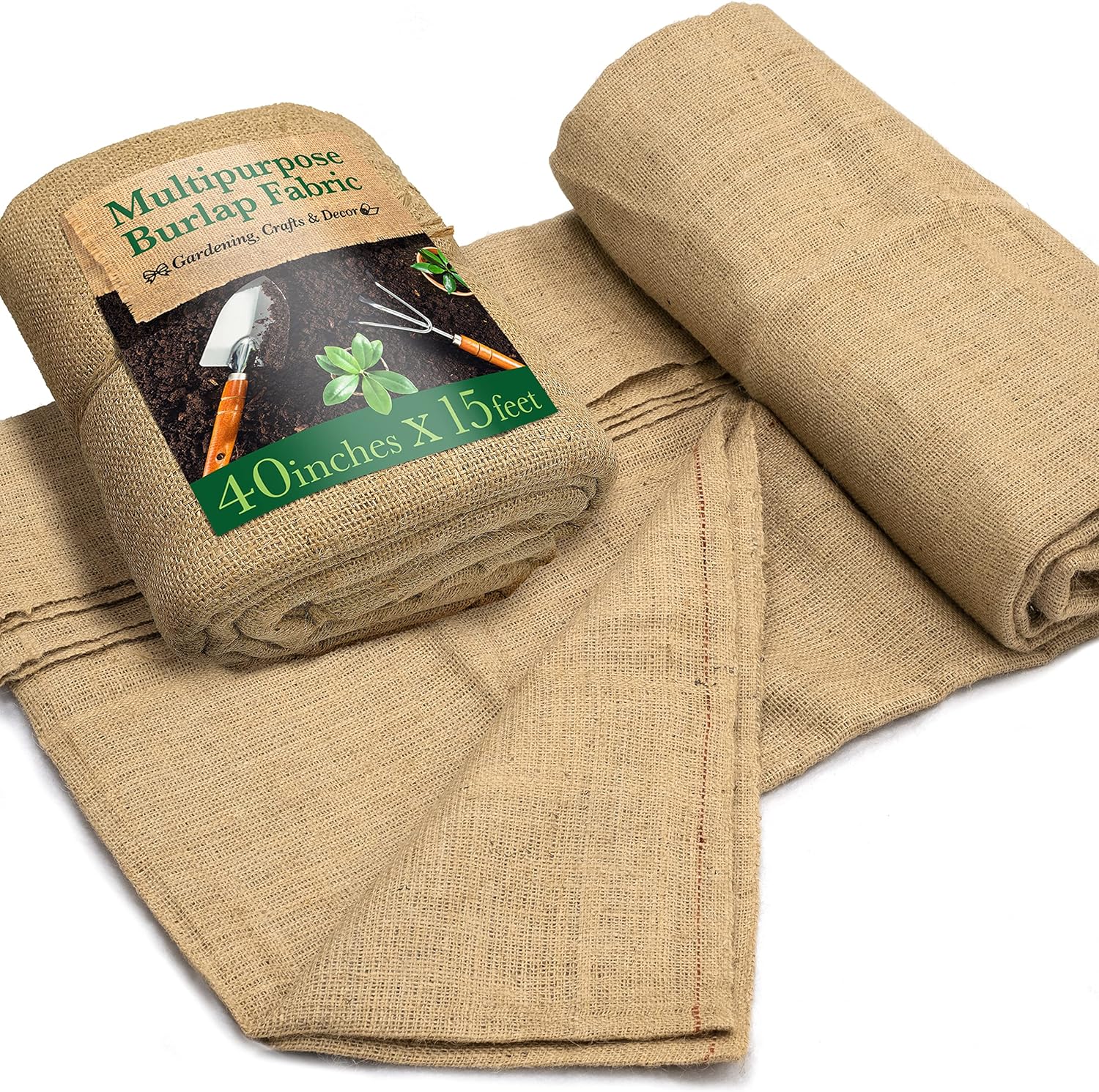
| Material Type | Jute |
|---|---|
| Fabric Type | Burlap |
| Unit Count | 50 Square Feet |
| Item Length | 15 feet |
This Burloptuous burlap roll is a heavy-duty natural jute fabric supplied as a 40 in by 15 ft cut that works well as a breathable ground cover and tree wrap. In practice you lay it over soil or around trunks to suppress weeds, reduce erosion, and protect roots while still allowing water and air to reach the soil. The plain weave jute is durable enough for outdoor use and can be cut to size for mulching rings, pathways, or rustic event décor. Because it is biodegradable and chemical-free, it is a good alternative to plastic landscape fabrics when you want something that will naturally break down. Expect a coarse texture that can fray at cut edges and will eventually degrade in wet climates, so it is best used where occasional replacement is acceptable. It is hand-wash only, so cleaning for reuse is limited, and very heavy-duty weed control or long-term permanent installations may require a polypropylene fabric instead.
Best for: Buyers who prefer eco-conscious, natural materials for tree rings and garden beds and who prioritize soil health and easy, seasonal ground cover swaps.
Less Ideal for: Gardeners who need a permanent, maintenance-free weed barrier or who require frequent machine-washable fabrics for heavy reuse.
- Breathable natural jute lets water and air reach soil while blocking sunlight to reduce weeds
- Biodegradable and chemical-free alternative to plastic landscape fabrics
- Large 40 in width simplifies covering rings around trees and planting beds
- Tough plain-weave construction suitable for outdoor, multipurpose use
- Will fray at cut edges and will break down over time in wet conditions
- Not intended for permanent, heavy-duty weed barriers where synthetic fabrics are preferred
Verdict: Choose this natural burlap roll when you want a breathable, biodegradable ground cover for tree bases and seasonal beds that avoids plastic.
Pterying Weed Barrier Landscape Fabric, 2.6ft x 100ft

| Material | Woven polypropylene |
|---|---|
| Weight | 2 oz per square yard |
| Permeability | Water- and air-permeable |
| Intended uses | Garden beds, gravel underlayment, pathways |
This woven polypropylene landscape fabric is intended as a durable, general-purpose weed barrier for flower beds, vegetable gardens, pathways, and under gravel. It blocks sunlight to prevent weed seed germination while remaining water- and air-permeable so irrigation reaches roots and the soil can breathe. Installation is straightforward: roll out, use the green alignment stripes for spacing, cut planting Xs, and secure edges with staples or U-pins; the manufacturer recommends taping cut lines to reduce fraying. At 2 to 2.4 ounces per square yard this is a midweight option that balances tear resistance with ease of handling, so it will support gravel underlayment and light driveway use but is not the heaviest commercial grade. The fabric is advertised as UV-stabilized for extended outdoor life and safe for use around edibles because it is polypropylene and non-leaching. Expect reliable weed suppression when seams are overlapped and edges are well anchored, but very aggressive perennial roots or weeds may eventually find weak points if not paired with proper edging and maintenance.
Best for: Buyers who want a reliable, easy-to-install weed barrier for beds, vegetable gardens, and light landscape underlayment and who prioritize predictable, low-risk performance over specialty heavy-duty options.
Less Ideal for: People needing the toughest commercial-grade fabric for heavy vehicle driveways or sites with persistent deep-rooted weeds should consider heavier-weight geotextiles or mechanical methods instead.
- Woven polypropylene construction blocks light while allowing water and air to pass
- Green alignment stripes simplify planting layout and spacing
- Midweight fabric with tear resistance suitable for garden beds and gravel underlayment
- UV-stabilized and described as non-leaching, making it safe for vegetable gardens
- Not the heaviest commercial grade so very aggressive roots or heavy vehicle traffic may require a heavier option
- Landscape staples or pins are sold separately and needed for reliable edge security
Verdict: A dependable midweight woven weed barrier that balances durability and breathability for low-risk garden and landscape projects.
Choosing the Right Ground Cover for Around Trees: Key Factors to Consider
Shade Tolerance and Light Requirements
Tree canopies create deep shade patterns that change through the year. Choose ground covers that are adapted to low light rather than forcing sun-loving species into poor conditions. Shade-tolerant plants maintain leaf production and ground coverage with less frequent replacement, which reduces bare patches where weeds can appear.
Consider seasonal light shifts as well. Some spots get morning sun and afternoon shade while others are in near-constant shade. Match the species to the lowest light level in winter and summer, and expect slower growth rates under dense shade.
Root Competition and Tree Health
Roots near the surface supply most of a tree's water and nutrients. Ground covers that aggressively compete for moisture or form deep, dense roots can stress young or shallow-rooted trees. Prefer low-competition species with shallow, fibrous root systems or those that coexist without extensive belowground dominance.
Also avoid covers that require trenching, heavy soil cultivation, or deep planting that disturbs tree roots. Installation methods that minimize root damage are crucial for tree health, especially in established landscapes.
Maintenance Needs and Long-Term Care
Some ground covers establish and then largely maintain themselves, while others need regular trimming, deadheading, or replacement. Consider how often you can manage pruning, weed control, and irrigation under the canopy. Low-maintenance covers reduce trips under the tree and cut the risk of injuring bark or low branches.
Think about leaf litter and debris. Ground covers that tolerate seasonal litter or that can be refreshed with light cleanup will keep the area neat without disturbing roots or trunk flare.
Soil and Moisture Adaptability
Soil under trees is often drier, more compacted, and enriched with leaf litter. Choose covers that tolerate the actual soil conditions rather than idealized garden soil. Drought-tolerant species are helpful under mature trees where roots capture most water, while moisture-loving covers may be suitable in drip-line low spots or where irrigation is possible.
Assess soil pH and organic content when selecting plants. Some covers perform fine in a wide pH range, lowering the need for amendments that would require digging around roots.
Establishment Strategy and Timing
Establishing ground cover around trees requires a careful timing strategy to minimize root disruption and to get plants past their vulnerable phase. Establish during cooler, wetter parts of the season when evaporation is lower and supplemental watering is easier. Use mulches or light weed suppression techniques to protect new plants but avoid piling mulch against trunks.
Plan for initial irrigation without overwatering; slow, infrequent deep watering helps new covers develop stronger root systems that compete less with tree roots in the long run.
Impact on Tree Trunk and Root Flare
Ground cover should not be allowed to pile up against the trunk, which can hold moisture and invite decay. Plants that grow tall and smother the trunk flare can obscure signs of disease or create microclimates that encourage pests. Choose low, spreading covers or keep a mulch-free circle immediately around the trunk to protect the trunk flare.
In landscape settings where trunks are inspected regularly, select covers that allow visual access for monitoring trunk condition and pest issues without needing frequent disturbance.
Designing a Ground Cover Bed Under Trees
Map the drip line and existing root zones before planting. Leave a small mulch- or rock-free ring directly at the trunk to prevent moisture buildup and to allow inspection of the trunk flare. Use shallow planting techniques and avoid turning soil over deeply to reduce root injury.
Group ground covers with similar light and moisture needs so one irrigation plan suits the whole bed. In mixed plantings, place slower-establishing species in protected microspots and faster spreaders where you want quick cover.
- Leave a mulch-free zone of several inches at the trunk base
- Plant in small groups to reduce competition between different covers
- Use shallow planting depth and avoid digging into major roots
Preparing Soil Without Damaging Tree Roots
When working near trees, avoid heavy soil excavation. Instead, topdress with a thin layer of compost to improve surface nutrients and structure without disturbing major roots. Aeration with narrow-tined tools can help compacted soil but avoid deep rototilling.
If soil is very poor, consider planting in shallow raised mounds or using soil enhancers placed carefully around planting holes to limit root disruption.
- Topdress rather than dig where possible
- Use narrow tools for aeration to limit root injury
- Avoid deep cultivation or heavy machinery within the drip line
Watering and Irrigation Strategies
New plantings need consistent moisture until established, but avoid frequent shallow watering that encourages surface-rooting. Use drip emitters or soaker hoses to deliver slow, deep water near new plants while minimizing wetting of the trunk base.
Adjust irrigation as ground cover establishes. Mature tree roots will pull much of the moisture, so reduce supplemental watering to prevent competition and to encourage deep rooting of the ground cover.
- Use slow, deep watering for establishment
- Avoid wetting the trunk and keep the trunk base dry
- Reduce frequency as plants mature and roots deepen
Managing Leaf Litter and Debris
Leaf litter under trees is natural and can be beneficial when it breaks down slowly. Select ground covers that tolerate seasonal litter or that recover quickly after leaves decompose. Light raking can keep pathways clear without disturbing roots.
Avoid constant removal that damages shallow roots. Instead, let litter mulch the ground cover where appropriate and remove only heavy accumulations that might smother young plants.
- Allow light litter to remain as natural mulch
- Rake only when accumulation smothers plants
- Use manual tools near trunks to avoid root damage
Combining Ground Cover With Mulch and Pathways
Pair ground cover with a thin mulch layer to retain moisture and reduce weed pressure, but keep mulch away from the trunk. Where foot traffic is expected, plan mulch or low paths to protect plants and roots. Porous materials help water penetrate while keeping compaction low.
Mulch depth should be modest under trees; thick layers can suffocate roots and encourage pests. Consider stepping-stone paths or low-profile edging to define high-traffic areas.
- Keep mulch thin and away from trunk flare
- Use porous mulch materials to avoid compaction
- Provide defined paths to prevent trampling of covers
How We Chose the Best Ground Cover for Around Trees
We focused on traits that matter when planting under or near tree canopies. Shade tolerance was essential because tree shade limits light for ground-level plants. Root interaction and competition were evaluated to avoid covers that aggressively steal moisture or physically damage roots. Maintenance needs were measured by pruning, reseeding, or groundcover spread control required over time. Soil and moisture adaptability were considered so each pick handles common site conditions from dry, compacted soil to richer, moist pockets. Establishment speed was noted because slower starts can leave exposed soil vulnerable to erosion and weeds. We excluded fast-spreading invasive species and plants known to girdle trunks or require constant trimming. Products that made the list demonstrated a balance of low root competition, proven shade performance, reasonable maintenance, and the ability to establish without heavy soil disturbance. We also looked for covers that tolerate common debris and foot traffic beneath trees. Options that demand frequent fertilizer, heavy pruning, or pose a high risk of root damage were not included.
FAQ
Can ground cover harm tree roots?
Ground cover can stress tree roots if it competes heavily for water or requires deep planting that disturbs roots. Choosing low-competition species and planting shallowly reduces risk. Avoid species with aggressive, woody root systems near young or shallow-rooted trees.
How close to the trunk should I plant ground cover?
Leave a small, bare zone immediately around the trunk flare to prevent moisture buildup and to allow trunk inspection. Plant ground cover a few inches beyond that zone so roots and stems do not touch the bark.
Will leaf litter kill ground cover?
Light leaf litter typically breaks down and benefits ground cover by adding organic matter. Heavy, persistent layers can smother plants, so occasional raking or thinning may be needed until the cover is well established.
What maintenance is required after planting?
Initial irrigation, light weeding, and occasional pruning or thinning are common during establishment. Once established, many ground covers need minimal care beyond seasonal cleanup and monitoring for invasive spread.
Is it okay to use mulch and ground cover together?
Yes, a thin mulch layer can help establish ground cover by conserving moisture and suppressing weeds. Keep mulch away from the trunk and avoid excessive depth, which can harm roots and create pest habitat.
Final Verdict
Choosing ground cover for areas around trees means balancing shade performance, low root competition, and modest maintenance. Prioritize species that tolerate the light and moisture conditions under your canopy, establish without heavy soil disturbance, and allow visual access to the trunk flare. Expect tradeoffs between speed of coverage and long-term care: faster spreaders may need control while slower species need protection during establishment. With that in mind, pick a cover that matches your site conditions and maintenance capacity to protect tree health and create an attractive, low-effort understory.
