

Note: This article contains affiliate links. If you click on these links and make a purchase, I may earn a small commission at no extra cost to you. This helps support my research and content. Read my full affiliate disclosure here.
Ground cover shrubs are the practical backbone of many gardens where you need durable, low-maintenance coverage that also adds texture and seasonal color. Choosing the right ground cover shrubs affects erosion control, planting density, and how much routine pruning or irrigation you will need. This guide shortlists six top-performing ground cover shrubs suitable for common garden situations, from slopes and narrow beds to full-sun swaths and shady corners. We evaluated plants on spread behavior, light and moisture tolerance, maintenance needs, and ornamental value to help you pick the best fit for your site and goals. Read on for the criteria we used and clear guidance for planting and care.
Top Picks at a Glance
| Best Overall The best all-around choice for most situations | Plants by Mail Asiatic Jasmine – 18-Pack Live Evergreen Groundcover (3.25 in. Pots) |  |
| Best Quality Built to a higher standard if you want something more solid | Garden Debut Golden Pacific Juniper (3 Gallon) |  |
| Best Value The sweet spot between price and what you get | Juniper Blue Rug (Wilton) Groundcover — 4" Pot |  |
| Highest Rated A top-rated pick with lots of positive feedback | Green Promise Farms Juniperus horizontalis 'Blue Chip' (Creeping Juniper) |  |
| Most Popular A crowd favorite that many people choose with confidence | Groundcover Pachysandra terminalis Japanese Spurge — 100 Bare Root Plants |  |
| Best Seller A high-volume bestseller chosen again and again | Greenwood Nursery Pachysandra terminalis (Japanese Spurge) Bare Root Groundcover — 50 Count |  |
Plants by Mail Asiatic Jasmine – 18-Pack Live Evergreen Groundcover (3.25 in. Pots)

| USDA Hardiness Zone | 7,8,9,10 |
|---|---|
| Sunlight Exposure | Partial Sun |
| Moisture Needs | Moderate Watering |
| Number of Pieces | 18 |
| Expected Planting Period | Spring |
This 18‑pack of Asiatic jasmine arrives as small potted plants intended to establish a dense, year‑round green groundcover. Asiatic jasmine is a low‑growing, fast‑spreading vine with glossy dark foliage and fragrant spring blossoms that make it useful for covering bare soil, edging pathways, or filling in under trees. Typical use is in beds or mass plantings where you plant plugs relatively close together and allow them to interweave; they can also be adapted to containers or hanging baskets. The listing highlights straightforward watering and seasonal fertilizer guidance to help plants establish during the first two seasons, after which they need occasional supplemental water during heat or drought. The practical benefits are quick visual coverage, evergreen color in mild climates, and low pruning needs. Important limitations are climate range and delivery format: plants are for outdoor use in zones roughly 7–10 and arrive as small pots that require initial care and close monitoring until established. Buyers should be prepared to follow the provided watering schedule for reliable results.
Best for: Buyers who want a reliable, low‑maintenance evergreen to quickly cover beds or slopes and who plan to invest a season or two of basic care to let plants establish.
Less Ideal for: People in colder climates outside the listed USDA zones or gardeners who prefer instant mature cover without waiting for plants to fill in should consider alternatives.
- Evergreen foliage provides year‑round groundcover in suitable climates
- Fast spreading habit establishes dense coverage with minimal pruning
- Fragrant spring blossoms add seasonal interest and attract birds
- Sold as an 18‑plant set for planting large areas or creating continuous coverage
- Specified hardiness zones limit use outside roughly zone 7–10
- Plants arrive as small potted specimens and need attentive early care to establish
Verdict: A cost‑effective way to establish a low‑pruning, evergreen groundcover across a larger area once you commit to initial seasonal care and planting.
Garden Debut Golden Pacific Juniper (3 Gallon)

| Sunlight Exposure | Full Sun |
|---|---|
| Moisture Needs | Moderate Watering |
| Soil Type | Sandy Soil |
| Expected Blooming Period | Winter |
| Planting Period | Winter |
The Golden Pacific Juniper is a hardy, low-maintenance groundcover that spreads broadly while staying only about 10–18 inches tall, making it useful for erosion control, cascading over walls, or mass plantings. It thrives in full sun and well-drained, sandy soils and becomes drought- and heat-tolerant once established. Notable features are its bright golden-yellow foliage that intensifies in winter and a pleasant aroma when foliage is brushed. In practice this plant covers large areas quickly with a compact, creeping habit and requires only moderate watering after establishment. Practical benefits include strong tolerance for tough conditions including salt and poor soils and a moderate growth rate that reduces frequent pruning. Limitations to consider are its strict sun and drainage preferences and that it is intended for outdoor use in zones 6–9, so it is not suitable for shady or waterlogged sites; also it is a spreading plant so it needs room to fill out and will not make a tall privacy screen.
Best for: Buyers who need a reliable, low-maintenance groundcover for sunny slopes, retaining walls, or large landscape beds and prioritize durability and year-round color.
Less Ideal for: Gardeners seeking shade-tolerant plants, tall screening shrubs, or plants for waterlogged sites should consider other options.
- Striking golden-yellow foliage that brightens landscapes and intensifies in winter
- Low, carpet-forming habit ideal for groundcover and erosion control
- Drought, heat, and salt tolerance once established
- Performs well in poor, sandy soils with minimal maintenance
- Requires full sun and well-drained soil and will decline in shade or wet soils
- Spreading habit needs space and is not suitable for tight, small beds
Verdict: Choose this juniper when you want a durable, low-growing groundcover that provides bright year-round color and holds slopes with minimal upkeep.
Juniper Blue Rug (Wilton) Groundcover — 4" Pot

| Sunlight Exposure | Full Sun |
|---|---|
| USDA Hardiness Zone | 9 |
| Soil Type | Sandy Soil |
| Moisture Needs | Moderate Watering |
This plant is the classic blue rug juniper used to form a dense, carpet-like mat on sunny slopes and rock gardens. It arrives as a 4-inch potted specimen and, once planted in well-drained, sandy or poor soils, spreads rapidly to create erosion-controlling coverage 6 to 8 feet across while staying only 4 to 6 inches tall. The needle-like evergreen foliage provides season-long color and the species tolerates seaside exposure and dry conditions, so it is suited to low-maintenance landscapes that need durable groundcover. Expect moderate to rapid growth of roughly 0.5 to 1.5 feet per year until it fills a space. Important limits are its need for full sun and well-drained soils and its intolerance of excessive moisture; it is not appropriate for waterlogged or heavily shaded areas. Plants are sold individually, so larger projects require multiple purchases and time for the mat to establish.
Best for: Gardeners who need a durable, low-maintenance groundcover for sunny slopes, rock gardens, or banks and value erosion control and year-round color.
Less Ideal for: Homeowners with shaded yards, heavy clay or poorly drained sites, or those wanting immediate full-coverage without planting multiple specimens should consider alternatives.
- Forms a dense, low carpet that controls erosion on slopes
- Tolerates poor, sandy soils and seaside exposure
- Evergreen blue-green foliage provides year-round color
- Low maintenance and drought-tolerant once established
- Sold as single 4-inch pots so covering large areas requires multiple plants and time to spread
- Requires full sun and good drainage and will not thrive in shade or wet soils
Verdict: Choose this blue rug juniper when you want a hardy, low-growing evergreen that quickly establishes a dense, erosion-resistant mat on sunny, well-drained slopes.
Green Promise Farms Juniperus horizontalis 'Blue Chip' (Creeping Juniper)
| Sunlight Exposure | Full Sun |
|---|---|
| Expected Planting Period | Spring |
| USDA Hardiness Zone | 3-8 |
| Soil Type | Sandy Soil |
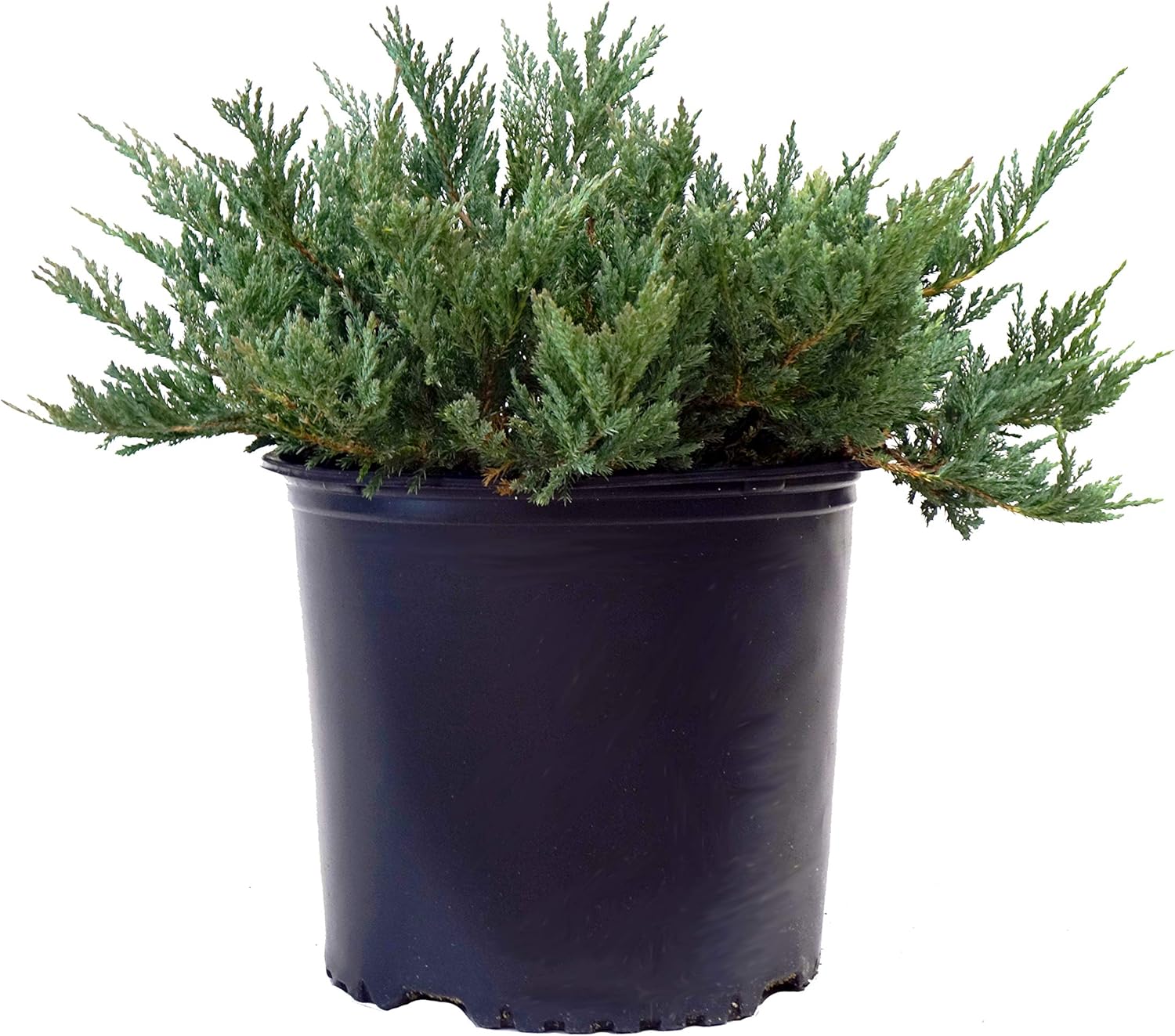
The Blue Chip creeping juniper is a prostrate evergreen intended for fast, low-maintenance ground cover on slopes, banks, and mass plantings. It is typically planted in spring into well-drained, sandy soils and thrives in full sun across USDA zones 3 to 8. Notable features include its distinctive steel-blue foliage, aggressive spreading habit that quickly fills space, and tolerance for sandy, poor soils and road salt. Because the plants arrive fully rooted they can be installed right away and include basic planting and care guidance. Practical benefits are long-term, low maintenance coverage, visual interest from the blue color, and suitability for erosion control on hillsides. Limitations are that it is a spreading species so it requires room to establish and occasional pruning or edging where it meets paths or other plantings; it also prefers full sun and may perform poorly in shady sites. Expect reliable, durable performance when used in the recommended conditions but plan spacing to accommodate its mature spread.
Best for: Gardeners who need a reliable, low-maintenance ground cover for sunny slopes, banks, or large mass plantings and prioritize durable performance over decorative containment.
Less Ideal for: Those wanting a compact, non-spreading ornamental for small beds or heavily shaded landscapes should consider alternatives.
- Distinctive steel-blue foliage provides strong visual impact in mass plantings
- Aggressive, prostrate growth covers ground quickly for erosion control
- Tolerates sandy soils and road salt, making it suitable for challenging sites
- Arrives fully rooted and ready to plant with included care instructions
- Spreading habit requires space and periodic edging to keep it from encroaching
- Requires full sun to perform well and will not thrive in shade
Verdict: Choose Blue Chip juniper when you need a tough, fast-spreading, low-maintenance ground cover that performs reliably on sunny, sandy slopes.
Groundcover Pachysandra terminalis Japanese Spurge — 100 Bare Root Plants

| Quantity | 100 heavily rooted plants |
|---|---|
| Hardiness Zone | 5 to 9 |
| Height | 6 to 12 inches |
| Spread | 1 to 1.5 feet |
| Sun | Part shade to full shade |
This offering supplies 100 heavily rooted Pachysandra terminalis (Japanese spurge) plants designed to establish a dense, low-maintenance evergreen groundcover in part to full shade. Pachysandra spreads by underground stems to form a carpet of dark green foliage 6 to 12 inches high and about 1 to 1.5 feet across, producing small white April blooms. It is typically planted on 6 to 9 inch centers to close in quickly for erosion control, borders, or under trees where grass struggles. The key practical benefits are rapid lateral spread that suppresses weeds, year-round foliage in suitable zones, and very low maintenance once established. Important limits are climate and placement: it is suited to USDA zones 5 to 9 and prefers shady conditions, so it will not perform well in full sun or outside its hardiness range. Buyers should also plan spacing and quantity carefully because the pack size and recommended spacing determine how much area these 100 plants will cover and how long it takes to fill in.
Best for: Gardeners who need a reliable, low-maintenance evergreen groundcover for shaded beds or under trees and want to establish coverage quickly with a ready supply of plants.
Less Ideal for: People seeking a sun-loving groundcover, a flowering show-plant, or those with planting areas outside USDA zones 5 to 9 should look at other options.
- Evergreen foliage that provides year-round groundcover in shaded sites
- Spreads rapidly via underground stems to form a dense, weed-suppressing carpet
- Low maintenance once established, useful for erosion control and borders
- Large quantity (100 heavily rooted plants) lets you cover a substantial area or accelerate fill-in
- Only recommended for part shade to full shade and USDA zones 5 to 9
- Pack requires planning for spacing since 100 plants may not cover very large areas at tight spacing
Verdict: A straightforward, low-maintenance choice for quickly establishing an evergreen carpet in shaded garden areas.
Greenwood Nursery Pachysandra terminalis (Japanese Spurge) Bare Root Groundcover — 50 Count

| Indoor Outdoor Usage | Outdoor |
|---|---|
| Expected Planting Period | Year Round |
| USDA Hardiness Zone | 4, 5, 6, 7, 8 |
| Moisture Needs | Moderate Watering |
| Unit Count | 50 Count |
These Pachysandra terminalis bare-root plants are sold as a 50-count option for establishing an evergreen, shade-tolerant groundcover. Pachysandra forms a low, dense mat of glossy foliage and is typically planted 12 inches apart along shaded paths, under trees, or on slopes to suppress weeds and stabilize soil. The plants ship bare-root with roots coated in hydrating gel and bundled for transit, and Greenwood includes planting and care instructions plus a 14-day guarantee. Key practical benefits are quick coverage when planted close together and minimal upkeep once established, needing only moderate watering and well-drained loam soil. Limitations to expect are initial transplant shock from bare-root shipping, which requires immediate watering and prompt planting, and that this variety does not flower prominently. For gardeners in USDA zones 4 through 8 the species is reliable, but success depends on preparing soil with compost and keeping new transplants consistently moist until they root in.
Best for: Buyers who want a dependable, low-maintenance evergreen groundcover for shaded areas and prefer plants that establish into a dense mat to control weeds and stabilize soil.
Less Ideal for: Gardeners seeking a showy, flowering groundcover or those who prefer potted plants delivered already established should consider other options.
- Evergreen groundcover that creates a dense, low mat to suppress weeds
- Suitable for shade to partial sun and hardy in USDA zones 4–8
- Ships as bare roots with hydrating gel and bundled packaging to protect roots
- Low maintenance once established, requiring only moderate watering and typical garden soil
- Arrives bare-root so plants need immediate planting and careful post-delivery watering
- Not a flowering groundcover so it provides foliage interest rather than blooms
Verdict: Choose this 50-count Pachysandra pack if you want a reliable, low-maintenance evergreen groundcover to quickly establish shade garden coverage and suppress weeds.
Choosing the Right Ground Cover Shrubs: Key Factors to Consider
Spread Habit and Planting Density
How a ground cover shrub spreads determines how many plants you need and how quickly gaps close. Dense, low-growing habits fill space faster but can crowd smaller companion plants, while looser habits leave room for perennials or bulbs. Consider the mature spread listed for each shrub and allow for at least that much horizontal space between plants to avoid overcrowding.
Planting density also affects weed suppression and erosion control. Plants that form an interlocking canopy suppress weeds and slow runoff, which matters on slopes or exposed sites. If you prefer a mixed planting, space shrubs slightly wider and use interim annuals until the canopy closes.
Light Exposure and Shade Tolerance
Different ground cover shrubs perform best in specific light conditions. Some species thrive in full sun and produce abundant flowers, while others are adapted to deep shade and focus more on foliage color than blooms. Assess the amount of direct sun the planting area receives and choose a shrub with matching tolerance to reduce stress and prevent sparse growth.
Partial-shade selections are useful under trees or along north-facing walls, but expect slower spread and reduced flowering in low-light sites. For variable exposure across a bed, group plants by light needs to avoid underperforming specimens.
Soil Type and Moisture Requirements
Soil texture and drainage strongly influence survival and spread. Many ground cover shrubs prefer well-drained soils and will decline in waterlogged conditions, while a few tolerate heavier clay or periodic wet feet. Match a shrub's moisture tolerance to your site; amending soil can help, but it is better to select plants adapted to existing conditions for lower long-term maintenance.
Consider seasonal moisture patterns too. Sites with summer drought need drought-tolerant shrubs, whereas consistently moist or irrigated beds can support species that require more water. Mulch and organic matter improve moisture retention and rooting but do not compensate for chronic poor drainage.
Maintenance and Pruning Needs
One reason gardeners choose ground cover shrubs is to reduce routine maintenance, but not all options are equally undemanding. Some maintain a tidy shape with little trimming, while others benefit from annual shearing to keep them from straggling. Evaluate how often you are willing to prune, remove old wood, or thin the canopy.
Also consider winter cleanup and susceptibility to litter or leaf drop. Plants that hold foliage and present tidy silhouettes in winter lower seasonal chores. Pest and disease resistance is part of maintenance too; choose shrubs with local resilience to avoid frequent interventions.
Cold Hardiness and Regional Suitability
Cold hardiness zones and microclimate factors influence whether a shrub will persist and perform. A plant rated for colder zones may still struggle on exposed ridges or in urban heat islands. Check the expected hardiness range and consider local extremes like late frosts, salt exposure near roads, or coastal wind.
Selecting shrubs with overlapping hardiness and site suitability reduces replacement needs and ensures consistent coverage year after year. For transitional climates, favor species known for wide adaptability rather than those at their zone margins.
Ornamental Traits and Seasonal Interest
Beyond mere coverage, many ground cover shrubs contribute seasonal interest through flowers, fall color, berries, or evergreen foliage. Decide whether you want a plant primarily for functional coverage or one that also adds color and texture across seasons.
Consider tradeoffs: highly ornamental species sometimes require more water or pruning to look their best, while plain evergreen spreaders may give constant but understated structure. Balance your desire for bloom and fruit with the maintenance and site needs of the plant.
Planting Tips for Quick, Healthy Coverage
Prepare the bed by removing persistent weeds and loosening compacted soil to promote root establishment. Incorporate several inches of organic matter if your soil is poor, but avoid creating a raised-mound that alters drainage unless you need to improve wet soils.
- Stagger plants in a triangular pattern to speed canopy closure.
- Water newly installed shrubs regularly until established, then taper to tolerance levels.
- Apply a 2-3 inch mulch layer, keeping it a few inches away from stems to prevent rot.
Using Ground Cover Shrubs on Slopes and Banks
On slopes, choose shrubs with strong lateral rooting and rapid canopy spread to stabilize soil and reduce erosion. Plant in staggered rows across the slope rather than in straight lines downhill to increase root interlock and slow runoff.
- Space slightly closer on steep grades to accelerate coverage.
- Combine shrubs with deep-rooted perennials for complementary structure and soil binding.
- Install erosion-control matting temporarily on very steep or newly disturbed sites until plants establish.
Combining Ground Cover Shrubs with Perennials and Bulbs
Plan for seasonal layering. Select lower-growing bulbs and spring ephemerals that emerge before the shrub canopy fills in, and choose perennials that tolerate being partially shaded once the shrubs spread. This approach keeps beds interesting without interfering with the shrub's cover function.
- Use shorter perennials in front or between shrubs during establishment.
- Avoid high-water perennials under drought-tolerant shrubs unless irrigation is provided.
- Consider bloom times so flowers are staggered rather than all happening when the shrub is at peak growth.
Planting in Narrow or Confined Spaces
For tight beds or pathways, pick ground cover shrubs with compact, controlled spreads and low profiles. Prune lightly in the first two seasons to guide shape and prevent overreach into walkways. If root spread is a concern, install a narrow root barrier to protect adjacent plantings without restricting surface spread.
- Choose shrubs with tidy winter form for narrow beds.
- Keep an annual trim window to maintain clearance from paths.
- Evaluate sunlight and airflow-confined shady spots can increase disease risk.
Establishing in Dry or Coastal Gardens
In dry or salt-exposed sites, select shrubs with proven drought and salt tolerance. Prepare the planting hole with improved drainage if native soil holds moisture, and use mulches that conserve moisture without creating excessive humidity around stems. Once established, many tolerant ground cover shrubs will need minimal supplemental irrigation.
- Group drought-tolerant shrubs together to simplify irrigation.
- Avoid heavy mulches that retain too much surface moisture in coastal fog zones.
- Rinse salt spray from foliage occasionally in exposed coastal positions.
How We Chose the Best Ground Cover Shrubs
We evaluated candidate ground cover shrubs using criteria that matter for real-world garden performance. Primary filters were spread habit and rate to ensure reliable coverage without becoming invasive, and light and moisture tolerance so a shrub will persist in the intended site. We also judged maintenance demands, including pruning frequency and susceptibility to common pests or diseases, because low-maintenance performance is central to most ground-cover roles. Ornamental value – seasonal flowers, foliage color, or berries – was scored for gardeners who want both function and form. Finally, durability across climates and soil types was considered so selections suit a range of yards and microclimates. Plants were excluded if they are known to naturalize aggressively outside garden beds, require specialist care, or are unsuitable for typical garden soil and moisture conditions. We prioritized shrubs with predictable spread measurements, clear growth habits, and documented tolerances for sun and shade. The result is a concise set of robust options that balance coverage, upkeep, and year-round interest.
FAQ
How far apart should I plant ground cover shrubs?
Spacing depends on mature spread but a common approach is to space plants at 50 to 75 percent of their mature width for quicker closure. For a slower, helper-planting method, space at full mature width and allow perennials to fill gaps while shrubs establish.
Can ground cover shrubs be used under trees?
Some species tolerate light shade and perform well beneath open-canopied trees. Expect slower growth and fewer flowers in deep shade. Avoid planting under dense, shallow-rooted trees that will compete heavily for water and nutrients.
How long before a ground cover shrub fills a bed?
Growth rate varies by species and site conditions but many ground cover shrubs will substantially close a small bed in two to three growing seasons. Faster spreaders may fill space in one season, while slower types can take several years.
Do ground cover shrubs need fertilizer?
Most established ground cover shrubs need little fertilizer if planted in reasonably fertile soil. A light, balanced application in spring supports growth in poor soils, but over-fertilizing can encourage soft leggy growth and increase maintenance needs.
How do I control a ground cover shrub that is spreading too aggressively?
Regular pruning or selective removal of runners will keep spread in check. For stubborn spreaders, remove a few plants to create a physical gap or install an underground root barrier. Always prune during the species' recommended dormant window when possible.
Will ground cover shrubs prevent erosion on steep slopes?
Properly chosen and planted ground cover shrubs can significantly reduce erosion by binding soil with lateral roots and slowing surface runoff. For very steep or newly disturbed slopes, combine planting with temporary erosion-control measures until the plants establish.
Final Verdict
Choose ground cover shrubs by matching spread habit, light and moisture tolerance, and maintenance expectations to your site. Prioritize plants that naturally fit your soil and exposure to reduce long-term chores and replacements. Tradeoffs are inevitable: faster spreaders give quicker coverage but may need more control, while slow, tidy spreaders require more time but less pruning. Focus on predictable growth habit and resilience for the clearest long-term results. With the right selection and proper planting, ground cover shrubs provide durable structure, reduce weeds and erosion, and add seasonal interest with minimal ongoing effort.
