

Note: This article contains affiliate links. If you click on these links and make a purchase, I may earn a small commission at no extra cost to you. This helps support my research and content. Read my full affiliate disclosure here.
Picking the right hand saw for carpentry changes how you work in the shop and on-site. The right blade geometry, tooth count, and stiffness let you rip or crosscut accurately without fighting the tool or the wood. Whether you are trimming framing lumber, cutting joinery, or finishing trim, a carpenter-focused hand saw can make common tasks faster and neater. This guide shortlists the top hand saws for carpentry, selected for real-world shop and jobsite use. Below you will find practical notes on what each saw type handles best and the evaluation criteria we used to pick these top options before the product list.
Top Picks at a Glance
| Best Overall The best all-around choice for most situations | Jorgensen 15-Inch Hand Saw with 8 TPI Black-Coated Blade |  |
| Best Quality Built to a higher standard if you want something more solid | SUIZAN Dozuki (Dovetail) 7" Japanese Pull Saw |  |
| Best Value The sweet spot between price and what you get | Shark 12-Inch Carpentry Hand Saw |  |
| Best Budget The cheapest option that still gets the job done reliably | WFOEJEJ 6-inch Japanese Double-Edge Pull Saw (SK5 Blade) |  |
| Highest Rated A top-rated pick with lots of positive feedback | IRWIN Marathon ProTouch 15-Inch Coarse-Cut Carpenter Saw |  |
| Most Popular A crowd favorite that many people choose with confidence | SUIZAN Ryoba 9.5" Japanese Double-Edge Pull Saw |  |
| Best Seller A high-volume bestseller chosen again and again | TOOLAN 8-in-1 Multi-Blade Manual Hand Saw with Quick-Change Handle |  |
Jorgensen 15-Inch Hand Saw with 8 TPI Black-Coated Blade

| Number of Teeth | 8 |
|---|---|
| Blade Material | Alloy Steel |
| Handle Material | Aluminum |
| Surface Recommendation | Plastic,Wood |
The Jorgensen 15-inch hand saw is a straightforward, heavy-cut handsaw aimed at general woodworking and outdoor trimming tasks. Its 8 TPI triple-ground teeth deliver aggressive, fast cuts through dimensional lumber and framing stock, while the SK5 high-carbon steel blade holds an edge and resists bending under regular use. The black Teflon-like coating reduces friction and helps keep sap and debris from building up on the blade. The reinforced aluminum frame and TPE/ABS ergonomic grip make it comfortable to hold for extended sessions and the handle includes 45° and 90° angle guides useful for marking cuts. Practical uses include rip and cross cuts on rough lumber, pruning thick branches, and cutting PVC or trim where speed matters more than ultra-fine finish. Limitations are inherent to the coarse 8 TPI: it is not intended for fine finish work or precise joinery and will leave a rougher cut on delicate stock. Also, being a fixed non-folding saw it requires safe storage with the included edge protector.
Best for: A buyer who wants a reliable, fast-cutting handsaw for general carpentry, framing, and heavier trimming tasks and values durability and comfort during frequent use.
Less Ideal for: Not the best choice for woodworkers focused on fine finish work, delicate trimming, or precision joinery who need higher-tooth-count saws.
- Aggressive 8 TPI triple-ground teeth for fast, efficient cutting of rough lumber
- SK5 high-carbon steel blade offers good edge retention and resists bending
- Black low-friction coating reduces material buildup and helps corrosion resistance
- Ergonomic aluminum-framed handle with TPE/ABS grip and built-in angle guides
- Coarse 8 TPI tooth pattern produces a rougher finish not suited to fine joinery
- Fixed blade requires careful storage and is less portable than folding saws
Verdict: Choose this saw if you want a durable, comfortable hand saw that makes fast, aggressive cuts for general carpentry and trimming.
SUIZAN Dozuki (Dovetail) 7" Japanese Pull Saw

| Blade Material | Japanese Steel |
|---|---|
| Blade Length | 7 inches |
| Blade Thickness | 0.012" |
| TPI | 17 |
| Kerf Width | 0.02" (0.5mm) |
The SUIZAN 7" Dozuki is a purpose-built Japanese pull saw for fine woodworking and joinery where accuracy matters. It cuts on the pull stroke with a 0.012" thin blade and a 17 TPI tooth pattern that handles rip, cross, and angle cuts, giving a narrow 0.02" kerf and very smooth cut faces ideal for dovetails, tenons, and cabinet details. The steel back keeps the blade rigid for square, controlled cuts and the elastomer grip offers a secure non-slip hold during extended work. Blade replaceability means you can refresh cutting performance without replacing the whole saw. Expect minimal effort per cut and excellent control in hardwoods and softwoods, but the short 7" blade limits reach on large stock and the thin blade is best for detail work rather than heavy ripping of large sections. For carpenters who prize clean joints and low fatigue, this saw elevates the quality of hand-cut joinery; for high-volume rough cutting, a longer or more aggressive saw will be faster.
Best for: A performance-focused woodworker or carpenter who prioritizes precise, low-effort hand cuts for joinery and finish work and values a tool that delivers clean, repeatable results.
Less Ideal for: Builders or users who need to make fast, heavy ripping or long crosscuts on large stock should choose a longer, more aggressive saw instead.
- Very thin 0.012" blade and 17 TPI produce a narrow kerf and smooth, accurate cuts for fine joinery
- Steel back provides stiffness for square, controlled dovetail and tenon cuts
- Replaceable blade lets you restore factory sharpness without replacing the handle
- Elastomer non-slip handle offers a secure grip for extended use
- 7" blade length limits reach and makes large stock or long rip cuts slower
Verdict: Buy this Dozuki if you want a compact, professional pull saw that delivers razor‑sharp, low‑effort precision for dovetails and fine joinery.
Shark 12-Inch Carpentry Hand Saw
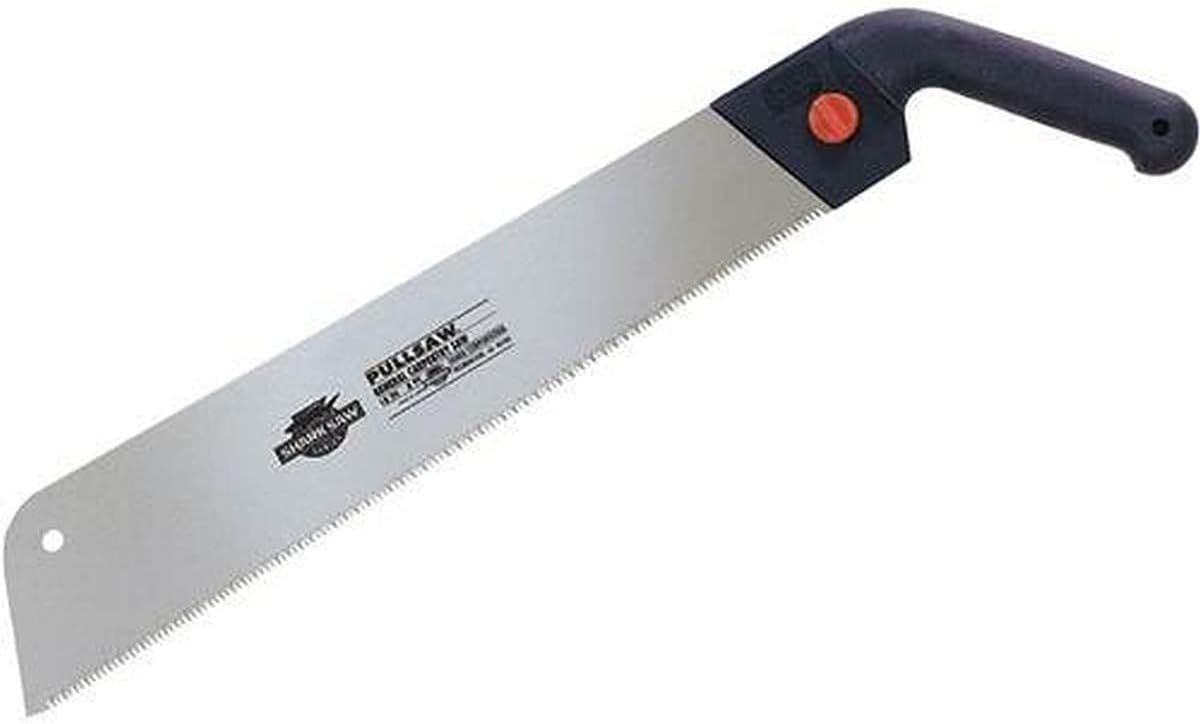
| Power Source | Manual |
|---|---|
| Number of Teeth | 168 |
| Blade Material | High Speed Steel |
| Blade Length | 12 inches |
| Other Special Features of the Product | Keyless Blade Change |
The Shark 12-inch carpentry saw is a straightforward handsaw for everyday woodworking and repair tasks. Its 14 teeth-per-inch, high-speed steel blade makes smooth, relatively fast cross and rip cuts in soft and hard woods and also handles PVC and ABS plastic pipe. The blade is flexible for flush cutting and keyless blade change lets you replace the blade quickly without tools. A plastic handle keeps weight low for prolonged use and the saw’s manual power makes it reliable where power tools are impractical. Practical benefits include predictable control for finish work, portability for jobsite or toolbox use, and easy blade replacement when teeth dull. Limitations are that it is a basic manual saw without anti-vibration or ergonomic cushioning on the handle and it is not intended for cutting metal or heavy industrial lumber where a powered saw or larger toothed saw would be faster.
Best for: Buyers who want a reliable, no-frills handsaw for general carpentry, finish work, and occasional plastic or pipe cutting and who prioritize portability and easy maintenance.
Less Ideal for: Professionals who need faster removal on large structural timbers or users who require powered cutting tools or specialty blades for metal cutting.
- 14 teeth-per-inch blade for smooth, efficient cuts in wood and plastic
- High-speed steel blade that is replaceable for long-term use
- Keyless blade change allows quick blade swaps without tools
- Flexible blade enables flush cuts against surfaces
- Handle is basic plastic with minimal ergonomic padding
- Not suitable for cutting metal or very large structural lumber
Verdict: A durable, easy-to-maintain 12-inch handsaw that delivers smooth cuts for general carpentry and quick blade swaps for busy toolboxes.
WFOEJEJ 6-inch Japanese Double-Edge Pull Saw (SK5 Blade)

| Blade Material | Sk5, steel |
|---|---|
| Blade Length | 6 inches |
| Number of Teeth | 168 |
| Power Source | Hand Powered |
This 6-inch Japanese pull saw is a budget-friendly handheld tool aimed at precision carpentry and small woodworking tasks. It has a double-edge SK5 steel blade with 14 and 17 TPI, so you can switch between faster material removal and finer trimming without changing tools. The thin, flexible blade is suited to flush cuts around dowels, tenons and other protrusions, while the pull-stroke design keeps the blade in tension for controlled cutting. The plastic soft-grip handle is comfortable and non-slip for extended use, and the compact blade size makes the saw easy to maneuver in tight spaces and on small workpieces. Because the blade is thin and designed for pull cutting, it excels at finish work and joinery rather than heavy ripping of large boards. Overall this saw offers good value for routine carpentry, repair and hobby projects where accuracy and a low-cost tool are the priority.
Best for: Buyers who want an inexpensive, versatile saw for carpentry finish work, furniture repair, and hobby woodworking where control and compact size matter more than heavy-duty cutting.
Less Ideal for: Professional carpenters who need a durable saw for frequent heavy ripping or contractors who primarily work with large dimensional lumber should consider more robust saws.
- Double-edge 14/17 TPI blade covers both faster cuts and fine trimming without swapping tools
- SK5 steel blade balances sharpness and flexibility for flush cuts and detailed joinery
- Compact 6-inch blade is easy to control in tight spaces and on small workpieces
- Soft non-slip handle improves grip and reduces hand fatigue during repeated strokes
- Thin pull-cut blade is not intended for heavy ripping or large construction lumber
- Plastic handle and economy construction may wear faster under heavy professional use
Verdict: A low-cost, compact Japanese pull saw that delivers controlled flush cuts and fine trimming for carpentry finish work and DIY projects.
IRWIN Marathon ProTouch 15-Inch Coarse-Cut Carpenter Saw
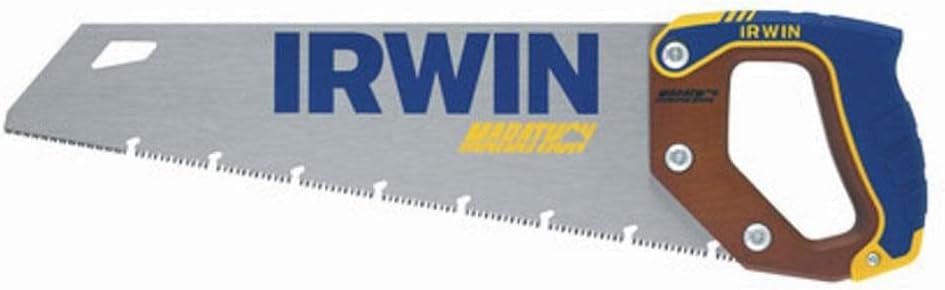
| Blade Material | Alloy Steel |
|---|---|
| Number of Teeth | 14 |
| Blade Shape | Rectangular |
| Power Source | Hand powered |
The IRWIN Marathon ProTouch 15-inch carpenter saw is built for heavy-duty, performance-focused wood cutting. Its M2 tooth geometry and Tri-Ground teeth deliver fast, efficient cutting across and with the grain, while deep gullets clear chips quickly to maintain cutting speed. The tapered-pitch nose improves clearance and control when starting cuts and working near corners, and the thick-body blade adds rigidity for straighter strokes when ripping or crosscutting. The wood ProTouch handle is shaped for comfort during extended use but remains robust for jobsite wear. This saw is best used for framing, rough carpentry, and general-purpose wood cutting where speed and aggressive material removal matter more than super-fine finish. Limitations include a coarse 9-point tooth pattern that leaves a rougher cut compared with fine-tooth saws and a wooden handle that some users may find less ergonomic than modern composite grips.
Best for: Buyers who prioritize fast, aggressive cutting for framing, rough carpentry, or frequent jobsite use and want a reliable, high-performance hand saw.
Less Ideal for: People who need very fine, smooth finish cuts for trim, cabinetry, or finish carpentry should choose a finer-toothed saw designed for precision.
- Aggressive M2 and Tri-Ground teeth for fast cutting and efficient chip removal
- Deep gullets reduce clogging and keep the cut moving quickly
- Thick-body blade improves rigidity for straighter, controlled strokes
- Tapered-pitch nose aids clearance and starting cuts in tight spots
- Coarse 9-point tooth pattern produces a rougher finish not ideal for fine joinery
- Wooden handle offers durability but less modern ergonomic padding
Verdict: Choose this saw when you need a durable, high-performance carpenter saw that cuts fast and clears chips efficiently for rough and framing work.
SUIZAN Ryoba 9.5" Japanese Double-Edge Pull Saw

| Blade Material | Japanese Steel |
|---|---|
| Blade Length | 9.5 inches |
| Number of Teeth | 15 |
| Power Source | Hand Powered |
| Handle Material | Wood |
The SUIZAN Ryoba is a double-edged Japanese pull saw built for accurate, low-effort woodworking. It cuts on the pull stroke with a very thin 0.02" blade and offers two tooth patterns—9 TPI rip teeth on one edge and 15 TPI crosscut teeth on the other—so you can switch between ripping and crosscutting without changing tools. Made in Japan from high-quality Japanese steel and fitted to a wooden handle wrapped by hand, the saw delivers a narrow kerf and smooth surfaces that reduce tearout and need for heavy sanding. The blade is replaceable with a single screw, and the package includes a blade guard, making it practical for regular use and blade maintenance. For finish carpentry, joinery, miter-box work, and detailed trim cuts the saw gives excellent control and line-following. The thin blade is fragile compared with thicker Western saws, so it requires the pulling technique and some care to avoid bending or chipping when cutting awkward shapes or nail-dense material.
Best for: Buyers who prioritize proven, pro-level woodworking tools and want a versatile hand saw for finish carpentry, joinery, and detailed trim work that delivers clean, controlled cuts.
Less Ideal for: Users who need a heavy-duty ripping saw for rough framing, or those who prefer push-stroke Western saws and want a tool that tolerates aggressive force without risk of blade damage.
- Double-edge Ryoba design provides both rip and crosscut teeth in one tool
- Very thin 0.02" blade creates a narrow kerf for cleaner, more precise cuts
- High-quality Japanese steel and artisan tooth setting for durable, sharp performance
- Replaceable blade and included blade guard make maintenance straightforward
- Thin blade is more delicate than thicker Western saws and can bend or chip if misused
Verdict: A precise, pro-grade Ryoba pull saw that gives carpenters clean, controllable cuts for finish work while keeping maintenance simple.
TOOLAN 8-in-1 Multi-Blade Manual Hand Saw with Quick-Change Handle

| Power Source | Manual |
|---|---|
| Blade Material | Alloy Steel |
| Included Components | 1 pcs handle, 8 pcs blade |
| Item Highlight | Blade Quick Change Mechanism |
The TOOLAN 8-in-1 multi-blade hand saw is a manual, compact cutting tool that uses a single ergonomic handle and a selection of eight interchangeable blades to tackle drywall, plywood, plastic and thin metal. It is typically used for light carpentry and home repairs where a powered saw would be overkill or unavailable. Notable features include a quick-change, self-locking clamp that accepts both side-hole and middle-hole reciprocating blades and an anti-slip ergonomic plastic handle to reduce hand fatigue during repeated cuts. The included blades cover a range of tooth counts and intended materials so you can switch from plunge cuts in drywall to finer cuts in wood or metal without adding new tools. Practical benefits are portability, simple maintenance and the ability to use standard replacement blades from local suppliers. Important limitations are that it is a hand-powered tool so cutting larger dimensional lumber or long rip cuts will be slow and more physically demanding, and the compact blade lengths are best suited to detail work rather than heavy framing tasks.
Best for: Buyers who prefer a low-risk, dependable hand tool for occasional carpentry and repair work and who value portability and simple, serviceable components over power.
Less Ideal for: Carpenters who regularly need to cut large lumber, perform long rip cuts, or want the speed of a powered reciprocating saw should choose a powered model instead.
- Quick-change, self-locking clamp accepts common reciprocating blades for easy swaps
- Includes eight blades sized for drywall, wood, plastic and thin metal for versatile use
- Ergonomic TPR handle with anti-slip texture reduces hand fatigue during repeated cuts
- Compact and lightweight for easy storage and portability in a toolbox
- Manual operation limits speed and power compared with powered reciprocating saws
- Compact blade lengths are not suited for heavy framing or deep rip cuts
Verdict: A portable, low-maintenance multi-blade hand saw ideal for detail carpentry and home repairs when a reliable, nonpowered tool is preferred.
Choosing the Right Hand Saw for Carpentry: Key Factors to Consider
Blade Tooth Geometry and TPI
Tooth geometry and teeth per inch (TPI) determine whether a saw is best for ripping along the grain or crosscutting across the grain. Coarser teeth and lower TPI remove material faster and are better for rough framing cuts, while finer teeth and higher TPI leave a cleaner finish for trim and joinery.
Understanding tooth shape matters because different profiles cut differently: raker-style teeth score the wood and remove chips efficiently for ripping, while alternating beveled teeth slice fibers when crosscutting. Match the tooth geometry to the primary work you do to reduce tear-out, improve control, and minimize finishing work after the cut.
Blade Stiffness and Reinforcement
Blade stiffness affects straightness and control on long cuts. Thin, flexible blades bend and wander, which makes it hard to keep a straight line during rip cuts on large stock. Reinforced backs or thicker blade sections help the saw hold a line and reduce user fatigue from constantly correcting the blade.
Consider the length and type of cuts you make most often. A stiffer blade is preferable for long rip cuts or when you need a true, straight edge. For short or detail cuts a slightly more flexible blade can be easier to maneuver, but it will not be as forgiving when cutting long boards.
Handle Design and Comfort
Handle shape, material, and mounting influence control and comfort during repetitive cutting. A handle that fits your hand and positions your wrist for a natural stroke reduces strain and improves accuracy. Closed or pistol-grip handles offer secure control for aggressive ripping, while more open or slim profiles can be better for delicate alignment and fine work.
Also check how the handle attaches to the blade. Mechanical fasteners or solid tang mounting that resist loosening will keep the saw tracking consistently over time, which matters if you use the tool daily.
Blade Steel, Edge Retention, and Ease of Sharpening
Blade material and heat treatment affect how long teeth hold an edge and how often you will need to sharpen. Higher-carbon steels can take a keen edge that lasts through heavy use but may require occasional professional sharpening. Softer steels are easier to restore at the bench but may dull faster under abrasive conditions.
Consider whether you want a saw that you can routinely resharpen yourself or one that trades longer edge life for more difficult maintenance. Ease of resharpening also depends on tooth profile; some geometries are simpler to file accurately than others.
Durability and Corrosion Resistance
A saw that resists rust and holds up to knocks and drops saves replacement cost and keeps performance consistent. Coatings, stainless options, or good-quality heat treatment all contribute to a blade that stands up to moisture in a workshop or jobsite environments. Handle materials also affect longevity; hardwood handles, stabilized composites, and well-sealed molds resist cracking and loosening.
Durability considerations also include how the saw is likely to be stored and used. If you work outdoors or in humid conditions, prioritize corrosion resistance and robust handle attachments to avoid premature failure.
Choosing Between Rip and Crosscut Blades
Rip blades and crosscut blades serve different purposes. Rip blades have larger, chisel-like teeth that carve along the grain and are faster at removing material, while crosscut blades have finer, knife-like teeth designed to slice fibers for a cleaner edge.
If your carpentry work mixes framing and finish carpentry, you may want one of each type or a hybrid tooth pattern that balances speed and finish. Think about the most common tasks you perform and prioritize the tooth pattern that supports those cuts.
- Rip blades: faster on long grain cuts, rougher finish
- Crosscut blades: cleaner finish, slower material removal
- Hybrid patterns: compromise between speed and cleanliness
Saw Length and Typical Applications
Longer saws are better for long rip cuts and breaking down full-length boards, while shorter saws excel at precise cuts in confined spaces or for detail joinery. Common carpentry lengths balance portability with cutting control.
Match saw length to your most frequent tasks. If you often cut studs, a longer saw will reduce the number of passes needed. For joinery or trim, a shorter saw provides better control and less blade wandering.
- Long blades: efficient long rip cuts, need more control
- Short blades: greater maneuverability, better for confined work
Maintenance and Sharpening Basics
Keeping teeth sharp and the blade straight extends a saw's useful life. Regular light filing maintains tooth geometry and can be done at the bench with the right files. Check for bent teeth or a warped blade and straighten or replace components as needed.
Routine care also includes wiping blades after use, storing them to avoid knocks, and applying a light protective coating if the workspace is humid. Proper maintenance reduces frustration and keeps cut quality consistent.
- File teeth to original profile for best results
- Keep blade clean and dry to prevent rust
- Check handle fastenings periodically for tightness
Practical Tips for Getting a Straight Cut
Start the cut with a shallow guiding stroke to establish the kerf before committing to full-power strokes. Use a square or a guide for long rip cuts when precision matters. Maintain consistent stroke length and pressure, and let the saw's teeth do the cutting rather than forcing the blade.
If the blade begins to wander, stop and check blade alignment, tooth condition, and whether the board is supported evenly. Simple setup and technique adjustments often improve results more than swapping tools.
- Begin with a short, controlled stroke to seat the blade
- Support long boards to prevent pinching
- Use guides for repeatable straight cuts
Storage and Transport Considerations
How you store and carry a hand saw affects its life and readiness. A dedicated slot or rack keeps blades from banging into other tools and helps prevent dulling and warping. When transporting saws to jobsites, protect the teeth with a sheath or folded cardboard to avoid damage and accidental cuts.
Consider whether you need a compact saw for a crowded tool bag or a larger, protected case if you frequently travel with long blades. The storage solution should balance protection with accessibility.
- Use a blade cover to protect teeth
- Store blades flat or hung to avoid warping
- Keep saws away from corrosive chemicals and moisture
How We Chose the Best Hand Saw for Carpentry
We evaluated hand saws using criteria that reflect how carpenters actually use them on projects. Blade tooth geometry and TPI were weighted heavily because they determine cut type and finish. Blade stiffness and back reinforcement were assessed to judge how well a saw tracks on long rip cuts and resists flexing. Handle ergonomics and control were examined for comfort during extended cutting and for safe, repeatable accuracy. Blade steel and edge retention were considered to estimate how often a saw will require sharpening and how long it will stay useful between maintenance. Durability and corrosion resistance were included to reflect real workshop and jobsite conditions. Excluded items: specialty pull saws and small precision saws intended only for cabinetry were set aside if they did not match general carpentry cutting profiles. We also excluded saws that lacked clear specifications on tooth form or blade material. The resulting shortlist focuses on saws that offer reliable cutting geometry, predictable tracking, durable construction, comfortable handling, and reasonable maintenance requirements.
FAQ
What tooth pitch is best for general carpentry work?
A mid-range tooth pitch often works well for general carpentry. Something around 6 to 8 TPI balances cutting speed and finish on common framing and trim lumber, though specific tasks may call for coarser or finer teeth.
Can I sharpen a carpentry hand saw myself?
Often you can perform routine sharpening and jointing with basic files if you have steady hands and the correct tooth file. More complex or hardened teeth may require a professional sharpening service.
How long should a hand saw blade be for cutting studs and long boards?
For cutting studs and long boards, a longer blade in the 20 to 26 inch range typically provides better efficiency and straighter long cuts. Shorter blades are more maneuverable but usually require more strokes for long rip cuts.
Are there hand saws that work well for both ripping and crosscutting?
Yes, hybrid tooth patterns exist that aim to balance ripping speed and crosscut finish. They are a good compromise if you need one saw for varied tasks, but they will not match the specialized performance of dedicated rip or crosscut blades.
How do I prevent a hand saw from rusting in a humid workshop?
Wipe the blade dry after use and apply a light coating of oil or a rust-inhibiting product. Store the saw in a dry area and consider silica packs or a dehumidified cabinet if humidity is persistent.
Final Verdict
Choose a hand saw that matches your dominant carpentry tasks and accept the inherent tradeoffs. If you do a lot of long rip cuts, prioritize blade stiffness and a coarse tooth pattern. If finish and joinery are more common, prioritize finer teeth and a comfortable, precise handle. Balance maintenance needs with edge retention: easier-to-sharpen teeth reduce downtime, while harder steels can stay sharp longer. Focus on tooth geometry, blade tracking, handle comfort, and durability to select a saw that performs reliably in real carpentry work.
