

Note: This article contains affiliate links. If you click on these links and make a purchase, I may earn a small commission at no extra cost to you. This helps support my research and content. Read my full affiliate disclosure here.
If you split and process firewood or clear small fallen limbs, the right hand saw makes the job faster and less tiring. Choosing a hand saw for cutting logs matters because blade shape, tooth pattern, and handle ergonomics determine how quickly a cut progresses and how much control you retain on medium to large-diameter wood. This guide highlights seven shortlisted hand saws suited to cutting logs, and explains the practical tradeoffs gardeners and homesteaders encounter. We evaluated ease of cutting, blade longevity, and how the saw behaves on wet, dry, and knotty wood. Read on to see which features matter most and why these top picks earned a spot on the short list.
Top Picks at a Glance
| Best Overall The best all-around choice for most situations | Kings County Tools 30" 4-TPI Western Log Saw |  |
| Best Quality Built to a higher standard if you want something more solid | Kings County Tools 3 ft One-Man Crosscut Saw with Screw-on Auxiliary Handle |  |
| Best Value The sweet spot between price and what you get | HAUTMEC 22" Hand Saw with 9 TPI Coarse Teeth and Ergonomic Handle |  |
| Best Budget The cheapest option that still gets the job done reliably | Skyocean 36" Pocket Chainsaw with Paracord Handles |  |
| Highest Rated A top-rated pick with lots of positive feedback | Silky Professional BIGBOY Folding Saw 360mm (Large Teeth, Model 354-36) |  |
| Most Popular A crowd favorite that many people choose with confidence | REXBETI 11-Inch Folding Pruning Saw with SK-5 Steel Blade |  |
| Best Seller A high-volume bestseller chosen again and again | Craft911 11-inch Folding Pruning Saw with SK5 Triple-Cut Blade |  |
Kings County Tools 30" 4-TPI Western Log Saw

| Blade length | 30" |
|---|---|
| Tooth pitch | 4 TPI |
| Recommended max cut | 12-inch diameter |
| Materials | Alloy Steel and Wood |
This Kings County Tools 30-inch western log saw is a single-person handsaw built for heavy-duty wood cutting without power tools. The 4 TPI alloy steel blade uses a crosscut tooth pattern similar to larger two-person saws, so it bites aggressively and clears chips well when sawing through wet or dry logs. The wooden handle is shaped for a secure grip and gives good control during long cuts. It is commonly used for pruning, cutting fallen branches, and bucking small logs at campsites or around the yard where a chainsaw is unnecessary or impractical. Because it is a manual tool, it is quiet, simple to maintain, and less likely to bind than finer-tooth saws when cutting larger-diameter wood. The main limitation is that progress is slower than a chainsaw on very large timbers and it requires physical effort for thick cuts, so it is best for regular yard work and occasional log bucking rather than heavy commercial use.
Best for: Gardeners and homeowners who want a reliable manual saw for pruning, campsite use, and occasional log bucking and who prefer a durable, easy-to-maintain tool over powered equipment.
Less Ideal for: People who need to process large volumes of timber quickly or who regularly cut very large-diameter trunks should choose powered saws instead.
- Aggressive 4 TPI crosscut blade that cuts quickly through wet and dry wood
- 30-inch length gives good reach for single-person log and branch cutting
- Wooden handle shaped for a secure, comfortable grip during extended use
- Alloy steel blade balances flex and stiffness to reduce binding
- Manual operation requires significant physical effort on very thick or dense logs
- Not suitable for heavy commercial logging where a chainsaw would be far faster
Verdict: A sturdy 30-inch western handsaw that delivers fast, reliable manual cutting for homeowners and gardeners who need a tough saw for branches and small logs.
Kings County Tools 3 ft One-Man Crosscut Saw with Screw-on Auxiliary Handle
| Blade Material | Stainless Steel |
|---|---|
| Handle Material | Beechwood |
| Number of Teeth | 120 |
| Other Special Features | Self-Clearing Gullets |
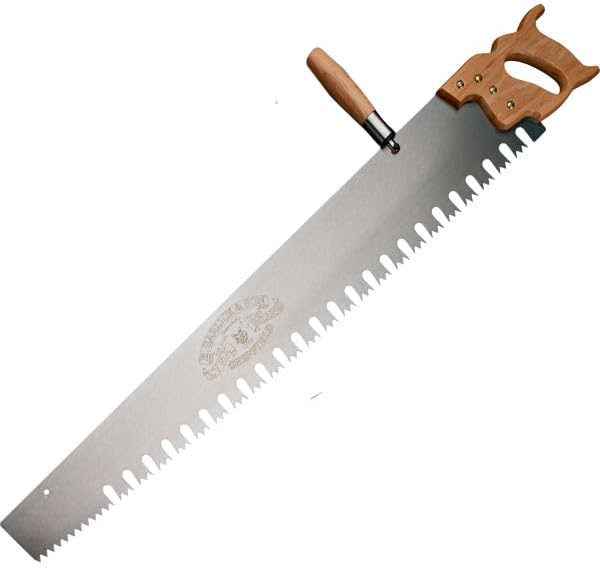
This Kings County Tools one-man crosscut saw is aimed at serious users who need a hand-powered tool for bucking and cutting large felled trunks. The 36-inch stainless steel blade has aggressive, pre-sharpened Great American style teeth with deep gullets that self-clear sawdust and debris, so cuts stay clean and progress quickly through both dry and green wood. The slightly curved blade and 120-tooth pattern provide a smooth cutting stroke, while the beechwood main handle and optional 6-inch screw-on auxiliary handle let you switch between single- and two-handed use depending on the log and stance. Practical benefits include quieter, fuel-free operation compared with a chainsaw and easier control for precise bucking and sectioning. Important limitations are that it requires significant physical effort and technique for large-diameter trees, and it will be slower than a powered saw for high-volume work. Expect the best results when used by someone comfortable with traditional sawing technique and looking for a durable, low-tech solution for occasional to moderate log cutting.
Best for: Buyers who prioritize cutting performance and control without a chainsaw and who are willing to use physical effort and technique for clean, precise log bucking.
Less Ideal for: People who need fast, high-volume processing of many large trees or who prefer a powered, low-effort solution.
- 36-inch stainless steel blade with aggressive, pre-sharpened Great American style teeth for fast crosscutting
- Deep self-clearing gullets that eject sawdust and reduce blade binding
- Screw-on auxiliary handle allows two-handed leverage for tougher cuts
- Beechwood handles provide durable, comfortable grips for extended use
- Manual operation requires significant physical effort and proper technique for large logs
- Slower than chainsaws for high-volume or time-sensitive jobs
Verdict: Choose this saw if you want a durable, high-performance hand tool for precise log bucking without using a chainsaw.
HAUTMEC 22" Hand Saw with 9 TPI Coarse Teeth and Ergonomic Handle
| Blade Material | High Carbon Steel |
|---|---|
| Number of Teeth | 9 |
| Blade Length | 22 inches |
| Other Special Features of the Product | Ergonomic Handle |
| Surface Recommendation | Wood |
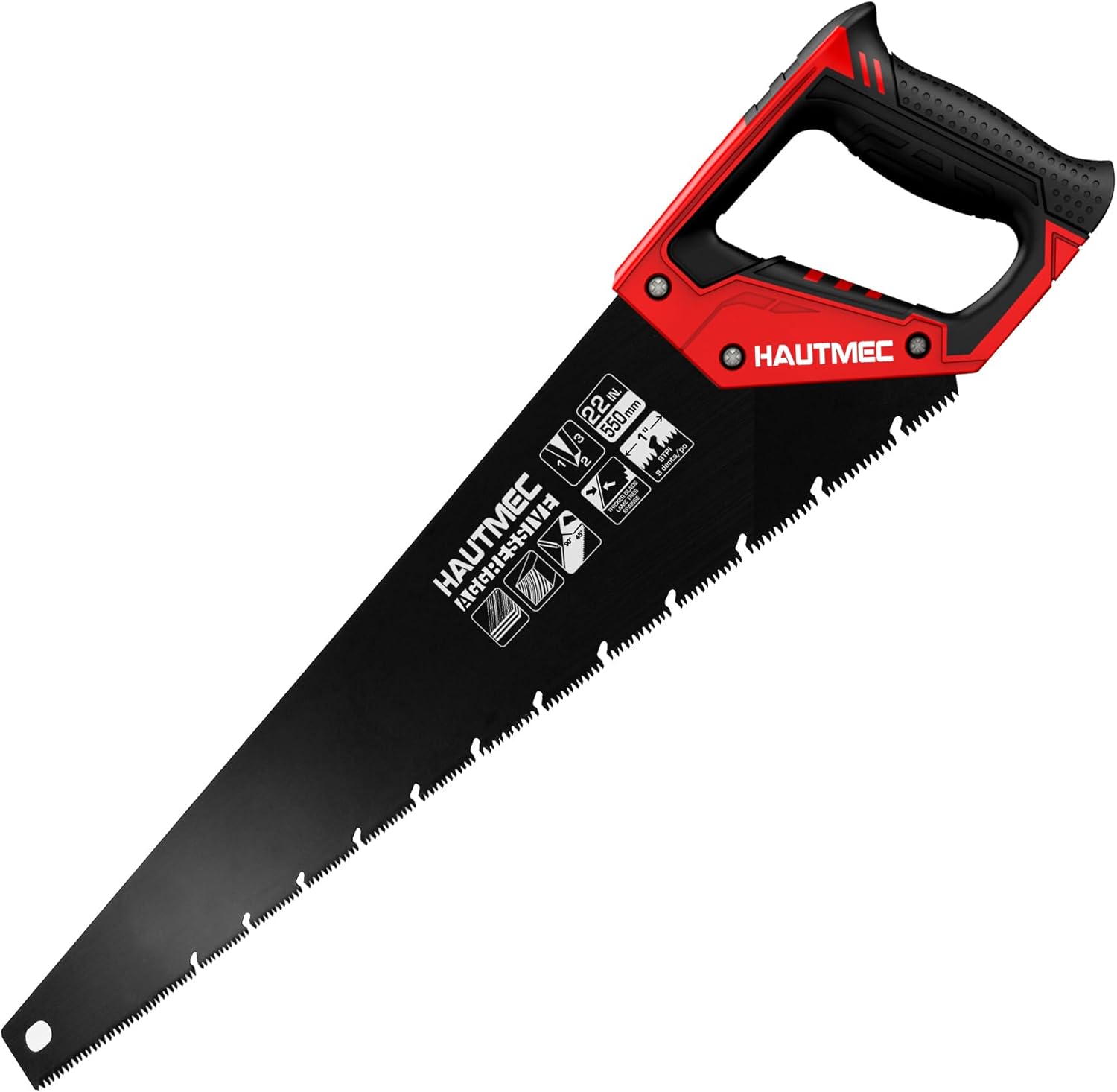
The HAUTMEC 22" hand saw is a heavy-duty manual saw intended for quick, aggressive cuts in logs, lumber, and general woodworking. Its 9 TPI triple-ground teeth and deep gullets evacuate chips efficiently, so you can cut faster with fewer binding interruptions when ripping or crosscutting medium to large-diameter wood. The 1mm heat-treated high carbon steel blade has a low-friction black coating and induction-hardened teeth for longer sharpness and improved rust resistance, which keeps performance consistent during repeated outdoor use. The two-component ergonomic handle with TPE grip is comfortable and non-slip and includes molded 45 and 90 degree guides for on-the-spot angle marking. Limitations are typical of a coarse-tooth saw: it is optimized for speed on larger stock and will leave a rougher finish than fine-tooth saws, and the 9 TPI tooth spacing can be less effective on very small or delicate work. For cutting logs and pruning larger branches it performs well, but it is not a replacement for a chainsaw on very large trunks or for fine joinery work.
Best for: Buyers who want a practical, efficient hand saw for cutting logs, trimming medium branches, and general lumber work and who prioritize speed and durability over a fine finish.
Less Ideal for: People who need very fine, smooth cuts for joinery or those who regularly cut very large-diameter trees and require a powered saw for speed and safety.
- Aggressive 9 TPI triple-ground teeth and deep gullets for faster chip removal and quicker cuts in larger wood
- Heat-treated high carbon steel blade with low-friction coating and induction-hardened teeth for longer edge life and rust resistance
- Ergonomic two-component TPE handle with non-slip surface reduces fatigue and includes angle guides for quick layout
- 22-inch blade length gives good reach for cutting logs, branches, and longer boards
- Coarse 9 TPI produces a rougher finish compared with fine-tooth saws, so additional sanding may be required
- Not suitable as a substitute for power tools on very large trunks or high-volume cutting tasks
Verdict: If you need a durable, fast manual saw for cutting logs and larger lumber by hand, this 22" HAUTMEC delivers efficient, long-lasting performance.
Skyocean 36" Pocket Chainsaw with Paracord Handles
| Power Source | Manual |
|---|---|
| Blade Length | 36 inches |
| Number of Teeth | 16 |
| Blade Material | High Speed Steel |
| Handle Material | Nylon |
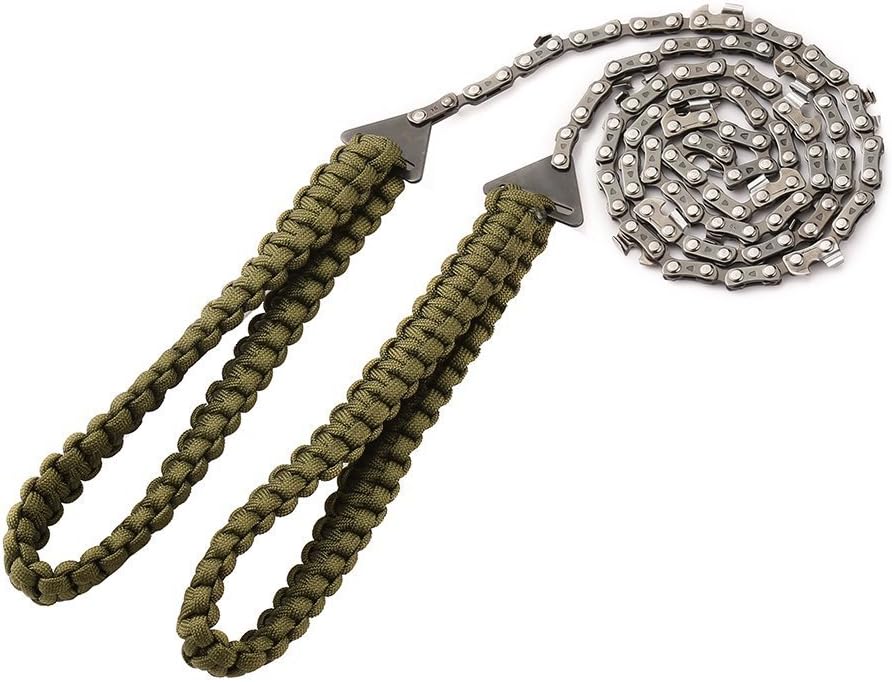
The Skyocean 36" pocket chainsaw is a lightweight, manual cutting tool intended for backpacking, camping, and quick trail work. Its 36-inch high-speed steel chain with 16 teeth wraps between two paracord handles so two people or a single user with a bracket-like motion can saw through limbs and small logs. It packs into a small nylon pouch and the paracord handles can be unraveled for extended reach, which is useful for overhead branches or when you need improvised rope. The chain is heat treated for durability and the folding design makes it easy to carry in a pack or belt loop. Expect fast cuts on 1 to 3 inch limbs and reasonable performance on thicker hardwood if you have steady pull technique. Limitations are that it is a manual tool so cutting large trunks is slow and physically demanding, and the exposed chain requires care to avoid dulling or injury and occasional cleaning to prevent corrosion after wet use. For basic log-cutting tasks in the outdoors it is a practical, highly portable backup saw.
Best for: Buyers who prioritize low-cost, lightweight tools for occasional log and branch cutting while camping or maintaining a small woodpile and who value something easy to stash in a pack.
Less Ideal for: People who need to cut large diameter logs frequently or want a faster, power-driven solution should choose a dedicated folding saw or chainsaw instead.
- Very portable and packs into a small nylon pouch for easy carry
- 36-inch chain provides longer strokes and better reach than shorter pocket saws
- Heat-treated high-speed steel chain designed to resist wear and cut hardwood
- Paracord handles double as emergency cordage and can be extended for higher cuts
- Manual cutting requires significant physical effort on larger logs
- Exposed chain needs routine cleaning and care to prevent rust and dulling
Verdict: A budget-friendly, highly portable hand saw that delivers fast, practical cutting for small logs and branches when you need a lightweight backup tool.
Silky Professional BIGBOY Folding Saw 360mm (Large Teeth, Model 354-36)

| Blade Length | 360mm / 14.2 inches |
|---|---|
| Teeth Configuration | Large teeth (5.9 TPI / 7 teeth per 30mm) |
| Cut Capacity | 7.1" |
| Blade Material | Hard Chrome Plated Steel |
| Handle Material | Rubber (GOM) |
The Silky BIGBOY folding saw is built for dependable, high-performance pruning and limb removal when you need a tool that lasts. Its 14.2-inch hard chrome plated blade uses Silky's taper-ground, non-set tooth design and Mirai-Me tooth geometry to cut quickly and stay sharp while resisting rust and resin. The blade locks in two positions for flush cutting and folds into the handle for safer transport and storage. A non-slip two-handed GOM rubber handle gives a secure, comfortable grip in wet or cold conditions and reduces vibration during aggressive cuts. In practice this saw excels at cutting green or dry hardwood up to its 7.1-inch cut capacity, making it suitable for tree work, heavy pruning, and clearing branches around a property. The main compromises are that it is a manual tool so large-diameter trunks require more time and effort than powered equipment and the rigid professional blade is less convenient for ultra-lightpacking situations. For anyone focused on a long-lasting, consistently sharp hand saw for serious tree and limb work, the BIGBOY is a reliable choice.
Best for: Buyers who prioritize a durable, consistently sharp hand saw for regular tree pruning and limb removal and who prefer a tool built to perform reliably over many seasons.
Less Ideal for: Casual gardeners who rarely cut branches or people who need an ultralight saw for backpacking and minimal gear scenarios.
- Hard chrome plated, taper-ground blade resists rust and reduces friction for longer life
- Mirai-Me precision teeth and non-set design deliver fast, clean cuts through green and dry wood
- Two-position locking blade allows flush cutting and safer storage when folded
- Non-slip two-handed rubberized handle provides secure, comfortable grip and reduced vibration
- Manual operation makes cutting very large trunks slow and physically demanding
- Heavier and less packable than small pocket saws for ultralight outdoor use
Verdict: Choose the Silky BIGBOY when you want a rugged, long-lasting folding saw that delivers fast, reliable cuts for tree pruning and limb work.
REXBETI 11-Inch Folding Pruning Saw with SK-5 Steel Blade

| Blade Material | Alloy Steel (SK-5) |
|---|---|
| Blade Length | 11 inches |
| Number of Teeth | 7 TPI |
| Handle Material | Rubber coated polymer |
| Other Feature | Foldable |
The REXBETI 11-inch folding pruning saw is a portable hand saw built for yard work, camping, and basic bushcraft tasks. Its SK-5 steel blade with aggressive 7 TPI staggered teeth cuts green wood efficiently and is rated by the maker to handle branches roughly 6–7 inches in diameter. The blade folds into an ergonomic rubber-coated polymer handle for safe storage and easy carrying in a backpack or tool kit, and the reinforced blade design improves stability during heavier cuts. In practice this saw is handy for pruning limbs, cutting small firewood, and quick campsite tasks where a compact, manual tool is preferable to a chainsaw. Notable features include the triple-cut tooth pattern for smoother sawing and a lightweight foldable design that reduces bulk. Limitations to expect are the usual ones for a folding hand saw: it requires more physical effort and time than a powered saw, and long or repeated heavy-duty cutting will eventually dull the blade and may push it beyond what a foldable tool can handle comfortably.
Best for: Buyers who want a reliable, portable manual saw for routine pruning, campsite woodwork, and occasional firewood tasks and who value compactness and proven user feedback when choosing tools.
Less Ideal for: People who need to fell large trees, cut long runs of hardwood, or want the speed and convenience of a motorized saw should choose a powered saw instead.
- SK-5 steel blade with 7 TPI staggered teeth for efficient cutting of green wood
- Folding design and light weight make it easy to carry in backpacks and tool kits
- Ergonomic rubber-coated handle provides a secure grip in varied conditions
- Reinforced blade structure improves stability during tougher cuts
- Manual operation is slower and more physically demanding than powered saws
- Blade will dull with heavy use and will need sharpening or replacement over time
Verdict: A compact, well-reviewed folding pruning saw that delivers strong manual cutting performance for routine pruning and campsite wood tasks.
Craft911 11-inch Folding Pruning Saw with SK5 Triple-Cut Blade

| Blade Length | 11 inches |
|---|---|
| Blade Material | High Carbon Steel |
| Number of Teeth | 7 |
| Handle Material | TPR Rubber |
| Power Source | Manual |
This Craft911 folding pruning saw is a straightforward, no-frills tool for cutting small to medium branches when working on trees or preparing firewood. The 11-inch SK5 high-carbon steel blade with 7 TPI triple-cut teeth delivers aggressive, fast cuts through both green and dry wood, while the curved blade profile helps keep the saw tracking on the cut. The folding design makes it easy to carry in a backpack or tool kit and the TPR rubber handle gives a secure, comfortable grip that reduces hand fatigue during longer jobs. Because it is manual and relatively compact, it is best for pruning, limbing, and campsite wood processing rather than felling large trunks. The construction is described as heavy duty and the blade locks in place for safe cutting, but users who frequently tackle very thick or high branches will want a larger saw or a powered option. For routine tree maintenance and outdoor use this saw balances portability, cutting speed, and reliable blade material.
Best for: Buyers who want a reliable, portable hand saw for routine tree trimming, pruning, and campsite wood cutting and who prioritize a simple, durable tool over power or large cutting capacity.
Less Ideal for: People who need to fell large trees, cut very thick hardwood trunks, or prefer motorized tools for speed and reduced physical effort.
- SK5 high-carbon steel blade with 7 TPI triple-cut teeth for fast, aggressive cutting
- Folding design that stores safely and fits in a backpack or tool bag
- TPR rubber ergonomic handle for a secure, comfortable grip
- Curved blade shape helps maintain alignment through the cut
- 11-inch blade size limits efficiency on very large trunks or very thick limbs
- Manual operation requires more effort and time compared with powered saws
Verdict: A portable, heavy-duty folding pruning saw that gives fast manual cutting for routine tree trimming and campsite woodwork.
Choosing the Right Hand Saw for Cutting Logs: Key Factors to Consider
Blade Length and Stroke Efficiency
Blade length directly affects how many strokes it takes to cut through a log. Longer blades let you take deeper, more efficient strokes across the grain, which reduces time and effort on medium and large logs.
Too long a blade can be awkward to maneuver in tight spaces, so pick a length that matches the typical log diameter you expect to cut. For frequent work on larger rounds, favor blades that permit long, smooth strokes without tiring your shoulder and back.
Tooth Geometry and Cut Type
Tooth pattern determines whether a saw excels at rip cuts along the grain or crosscuts across the grain. For cutting logs into sections, tooth geometry that clears chips quickly and resists clogging will keep each stroke effective.
Aggressive, large teeth remove material fast but can produce rougher faces and require more effort on hardwoods. Finer teeth give a cleaner cut but slow progress. Consider mixed or alternate tooth patterns that balance speed and control for varied wood conditions.
Blade Material and Edge Retention
The steel alloy and heat treatment affect how long teeth stay sharp and how often you need to resharpen or replace the blade. Better edge retention reduces downtime and keeps cutting speed consistent through multiple logs.
Harder steels can hold an edge longer but may be more brittle and harder to file in the field. Softer steels are easier to sharpen but require more frequent maintenance. Match the blade material to how often you are willing to sharpen and the tools you have on hand.
Handle Ergonomics and Vibration Control
A comfortable handle reduces hand fatigue during repetitive cutting and improves control when starting and finishing a cut. Grip shape, size, and material influence how well the saw seats in your hand and how much torque you can apply safely.
Look for handles that provide a secure grip even when wet and that position the wrist to maximize stroke power. Some handles incorporate cushioning or isolation features that reduce vibration and hot spots during long sessions.
Portability and Blade Protection
Because log-cutting often happens at the stump or in the field, a saw that is easy to carry and quick to deploy saves time. Compact folding designs or models with protective sheaths protect the blade and prevent accidental damage while transporting.
Consider how the saw packs with other gear and whether it can be mounted or hung on a belt or pack. Blade covers that lock in place are important for safety and for keeping teeth from dulling against other tools.
Resistance to Rust and Outdoor Conditions
Saws stored in sheds, trucks, or damp environments need coatings or stainless alloys to resist corrosion. Surface treatments preserve tooth geometry and reduce the need for frequent cleaning and sharpening after exposure to sap or moisture.
Even with protective finishes, regular drying and light oiling extend service life. Factor in how often you use the saw outdoors and whether you will maintain it between jobs when choosing materials and finishes.
Best Saw Types for Log Work
Several hand saw forms suit log cutting depending on scale and access. Straight-back crosscut and rip saws work well for bench-style sawing, while folding saws and pruning-style blades are convenient for fieldwork. For larger rounds, a long straight saw that supports long strokes is usually more efficient.
Folding saws are lightweight and packable, ideal when you need mobility. Fixed-blade saws tend to give more control and can accept longer blades. Consider your typical workspace and how often you will carry the saw when choosing a style.
- Fixed-blade long saws: better for long continuous strokes
- Folding saws: best for portability and occasional wood processing
- Crosscut vs rip geometry: choose based on whether you cut across or along the grain more often
Sharpening and Field Maintenance
Regular maintenance keeps a hand saw cutting efficiently. Light filing of teeth, deburring the gullets, and wiping sap or pitch away after a job preserves cutting speed and reduces rust risk. Even a quick hone in the field can restore much of the original performance.
Bring a small flat or triangular file for common tooth patterns and a rag with light oil to protect the blade after cleaning. For folding saws, check pivots periodically and tighten any loose hardware to maintain smooth action.
- Carry a compact file matched to your tooth pattern
- Wipe blades dry and oil lightly before storage
- Inspect teeth for missing or bent points after use
Safe Techniques for Cutting Logs by Hand
Set up a stable work surface: use sawbucks, a chopping block, or secure the log between supports so it does not roll. Unstable logs increase the risk of pinching the blade or losing control. Position yourself so you can take full, controlled strokes without twisting your body.
Start cuts carefully to establish a kerf, then use full strokes to let the saw do the work. Avoid forcing the blade. When finishing a cut, reduce power to prevent splintering and to keep the saw from binding in the closing section of the kerf.
- Stabilize the log before cutting
- Use long, even strokes and let the teeth remove material
- Be mindful of kickback and protect hands with gloves
Working With Wet or Knotty Wood
Wet and knotty wood slows cutting and clogs teeth with sap. Choose blades with gullets that clear chips quickly, and pause to clear the cut when sap accumulates. For extremely knotty sections, reduce stroke speed and apply steady pressure to avoid bending teeth.
If you frequently cut freshly felled trees, plan for more frequent sharpening and routine cleaning. A blade with a corrosion-resistant finish helps when wood moisture is consistently present.
- Clear chips from the kerf often when cutting wet wood
- Use blades with aggressive gullets for faster clearing
- Expect more frequent maintenance after cutting green timber
Carrying and Storing Saws Safely
Secure storage preserves blade sharpness and prevents accidents. Use sheaths or folded locked positions to avoid contact with teeth when carrying. Hang saws in a dry place where they are unlikely to collect moisture or dust.
For seasonal tools, clean and oil blades before long-term storage. Check folding mechanisms and locking features for wear before redeploying the saw for heavy tasks.
- Use protective sheaths or locking folds when transporting
- Store in a dry, ventilated place to avoid rust
- Inspect locks and pivot points before each season
How We Chose the Best Hand Saw for Cutting Logs
We focused on real-world log cutting performance and durability rather than marketing claims. Our selection began by filtering for saws designed for rip and crosscut work on round wood, then excluding trim or pruning-only blades that lack the tooth geometry or length needed for logs. Key evaluation dimensions included cutting speed and tooth geometry, blade material and edge retention, handle ergonomics and vibration control, and portability with blade protection for field use. We also considered resistance to corrosion for outdoor storage and how easy replacement or sharpening is in the field. Saws that were undersized for typical log diameters or built primarily for fine carpentry were excluded. The final list contains tools that strike practical tradeoffs between aggressive cutting and controllable strokes, suitable for gardeners, homesteaders, and backyard wood users.
FAQ
What blade length is best for cutting 8-12 inch logs?
A mid-length blade that allows full strokes across the diameter is usually best for 8 to 12 inch logs. That typically means choosing a saw long enough to take comfortable, deep strokes without overreaching. Very short blades will increase the number of strokes and fatigue.
Can I use a pruning saw for cutting large logs?
Pruning saws can handle small to medium rounds but are often optimized for curves and limited depth. For larger logs you will want a longer blade with tooth geometry meant for sustained crosscutting to keep effort and time reasonable.
How often should I sharpen a hand saw used for firewood?
Sharpening frequency depends on wood type and use intensity. With regular use on hardwoods you may need light filing after several days of work. Softer woods and occasional use extend the time between sharpenings. Inspect cutting performance and tooth tips to judge timing.
Is a folding saw strong enough for regular log processing?
Modern folding saws can be robust and convenient, but heavy, repeated log processing favors fixed-blade designs for greater rigidity and longer effective strokes. Folding models are ideal when portability matters and processing volumes are moderate.
How do I prevent a blade from rusting after outdoor use?
Wipe the blade dry after use and apply a light coat of oil before storing. If sap is present, remove it with solvent or warm soapy water first. Store the saw in a dry place and consider a corrosion-resistant finish if you routinely leave tools outdoors.
Final Verdict
Prioritize the saw features that match how and where you cut logs. If you process larger rounds regularly, favor longer, stiffer blades with tooth geometry optimized for fast chip clearing. If portability and occasional field work are more important, choose compact folding designs with secure locks and easy maintenance. Balance cutting speed, blade durability, and handle comfort for the most productive sessions. With the right mix of blade length, teeth, and materials you can reduce fatigue, keep cuts cleaner, and maintain a dependable tool for season after season.
