

Note: This article contains affiliate links. If you click on these links and make a purchase, I may earn a small commission at no extra cost to you. This helps support my research and content. Read my full affiliate disclosure here.
If you handle large trees, frequent storm cleanup, or heavy firewood duty, a high end chainsaw makes a measurable difference in speed and safety. You need reliable power, durable components, and features that reduce operator fatigue so long jobs do not wear you down. This guide brings together seven top shortlisted high-end chainsaws suited for demanding residential and light-commercial work. Each pick was evaluated on real-garden priorities like sustained cutting power, chain and bar durability, vibration control, ergonomics, and serviceability. Read on to understand the tradeoffs and which features matter most for your workload before you inspect specific models.
Top Picks at a Glance
| Best Overall The best all-around choice for most situations | Makita XCU04PT1 36V (18V x2) LXT Brushless 16" Cordless Chainsaw Kit (4 Batteries) |  |
| Best Quality Built to a higher standard if you want something more solid | Husqvarna 555 Professional Gas Chainsaw, 24-inch Bar |  |
| Best Value The sweet spot between price and what you get | Husqvarna 455 Rancher Gas Chainsaw, 20-inch, 3.5 HP |  |
| Best Budget The cheapest option that still gets the job done reliably | EGO POWER+ 18" Cordless Chainsaw with 6.0Ah Battery (CS1815) |  |
| Highest Rated A top-rated pick with lots of positive feedback | STIHL MS 201 TC-M Chainsaw, 35 cm Cutting Length |  |
| Most Popular A crowd favorite that many people choose with confidence | Milwaukee M18 FUEL 16 in. Cordless Chainsaw (Tool Only) |  |
| Best Seller A high-volume bestseller chosen again and again | Husqvarna 460 Rancher 24-Inch Gas Chainsaw |  |
Makita XCU04PT1 36V (18V x2) LXT Brushless 16" Cordless Chainsaw Kit (4 Batteries)

| Power Source | Battery Powered |
|---|---|
| Horsepower | 32 hp |
| Chain Length | 16 inches |
| Model Number | XCU04PT1 |
The Makita XCU04PT1 is a heavy-duty cordless chainsaw built to replace small gas saws for demanding property work. It runs on two 18V LXT batteries (36V total) and an outer-rotor brushless direct-drive motor that Makita says produces power comparable to a 32cc gas engine while keeping emissions and noise to a minimum. Typical use cases are pruning, limb and small tree cutting, and contractor yard work where quick startup, lower maintenance, and quieter operation matter. Notable features include tool-less chain adjustment, an electric chain brake, variable-speed trigger with up to 3,940 FPM chain speed, and Star Protection electronics to reduce overload and overheating. Practical benefits are instant readiness without fuel mixing, fewer service items to manage, and compatibility with the large Makita 18V battery ecosystem for fast turnaround between jobs. Limitations are inherent to battery systems: to match long continuous gas runs you need multiple charged batteries and chargers, and this kit is sized for pro or heavy‑duty users rather than occasional homeowners who rarely need that level of output.
Best for: Professionals and serious homeowners who want gas-class cutting power without the noise, emissions, and routine maintenance of a gas saw and who already invest in or plan to use Makita 18V batteries.
Less Ideal for: Casual users who only need an occasional light-duty saw or those unwilling to manage multiple battery packs and chargers for extended jobs.
- Brushless outer-rotor direct-drive motor provides power comparable to a 32cc gas saw with lower noise and no emissions
- Uses two 18V LXT batteries so it integrates with a large battery ecosystem and offers fast charge turnaround
- Tool-less chain adjustment and electric brake simplify maintenance and improve jobsite productivity
- Star Protection electronics help protect tool and battery from overload, overheating, and over-discharging
- Requires multiple high-capacity batteries and charging infrastructure to sustain long continuous cutting sessions
Verdict: If you need near-gas power in a low-noise, low-maintenance package and already use or plan to adopt Makita 18V batteries, this cordless 16" kit delivers professional performance.
Husqvarna 555 Professional Gas Chainsaw, 24-inch Bar

| Power Source | Gas Powered |
|---|---|
| Horsepower | 4.16 hp |
| Engine Displacement | 59.8 CC |
| Chain Length | 24 inches |
| Sound Level | 106 dBA |
The Husqvarna 555 is built for demanding cutting work like felling small to midsize trees, limbing, bucking, and cutting firewood. It pairs a 59.8 cc, 4.16 HP X-Torq engine with a 24-inch recommended bar and an X-Cut chain to deliver strong, consistent cutting power and efficient fuel use. Features such as Smart Start, side-mounted chain tensioning, Air Injection pre-cleaning, AutoTune carburetor, and an adjustable chain oiler reduce downtime and keep performance stable across different conditions. The slim body and anti-vibration system make long tasks easier to handle, while the inertia-activated chain brake helps reduce kickback risk. Expect professional-level durability from the magnesium crankcase and three-piece crankshaft, but note that this is a loud, gas-powered machine and it requires regular fuel, oil mixing, and basic maintenance. At its size and power it is less suitable for casual yard trimming or users seeking an electric or low-noise option.
Best for: Experienced users, landscapers, and pros who prioritize raw cutting performance and durability for heavy felling, bucking, and firewood processing in outdoor settings.
Less Ideal for: Casual homeowners who need a low-noise, low-maintenance tool or users who prefer cordless or electric models for small yard tasks.
- High power output from a 59.8 cc X-Torq engine for demanding cutting tasks
- 24-inch bar and X-Cut chain for extended reach and efficient cutting
- AutoTune and Air Injection systems for consistent performance and reduced air filter maintenance
- Smart Start and side-mounted tensioning for easier startup and quick chain adjustments
- Loud 106 dBA sound level makes hearing protection essential and limits use in noise-sensitive areas
- Requires regular two-stroke fuel/oil mixing and routine maintenance common to gas chainsaws
Verdict: Buy this if you need a professional, high-power gas chainsaw that delivers reliable cutting performance for heavy-duty timber work.
Husqvarna 455 Rancher Gas Chainsaw, 20-inch, 3.5 HP

| Power Source | Gas Powered |
|---|---|
| Horsepower | 3.5 hp |
| Chain Length | 20 inches |
The Husqvarna 455 Rancher is a robust gas chainsaw aimed at homeowners and landowners who need a dependable workhorse for tasks like storm cleanup, cutting firewood, and routine tree trimming. It uses a 3.5-HP X-Torq two-stroke engine and a 20-inch bar to deliver strong cutting power while Smart Start and an inertia-activated chain brake simplify starting and improve safety. Practical features such as Air Injection to reduce debris reaching the filter, side-mounted chain tensioning for on-the-fly adjustments, LowVib vibration dampening, and an ergonomic offset front handle make longer jobs less tiring. Maintenance is straightforward thanks to the automatic oiler and accessible tensioning, but being a gas model it requires fuel mixing and periodic engine upkeep that electric alternatives avoid. Its weight and fuel noise are typical for this class, so expect more vibration and emissions than battery or corded saws. For someone who needs reliable, professional-level cutting performance in an all-around package, this model balances power and user-friendly features well.
Best for: Buyers who want a capable, versatile saw for frequent property maintenance and heavier cutting tasks and who prioritize cutting performance and durability over quieter electric operation.
Less Ideal for: Casual users with small yards or those who prefer low-noise, low-maintenance electric or battery saws should consider lighter alternatives.
- Powerful 3.5-HP X-Torq engine suitable for heavy cutting and firewood
- Smart Start and inertia chain brake for easier starting and improved safety
- Air Injection centrifugal system reduces debris reaching the air filter to extend engine life
- Side-mounted chain tensioning and automatic oiler simplify adjustments and routine maintenance
- Requires gas and oil mixing and regular engine maintenance unlike battery models
- Heavier and louder than electric chainsaws, which can increase fatigue and noise on long jobs
Verdict: Choose the 455 Rancher when you need a durable, pro-capable gas chainsaw that balances strong cutting power with user-focused features for regular property work.
EGO POWER+ 18" Cordless Chainsaw with 6.0Ah Battery (CS1815)

| Chain Length | 18 inches |
|---|---|
| Power Source | Battery Powered |
| Included Components | 6.0Ah Battery and 320W Charger |
| Motor Type (from comparison) | Brushless Motor |
The EGO POWER+ 18" cordless chainsaw delivers near-gas power in a battery package aimed at homeowners and property managers who need dependable cutting performance. Its brushless 2500W-equivalent motor and 18-inch bar handle large branches, stumps, and firewood, while the included 56V 6.0Ah ARC Lithium battery is rated for up to about 330 cuts on a 4×4. Practical features include an industry-style LED display for speed and battery status, an adjustable LED work light for low-light jobs, automatic oiling, and a tool-free chain tensioning dial that makes maintenance quick. The design also includes large metal bucking spikes for stable cutting. The saw is quieter and cleaner than gas alternatives and benefits from a broad EGO battery ecosystem and a multi-year warranty for the tool and battery. Consider that the unit is a full-size chainsaw and therefore heavier and bulkier than compact models, and runtime depends on the workload and how aggressively the saw is used.
Best for: Homeowners, DIY landscapers, and property managers who need a reliable, near-gas‑level cordless chainsaw for seasonal cleanup, large branches, and firewood without the fuss of gas engines.
Less Ideal for: Users who prioritize ultra-lightweight handheld trimming or very long continuous commercial cutting shifts should consider lighter or gas-powered alternatives.
- Brushless motor with gas-equivalent 50cc performance for demanding cuts
- Included 56V 6.0Ah ARC Lithium battery delivers long runtime and fast charging
- Tool-free chain tensioning and automatic oiling simplify maintenance
- Digital LED display and adjustable work light provide real-time status and better visibility
- Backed by a multi-year warranty for tool and battery
- Full-size saw that is heavier and less maneuverable than compact cordless models
- Runtime will vary with load and aggressive cutting can reduce the number of cuts per charge
Verdict: Choose this EGO 18" cordless chainsaw if you want reliable, near‑gas power and convenient battery operation with simple maintenance and a robust warranty.
STIHL MS 201 TC-M Chainsaw, 35 cm Cutting Length

| Power Source | Gas Powered |
|---|---|
| Horsepower | 2.4 hp |
| Chain Length | 35 centimeters |
| Manufacturer Warranty Description | 1 year |
The STIHL MS 201 TC-M is a gas-powered chainsaw built for dependable performance in demanding yard and light professional work. It pairs a 2.4 hp engine with a 35 cm cutting bar so it can handle limb work, pruning, and small to medium firewood cutting with steady power. Key features include a proven STIHL drivetrain and a compact chassis that makes the saw easier to maneuver in tight spaces and overhead jobs. Practical benefits are long spare-part availability and a one-year manufacturer warranty that support long-term ownership, while the gas power gives consistent cutting speed without dependence on batteries. Limitations are inherent to a compact gas saw: it requires fuel and routine maintenance like chain sharpening and tuning, and it is heavier and louder than comparable battery models. For buyers who prioritize reliable, serviceable power and parts support, this model delivers consistent, workshop-serviceable performance.
Best for: Buyers who need a dependable, serviceable gas chainsaw for regular yard work or light professional tasks and who value long-term parts support and predictable power delivery.
Less Ideal for: Casual users who prefer lower-noise, low-maintenance battery tools or those who need the lightest possible tool for occasional use.
- Gas-powered 2.4 hp engine provides consistent cutting power for demanding tasks
- Compact 35 cm bar improves maneuverability for pruning and overhead work
- Long spare-part availability (25 years) supports long-term serviceability
- Manufacturer warranty and established brand reputation for reliability
- Requires regular fuel, maintenance, and tuning compared with electric alternatives
- Heavier and louder than cordless battery chainsaws, which affects comfort for extended use
Verdict: Choose this STIHL if you want a compact, gas-powered chainsaw built for reliable, serviceable performance and long-term parts support.
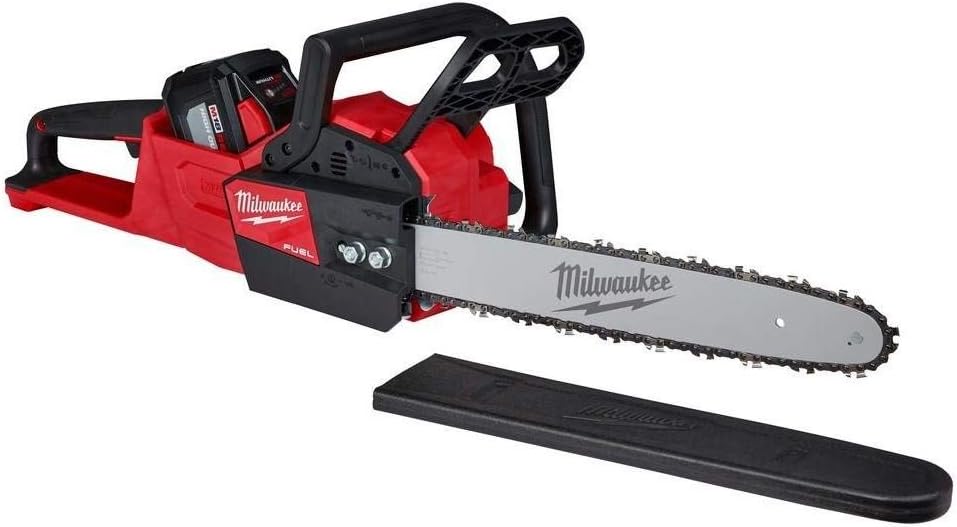
Milwaukee M18 FUEL 16 in. Cordless Chainsaw (Tool Only)
| Power Source | Battery Powered |
|---|---|
| Horsepower | 5.3 hp |
| Chain Length | 16 inches |
The Milwaukee M18 FUEL 16 in. cordless chainsaw is a tool-focused model that brings high power and convenient cordless operation to homeowner cutting tasks. It uses the M18 battery platform (battery and charger sold separately) and is built around a 16-inch Oregon bar and chain with an automatic oiler and variable speed trigger so you can control cut speed for different wood types. In practice this saw handles hardwood and mid-size logs quickly and is reported to deliver many cuts per charge with higher-capacity M18 packs. Notable features include the brushless FUEL motor for stronger acceleration and reduced maintenance compared with brushed motors, and a compact build that makes limbing and pruning easier in tight spaces. Important limitations are that the battery and charger are not included so you must already own or purchase compatible M18 batteries to realize the reliability benefits, and run time depends heavily on battery capacity. For homeowners who want near-professional cutting performance without gas fuss, this is a dependable cordless option when paired with a robust M18 battery.
Best for: Homeowners who prioritize a reliable, high-performance cordless saw and either already own M18 batteries or are prepared to invest in them for consistent, gas-free cutting around the yard.
Less Ideal for: Casual users who want an all-in-one package with battery and charger included or people needing very long continuous cutting sessions without spare batteries.
- Powerful brushless motor claims faster cuts than gas models for efficient work
- Automatic oiler maintains chain lubrication for consistent cutting performance
- Variable speed trigger gives precise control for pruning or larger cuts
- Compatible with the M18 battery ecosystem so higher-capacity packs boost runtime
- Battery and charger are not included so additional purchase is required
- Run time and cutting output depend on which M18 battery you use
Verdict: Choose this Milwaukee M18 FUEL 16 in. cordless chainsaw if you want near-professional cordless cutting performance and already use or plan to buy M18 batteries for dependable, gas-free operation.
Husqvarna 460 Rancher 24-Inch Gas Chainsaw

| Power Source | Gas Powered |
|---|---|
| Horsepower | 3.6 |
| Chain Length | 24 inches |
The Husqvarna 460 Rancher is a workhorse 24-inch gas chainsaw designed for heavy cutting jobs like felling medium to large trees and preparing firewood on acreage. It uses a 60.3-cc, 3.6-HP X-Torq two-stroke engine with Smart Start for easier ignition and an Air Injection centrifugal system that helps keep the air filter cleaner for longer service intervals. Ergonomic touches such as LowVib anti-vibration, a 7-degree offset front handle, side-mounted chain tensioning and an inertia-activated chain brake make long sessions more manageable and adjustments quicker in the field. Practical benefits include strong cutting power at low RPM, replaceable bar and chain, and an adjustable oil pump for proper lubrication during heavy use. Expect typical gas-saw care needs such as fuel mixing, periodic filter and spark plug maintenance, and the added noise and emissions of a gas engine. This is a substantial saw that performs well for owners who need sustained power and durability rather than a lightweight occasional-use option.
Best for: Landowners, small farm operators, and homeowners with extensive woodcutting needs who want a durable, high‑power saw for sustained felling and firewood preparation.
Less Ideal for: Casual users with light pruning or occasional cutting needs and those who prefer low-noise, low-maintenance electric or battery options.
- High power 60.3-cc X-Torq engine delivers strong cutting performance for large logs
- Smart Start and combined choke/stop control make starting quicker and reduce flooding
- Air Injection centrifugal system helps extend air filter life under dusty conditions
- Ergonomic design with LowVib technology and offset front handle reduces user fatigue
- Gas engine requires fuel mixing and regular maintenance compared with battery models
- Large 24-inch bar makes the saw heavier and less maneuverable for tight or overhead work
Verdict: Choose the 460 Rancher if you need a powerful, durable gas chainsaw built to handle large logs and sustained heavy-duty cutting.
Choosing the Right High End Chainsaw: Key Factors to Consider
Engine or Motor Output
Power rating and torque define how a high-end chainsaw performs under load. In practice this affects how smoothly the saw maintains RPMs when biting into knotty or large-diameter wood. A saw with higher sustained torque will clear thick limbs with fewer bogs and less repeated passwork. For electric high-end models, continuous motor cooling and sustained amperage are the practical equivalents of engine displacement.
Choose a spec that matches your typical workload. For frequent felling and bucking of large trees, prioritize higher torque and a robust cooling system to avoid performance drop-off during extended cutting sessions.
Bar and Chain Construction
The materials and build quality of the bar and chain determine cut consistency and service intervals. Hardened steel rails, quality chain steel, and correct heat treatment reduce wear and help maintain a sharper edge longer. Chain design affects cutting speed and kickback tendencies: ripping chains and low-kickback chains behave differently depending on the task.
Durable bars resist bending and wear around the sprocket nose. Consider the availability of replacement bars and chains compatible with the saw, since frequent professional use requires easy access to spares and correct fitment.
Vibration Control and Ergonomics
High vibration levels accelerate operator fatigue and reduce cutting precision. Quality damping systems, anti-vibration mounts, and balanced engine-motor layouts make long shifts less tiring. Handle shape, grip material, and weight distribution affect control during felling and limbing.
Ergonomic details such as an accessible choke, well-placed stop switch, and a comfortable top handle matter when working overhead or on awkward cuts. Try to match saw weight and ergonomics to your physical strength and the type of jobs you do most often.
Serviceability and Maintenance Access
High-end saws are meant for frequent use, so easy routine maintenance reduces downtime. Quick-access air filters, tool-less chain tensioners, and straightforward spark plug or brush access keep service simple in the field. For battery or electric saws, battery swapping or cord management are practical considerations.
Consider how easy it is to sharpen and tension the chain in the field, where a hard-to-access tensioner or messy air filter compartment adds time and frustration between jobs.
Starting and Cold-Weather Reliability
Reliable starting is essential when you cannot afford delays. For gas models, a good decompression system, choke design, and primer arrangement reduce pull counts and starter wear. For electric or battery saws, consistent power delivery and robust battery performance in lower temperatures matter.
In colder climates, consider how the saw behaves on a cold morning and whether its systems are tolerant of slow starts, since frequent cranking or battery performance dips can be a real productivity sink.
When a High End Saw Makes Sense
A high end chainsaw is worth considering when you routinely cut large-diameter timber, clear storm damage quickly, or rely on the tool for small-scale contracting. These saws are built for repeated heavy cycles and longer daily run times than consumer-level models.
If your jobs are limited to occasional trimming or small-diameter firewood, the additional weight and maintenance requirements of a high-end saw may not be justified. Match the saw class to the frequency and scale of the work rather than assuming that the most powerful option is always best.
- Ideal for frequent felling, bucking, and processing large logs
- Built for durability and serviceability under heavy use
- Often heavier and requires more routine maintenance than consumer models
Gas Vs Battery High End Options
Gas-powered high-end chainsaws still lead in raw sustained power and long runtime without battery swaps, making them common choices for remote or full-day work. They require fuel management, periodic carburetor and spark plug checks, and more hands-on service.
Battery high-end saws offer cleaner operation, lower vibration in some designs, and simpler maintenance. The tradeoff is limited continuous runtime unless you plan on multiple high-capacity batteries and a charging workflow. Consider access to charging and how often you need uninterrupted cutting.
- Gas: better for long, remote sessions where refueling is simpler than swapping batteries
- Battery: lower routine maintenance and quieter operation, but plan for battery management
Safety Practices for Heavy-Duty Cutting
Safety is central when using a high-end chainsaw because the increased power raises the consequences of mistakes. Use appropriate personal protective equipment such as cut-resistant chaps, eye protection, hearing protection, and gloves. Maintain a clear escape route when felling and keep bystanders well away from the work area.
Check the chain brake periodically and ensure chain tension is correct before each session. Inspect the bar nose, chain teeth, and sprocket area for wear; early replacement avoids sudden failures that can cause kickback or chain derailment.
- Wear full PPE and keep a safe felling zone
- Test the chain brake and inspect for wear before use
- Plan cuts and escape routes, especially on multi-stem or lean trees
Routine Maintenance Checklist
Establish a short pre-use checklist to preserve performance: check chain tension and sharpness, inspect the bar for straightness and wear, clean or replace the air filter, and verify chain lubrication. Clean the cooling fins and remove debris from the clutch and sprocket area after heavy dusty or resinous work.
Keep spare chains and a sharpener accessible. Regularly inspect anti-vibration mounts and handle fasteners, and service the fuel or battery systems according to manufacturer intervals to avoid preventable failures in the field.
- Daily: chain tension, sharpness, bar oil level
- Weekly: air filter, cooling passages, chain lubrication points
- Seasonal: spark plug, carburetor adjustment, full inspection
Felling and Bucking Techniques for Efficient Cuts
Use a combination of proper saw placement and progressive cutting to reduce strain on the saw and operator. For felling, make a controlled face cut and back cut while monitoring hinge thickness to direct the tree safely. For large logs, make relief cuts or use progressive depth passes instead of forcing a too-small bar through a thick section.
Let the saw do the work. Forcing the bar can stall the chain and overheat drive components. Keep the chain sharp and feed steadily for the fastest, cleanest cuts; dull chains increase fuel or battery consumption and accelerate wear.
- Make controlled, staged cuts on large-diameter wood
- Avoid forcing the bar; use larger bars for thicker logs when needed
- Maintain sharp chain teeth for efficient cutting and reduced strain
How We Chose the Best High End Chainsaw
We focused on criteria that matter in real-world yard and forest work rather than marketing claims. Key evaluation dimensions included sustained engine or motor power under load, which determines how quickly and consistently a saw cuts larger-diameter wood. We assessed vibration control and ergonomics because reduced vibration lowers fatigue and improves cut accuracy during long sessions. Bar and chain construction and recommended maintenance practices were weighed for long-term durability and cost of ownership. We also considered starting reliability and ease of routine service tasks such as chain tensioning, air filter access, and spark plug replacement. Safety features and chain-brake performance were evaluated to ensure effective user protection in common failure modes. Excluded from our list were entry-level light-duty saws and small, consumer-only models that lack the power or serviceability expected of high-end equipment. We did not include tools intended solely for one-off occasional use. The final shortlist contains saws that met our power, durability, ergonomics, and serviceability thresholds appropriate for demanding property and professional tasks.
FAQ
How big a bar should I choose for heavy property work?
Bar length depends on the largest diameter you expect to cut. For frequent large-diameter felling and bucking, choose a longer bar to reduce the need for multiple passes. Keep in mind longer bars add weight and require more powerful drive systems to maintain performance.
Can electric high-end chainsaws match gas models for continuous work?
Electric and battery high-end saws can approach gas-level performance for many tasks, especially with high-capacity battery systems. However, for uninterrupted multi-hour sessions in remote areas, gas models still tend to provide longer continuous runtime without swapping power sources.
How often should I sharpen the chain during heavy use?
Sharpening frequency depends on wood type and use. With continuous heavy cutting, you may need to sharpen after a few hours of work or even sooner when cutting dirty or frozen timber. Monitor cutting speed and wood shavings to judge when the chain needs attention.
What maintenance tasks can I do in the field versus in the shop?
In the field you can handle chain tensioning, quick sharpening, bar oil refills, and basic cleaning of debris. More involved tasks like carburetor work, clutch service, or major bar and sprocket replacement are best done in a shop with proper tools and clean conditions.
Are anti-vibration systems worth it on a heavy saw?
Yes. Effective anti-vibration systems reduce operator fatigue and improve control, especially during long shifts. They also lower the cumulative strain on fasteners and mounts, which can reduce maintenance over time.
Final Verdict
Choose a high-end chainsaw by matching sustained power and serviceability to the scale of your work. Prioritize engine or motor torque, durable bar and chain construction, and vibration control if you expect long daily sessions. Plan for the maintenance that comes with higher-performance saws and match weight and ergonomics to who will be operating the tool. In the end, prioritize the dimensions that matter most for your workload: continuous cutting power for long jobs, easy field service to reduce downtime, and safety features that protect during demanding cuts. Those tradeoffs will guide you to the right high-end option for your property or professional needs.
