

Note: This article contains affiliate links. If you click on these links and make a purchase, I may earn a small commission at no extra cost to you. This helps support my research and content. Read my full affiliate disclosure here.
A high tunnel greenhouse can transform a backyard, community plot, or small farm by giving plants warmer, more stable conditions and earlier harvests. The right high tunnel balances structure, cover material, and ventilation so you get season extension without constant repair or excessive microclimate problems. This guide looks at a shortlist of top high tunnel greenhouses suited to a range of growing situations. We evaluated options across structural durability, light transmission, and grower-friendly features to help you pick a tunnel that will perform in your garden season after season. Read on for the factors we considered and practical advice for installing and using a high tunnel greenhouse.
Top Picks at a Glance
| Best Overall The best all-around choice for most situations | Quictent 25'x10'x6.6' Premium Tunnel Greenhouse with Dual Hinged Doors |  |
| Best Value The sweet spot between price and what you get | KING BIRD Premium 25x10x6.6 ft Tunnel Greenhouse (Upgraded Galvanized Frame) |  |
| Best Budget The cheapest option that still gets the job done reliably | VEVOR Walk-In Tunnel Greenhouse 9.6 x 6.4 x 6.2 ft Galvanized Steel Frame |  |
| Highest Rated A top-rated pick with lots of positive feedback | DNYKER 26×10×7 ft Walk-in Tunnel Greenhouse, Galvanized Steel Frame |  |
| Most Popular A crowd favorite that many people choose with confidence | VEVOR Walk-In Tunnel Greenhouse, 14.6 x 6.4 x 6.3 ft, Galvanized Steel Frame |  |
Quictent 25'x10'x6.6' Premium Tunnel Greenhouse with Dual Hinged Doors
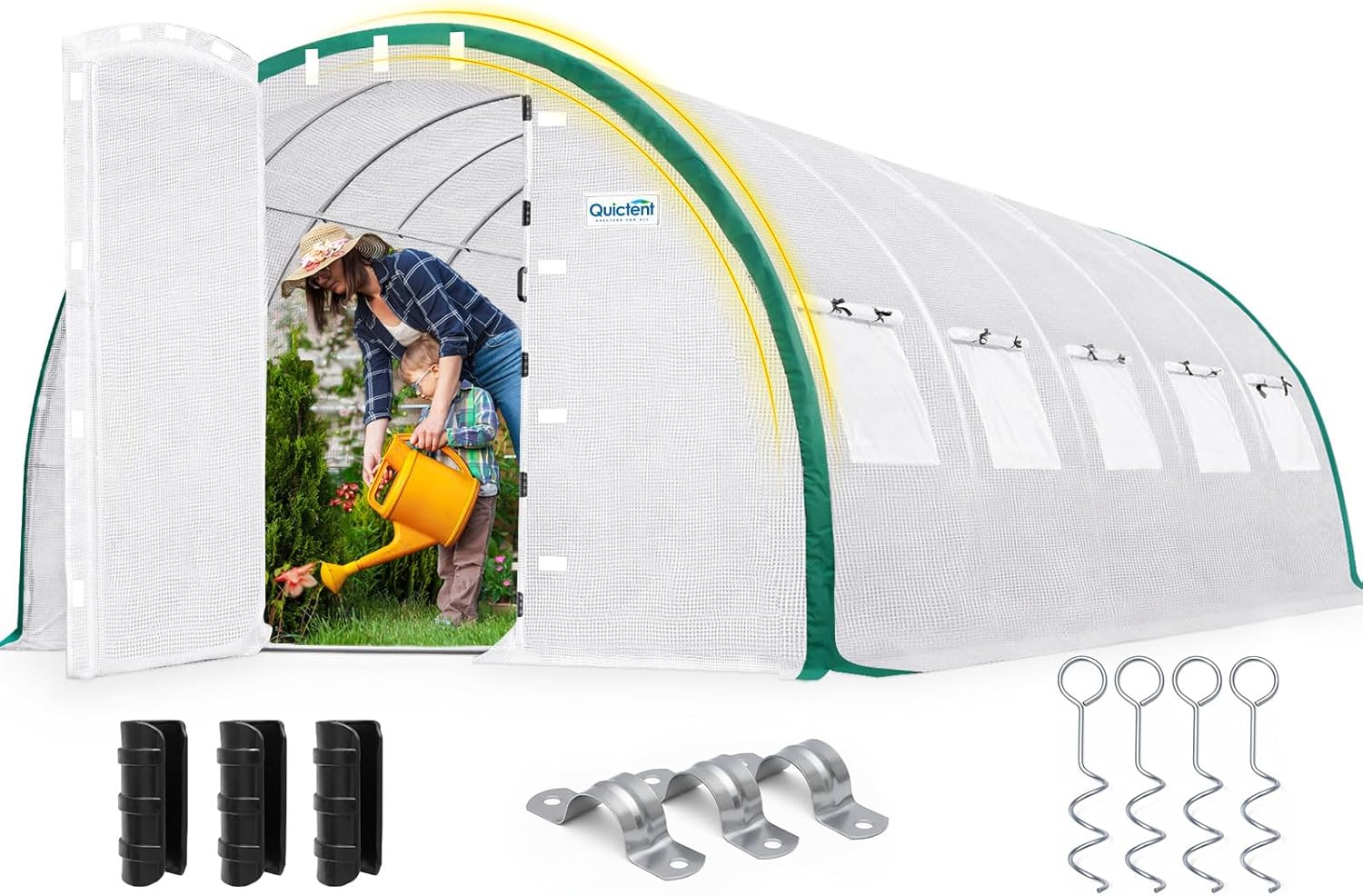
| Size | 25'x10'x6.6' |
|---|---|
| Cover Material | Polyethylene (PE) |
| Frame Material | Metal |
| Number of Doors | 2 |
| Number Of Vents | 10 |
This Quictent tunnel greenhouse is built as a heavy-duty walk-in structure for backyard vegetable and seedling production across seasons. It uses a galvanized steel hoop frame with extra crossbars and spiral ground stakes to reduce sagging and resist wind and snow load, while a reinforced 150 GSM polyethylene cover with Oxford seam patches and UV inhibitor promises higher tear resistance and about 85 percent light transmission. The patented dual hinged-door frames open fully for easy access with tools and better airflow compared with zipper-only models, and ten mesh windows plus full-perimeter velcro seals give options for ventilation or heat retention. Assembly requires time and two people for accurate anchoring and aligning the panels, and the unit is large and heavy to move once built. For gardeners wanting an affordable high-tunnel footprint with improved structural details and ventilation control, this greenhouse delivers reliable season extension; buyers should plan for careful installation and periodic cover tensioning to keep performance optimal.
Best for: Gardeners who want a substantial, season-extending high tunnel that balances durability and ventilation control for growing vegetables and seedlings in a backyard or small farm setting.
Less Ideal for: Those who need a compact, easily portable greenhouse or want a quick pop-up solution for short-term use.
- Reinforced galvanized steel frame with extra crossbars for improved snow and water load resistance
- Heavy-duty 150 GSM PE cover with seam reinforcement and UV inhibitor for tear resistance and high light transmission
- Dual hinged-door frames that open 180 degrees for easy equipment access and secure closure
- Multiple mesh windows and perimeter velcro seals for controlled ventilation and heat retention
- Large footprint and substantial weight make assembly and relocation labor intensive
- Requires careful anchoring and occasional cover tensioning to prevent sagging over time
Verdict: Choose this greenhouse when you want a roomy, reinforced tunnel that extends the growing season with sturdy structure and built-in ventilation control.
KING BIRD Premium 25x10x6.6 ft Tunnel Greenhouse (Upgraded Galvanized Frame)

| Size | 25'x10'x6.6' |
|---|---|
| Cover Material | Polyethylene (PE) |
| Frame Material | Alloy Steel |
| Nominal Wall Thickness | 150 GSM |
| Number Of Vents | 10 |
The KING BIRD 25x10x6.6 ft tunnel greenhouse is built to give a backyard gardener a roomy, protected environment for vegetables and ornamentals through winter and into the growing season. It uses a galvanized alloy-steel frame with extra crossbars and two stiffeners to add rigidity, and a 150 GSM PE cover treated for UVI 6 to resist UV damage and shed rain and snow. Ten roll-up screen windows and dual zipper mesh/PE doors let you balance ventilation and warmth as seasons change, while included stakes and ropes help anchor the structure. In practice this greenhouse suits seasonal crop protection, extending the growing season and keeping plants sheltered from wind and precipitation. The large interior gives space for multiple benches or tall plants, but assembly and anchoring take time and strong fastening is important in high winds because the cover can act like a sail. The upgraded zippers and reinforced seams reduce tearing, and the maker offers a one-year KING CARE+ support plan for component help and gardening advice.
Best for: Gardeners who want a roomy, season-extending outdoor greenhouse that prioritizes year-round plant protection and ventilation control and who are willing to invest time in proper installation and anchoring.
Less Ideal for: People with very limited yard space or those seeking a lightweight, portable hoop house for occasional use should consider smaller or simpler options.
- Reinforced galvanized-steel frame with extra crossbars and stiffeners for improved stability
- 150 GSM PE cover with UVI 6 treatment for longer UV and weather resistance
- Ten roll-up screen windows plus dual-layer zipper doors give good ventilation and pest protection
- Large internal footprint suitable for multiple benches or taller plants
- Includes ground stakes and ropes and upgraded zippers to reduce cover damage over time
- Large footprint requires significant site space and a multi-person assembly
- Cover can create a sail effect in strong winds so additional anchoring or removal in storms is recommended
Verdict: Buy this if you need a large, reinforced tunnel greenhouse that reliably extends the outdoor growing season and withstands sun, rain, and light winter conditions.
VEVOR Walk-In Tunnel Greenhouse 9.6 x 6.4 x 6.2 ft Galvanized Steel Frame

| Cover Material | Polyethylene (PE) |
|---|---|
| Frame Material | Alloy Steel |
| Number Of Vents | 6 |
| Closure Type | Roll Up Zipper |
This VEVOR walk-in tunnel greenhouse is a budget-conscious, practical option for extending your outdoor growing season into winter. The kit uses 1" galvanized steel pipes with added diagonal braces, U-shaped stakes, and tie-downs to create a stable hoop structure that resists deformation in wind and light snow. A thick 140 g/m² polyethylene cover with double-stitched seams and reinforced window areas helps retain heat and block sun while the roll-up zipper door and six Velcro-window vents provide adjustable airflow and insect protection. Inside the roomy walk-in footprint you can fit shelving or move around to tend plants, seedlings, and overwintering containers. Assembly requires time and at least two people to align pipes and secure the cover; the PE cover will still need winter anchoring and occasional tightening to stay taut. It is a strong, no-frills greenhouse for gardeners who want reliable frost protection without specialty materials or rigid panels.
Best for: Gardeners who want a practical, low-cost way to protect vegetables and potted plants through cold months and who prioritize stability and usable interior space over premium glazing.
Less Ideal for: Users seeking a permanent, rigid greenhouse with glass or polycarbonate panels or those who need a solution rated for heavy snow loads.
- Reinforced galvanized steel frame with diagonal bars and stakes for improved stability
- Thick 140 g/m² PE cover with double-stitched seams for better insulation and durability
- Walk-in interior large enough for multiple shelves and easier plant access
- Six mesh windows plus a roll-up zipper door for adjustable ventilation and pest control
- PE cover requires regular anchoring and may need replacement sooner than rigid glazing
- Assembly is time-consuming and typically requires two people to complete properly
Verdict: A sturdy, cost-effective tunnel greenhouse that gives practical winter protection and roomy walk-in access for gardeners who want reliable frost-cover without premium glazing.
DNYKER 26×10×7 ft Walk-in Tunnel Greenhouse, Galvanized Steel Frame

| Size | 26' x 10' x 7' |
|---|---|
| Frame material | Galvanized steel |
| Cover material | 140g/m² PE mesh with UV50+ |
| Number of vents | 12 |
| Number of doors | 2 |
This DNYKER tunnel greenhouse is built around a galvanized steel 6-bay frame and a breathable 140g/m² PE mesh cover designed for season-extending backyard production. It assembles from numbered pipes with lock nuts, diagonal braces, a steel ridge cable with turnbuckle and carabiner, and supplied stakes and guy ropes to keep the structure stable in wind. The mesh cover blocks harsh sun while providing ventilation through 12 roll-up vents, and two full-length zipper doors give easy access for planting, watering and harvesting. The roomy interior lets you stand and run long rows of tomatoes, peppers or herbs. Key practical benefits are the robust metal frame and anti-loosening hardware that reduce maintenance and sagging over time, plus the breathable cover that reduces heat buildup. Important limitations are that the PE mesh is not a rigid polycarbonate so it will not insulate like a framed glass or twin-wall greenhouse and it will still require secure anchoring and occasional tightening in exposed locations.
Best for: Buyers who prioritize a durable, low-maintenance tunnel greenhouse for reliable seasonal growing and want a structure that holds tension and resists sagging with minimal upkeep.
Less Ideal for: Gardeners seeking a high-insulation, year-round rigid greenhouse solution or those with very small yards where the 26×10 ft footprint is impractical.
- Galvanized steel multi-bay frame with diagonal braces for improved structural rigidity
- Breathable 140g/m² PE mesh cover with UV50+ to reduce sun stress and wind pressure
- Twelve roll-up vents and two full-length zipper doors for strong airflow and easy access
- Anti-loosening lock nuts, ridge cable with turnbuckle and carabiner to minimize sagging over time
- Includes guy ropes and large J-shaped ground stakes for secure anchoring
- PE mesh cover offers limited thermal insulation compared with rigid glazing
- Large footprint requires adequate level space and time for assembly
Verdict: Choose this heavy-duty tunnel greenhouse if you want a reliably built, well-ventilated walk-in structure that stays tensioned and requires little ongoing maintenance.
VEVOR Walk-In Tunnel Greenhouse, 14.6 x 6.4 x 6.3 ft, Galvanized Steel Frame

| Cover Material | Polyethylene (PE) |
|---|---|
| Frame Material | Alloy Steel |
| Number Of Vents | 8 |
| Closure Type | Zipper |
This VEVOR walk-in tunnel greenhouse is a sizeable, value-oriented hoop house built from galvanized steel pipes and a heavy-duty PE cover to protect plants from weather and extend the season. It assembles into a walk-in tunnel with a roll-up zippered door and eight mesh windows that use Velcro closures to balance ventilation with insect exclusion. The reinforced U-stakes, diagonal frame braces, and double-stitched seams improve stability and tear resistance compared with thinner hobby covers. Typical uses are starting seedlings, protecting tender vegetables and herbs, or fitting multiple shelving units for small-scale vegetable production. Expect practical benefits: easy access for watering and pruning, improved warmth in cooler months, and airflow control to reduce mildew. Limitations are typical for this price point: the thin-walled 0.02-inch tubing and PE cover will not perform like rigid polycarbonate or permanent greenhouses in very high winds or heavy snow, and periodic retightening and anchoring are required to maintain structure and cover tension.
Best for: Gardeners who want an inexpensive, easy-access greenhouse to start seedlings, protect vegetables, and extend the season without investing in a permanent structure.
Less Ideal for: People seeking a permanent, all-season greenhouse for heavy snow loads or commercial-scale production should consider rigid-frame polycarbonate or metal greenhouses instead.
- Large walk-in interior for easy access and multiple shelving options
- Galvanized steel frame with diagonal braces and U-stakes for improved stability
- Heavy-duty 140 g/m² PE cover with double-stitched seams for better tear resistance
- Eight mesh windows plus a roll-up zippered door for adjustable ventilation and pest control
- PE cover and 0.02-inch wall thickness tubing are vulnerable in prolonged extreme weather compared with rigid greenhouse materials
Verdict: A roomy, low-cost walk-in tunnel greenhouse that gives budget-focused gardeners a practical way to extend the growing season and protect plants.
Choosing the Right High Tunnel Greenhouse: Key Factors to Consider
Frame Strength and Anchoring
A high tunnel's frame carries the loads from wind, snow, and the cover material itself. Look for tubing thickness, gusseting at joints, and anchor methods that match your local wind and snow conditions. A stronger frame reduces the chance of midseason damage and lowers the long-term maintenance burden.
Anchoring is equally important. Stakes driven into soil, ground augers, or concrete footings change how the structure transmits force to the ground. Choose anchoring that fits your soil type and exposure. Poor anchoring increases wobble and accelerates wear on connectors and the cover.
Cover Material and Light Quality
The cover determines how much usable light reaches crops and how well the interior retains heat. Polyethylene film is common because it is inexpensive and transmits light well, but UV-stabilized multilayer films last longer. Consider the tradeoff between initial cost and expected service life.
Translucency matters for plant development. Aim for a cover that provides even light without hot spots, and check manufacturer specifications for light transmission percentages. Diffuse covers reduce shadowing and can improve crop uniformity, especially for taller crops or dense plantings.
Ventilation and Climate Management
High tunnels trap heat by design, so ventilation strategies are critical to avoid overheating and to control humidity. Look for roll-up sides, end-wall vents, or compatible fan systems that allow both passive and active airflow. The ability to modulate ventilation quickly helps prevent fungal problems and heat stress during warm spells.
Consider how ventilation options integrate with your irrigation and shade plans. Louvers and adjustable vents that are easy to operate from inside the tunnel reduce the frequency of trips outside and make daily climate management more practical.
Size, Layout, and Accessibility
Tunnel length, width, and interior headroom determine what crops you can grow and how you organize beds, aisles, and equipment. Wider tunnels allow multiple beds and easier access with wheelbarrows, while taller hoops permit trellising and crop rotation strategies that maximize yield per square foot.
Door size and placement affect everyday workflow. End doors that open wide and sit flush with a level threshold improve movement of tools and harvested produce. Think about how the tunnel will fit on your site, including orientation for sunlight and access to water.
Ease of Installation and Seasonal Setup
Some high tunnels arrive as kit systems intended for DIY assembly, while others require contractor-level skills. Readiness of parts, clarity of instructions, and the number of fasteners matter when estimating how long setup will take and whether you can handle repairs yourself.
Seasonal setup also includes how easy it is to apply and remove covers for spring and fall transitions. Systems designed for straightforward cover changes reduce labor and extend the useful life of the materials by minimizing strain on fasteners and seams.
Maintenance Needs and Longevity
Anticipate routine tasks such as tightening connections, re-tensioning covers, and replacing worn clips or fasteners. Metal frames may need periodic rust checks and touch-up if exposed to fertilizer salts or wet soils. Cover materials degrade under UV exposure, so factor in replacement intervals and ease of sourcing compatible films.
Long-term durability also depends on how repairable the system is. Components that are modular and widely available make repairs faster and cheaper, and that will influence the total lifetime cost of your high tunnel greenhouse.
Site Selection and Orientation
Choosing the right site for a high tunnel reduces weather impacts and improves crop performance. Pick a location with full sun for the main growing season and avoid low spots where cold air settles or where water pools after rain.
Orient the tunnel with the long axis running north-south to promote even light distribution along beds. Consider prevailing winds and use windbreaks or natural shelter to reduce stress on the frame, especially in exposed locations.
- Avoid shaded corners near tall trees or structures.
- Allow room for maintenance access on both sides.
- Plan for water access and drainage away from the tunnel base.
Season Extension Strategies
High tunnels extend the growing season by capturing solar heat and shielding crops from frost. Use row covers inside the tunnel for extra overnight protection during shoulder seasons, and stagger plantings to take advantage of the warmed soil.
Combine the tunnel with low tunnels or cloches for sensitive transplants to add another layer of protection. Remember that as temperatures rise in late spring, you will need to increase ventilation to prevent heat stress and bolster pollination.
- Use insulating covers or thermal mass for winter crops.
- Employ shade cloth in summer to reduce heat spikes.
Soil and Bed Preparation Inside a Tunnel
Soil inside a high tunnel warms earlier than exposed ground, so you can prepare beds sooner in spring. Amend soil with organic matter and ensure good drainage to prevent saturated conditions that encourage root diseases.
Consider permanent beds to minimize compaction from repeated foot traffic. Install irrigation lines and support systems before covering the tunnel to make later adjustments easier.
- Use raised or bermed beds to improve drainage and soil warming.
- Lay drip irrigation for efficient, targeted watering.
Pest and Disease Management
High tunnels change pest dynamics because they create a more stable environment. Some insect pests thrive in warm, humid conditions while beneficial predators may be less active. Monitor regularly and use exclusion techniques such as fine mesh on vents when needed.
Good sanitation reduces disease pressure. Remove old plant debris at season end, disinfect tools, and rotate crop families within the tunnel to break pathogen cycles.
- Inspect vents and seals to limit pest entry points.
- Employ integrated pest management practices tailored to the tunnel microclimate.
Winter Care and Snow Management
In climates with snowfall, choose a tunnel with a frame geometry that sheds snow and a cover rated for snow load if you plan year-round use. Clear heavy accumulations promptly to prevent permanent frame deformation.
If you winterize the tunnel, secure edges and reinforce anchors to handle freeze-thaw cycles. Consider temporary bracing or additional guying in locations with unpredictable winter storms.
- Brush off light snow frequently rather than waiting for big storms.
- Store spare cover clips and repair kits on site for quick fixes.
How We Chose the Best High Tunnel Greenhouse
We focused on practical performance characteristics that matter in real gardens and small farms. Primary evaluation criteria included structural strength under wind and snow loads, cover material quality for consistent light transmission, ventilation options to control heat and humidity, and ease of installation and maintenance so the structure remains usable with ordinary garden skills. We also assessed accessibility features such as door size and end-wall design, and adaptability for beds, irrigation, and row covers inside the tunnel. Exclusions included specialty research tunnels and hobby cold frames that are not sized or engineered like production high tunnels. Final selection emphasized long-term durability and predictable growing results rather than novelty features. The shortlisted high tunnel greenhouses represent options that meet the backbone needs of season extension: reliable frame systems, proven covering materials, workable ventilation, and straightforward installation for most home and small-scale growers.
FAQ
How much ventilation does a high tunnel need?
Ventilation needs vary with climate and crop stage. Many growers use roll-up sides and adjustable end vents to provide passive airflow, adding fans only in very hot or high-humidity situations. Aim for the ability to exchange air rapidly on warm days to prevent heat stress and humidity buildup.
Can I use a high tunnel year-round?
Often you can, but year-round use requires a frame and cover rated for local winter conditions and a plan for snow management. Some growers remove covers seasonally in very cold, windy areas to protect materials and reduce snow load risk.
What maintenance should I expect for covers?
Expect periodic re-tensioning, patching of small tears, and eventual replacement after several seasons depending on UV exposure. Clean covers gently to avoid scratches and inspect seams and fasteners before each season to catch wear early.
Do I need a permit to install a high tunnel?
Permit requirements depend on local building codes and the tunnel size. Small, temporary tunnels may be exempt in some jurisdictions, while larger or permanent installs often require permits. Check local regulations before starting installation.
How do I prevent condensation inside the tunnel?
Condensation is managed by improving air circulation and reducing humidity peaks. Increase ventilation during the warmest part of the day, avoid overwatering, and provide adequate spacing between plants. Using covers that promote thermal performance can also reduce internal temperature swings.
Final Verdict
Choose a high tunnel by prioritizing structural strength and a cover material that delivers consistent light and expected service life for your climate. Match ventilation and size to your crops and daily workflow to make climate control manageable across the season. Expect tradeoffs between upfront ease of installation and long-term durability. Focus on anchoring, repairability, and ventilation options to get the most reliable season extension from a high tunnel greenhouse.
