

Note: This article contains affiliate links. If you click on these links and make a purchase, I may earn a small commission at no extra cost to you. This helps support my research and content. Read my full affiliate disclosure here.
A clear, well-installed edge makes a garden look finished and cuts back on maintenance work like grass encroachment and mulch migration. For homeowners, the right garden edging preserves planting area, speeds mulching and mowing tasks, and protects roots and soil structure during seasonal care. This guide covers seven shortlisted homeowner garden edging options chosen for common yard conditions and typical DIY installation skill. We evaluate each pick for durability, ease of installation, appearance, and how well it controls soil and turf. Read on to find edging that fits your bed shape, material preference, and maintenance expectations.
Top Picks at a Glance
| Best Overall The best all-around choice for most situations | VEVOR Galvanized Steel Landscape Edging, 6-Pack (40 x 6 in) |  |
| Best Quality Built to a higher standard if you want something more solid | Edge Right COR-TEN Steel Hammer-In Landscape Edging, 48-inch Strips (5 Pack) |  |
| Best Value The sweet spot between price and what you get | Amazon Basics Flexible Landscape Edging Coil, 5 in x 40 ft with Stakes |  |
| Best Budget The cheapest option that still gets the job done reliably | LXVOOEE 4 in Tall 20 ft Plastic Landscape Edging with 30 Metal Spikes |  |
| Highest Rated A top-rated pick with lots of positive feedback | SJPULMO Galvanized Steel Landscape Edging Kit, 6-Pack (42" panels, 21 ft total) |  |
| Most Popular A crowd favorite that many people choose with confidence | STIRLINGEAR 33 ft Powder-Coated Galvanized Steel Landscape Edging (10-Pack) |  |
| Best Seller A high-volume bestseller chosen again and again | STIRLINGEAR 6-Pack Galvanized Steel Landscape Edging, 40" x 6" (20 ft total) |  |
VEVOR Galvanized Steel Landscape Edging, 6-Pack (40 x 6 in)

| Material Type | Alloy Steel |
|---|---|
| Number of Items | 1 (6-Pack sections) |
| Item Dimensions L x W | 40"L x 6"W |
| Item Weight | 13.8 pounds |
This VEVOR landscape edging is a practical solution for defining lawn and garden borders with a durable galvanized alloy-steel design. Each pack includes six 40 x 6 inch sections, mounting clips, and spikes that connect to form straight runs or smooth curves; the panels are bendable so you can shape beds or pathways without specialty tools. The galvanized finish and treated surface increase resistance to rust and fading, so installed edges stay visible and functional through seasonal weather. Setup is straightforward: link sections, drive the spikes into soil, and trim or overlap where needed, making it suitable for one- or two-person installs. Expect a rigid, low-profile edge that keeps grass from creeping into beds and contains mulch or gravel neatly. Limitations: the panels are intended for in-ground edging only and require a manual tap-in installation that can be harder in very compacted or rocky soil, and the fixed 6-inch height suits shallow beds but will not replace taller containment needs.
Best for: Buyers who prioritize a reliable, low-maintenance edge to keep grass out of beds and want a durable steel solution they can install themselves.
Less Ideal for: Avoid this if you need deep containment, a temporary portable edge, or if your site has consistently rocky or compacted soil that prevents spike installation.
- Galvanized alloy-steel resists rust and fading for long outdoor life
- Bendable sections allow curves and straight runs without special tools
- Comes as a complete set with clips, spikes, and gloves for immediate installation
- Low-profile 6-inch height effectively keeps grass and mulch separated
- Not designed for very rocky or heavily compacted soils where driving spikes is difficult
- 6-inch height is too short for applications that need taller containment
Verdict: A sturdy, galvanized steel edging set built for dependable, long-lasting lawn and flower-bed borders.
Edge Right COR-TEN Steel Hammer-In Landscape Edging, 48-inch Strips (5 Pack)

| Material Type | COR-TEN Steel |
|---|---|
| Number of Items | 5 |
| Unit Count | 5 Count |
This Edge Right COR-TEN steel hammer-in edging is a professional-grade solution for creating crisp, durable borders around garden beds, walkways, and rock features. Install by placing the toothed edge into the soil and tapping the spine with a hammer or mallet for a secure, low-profile edge that resists grass and weed encroachment. The 48-inch strips come in a 5-pack and are malleable enough to form gentle curves while remaining stiff for straight runs. COR-TEN steel develops a protective rust patina that both protects the material and gives a consistent, finished look without paint. Practical benefits include exceptional durability against weather and weed-eater damage and minimal upkeep once seated. Important limitations are that you need basic physical effort and a hammer for installation, and sharp edges and rusted surfaces require care during handling. Also the fixed 48-inch length means more joints on long runs compared with longer bespoke pieces.
Best for: Gardeners and landscape professionals who prioritize a durable, low-maintenance edging that installs quickly and holds up to heavy use in high-traffic or performance-focused landscapes.
Less Ideal for: People looking for a decorative painted finish or a completely tool-free plastic solution should consider other materials; small container gardeners or those needing very short prefabricated pieces may prefer alternatives.
- Made from COR-TEN steel for long-term weather resistance and a protective patina
- Hammer-in teeth design allows quick installation without specialized tools
- Stiff enough for straight runs but flexible enough to form gentle curves
- Withstands damage from weed eaters and everyday lawn maintenance
- Requires physical labor and a hammer to install securely
- Exposed edges and patinaed surface can be sharp and need careful handling
- Fixed 48-inch length means more seams for long continuous borders
Verdict: Choose this COR-TEN steel hammer-in edging when you want a professional, virtually maintenance-free border that lasts for decades and tolerates heavy use.
Amazon Basics Flexible Landscape Edging Coil, 5 in x 40 ft with Stakes

| Item Type Name | Edging Coil |
|---|---|
| Unit Count | 1 Count |
| Material Type | All-new material |
| Item Weight | 8.9 pounds |
This flexible landscape edging coil is designed to create tidy borders around lawns, flower beds, pathways and raised beds. The 5-inch-high coil ships as a 40-foot length and is flexible enough to form gentle curves or straight runs; matching stakes are included to hold the edging in place once positioned. Constructed from recycled plastic with a faux woodgrain texture, it blends into natural landscapes while resisting rot and the maintenance needs of real wood. Installation is straightforward for a single person: roll out the coil, shape it to the desired line, and drive the stakes through the pre-drilled areas to secure it. Expect good long-term low-maintenance performance, though the plastic can be less rigid than metal options and may require more frequent staking on very uneven ground. The brown finish helps hide in most planting beds but does not camouflage perfectly against every mulch or planting scheme. For routine edging jobs it offers an economical, easy-to-install solution that keeps edges neat without special tools.
Best for: Buyers who want a practical, low-maintenance way to define garden edges quickly and economically, and who value ease of installation and flexibility over heavy-duty rigidity.
Less Ideal for: Not the best choice for landscapers needing very rigid, permanent edging or for sites with extreme soil erosion where metal or concrete edging is required.
- Long 40 ft coil covers large perimeters without seams
- Flexible material lets you create curves and straight edges easily
- Included matching stakes simplify and secure installation
- Recycled plastic with faux woodgrain gives a low-maintenance, natural look
- Plastic is less rigid than metal edging and may need extra stakes on uneven terrain
- Color and woodgrain effect may not perfectly match all landscapes
Verdict: A budget-friendly, easy-to-install flexible edging solution that quickly creates clean garden borders with minimal tools.
LXVOOEE 4 in Tall 20 ft Plastic Landscape Edging with 30 Metal Spikes

| Height | 4 in |
|---|---|
| Length | 20 ft |
| Material Type | PE Plastic |
| Included Spikes | 30 pcs 8-gauge galvanized steel |
This LXVOOEE landscape edging kit is a simple, no-dig solution for defining lawns, flower beds, and pathways. The 20 ft coil is made from HDPE plastic that bends to follow curves and can be cut to length for custom runs. Installation is straightforward: unroll the edging, shape it, and secure it with the included 8-gauge galvanized metal spikes that anchor the strip at regular intervals for good holding power in typical soil. The material is thicker than some economy trims so it resists deforming when shaped into straight runs, and the extra spikes in the kit reduce movement in moist ground. Because it is plastic, the edging is lightweight and easy for one person to handle and reposition. Limitations are that the plastic will not provide the permanence of steel edging for heavy-duty applications and long straight runs may need additional anchoring or repeated fastening. Also the black color is utilitarian rather than decorative, so plan for top edging treatment if appearance is a priority.
Best for: Homeowners who want an affordable, easy-to-install border to tidy small to medium garden beds and lawn edges without heavy tools or professional labor.
Less Ideal for: People seeking a long-lasting, heavy-duty metal edge for high-traffic or commercial landscapes should consider steel or concrete alternatives.
- No-dig installation makes it quick to put in place for DIY homeowners.
- Flexible HDPE material bends around curves and can be cut to fit custom beds.
- Includes 8-gauge galvanized steel spikes for stronger anchoring than thin staples.
- Thicker edging resists deformation when shaped into straighter runs.
- Plastic material is less permanent and less rigid than metal edging for heavy-duty landscapes.
- Kit length (20 ft) may be short for larger yards and requires joining multiple pieces for long runs.
Verdict: A budget-friendly, easy-to-install plastic edging kit that lets homeowners quickly define beds and borders without digging.
SJPULMO Galvanized Steel Landscape Edging Kit, 6-Pack (42" panels, 21 ft total)

| Material Type | Galvanzied Steel with Powder Coating |
|---|---|
| Panels | 6 panels (42" each), 21ft total |
| Includes | Stakes, latch stakes, gardening glove, manual |
| Height | 4.5" (2" above ground, 2.5" below) |
This SJPULMO garden edging kit provides a straightforward way to create crisp, long-lasting borders. The kit ships with six 42" galvanized steel panels (21 feet total), matching stakes and latch stakes that lock panels together, plus a pair of gloves and a manual for quick setup. The panels are powder-coated for rust resistance and are described as easy to bend so you can shape curves or tight corners by hand and secure the edging with the included hammer-in spikes. In practice the heavy-gauge steel and latch system keep panels aligned and resist deformation better than thin plastic edging, making this suitable for visible bed edges and tree rings. Expect to use a rubber mallet for installation in compacted soil and to plan joints where panels meet since they come in fixed lengths. The finish helps outdoors durability but exposed cut edges could show wear over many seasons. If you want a durable, performance-focused metal border that installs without complex tools, this kit delivers; however it is a permanent to semi-permanent solution and needs some effort to remove or reposition later.
Best for: Buyers who prioritize a durable, professional-looking metal edge and are prepared to install a semi-permanent border for flower beds, pathways, or tree rings.
Less Ideal for: Those needing a temporary, lightweight, or tool-free edging solution for very small containers or frequent repositioning should consider alternatives.
- Galvanized steel with powder coating resists rust and holds a straight edge.
- Latch stakes and spikes secure panels together for stable, professional-looking borders.
- Bendable panels allow shaping curves and custom layouts without cutting.
- Includes stakes, gloves, and a manual so you have the basic hardware and guidance to install.
- Fixed 42" panel length means more joints for longer runs and occasional cutting for custom lengths.
- Requires physical effort and a mallet to install in compacted or rocky soil.
Verdict: Choose this kit when you want a durable, rust-resistant metal edging that shapes to curves and stays securely fastened for a professional finish.
STIRLINGEAR 33 ft Powder-Coated Galvanized Steel Landscape Edging (10-Pack)

| Total length | 33 ft (10-pack) |
|---|---|
| Material Type | Powder-Coated Galvanized Steel |
| Stake count | 11 stakes included |
| Finish | Black powder coat |
This 10-pack landscape edging kit provides a durable, low-profile solution for defining flower beds, paths, and lawn borders. Each 40-inch panel is made from powder-coated galvanized steel and installs with hammer-in stakes, so you can create a neat edge quickly without excavating long trenches. The kit includes 11 stakes for anchoring and a black finish that blends into planting beds. In practice the metal is stiff enough to hold a clean line against turf and light soil movement yet flexible enough to be cut and eased around gentle curves. The powder coating and galvanization help resist rust in typical garden conditions, making this a good long-term option for a risk-averse gardener who wants minimal maintenance. Keep in mind the panels are low profile, so they do not provide a tall barrier against creeping roots or heavy mulch; very thick turf or aggressive runners may still cross the line. Installation requires a hammer and occasional trimming at corners, but no special tools are needed.
Best for: Home gardeners who want a low-maintenance, long-lasting edging solution that installs quickly and keeps flower beds tidy with minimal ongoing fuss.
Less Ideal for: Gardeners needing a high barrier against invasive roots or a tall edging for steep grade changes should consider taller or buried edging systems instead.
- Durable galvanized steel with powder coating for rust resistance
- Hammer-in stake design enables fast installation without deep digging
- Low-profile panels create a neat, professional-looking border
- Flexible enough to cut and shape around gentle curves
- Includes stakes so kit is ready to anchor after layout
- Low profile does not block aggressive runners or heavy mulch movement
- May require trimming and shaping for tight corners or complex curves
Verdict: A fuss-free, rust-resistant steel edging kit that gives risk-averse gardeners a quick, durable way to create clean flower-bed borders.
STIRLINGEAR 6-Pack Galvanized Steel Landscape Edging, 40" x 6" (20 ft total)
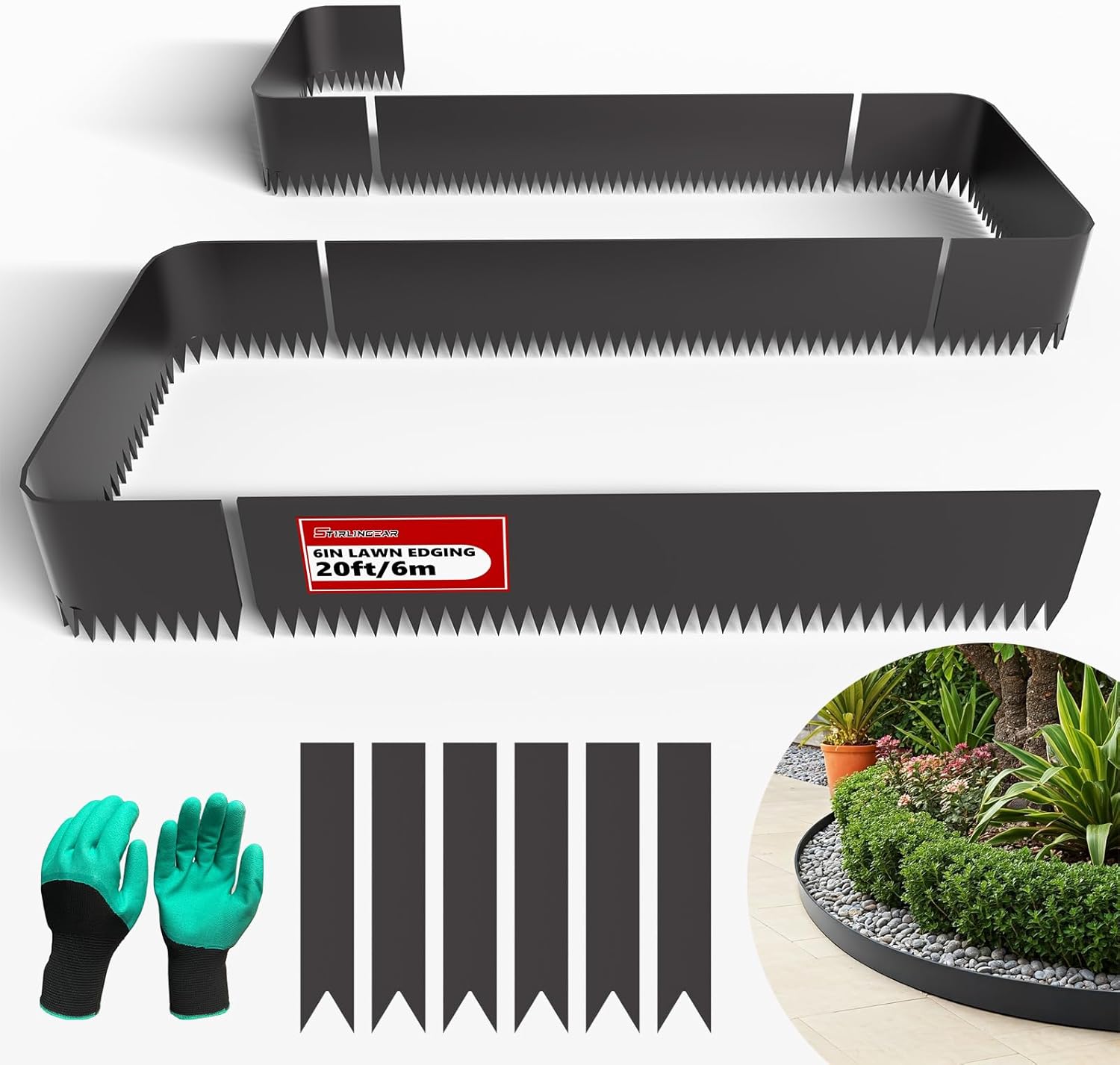
| Material Type | Metal |
|---|---|
| Unit Count | 6 Count |
| Unit Height | 6" |
| Unit Length | 40" |
| Total Length | 20 Feet |
This 6-pack galvanized steel landscape edging provides a simple, durable way to define garden beds and pathways around a typical home. Each 40-inch panel connects with a seamless joint and installs by driving the included stakes or connectors into the ground with a rubber mallet, so no special tools or heavy equipment are required. The galvanized finish resists rust and weathering, which reduces maintenance and keeps the border looking neat over multiple seasons. The panels are flexible enough to bend around gentle curves yet stiff enough to hold soil and mulch edges in place, helping prevent grass encroachment and giving beds a tidy, finished look. On the downside the edging is low-profile and better suited to shallow borders rather than retaining tall soil or heavy mulch slopes, and installation into very rocky or compacted soil can be harder without extra effort. For homeowners who want a straightforward, long-lasting edging solution that looks clean and installs with basic DIY skills this kit is a practical option.
Best for: Homeowners who want a reliable, low-maintenance edging solution they can install themselves to create tidy beds and clear lawn boundaries.
Less Ideal for: Landscapers or gardeners needing high retaining walls or heavy-duty edging for steep slopes should choose a taller, more robust barrier instead.
- Galvanized steel construction resists rust and reduces long-term maintenance
- Seamless connection design creates uniform, neat borders without visible gaps
- Flexible panels allow shaping around curves while maintaining edge definition
- Easy installation using stakes and a rubber mallet with no special tools needed
- Low 6-inch height limits use for tall berms or heavy soil retention
- Can be difficult to install in very rocky or compacted ground without pre-digging
Verdict: A straightforward, rust-resistant edging kit that lets homeowners quickly create neat, durable borders with basic DIY tools.
Choosing the Right Homeowner Garden Edging: Key Factors to Consider
Material and Weather Resistance
The material determines how long edging will last and how it behaves through seasons. Metal edges resist compression and give a crisp lip but can corrode in salty or acidic soils unless treated. Plastic resists rot and rust and is lightweight, but thinner profiles may flex or shift under pressure from lawn equipment.
Consider freeze-thaw in colder climates and strong sun exposure in hot climates. Some composite and aluminum options offer a good balance of rigidity and corrosion resistance, while timber will weather and may need replacement or preservative treatment over time.
Profile and Height Relative To Lawn
Profile height controls how well the edge stops grass and mulch. A taller lip gives better containment for deep mulch and prevents grass runners from creeping into beds, but it can create a mowing hazard if too high. Low-profile edging looks subtle but may require more frequent maintenance to keep turf back.
Match profile to your lawn care routine. If you use a mower without a side discharge, a subtle ridge may be enough. If you string-trim frequently, pick an edge with a smooth top and secure anchoring so trimming does not dislodge it.
Ease of Installation and Adjustability
Homeowners often install edging themselves, so design matters. Flexible roll-style edging conforms to curves and is quick to stake, while rigid lengths require cutting and precise placement but create very straight lines. Consider whether you need connectors, corner pieces, or cutting tools for curves and whether the product can be shortened or extended easily.
Also think about seasonal adjustments. Some edges are simple to lift for bulb planting or irrigation work and then reset; others are intended as permanent fixtures and need more effort to modify.
Maintenance Requirements
Different edging types demand different upkeep. Metal and composite edges usually need little routine care beyond occasional checking for displacement. Wood may need periodic staining or treatment and can rot where it contacts moist soil. Plastic can become brittle over many seasons and may sag if not properly anchored.
Factor in how much time you want to spend maintaining the edge and whether you prefer an occasional tidy-up or near-zero maintenance.
Appearance and Landscape Style
Edging contributes to the visual transition between lawn and planting beds, so choose a material and color that complements your yard. Clean modern landscapes often suit slim metal or dark composite edging, while cottage or rustic gardens may look best with timber or stone-style edging.
Also consider how visible the edge will be from windows and walkways. Pick a profile and finish that blends with nearby hardscape, mulch, and plant color.
Cost To Install And Replace Over Time
Initial price is only part of the picture. Durable materials might cost more up front but require replacement less often. Lightweight plastic is inexpensive and easy to install but may need more frequent replacement or repair, increasing lifetime cost and effort.
Think about tools and labor. An option that is slightly more expensive but installs quickly without heavy tools can save time and reduce the barrier to doing a good job yourself.
Types Of Edging Materials Compared
Garden edging comes in several material families, each with distinct behavior in the yard. Metal edging provides a sharp, durable lip that resists mower wear and makes a clean line between turf and beds. Plastic or recycled polymer edging is flexible and affordable, working well for curves and irregular beds. Timber and natural stone offer a more traditional look but require attention for drainage and settlement. Composite products blend a natural appearance with improved weather resistance.
When choosing, visualize how the material will age near wet soil and consider whether you want an invisible edge or an intentional design feature. Also plan for transitions where different materials meet, such as from a straight metal run to a curving plastic section.
- Metal: crisp edge, high durability, possible corrosion issues in some soils
- Plastic: flexible, budget-friendly, varying long-term stiffness
- Wood: warm aesthetic, needs treatment or replacement over years
- Stone and pavers: permanent look, heavier installation and groundwork
Tools And Prep For A Successful Edge
Good preparation makes installation straightforward and extends the life of the edging. Mark the line with spray paint or a garden hose to visualize curves and ensure symmetry. Clear turf and dig a shallow trench if required by the product, compacting the base so pieces sit flat and stable.
For rigid materials, measure and cut on firm ground using the recommended saw or snips and protect yourself with gloves and eye protection. For flexible edges, stakes or anchors are key; place them at recommended intervals and check alignment as you go.
- Mark the line before cutting or digging
- Remove competing turf and roots for a clean fit
- Use anchoring stakes at manufacturer-recommended spacing to prevent shifting
Installing Edging Around Plants And Tree Roots
When edging runs near established plantings or trees, take care not to damage roots. For shallow-rooted perennials, a narrow trench that slips between feed roots avoids major disturbance. For larger shrubs or trees, step the edging outward and use supplemental mulch to bridge the gap without severing roots.
If you anticipate regular planting changes, choose an edging that is simple to lift or has detachable sections so you can work inside the bed without extensive rework.
- Slide thin edging between small roots rather than cutting them
- Leave a small expansion gap at tree trunks and use mulch to smooth the transition
- Use removable connectors for future bed reshaping
Maintaining and Repairing Installed Edging
Routine checks save time later. Inspect anchors after heavy rain and reset any sections that shifted. Clean metal edges of soil buildup to reduce corrosion, and replace broken plastic stakes quickly to keep runs aligned. For wooden edging, refresh preservative coatings every few years if needed.
When a section fails, repair is often localized. Lift a short run, re-compact the base, and reinstall or replace only the damaged pieces rather than redoing the whole perimeter.
- Check anchoring after storms or winter thaw
- Replace stakes or short sections rather than entire runs
- Treat wood with preservative where it contacts moist soil
How We Chose the Best Homeowner Garden Edging
We selected seven homeowner garden edging options by applying practical, garden-focused filters that match typical yard conditions and DIY needs. Primary evaluation criteria included longevity in outdoor exposure, how easily a homeowner can install and adjust the edging, and the material's resistance to common garden stresses like UV, freeze-thaw cycles, and rot. We also assessed how cleanly each edging defines a bed edge and how well it limits turf and mulch movement during routine maintenance. We excluded commercial and heavy-construction products intended for landscapers, items requiring specialized tools or professional installation, and temporary decorative stakes that do not provide a real turf barrier. For each candidate we prioritized materials and designs that balance low maintenance with a neat profile, and we favored options offering straightforward repairs or extensions so homeowners can adapt lengths as plantings change.
FAQ
What height should garden edging be for lawns?
Aim for 2 to 4 inches above the soil surface for most lawns; this height contains mulch and discourages grass runners while staying low enough to swipe with a mower. Taller edging is useful when you need stronger containment but may require trimming attention.
Can I install edging without digging?
Some flexible edging systems and low-profile plastic options can be installed by staking into the soil surface, but a shallow trench improves stability and longevity. Digging a narrow base helps prevent frost heave and shifting under mower impact.
How do I cut and join different edging materials?
Metal typically needs a hacksaw or power saw with a metal blade and proper safety gear. Plastic is often cut with heavy-duty snips or a fine-toothed saw. Use the recommended connectors or overlap and stake joints securely to keep a continuous barrier.
Will edging prevent weeds?
Edging helps reduce weed encroachment from the lawn by creating a physical barrier, but it does not stop weeds from seed or reinvasion from within beds. Combine edging with good mulching and periodic weeding for best results.
Is one edging material better for curved beds?
Flexible plastic and thin steel strip edging conform to curves more easily than rigid timber or stone. Choose a material that balances the curve radius you want with the edge firmness you need for mowing.
How long should edging last before replacement?
Lifespan depends on material and exposure. Metal and composite edges often last many years with minimal maintenance, while untreated wood and thin plastic may need replacement sooner. Proper installation and secure anchoring help extend life.
Final Verdict
Choose edging that matches how you maintain the yard and how permanent you want the border to be. Prioritize material and profile first: pick a durable material if you want a long-term, low-maintenance border, or a flexible, easy-to-install option if you expect to reshape beds often. Match height and anchoring to your mowing and mulching habits. The right homeowner garden edging balances neat appearance, reasonable installation effort, and predictable upkeep. Focus on the tradeoffs outlined above to pick an edging solution that fits your landscape style and maintenance preferences.
