

Note: This article contains affiliate links. If you click on these links and make a purchase, I may earn a small commission at no extra cost to you. This helps support my research and content. Read my full affiliate disclosure here.
If you need steam-like cleaning power to tackle oil, grease, and thick grime, the right hot pressure washer makes routine heavy-duty jobs faster and more effective. You likely work in a garage, farm, or commercial setting where cold-water washers struggle to break down residues. This guide covers seven shortlisted hot pressure washers chosen for their heat output, pump construction, flow rate, and real-world durability. Below you will find practical notes about how heat affects cleaning, what pump and burner features matter, and the tradeoffs that affect reliability and operating cost. Read on for the evaluation criteria we used and concise guidance to help you pick the most useful unit for your needs.
Top Picks at a Glance
| Best Overall The best all-around choice for most situations | BILT HARD 4000 PSI Hot Water Pressure Washer with 171 gal Tank and Hose Reel |  |
| Best Quality Built to a higher standard if you want something more solid | Dapper Supply 4350 PSI Hot Water Gas Pressure Washer, 5.0 GPM, Diesel Heated |  |
| Best Value The sweet spot between price and what you get | Powerhorse Gas Hot Water Pressure Washer with Diesel Heater, 4000 PSI |  |
| Best Budget The cheapest option that still gets the job done reliably | AGT Industrial HPW3000 Hot Water Pressure Washer (3 GPM, 3000 PSI) |  |
| Highest Rated A top-rated pick with lots of positive feedback | Green-Power America GNHW3530E 3500 PSI Hot Water Pressure Washer |  |
| Most Popular A crowd favorite that many people choose with confidence | MechMaxx HPW40H Hot Water Pressure Washer with Honda GX390 E‑Start Engine |  |
| Best Seller A high-volume bestseller chosen again and again | SIMPSON King Brute 4000 PSI Hot Water Gas Pressure Washer (KB65132) |  |
BILT HARD 4000 PSI Hot Water Pressure Washer with 171 gal Tank and Hose Reel

| Maximum Pressure | 4000 psi |
|---|---|
| Maximum Flow Rate | 4 gpm |
| Power Source | gas_powered |
| Tank Volume | 171 gallons |
| Hose Length | 50 feet |
This BILT HARD unit is a commercial-style hot water pressure washer built for remote and heavy-duty cleaning where hot water makes a difference. It pairs a 420cc 15 HP gas engine with a triplex plunger pump to deliver up to 4,000 PSI at 4 GPM while an onboard 171 gallon tank provides an independent water supply for sites without mains access. The diesel burner and digital temperature control let you heat water up to about 200°F quickly, and the electric start simplifies cold starts. Practical touches like a built-in hose reel, five quick-connect nozzles and a skid frame with forklift slots make it straightforward to transport, store, and adapt to different cleaning tasks. Expect strong performance on greasy equipment, construction cleanup, and agricultural machinery, though the size and skid mounting mean it is best suited to commercial or large-property use rather than casual homeowner jobs. Maintenance and fuel for the burner add operational cost and require basic mechanical familiarity.
Best for: People who need a portable yet self-contained hot water pressure washer for regular heavy cleaning on farms, construction sites, or large properties and value on-board water and quick heating.
Less Ideal for: Homeowners with occasional light cleaning needs or those who need a compact, easily wheeled machine for tight-driveway use should look at smaller, consumer-grade models.
- Delivers commercial-level cleaning power at 4000 PSI and 4 GPM for heavy soiling
- Onboard 171 gallon tank allows operation at remote sites without external water
- Digital temperature control and diesel burner heat water up to 200°F for better grease removal
- Electric start and hose reel improve usability on job sites
- Skid-mounted frame with forklift slots simplifies transport and installation
- Large, skid-mounted design is not convenient for small residential use or tight storage
- Diesel burner and engine require fuel and periodic maintenance
Verdict: Buy this when you need a self-contained, hot-water commercial washer that delivers high pressure and on-site water for heavy dirt and grease removal.
Dapper Supply 4350 PSI Hot Water Gas Pressure Washer, 5.0 GPM, Diesel Heated

| Power Source | gas_powered |
|---|---|
| Maximum Flow Rate | 5 gpm |
| Maximum Pressure | 4350 psi |
| Tank Volume | 6.6 gallons |
This Dapper Supply hot water pressure washer is built for heavy-duty, performance-focused cleaning tasks like degreasing equipment, oil-stained concrete, and jobsite cleanup. It pairs an 11.8 HP gas engine with a durable triplex plunger pump to deliver a consistent 4350 PSI at 5.0 GPM and up to 194°F water temperature from a diesel burner, which improves grease-cutting power compared with cold-water units. The unit includes a long 50 ft, high-temp hose, insulated 48 in. wand, and multiple quick-connect nozzles for reaching and adjusting spray patterns on large areas. A tubular steel frame with solid 9.5 in. wheels and built-in safety systems such as thermal protection and an emergency shutoff make it practical for jobsite use. Expect a substantial, workshop-class machine that needs appropriate handling and storage: it is heavy and not suited to occasional light cleaning, and the diesel heater and fuel maintenance add operational complexity compared with simple electric cold-water washers.
Best for: A buyer who prioritizes maximum cleaning performance for commercial or frequent heavy-duty outdoor jobs and needs a hot-water system to tackle oil and grease. This is for someone comfortable with routine equipment maintenance and jobsite-scale machinery.
Less Ideal for: Not a good fit for occasional residential users, small yards, or anyone wanting a lightweight, low-maintenance electric cleaner.
- High cleaning power with 4350 PSI and 5.0 GPM for fast removal of heavy soils
- Diesel-heated system up to 194°F increases effectiveness on grease and oil
- Triplex water-cooled pump and direct drive improve durability and stable pressure
- Long 50 ft high-temp hose and insulated 48 in. wand allow extended reach and comfortable use
- Robust powder-coated steel frame and solid wheels for jobsite mobility and protection
- Very heavy and bulky which complicates transport and storage
- Requires diesel fuel management and more maintenance than cold-water models
- Loud operation at about 95 dB limits use near noise-restricted areas
Verdict: Choose this unit if you need a commercial-grade hot water washer that delivers high PSI, strong flow, and heated cleaning to quickly remove heavy grease and buildup.
Powerhorse Gas Hot Water Pressure Washer with Diesel Heater, 4000 PSI

| Power Source | gas_powered |
|---|---|
| Maximum Flow Rate | 4 gpm |
| Maximum Pressure | 4000 psi |
| Item Highlight | 150F Temperature Rise, Triplex Pump, Downstream Detergent Injection |
This Powerhorse hot water pressure washer pairs a Senci gas engine with a diesel-fired burner to produce 4,000 PSI at 4 GPM and a temperature rise up to 150°F, making it suited to heavy-duty cleaning tasks. It is typically used for degreasing equipment, cleaning vehicles, concrete, and other surfaces where hot water speeds grime removal. The commercial-grade triplex pump is designed for continuous duty and durability, while the downstream detergent injection lets you apply cleaners without exposing the pump to harsh chemicals. In practice the unit delivers powerful, faster cleaning than cold-water machines and reduces scrubbing time on oil and grease. Expect a large, heavy machine that requires a fuel supply for the burner and basic familiarity with gas engines and pump maintenance. This model favors professional or very frequent users who need robust performance rather than casual homeowners who prefer compact, lightweight cold-water units.
Best for: Buyers who prioritize maximum cleaning performance and durability for frequent or commercial hot-water cleaning jobs and who are comfortable operating gas-powered equipment.
Less Ideal for: Casual homeowners with occasional light cleaning needs or anyone seeking a compact, portable cold-water pressure washer.
- Delivers 4000 PSI and 4 GPM for high cleaning power
- Diesel-fired burner raises water temperature up to 150°F for faster grease and oil removal
- Commercial-grade triplex pump built for continuous-duty durability
- Downstream detergent injection allows chemical use without damaging the pump
- Very heavy and large, not practical for light or occasional household use
- Requires diesel fuel and routine engine/pump maintenance
- Designed for commercial settings so may be overpowered for small residential jobs
Verdict: Choose this unit when you need commercial-level hot-water cleaning power to remove grease and heavy buildup quickly and reliably.
AGT Industrial HPW3000 Hot Water Pressure Washer (3 GPM, 3000 PSI)

| Power Source | Gasoline |
|---|---|
| Maximum Flow Rate | 3 gpm |
| Maximum Pressure | 3000 psi |
| Tank Volume | 0.95 gallons |
The AGT Industrial HPW3000 is a commercial-style hot water pressure washer built to cut through grease, oil, and baked-on grime faster than cold-water units. It uses a 6.5 HP gasoline engine with a LX1210 triplex plunger pump to sustain up to 3000 PSI peak and a steady 2500 PSI working pressure at 3 gallons per minute. The unit heats water to near-boiling in about 1.5 minutes and offers adjustable temperature via an integrated control panel with an LED display, which is useful when switching between delicate and heavy-duty jobs. Construction is industrial-minded with a powder-coated steel frame and vibration isolators, and it ships with a 33 ft high-pressure hose, spray gun, and wand for typical vehicle, equipment, pavement, and factory cleaning. Expect a heavy, bulky machine that requires at least two people or equipment to move and to manage fuel and hot-water plumbing; the 0.95 gallon tank and gasoline power mean ongoing fuel and maintenance costs. For buyers focused on powerful hot-water cleaning, this model delivers commercial performance in a compact footprint, though it is not the lightest or lowest-maintenance option.
Best for: Buyers who need a powerful hot-water washer for demanding commercial or farm jobs and prioritize cleaning performance over portability or minimal upkeep.
Less Ideal for: Homeowners with small yards or occasional light cleaning tasks who prefer a lightweight, electric, or low-maintenance cold-water unit.
- Produces hot water up to 212°F for better removal of grease and oil
- High pressure output rated to 3000 PSI with a steady 3 GPM flow for fast cleaning
- Industrial-grade pump and reinforced steel frame designed for frequent commercial use
- Includes 33 ft industrial high-pressure hose and spray gun for immediate job readiness
- Very heavy and large which makes transport and storage more difficult
- Runs on gasoline and has a small onboard tank so it requires fuel management and regular maintenance
Verdict: Choose the HPW3000 if you need commercial-strength hot-water cleaning to remove heavy grease and grime quickly.
Green-Power America GNHW3530E 3500 PSI Hot Water Pressure Washer
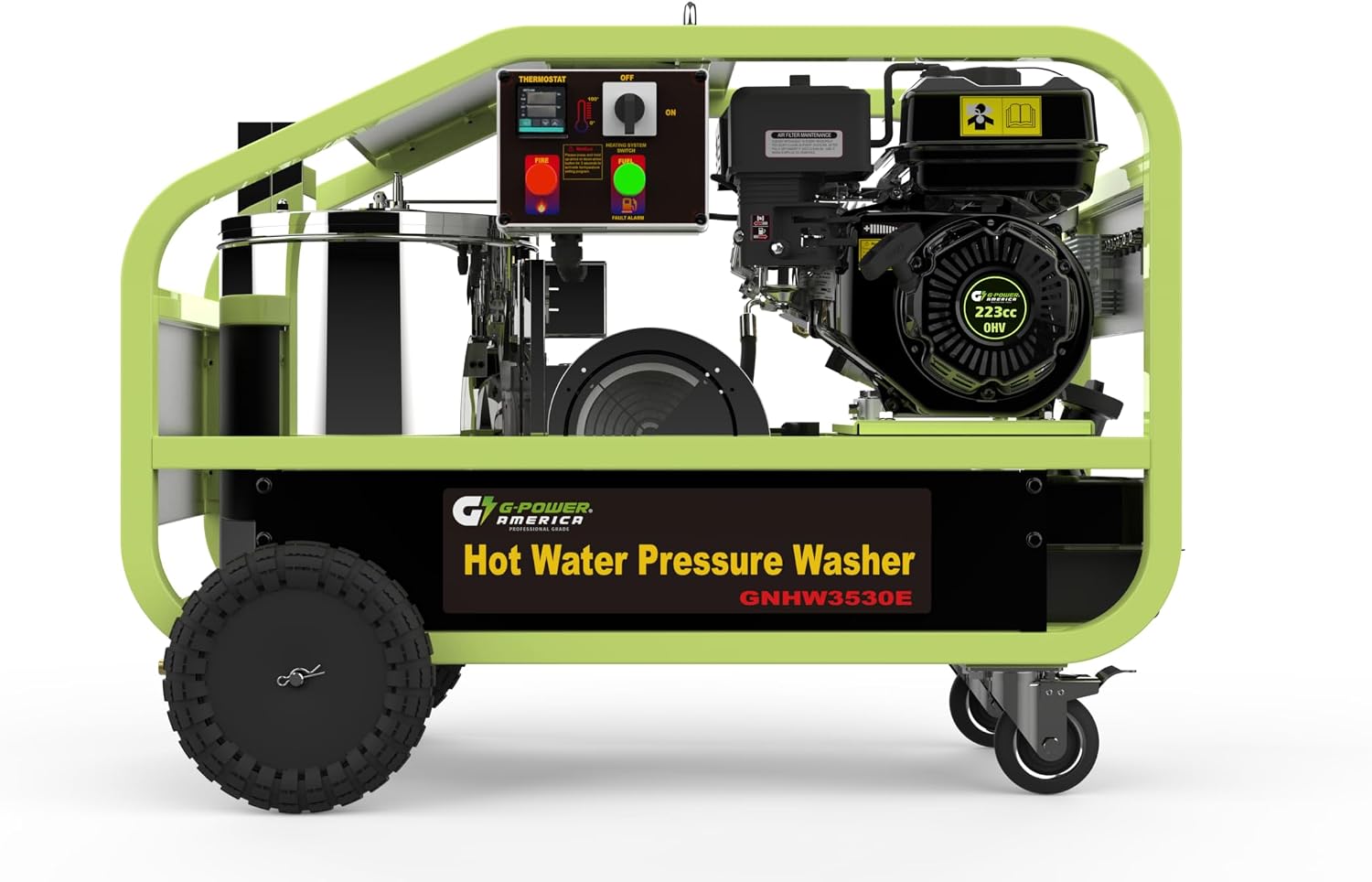
| Maximum Flow Rate | 3 gpm |
|---|---|
| Maximum Pressure | 3500 psi |
| Hose Length | 33 feet |
| Specification Met | EPA |
The Green-Power America GNHW3530E is a commercial hot water pressure washer designed for heavy-duty cleaning where grease, oil, and industrial grime need to be removed. It pairs a 223cc 4-stroke engine with an electric start and an Italian AR brass triplex plunger pump to produce 3500 PSI at 3.0 GPM and water temperatures up to 212°F, which helps dissolve stubborn residues faster than cold-water units. Typical use is on farms, fleet vehicles, construction equipment, and concrete surfaces; the included 33 ft steel-braided high-pressure hose, stainless steel wand, and five quick-connect nozzles let you switch from focused blasting to wide rinsing or soap application. The heavy steel chassis and offset wheel system with solid rear wheels and never-flat front tires make it easier to move over rough terrain without risking burner damage. Important limitations are its commercial weight and footprint, fuel and maintenance needs typical of gas-fired hot-water systems, and that it is not certified for sale in California. For buyers who need hot-water cleaning power and built-for-duty components, this unit delivers reliable performance.
Best for: Buyers who prioritize dependable, commercial-grade hot-water cleaning for frequent heavy-duty tasks and need a machine built for continuous operation and rough jobsite mobility.
Less Ideal for: Homeowners with only occasional light cleaning needs or those who need a compact, low-maintenance electric cold-water washer should consider smaller alternatives.
- Delivers 3500 PSI at 3.0 GPM with water up to 212°F for effective removal of oil and heavy grime
- Commercial-grade AR brass triplex plunger pump built for continuous duty and corrosion resistance
- Electric push-button start reduces downtime and eliminates pull-start effort
- Long 33 ft steel-braided high-pressure hose and five quick-connect nozzles for versatile cleaning
- Robust steel chassis and offset wheel system with never-flat front tires for stable mobility on rough terrain
- Large, heavy commercial unit requires regular fuel and maintenance and is less convenient for light residential use
- Not available for sale in California, limiting compliance for some buyers
Verdict: Choose this model when you need a robust, hot-water commercial pressure washer that reliably blasts away heavy oil and industrial grime.
MechMaxx HPW40H Hot Water Pressure Washer with Honda GX390 E‑Start Engine

| Power Source | gas_powered |
|---|---|
| Maximum Flow Rate | 4 gpm |
| Maximum Pressure | 4000 psi |
| Max Temperature | 200℉ (93℃) |
The MechMaxx HPW40H is a commercial-style hot water pressure washer designed for heavy washdown work on farms, equipment, and construction gear. It pairs a Honda GX390 electric-start engine with a triplex plunger pump and a diesel-fired heating coil to produce 3,500–4,000 PSI at 4.0 GPM and water temperatures up to 200°F, which helps dissolve grease and baked-on grime far better than cold-water washers. The integrated control panel and included hose reel, 50-foot high-pressure hose, and multiple nozzles make it ready for typical site use, while the 13-inch pneumatic tires, handlebar, and lift hook let one move it around rough yards or load it for transport. Because it is gasoline- and diesel-fueled, you get true off-grid operation at the expense of larger size and more maintenance compared with electric units. The unit is heavy and built for commercial workloads, so it is best when used by crews who need fast, repeatable cleaning power rather than occasional homeowner touch-ups.
Best for: Best for professional users, contractors, and farm or fleet managers who need a portable, high-output hot water washer for frequent heavy-duty cleaning and value proven engine reliability.
Less Ideal for: Not a good fit for casual homeowners or small-scale users who only need occasional pressure washing or who prefer low-maintenance electric units.
- Honda GX390 electric-start engine provides reliable commercial-grade power
- Hot water up to 200°F improves removal of oil, grease, and heavy buildup
- Triplex plunger pump offers stable pressure for demanding cleaning tasks
- Includes 50' high-pressure hose, hose reel, multiple nozzles, and spray gun for immediate use
- Very heavy and large, requiring equipment or at least two people to move safely
- Runs on gasoline and diesel which increases operational cost and maintenance compared with electric models
Verdict: If you need commercial hot-water cleaning power and reliable Honda engine performance for frequent heavy-duty washdowns, this unit delivers it in a ready-to-use portable package.
SIMPSON King Brute 4000 PSI Hot Water Gas Pressure Washer (KB65132)

| Power Source | gas_powered |
|---|---|
| Maximum Flow Rate | 4 gpm |
| Maximum Pressure | 4000 psi |
The SIMPSON King Brute KB65132 is a professional hot water gas pressure washer built for heavy-duty cleaning tasks. It produces 4000 PSI at 4.0 GPM using an AAA triplex plunger pump and a CRX 420 direct-drive engine with low-oil shutdown, which makes it suited to remove grease, oil, and baked-on dirt on equipment, trucks, and concrete. The unit includes a 50-foot high-temperature hose with quick-connect fittings, a heat-resistant gun and a 48-inch insulated lance for operator comfort. A welded steel frame, pneumatic tires and swivel casters make it stable and reasonably mobile on varied surfaces. Important practical limitations are its commercial size and weight, which require space to store and a firm surface for use, and the need to manage gasoline and diesel for engine and burner tanks. This model is built to last and to handle continuous professional use, but it is heavier and more complex to operate than consumer electric washers and will require routine maintenance and safe fuel handling.
Best for: Buyers who need a reliable, professional hot-water washer for regular heavy-duty cleaning on job sites or fleet/equipment maintenance and who prioritize durability and consistent performance.
Less Ideal for: Casual homeowners or users who need a lightweight, low-maintenance electric washer for infrequent tasks or limited storage and who prefer simpler fuel handling.
- High cleaning power: 4000 PSI at 4.0 GPM from an industrial AAA triplex pump
- Hot-water capability and heat-resistant gun allow effective removal of grease and oil
- Long 50-foot high-temperature hose with quick-connect fittings for reach and durability
- Robust build with welded steel frame and pneumatic tires for jobsite mobility
- Engine features low-oil shutdown to help protect the motor during heavy use
- Large and heavy commercial unit that needs significant storage space and handling
- Requires managing both gasoline for the engine and diesel for the burner, adding operational complexity
Verdict: Choose the King Brute if you need a heavy-duty hot-water pressure washer that delivers commercial-level cleaning power and durability for regular professional use.
Choosing the Right Hot Pressure Washer: Key Factors to Consider
Heat Output and Temperature Control
Heat is the primary reason gardeners and technicians choose a hot pressure washer. Hot water shortens dwell time on grease, breaks down oils and organic residues, and helps detergents work faster. Look for a unit that lists maximum water temperature and has a reliable thermostat or adjustable control so you can tune heat to the soil type.
Overheating can damage surfaces or components, so the ability to lower temperature for delicate tasks matters. In practice you will use high heat for degreasing metal surfaces and lower settings for painted or rubber-coated items.
Pump Construction and Durability
The pump is the mechanical heart of any pressure washer and its construction determines lifespan under heavy duty. Triplex plunger pumps or high-quality axial-piston designs handle continuous operation and offer replaceable wear parts. Materials, such as forged brass manifolds and hardened steel plungers, resist abrasion from particulates and extended run times.
Serviceability of the pump also matters. Machines with accessible pump mounts and commonly available rebuild kits reduce downtime and long-term maintenance cost.
Pressure, Flow Rate, and Cleaning Balance
Effective cleaning depends on the right mix of pressure (PSI) and flow (GPM). Higher pressure increases mechanical force while more flow increases rinse and heat transfer. For hot washing, you often need less extreme pressure and more heated flow to avoid damaging surfaces while still removing stubborn grime.
Match the pump and nozzle setup to common tasks: heavy grease removal benefits from steady flow and heat, while paint prep or heavy scaling may need higher pressure with careful heat control.
Burner Design and Fuel Type
Burner efficiency determines how quickly a unit reaches operating temperature and how economical it is to run. Common burner fuels include diesel, kerosene, and diesel blends; some units use oil-fired burners designed for continuous heat generation. A well-shielded, serviceable burner that is easy to light and maintain reduces downtime.
Consider fuel availability where you work. Fuel-handling features such as a captive fuel tank, easy-access filters, and clear service points make real-world operation easier and safer.
Frame, Mobility, and Mounting
How you move and secure the washer matters for day-to-day use. Rugged frames with vibration isolation protect components during transport. Wheels or skids should suit the work environment: pneumatic tires for rough ground, solid wheels for warehouses, or forklift pockets for permanent installations.
Mounting points and space for optional accessories like hose reels or detergent tanks increase versatility. A compact footprint may be important if you store the unit inside a small shop.
Maintenance Accessibility and Parts Availability
Regular maintenance keeps hot pressure washers running reliably. Check how easy it is to reach components such as the pump, burner, unloader valve, and filters. Units that allow quick access to wear parts save labor hours and reduce downtime.
Also consider the availability of common replacement parts. Widespread part compatibility and clear documentation simplify repairs in the field or shop.
How Hot Water Changes Cleaning Dynamics
Hot water increases chemical activity and reduces surface tension, allowing detergents and surfactants to penetrate soils faster. For greasy residues, heat melts and emulsifies oils so high-flow rinsing can carry them away more readily than cold-water blasting.
Using heat lets you lower pressure for the same cleaning effect, which helps protect painted surfaces and rubber components. In practice, pairing steady heat with the right detergent and moderate pressure produces the best results for most heavy-duty cleaning tasks.
- Heat reduces cleaning time on oily, protein, and carbonized soils
- Moderate pressure plus heat minimizes surface damage
- Detergents activate faster at higher temperatures
Common Applications and Best Practices
Hot pressure washers are ideal for garages, farm equipment, food-prep surfaces, masonry, and heavy equipment where oils and greases are common. Use hot settings and appropriate detergents for engine bays, hydraulic components, and concrete with embedded oil stains.
Safety practices include keeping a safe distance, avoiding direct hot-water spray on seals or sensitive electronics, and cooling or rinsing components that could warp under heat. Always test an inconspicuous area before full-scale cleaning.
- Pre-treat thick deposits with a suitable degreaser
- Rinse with steady heated flow rather than short, high-pressure bursts
- Adjust heat downward for painted or rubberized parts
Fuel and Power Considerations for Work Sites
Fuel type affects run time, convenience, and operating logistics. Diesel or kerosene burners are common for prolonged field use because they have higher energy density and fast recovery to operating temperature. Consider fuel storage regulations and safety when placing a unit in a workshop or barn.
If you need a mobile setup, account for fuel tank size and how often you will refill. For installations with regular access to electricity and lower temperature needs, consider whether an electric-fired boiler or hot-water option might be more appropriate, bearing in mind the limits on sustained high-temperature delivery.
- Choose fuel type based on availability and refilling logistics
- Larger fuel tanks reduce interruptions for long jobs
- Factor in local safety rules for on-site fuel storage
Hose, Nozzle, and Accessory Choices
Hose length and construction affect heat retention and usability. Longer hoses lose heat over distance, so keep runs short when possible or use insulated high-temperature hoses. Nozzle selection controls spray pattern and pressure; wide-angle nozzles spread heat and rinse, while narrower ones concentrate force for stubborn spots.
Accessories such as foaming injectors or surface cleaners help apply detergents evenly and speed up cleaning of large flat areas. Prioritize attachments rated for hot water and the unit's maximum pressure to avoid damage.
- Use insulated hoses for long runs
- Match nozzles to the task: wider for rinsing, narrower for tough deposits
- Only use accessories rated for hot water
Storage, Winterizing, and Off-Season Care
Hot pressure washers need winter protection to prevent freeze damage and corrosion. Drain water from the pump and hoses, treat the system with antifreeze where appropriate, and store the unit in a dry, protected space. Fuel systems should be treated with stabilizer if the unit will sit unused for months.
Regular off-season checks include inspecting seals, replacing worn hoses, and running the burner briefly to verify ignition and combustion before the next active season. A maintenance checklist reduces the chance of surprises when you bring the machine back into service.
- Drain and protect the pump and hoses from freezing
- Stabilize fuel if storing for long periods
- Run a periodic start-up check to catch issues early
How We Chose the Best Hot Pressure Washer
We prioritized machines built for consistent hot-water delivery and long-term reliability under heavy use. Key evaluation criteria included heat output and temperature control because higher and stable water temperature breaks down oils and protein-based soils more quickly. Pump durability and construction were assessed next, focusing on triplex pumps or comparable designs that tolerate continuous duty and replacement parts availability. Flow rate and pressure were measured for cleaning throughput and the right balance between agitation and dwell time. Burner and fuel system efficiency was included to estimate run-time and operating cost without testing exact consumption. Ease of maintenance and access to service components was another filter, since field repairability matters in commercial and farm settings. We excluded light-duty consumer cold-water models and electric-only units that cannot sustain elevated water temperatures. Also excluded were units intended only for occasional residential use, because they lack the design features needed for frequent heavy cleaning. The final list balances heat performance, robust pump design, sensible flow/pressure pairing, and accessible maintenance.
FAQ
Do hot pressure washers clean better than cold ones for automotive grease?
Often yes. Hot water helps dissolve and emulsify oils and grease faster than cold water, which reduces scrubbing time and improves detergent performance. Cold-water units can work with the right chemicals but usually need more dwell time and mechanical action.
Can hot pressure washers damage painted surfaces or seals?
They can if used improperly. Excessive temperature or concentrated high-pressure spray can strip paint or degrade rubber seals. Use moderate pressure, adjust temperature down for delicate materials, and test a small area first.
What maintenance do hot pressure washers require?
Routine maintenance includes checking oil and seals on the pump, cleaning or replacing fuel and water filters, and inspecting hoses and nozzles for wear. Burner components need periodic cleaning and safe ignition checks. Regular servicing prolongs component life.
How important is pump material and design for commercial use?
Very important. Commercial settings demand pumps that can handle long duty cycles and particulates. Triplex or high-quality axial pumps with hardened components last longer and are easier to rebuild than low-end designs.
Are there safety concerns when using hot pressure washers indoors?
Yes. Ventilation is critical if the unit uses combustible fuel because burners produce exhaust. Even electric hot units can create steam and humidity that affect indoor air quality. Place units where there is adequate ventilation and observe manufacturer safety guidelines.
Final Verdict
Pick a hot pressure washer by prioritizing heat output and pump robustness for the types of soiling you face. Balance pressure and flow so heat does the bulk of the cleaning without damaging surfaces, and choose a burner and fuel setup that suits your jobsite logistics. Maintenance accessibility and parts availability are crucial for minimizing downtime. If you focus on those tradeoffs, you can select a unit that delivers reliable heavy-duty cleaning while remaining serviceable and cost-effective over time.
