

Note: This article contains affiliate links. If you click on these links and make a purchase, I may earn a small commission at no extra cost to you. This helps support my research and content. Read my full affiliate disclosure here.
Choosing the right indoor planter matters for plant health and for the look and function of your home. The wrong pot can trap water, stunt roots, or clash with the light and space you have available. This guide covers seven shortlisted indoor planters that fit common apartment, condo, and house conditions. We explain the practical tradeoffs between drainage, material, and size so you can pick a pot that helps plants thrive where you place them. Read on for the evaluation criteria we used and what to consider for your room and plant types.
Top Picks at a Glance
| Best Quality Built to a higher standard if you want something more solid | LE TAUCI 12-Inch Ceramic Planter (Neutral Gray) |  |
| Best Value The sweet spot between price and what you get | YNNICO 6‑Piece Self‑Watering Planter Set (5–8 inch) |  |
| Best Budget The cheapest option that still gets the job done reliably | SQKH 4-Inch Plastic Plant Pots, 6-Pack with Drainage Trays |  |
| Highest Rated A top-rated pick with lots of positive feedback | Xiaan Jiaju Tuscan Ceramic Plant Pot with Drainage |  |
| Most Popular A crowd favorite that many people choose with confidence | Utopia Home Indoor Plant Pots with Drainage, 5‑Pack |  |
| Best Seller A high-volume bestseller chosen again and again | Fielda 8/10/12 Inch Self-Watering Planter Set |  |
LE TAUCI 12-Inch Ceramic Planter (Neutral Gray)

| Material | Ceramic |
|---|---|
| Finish | Unglazed |
| Capacity | 8.96 liters |
| Included components | Fine-Mesh Drainage Screen, Silicone Drainage Plug |
| Indoor Outdoor Usage | Indoor |
This LE TAUCI 12-inch ceramic planter is built for steady indoor displays of statement plants like monstera or fiddle leaf fig. Its unglazed, textured neutral gray finish gives a concrete-like look while the substantial ceramic construction keeps tall pots from tipping. The planter includes a fine-mesh drainage screen to hold soil back when planting directly and a removable silicone plug so you can use the pot as a nursery-pot cover. Typical use is straightforward: plant directly with the mesh in place and a saucer underneath, or place an 11-inch nursery pot inside and remove it for watering so the outer pot stays tidy. Practical benefits include a roomy inner opening for larger root balls, good stability from the weight, and a neutral finish that fits modern interiors. Expect the usual ceramic limitations though, such as significant weight when filled and susceptibility to chipping if knocked. The product is focused on indoor styling and does not replace frostproof outdoor planters.
Best for: Buyers who prioritize stable, stylish indoor planters for larger houseplants and want a finished pot that supports both direct planting and nursery-pot use.
Less Ideal for: People who need lightweight, portable pots for frequent rearranging or who require frostproof outdoor planters.
- Unglazed ceramic with textured finish that complements modern interiors
- Includes fine-mesh drainage screen and silicone plug for flexible planting methods
- Large inner opening suitable for 11-inch nursery pots and small indoor trees
- Heavy, stable construction that resists tipping with tall plants
- Ceramic weight makes it cumbersome to move once filled
- Not rated for outdoor or freeze-prone use and can chip if dropped
Verdict: A heavy, stylish indoor ceramic planter made for stable displays of larger houseplants and flexible planting options.
YNNICO 6‑Piece Self‑Watering Planter Set (5–8 inch)
| Included Components | Tray |
|---|---|
| Unit Count | 6 Count |
| Other Special Features of the Product | Drainage Hole, Self Watering |
| Material Type | Plastic |
| Finish Types | Matte |
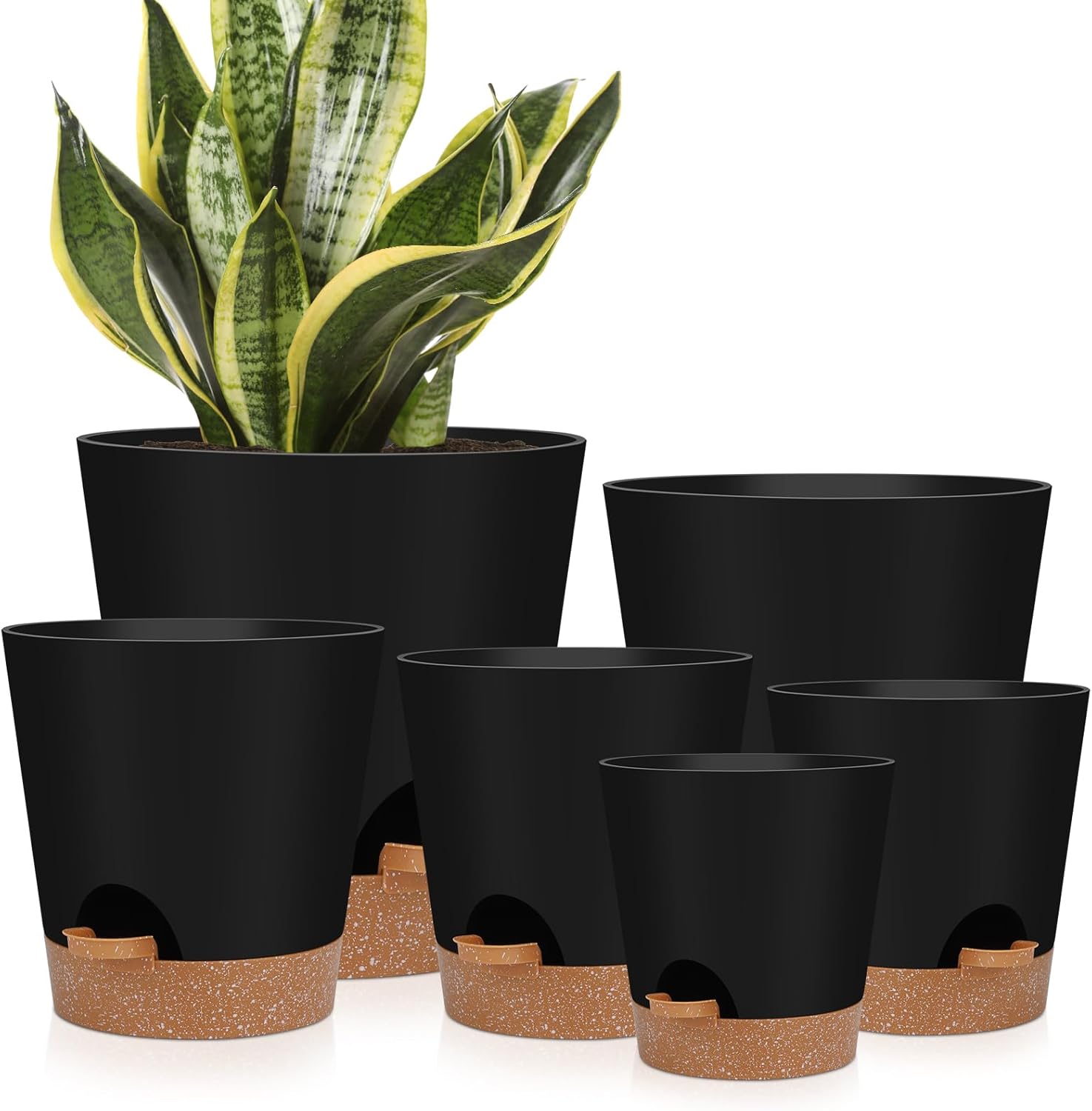
These YNNICO planters are a practical set for people who want low‑maintenance container gardening. The kit includes six nested sizes (8, 7, 6.5, 6, 5.5 and 5 inches) made from durable polypropylene with a matte finish. Each pot has multi drainage holes, a large bottom tray and a wick for bottom watering so you can use the separate reservoir for self watering or remove the tray for conventional drainage. The lightweight construction makes them easy to move between a windowsill, desk or small balcony, and the simple modern look fits most interiors. Because they are plastic they tolerate temperature swings and are less likely to crack than thin ceramic, but they are not decorative focal pieces and the finish can scratch if handled roughly. The set is best for small to medium houseplants, starting cuttings or creating a coordinated group of pots where consistent watering control matters.
Best for: Buyers who prioritize reliable, low‑maintenance watering and want a matched set of pots for multiple indoor plants or a coordinated display.
Less Ideal for: If you need heavy decorative planters or large outdoor containers for big plants, choose thicker ceramic or large garden pots instead.
- Includes six common planter sizes for a range of small to medium plants
- Built‑in drainage holes plus separate reservoir and wick for bottom self watering
- Durable, lightweight polypropylene construction suitable for indoor and sheltered outdoor use
- Plastic finish is utilitarian and can show scratches or scuffs over time
- Not intended as a decorative statement pot for high‑end styling
Verdict: A practical, matched six‑pot set that makes bottom self‑watering simple for small to medium indoor plants.
SQKH 4-Inch Plastic Plant Pots, 6-Pack with Drainage Trays
| Unit Count | 6 Count |
|---|---|
| Material Type | Plastic |
| Other Special Features of the Product | Drainage Hole |
| Indoor Outdoor Usage | Indoor, Outdoor |
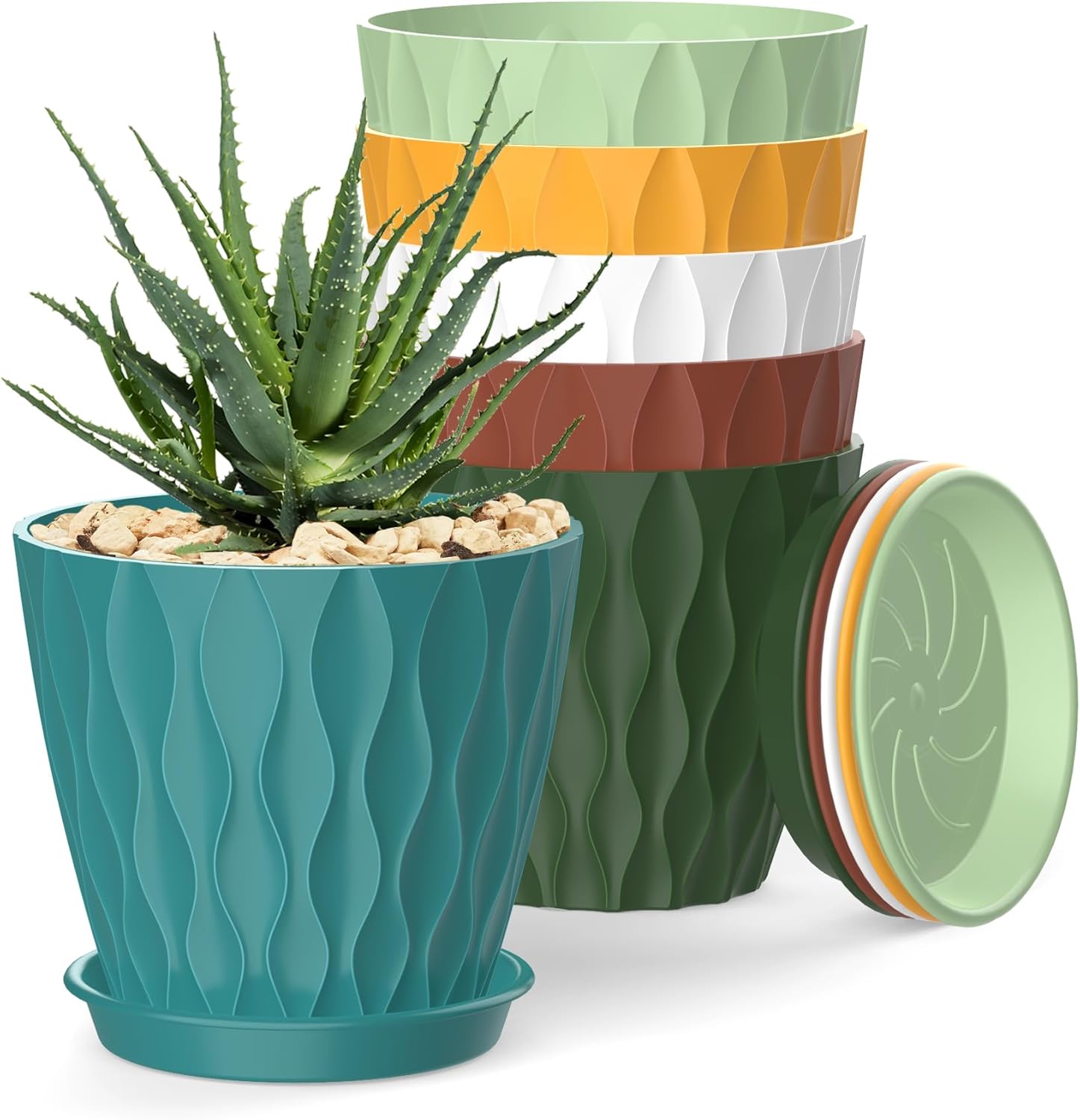
These SQKH 4-inch pots are a practical, no-frills option for growing small houseplants, succulents, herbs, and starters. Each set includes six lightweight matte plastic pots and matching trays, which makes potting multiple plants or replacing nursery containers quick and tidy. The manufacturer highlights a dense pattern of drainage holes at the base and the separate saucers collect excess water, so plants are less likely to sit in soggy soil. The polypropylene construction is thick for this price class, so the pots resist crushing and will tolerate sun exposure without becoming brittle quickly. Because they are small, they work best for seedlings and species that prefer confined root space. There is limited decorative variety beyond the simple striped matte look, and these are not intended for large plants or long-term planting of fast-growing species without repotting. For budget-focused gardeners who need an economical, durable set of starter pots with reliable drainage, these are a solid everyday choice.
Best for: Buyers looking for an affordable, durable set of starter pots to propagate seedlings, house succulents, or pot multiple herbs and small plants quickly and without fuss.
Less Ideal for: Gardeners who want decorative statement planters or need containers for large or long-term plantings should consider larger or higher-end options.
- Six-pack provides good value for potting multiple small plants
- Built-in drainage holes plus trays help prevent overwatering
- Thicker polypropylene construction resists compression and sun damage
- Matte finish and simple striped design suit modern indoor decor
- Small 4-inch size requires frequent repotting for fast-growing plants
- Limited color and decorative options compared with ceramic or designer pots
Verdict: A budget-friendly, durable six-pack of 4-inch pots with reliable drainage that makes potting multiple small plants fast and simple.
Xiaan Jiaju Tuscan Ceramic Plant Pot with Drainage

| Material Type | Ceramic |
|---|---|
| Other Special Features of the Product | Drainage Hole, Hand-Finished, Scalloped Edges |
| Finish Types | Distressed, Crackle Glaze |
| Indoor Outdoor Usage | Indoor |
This Xiaan Jiaju ceramic plant pot is a small, decorative indoor planter designed to show off houseplants while protecting surfaces. It is typically used on tabletops, shelves, or windowsills to hold small flowering plants or foliage. Notable features include a hand-finished distressed crackle glaze, scalloped rim detail, and an integrated drainage hole that helps prevent overwatering. The ceramic feels substantial and gives a vintage, rustic look that complements farmhouse and classic interiors. Practical benefits are simple: the drainage reduces root rot risk for moisture-sensitive plants and the compact footprint fits tight spots. Because it is ceramic, the pot retains moisture longer than terracotta so you may need to adjust watering for succulents or plants that prefer drier soil. The small size limits plant choices to seedlings, small herbs, or compact houseplants, and the indoor-only recommendation means it is not intended for outdoor freeze-prone locations. For buyers who want an attractive, reliable indoor planter that helps manage watering, this is a solid choice; if you need larger capacity or all-weather durability consider a different material or size.
Best for: Buyers who want a dependable, attractive indoor planter that helps manage watering and fits into small spaces, especially those seeking a vintage or farmhouse look.
Less Ideal for: Gardeners who need large containers, outdoor all-weather planters, or highly breathable pots for succulents and cacti should look elsewhere.
- Built-in drainage hole reduces risk of overwatering and root rot
- Hand-finished distressed crackle glaze provides attractive vintage styling
- Compact tabletop size fits small spaces like windowsills and shelves
- Ceramic construction feels substantial and stable for indoor display
- Small capacity restricts use to seedlings, small herbs, or compact houseplants
- Ceramic retains moisture longer than porous options, requiring adjusted watering for drought-tolerant plants
Verdict: A stylish, reliable small indoor ceramic planter with drainage that makes keeping houseplants healthy easier in tight spaces.
Utopia Home Indoor Plant Pots with Drainage, 5‑Pack

| Material Type | Plastic |
|---|---|
| Included Components | Saucers Tray |
| Unit Count | 5 Count |
| Other Special Features of the Product | Frost Resistant, Lightweight, Portable, Rot Resistant |
| Mounting Type | Tabletop |
These Utopia Home planters are a practical starter set for indoor potted trees and other houseplants. The pack includes five nested sizes and matching saucers so you can pot seedlings, small citrus or ficus cuttings and move them around a sunny windowsill or tabletop. Made from reinforced PP plastic, the pots are frost and rot resistant and feel light enough to reposition without strain. Each pot features drainage provisions and removable plugs that help prevent overwatering while the saucers protect furniture from runoff. The minimalist polished finish is unobtrusive with most décor, and the multiple sizes make it easy to repot a sapling as it grows. Limitations are that these are basic plastic planters so they offer less insulation and long-term durability than ceramic or thick fiberstone, and the listed specs emphasize indoor use rather than outdoor longevity in harsh weather. For buyers who prioritize fuss-free, lightweight containers with simple drainage, this set covers common needs for small potted trees and starter transplants.
Best for: Buyers who want a low-risk, practical set of indoor planters for starting or styling small potted trees and other houseplants and who value ease of use and social proof from a popular, well-reviewed product.
Less Ideal for: Gardners seeking heavyweight, display-grade planters for mature large trees or outdoor year-round exposure should consider ceramic, concrete, or fiberstone alternatives.
- Multiple pot sizes in one set for potting and repotting as a tree seedling grows
- Included saucers protect surfaces from drainage and allow indoor placement
- Drainage plugs and design to reduce risk of overwatering
- Lightweight, frost and rot resistant plastic that is easy to move
- Plastic construction provides less thermal insulation and premium appearance than heavier ceramic or stone pots
Verdict: A convenient, well-reviewed five-piece indoor planter set that makes starting and repotting small potted trees simple and low effort.
Fielda 8/10/12 Inch Self-Watering Planter Set

| Included Components | Saucer, Water Level Indicator Window |
|---|---|
| Capacity | 2.5 gallons |
| Material Type | Plastic |
| Indoor Outdoor Usage | Indoor, Outdoor |
These Fielda planters are a practical self-watering set for anyone who wants lower-maintenance container gardening. Each pot has a deep reservoir and an absorbent cotton wick that draws water up to the root zone, while a transparent water-level window lets you check reservoir volume without disturbing the plant. Detachable saucers and multiple drainage holes simplify cleaning and prevent overwatering, and the thicker plastic walls make the pots durable for both indoor and outdoor placement. In real use they keep soil evenly moist for roughly a week for typical houseplants, which is convenient for busy schedules or short trips. Limitations to note are the reduced usable planting depth because of the reservoir and the lightweight plastic construction, which can tip with very top-heavy plants in windy outdoor spots. The design is straightforward to set up and maintain, and the visible indicator and removable tray make it easy to avoid waterlogging while reducing daily watering chores.
Best for: Buyers who want a low-maintenance, reliable self-watering solution that visibly shows reservoir status and simplifies weekly care for common houseplants and balcony pots.
Less Ideal for: Growers needing maximum root depth for large specimen plants or those who prefer heavy, terracotta-style pots for stability and aesthetic weight.
- Self-watering reservoir with cotton wick delivers consistent moisture to roots for up to 7–10 days
- Transparent water-level window provides easy visual monitoring without moving the pot
- Removable saucer tray and multiple drainage holes simplify cleaning and prevent waterlogging
- Durable, high-temperature-resistant plastic resists fading and cracking for indoor or outdoor use
- Reservoir reduces usable planting depth compared with a regular pot of the same outer size
- Lightweight plastic can be prone to tipping with large, top-heavy plants in windy conditions
Verdict: A convenient, visible self-watering planter set that cuts down weekly watering while working reliably for typical houseplants and balcony containers.
Choosing the Right Indoor Planter: Key Factors to Consider
Drainage and Water Management
Proper drainage affects plant survival more than almost any other factor for indoor containers. A planter that allows excess water to escape or that includes a built-in reservoir reduces root rot risk and makes watering more forgiving.
Look at whether a pot has a drainage hole, a removable inner liner, or a self-watering reservoir. Consider how the planter performs with the soil mix you use. Some decorative pots rely entirely on a tray which holds water beneath the pot; others provide a separate liner so you can lift the plant and check moisture. Think about your routine: if you tend to overwater, a design that isolates excess water from roots is especially helpful.
Material and Finish
The material determines weight, porosity, and how the planter ages indoors. Terracotta breathes and can help soil dry between waterings, but it can also wick salts and stain surfaces. Ceramic glazes provide a wide range of finishes and are easy to wipe clean, though glazed pots without drainage trap moisture. Plastic and fiberglass are lightweight and durable, but may look less premium and can retain heat differently.
Also consider how the finish interacts with humidity and indoor temperature changes. Some materials chip or craze over time, which affects aesthetics and cleaning. If the planter will sit on wood or fabric surfaces, check whether the finish resists staining or needs a saucer.
Size, Shape, and Root Space
Choose a planter that matches both the current size of the plant and its expected root growth. A pot that is too large can hold excess moisture and slow drying, while one that is too small restricts roots and forces frequent repotting.
Measure both the root ball and available room. Depth matters for plants with deep taproots or tall growth, while wide shallow pots suit spreading species. Also consider whether pot shape affects placement: narrow pots fit windowsills, while wide bowls work for grouped displays. Think about whether you want to pot directly into the decorative container or use a nursery pot inside it.
Stability and Weight Balance
Top-heavy plants and tall stems can tip easily in lightweight pots. Stability depends on base diameter, pot weight, and how the plant's center of gravity shifts as it grows. Heavy ceramic and terracotta pots provide ballast, which reduces tipping risk, but they are harder to move and may be impractical for large plants.
For wobbly locations such as narrow shelves or high windowsills, choose planters with a low center of gravity or wide base. Consider options with integrated saucers or rubber feet to prevent sliding and protect surfaces. If you repot often, look for solutions that let you increase stability without permanently fixing the pot in place.
Ease of Maintenance and Cleaning
Indoor planters pick up soil, salts, and mineral buildup that can stain both the pot and the surface beneath. Planters that are easy to clean save time and prevent long-term damage to furniture and floors. Smooth glazed surfaces are easiest to wipe; porous materials may require scrubbing and occasional lime or salt removal.
Consider whether the design allows you to lift out the plant or access the interior for rinsing. Removable liners and trays speed cleaning and let you inspect root health. Also evaluate whether the planter's finish resists watermarks and whether protective pads or saucers are included or required.
Aesthetics and Placement Flexibility
A planter is both a functional container and part of interior decor. Color, texture, and shape influence how a plant complements a room. Matte finishes can hide fingerprints and watermarks; glossy glazes reflect light and may highlight imperfections.
Think about where plants will live and how the pot's style fits that environment. Stackable or nesting planters save space for seasonal storage. If you plan to move plants between rooms, choose styles that work across multiple decors so you do not need to repot when changing placement.
Matching Planter Types to Indoor Conditions
Different indoor environments call for different planter behaviors. Low-light rooms with slow-drying soil need planters that promote evaporation or allow for easy drainage. Bright, warm rooms speed evaporation, which can make porous materials a good choice because they help the soil dry evenly.
Consider how often you check plants. If you water infrequently, self-watering or reservoir planters minimize risk. If you check moisture daily, a traditional pot with a drainage tray may be sufficient. Also adapt the planter choice to the room's humidity. Bathrooms often tolerate materials that would dry too quickly in a dry living room.
- Low-light rooms: favor pots that reduce water retention
- Bright rooms: porous or terracotta can aid drying
- High-humidity rooms: glazed or plastic materials prevent mold on the pot surface
Preparing a Planter for First Use
Before adding soil and plants, confirm whether the planter has a drainage hole or a removable liner. If a pot lacks drainage, create a clear water management strategy by adding a layer of pebbles and using an inner nursery pot. Clean new pots to remove manufacturing dust or residues that can affect delicate seedlings.
Add a breathable potting mix appropriate to the plant species and fill to a level that leaves room for watering without overflow. If using a decorative outer pot, test fit the inner container and ensure the combined height and drainage orientation will sit securely on its intended surface.
- Check drainage hole or plan for an inner liner
- Pre-wash pots to remove dust and residues
- Match potting mix depth to plant root ball
Placement Tips to Prevent Damage
Protect furniture and flooring from moisture and scratches by using saucers, plant stands, or felt pads. Some materials will leach salts or stain surfaces over time, so place a barrier under porous pots. Avoid placing heavy pots on delicate shelves without additional support.
If a plant leans toward light and becomes top-heavy, rotate it regularly or move it to a wider-based planter. For high-traffic areas, pick pots with rounded edges and stable bases to reduce the chance of accidental tipping.
- Use saucers to catch overflow
- Use felt pads to prevent scratches
- Rotate plants to encourage even growth
Repotting and Long-Term Care
Plan for repotting by picking planters that make access easy. Removable liners and lightweight inner pots simplify lifting heavy root balls and replacing soil. When repotting, choose the next pot size incrementally to avoid excessive soil volume that retains water.
Over time, refresh soil to replenish nutrients and check root health. Clean external surfaces to remove mineral buildup. If you notice frequent overwatering issues, switch to a more porous material or a planter with improved drainage capability.
- Choose pots that allow easy removal of the plant
- Increase pot size gradually when repotting
- Refresh potting mix every 1 to 2 years for most houseplants
Styling Grouped Displays
Grouping planters creates visual impact and microclimates that help humidity-loving plants. Arrange pots of varied heights and textures to add depth. Use a consistent material or color palette to unify the display if the plants vary widely.
When grouping, ensure each pot has adequate airflow and light. Crowding can increase pest and disease risk, so leave enough space for maintenance and rotation.
- Vary heights and textures for visual interest
- Ensure airflow between grouped pots
- Use matching saucers or trays for a cohesive look
How We Chose the Best Indoor Planter
We focused on attributes that directly affect plants and everyday use indoors. Our selection prioritized planters that manage moisture, resist breakage or staining, fit common potting soil volumes, and are easy to move and maintain. We evaluated drainage performance and water management options because excess moisture is the most frequent indoor problem. Material durability and finish matter for longevity and for preventing salt stains or cracking from temperature swings. Size range and root space were checked to make sure pots suit small to medium houseplants and common container mixes. Ease of cleaning and stability were reviewed for heavy or top-heavy plants. We also considered weight and transportability for people who repot, rearrange, or move plants seasonally. Products that lacked basic drainage or used materials prone to chipping or moisture damage were excluded. The criteria below reflect the specific dimensions and behaviors that actually affect indoor planting success.
FAQ
Do I always need a drainage hole in an indoor planter?
Often a drainage hole makes managing moisture much easier because excess water can escape. If a decorative pot lacks a hole, use an inner nursery pot or a self-watering liner to prevent roots from sitting in water.
What materials are best for houseplants in low-light apartments?
Porous materials like terracotta slow down overwatering in low light because they allow some evaporation. Glazed ceramic or plastic can work too if you adjust watering frequency and ensure proper drainage.
How do I stop mineral buildup on planters and trays?
Wipe pots and trays regularly and occasionally soak and scrub with a mild vinegar solution to dissolve salts. Prevent buildup by using filtered or rainwater when possible and by ensuring good drainage.
Can I use very large planters for small houseplants?
Usually very large pots hold excessive moisture and make watering unpredictable for small plants. If you need a larger decorative container, use an inner pot sized to the plant and leave space between the inner and outer pot.
How do I make a lightweight planter more stable for tall plants?
Increase ballast by adding stones to the base, using a heavier saucer, or placing a weight in an inner liner. Choosing a wider base or a lower-profile pot also improves stability without permanent modification.
Final Verdict
Focus first on drainage and appropriate size when choosing an indoor planter, because those factors most directly affect plant health. Balance material choice and aesthetics against the practical needs of moisture control, stability, and ease of cleaning. Prioritize a pot that fits the plant's root space and the room's light and humidity, and accept tradeoffs between weight and ease of movement. With these priorities in mind you can confidently pick a planter that helps houseplants thrive while matching your indoor style.
