

Note: This article contains affiliate links. If you click on these links and make a purchase, I may earn a small commission at no extra cost to you. This helps support my research and content. Read my full affiliate disclosure here.
Picking the right indoor potting soil mix matters for plant health more than you might expect. The wrong mix can hold too much water and cause root rot, or dry out quickly and stress roots between waterings. Good mixes supply steady moisture, air, and nutrients while fitting common indoor pots and drainage setups. This guide looks at seven shortlisted indoor potting mixes suited to typical houseplant conditions. We evaluated mixes for moisture control, aeration, and nutrient-holding ability to help you find the right soil behavior for your light, pot size, and watering habits. Read on to understand what each mix delivers and why those properties matter in everyday indoor gardening.
Top Picks at a Glance
| Best Overall The best all-around choice for most situations | Miracle-Gro Houseplant Potting Mix, 4 qt. |  |
| Best Quality Built to a higher standard if you want something more solid | FoxFarm Ocean Forest Potting Soil, 12 qt (with 2 Plant Tags) |  |
| Best Value The sweet spot between price and what you get | Miracle-Gro Indoor Potting Mix for All Plants, 16 qt. |  |
| Best Budget The cheapest option that still gets the job done reliably | Office Roast Potting Mix, 3 qt |  |
| Highest Rated A top-rated pick with lots of positive feedback | circle soil Houseplant Potting Mix (Peat-Free, 4 qt) |  |
| Most Popular A crowd favorite that many people choose with confidence | Miracle-Gro Indoor Potting Mix for All Plants, 6 qt. (2-Pack) |  |
| Best Seller A high-volume bestseller chosen again and again | Back to the Roots Organic Indoor Potting Mix, 6 Quart |  |
Miracle-Gro Houseplant Potting Mix, 4 qt.

| Unit Count | 128 Ounce |
|---|---|
| Item Highlight | Fertilized, Perlite Soil for Indoor Gardening, Designed to Be Less Prone to Gnats |
| Ingredients | Perlite, Sphagnum Peat Moss, Fertilizer, Wetting Agent, Coir |
| Volume | 5 quarts |
Miracle-Gro Houseplant Potting Mix is a ready-to-use indoor soil blend intended for repotting and potting up houseplants such as pothos, spider plants, and monstera. The mix combines perlite, sphagnum peat moss, coir, a wetting agent and built-in fertilizer so newly potted plants get both drainage and nutrition for up to six months. In practice it works well for routine repotting: fill a drain-holed container, seat the root ball and firm the mix around roots, then water to settle. Notable benefits are lighter texture from perlite for good aeration and the absence of compost or bark which helps reduce conditions that favor fungus gnats. Because it is pre-fertilized, you can wait about 30 days before starting additional feedings. Limitations are typical of small-volume bags: a 4 qt. bag only fills an 8-inch pot so multiple bags are needed for larger collections, and the peat-based formula may compact over time so annual repotting or occasional light amendments keep soil friable.
Best for: An everyday houseplant owner who wants a convenient, all-in-one potting mix that provides good drainage and built-in nutrition for common indoor plants without extra mixing.
Less Ideal for: Specialist growers who need custom blends for succulents, orchids, or very large container plantings should choose mixes formulated specifically for those plants or buy larger-volume soil.
- Pre-fertilized formula feeds houseplants for up to six months
- Blend includes perlite and coir for improved drainage and aeration
- Formulated without compost or bark to be less prone to fungus gnats
- Contains a wetting agent to help the mix absorb water evenly
- Small 4 qt. bag only fills about one 8-inch pot, so bulk purchases are needed for many plants
- Peat-based mixes can compact over time and may require repotting or amendment
Verdict: A convenient pre-fertilized potting mix that gives most common houseplants good drainage and up to six months of nutrition while reducing conditions that favor fungus gnats.
FoxFarm Ocean Forest Potting Soil, 12 qt (with 2 Plant Tags)

| Brand Name | FoxFarm |
|---|---|
| Unit Count | 144 Ounce |
| Item Highlight | Light, Aerated Texture with Fish Meal, Crab Meal, Earthworm Castings |
| Volume | 12 quarts |
FoxFarm Ocean Forest is a ready-to-use potting mix designed to give container plants and houseplants a strong start. The blend of aged forest products, sandy loam and sphagnum peat moss creates a light, aerated texture that promotes drainage and root aeration while retaining enough moisture for seedlings. It is enhanced with organic amendments such as fish meal, crab meal and earthworm castings so young plants get an early nutrient boost without immediate fertilizer additions. Typical uses include repotting houseplants, starting seedlings, and filling small to medium containers; the included plant tags make tracking varieties and dates easier. Practical benefits are vigorous early growth, good drainage for indoor pots, and convenience since no amendment or mixing is required before use. Limitations are that the 12 qt bag covers a modest area so multiple bags are needed for larger projects and it may be richer than desired for plants needing very low-nutrient media, which could require leaching or mixing with inert substrate.
Best for: Buyers who prioritize strong early growth and convenience for indoor pots and seed starts and want a premixed, nutrient-rich medium that performs out of the bag.
Less Ideal for: Not the best choice for growers who need large volumes for landscape beds or those who require a very low-nutrient or sterile substrate for sensitive species.
- Ready-to-use mix with light, aerated texture for good drainage and root aeration
- Includes organic amendments (fish meal, crab meal, earthworm castings) to support early growth
- Suitable for seedlings, houseplants and container gardens without pre-mixing
- Comes with plant tags to label varieties and planting dates
- 12 quart volume is small for larger projects so you may need multiple bags
- Rich nutrient content may be too strong for plants that prefer low-nutrient or sterile media
Verdict: Choose this potting mix when you want a high-performance, ready-to-use soil that kick-starts seedlings and container plants indoors.
Miracle-Gro Indoor Potting Mix for All Plants, 16 qt.

| Item Highlight | Feeds for up to 6 Months |
|---|---|
| Unit Count | 128 Ounce |
| Item Type Name | Soil |
| Style Name | All Purpose Indoor Potting Mix |
| Volume | 16 quarts |
This 16 qt. Miracle-Gro Indoor Potting Mix is a lightweight, ready-to-use soil designed for typical houseplants, herbs, and flowering container plants. The blend of sphagnum peat moss, coconut coir, and perlite helps retain moisture while allowing excess water to drain so roots stay aerated. Because it is bark- and compost-free, it is less likely to harbor fungus gnats than mixes that include chunky organic material. Use it straight from the bag to repot plants or to start new containerings; the product notes that one bag will refill several 8-inch pots. The mix is formulated to supply nutrients for up to six months, so new transplants get a buffer before feeding is needed. Practical gardeners will appreciate the consistent, light texture and the convenience of a feed-included mix, but those who prefer custom soil blends or require organic-certified mixes will need to amend or look elsewhere. Overall, it performs as a low-effort, general-purpose indoor potting medium that makes repotting and maintenance simpler.
Best for: Buyers who want a reliable, low-effort indoor potting mix for common houseplants and who value convenience and consistent results when repotting.
Less Ideal for: Growers seeking certified organic media, bespoke soil recipes, or mixes tailored for specialized substrates should consider alternatives or plan to amend this product.
- Ready-to-use mix requiring no on-site blending
- Lightweight blend of peat moss, coir, and perlite for good water retention and drainage
- Formulated without compost or bark to reduce fungus gnat habitat
- Feeds plants for up to six months so you can delay fertilizer for new repots
- Not labeled as organic or potting-soil-free of synthetic inputs
- Single blend may not suit specialty needs without amendment
Verdict: A convenient, all-purpose indoor potting mix that makes repotting easy and keeps common houseplants healthy with minimal fuss.
Office Roast Potting Mix, 3 qt

| Brand Name | Office Roast |
|---|---|
| Unit Count | 16 Ounce |
| Volume | 3 quarts |
| Style Name | Potting Mix |
This Office Roast potting mix is a ready-to-use, all-purpose soil suited to indoor plants, seed starting, and container vegetables or herbs. The mix is marketed as seed-starter ready and combines moisture-retaining components with materials that allow excess water to drain away, which helps fragile seedlings and potted houseplants avoid water stress. Typical use is filling pots, starter trays, or small containers without needing to amend the bagged mix. Notable features include a lightweight texture for root aeration and a balanced formula aimed at promoting healthy root development and nutrient uptake. For practical benefits you get something convenient for quick repotting and transplanting, a product that supports germination, and reduced need to blend custom mixes. Limitations are the small 3-quart volume, which means frequent repurchasing for multiple pots or larger container gardens, and the lack of detailed ingredient percentages or added fertilizer information for long-term feeding plans.
Best for: Buyers who want an inexpensive, grab-and-go potting mix for indoor pots, seedlings, or a few container plants and prefer convenience over mixing their own soil blends.
Less Ideal for: Gardeners with many containers, large raised beds, or those who need a bulk professional-grade or custom-amended mix should look for larger bags or specialized blends.
- Ready-to-use mix suitable for seed starting and container plants
- Balanced formulation that retains moisture while allowing quick drainage
- Lightweight texture that promotes root aeration and healthy early growth
- Versatile for indoor and outdoor container use across herbs, flowers, and vegetables
- Small 3-quart volume requires frequent replacement for multiple pots
- No detailed breakdown of ingredients or long-term nutrient content provided
Verdict: A convenient, budget-friendly 3-quart potting mix that works well for starting seeds and repotting a few indoor or container plants.
circle soil Houseplant Potting Mix (Peat-Free, 4 qt)
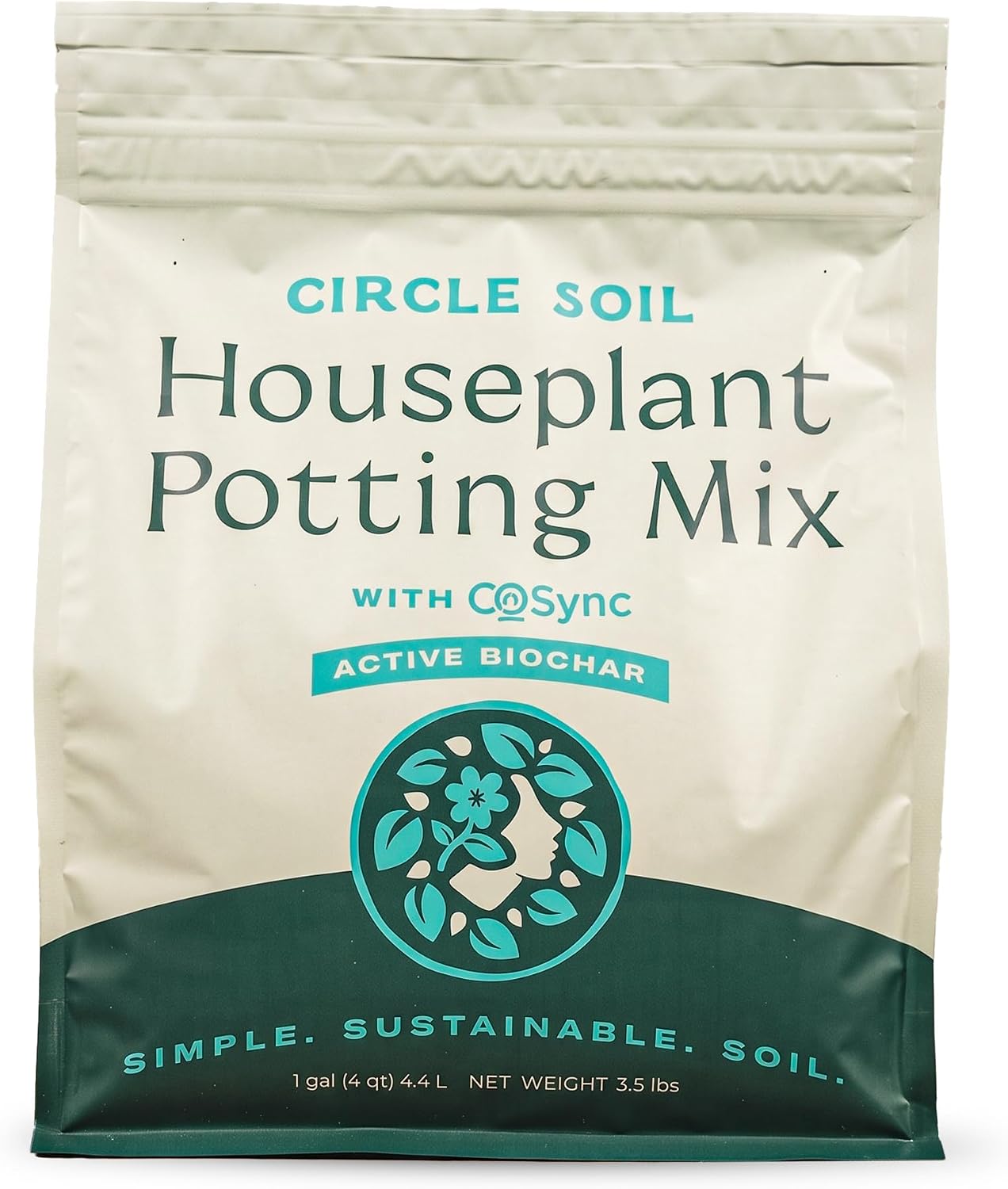
| Unit Count | 56 Ounce |
|---|---|
| Item Highlight | Active Biochar, Worm Castings, Expanded Shale, Peat-Free, Organic |
| Number of Packs | 1 |
| Manufacturer | Circle Soil |
This houseplant potting mix is designed as an all-purpose indoor soil that balances moisture retention, aeration, and nutrient support for common houseplants and herbs. It combines active biochar made from recycled tree waste, worm castings and local compost for living nutrients, and expanded shale plus coconut coir to keep the mix light and well drained. In practice the mix should help roots breathe while holding moisture where roots can access it, so repotted tropicals, pothos, and small herbs establish quickly without sitting in water. The resealable packaging and peat-free formulation are practical for repeat use and for gardeners avoiding peat. Limitations to note are the 4 quart bag size, which suits single pots or small repots but means frequent purchases for larger collections, and the absence of perlite for those who prefer a very gritty, fast-draining cactus-style substrate. For steady, low-fuss indoor growers this mix offers a reliable, plant-friendly medium.
Best for: Indoor plant owners who prioritize a dependable, low-maintenance potting medium and want a peat-free, microbially active mix for everyday houseplants and herbs.
Less Ideal for: Collectors needing bulk soil for many large pots or growers who require a coarse, fast-draining mix for desert succulents without further amendment.
- Peat-free formula with active biochar to improve nutrient retention and microbial support
- Includes organic inputs like worm castings and local compost for living nutrients
- Expanded shale and coconut coir provide natural aeration and drainage
- Resealable packaging makes it convenient to store between uses
- Small 4 quart bag is not economical for large collections or frequent repotting
- Not formulated specifically for succulents or cacti without additional gritty amendment
Verdict: Choose this peat-free, biochar-rich mix when you want a reliable everyday potting soil that promotes root health and steady moisture balance for indoor plants.
Miracle-Gro Indoor Potting Mix for All Plants, 6 qt. (2-Pack)

| Feeds for up to | 6 months |
|---|---|
| Volume per bag | 6 quarts |
| Number of packs | 2 |
| Ingredients | Sphagnum peat moss, coir, perlite, fertilizer, wetting agent |
This two-pack of Miracle-Gro Indoor Potting Mix is a lightweight, ready-to-use soil for a wide range of houseplants. It blends sphagnum peat moss, coconut coir, and perlite to balance water retention and drainage so pots stay moist without becoming waterlogged. The mix is pre-fertilized to feed plants for up to six months, which simplifies repotting or starting new indoor containers. Notably, the formula is bark- and compost-free, which the brand says reduces habitat for fungus gnats. Typical use is straightforward: fill a drained pot, position the plant, backfill, and water. Practical benefits include consistent texture that reduces compaction, an all-purpose recipe suitable for foliage, herbs, and flowering houseplants, and the convenience of two 6 qt. bags that fill multiple small pots. Limitations are that the bagged mix is not specialized for succulents or orchids that need very coarse or fast-draining media, and after the initial nutrient period you will need to resume feeding or repot annually to maintain fertility and structure.
Best for: Buyers who want a reliable, no-fuss potting mix for everyday indoor plants and value proven performance and wide user adoption.
Less Ideal for: Growers who focus on specialized containers like succulents, cacti, or epiphytic orchids should choose a purpose-made mix instead.
- Balanced blend of peat moss, coir, and perlite for good moisture control and aeration
- Pre-fertilized formula that feeds plants for up to six months, reducing immediate need for added fertilizer
- Bark- and compost-free mix reduces spots that commonly shelter fungus gnats
- Ready-to-use so no mixing required when repotting or potting up new plants
- Not formulated specifically for succulents, cacti, or orchids that require coarser, faster-draining media
- Nutrient boost lasts about six months so ongoing fertilization or annual repotting is necessary
Verdict: A convenient, all-purpose indoor potting mix that simplifies repotting and reliably supports a wide range of houseplants.
Back to the Roots Organic Indoor Potting Mix, 6 Quart

| Unit Count | 192 Fluid Ounces |
|---|---|
| Item Type Name | Indoor Potting Mix 6qt |
| Item Highlight | Peat-free, 100% organic, made in the USA |
| Ingredients | Coconut Coir, Yucca, Mycorrhizae, Perlite, Horticultural Sand |
This 6-quart Back to the Roots indoor potting mix is designed for everyday houseplants like pothos, monstera and ferns. The blend uses coconut coir as the base plus yucca extract to help the mix retain moisture, and includes mycorrhizae to support root growth and nutrient uptake. It is peat-free and made in the USA, so it suits gardeners who prefer organic, lower-impact inputs. In practice the mix is easy to use for repotting or top-ups in decorative pots and performs well at holding moisture without becoming waterlogged thanks to horticultural sand and perlite for drainage. Because it is formulated without bark or compost it tends to attract fewer indoor gnats. The main limitation is volume: a single 6-quart bag covers small pots or a few repots but is not intended for multiple large containers, so plan on buying several bags for bigger projects.
Best for: Buyers who prefer proven, low-risk potting mixes and want an organic, easy-to-use option for common houseplants without dealing with peat or frequent pest issues.
Less Ideal for: Those repotting many large plants or building big container displays who need bulk volumes or professional-grade mixes tailored to specific species.
- 100% organic and peat-free composition for lower environmental impact
- Includes yucca extract to improve moisture retention between waterings
- Contains mycorrhizae to promote healthier root development and nutrient uptake
- Formulated with perlite and horticultural sand for reliable drainage and aeration
- Small 6-quart volume means multiple bags are needed for larger collections or multiple repots
Verdict: A reliable, organic peat-free potting mix that simplifies repotting and care for common indoor plants.
Choosing the Right Indoor Potting Soil Mix: Key Factors to Consider
Moisture Balance and Watering Frequency
How a mix holds and releases water directly determines how often you need to water. Mixes with high peat or coir content retain moisture longer, which can be good for moisture-loving plants but risky in pots with poor drainage. Fast-draining mixes with more perlite, pumice, or coarse bark suit frequent watering cycles and plants that need drier root zones between irrigations.
Think about your usual watering rhythm and the pots you use. If you tend to underwater, choose a mix that holds moisture well. If you often overwater or keep plants in low light, favour mixes that shed excess water quickly to prevent root problems.
Aeration, Root Space, and Compaction Resistance
Air around roots is essential for healthy growth. Mixes with larger particles such as bark, perlite, or pumice maintain pore space and resist compaction over time. Fine-textured mixes compress sooner, reducing oxygen flow and increasing the risk of anaerobic conditions and root decline. For larger pots and vigorous root systems, aim for a coarser structure that supports root expansion.
Also consider how repotting and root disturbance affect pore structure. A stable, open mix reduces the need for frequent repotting and helps roots regenerate faster after transplanting.
Nutrient Holding and Fertilizer Compatibility
Potting mixes differ in how they bind and release nutrients. Organic components like composted bark, coir, or peat provide cation exchange capacity to hold onto nutrients, while inert components such as perlite do not. If you prefer minimal fertilizer, select a mix with some nutrient-holding organic matter. If you plan to feed regularly with liquid fertilizers, an inert, fast-draining blend lets you control nutrition more precisely.
Consider whether the mix includes slow-release fertilizer. That can simplify care for busy gardeners but may not suit all plant types or feeding preferences.
pH Stability and Suitability for Plant Types
Different plants prefer different pH ranges. A mix that drifts acidic or alkaline can affect nutrient availability and overall plant health. Peat-based mixes tend to be on the acidic side, while mixes with dolomitic lime or certain amended components can be more neutral. Match the expected pH behavior to your plants, whether bulbs, succulents, ferns, or tropical foliage.
If you grow a variety of species, choose a neutral, stable mix and adjust feeding rather than using specialized mixes for each plant, unless you want the precision for particular specimens.
Cleanliness, Pathogen Risk, and Pest Avoidance
Soil-borne pests and pathogens are more problematic indoors where conditions are stable and spread easily. Look for mixes that are pasteurized or manufactured with quality controls to reduce the risk of fungal spores, nematodes, or insect hitchhikers. Avoid using outdoor garden soil that may contain weed seeds, insect larvae, or unknown microbes.
Clean, consistent ingredients also help prevent future problems when you repot or store leftover mix. Good hygiene in potting material reduces the chance of recurring root or foliar issues.
Texture, Bulk Density, and Container Weight
The physical weight of the potting mix matters for large containers and hanging pots. Heavier mixes with lots of compost or clay-like components can increase load on stands and hooks. Lightweight mixes using perlite or pumice make moving potted plants easier and reduce stress on hardware.
Texture also affects how the soil sits in narrow pots versus wide bowls. A mix that slumps or settles can expose roots or change watering behavior over time, so choose a stable texture that suits your pot shapes and placement.
Adjusting Mix Choice by Plant Group
Different houseplants have distinct root-zone needs. Succulents and cacti need a fast-draining blend with plenty of inorganic particles to prevent waterlogging, while ferns and some tropicals prefer mixes that retain moisture and organic matter. Orchids and epiphytic plants often do best in very chunky, bark-heavy media rather than traditional potting soil.
Match the general category of your plants to a corresponding mix behavior rather than chasing marketing labels. You can further tweak a base mix by adding pumice, perlite, or extra composted bark to better suit a species or microclimate.
- Succulents: high drainage, coarse particles
- Tropicals: balanced moisture, good aeration
- Seedlings: finer texture with steady moisture retention
- Repotting large specimens: stable, chunky mix to support root mass
How Pot Size and Drainage Affect Soil Performance
Small pots dry out quickly and benefit from mixes with greater moisture retention. Large pots can hold more water and therefore need better drainage and aeration to avoid waterlogging at the bottom. The presence and size of drainage holes also change how a mix behaves; a fast-draining mix can pass water through quickly in a pot with good drainage but may still sit wetter in a saucer-bound container.
Consider pot material too. Terracotta wicks moisture through the pot walls and effectively increases drying, while plastic retains moisture longer. Match the mix to the pot material to create a predictable watering routine.
- Small pots: add moisture-retaining components
- Large pots: increase drainage and chunky particles
- Terracotta: favors faster-draining mixes
- Plastic: allows for mixes with longer water retention
Reusing and Refreshing Indoor Potting Mix
Reusing potting mix can save resources but requires refreshing to restore structure and nutrients. After a few seasons the mix often becomes compacted and depleted. Reviving it means removing large clumps, amending with fresh organic matter or slow-release fertilizer, and incorporating coarse material to reopen pore space.
Fully replacing mix is wise when pests, persistent diseases, or severe compaction are present. For routine refreshes, a 20 to 30 percent top-up of new mix or amendments helps most houseplants without a full repot.
- Refresh with composted bark or coir to restore moisture balance
- Add pumice or perlite to reverse compaction
- Replace entirely if there are signs of disease or persistent pests
- Sift and break up old mix before reusing to remove debris
Organic Versus Inert Components
Organic components such as composted bark, coconut coir, and compost provide nutrients and improve water retention. Inert components like perlite, pumice, and sand primarily control drainage and aeration. The right ratio depends on whether you want the mix to supply some nutrients or act as a neutral medium for scheduled feeding.
Gardeners who prefer organic feeding cycles will appreciate mixes with more organic matter, while those who use precise liquid feeding often favor inert-based mixes to avoid nutrient buildup and salt accumulation.
- Organic-rich mixes: better baseline nutrients and water holding
- Inert-rich mixes: stable structure and precise feeding control
- Consider a hybrid approach for versatile plant collections
Storage and Handling of Potting Mix
Store unopened or leftover mixes in a cool, dry place to prevent mold growth. Once opened, keep bags off concrete floors and seal them against moisture and pests. Proper handling includes fluffing the mix before use and screening out overly fine dust or clumps that can impede drainage.
When mixing components at home, wear a mask and gloves to avoid inhaling dust or spores, and mix on a plastic sheet for easier cleanup. Proper storage preserves the physical and biological quality of the mix for future seasons.
- Keep bags dry and sealed
- Fluff and sift before potting
- Store off the ground to reduce moisture pickup
- Use PPE when mixing dusty components
How We Chose the Best Indoor Potting Soil Mix
We narrowed the field to mixes formulated specifically for houseplants and container use, then scored each option against practical, gardener-focused dimensions. Evaluation centered on moisture management, aeration and root space, nutrient retention and slow-release compatibility, and ingredient consistency and cleanliness. We also checked how well mixes worked in common indoor containers and with common watering routines. Excluded from consideration were outdoor garden soils, straight garden loam without container amendments, and mixes designed only for a single specialist crop. We filtered out products lacking clear ingredient lists or those with inappropriate particle sizes for standard indoor pots. The goal was to highlight mixes that give reliable moisture balance, prevent compaction, support healthy root systems, and accept standard fertilizing schedules.
FAQ
How often should I water plants in indoor potting mix?
It depends on the mix and pot size. Fast-draining mixes need watering more often, while moisture-retentive mixes let you wait longer. Check soil moisture with your finger or a probe and water when the top inch or the recommended depth for that plant feels dry.
Can I make my own indoor potting soil mix?
Yes. Start with a base of a light organic component like coir or composted bark and add perlite or pumice for drainage. Adjust proportions for your plant types. Avoid using raw garden soil without amendments because it compacts and can carry pests.
Is peat-free mix necessary for houseplants?
Peat-free mixes are a sustainable option and can perform well when balanced with moisture-retaining substitutes like coir. The necessity depends on your preferences; both peat-based and peat-free mixes can support healthy plants if the moisture and aeration balance is right.
How do I know when to replace potting mix?
Replace mix when it is heavily compacted, water drains poorly, or plants show persistent decline despite proper care. Also replace if you detect pests or recurring fungal issues. For many houseplants a refresh every one to three years is common.
Should I add fertilizer to potting mix before planting?
Some mixes include slow-release fertilizer, which can be helpful for the first few months. If the mix is inert or you prefer liquid feeding, plant without added fertilizer and begin a regular feeding schedule according to your plants' needs.
Final Verdict
Choose an indoor potting soil mix that matches the moisture and aeration needs of your houseplants and the characteristics of your pots. Prioritize mixes that maintain pore space, support steady nutrient availability, and resist compaction for longer-term root health. Balance tradeoffs between organic nutrient content and inert drainage components based on how you fertilize and water. With a suitable mix, you can simplify care and give plants a stable foundation for steady growth.
