

Note: This article contains affiliate links. If you click on these links and make a purchase, I may earn a small commission at no extra cost to you. This helps support my research and content. Read my full affiliate disclosure here.
If you keep food scraps in the house you need a compost bin that handles kitchen traffic, controls smells, and fits your available space. The right kitchen kitchen compost bin makes daily sorting simple, keeps counters tidy, and reduces trips to an outdoor compost pile. This guide shortlists the top options for small and medium kitchens and explains the features that matter in real use. We tested shortlisted features like sealing performance, capacity, and ease of emptying to help you pick the best fit for frequent cooking or light household composting. Read on for practical guidance and the top picks.
Top Picks at a Glance
| Best Overall The best all-around choice for most situations | simplehuman 4L Compost Caddy with Magnetic Dock, Brushed Stainless Steel |  |
| Best Quality Built to a higher standard if you want something more solid | RED FACTOR Stainless Steel Kitchen Compost Bin with Dual Charcoal Filters (1.3 Gal) |  |
| Best Value The sweet spot between price and what you get | Utopia Kitchen Countertop Compost Bin, 1.3 Gallon Stainless Steel |  |
| Best Budget The cheapest option that still gets the job done reliably | IVWOXO 0.7‑Gal Sealed Countertop Compost Bin |  |
| Highest Rated A top-rated pick with lots of positive feedback | Reli. 1.3‑Gallon Stainless Steel Kitchen Compost Bin with Charcoal Filters |  |
| Most Popular A crowd favorite that many people choose with confidence | Epica Kitchen Compost Bin, 1.3 Gallon Stainless Steel |  |
| Best Seller A high-volume bestseller chosen again and again | OXO Good Grips Easy-Clean Compost Bin, 1.75 gal |  |
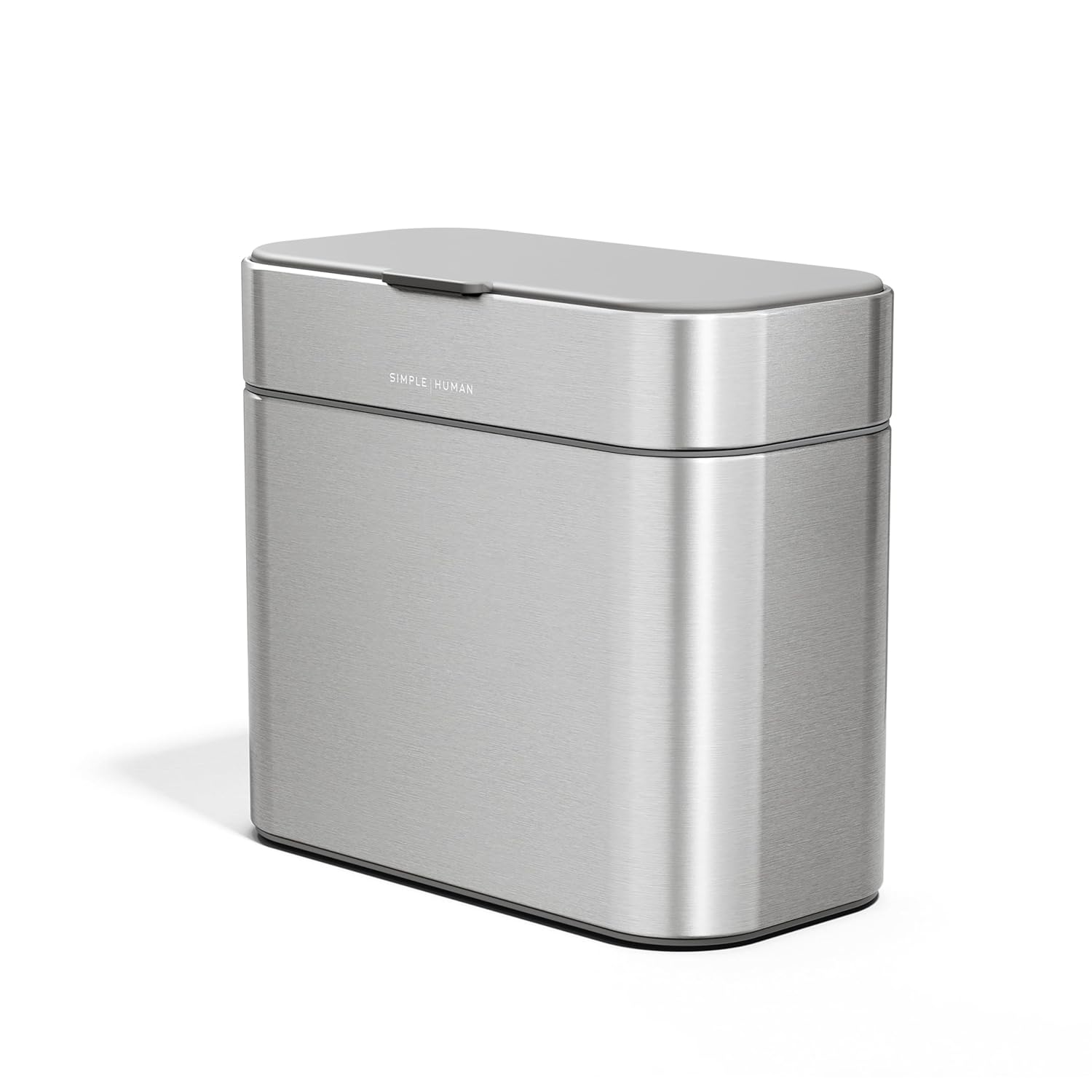
simplehuman 4L Compost Caddy with Magnetic Dock, Brushed Stainless Steel
| Capacity | 4 liters |
|---|---|
| Material Type | Stainless Steel |
The simplehuman 4L Compost Caddy is a compact countertop bin designed to make kitchen composting quick and tidy. It docks magnetically to compatible rectangular or slim‑rim simplehuman trash cans to stay out of the way between uses, and can be lifted off the dock for food prep beside the cutting board. The soft‑seal lid lets scraps breathe while reducing kitchen odors and discouraging fruit flies. A smooth, handled inner bucket lifts out for easy dumping into an outdoor compost pile or municipal pickup and rinses clean without tight corners. The stainless exterior has a silver‑ion coating to resist fingerprints and the caddy accepts custom fit compostable liners that eliminate bag overhang and simplify disposal. Limitations are its small 4 liter capacity, which means more frequent emptying for larger households, and that magnetic docking requires a compatible simplehuman can or optional wall mount for alternate placement.
Best for: Buyers who want a high‑quality, performance‑focused solution for daily kitchen scraps and prioritize odor control and quick food‑prep convenience on the countertop.
Less Ideal for: Households that generate large amounts of food waste or need a larger indoor compost container for multiple people will find the capacity too small.
- Magnetic dock keeps the caddy tucked out of the way on compatible trash cans for a streamlined countertop workflow
- Soft‑seal lid lets organics breathe while reducing odors and deterring fruit flies
- Removable handled inner bucket lifts out for easy emptying and rinsing with no hard‑to‑clean corners
- Stainless steel exterior treated to resist fingerprints for a cleaner appearance
- Designed to use custom compostable liners that fit without overhang for mess‑free disposal
- 4 liter capacity is small for busy or larger households and requires frequent emptying
- Magnetic docking limits placement unless you have a compatible simplehuman can or purchase the wall mount
Verdict: Choose this compact compost caddy if you want a clean, countertop‑friendly system that controls odors and speeds daily food‑prep scraping.
RED FACTOR Stainless Steel Kitchen Compost Bin with Dual Charcoal Filters (1.3 Gal)

| Capacity | 5 liters |
|---|---|
| Material Type | Stainless Steel |
| Filter | Dual active charcoal filters (includes spare) |
This RED FACTOR countertop compost bin is built for everyday kitchen use: hold your fruit and vegetable peelings, coffee grounds, eggshells and tea bags in a neat 1.3 gallon pail until you transfer them to an outdoor compost pile. The stainless steel single-sheet construction feels sturdy and resists rust while the dome lid and soft-grip handle make it easy to open, carry and empty. Its standout feature is the dual active charcoal filters plus a vented lid, which together reduce odors and help keep fruit flies at bay so you can keep the bin on the counter even in warm weather. The kit includes spare filters and a stainless filter protector that extends filter life, though the manufacturer warns against overfilling because scraps touching the filter can reduce effectiveness. It cleans with soapy water but is not dishwasher-safe. For someone who prioritizes reliable odor control and a durable, attractive container, this is a practical countertop solution; if you need a much larger capacity or a hands-free operation, a bigger or pedal-operated model would be a better choice.
Best for: Buyers who want a reliable, stylish countertop solution that minimizes odor and keeps kitchen scraps handy between trips to an outdoor compost pile.
Less Ideal for: People who need a high-capacity indoor composter or a hands-free pedal bin should consider larger or different-style models instead.
- Durable stainless steel single-sheet construction resists rust and looks finished on a countertop
- Dual active charcoal filters plus vented lid significantly reduce smells and deter fruit flies
- Compact 1.3 gallon capacity reduces trips outside while taking up minimal counter space
- Includes spare filters and a stainless filter protector to extend filter life
- Not dishwasher-safe so must be hand cleaned
- Limited capacity requires frequent emptying for larger households
Verdict: A compact, well-built countertop compost pail that keeps kitchen scraps contained and largely odor-free with dual charcoal filtration.
Utopia Kitchen Countertop Compost Bin, 1.3 Gallon Stainless Steel

| Capacity | 4.92 liters |
|---|---|
| Material Type | Stainless Steel |
| Item Highlight | Odorless countertop compost bin with charcoal filter |
| Item Type Name | Kitchen Compost Bin for Kitchen Countertop – 1.3 |
This stainless steel countertop compost bin is designed for everyday kitchen use as a small, tidy container for food scraps until they move to an outdoor pile or municipal collection. It holds roughly 1.3 gallons, enough to collect a week of typical household fruit and vegetable peelings or coffee grounds for one to two people. The cylindrical stainless steel body looks neat on a counter and resists chips or cracks that plastic bins can show. A tight-fitting lid and replaceable charcoal filter reduce odors so you can keep the bin in the kitchen without noticeable smells for several days. Cleaning is straightforward: line with paper or rinse with mild soap as needed. The main limitations are capacity and active composting functions; this is a holding bin not a hot composter, so you still need to empty it regularly and manage moisture by draining liquids or using absorbent liners. If you need a larger or processing-capable unit this will not replace that role, but as a clean, low-maintenance countertop catcher it performs well.
Best for: Buyers who want a low-maintenance, odor-controlled way to collect daily kitchen scraps on the counter and prefer a durable, attractive container over hidden plastic buckets.
Less Ideal for: Households that generate large volumes of food waste or want a single device that actively processes compost rather than temporarily storing scraps.
- Stainless steel construction resists scratching and looks tidy on a countertop
- Charcoal filter and tight lid help control odors for several days
- Compact 1.3 gallon capacity fits small kitchens and does not take much prep-space
- Easy to clean by rinsing or lining with paper to absorb liquids
- Small capacity requires frequent emptying for larger households
- Does not accelerate decomposition or perform active composting
Verdict: A compact, durable countertop catcher with a charcoal filter that keeps kitchen scraps contained and largely odor-free for users who want simple, low-effort indoor compost storage.
IVWOXO 0.7‑Gal Sealed Countertop Compost Bin

| Capacity | 0.7 gallons |
|---|---|
| Material Type | Plastic |
| Item Highlight | Indoor Compost Bin, No Filter Required, Compost Bucket with Lid and Handle |
This IVWOXO countertop compost bin is designed for daily kitchen scraps like coffee grounds, tea bags, and small fruit peels. Its nearly airtight lid and removable inner bucket keep odors contained and let you separate liquids from solids to slow decomposition. The one-handed lid, sturdy handle and drainable inner container make emptying and rinsing quick, and the smooth plastic body is dishwasher-safe for easy cleaning. At 0.7 gallons it fits neatly on counters or under sinks, so it works well in small kitchens or for single cooks. Because it does not use a charcoal filter it keeps ongoing costs down, but very long storage between emptying can still allow some odor development. The simple plastic construction is lightweight and low maintenance, though it lacks insulated walls or active odor-control systems that higher-end models offer. For basic, everyday indoor compost collection this is a practical, space-saving choice that minimizes upkeep.
Best for: Buyers who want a low-cost, no-fuss kitchen compost collector for small households or counter use and prioritize minimal maintenance over advanced features.
Less Ideal for: Not a good fit for larger families or anyone who wants long-term indoor storage of food waste or active odor filtration systems.
- Nearly airtight lid reduces odors without needing replaceable filters
- Removable, drainable inner bucket simplifies emptying and rinsing
- Compact 0.7‑gal size fits small countertops or under-sink spaces
- Dishwasher-safe smooth plastic interior for easy cleaning
- Small capacity requires frequent emptying for multi-person households
- Made of basic plastic so it lacks insulation or advanced odor-control features
Verdict: A compact, low-maintenance countertop bin that keeps costs down while providing reliable short-term indoor compost collection.
Reli. 1.3‑Gallon Stainless Steel Kitchen Compost Bin with Charcoal Filters

| Capacity | 1.3 gallons |
|---|---|
| Material Type | Stainless Steel |
| Included Components | Bags |
This Reli. 1.3‑gallon compost bin is built for everyday kitchen use where odor control and durability matter. Made from stainless steel with an airtight, vented lid and two activated charcoal filters, it keeps food waste discreet on a countertop and resists rust and staining. The compact footprint fits in tight kitchens and the ergonomic handle makes transferring scraps to an outdoor pile or larger bin simple. In practice the charcoal filters and vented lid noticeably reduce smells, though the filter needs replacing every 2 to 3 months for best performance. The small capacity means it suits singles, couples, or light kitchen use rather than large families or heavy cooking days. Cleaning is straightforward because of the smooth steel interior, but you will still need to empty and rinse regularly to avoid buildup. Overall this is a practical, low-maintenance choice if you want a dependable indoor compost container that prioritizes odor control and long-term material performance.
Best for: Buyers who want a no-fuss, durable countertop compost solution that reliably controls smells and is easy to maintain in small kitchens.
Less Ideal for: Homes that produce large volumes of food scraps, need a hands-off continuous composter, or prefer a larger-capacity indoor system.
- Stainless steel construction resists rust, stains, and odor absorption
- Airtight vented lid combined with charcoal filters reduces kitchen odors
- Compact size fits small countertops and includes an ergonomic pour handle
- Comes with two activated charcoal filters so a replacement is included
- 1.3 gallon capacity is small for large households or heavy food waste producers
- Filters require replacement every 2 to 3 months to maintain odor control
Verdict: A sturdy, compact stainless steel countertop bin that reliably keeps kitchen scraps contained and odors down for small household composting.
Epica Kitchen Compost Bin, 1.3 Gallon Stainless Steel

| Capacity | 1.3 gallons |
|---|---|
| Material Type | Stainless Steel |
| Item Type Name | Compost Bins |
This Epica countertop compost bin is built for everyday kitchen use: it holds about 1.3 gallons of food scraps and sits neatly on a counter or under the sink. The stainless steel body resists rust and is easy to hand wash, and the one-piece design helps prevent leaks. An airtight, leak-resistant lid plus a replaceable activated charcoal filter reduce odors during short-term indoor storage, and filters can be rinsed gently or swapped every few months. It is straightforward to use—drop scraps in, close the lid, empty weekly into an outdoor compost pile or municipal bin, and wash as needed. The unit is compact enough for small households but will require frequent emptying for larger families. The filter helps with smells but will need periodic replacement and gentle care to avoid saturating it. If you want a stylish, low-maintenance indoor holding container for vegetable peels, coffee grounds, and other kitchen scraps, this model performs well; it is not a processing device and is meant only for temporary storage before transfer to an outdoor or municipal compost system.
Best for: Buyers who want a tidy, low-profile way to store daily vegetable scraps and coffee grounds indoors and who prioritize odor control and a durable, easy-to-clean container.
Less Ideal for: Those looking for a unit that composts or processes waste indoors or households that generate large volumes of food waste without frequent emptying.
- Stainless steel construction resists rust and is easy to clean
- Airtight, leak-resistant lid minimizes drips and mess
- Replaceable activated charcoal filter reduces kitchen odors
- Compact 1.3 gallon capacity fits on countertops and under sinks
- Small capacity requires frequent emptying for larger households
- Filters need periodic replacement and careful rinsing to extend life
Verdict: A durable, compact countertop compost bin that keeps daily kitchen scraps contained and largely odor-free until you transfer them to your outdoor compost or waste collection.
OXO Good Grips Easy-Clean Compost Bin, 1.75 gal

| Capacity | 6.62 liters |
|---|---|
| Material Type | Plastic |
| Included Components | Compost bin |
| Unit Count | 26.35 Ounce |
The OXO Good Grips Easy-Clean Compost Bin is a compact countertop container for collecting kitchen scraps before transferring them to an outdoor composter or municipal pickup. It fits on a counter without drawing attention and is designed to tuck a compost bag inside for a neat appearance. The soft-close lid helps limit odors while allowing airflow to reduce pest attraction, and the stay-open feature makes it convenient to toss peels and coffee grounds while cooking. The internal bucket is removable and dishwasher safe, and the smooth plastic interior wipes clean easily without much scrubbing. A folding handle makes short trips to the larger bin straightforward. Because it is only 1.75 gallons, it works best for small households or cooks who empty it frequently; heavy users will need to empty it often to avoid overflow. The plastic construction is lightweight and easy to maintain but is not insulated for odor control beyond the lid design.
Best for: Best for cooks or small households that want a tidy, easy-to-use countertop solution for collecting daily food scraps and who will empty it regularly.
Less Ideal for: Not suited for large families, heavy cooks, or anyone who wants a high-capacity or actively filtered indoor composter.
- Compact countertop size that fits on most kitchen surfaces
- Soft-close, stay-open lid that limits odors and makes tossing scraps easy
- Removable internal bucket that is dishwasher safe for thorough cleaning
- Tucks compost bags inside for a tidy look and easier disposal
- Small 1.75 gallon capacity requires frequent emptying for multi-person households
- Plastic body offers no active odor filtration beyond the lid design
Verdict: A neat, easy-to-clean countertop compost bin that keeps daily kitchen scraps contained and is ideal for small households who empty it often.
Choosing the Right Kitchen Kitchen Compost Bin: Key Factors to Consider
Odor Control and Sealing
Good odor control is the most important practical factor for an indoor compost bin. A tight-fitting lid and an effective gasket or seal keep kitchen smells contained between trips to the outdoor pile or municipal bin. Passive carbon filters or removable charcoal inserts can reduce lingering scents, but sealing design and how well the lid seats are equally important. Consider how the lid behaves when you open it quickly with one hand while cooking; lids that slam open or do not reseat reliably will let odors escape and may trap food inside rim crevices.
Airflow matters too. Some designs include small vents combined with filters to balance containment and drying, which can reduce wet, smelly conditions. If you produce a lot of wet scraps, choose a bin whose seal and ventilation keep moisture from building up against the base.
Countertop Footprint and Placement
Measure your intended counter or cabinet space before choosing a bin. Footprint is critical in small kitchens where every inch counts. Slim, taller units can save counter space but may be harder to empty without spilling if the opening is narrow. Short, wide bowls fit under cabinets or beside the sink more easily but take up valuable counter depth.
Think about placement in relation to food prep zones and sinks. A bin that fits comfortably next to the cutting board or under a cabinet door is more likely to be used consistently. Also consider how the bin's shape affects cleaning-rounded interiors are easier to wipe out than models with tight corners or recessed lids where food can lodge.
Capacity and How You Compost
Choose capacity based on household size and how often you want to empty the bin. Small households or solo cooks may be fine with a one- to two-liter countertop pail, while families or frequent cooks benefit from three to five liter options to avoid daily dumping. Larger capacities reduce trips outdoors but increase risk of odors and pest attraction if sealing is poor.
Balance capacity against weight when full. Metal or heavy ceramic bins with larger volume can be awkward to carry to an outdoor compost pile; plastic or lightweight stainless designs ease transport. If you compost in a backyard tumbler or municipal program, coordinate bin size with how often you plan to transfer scraps.
Ease of Emptying and Cleaning
A bin that is easy to empty and clean will actually get used. Look for wide mouths, removable inner buckets, or liners that detach quickly without spilling. Smooth interior surfaces and rounded edges reduce stuck-on food and make rinsing with a sink sprayer simple.
Consider whether the lid and interior components are dishwasher-safe or designed to withstand repeated hand washing. Hinges, snaps, and gasket attachments that come apart without tools speed deep cleaning and help prevent bacterial buildup.
Materials and Long-Term Durability
Materials affect longevity and hygiene. Stainless steel resists stains and odors and looks tidy on the counter, though lower-quality coatings can scratch or pit over time. Food-grade plastics are lightweight and affordable but can absorb odors if porous or if finishes degrade. Ceramic and stoneware are attractive and stable but tend to be heavier and more brittle.
Consider finishes that tolerate near-daily cleaning and exposure to acidic food scraps. Metal lids and clips should resist corrosion. Pay attention to gasket materials; soft rubber seals keep odors out but can degrade if cleaned with harsh chemicals.
Lid Mechanism and User Ergonomics
How the lid opens and closes affects daily convenience. Swing-top or push-button lids let you deposit scraps with one hand while stirring a pot. Hinged lids that open fully simplify emptying and cleaning. Some lids incorporate filters or trays you will need to replace or cleanse periodically.
Ergonomics also includes handle placement and balance when lifting to an outdoor pile. A comfortable handle and a balanced center of gravity reduce spills. Consider whether the bin can be used with liners and how liner fit interacts with the lid closure.
Small Kitchen Strategies
In tight kitchens the goal is to minimize footprint without sacrificing capacity or odor control. Choose narrow, taller bins or countertop units designed to tuck under cabinets and beside sinks. Keep the bin near your main prep station to reduce steps while cooking.
Use methods that lower wetness and smells between emptying. Line the bottom with paper towels or absorbent material, and scrape plates or collect greasy scraps separately. Consider keeping a small scoop or compost card on the counter to transfer scraps quickly.
- Place near prep zones but away from heat sources to avoid accelerating decomposition
- Opt for units with replaceable carbon filters in really small spaces
- Select models with removable inner buckets for easy transport
Maintenance Tips to Reduce Odors
Regular cleaning and simple upkeep dramatically cut odors. Rinse or wipe the bin and lid after each emptying and deep-clean weekly. Replace or refresh charcoal filters as specified by the manufacturer or when you notice lingering smells.
Rotate absorbent liners or paper at the base to soak up liquids. For stubborn residues, use a mild vinegar rinse to neutralize odors without damaging seals or finishes.
- Wipe the rim and lid crevices where food tends to collect
- Air out the bin occasionally with the lid open when weather allows
- Use biodegradable liners that match the bin size to prevent leaks
Composting Workflow Between Indoor and Outdoor
Plan a straightforward transfer routine to avoid accumulating wet scraps. Keep an outdoor compost container or municipal drop-off schedule in mind so you know how much indoor storage you need. Emptying into a larger outdoor bin promptly reduces indoor odor pressure.
Designate a single transfer point and a carried container. A lightweight, sealed bucket for transport makes trips faster and reduces spills. If you are composting in a shared building or balcony, choose containers with the best possible seal and discreet appearance.
- Match indoor bin capacity to your outdoor emptying frequency
- Line the transport bucket for easier cleanup
- Avoid overfilling to maintain a good seal and prevent dripping
Filter Options and When to Use Them
Carbon and charcoal filters absorb odors and are useful in apartments or when you cannot empty scraps daily. They are not a cure-all; filters work best combined with a good lid seal and regular cleaning. Replaceable filters require occasional purchase and fitting, so factor that into long-term upkeep.
Some bins use passive ventilation to reduce moisture while routing air through a filter. If you produce a lot of wet scraps, search for designs that balance venting with filtration rather than fully airtight models that trap moisture.
- Use filters in closed living spaces or during warm months
- Check replacement intervals and compatibility before choosing a bin
- Combine charcoal filters with absorbent liners for best results
Aesthetics and Counter Integration
Since the bin will live on your counter, appearance and finish matter. Matte metal, textured plastic, or ceramic finishes blend better with kitchen décor than industrial-looking containers. But balance looks with practicality; highly decorative finishes can hide residue or be more fragile.
Consider how the lid color and shape will fit with your cabinet lines and appliance colors. A discreet design encourages use and reduces the temptation to stash scraps in less appropriate places.
- Choose neutral finishes for easier matching with existing kitchen elements
- Avoid overly ornate lids that trap food in crevices
- Select a design whose cleaning requirements fit your routine
How We Chose the Best Kitchen Kitchen Compost Bin
We focused on features that matter in everyday kitchen composting and excluded outdoor-only or bulky collection systems. Our selection criteria emphasized sealing performance to limit odors, container capacity and footprint to suit small to medium kitchen counters, and materials that resist staining and hold up to frequent emptying. We also prioritized lid and closure designs that are easy to use with one hand, and models that simplify cleaning and maintenance. Durability of finishes and resistance to corrosion were considered so options stay sanitary over months of use. We excluded units designed only for long-term outdoor storage, single-use disposable liners, and systems that require special composting additives. The final shortlist balances real-world convenience with solid construction and odor control, the dimensions gardeners and home composters care about most.
FAQ
How often should I empty a kitchen compost bin?
It often depends on household size and weather. Small households can usually empty every two to three days, while larger families or hot weather may require daily emptying to avoid odors and pests.
Are charcoal or carbon filters necessary for indoor bins?
Filters are useful in enclosed spaces and reduce noticeable odors, but they work best with a tight lid seal and regular cleaning. Filters do not replace routine emptying.
Can I use regular trash bags as liners?
You can, but biodegradable or compostable liners designed for compost collection reduce plastic contamination and make outdoor transfer easier. Ensure the liner fits snugly and does not interfere with the lid seal.
What is the best place to keep a compost bin in a small kitchen?
Keep it near your main prep area or the sink for convenience, but away from direct heat or sunlight. Positioning it under a counter overhang or beside the prep station encourages consistent use.
How do I stop fruit flies in my kitchen compost bin?
Clean spills promptly, use tightly sealed lids, and include a layer of dry material like paper towels at the bottom. Emptying more frequently and using filters or lids that close firmly will also reduce fly attraction.
Is stainless steel better than plastic for a compost bin?
Stainless steel resists stains and looks tidy, but some plastics are lightweight and easier to lift when full. Both can work well if they have good sealing and are easy to clean.
Final Verdict
Choose a Kitchen Kitchen Compost Bin that balances capacity with a strong seal and manageable footprint. Prioritize odor sealing, ease of emptying, and materials that tolerate regular cleaning. In small spaces favor compact designs with filters and removable inner buckets; in larger kitchens opt for higher capacity with sturdy handles. Ultimately pick the configuration that matches how often you will transfer scraps and how much cleaning effort you are willing to do so the system stays convenient and sanitary.
