

Note: This article contains affiliate links. If you click on these links and make a purchase, I may earn a small commission at no extra cost to you. This helps support my research and content. Read my full affiliate disclosure here.
If you grow Knock Out roses, the right fertilizer can mean the difference between sporadic blooms and a season full of healthy flowers. Roses labeled Knock Out have particular vigor and repeat-bloom habits, but they still need consistent nutrients and a feeding approach that matches their growth pattern and your maintenance level. This guide covers seven shortlisted Knock Out fertilizer options chosen for common rose garden situations, from container plants on a patio to mixed beds in full sun. Below we explain the evaluation criteria you can use to compare formulas, application styles, and feeding schedules so you can pick a fertilizer that supports bigger blooms, strong canes, and easier care. Read on for targeted guidance before the product list.
Top Picks at a Glance
| Best Overall The best all-around choice for most situations | Miracle-Gro Water Soluble Rose Plant Food, 1.5 lb |  |
| Best Quality Built to a higher standard if you want something more solid | Miracle-Gro Shake 'N Feed Rose & Bloom Plant Food, 4.5 lb |  |
| Best Value The sweet spot between price and what you get | Jobe's Organics Granular Rose & Flower Fertilizer, 4 lb |  |
| Best Budget The cheapest option that still gets the job done reliably | Jobes Organic Rose Fertilizer Spikes, 10 Pack |  |
| Highest Rated A top-rated pick with lots of positive feedback | Espoma Organic Rose-Tone 4-3-2 Organic Fertilizer, 18 lb. Bag (2-Pack) |  |
| Most Popular A crowd favorite that many people choose with confidence | BioAdvanced All-in-One Rose & Flower Care Granules, 64 oz |  |
| Best Seller A high-volume bestseller chosen again and again | Miracle-Gro Water Soluble Bloom Booster Flower Food, 5.5 lb |  |
Miracle-Gro Water Soluble Rose Plant Food, 1.5 lb

| Item Form | Powder |
|---|---|
| Application Method | watering can |
| Target Species | Roses |
| Mixing Ratio | 1.5 tbsp/1.5 gal outdoor; 0.5 tsp/1 gal indoor |
| Fertilizer Analysis | 18-24-16 |
Miracle-Gro Water Soluble Rose Plant Food is a powder fertilizer designed for regular feeding of roses to encourage bigger blooms and greener foliage. It dissolves in a watering can or can be used with the Miracle-Gro Garden Feeder, letting you soak the base of plants with a nutrient solution. The product lists an NPK analysis (18-24-16) tailored for roses and includes clear mixing guidance for indoor and outdoor use, so you can feed plants every 7 to 14 days for consistent results. Practical benefits include quick uptake because it is water soluble and flexible application options for containers or in-ground beds. It also covers a moderate area from the 1.5 lb size when used with the garden feeder. Limitations to consider are the need for frequent applications compared with slow-release granular fertilizers and the requirement to measure and mix each feeding. Users should follow label safety guidance to avoid contact with skin and eyes and keep the product away from children.
Best for: Roses growers who want a reliable, easy-to-use feed they can apply regularly to boost blooms and foliage in containers or garden beds.
Less Ideal for: Gardeners who prefer low-maintenance, single-application fertilizers or who want organic or slow-release nutrient solutions should consider other options.
- Water-soluble formula provides fast nutrient uptake for quicker visible results
- Clear mixing ratios for indoor and outdoor applications make dosing straightforward
- Works with a watering can or Miracle-Gro Garden Feeder for flexible application
- Formulated specifically for roses to encourage bigger blooms and lush foliage
- Requires frequent feeding every 7 to 14 days compared with slow-release options
- Powder must be measured and mixed each time which adds repeat effort
Verdict: Choose this if you want a rose-specific, fast-acting soluble fertilizer you can apply regularly for bigger blooms and greener foliage.
Miracle-Gro Shake 'N Feed Rose & Bloom Plant Food, 4.5 lb

| Item Form | Granules |
|---|---|
| Specific Uses For Product | Plant Food |
| Coverage | 4.5 pounds |
| Target Species | roses and flowering plants |
Miracle-Gro Shake 'N Feed Rose & Bloom is a granular, slow‑release plant food designed to encourage bigger blooms and sustained flowering with minimal upkeep. You apply it by shaking the granules onto dry soil around the plant, working them in, and watering to start the release; one application is meant to feed for up to three months. The formula contains organic ingredients such as kelp, feather meal, bone meal, and earthworm castings that support soil microbes and root development, which can improve water efficiency and bloom production. For ranunculus growers seeking reliable bloom performance without frequent feedings, this product offers convenient, season‑long nutrition for both in‑ground beds and containers. Limitations to consider are that it is a general rose/flower formula rather than a ranunculus‑specific NPK balance and results will depend on proper soil preparation and watering; heavy feeders or growers wanting very precise nutrient ratios may prefer a specialty bulb or bloom booster fertilizer. Pack size and the granular format make it easy to apply to small beds but do require occasional incorporation into the topsoil.
Best for: Gardeners who prioritize reliable, low‑maintenance bloom feeding and want season‑long results with minimal reapplication for their flowering borders or containers.
Less Ideal for: Specialists who need a fertilizer matched precisely to ranunculus tuber requirements or growers who prefer water‑soluble feeds and exact NPK control.
- Slow‑release formula feeds up to three months from one application
- Contains natural, soil‑building ingredients that support microbes and root health
- Easy granular application for beds and containers
- Suitable for both in‑ground and container flowering plants
- Not formulated specifically for ranunculus so NPK is not tailored to bulb/tuber needs
- Granules must be worked into soil surface for best effect rather than delivered directly to the crown
Verdict: Provides convenient, long‑lasting nutrition to boost blooms with one easy granular application every three months.
Jobe's Organics Granular Rose & Flower Fertilizer, 4 lb

| Item Form | Granules |
|---|---|
| Specific Uses For Product | Plant Growth,Root Development,Seed Developmen,tSoil Conditioning |
| Target Species | roses, hydrangeas, hibiscus, azaleas, and other flowering shrubs |
| Mixing Ratio | 3-5-3 |
| Unit Count | 64 Ounce |
This granular organic fertilizer is designed for roses, hydrangeas and other flowering shrubs and supplies balanced nutrients in a 3-5-3 NPK formula. It is OMRI listed so it can be used in organic gardens and is supplied as easy-to-scatter granules that you work into the soil or apply around the drip line every six weeks during the blooming season. Key ingredients listed include nitrogen, phosphate, potash and essential secondary nutrients like calcium and magnesium, which help blooms and overall plant vigor. The packaging size and medium coverage make it practical for small to medium beds or several container hydrangeas, and the granular form reduces mess and runoff compared with liquid feeds. Limitations are that the bag is only 4 pounds so larger hydrangea plantings will require frequent repurchase, and the fixed 3-5-3 ratio may not match specialty needs for acid-loving hydrangea color manipulation. Follow the product directions and wear gloves when handling.
Best for: Gardeners who want a straightforward, organically approved granular feed for hydrangeas and other flowering shrubs and prefer simple, scheduled applications during the bloom season.
Less Ideal for: Growers managing large beds or commercial plantings who need bulk fertilizer or gardeners seeking a product specifically formulated to alter hydrangea flower color.
- OMRI listed and suitable for certified organic gardening
- Balanced 3-5-3 NPK tailored to promote flowering and root development
- Granular form is easy to measure and apply with reduced runoff and mess
- Contains secondary nutrients like calcium and magnesium to support plant vigor
- 4 lb bag provides limited coverage for larger gardens
- Fixed NPK ratio limits flexibility for gardeners who need different nutrient balances
Verdict: A small, OMRI-listed granular fertilizer that reliably feeds hydrangeas and other flowering shrubs with a bloom-focused 3-5-3 formula for easy, organic seasonal applications.
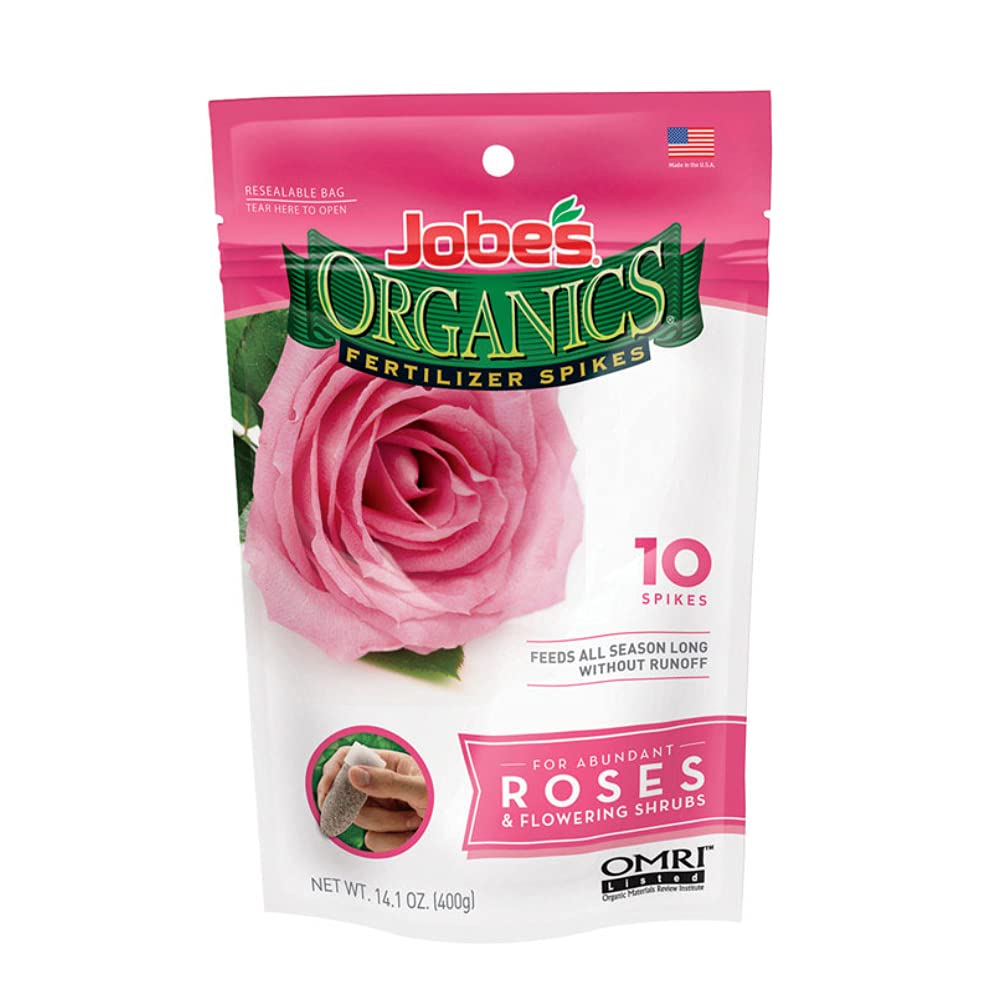
Jobes Organic Rose Fertilizer Spikes, 10 Pack
| Item Form | Sticks |
|---|---|
| Application Method | Insert into soil |
| Target Species | Roses and Flowering Shrubs |
| Unit Count | 10 Count |
| Mixing Ratio | 3-5-3 |
These Jobes organic fertilizer spikes are a low-effort way to feed roses and other flowering shrubs during the growing season. You push the premeasured sticks into the root zone and they release nutrients slowly, following a 3-5-3 NPK ratio intended for blooming plants. The stick format makes application fast and eliminates measuring or mixing liquid fertilizers, so they are convenient for regular upkeep and for gardeners who want a tidy, no-mess solution. The product is labeled organic and comes in a ten-count pack that covers a medium area, which suits small beds or a few Knock Out roses. Limitations to expect are coverage and frequency: spikes cover a moderate area so dense plantings will need multiple sticks, and larger shrubs may require repeat applications. The simple design also means there is no granular spreading option for broader lawns or beds.
Best for: Budget-minded gardeners who want a simple, low-effort way to feed a few Knock Out roses or other flowering shrubs without measuring or mixing fertilizers.
Less Ideal for: Those managing large rose borders, mass plantings, or lawns who need broad coverage or a product that can be broadcast over many plants.
- Premeasured spikes for easy, no-mess application
- Slow-release 3-5-3 formula targeted for blooms
- Organic formulation suitable for gardeners preferring organic inputs
- Ten spikes per pack works well for small beds or a few shrubs
- Medium coverage means multiple spikes required for larger or dense plantings
- Not suitable for treating large areas quickly since there is no broadcast option
Verdict: A simple, affordable organic spike fertilizer that takes the guesswork out of feeding a few Knock Out roses.
Espoma Organic Rose-Tone 4-3-2 Organic Fertilizer, 18 lb. Bag (2-Pack)

| Item Form | Granules |
|---|---|
| Specific Uses For Product | Organic Plant Food for flowers |
| Coverage | Medium |
| Target Species | roses |
| Mixing Ratio | 4-3-2 |
Espoma Rose-Tone is a ready-to-use granular organic fertilizer designed for roses and other flowering shrubs like viburnum. You apply it around the plant drip line and water in monthly during the growing season to encourage green growth and abundant blooms. The 4-3-2 N-P-K balance with added calcium and the company s Bio-tone blend provides gentle, slow-release nutrition suited to established shrubs and repeat feeding without mixing. Being an approved organic input makes it a dependable choice for gardeners who want predictable, soil-friendly feeding that supports long-term plant health. The product is medium coverage per bag and comes in a large unit suited to multiple plants or repeat monthly applications. It does not dissolve instantly like a liquid feed, so results build over weeks rather than days, and it requires correct placement and watering to be effective. For reliability-focused gardeners this fertilizer reduces guesswork by using a proven formula, but those needing rapid correction of severe deficiencies may prefer a soluble supplement.
Best for: Gardeners who prioritize consistent, low-risk feeding for flowering shrubs and want an organic, easy-to-apply fertilizer they can use monthly through the growing season.
Less Ideal for: Growers who need a fast corrective feed for acute nutrient deficiencies or who prefer liquid concentrates for quick uptake should consider alternative products.
- Organic formulation approved for organic gardening and soil-friendly feeding
- Balanced 4-3-2 N-P-K with added calcium supports flowering and overall plant vigor
- Ready-to-use granular form that requires no mixing and is easy to apply around the drip line
- Suitable for repeat monthly applications through the growing season for steady nutrition
- Slow-acting granular formula means results accumulate over weeks rather than delivering an immediate boost
- Coverage is described as medium so very large plantings may require multiple bags
Verdict: A reliable, organic granular fertilizer that delivers steady monthly nutrition to support flowering shrubs like viburnum and roses.
BioAdvanced All-in-One Rose & Flower Care Granules, 64 oz

| Unit Count | 64 Ounce |
|---|---|
| Item Form | Granules |
| Target Species | Insects |
| Specification Met | EPA |
BioAdvanced All-in-One Rose & Flower Care is a granular, three-in-one product that combines fertilizer, insect control, and fungicide into a single application for roses and other flowering shrubs. You apply the granules around the base of the plant, pulling back mulch first, and the systemic formula is taken up by roots so no spraying is required and protection remains effective through rain for up to six weeks. Notable features include a balanced N-P-K analysis and active ingredients (acephate and tebuconazole) that target common pests like aphids and leafhoppers while reducing fungal issues such as black spot and powdery mildew. For a gardener seeking convenience, this simplifies routine rose care by reducing separate feeding and spray steps and helps maintain stronger roots and better blooms. The main limitations are that it contains conventional active ingredients that some gardeners may wish to avoid and it is formulated for listed pests and diseases rather than every possible problem, so you should follow label directions and local regulations when using it.
Best for: Gardeners who want a straightforward, low-effort way to feed roses and reduce common insect and fungal problems with a single seasonal application.
Less Ideal for: People who prioritize organic or all-natural products or who need treatments for pests or diseases not listed on the label.
- Combines fertilizer, insect control, and disease control in one granular application
- Systemic, rainproof formula provides protection for up to six weeks
- Easy to apply around the plant base with no spraying required
- Targets common rose pests and diseases, helping improve blooms and plant health
- Contains conventional pesticides and fungicides that may not suit organic gardeners
- Protection covers only listed pests and diseases and requires correct placement and timing
Verdict: Choose this product when you want a convenient single-product solution to feed roses and provide multiweek, rainproof insect and disease protection.
Miracle-Gro Water Soluble Bloom Booster Flower Food, 5.5 lb

| Item Form | Powder |
|---|---|
| Application Method | Mix with water |
| Target Species | Flower |
| Mixing Ratio | 1:Water |
Miracle‑Gro Water Soluble Bloom Booster is a powdered, water‑mix fertilizer designed to be dissolved and applied every 7 to 14 days to flowering plants. It carries a high middle number NPK (10‑52‑10) so it delivers an extra boost of phosphorus to encourage bud set and larger blooms, and it can be used for in‑ground beds, containers and indoor flowering plants when diluted to the package directions. The included mixing guidance and scoop make it straightforward to dose for small containers or larger garden areas, and one 5.5 lb container covers a substantial area. Practical benefits include fast uptake when watered in at the base of plants and compatibility with common feeders or a watering can. Limitations are that the concentrated phosphorus focus is for flowering performance rather than overall foliage growth and it requires regular reapplication through the blooming season rather than a single slow‑release feed. Also users should follow safety directions when handling and avoid overfeeding sensitive or newly transplanted plants.
Best for: Gardeners who prioritize showy, frequent blooms and want a product they can apply regularly to flower beds and containers during the flowering season.
Less Ideal for: People looking for an all‑season, low‑maintenance slow‑release fertilizer or those who need a balanced feed for foliage and establishment of new transplants.
- High phosphorus NPK (10-52-10) targets bud set and bloom production
- Water‑soluble powder mixes quickly for fast feeding and easy use in a watering can or garden feeder
- Suitable for both in‑ground beds and container flowering plants including roses and hydrangeas
- Covers a large area from a single 5.5 lb container when used to label directions
- Requires frequent applications during bloom period rather than providing long‑term slow release
- Formulation focuses on flowering so it is less balanced for leafy growth or general maintenance
Verdict: Choose this bloom booster if your goal is bigger, more frequent flowers by feeding a high‑phosphorus, fast‑acting soluble fertilizer during bloom season.
Choosing the Right Knock Out Fertilizer for Roses: Key Factors to Consider
Nutrient Ratio and Bloom Focus
The nutrient ratio, especially relative amounts of nitrogen, phosphorus, and potassium, shapes how a rose plant allocates energy. Knock Out roses respond well to formulations that encourage repeat blooming without producing overly lush foliage that invites disease. A moderate nitrogen level paired with adequate phosphorus and potassium helps support continuous flower production and root health.
Choose a fertilizer that emphasizes bloom-promoting phosphorus and balanced potassium while avoiding excessive quick-release nitrogen that can cause surges of leafy growth. Consider seasonal needs: slightly higher phosphorus during bloom initiation and balanced feeds during heavy growth periods.
Release Type and Feeding Frequency
Slow-release granules provide steady nutrition over weeks to months and reduce the risk of burning, which is useful for low-maintenance gardeners and planted borders. Water-soluble formulas deliver an immediate nutrient boost and are helpful for correcting deficiencies or supporting heavy flowering stretches, but they require more frequent applications.
Think about how often you want to fertilize and whether you prefer a set-and-forget approach or periodic feedings tied to bloom cycles. Combination products that include both controlled-release and soluble components give flexibility for steady growth plus occasional quick-feed boosts.
Application Method and Garden Logistics
Application format matters in real gardens. Granular top-dress is simple in open beds, while spikes or stakes are convenient for containers and small landscapes. Water-soluble powders work well with hose-end feeders or irrigation systems but need accurate measuring.
Consider access to your roses, the number of plants, and whether you are comfortable using a spreader, mixing solutions, or inserting spikes. Application instructions that match your watering routine and seasonal labor availability will make consistent feeding more likely.
Salt Sensitivity and Soil Safety
Some fertilizers increase soluble salts in the root zone, which can stress roses, especially when irrigation is irregular or soils are compacted. Knock Out roses are generally hardy, but salt buildup can reduce bloom performance and root activity over time.
Look for products with clear guidance on watering after application and formulations designed to minimize salt injury. If your garden has heavy clay or poor drainage, prioritize fertilizers that emphasize root safety and encourage microbial activity rather than those with high salt indexes.
Micronutrients and Long-Term Plant Health
Micronutrients such as iron, magnesium, calcium, and trace elements support leaf quality, disease resistance, and flower color intensity. Deficiencies may show as chlorosis, weak stems, or poor bud set even when primary nutrients are sufficient.
Choose fertilizers that include a suite of micronutrients or pair your primary feed with periodic soil amendments and foliar sprays to correct specific deficiencies. Regular soil testing can help target micronutrient needs and avoid unnecessary applications.
Compatibility With Cultural Practices
Feeding does not happen in isolation. Mulch choice, irrigation frequency, pruning habits, and planting density all influence how a fertilizer behaves. For example, thick mulches can slow nutrient movement into the root zone, while frequent shallow watering may keep salts concentrated near the surface.
Consider how a chosen fertilizer fits your overall rose care routine. Pick products whose timing and application methods align with pruning schedules, mulch refresh cycles, and the way you water to ensure nutrients reach the roots when the plants need them most.
Feeding Schedules for Seasonal Bloom
Adjusting your feeding schedule through the season helps Knock Out roses maintain steady flower production. Start with a light feed in early spring as new growth begins, increase slightly at the start of the main bloom flush, and taper off in late summer to encourage winter hardening.
For low-maintenance gardeners, a single spring application of a slow-release granular product followed by midseason water-soluble boosts can balance convenience and performance. Container-grown roses often need more frequent, lighter feedings than in-ground plants because pots drain and leach nutrients faster.
- Early spring: apply a balanced feed to support new cane development
- Main bloom period: use bloom-focused formulations or soluble boosters
- Late season: reduce nitrogen-rich feedings to help dormancy preparation
Container Roses Versus In-Ground Beds
Containers dry and drain more quickly, so fertilizers formulated for potted plants or those that release nutrients steadily are often a better fit. Spikes or soluble feeds are useful for patio roses because they are easy to dose and control.
In-ground Knock Out roses benefit from longer-lasting granular feeds and soil amendments that improve structure. Deep root zones buffer nutrient swings but may require larger, less frequent applications to reach the active root layer.
- Containers: shorter feeding intervals, watch for salt buildup
- Beds: longer-release options, pair with compost to improve soil
Watering and Fertilizer Interactions
How you water affects nutrient availability and salt movement. Apply granular fertilizers before a scheduled watering to help move nutrients into the root zone. For soluble feeds, apply during or after watering to prevent concentrated pockets and reduce leaf contact.
Consistent, deeper watering encourages roots to grow downward and access nutrients more effectively. Avoid frequent shallow watering, which can concentrate salts near the soil surface and reduce root exploration.
- Apply granular feeds ahead of a thorough irrigation
- Rinse foliage if soluble spray contacts leaves and instructions advise
- Monitor soil moisture to prevent salt accumulation
Addressing Common Rose Nutrient Problems
Yellowing leaves, poor bud set, and weak canes usually point to nutrient imbalances or micronutrient shortages. A quick soil test can distinguish between pH-related nutrient lockout and true nutrient deficiency.
Iron chlorosis is common in alkaline soils and responds to iron chelates or foliar iron treatments, while magnesium deficiency often shows as interveinal yellowing on older leaves and can be corrected with targeted magnesium supplements.
- Use soil tests to guide corrective feeds
- Apply targeted micronutrient treatments for specific deficiency symptoms
- Adjust long-term soil pH when repeated lockout occurs
Organic Versus Synthetic Feeding Options
Organic fertilizers release nutrients more slowly and can improve soil structure and microbial life, which benefits long-term rose health. They tend to be lower in salt and safer for repeated use but may require higher application volumes.
Synthetic feeds provide predictable nutrient ratios and quicker responses, which is useful for correcting deficiencies or pushing blooms at key times. Many gardeners combine organic baseline feeding with periodic synthetic boosts for precise control.
- Organics improve soil over time but act slower
- Synthetics give faster, measurable results when timed properly
- Consider a blended approach for both soil health and bloom control
How We Chose the Best Knock Out Fertilizer for Roses
We started by focusing on fertilizers that match the growth characteristics of Knock Out roses: steady, repeat flowering, moderate vigor, and resilience to common landscape conditions. Our editorial filters favored formulas and application methods that support continuous bloom without encouraging excessive foliage at the expense of flowers. We evaluated nutrient ratios for bloom promotion, the balance between slow-release and quick-release nitrogen, and the presence of micronutrients important to rose health. We also considered application convenience in real garden settings, including compatibility with granular top-dress, water-soluble feedings, and low-mess spikes or stakes. Longevity of feed, ease of measuring and applying, and compatibility with mulches and irrigation were assessed. Practical disease and salt management factors were included, such as how formulations affect soil salinity and whether instructions fit common landscape watering schedules. Products that required specialty equipment or had narrow-use claims were excluded, as were fertilizers formulated only for commercial growers or greenhouse use. The end result reflects options that are realistic for home gardeners managing Knock Out roses in beds, borders, and containers.
FAQ
How often should I feed Knock Out roses?
It depends on the product type. Slow-release granular feeds can be applied once or twice per season, while water-soluble feeds are usually applied every 2 to 4 weeks during the active bloom period. Containers typically need more frequent, lighter feedings.
Can I use the same fertilizer on Knock Out roses and other shrubs?
Often you can, provided the fertilizer has a balanced NPK and includes necessary micronutrients. However, roses often benefit from bloom-focused formulations, so monitor flowering and adjust if other shrubs show different nutrient responses.
Will frequent feeding cause too much foliage instead of flowers?
Excessive quick-release nitrogen can promote leafy growth at the expense of blooms. To avoid this, choose balanced or bloom-focused formulas and use slow-release options for baseline nutrition, reserving high-nitrogen feeds for corrective situations only.
How do I avoid fertilizer burn on roses?
Follow label rates, water in granular applications thoroughly, and avoid applying concentrated soluble feeds during hot, dry weather. For containers, flush the pot occasionally to prevent salt buildup and reduce burn risk.
Should I adjust feeding for roses in heavy clay or sandy soils?
Yes. Clay holds nutrients but can limit root oxygen and increase salt stress, so choose lower-salt, slow-release formulations and improve drainage with organic matter. Sandy soils leach nutrients quickly, so use more frequent, lighter feedings or steady-release products to maintain levels.
Final Verdict
Choosing the right Knock Out fertilizer for roses comes down to matching nutrient ratios and application style to your garden routine. Prioritize bloom-focused nutrient balance, a release profile that fits how often you want to feed, and formulations that protect roots from salt stress. Consider micronutrients and how the product interacts with your watering and mulching practices. By weighing tradeoffs between convenience, speed of response, and long-term soil health, you can pick a feeding approach that keeps Knock Out roses flowering reliably while fitting your garden workflow.
