

Note: This article contains affiliate links. If you click on these links and make a purchase, I may earn a small commission at no extra cost to you. This helps support my research and content. Read my full affiliate disclosure here.
If you want a low-toxicity way to reduce aphids, whitefly, and other soft-bodied pests, lacewings are one of the most gardener-friendly options. Choosing the right lacewing solution matters because timing, delivery method, and the local environment determine whether the insects establish long enough to reduce pest pressure. This guide covers seven shortlisted lacewing options suitable for home gardens and small vegetable plots. We evaluate practical factors gardeners care about, such as release method, lifecycle timing, and likely pest impact, so you can pick the approach that fits your planting schedule and pest problem. Read on for the criteria used and the buying considerations to keep in mind before you introduce lacewings to your outdoor space.
Top Picks at a Glance
| Best Overall The best all-around choice for most situations | Bug Sales Green Lacewing Eggs on Hanging Card — 1,000 Count |  |
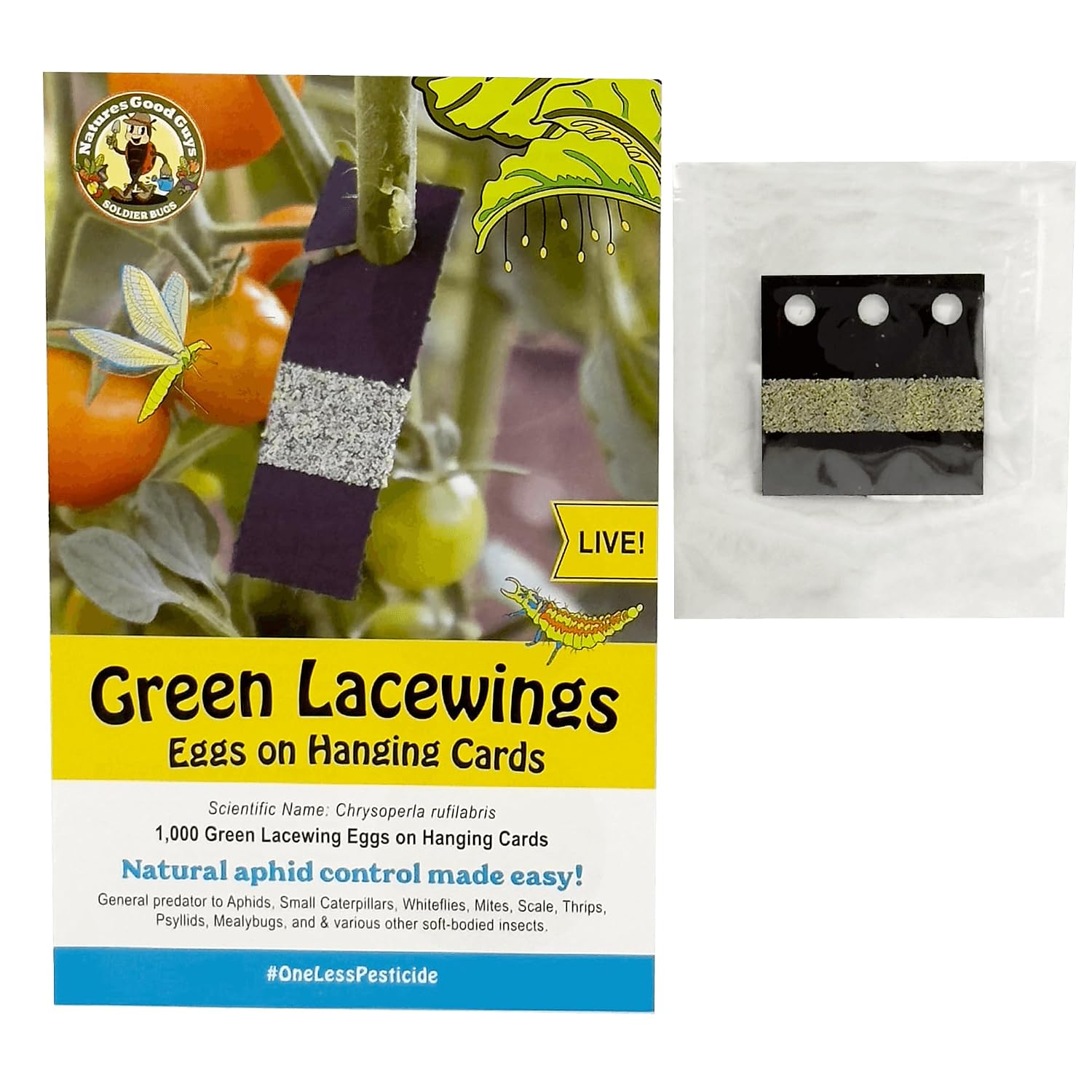
| Best Quality Built to a higher standard if you want something more solid | Nature's Good Guys Green Lacewing Eggs (Chrysoperla rufilabris) |  |
| Best Value The sweet spot between price and what you get | Natures Good Guys Green Lacewing Eggs (25,000) |  |
| Best Budget The cheapest option that still gets the job done reliably | NaturesGoodGuys Green Lacewing Eggs, 1,000 count |  |
| Highest Rated A top-rated pick with lots of positive feedback | Natures Good Guys Green Lacewing Eggs on Hanging Card (2,500 Eggs) |  |
| Most Popular A crowd favorite that many people choose with confidence | Bug Sales Green Lacewing 5,000 Eggs |  |
| Best Seller A high-volume bestseller chosen again and again | NaturesGoodGuys Green Lacewing Eggs (5000 Eggs) |  |
Bug Sales Green Lacewing Eggs on Hanging Card — 1,000 Count
| Unit Count | 1 Count |
|---|---|
| Target Species | Beetle, Fly, Moth, Spider, Thrip, Whiteflies |
| Manufacturer | Bug Sales |
This product supplies 1,000 live green lacewing eggs attached to easy-to-hang cards for targeted biological pest control. You hang the cards in the shaded part of the plant canopy and the eggs typically hatch in about five days, releasing larvae that feed on aphids, thrips, whiteflies, spider mites and other soft-bodied insects. The hanging-card format simplifies placement in greenhouses, gardens, grow rooms and indoor plantings and the vendor includes release rate guidance for different planting scales. Lacewing larvae live for a few weeks and are voracious predators while adults primarily disperse and lay more eggs, so a single release can provide both immediate and follow-up suppression under favorable conditions. Important limitations are that success depends on local temperature, humidity and timing relative to pest populations, and adults do not feed on pests so you must rely on larvae for control; multiple releases or integration with other beneficials may be needed for heavy infestations.
Best for: Gardeners looking for a low-effort, biological way to reduce common soft-bodied pests in mixed ornamental or edible plantings who value integrated, chemical-free solutions.
Less Ideal for: Growers needing immediate knockdown for severe outbreaks or those who prefer instant chemical control methods; not ideal if you cannot monitor environmental conditions or follow release timing.
- Includes 1,000 live eggs pre-attached to hanging cards for simple deployment
- Works against a broad range of soft-bodied pests including aphids, thrips, whiteflies and spider mites
- Clear usage guidance with recommended release rates for different planting areas
- Suitable for indoor and outdoor environments such as greenhouses, grow rooms and gardens
- Effectiveness depends on ambient temperature and humidity and eggs may take up to several days to hatch
- Not a standalone fix for heavy infestations since adults do not consume pests and additional releases or other controls may be required
Verdict: An easy-to-deploy biological control that delivers lacewing larvae where you need them, ideal for gardeners who want a practical, chemical-free way to reduce common soft-bodied pests.
Nature's Good Guys Green Lacewing Eggs (Chrysoperla rufilabris)

| Manufacturer | Nature's Good Guys |
|---|---|
| Species | Chrysoperla rufilabris |
| Target pests | Aphids, thrips, mealybugs, scale insects, spider mites, psyllids |
| Storage temperature | 39-45°F for short-term storage |
| Introduction rate | About 1 insect per sq. ft. |
These packaged green lacewing eggs supply a ready-to-use biological control for aphids, thrips, mealybugs, spider mites and other soft-bodied pests. You receive eggs attached to cards or in rice hulls with instructions to hatch at warm temperatures then disperse the newly hatched larvae onto infested plants or into hanging release boxes. Typical use is in greenhouses, grow rooms, indoor plants and small garden beds where chemical controls are undesirable. Key features include species identification (Chrysoperla rufilabris), guidance on introduction rates (about 1 insect per sq. ft.) and short cold-storage windows to preserve viability. The practical benefit is targeted, chemical-free predation that integrates into IPM programs and reduces reliance on pesticides. Limitations are the need for correct handling and timing — eggs require 7 to 14 days to hatch at about 70°F and live larvae are delicate and should be protected from ants and direct sun. Multiple releases and monitoring are usually necessary for meaningful population control rather than a single cure-all application.
Best for: Gardeners and growers who prioritize effective, pesticide-free pest control and are willing to plan timed releases and monitor results as part of an integrated pest management approach.
Less Ideal for: Someone needing immediate, one-time knockdown of a severe outbreak or who cannot control storage and release conditions for live biologicals.
- Targets a broad range of soft-bodied pests including aphids, thrips, mealybugs and spider mites
- Chemical-free, people- and pet-safe biological control suitable for organic or IPM approaches
- Includes clear introduction guidance and comes in release-ready packaging (hanging cards or rice hulls)
- Requires correct storage and timing because eggs need specific temperatures and limited cold storage to remain viable
- Not an instant solution since eggs take 7–14 days to hatch and multiple releases are recommended
Verdict: Choose these lacewing eggs when you want a practical, chemical-free predator release that reduces soft-bodied pest pressure as part of a planned IPM program.
Natures Good Guys Green Lacewing Eggs (25,000)

| Package contents | 25,000 live green lacewing eggs |
|---|---|
| Application rate | 1-5 lacewing per sq. ft. |
| Recommended release timing | Eggs hatch in ~5 days depending on temperature |
| Use cases | Indoors, outdoors, orchards, greenhouses, gardens, hydroponics |
This pack supplies 25,000 green lacewing eggs intended for biological control of soft-bodied pests such as aphids, thrips, whiteflies and small caterpillars. The product ships the eggs mixed with rice hulls and includes small hanging bags so you can distribute and suspend them in shaded spots to protect from sun and rain. Eggs typically hatch in about five days depending on temperature, producing larvae that feed for 15 to 20 days before pupating and later emerging as adults, which can provide ongoing presence in the crop. Recommended release rates and application guidance are provided for interiorscapes, gardens and field crops, and the seller notes these lacewings tolerate a wide range of temperatures and humidities and can be used indoors or outdoors. Limitations to consider are the need to time releases to when pests are present, sensitivity to direct sun and rain, and that biological control is slower and less predictable than chemical sprays. For someone managing an integrated pest plan this is a cost-effective way to introduce predators, but it requires planning and monitoring.
Best for: Growers who want an economical, biological way to reduce soft-bodied pests and are willing to monitor and time releases as part of an integrated pest management plan.
Less Ideal for: Those who need immediate, predictable knockdown of heavy infestations or who cannot provide shaded, protected release locations should consider faster-acting control methods.
- Large quantity suitable for treating multiple areas or repeat releases
- Includes rice hull carrier and hanging bags for easy placement and protection
- Effective against a wide range of soft-bodied pests including aphids, thrips and whiteflies
- Can be used indoors or outdoors across a broad range of temperatures and humidities
- Requires correct timing and shaded placement to avoid egg or larval mortality
- Biological control speed and effectiveness vary with environmental conditions and pest pressure
Verdict: A cost-efficient bulk release option for growers who prefer preventive biological control and can manage timing and protected placement.
NaturesGoodGuys Green Lacewing Eggs, 1,000 count

| Quantity | 1,000 eggs |
|---|
These NaturesGoodGuys green lacewing eggs are sold as a living, low-cost biological control for common soft-bodied pests like aphids. You receive 1,000 eggs in a breathable packet; growers are advised to wait until larvae are visibly moving before release so the insects survive transit. Once hatched, lacewing larvae are active predators and can each eat large numbers of aphids and other small pests, making them useful for integrated pest management in vegetable beds, ornamentals, and small greenhouses. The product is compact and lightweight to store until release and can be used alongside other beneficials. Limitations are that timing and handling matter: eggs must be released when larvae are visible and environmental conditions suit survival, and results depend on pest pressure and habitat rather than instant knockdown like chemical sprays. Buyers should also plan for multiple releases for ongoing pest suppression rather than a single guaranteed cure.
Best for: Gardeners on a tight budget who want a chemical-free, scalable predator release to reduce aphids and similar pests in vegetable beds, ornamentals, or small greenhouse setups.
Less Ideal for: People who need rapid, one-time knockdown of a heavy infestation or who cannot time releases to when larvae are active should consider faster-acting alternatives.
- Large quantity suitable for treating multiple small beds or repeat releases
- Biological control that targets aphids and other soft-bodied pests without chemicals
- Compact packaging that is easy to store until larvae are ready for release
- Effectiveness depends on correct timing, handling, and favorable environmental conditions
- Not an immediate solution; requires larvae to hatch and feed over days to reduce pest populations
Verdict: An affordable way to introduce a large number of biological predators for ongoing, chemical-free aphid control in small gardens and greenhouses.
Natures Good Guys Green Lacewing Eggs on Hanging Card (2,500 Eggs)

| Item type | Green lacewing eggs on hanging card |
|---|---|
| Egg count | 2,500 eggs |
| Use | Biological control of soft-bodied pests |
| Hatch time | 7–14 days at warm temperatures |
These hanging cards deliver 2,500 live green lacewing eggs glued to a cardboard card so you can introduce a natural predator directly into the garden. Place the card near infested plants or hang it in a sheltered spot; eggs typically hatch in 7 to 14 days at warm temperatures and the emerging larvae will seek out aphids, thrips, mealybugs, spider mites and other soft-bodied pests. The hanging-card format makes timed releases easy and minimizes handling stress to the eggs, and because larvae feed on common pests you can reduce reliance on chemical insecticides. Limitations are that hatch time depends on temperature and some eggs may not hatch if stored or placed in cool conditions, and you need to plan releases to match pest pressure since lacewing larvae do not persist indefinitely like an established predator population. This product works best as a targeted, short-term biological control in small to medium plantings or greenhouse spaces where you can monitor conditions and pest levels.
Best for: Gardeners seeking a dependable, hands-off biological control to quickly reduce soft-bodied pest outbreaks and who monitor plant conditions closely to time releases.
Less Ideal for: People who want a permanent, self-sustaining predator population or those unwilling to coordinate releases to match pest activity.
- Convenient hanging-card format for easy, low-stress release into the crop or garden
- Targets a wide range of soft-bodied pests including aphids, thrips, mealybugs and spider mites
- Large egg count (2,500) suitable for treating multiple plants or a small greenhouse
- Natural biological control that reduces need for chemical sprays
- Hatch rate and timing are temperature dependent so results vary with conditions
- Does not establish a long-term resident population so repeat releases may be necessary
Verdict: If you need a straightforward, ready-to-use biological release to quickly knock down aphids and other soft-bodied pests, these hanging lacewing egg cards are an effective choice.
Bug Sales Green Lacewing 5,000 Eggs

| Package contains | 5,000 live green lacewing eggs |
|---|---|
| Recommended uses | organic pest management |
| Targets | aphids, spider mites, thrips, whiteflies, mealybugs |
This product supplies 5,000 live green lacewing eggs intended for biological pest control in gardens, greenhouses, and indoor grows. Eggs arrive mixed with rice hulls and are released by placing the mixture into the small hanging bags provided and suspending them in shaded areas of the crop to protect from sun and rain. Lacewing larvae hatch in about a week depending on temperature and feed on aphids, spider mites, thrips, whiteflies, mealybugs and other soft-bodied pests, making them a low-chemical option for ongoing pest suppression. The package is designed for general release rates of about 1 to 5 larvae per square foot, which makes it practical for medium to large planted areas. Limitations to expect are timing and environmental dependence: hatch rate and immediate effectiveness vary with temperature and humidity, and you will need to monitor pest levels and possibly supplement with other controls. These eggs are best used as part of an integrated approach rather than a one-time fix.
Best for: Gardeners and small-scale growers who prioritize low-chemical, biological pest control and are comfortable planning releases and monitoring pest populations over time.
Less Ideal for: People who need instant pest elimination or who cannot provide shaded protected release sites and follow-up monitoring.
- Large quantity (5,000 eggs) suitable for covering medium to large planted areas
- Targets a wide range of soft-bodied pests including aphids, thrips, whiteflies and spider mites
- Includes hanging bags and rice hull mix for simple field release
- Suitable for indoor and outdoor use across a broad range of temperatures and humidities
- Effectiveness depends on local temperature and humidity so hatch timing can be unpredictable
- Not an immediate knockdown solution since eggs require days to hatch and larvae to feed
- Requires careful placement and protection from direct sun and rain after hanging
Verdict: A cost-effective bulk source of green lacewing eggs for growers who want an organic, ongoing biological option to suppress soft-bodied pests.
NaturesGoodGuys Green Lacewing Eggs (5000 Eggs)

| Target Species | Lady Bug |
|---|---|
| Recommended Uses For Product | organic pest management |
These green lacewing eggs are a biological, chemical-free option for controlling aphids, thrips, mealybugs, spider mites, and other soft-bodied pests. The product ships with eggs attached to cards or in rice hulls and is meant for timed releases in the morning or evening; hatching typically takes 7 to 14 days at around 70°F. Use is straightforward for small infestations: keep unhatched eggs refrigerated short-term, wait until you see movement, then place the cards or rice hulls on infested plants or hang the included boxes near problem areas. Practical benefits include safe use around people, pets, and plants and suitability for organic gardens, greenhouses, and indoor grow rooms. Important limitations are that larvae are tiny and easy to miss, success depends on proper timing and handling, and multiple releases are usually needed for sustained control. This product works best as part of an integrated pest management plan rather than a one-time fix.
Best for: Buyers who prefer low-risk, natural pest control and are willing to follow handling and timing instructions for biological introductions.
Less Ideal for: Gardeners who need immediate knockdown of heavy infestations or who prefer ready-to-use chemical treatments should look elsewhere.
- Provides chemical-free biological control for common soft-bodied pests
- Suitable for use in gardens, greenhouses, raised beds, and indoor plants
- Includes practical introduction guidance such as timing, placement, and short-term storage
- Can be integrated into organic and IPM programs without harming plants or people
- Hatching timeframe (7–14 days) and tiny larvae make immediate results unlikely
- Requires careful handling and possible multiple releases for effective control
Verdict: A safe, chemical-free way to reduce soft-bodied pests for gardeners who want a natural, low-risk control method when used as part of an IPM approach.
Choosing the Right Lacewings: Key Factors to Consider
Release Method and Timing
How lacewings are delivered-eggs on cards, loose larvae, or adult insects in a container-affects how quickly they begin hunting. Eggs on cards can hatch over days and provide a steady emergence of predators, while shipping larval stages can give faster control but may be more delicate.
Timing matters because lacewings are most effective when pest populations are small to moderate and when temperatures support predator activity. Release during cool, damp parts of the day reduces stress on insects and improves establishment. Stagger releases if pest pressure is ongoing to maintain predator presence.
Lifecycle Stage Sent
Products vary by whether they supply eggs, larvae, or adults. Eggs provide a sustained emergence but require days before predators become active. Larvae are immediate feeders and can suppress pests quickly, but they may be more vulnerable during shipment. Adults can disperse and search for prey, which is useful for larger areas but may lead to higher dispersal away from release points.
Understanding the lifecycle stage helps you match the product to urgency and garden layout. For a rapid outbreak, larvae can be preferable. For long-term prevention, eggs or adults released near sheltering vegetation can establish a population over time.
Compatibility With Garden Environment
Lacewings perform best within certain temperature and humidity ranges. Very hot, dry weather reduces survival and foraging activity, while mild, humid conditions favor predator activity and egg survival. Also consider wind exposure and lack of shelter; predators need flowering plants or refuges to find nectar and pollen that support adults.
If your garden has long dry spells or extreme heat, pick an option with better environmental tolerance or plan releases in cooler seasons and near irrigation or sheltered beds to improve establishment.
Target Pest Range
Different lacewing stages prefer different prey and sizes. Most lacewing larvae feed on aphids, small caterpillars, whiteflies, and soft-bodied pests. Knowing which pests are prevalent in your garden helps you choose a lacewing option with documented feeding behavior for those pests.
If you have mixed pest problems, prioritize options that list a broad diet or consider complementary biological controls for pests that lacewings do not reliably eat, such as certain larger beetles or established scale insects.
Ease of Handling and Instructions
Gardeners without specialized training need clear, simple release instructions and tolerances for brief delays. Packaging that allows staged releases, clear guidance on where and when to place cards or larvae, and safe handling recommendations reduce mistakes that harm survival.
Good instructions will cover ideal temperatures for release, how to protect insects from direct sun and wind, and whether to water or irrigate before or after release to improve establishment.
When to Introduce Lacewings in the Season
Introduce lacewings early in an outbreak or as a preventive measure when you first notice small clusters of aphids or whitefly nymphs. Early-season releases allow predators to multiply as pest populations rise, reducing the need for repeated interventions later.
Avoid releases during the hottest part of the day or during cold snaps. Aim for cool mornings or evenings and ideally a few hours after irrigation so insects can move into plants with higher humidity.
- Release at first sign of soft-bodied pests to maximize impact
- Stagger releases every one to two weeks if pests persist
- Place releases near sheltering plants or flowering strips to provide adult nutrition
Preparing Your Garden Before Release
Reduce pesticide use for at least two weeks before introducing lacewings, because residual sprays can kill beneficial insects. If you must treat, choose targeted options and apply in areas away from planned release sites.
Create habitat that supports adults by adding small flowering plants, herbs, or cover crops. These provide nectar and pollen that help adult lacewings survive and reproduce, increasing the likelihood of local establishment.
- Remove heavily soiled plant debris that could harbor pests unless it provides refuge for predators
- Water beds lightly before release to increase humidity
- Choose shaded or sheltered release spots to lower stress on insects
Release Techniques for Different Delivery Types
If you receive eggs on cards, place the cards in the canopy near pest hotspots and anchor them so they do not blow away. Check the instructions for orientation and expected hatch window.
For loose larvae, scatter them across infested plants in the evening when temperatures are cooler. Avoid handling larvae directly when possible and use provided tools or soft brushes if needed.
When releasing adults, open containers near flowering plants and allow them to fly out. Release in calm weather to reduce drift and try to release multiple small batches rather than one large concentration to encourage local retention.
- Follow timing guidance supplied with the product for best results
- Use multiple release points in larger gardens to increase coverage
- Monitor sites after release and avoid disturbing fragile larvae
Monitoring and Follow-Up
Check plants regularly for declines in pest numbers and for the presence of lacewing eggs or larvae. Seeing larvae actively feeding is a good sign that the release succeeded. Count aphids or other pests on a sample of leaves before and after to estimate effectiveness.
If pest pressure remains high after the expected activity window, consider a follow-up release timed to the predator lifecycle. Pairing lacewings with other biological controls can broaden pest coverage when needed.
- Record environmental conditions at release to refine timing for future releases
- Avoid broad-spectrum insecticides that will undo biological control gains
- Use simple sticky cards or leaf counts to quantify changes in pest pressure
Common Deployment Mistakes to Avoid
Releasing predators in the middle of the day under high heat or direct sun often leads to low survival. Follow guidance on ideal temperatures and humidity to reduce mortality. Another common mistake is placing releases in exposed, windy locations where adults disperse quickly and fail to stay in treated beds.
Failing to create adult food sources like small flowers limits reproduction and shortens the effective control period. Also avoid releasing lacewings directly after a pesticide application without confirming residues are below harmful levels.
- Do not rely on a single, large release for season-long control
- Do not place release cards on the ground or in waterlogged soil
- Do not mix different predator species in the same release point without guidance
How We Chose the Best Lacewings
We focused on attributes that affect real-world success when using lacewings as biological control in home gardens. Selection criteria included release method and timing because the way lacewings are delivered and when they arrive affects establishment and immediate pest suppression. Lifecycle completeness and egg-to-adult survival were considered to estimate whether a shipment will produce active predators in your plot. Packaging and handling matter for small-scale gardeners who may be releasing insects themselves, so we evaluated ease of release and on-site instructions. Target pest range was assessed to ensure chosen lacewing options actually feed on common garden pests like aphids, mealybugs, and thrips. Environmental tolerance including temperature and humidity ranges was included to match products to typical backyard conditions. We excluded options intended only for large commercial greenhouses and any formulations that require specialized licensing. We also excluded unproven delivery claims and products without clear rearing or release instructions. The resulting shortlist emphasizes practical deployment, likely predation rates, and clear guidance for backyard gardeners.
FAQ
How long after release will I see pest reductions?
It often depends on the lifecycle stage released. Larvae can begin eating pests within hours to a day, while eggs may take several days to hatch. Expect noticeable reductions over one to three weeks with proper conditions.
Can lacewings survive in small container gardens or balconies?
Often they can, especially if you provide shelter, flowering companion plants, and avoid pesticides. Small spaces may require more frequent, targeted releases because adults can fly away more easily.
Will lacewings harm pollinators or other beneficial insects?
Lacewing larvae are predators of soft-bodied pests and do not typically prey on adult pollinators. Adults feed on nectar and pollen. However, be cautious when combining biological controls and avoid releasing multiple predator types in the same spot without guidance.
What weather conditions are best for releasing lacewings?
Mild temperatures with moderate humidity and low wind are best. Early morning or late evening releases reduce heat stress and improve chances that insects will stay and find prey.
How should I store lacewing shipments if I cannot release them immediately?
Short-term cool storage may be acceptable if the supplier provides guidance, but prolonged storage reduces survival. Follow the handling instructions included with the shipment and avoid extreme temperatures and direct sunlight.
Final Verdict
When choosing among lacewing options, prioritize the delivery stage and release method that match the urgency of your pest problem and the size of your garden. Consider environmental tolerance and adult nutrition needs to improve establishment, and follow clear handling instructions to minimize shipment stress. Accept that biological control requires monitoring and occasional follow-up releases. Focus on timing, habitat support, and integrating lacewings into a broader cultural pest management plan to get the most consistent results.
