

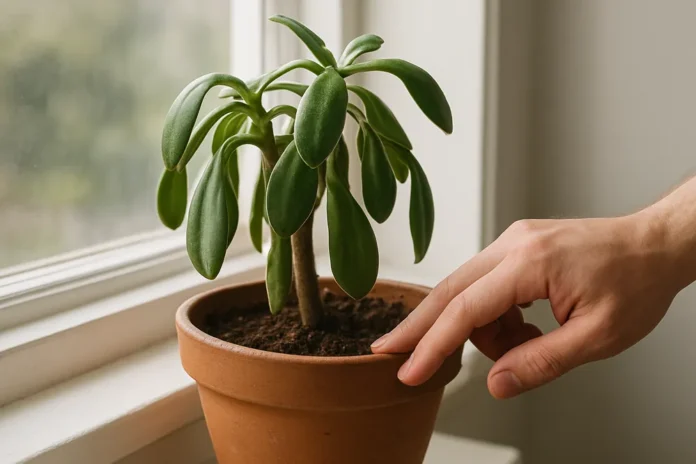
Jade plant leaves usually droop because the plant is stressed by too much water, too little water, weak light, root problems, or sudden temperature changes. In many homes, overwatering is the most common reason.
A jade plant is supposed to look firm, balanced, and almost a little stubborn. When the leaves start hanging, softening, or losing that upright look, it is a sign that something in the plant's routine is off. Jade plant leaves drooping is a common symptom, but it can come from several very different problems.
I have found that drooping on jade usually makes more sense once you look at the full pattern, not just the leaves alone. The soil texture, the weight of the pot, the amount of sun, and whether the stems still feel solid all help narrow it down. In many cases, the issue is fixable if you respond before leaf drop, stem rot, or root damage gets worse.
What Drooping Leaves Usually Mean on a Jade Plant
Drooping leaves are a stress signal, not a diagnosis by themselves. Jade plants store water in both their leaves and stems, so when that system gets disrupted, the leaves lose their usual firm, lifted look. Sometimes they wrinkle and droop because the plant is thirsty. Other times they droop because the roots have stayed wet too long and can no longer move water properly.
That is why two jade plants with the same symptom can need opposite treatments. A dry, light pot with slightly shriveled leaves points in one direction. A heavy pot with soft leaves and a mushy stem points in another. The goal is to match the symptom pattern to the real cause before changing care.
When I troubleshoot a drooping jade, I look at the oldest and newest leaves separately. If everything droops evenly, I suspect watering or root stress first. If the newest growth is weak and stretched while older leaves are still fairly solid, low light often plays a bigger role than people expect.
Overwatering Is the Most Common Cause
Why Too Much Water Makes Leaves Sag
Jade plants are succulents, and they dislike sitting in damp soil for long periods. When roots stay wet, oxygen levels drop and root tissues begin to weaken. Once that happens, the plant cannot regulate water normally, so the leaves may droop even though the pot is still moist.
This is one reason overwatered jade plants confuse people. The plant looks limp, so the instinct is to add more water. But extra watering only increases the stress if the roots are already struggling.
Signs Your Jade Is Getting Too Much Water
- Leaves droop but also feel soft or overly full rather than thin and dry
- Soil stays wet several days after watering
- Lower leaves turn yellow before falling
- Stems near the soil line feel soft, dark, or mushy
- The pot feels unusually heavy for its size
- There is a sour or stale smell coming from the soil
If your jade has only mild drooping and the stems are still firm, you may be dealing with simple overwatering rather than full root rot. In that case, letting the mix dry thoroughly and improving drainage may be enough. If the stem base is soft, roots are likely involved and the plant needs faster intervention.
Underwatering Can Cause Drooping Too
How a Thirsty Jade Looks Different
A dehydrated jade loses internal water pressure, so the leaves begin to relax downward instead of holding themselves upright. Unlike overwatering, underwatering usually comes with leaves that feel thinner, lighter, or slightly wrinkled. The soil is often bone dry, and the pot feels noticeably light when you pick it up.
A jade that has been dry for too long may also drop older leaves to conserve moisture. In strong light, the edges can take on a reddish cast, which is not always harmful by itself, but combined with drooping and shriveling it suggests the plant has gone too long between deep waterings.
Common Causes of Chronic Dryness
- Watering lightly instead of soaking the root ball thoroughly
- Very small pots that dry much faster than expected
- Hot south or west windows in summer
- Dry indoor heat in winter
- A rootbound plant that sheds water too quickly
With jade, I prefer a full watering followed by a true dry-down instead of frequent small sips. Shallow watering can leave part of the root ball dry while making the surface look damp, which leads people to misread the plant.
Root Rot and Damaged Roots Cause Persistent Drooping
If your jade keeps drooping even after the soil should have corrected, root damage becomes more likely. Healthy jade roots are pale and firm. Rotting roots are dark, mushy, or stringy, and they can no longer support normal water uptake. The plant may look limp whether the soil is wet or dry because the root system is no longer functioning well.
Root rot usually starts from a poor drainage chain rather than just one watering mistake. A decorative pot with no drainage hole, dense potting mix, low winter light, and a cool room can all stack together. That combination makes moisture linger much longer than most jade plants can tolerate.
Clues That Roots Are in Trouble
- The plant droops even though the soil is still damp
- Leaves yellow, blacken, or fall with a slight touch
- The trunk or branch bases soften
- Growth stalls during the active season
- The plant wobbles loosely in the pot because roots have decayed
When you suspect root rot, unpotting the plant is often the clearest way to know what is happening. If much of the root system is gone, repotting into fresh, fast-draining mix and trimming away dead roots gives the jade its best chance. If the lower stem is badly mushy, taking healthy stem cuttings may be the safer way to save it.
Insufficient Light Makes Jade Growth Weak and Floppy
Jade plants want bright light and usually perform best with several hours of direct sun or very strong indirect light. In dim rooms, the stems and leaves stretch toward the nearest light source. Over time, that growth becomes weaker, more open, and less able to hold itself upright. Leaves may droop not because they are losing water, but because the plant has produced soft, elongated tissue.
Low light often sneaks up on indoor growers. A spot that seems bright to us may be far too dim for a succulent, especially in winter. If your jade is leaning, spacing between leaves is increasing, and the overall shape looks sparse, light is likely part of the problem.
Signs Light Levels Are Too Low
- Branches stretch and arch instead of staying compact
- New leaves are smaller or farther apart
- The plant leans strongly toward a window
- Drooping is more obvious on newer growth
- Soil takes a long time to dry because growth has slowed
Increasing light gradually is important. A jade moved straight from a dim room into harsh afternoon sun can scorch. Give it more brightness in steps over a week or two, especially if it has lived in lower light for a long time.
Soil and Pot Problems Can Keep a Jade Stressed
Even a good watering schedule can fail if the container setup works against the plant. Jade does best in a gritty, fast-draining mix that dries predictably. Standard moisture-retentive houseplant soil often stays wet too long unless it is heavily amended. Pots without drainage holes make the risk even higher.
Pot size matters too. A small jade placed into a much larger pot has more damp soil around its roots than it can use efficiently. That extra volume dries slowly and raises the chance of drooping from root stress. On the other hand, an extremely crowded root ball can repel water and leave the plant drooping from dehydration even after you water.
Better Container Conditions for Jade
- Use a pot with at least one drainage hole
- Choose a cactus or succulent mix, or amend regular potting mix with extra pumice, perlite, or coarse grit
- Avoid oversized pots with lots of unused wet soil
- Use a terracotta pot if you tend to overwater
- Repot if the root ball has become so tight that water runs down the sides without soaking in
Temperature Shock and Seasonal Stress Can Trigger Drooping
Jade plants are fairly tough, but they do not enjoy abrupt environmental swings. Cold drafts, a hot heater vent, moving the plant outdoors suddenly, or bringing it in after cool nights can all lead to temporary drooping. The leaves may look limp because the plant is reacting to stress, even if watering is technically correct.
Cold damage is especially important to watch for. Jades can suffer once temperatures drop too far, and chilling may leave leaves drooping, translucent, or mushy. Heat stress, while different, can also cause fast moisture loss and leaf sag, particularly near glass that intensifies afternoon sun.
Environmental Triggers to Consider
- Drafty windows in winter
- Air conditioning vents blowing directly on the plant
- Radiators or heating vents drying the root zone too quickly
- Sudden moves from indoors to full outdoor sun
- Cold nights on patios or porches
If a jade droops right after a location change, I pause before assuming disease or fertilizer issues. Timing matters. A plant that looked fine for months and then slumps within a day or two of a move is often reacting to the new environment, not developing a mystery problem out of nowhere.
How to Tell Which Cause Is Affecting Your Plant
The fastest way to diagnose drooping jade leaves is to compare the leaves, stems, soil, and recent care history together. Do not rely on just one clue. A drooping jade in soggy soil needs a different response than a drooping jade in a dry, hard root ball.
Patterns That Point to Overwatering
- Leaves are limp and soft rather than wrinkled
- Potting mix feels wet well below the surface
- Yellowing or blackened leaves accompany the droop
- Stems feel weak at the base
Patterns That Point to Underwatering
- Leaves are droopy, thin, or lightly shriveled
- Soil is dry throughout the pot
- Pot feels very light
- Leaves perk up over the next several days after a thorough watering
Patterns That Point to Low Light
- Drooping comes with stretched stems and a leggy shape
- Growth leans strongly toward the window
- The plant has not been getting direct sun or very bright light
- New growth looks weak and sparse
If several causes overlap, start with the one most likely to harm roots. Root and watering issues usually deserve attention before feeding or pruning. Once the root zone is stable and the plant is in better light, the leaf posture often improves gradually with new healthy growth.
How to Fix a Drooping Jade Plant
If the Plant Is Overwatered
Stop watering until the mix dries well through the root zone. Move the jade into brighter light if possible so the soil dries more efficiently. If the pot has no drainage or the mix is dense and soggy, repot into a gritty succulent mix in a container with drainage.
If the Plant Is Underwatered
Water deeply until excess runs out the drainage hole, then let the mix dry again before the next watering. If the soil has become so dry that water rushes through without soaking in, you may need to water slowly in stages so the root ball can rehydrate fully.
If Roots Are Rotting
Remove the plant from its pot, trim away black or mushy roots with clean scissors, and repot into fresh dry mix. Hold off on watering for a short period if significant root trimming was needed. If stem rot has climbed upward, prune back to healthy tissue and propagate sound cuttings.
If Light Is Too Weak
Relocate the jade to a brighter window or supplement with a grow light. Increase exposure gradually to prevent sunburn. You can prune stretched stems later, but fix the light first or the new growth will become weak again.
If the Environment Changed Suddenly
Stabilize the plant's location and avoid more abrupt changes while it recovers. Keep it away from cold drafts, heater blasts, and severe midday heat through glass. Many jades recover from mild environmental stress once conditions become steady again.
How to Prevent Drooping Leaves in the Future
Prevention comes down to matching jade care to the way succulents actually grow. They want bright light, periods of dryness between waterings, and a root zone that drains fast. Once you dial in those basics, drooping becomes much less common.
- Water only after the potting mix has dried well, not on a fixed calendar
- Use a fast-draining succulent mix and a pot with drainage
- Give the plant strong light year round
- Reduce watering in winter when growth slows
- Rotate the pot occasionally so growth stays balanced
- Inspect stems and roots early if the plant begins softening or yellowing
The healthiest jades are usually the ones grown a little on the dry side rather than pampered with constant moisture. They may not look dramatic day to day, but their leaves stay firm, their stems stay stout, and problems build much more slowly.
FAQ
Can a Jade Plant Recover After Its Leaves Start Drooping?
Yes, if the cause is corrected before major stem or root damage sets in. Mild drooping from watering mistakes, light problems, or environmental stress often improves, though badly rotted tissue will not recover.
Should I Water My Jade Plant when the Leaves Droop?
Not automatically. Drooping can mean thirst, but it can also mean overwatering or root rot. Check whether the soil is dry or wet and whether the leaves feel wrinkled or soft before watering.
Why Are My Jade Leaves Drooping but Not Wrinkled?
That often points more toward overwatering, weak roots, or low light than simple thirst. Wrinkling usually suggests dehydration, while soft drooping without wrinkling often comes from excess moisture stress.
Do Drooping Jade Leaves Mean Root Rot Every Time?
No. Root rot is only one possible cause. Underwatering, low light, sudden cold, heat stress, and poor potting conditions can all cause a jade to droop.
Can Low Light Alone Make a Jade Plant Droop?
Yes. In insufficient light, jade growth becomes stretched and weak, and stems may arch or flop under their own weight. The plant may not look thirsty, but it still loses that compact, upright form.
How Long Does It Take a Drooping Jade to Perk Back Up?
It depends on the cause. A thirsty jade may improve within days after a proper watering, while a jade recovering from overwatering, root damage, or low light can take weeks to show stronger posture and healthy new growth.
Need the right setup for a healthier succulent? Read our guide to the best succulent soils, pots, and grow lights so your jade can stay firm, compact, and easy to care for.
