

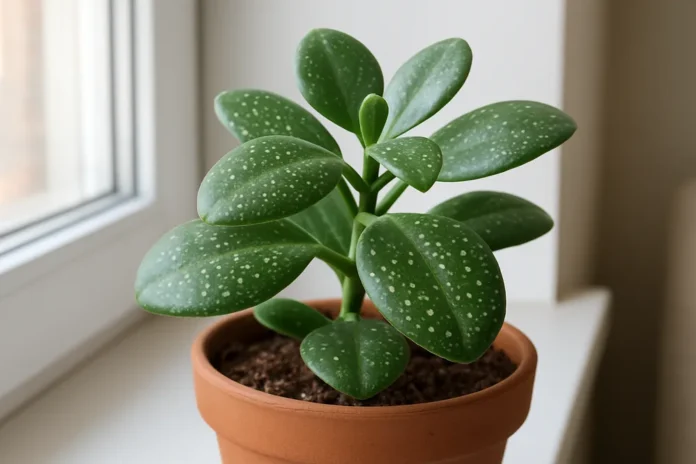
White spots on a jade plant are usually caused by harmless mineral residue, pest activity, fungal growth, or water-related stress. The exact cause depends on whether the spots wipe off, look fuzzy, feel crusty, or appear as scarring in the leaf.
A jade plant with white spots can look alarming at first, especially if the leaves were glossy and green just a few days earlier. The good news is that this symptom is often fixable, and in some cases it is not serious at all. I have seen jade plants develop white marks from everything from hard water spray to mealybugs, so the appearance of the spot matters as much as the spot itself.
With succulents, small visual clues tell you a lot. Some white spots sit on the surface and rub away. Others are raised, cottony, chalky, or sunken into the leaf. Once you know what kind of mark you are looking at, it gets much easier to choose the right response and avoid treating the wrong problem.
Below, I will walk through the most common reasons for white spots on jade leaves, how to tell them apart, and what usually helps the plant recover without adding more stress.
What the White Spots May Be Telling You
White spotting on jade plants is not one single problem. It is a symptom with several possible causes, ranging from harmless residue to active pest infestations. The first thing I pay attention to is the texture. If the spot wipes off cleanly, I usually suspect mineral buildup, dust, or mildew on the surface. If it feels sticky, fuzzy, cottony, or shell-like, pests move much higher on my list. If it does not wipe away and looks like part of the leaf tissue, I start thinking about edema, scarring, or old damage.
- Flat, powdery white film can point to powdery mildew or surface residue.
- Tiny cotton-like clumps often mean mealybugs.
- Hard white crust or rings may come from hard water minerals or dried guttation salts.
- Raised bumps or corky patches can signal edema from inconsistent watering.
- Fine stippling with webbing may indicate spider mites.
When I diagnose jade leaves, I compare several leaves instead of staring at one bad spot. If every mark looks identical and sits on top of the leaf, it is often residue. If the newest leaves and stem joints have uneven cottony patches, I treat it like pests until proven otherwise.
Mineral Residue and Natural Salt Deposits
When the Spots Are Harmless
One of the most common and least serious reasons a jade plant shows white spots is mineral residue. This often happens when leaves are misted with hard tap water, splashed during watering, or exposed to evaporated droplets that leave calcium and other dissolved minerals behind. Jade leaves have a smooth surface, so dried residue can stand out sharply.
Jade plants can also excrete excess mineral salts through tiny pores, especially after heavy watering or fertilizer use. When the moisture dries, it can leave pale dots or a chalky crust that looks like disease. If the marks are dry, superficial, and mostly on upper leaf surfaces, this is a strong possibility.
- Spots are white to pale gray and look chalky or ring-shaped.
- They sit on the leaf surface rather than inside the tissue.
- They often appear after overhead watering or misting.
- A damp cloth may remove or reduce them.
What to Do
Wipe the leaves gently with a soft cloth dampened with distilled water. If residue is stubborn, use a very diluted mix of water and white vinegar on the cloth, then wipe again with plain water so nothing acidic stays on the leaf. Going forward, water the soil directly instead of wetting the foliage, and if your tap water is very hard, consider filtered or distilled water for a while.
Mealybugs and Other Sap-sucking Pests
How Pest Spots Look Different
If the white spots look like bits of cotton, lint, or fluff tucked where leaves join the stem, mealybugs are a likely culprit. These insects feed on plant sap and cover themselves in a waxy white material that is easy to mistake for mold or dust. On jade plants, they often hide in leaf axils, on stems, and under crowded growth where air movement is poor.
Spider mites are another possibility, though they usually cause fine pale stippling rather than obvious white clumps. You may also see delicate webbing between leaves or stems. Scale insects can appear as white or pale bumps that do not brush off easily because they are attached to the plant.
- Cottony clusters around stem joints usually suggest mealybugs.
- Tiny speckling plus webbing points more toward spider mites.
- Fixed shell-like bumps can be scale.
- Sticky leaves or nearby sooty mold can follow sap-sucking insect damage.
How to Treat Pests Safely on Jade
Start by isolating the plant from your other houseplants. Remove visible mealybugs with a cotton swab dipped in 70 percent isopropyl alcohol, touching the pest directly rather than soaking the entire leaf. For heavier infestations, insecticidal soap can help, but test a small area first because succulent leaves can react badly if products are too strong or used in harsh sun.
Repeat treatment every several days until no new pests appear. Check the undersides of leaves, stem crevices, and the base of the pot. Severe infestations sometimes require pruning the worst sections. A jade plant usually rebounds well if you catch pests early.
I avoid broad, oily sprays on jade unless I really need them. Thick succulent leaves can hold residue, and if the plant then sits in strong afternoon light, that treatment can create a second problem in the form of leaf burn.
Powdery Mildew and Fungal Growth
Signs the White Spotting Is Fungal
Powdery mildew is less common on jade than on many outdoor garden plants, but it does happen, especially indoors where airflow is poor and humidity stays high around crowded foliage. This fungus looks like a white, dusty coating on the leaf surface. Instead of distinct chalky dots from water, it tends to spread in patches and can gradually enlarge.
Unlike mineral residue, mildew often returns after wiping and may start affecting more leaves over time. In more advanced cases, leaves may yellow, distort, or drop. If the plant is in a dim corner, packed tightly with other plants, or regularly misted, fungal growth becomes more likely.
- White film looks soft, dusty, or flour-like.
- It spreads across multiple leaves instead of staying in drip patterns.
- The problem tends to worsen rather than stay static.
- Crowded growing conditions and low airflow make it more likely.
What Helps
Remove the worst affected leaves if the plant is dense enough to spare them. Improve air circulation, stop misting, and make sure the jade gets bright light. Wipe affected leaves gently and consider a houseplant-safe fungicidal treatment if the spread continues. The key is environmental correction. Fungus on jade usually becomes manageable once humidity on the leaf surface drops and the plant has more space and light.
Edema and Corky White Scarring
What Edema Looks Like on Succulent Leaves
Sometimes white spots on jade are not sitting on the leaf at all. They are part of the leaf tissue. Edema happens when the roots take up water faster than the leaves can use or release it. Cells swell and rupture, leaving behind pale, corky, or blister-like marks. On jade plants, these spots can later harden into tan or white scabby patches.
This is more common when a plant goes from very dry to very wet, sits in a low-light room where soil stays damp too long, or grows in a heavy potting mix that holds more moisture than a succulent wants. Cool, cloudy weather can also slow evaporation and make the symptom worse.
- Spots do not wipe off.
- They may start as blisters or translucent bumps.
- Older damage can turn corky, white, tan, or beige.
- The issue often follows overwatering or erratic watering.
Can Edema Be Reversed?
Existing scarred tissue will not turn green again, but the plant can outgrow the damage. Adjust watering so the soil dries appropriately between drinks, and make sure the container drains freely. If the potting mix is dense or peaty, repotting into a gritty succulent mix often helps prevent more spotting.
Edema on jade often fools people because it looks like a disease that needs spraying. If the marks are corky and stable rather than fuzzy and spreading, I usually focus on watering rhythm and root-zone moisture before I reach for any treatment bottle.
Sun Stress, Physical Damage, and Old Leaf Scars
Not every white mark is a living problem. Jade leaves can scar after sunburn, bruising, rubbing against a window, or handling damage during repotting and moving. These marks may start pale and later dry into whitish or tan patches. If the damaged area stays the same size and the rest of the plant looks healthy, it is often just cosmetic injury.
Sun stress usually appears after a sudden shift into stronger direct light, especially if a jade that was living in medium indoor light is moved right onto a hot south- or west-facing windowsill. The leaf tissue can bleach before it browns, leaving light spots that never fully fade.
- Marks are dry, flat, and part of the leaf tissue.
- They do not spread from leaf to leaf in an active pattern.
- The spots appeared after a move, repotting, or more intense sun.
- New growth often looks fine once conditions stabilize.
If this sounds like your plant, leave the affected leaves in place unless they are badly damaged. Shift the jade gradually into brighter light and avoid sudden changes. Healthy new growth is the best sign that the issue was environmental rather than infectious.
How to Tell Which Cause You Are Dealing With
A quick visual inspection can usually narrow the problem down. Think about texture, location, spread, and recent care. White spots that show up overnight after splashing the leaves are very different from cottony clumps hidden deep in the stems or corky spots that formed over weeks.
- Gently wipe one spot with a damp cloth.
- Check stem joints, undersides, and crowded areas for insects or fluff.
- Look for webbing, stickiness, or shell-like bumps.
- Notice whether the mark is sitting on the surface or embedded in the leaf.
- Think back to recent watering, misting, repotting, fertilizing, or sunlight changes.
If the spot wipes off, residue or mildew is more likely. If it stays put and feels like scar tissue, edema or physical damage fits better. If it looks alive, clustered, or sticky, treat it as a pest issue. This kind of simple sorting saves a lot of frustration.
How to Help Your Jade Plant Recover
Once you have identified the likely cause, recovery usually depends on steady care rather than dramatic intervention. Jade plants are resilient, but they dislike repeated stress. Sudden overcorrection, like drenching after underwatering or applying several treatments at once, often creates more leaf damage.
- Keep the plant in bright light, with gradual adjustment if moving to stronger sun.
- Water only when the potting mix has dried enough for a succulent.
- Use a pot with drainage and a coarse, fast-draining soil mix.
- Avoid frequent misting or wetting the leaves.
- Inspect weekly for pests until the issue is clearly resolved.
- Judge progress by new growth, since old scars often remain.
If your jade is badly affected and also sitting in soggy soil, check the roots. Mushy roots and blackened stems suggest rot, which is a separate but serious problem that can show up alongside spotting. In that case, trim damaged roots, repot into dry succulent mix, and hold off on watering until the plant settles.
How to Prevent White Spots From Coming Back
Prevention comes down to matching jade care to what this plant naturally likes: bright light, drying time between waterings, good airflow, and clean growing conditions. Most recurring white spot problems happen when foliage stays damp, pests go unnoticed, or the soil stays wet for too long.
- Water the soil, not the leaves.
- Use low-mineral water if your tap water leaves visible residue.
- Quarantine new houseplants before placing them near your jade.
- Rotate and inspect the plant regularly so pests do not stay hidden.
- Repot old plants that have compacted, moisture-holding soil.
- Give the plant room around it so air can move freely.
In my experience, the healthiest jade plants are often the ones gardeners fuss over the least. A bright windowsill, a gritty mix, and a careful watering routine solve far more problems than constant feeding, spraying, or misting.
FAQ
Can White Spots on a Jade Plant Go Away on Their Own?
Surface residue can be wiped away, and minor mildew may stop spreading once conditions improve. But corky edema scars, sun scars, and old physical damage usually stay on the leaf even after the underlying problem is fixed.
Are White Spots on Jade Plant Leaves Always Caused by Pests?
No. Pests are only one possibility. White spots on jade are often caused by harmless mineral buildup, fungal growth, edema, or leaf scarring from sun and physical stress.
Should I Cut Off Leaves with White Spots?
Only remove leaves that are heavily infested, badly diseased, or severely damaged. If the spots are just cosmetic and the leaf is still functional, leaving it in place helps the plant keep its energy.
Can Hard Water Cause White Spots on Jade Plants?
Yes. Hard water often leaves pale mineral spots or crusty rings on the leaves after droplets dry. This is especially common if the plant is misted or splashed from above.
What Do Mealybugs Look Like on a Jade Plant?
Mealybugs usually look like tiny white cottony clumps, especially where leaves meet the stem. They may also cause sticky residue and gradual weakening of the plant.
Is Powdery Mildew Dangerous to Jade Plants?
It can be if ignored. Mild cases are usually manageable, but spreading fungal growth can weaken leaves and reduce vigor over time, especially in low light and poor airflow.
Why Does My Jade Plant Have White Crust After Watering?
That usually points to mineral salts from tap water, fertilizer residue, or natural salt deposits left behind as moisture evaporates. Crusty white marks are often superficial rather than a sign of infection.
How Do I Know if White Spots Are Edema Instead of Mildew?
Edema spots are part of the leaf tissue and do not wipe off. Mildew sits on the surface, looks dusty or powdery, and tends to spread across leaves over time.
Need the right setup to stop repeat jade problems? Read our guide to the best succulent soils, pots, and indoor plant treatments so you can fix white spots and keep new growth clean.
