

Note: This article contains affiliate links. If you click on these links and make a purchase, I may earn a small commission at no extra cost to you. This helps support my research and content. Read my full affiliate disclosure here.
Installing the right landscape fabric beneath gravel makes the difference between a stable, low-maintenance surface and one that quickly fills with weeds, ruts, or pooled water. If you plan to cover paths, driveways, or decorative beds with gravel, fabric designed specifically for under gravel helps keep material separated from soil, preserves drainage, and reduces future upkeep. This guide shortlists seven top-performing options suited to under-gravel use and evaluates them on factors gardeners care about most: water permeability, puncture resistance, and longevity in outdoor conditions. Read on to understand the tradeoffs and which features matter most for your site.
Top Picks at a Glance
| Best Overall The best all-around choice for most situations | DWALE 13 x 115 ft Heavy Duty Driveway / Landscape Fabric, 5 oz Geotextile |  |
| Best Quality Built to a higher standard if you want something more solid | AZHCHKE 13 x 120 ft Heavy-Duty Driveway Landscape Fabric, 5 oz Polypropylene |  |
| Best Value The sweet spot between price and what you get | LAVEVE Heavy Duty Weed Barrier Landscape Fabric, 4 ft x 100 ft (two 4×50 ft rolls) |  |
| Best Budget The cheapest option that still gets the job done reliably | Amazon Basics Weed Barrier Landscape Fabric, 3 x 50 Feet |  |
| Highest Rated A top-rated pick with lots of positive feedback | GAOMON 3 ft x 100 ft Non-Woven 8 oz Geotextile Landscape Fabric |  |
| Most Popular A crowd favorite that many people choose with confidence | Happybuy 13 ft x 60 ft Woven Geotextile Driveway Fabric (5 oz) |  |
| Best Seller A high-volume bestseller chosen again and again | Pterying Weed Barrier Landscape Fabric, 2.6ft x 100ft |  |
DWALE 13 x 115 ft Heavy Duty Driveway / Landscape Fabric, 5 oz Geotextile

| Material Type | Polyethylene (PE) |
|---|---|
| Thickness | 5 oz |
| Tensile Strength | 800 LBS (grab) |
| Unit Count | 1 Count |
This DWALE 13 x 115 ft fabric is a commercial-style geotextile intended as an underlayment for driveways and gravel surfaces. Made from woven polyethylene and rated at roughly 5 oz weight with an advertised grab tensile strength up to 800 lb, it resists tearing and supports heavy loads when layered under gravel, pavers, or road base. The weave is permeable, so water drains through rather than pooling, which makes it suitable for French drains and erosion control as well as typical driveway reinforcement. Its large roll covers long runs without many seams, so installation goes faster and fewer overlap joints are needed. Expect a durable, rot-resistant material that will hold up under stone and traffic, but be prepared to secure edges and seams with staples or pins and to cut and handle a large, stiff roll during installation. This is a utilitarian product best used under aggregate or in construction applications rather than as a decorative surface fabric.
Best for: Homeowners or contractors who need a robust, permeable underlayment for gravel driveways, French drains, or erosion control and value long roll coverage to minimize seams.
Less Ideal for: People looking for a lightweight garden weed fabric for beds, or those wanting a decorative visible landscape fabric rather than a buried structural geotextile.
- High claimed tensile strength (up to 800 lb) for load-bearing under gravel and driveways
- Permeable woven construction prevents water pooling and supports drainage
- Large 13 x 115 ft roll reduces seams and speeds installation on long runs
- Made from polyethylene so it resists rot and stands up to burial under stone
- Material can be stiff and awkward to handle for one person during cutting and placement
- Specification language mixes polyethylene and polypropylene terms which could confuse precise material expectations
Verdict: Choose this heavy-duty, permeable geotextile when you need a durable underlayer that supports gravel and improves drainage over long driveway runs.
AZHCHKE 13 x 120 ft Heavy-Duty Driveway Landscape Fabric, 5 oz Polypropylene

| Material Type | Polypropylene (PP) |
|---|---|
| Fabric Type | 100% Polypropylene |
| Weight/Thickness | 5OZ |
| Tensile Strength | 800 LBS |
This 13 x 120 ft, 5 oz woven polypropylene fabric is built for heavy-duty under-gravel applications where strength and longevity matter. It is typically laid over prepared subgrade and pinned or overlapped at seams before spreading gravel; the woven construction lets water and air pass while blocking sunlight to suppress weeds and reduce erosion. Notable features include an 800 lb tensile strength rating, high-density 5 oz material that resists deformation under heavy loads, and factory guide lines to make cutting and placement easier. In practice it performs well for driveway stabilization, French drains, and other load-bearing landscaping tasks because it stays flat under stone and helps keep aggregate separate from soil. The fabric is flexible enough to conform to uneven ground but thick enough to resist tearing during installation. Limitations are that it is a polypropylene textile so UV exposure will eventually degrade it without adequate cover, and managing seams on very large projects requires careful overlap and securing to prevent shifting.
Best for: Buyers who prioritize long-term performance for under-gravel applications such as driveway stabilization, contractors or experienced DIYers needing a high-strength geotextile for load-bearing landscaping work.
Less Ideal for: Casual gardeners installing around small flower beds or temporary ground covers who need a lighter, easier-to-handle landscape fabric.
- High tensile strength (800 lbs) suitable for supporting gravel and vehicle traffic
- Woven 100% polypropylene construction resists rot and chemical soil conditions
- Large coverage (13 x 120 ft) reduces seams on medium to large driveway projects
- Permeable fabric allows water and air through while suppressing weed growth
- Polypropylene will degrade over long-term UV exposure if not fully covered by aggregate
- Requires careful overlapping and fastening on very large installations to prevent shifting
Verdict: Choose this heavy-duty woven polypropylene fabric when you need a strong, permeable geotextile that holds up under gravel and vehicle loads.
LAVEVE Heavy Duty Weed Barrier Landscape Fabric, 4 ft x 100 ft (two 4×50 ft rolls)

| Material | Polypropylene |
|---|---|
| Permeability | Breathable, allows water and air flow |
| UV resistance | Resistant to sun exposure |
| Package | Two rolls totaling 4 ft x 100 ft |
This LAVEVE landscape fabric is a heavy-duty woven polypropylene ground cover intended to suppress weeds while letting moisture and air reach the soil. It ships as two 4 ft x 50 ft rolls (total 4 ft x 100 ft) with printed guide lines that make cutting and alignment straightforward. In practice it is laid over prepared beds, cut for plantings, and secured with U-shaped pegs; the fabric’s permeability helps reduce erosion and allows irrigation to penetrate. The material is UV-resistant and built for typical garden uses such as flower beds, vegetable plots, gravel paths, and sidewalks. Because it is a woven polypropylene, it is sturdier than thin nonwoven mats and stands up to foot traffic when covered with mulch or gravel. Limitations to expect are that surface-seeded weeds or seeds blown onto mulch can still germinate on top, and long-term burial or heavy soil compaction can reduce effectiveness; occasional maintenance and proper installation around plants are required to keep beds weed-free.
Best for: Gardeners who want a durable, breathable ground cover to reduce routine weeding and tidy beds across medium-length runs of pathway or planting area, and who value a product with solid usage feedback.
Less Ideal for: People seeking a permanent, maintenance-free solution or those who prefer chemical weed control methods; also not the best choice for beds where frequent deep digging or planting changes are required.
- Woven polypropylene construction provides durable, tear-resistant coverage
- Permeable design allows water and air to reach soil, reducing erosion
- Printed guide lines make measuring and cutting easier during installation
- Suitable for multiple applications including beds, paths, and under gravel
- Comes as two rolls totaling 4 ft x 100 ft for extended coverage
- Does not prevent weeds that germinate in mulch or on top of the fabric
- Requires proper securing and occasional maintenance to stay effective
Verdict: A sturdy, breathable woven fabric that gives reliable, easy-to-install weed suppression for medium garden beds and paths backed by strong user approval.
Amazon Basics Weed Barrier Landscape Fabric, 3 x 50 Feet

| Material | Polypropylene |
|---|---|
| Weight | 90 GSM (3.2 oz) |
| Purpose | Weed control, erosion prevention |
This Amazon Basics landscape fabric is a straightforward heavy-duty weed barrier intended for garden beds, paths, and under gravel or pavers. Made from 90 GSM (3.2 oz) polypropylene, the material is tear-resistant and laid flat to suppress weed growth while remaining permeable so water and fertilizer reach plant roots. The 3 x 50 foot roll covers a typical raised bed or several smaller beds and is easy to cut to shape; factory guide lines simplify alignment and trimming tips help reduce edge fraying. It is commonly used under mulch, river rock, or around perennials where long-term weed suppression is desired without impeding drainage. Limitations are that heavier soils or high-traffic areas will eventually wear the fabric and that it does not stop weeds that grow from seed on top of mulch or from root intrusion without proper installation and overlap. For gardeners focused on straightforward, durable weed control this fabric delivers a low-effort solution, especially when paired with correct installation and surface mulch.
Best for: Gardeners who prioritize practical, low-maintenance weed suppression for beds and borders and want an affordable, easy-to-install fabric to pair with mulch or decorative rock.
Less Ideal for: Growers who prefer no-barrier methods like sheet mulching or those needing an impermeable membrane for heavy paving or structural erosion control.
- 90 GSM polypropylene offers tear resistance suitable for garden-bed and under-gravel use
- Breathable fabric allows water and nutrients to penetrate to the soil
- Guide lines on the fabric make alignment and cutting easier
- Large 3 x 50 ft roll covers multiple beds or a long border without frequent joins
- Will eventually degrade or wear in high-traffic or heavily amended soil areas
- Does not prevent weeds that sprout above the fabric without proper mulch and maintenance
Verdict: A durable, breathable landscape fabric that gives practical, low-effort weed suppression for garden beds and borders.
GAOMON 3 ft x 100 ft Non-Woven 8 oz Geotextile Landscape Fabric
| Material | PP non-woven |
|---|---|
| Weight | 8 OZ |
| Tensile Strength | 350 N |
| Load Capacity | 440 N |
| Size | 3 ft x 100 ft |
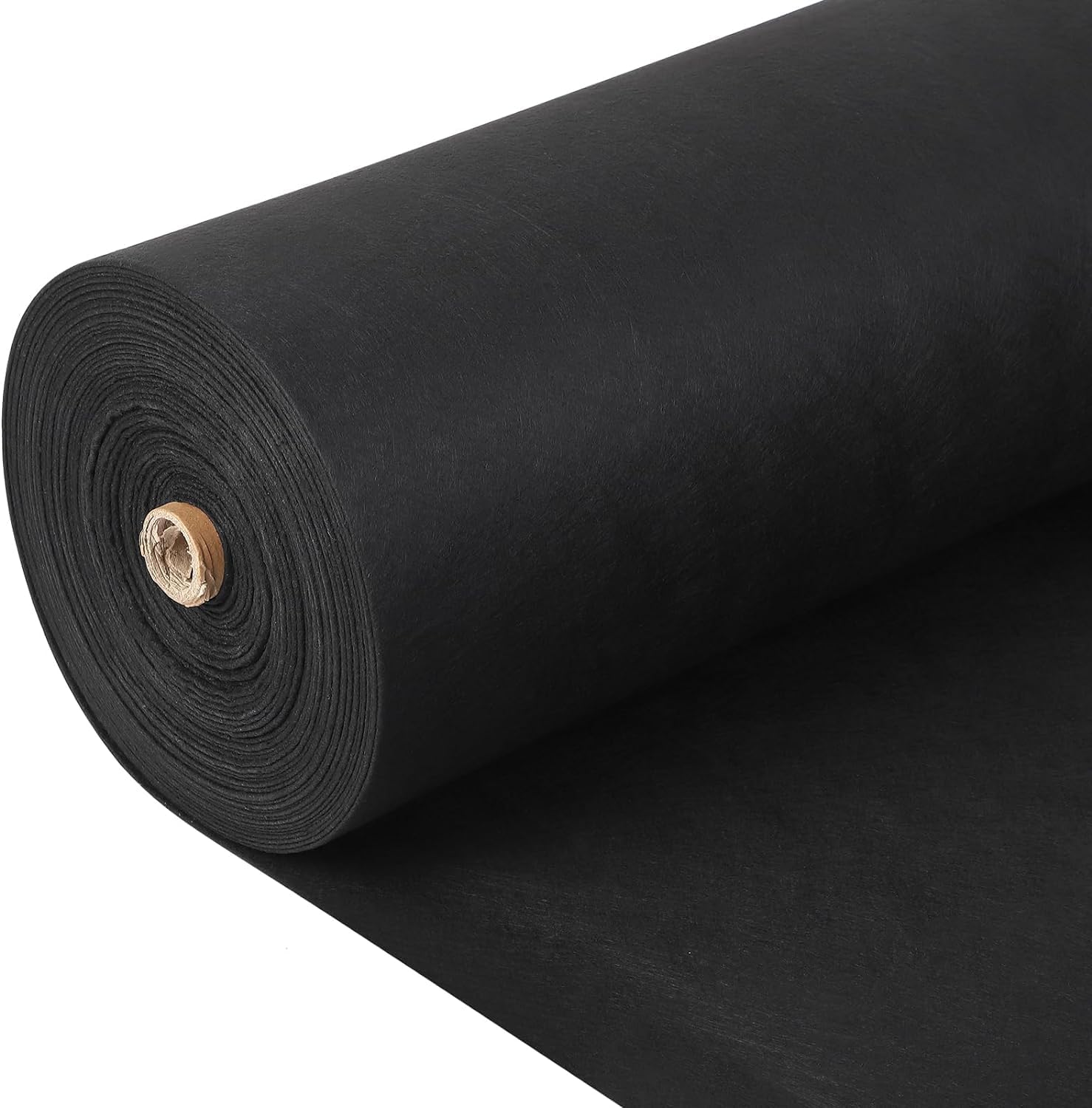
This GAOMON geotextile is a heavy-duty non-woven landscape fabric sold as a 3 ft by 100 ft roll and built for use under gravel, driveways, French drains, and other high-load ground-stabilization projects. The needle-punched PP material and 8 oz density give it a robust, tear-resistant feel while remaining flexible enough to unroll and cut on site. Its stated 350 N tensile strength and 440 N load capacity mean it acts as a reliable separation layer that helps keep gravel from mixing with soil and allows water to pass through rather than pool. In practice you would roll it out, cut to fit, and overlap seams before covering with aggregate; the fabric’s permeability supports drainage and reduces clogging of pipes or subbase. It is not marketed as a complete weed barrier so expect some weed growth over time if topsoil remains; for strict weed suppression combine it with a mulch or landscape cloth. Overall the product is aimed at contractors or homeowners who need a durable underlayment for gravel and pavement rather than a decorative or lightweight garden fabric.
Best for: Buyers who need a dependable separation and drainage layer under gravel or pavement and prioritize durability and load performance over weed-blocking alone.
Less Ideal for: Those looking primarily for a decorative, lightweight garden fabric or a product that will fully prevent weed growth without additional coverings.
- Needle-punched polypropylene construction for tear resistance and flexibility
- Permeable design that allows water drainage and helps prevent surface pooling
- High reported strength with 350 N tensile and 440 N load capacity for heavy-load use
- Supplied as a 3 ft x 100 ft roll that is easy to cut and overlap on site
- Not intended as a complete weed-stopping barrier so weeds can eventually grow through
- Product specs do not list UV lifespan or long-term degradation rates for exposed edges
Verdict: Choose this fabric when you need a tough, permeable underlayment that reliably separates soil from gravel and supports drainage under heavy loads.
Happybuy 13 ft x 60 ft Woven Geotextile Driveway Fabric (5 oz)

| Material | Polypropylene |
|---|---|
| Coverage | 780 sq ft (13 x 60 ft) |
| Tensile strength | 600 Pounds grab |
| Weight class | 5 oz woven |
This Happybuy woven geotextile is a heavy-duty landscape underlayment intended for stabilizing driveways and paving projects while limiting weed growth and allowing water to pass through. Installed under gravel, pavers, or base aggregate, the fabric separates subgrade from fill to reduce rutting and soil migration and is commonly used for driveways, paths, and French drains. Notable features include a 5 oz woven PP construction with a grab tensile strength of 600 pounds and a large 780 sq ft coverage that can be cut to fit irregular areas. The fabric’s high permeability helps drainage systems perform better and prevents washout without trapping moisture in the soil. Practical benefits are easier installation over uneven ground, reduced maintenance from fewer weeds, and improved longevity of paved surfaces. Limitations are that woven geotextile does not stop persistent weeds where light reaches between joints, it will require proper overlap and secure fastening to prevent shifting, and heavy compaction or sharp edges can eventually abrade the weave.
Best for: Owners planning paved or gravel driveways and paver installations who want a durable underlayment to stabilize base materials and improve drainage while cutting down on weed maintenance.
Less Ideal for: People who need a complete weed-proof barrier for tight jointed pavers or who prefer an adhesive or impermeable membrane for impermeable surfaces should consider other solutions.
- Heavy woven polypropylene construction (5 oz) offers durability for driveway and paving underlayment
- 600 lb grab tensile strength supports aggregate and vehicle loads without tearing easily
- High water permeability lets water drain through for use with French drains and permeable pavers
- Large single roll covers about 780 sq ft so fewer seams on medium projects
- Woven fabric does not completely block all light so persistent weeds can emerge at joints or seams
- Requires proper overlap and secure fastening to prevent movement during installation
Verdict: A robust, high-permeability woven geotextile that stabilizes base materials and improves drainage for pavers and gravel driveways.
Pterying Weed Barrier Landscape Fabric, 2.6ft x 100ft

| Material | Woven polypropylene |
|---|---|
| Weight | 2 oz per square yard |
| Permeability | Water- and air-permeable |
| Intended uses | Garden beds, gravel underlayment, pathways |
This woven polypropylene landscape fabric is intended as a durable, general-purpose weed barrier for flower beds, vegetable gardens, pathways, and under gravel. It blocks sunlight to prevent weed seed germination while remaining water- and air-permeable so irrigation reaches roots and the soil can breathe. Installation is straightforward: roll out, use the green alignment stripes for spacing, cut planting Xs, and secure edges with staples or U-pins; the manufacturer recommends taping cut lines to reduce fraying. At 2 to 2.4 ounces per square yard this is a midweight option that balances tear resistance with ease of handling, so it will support gravel underlayment and light driveway use but is not the heaviest commercial grade. The fabric is advertised as UV-stabilized for extended outdoor life and safe for use around edibles because it is polypropylene and non-leaching. Expect reliable weed suppression when seams are overlapped and edges are well anchored, but very aggressive perennial roots or weeds may eventually find weak points if not paired with proper edging and maintenance.
Best for: Buyers who want a reliable, easy-to-install weed barrier for beds, vegetable gardens, and light landscape underlayment and who prioritize predictable, low-risk performance over specialty heavy-duty options.
Less Ideal for: People needing the toughest commercial-grade fabric for heavy vehicle driveways or sites with persistent deep-rooted weeds should consider heavier-weight geotextiles or mechanical methods instead.
- Woven polypropylene construction blocks light while allowing water and air to pass
- Green alignment stripes simplify planting layout and spacing
- Midweight fabric with tear resistance suitable for garden beds and gravel underlayment
- UV-stabilized and described as non-leaching, making it safe for vegetable gardens
- Not the heaviest commercial grade so very aggressive roots or heavy vehicle traffic may require a heavier option
- Landscape staples or pins are sold separately and needed for reliable edge security
Verdict: A dependable midweight woven weed barrier that balances durability and breathability for low-risk garden and landscape projects.
Choosing the Right Landscape Fabric for Under Gravel: Key Factors to Consider
Permeability and Drainage
How quickly water passes through fabric under a gravel layer is critical for preventing surface pooling and for protecting nearby plantings. Fabrics used under gravel should let stormwater infiltrate into the soil or rock base rather than acting like a barrier. In practical terms, look for materials with high flow rates per manufacturer specs and woven constructions that maintain pore structure under weight.
Poor permeability can cause water to collect on the surface or migrate laterally, which damages gravel stability and can undermine edging. On sloped sites, good drainage through the fabric reduces erosion beneath the gravel and lowers the risk of washouts during heavy rain.
Strength and Puncture Resistance
Gravel is heavy and angular, and the fabric will be compressed and rubbed by gravel particles. Tensile strength determines how the fabric resists tearing during installation and from ground movement. Puncture resistance measures ability to withstand stones shifting or occasional sharp objects underfoot.
Higher strength fabrics are especially important for driveways, vehicle paths, or areas where machinery will pass. For low-traffic decorative beds, moderate strength may suffice, but even patios and walkways benefit from fabrics that resist ripping at seams and when cut to fit around plants or fixtures.
UV Resistance and Expected Lifespan
Although fabric under gravel is mostly covered, exposed edges and gaps allow sunlight and weather to degrade materials over time. UV-stabilized fabrics last longer and maintain structural properties, reducing the chance you will need to lift gravel and replace the underlayer prematurely.
Consider expected service life in years and whether the manufacturer rates the product for partial exposure. Longer-lasting fabrics cost more upfront but can reduce long-term maintenance, tearing costs, and the labor of redoing a gravel surface.
Ease of Handling and Installation
Practical installation factors affect both labor time and final performance. Fabrics that unroll smoothly, cut cleanly, and lay flat with minimal wrinkling make it faster to install large areas. Overlap requirements and recommended fastening methods matter too, because poor overlaps can allow soil migration or weed intrusion.
Also consider how well the material conforms to contours and whether it requires additional under-base preparation. Some fabrics are stiff and hard to mold into dips, while others are flexible but need extra pins or staples to stay in place during gravel placement.
Compatibility With Gravel Depth and Type
Different gravel depths place different demands on the fabric. Thin decorative layers transmit point loads more directly to the fabric, increasing puncture risk, while deep structural gravel distributes weight but requires fabrics that tolerate compaction. The angularity and size of gravel also matter; coarse, sharp rock increases abrasion compared with rounded pebbles.
Match fabric strength and recommended gravel depth. Some products are rated for light decorative use only, while others are formulated to perform under several inches of compacted base and traffic.
Weed Suppression Versus Soil Integration
Under-gravel fabrics aim to reduce weeds but must balance suppression with allowing plant roots or beneficial organisms to interact with the soil. Fabrics that block light completely tend to suppress most weeds but can also trap moisture above the layer if permeability is poor. Conversely, very porous fabrics let some fine soil particles migrate upward, which can create a seed bed over time.
Consider your tolerance for occasional weed growth and whether you plan to add a fine sand or stone dust layer. Some gardeners prefer a fabric that suppresses large-root weeds while accepting that very fine soil particles may slowly work through and require periodic surface maintenance.
Preparing the Base Before Laying Fabric
A well-prepared base extends the life of landscape fabric and the gravel surface above it. Clear vegetation, remove roots and large stones, and level the area. If drainage is a concern, consider installing a compacted rock subbase or a graded slope to move water away from structures.
After smoothing the base, roll out the fabric perpendicular to the direction of traffic or the longest run to minimize seams. Overlap edges according to product guidance and secure fabric with staples or landscape pins at recommended intervals before adding gravel.
- Remove sharp rocks and debris that could puncture the fabric.
- Compact subgrade where vehicles will travel to reduce settling.
- Stagger seams and maintain recommended overlap to prevent soil migration.
Choosing Woven Versus Nonwoven Constructions
Woven fabrics typically offer higher tensile strength and drainage under load because individual fibers are tightly bound into a stable matrix. They often hold up better to foot and light vehicle traffic and resist tearing during installation.
Nonwoven fabrics are usually better at filtering fine particles and can provide excellent immediate weed suppression, but some types compress more under gravel and reduce permeability. Match construction type to your priority: structural strength or fine filtration.
- Woven: better for strength and heavy-duty use.
- Nonwoven: better for filtration and temporary erosion control.
Installation Tips for Long-Term Performance
Place fabric with consistent overlap and avoid leaving gaps at edges where soil can migrate. Use landscape pins or staples to hold the fabric in place while placing gravel, placing fasteners every few feet along seams and edges.
When cutting for plants or fixtures, make clean X-shaped slits and fold material back neatly to reduce fraying. Maintain recommended gravel cover depth across the area to protect the fabric from UV and physical abrasion.
- Lay fabric flat without major wrinkles that create hollows
- Keep gravel depth consistent to avoid thin spots over fabric
- Edge the installation to keep gravel from running off and exposing the fabric
Common Problems and How to Avoid Them
Pooling water, weed intrusion, and fabric tearing are the most common issues when fabric is used under gravel. Pooling often results from poor permeability or blocked seams. Weed intrusion usually starts at seams or exposed edges and from fine soil migrating onto the gravel surface.
Avoid these problems by choosing a fabric with appropriate permeability and strength, installing adequate overlaps, and protecting exposed edges with edging or sufficient gravel cover. Regular inspection and topping up thin gravel areas will prolong performance.
- Inspect edges after storms to check for exposed fabric
- Top up gravel over high-traffic or thin areas
- Repair tears quickly with patching fabric and additional cover
How We Chose the Best Landscape Fabric for Under Gravel
We shortlisted landscape fabrics that address the specific demands of placement under gravel and evaluated them across concrete, garden-focused dimensions. Key criteria included permeability under load, since water must pass through the fabric quickly to avoid puddling; tensile strength and puncture resistance to stand up to gravel weight and occasional foot or vehicle traffic; UV resistance and expected lifespan when exposed at edges or thin cover; and ease of installation, including material flexibility, overlap handling, and how well the fabric cold-forms to contours. We also considered manufacturer guidance for recommended gravel depth, compatibility with edging, and whether a woven or nonwoven construction better matched the use case. Products were excluded if they were clearly intended only as plant-root barriers, as temporary landscape covers, or if specifications lacked meaningful permeability or strength data. We avoided items designed primarily as weed-suppression mulches that rely on blocking light rather than allowing drainage. The selections reflect fabrics likely to perform under typical garden and light driveway conditions, balancing durability, water flow, and practical installation factors.
FAQ
How deep should gravel be over landscape fabric?
Gravel depth usually depends on use. For decorative beds, 1.5 to 3 inches often suffices; walkways typically need 3 to 4 inches. High-traffic paths or driveways generally require several inches of compacted base plus a top layer to protect the fabric. Always follow the fabric manufacturer's recommended minimum cover depth.
Will landscape fabric completely stop weeds under gravel?
Fabric significantly reduces weed growth but rarely eliminates it completely. Weeds can appear at seams, edges, or where fine soil accumulates on the gravel surface. Combining good installation with proper gravel depth and periodic topping reduces the likelihood of significant regrowth.
Can I use landscape fabric under compacted base for a driveway?
Some heavy-duty woven fabrics are rated for use beneath compacted aggregate and light vehicle traffic. It depends on the fabric's tensile strength and puncture resistance. For full driveways, pair fabric with an engineered subbase and follow guidance for thickness and compaction rather than relying on fabric alone for structural support.
How do I repair a ripped fabric under gravel?
Small rips can be patched by exposing the area, placing a patch of similar fabric under the gravel, and covering it with adequate stone. Larger damage may require removing a section of gravel to replace the fabric. Preventative measures, like ensuring enough gravel cover and repairing thin spots early, reduce the need for major repairs.
Is a weed barrier the same as landscape fabric for under gravel?
Not always. Some weed barriers are thin, light-blocking films designed for potted beds and are not suitable for under gravel because they impede drainage. Landscape fabrics rated for under gravel balance weed suppression with permeability and strength.
Final Verdict
Selecting landscape fabric for under gravel is a balance between water flow, durability, and practical installation. Prioritize permeability if drainage is a concern, choose higher-strength woven options where load or traffic is expected, and protect edges and seams to limit weed intrusion. Investing in the right fabric and following careful installation steps reduces maintenance and extends the life of a gravel surface, so weigh the tradeoffs and pick the option that matches your site conditions and expected use.
