

Note: This article contains affiliate links. If you click on these links and make a purchase, I may earn a small commission at no extra cost to you. This helps support my research and content. Read my full affiliate disclosure here.
If you want fewer weeds, healthier planting beds, and less time spent hand-pulling, choosing the right landscape fabric matters. Landscape fabric to prevent weeds acts as a barrier while letting water and air reach the soil, but performance varies with material strength, permeability, and installation technique. This guide shortlists seven top-performing options selected for home gardens, raised beds, and borders, and it explains the practical tradeoffs gardeners face. Read on for the decision factors we tested conceptually-durability, drainage, ease of installation, and plant compatibility-so you can match a fabric to your site and maintenance plan.
Top Picks at a Glance
| Best Overall The best all-around choice for most situations | Happybuy 6 ft x 300 ft Heavy-Duty Garden Weed Barrier Fabric |  |
| Best Quality Built to a higher standard if you want something more solid | DeWitt Pro-5 Heavy-Duty Woven Weed Barrier Fabric (3 ft x 250 ft) |  |
| Best Value The sweet spot between price and what you get | Gree-Mac 3 x 100 ft Heavy-Duty Weed Barrier Landscape Fabric (3.2 oz) with 20 U-Shaped Pegs |  |
| Best Budget The cheapest option that still gets the job done reliably | HANWRAPS 3.3 ft x 13 ft Heavy-Duty Weed Barrier Landscape Fabric (3.2 oz) |  |
| Highest Rated A top-rated pick with lots of positive feedback | DeWitt Earthmat Woven Ground Cover Weed Barrier Fabric, 3 x 50 ft |  |
| Most Popular A crowd favorite that many people choose with confidence | GardenMate 6 x 33 ft Weed Control Fabric, 100 g/m² UV-Stabilized Polypropylene |  |
| Best Seller A high-volume bestseller chosen again and again | LAVEVE Heavy Duty Weed Barrier Landscape Fabric, 4 ft x 100 ft |  |
Happybuy 6 ft x 300 ft Heavy-Duty Garden Weed Barrier Fabric
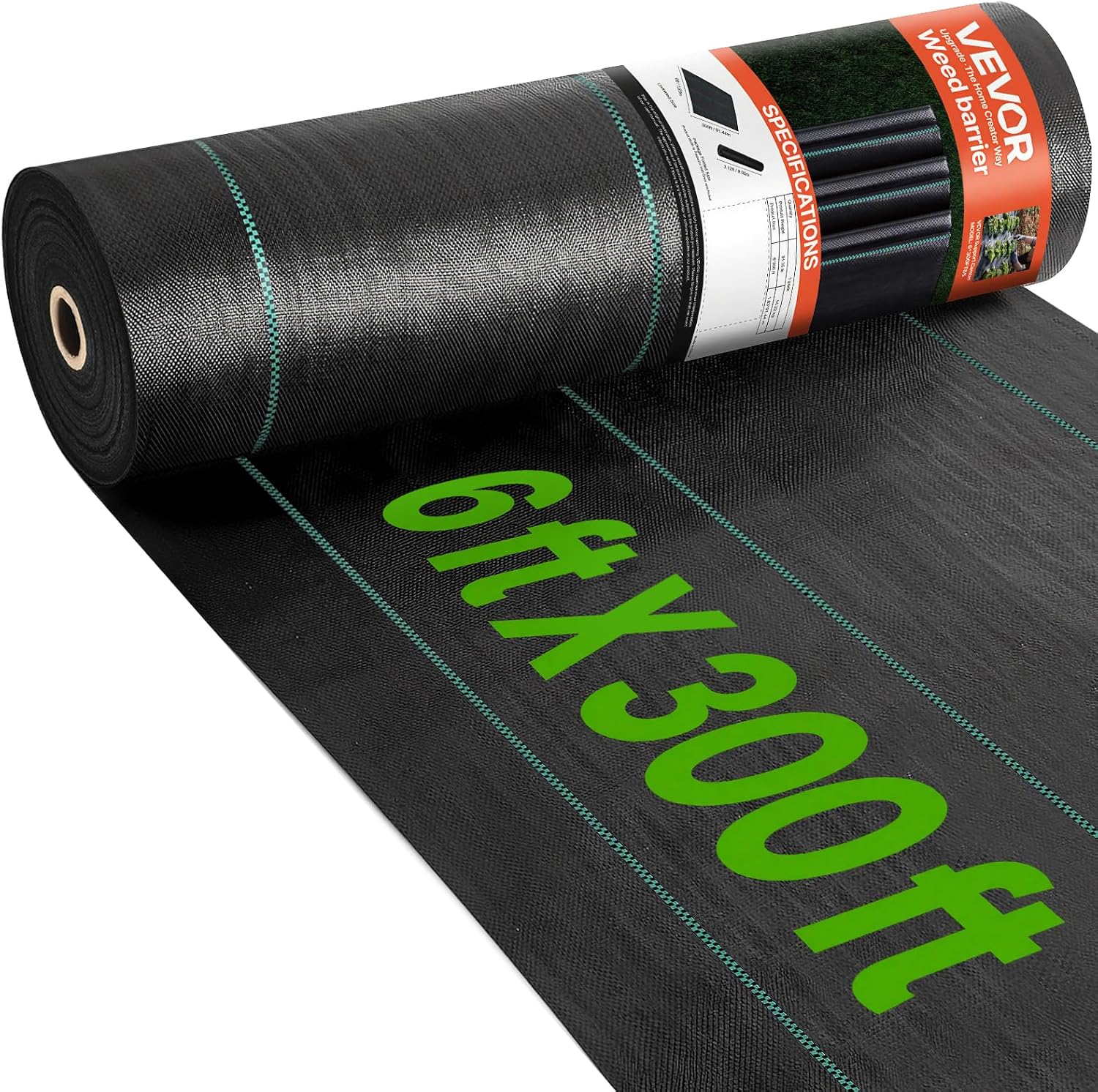
| Material | Polypropylene fabric |
|---|---|
| Size | 6 ft x 300 ft |
| Density | 12 |
| Weight | 2.4 oz |
This Happybuy woven polypropylene landscape fabric is a straightforward, large-format weed barrier for beds, paths, and under gravel or artificial turf. In practice you unroll, cut along the printed guide lines, and secure the fabric with staples to create a breathable layer that reduces weed emergence while letting water and air reach the soil. Notable features include a heavy-duty woven construction rated at 2.4 oz density and visible green layout lines for easier cutting and plant placement. The fabric's permeability helps avoid puddling and preserves soil moisture, and the black shade reduces sunlight that drives weed growth. Because the roll is wide and long it covers large areas with fewer seams, which speeds installation. Limitations are that anchoring hardware and seam-overlap materials are not included and the fabric can be awkward to handle by one person when unrolling the full 300-foot length. For balanced, all-purpose use it works well as an underlayer for vegetable patches, flower beds, walkways, and driveway edging where long coverage and basic weed suppression are priorities.
Best for: Buyers who want a reliable, no-frills landscape fabric that covers large areas and balances durability with breathability for general garden, bed, and hardscape underlayment.
Less Ideal for: People looking for a decorative surface layer, a fully prepped installation kit with fasteners, or those who need a narrow roll for tight, small-scale plantings.
- Large 6 ft × 300 ft roll covers a lot of ground with fewer seams
- Woven polypropylene construction resists tearing and endures outdoor conditions
- Permeable design allows water and air through to prevent puddling and maintain soil health
- Printed guide lines make cutting and plant placement easier
- Anchoring staples and seam materials are not included
- Full 300 ft roll is bulky and can be hard for one person to handle during installation
Verdict: A practical, heavy-duty woven fabric that covers large areas and provides effective, breathable weed suppression for general landscaping projects.
DeWitt Pro-5 Heavy-Duty Woven Weed Barrier Fabric (3 ft x 250 ft)

| Item Form | Ground Cover Mat |
|---|---|
| Surface Recommendation | Outdoors |
| Special Features | Safe Around Vegetation |
| Unit Count | 1 Count |
The DeWitt Pro-5 is a heavy-duty woven landscape fabric built for large- scale and high-traffic weed control. It is typically unrolled over prepared soil, anchored at edges, and covered with mulch, gravel, or pavers to create a durable barrier that reduces weed germination while still permitting water, air, and nutrients to reach the soil. Notable features include a 5-ounce commercial weave that resists tears and punctures during installation, and gold alignment stripes every 12 inches to speed planting and maintain straight rows. In practical use this fabric is well suited to pathways, raised beds, long planting runs, and commercial beds where longevity matters; it holds up to foot traffic and routine garden work better than lighter fabrics. The main limitations are that it requires proper anchoring and coverage to be effective and, like all woven barriers, will not eliminate deep or perennial weeds that can grow through seams or uncut edges. Expect a robust, long-lasting ground cover solution for projects where performance and durability are priorities.
Best for: Buyers who prioritize long-lasting, high-performance weed control for large beds, pathways, or commercial landscaping projects and who plan to install a durable covered surface over the fabric.
Less Ideal for: Casual gardeners with very small container or potted-plant setups or those seeking a short-term, decorative solution rather than a long-term performance fabric.
- Commercial-grade 5 oz woven construction for tear and puncture resistance
- Permeable to air and water so soil and plant roots remain healthy
- Gold alignment stripes every 12 inches for faster, straighter planting
- Durable enough for pathways, raised beds, and high-traffic landscape areas
- Must be properly overlapped, anchored, and covered to prevent weed intrusion and fabric movement
- Won't fully stop aggressive perennial roots or weeds that penetrate seams
Verdict: Pick this fabric when you need a heavy-duty, long-lasting woven barrier that stands up to installation and foot traffic for reliable weed prevention.
Gree-Mac 3 x 100 ft Heavy-Duty Weed Barrier Landscape Fabric (3.2 oz) with 20 U-Shaped Pegs

| Fabric weight | 3.2 oz |
|---|---|
| Roll size | 3 x 100 ft |
| Anchors included | 20 U-shaped pegs |
| Manufacturer | Gree Mac |
This Gree-Mac landscape fabric is a straightforward solution for keeping weeds out of garden beds, pathways, and under hardscapes. The 3.2 oz woven material is sold as a 3 x 100 ft roll so you can cover large areas with fewer seams, and the fabric’s permeability lets water and air reach roots while limiting sunlight that weeds need to sprout. It comes with 20 U-shaped anchoring pegs for quick installation: unroll, trim to shape, secure, and cover with mulch or gravel. The reinforced weave resists tearing and is intended for multiyear use, which reduces repeat maintenance. Important limitations are that the kit includes a limited number of anchors for very large projects and heavy fabric can be awkward to handle solo when positioning long runs. Expect to use additional staples where edges meet or in exposed windy areas. For gardeners who want a durable, low-maintenance barrier, this fabric simplifies long-term weed control but requires a little planning during installation for best results.
Best for: Gardeners who prioritize efficient, long-term weed suppression across sizable beds or landscape runs and who want a durable, low-maintenance solution that reduces repeat work.
Less Ideal for: People with very small container gardens or who need a temporary, lightweight barrier for seasonal use should consider simpler or thinner options instead.
- Heavy 3.2 oz woven construction intended for multiyear durability
- Large 3 x 100 ft roll reduces seams and speeds installation over big areas
- Permeable weave allows water, air, and nutrients to reach plant roots
- Includes 20 U-shaped pegs to anchor the fabric for quick setup
- Only 20 anchoring pegs included, which may be insufficient for full coverage of large or windy sites
- Heavier fabric can be bulky and harder to position alone during installation
Verdict: Choose this heavy-duty 3.2 oz, 3 x 100 ft woven fabric when you want a durable, low-maintenance barrier to cut weeds over large landscape areas.
HANWRAPS 3.3 ft x 13 ft Heavy-Duty Weed Barrier Landscape Fabric (3.2 oz)

| Material | Polypropylene |
|---|---|
| Weight | 3.2 oz |
| Size | 3.3 ft x 13 ft |
This HANWRAPS landscape fabric is a simple, budget-friendly weed barrier for garden beds, pathways, and small landscaping projects. Made from 3.2 oz woven polypropylene it feels sturdy and resists tearing when you cut and fit it around plants. The fabric is marketed as high-density but still permeable, so it keeps soil moisture and allows water to drain through instead of pooling on top. Typical use is laying the fabric over prepared soil, cutting holes or slits for plants, and anchoring it with landscape staples before covering with mulch or gravel. The roll size is convenient for small-to-medium beds and multiple pieces can be overlapped for larger areas. Limitations are that the fabric is relatively thin compared with professional commercial geotextiles and long-term performance will depend on UV exposure and how it is covered; it will work best under mulch rather than exposed to direct sun. For straightforward weed suppression on a budget this fabric does the core job without complicated installation.
Best for: Gardeners looking for an inexpensive, no-frills weed barrier to install under mulch or gravel in beds and borders who prioritize value over industrial-grade longevity.
Less Ideal for: Those needing heavy commercial geotextiles for long-term driveway or high-traffic landscaping stabilization should consider specialized, higher-spec materials.
- Heavy-duty woven polypropylene construction for good tear resistance
- Permeable weave retains soil moisture while allowing drainage
- Convenient 3.3 ft x 13 ft size that can be cut to fit and spliced for larger areas
- Suitable for multiple uses including garden beds, underlayment, and erosion control
- Not a thick commercial-grade geotextile so lifespan may be shorter if left exposed to strong UV without mulch covering
Verdict: A cost-conscious, easy-to-cut landscape fabric that provides effective weed suppression for mulch-covered garden beds and small landscaping projects.
DeWitt Earthmat Woven Ground Cover Weed Barrier Fabric, 3 x 50 ft

| Material | Polypropylene woven geotextile |
|---|---|
| Weight | 3.2 oz (per description) |
| Coverage | 3 x 50 ft (150 sq ft folded) |
The DeWitt Earthmat woven ground cover is a heavy-duty polypropylene landscape fabric meant to keep beds, borders and short paths tidy by suppressing weeds at the soil surface. You lay the sheet over prepared soil, cut it to shape for beds or curved borders, and anchor it with staples or landscape pins; the permeable weave lets water, air and fertilizer reach plant roots so established plantings continue to grow normally. At about 3.2 ounces per square yard and described as high tensile, the material tolerates foot traffic, wheelbarrows and routine outdoor wear without easily tearing or unraveling, which makes it suitable for areas that see occasional maintenance. The 3 x 50 foot folded pack supplies 150 square feet for a single bed or several borders and stores compactly. Limitations are that this is a surface barrier not a long-term buried solution for deep-rooting perennial weeds, and it requires careful cutting and overlap to avoid gaps where weeds can penetrate.
Best for: Gardeners and landscapers who prioritize a durable, no-nonsense barrier to keep planting beds and pathways weed-free with minimal upkeep.
Less Ideal for: People needing a permanent buried barrier for invasive deep-rooting species or those who want a decorative surface that hides the fabric entirely.
- Woven polypropylene weave allows water and nutrients through while blocking surface weeds
- High tensile strength resists tearing from foot traffic and wheelbarrows
- Folded 3 x 50 ft pack covers 150 sq ft and stores compactly
- Permeable construction supports healthy plant growth under the fabric
- Not designed to stop deep-rooted or aggressive perennial weeds when used alone
Verdict: Choose this woven DeWitt fabric when you need a reliable, tear-resistant ground cover that suppresses surface weeds while still letting water and nutrients reach plant roots.
GardenMate 6 x 33 ft Weed Control Fabric, 100 g/m² UV-Stabilized Polypropylene

| Material Type | Polypropylene (PP) |
|---|---|
| Fabric Weight | 100 grams_per_square_meter |
| Item Thickness | 100 mils |
| Unit Count | 215.28 Square Feet |
This GardenMate woven landscape fabric is a straightforward heavy-duty weed barrier for garden beds, paths, and under mulch. Made from UV-stabilized polypropylene at about 100 g/m², it is tear resistant and intended for long-term outdoor use; the weave is breathable so water, air and nutrients reach the soil while light is blocked to suppress weed growth. Typical use is laying the fabric over prepared soil, overlapping edges by at least 10 cm and securing with pins or anchors before covering with mulch, gravel or soil. Notable features are the advertised UV protection and a weight that balances durability with easy cutting using household scissors. Because it is not fully waterproof, it will still allow drainage and is suitable under paving or in raised beds. Limitations are that visible seams must be properly overlapped to prevent weeds at joins and it will not stop deep-rooted perennial weeds without additional mechanical control. For buyers concerned about longevity and proven results, this product presents a practical, low-maintenance weed suppression option when installed correctly.
Best for: Gardeners who prioritize proven, low-maintenance weed suppression and want a durable, UV-stabilized fabric they can install under mulch, gravel, or paving.
Less Ideal for: People seeking a completely impermeable membrane for pond liners or projects that require a waterproof barrier should consider a different product.
- UV-stabilized polypropylene resists sunlight degradation for longer outdoor life
- Breathable weave allows water and air to reach soil while blocking light to suppress weeds
- Heavy woven construction (100 g/m²) offers good tear resistance and durability
- Easy to cut and shape with household scissors for custom beds and paths
- Not water resistant when a fully impermeable barrier is required
- Seams need careful overlap and securing to prevent weeds emerging at joins
Verdict: Choose this UV-stabilized, heavy woven polypropylene fabric if you want a durable, breathable weed barrier for long-term garden beds and paths.
LAVEVE Heavy Duty Weed Barrier Landscape Fabric, 4 ft x 100 ft

| Material | Polypropylene |
|---|---|
| Permeability | Breathable, allows water and air |
| UV resistance | Resistant / UV-treated |
| Roll coverage | 4 ft x 100 ft |
This LAVEVE landscape fabric is a heavy-duty woven polypropylene sheet intended to reduce weed growth under mulch, gravel, or around planting beds. You cut it to fit, lay it over prepared soil, and secure it with landscape staples or U-shaped pegs; printed guide lines make alignment and cutting easier. The fabric is permeable so water and air can reach roots, which helps drainage and plant health while the dense weave blocks light and inhibits most weed germination. It is UV-treated for outdoor exposure and marketed in a 4 ft by 100 ft configuration that suits medium-length borders, pathways, or small beds. Expect simpler maintenance and neater beds where established weeds are removed before installation, because seeds can still accumulate on top of mulch. Also, like most woven fabrics, it will eventually show wear in high-traffic or heavily disturbed areas and may need replacement after several seasons in exposed locations.
Best for: Gardeners who want a low-risk, straightforward way to reduce weed growth in beds, paths, and borders and who prioritize ease of installation and reliable, predictable performance.
Less Ideal for: Do not choose this if you need a permanent hardscape under heavy vehicular traffic or if you want a no-maintenance, lifetime solution for high-disturbance areas.
- Woven polypropylene construction blocks weeds while allowing water and air to reach soil
- Printed guide lines simplify cutting and aligning around plants
- UV-resistant treatment for prolonged outdoor exposure
- Available in a roll size that covers multiple beds or a long border without seams
- Not a permanent solution—will degrade or need replacement after several seasons in high-wear areas
Verdict: A dependable, easy-to-install woven fabric that reduces weeds while keeping soil breathable, ideal for gardeners who prefer conservative, reliable solutions.
Choosing the Right Landscape Fabric to Prevent Weeds: Key Factors to Consider
Material Strength and Tear Resistance
Landscape fabric sits under mulch and across soil, where it must withstand foot traffic, tool contact, and occasional heavy loads. A heavier fabric or woven construction resists tearing and abrasion better than flimsy nonwoven sheets. If fabric tears easily you will get weed breakthroughs and more repair work.
Assess construction details such as fabric weight (often given as gsm or oz/yd2) and whether the weave is woven or spunbond nonwoven. Woven polypropylene typically offers higher tensile strength and better longevity in beds and paths. Thicker fabrics are easier to handle during installation without accidental rips, which reduces long-term maintenance.
Water Permeability and Drainage
Proper permeability keeps water from pooling on the surface and allows irrigation or rainfall to reach plant roots. Fabrics that are too impermeable can cause runoff or force you to water less effectively, stressing plants.
Look for information on flow rates, weave openness, or manufacturer permeability specs. In wet climates or heavy soils, choose a fabric with higher permeability. In raised beds or containers, permeability also affects how fast the soil dries after watering. Permeability influences whether you can use the fabric under heavy mulch, gravel, or pavers.
UV Stability and Expected Lifespan
Sunlight degrades many plastics, so UV-stabilized fabrics last longer when exposed at the soil surface or in mulched beds where edges and folds get sunlight. UV-stabilized fabrics maintain strength and weed control performance for multiple seasons.
Check for explicit UV resistance ratings or stated expected lifespan. Even with UV additives, fabrics placed where they will be regularly uncovered or in high-sun borders will age faster. Planning for replacement intervals and choosing fabrics with better UV stability saves labor later.
Ease of Installation and Handling
How a fabric handles on the job affects installation time and the quality of the finished bed. Fabrics that are lightweight but still stable are easier to cut, wrap around plants, and secure along edges. Very heavy fabrics can be awkward for a single gardener to position accurately.
Consider roll widths, pre-printed cutting guides, and whether the fabric accepts common fasteners. Good instructions for overlaps and seam treatments reduce future weed intrusion. If you plan to plant through the fabric, look for materials that allow clean cutting without frayed edges.
Edge Retention and Fastening
Weeds often enter beds at exposed edges, seams, or around plant stems. The way you fasten and finish edges determines how well the fabric holds back encroaching roots and seedlings. Fabrics that crumple or lift easily will create gaps where weeds take hold.
Evaluate recommended anchoring methods and whether the fabric holds staples, pins, or edging clips without tearing. Think through how the material works with your chosen edge treatment, whether landscape timbers, metal edging, or buried borders, to create a secure seal.
Compatibility With Mulch and Soil Health
Landscape fabric is almost always used with a top dressing such as wood mulch, gravel, or decorative stone. The fabric should allow mulch to sit evenly and not trap moisture in a way that promotes rot. Certain fabrics can also slow organic matter incorporation, which may affect soil biology over time.
If you plan to use heavy bark or gravel, choose a fabric rated to support the mulch weight without sagging. Consider how the fabric affects the breakdown of organic mulch and whether you are comfortable with limited natural soil enrichment below certain fabric types. For long-term beds where soil building is a priority, select fabric that allows some air and water movement to maintain a healthy root environment.
Installation Tips for Lasting Weed Control
Prepare the bed by removing perennial weeds, woody roots, and large stones so the fabric lies flat. Smooth soil and level the surface before unrolling the fabric to reduce stress points that cause tears.
Overlap seams by at least 6 to 12 inches and secure with landscape staples placed every 12 to 18 inches along the edges and seams. For borders, burying a small trench and tucking the fabric down before backfilling creates a barrier against creeping weeds.
Cut planting holes using an X or plus pattern and fold edges under rather than ripping outward. This keeps the openings tighter around plants and reduces future weed migration.
- Lay fabric under pathways and mulch for combined suppression.
- Use stainless or coated staples to avoid corrosion in moist soils.
- Replace fabric sections showing fraying or persistent weed growth.
Using Landscape Fabric With Different Mulches
Natural wood mulches pair well with permeable fabrics because they allow water and microbes to move between the mulch and the soil. Wood mulches also hide the fabric and reduce UV exposure, which extends material life.
Gravel and stone are heavier and will sit on most landscape fabrics without issues, but small stones can shift and abrade thinner materials. Use a heavier woven fabric or add a geotextile underlayment for paved areas to prevent displacement.
Rubber mulches and dense coverings can trap heat and moisture. Verify that the fabric you choose tolerates the intended mulch and that the combined system will not hold excess moisture against plant crowns.
- Refresh organic mulch regularly to reduce weed seed germination.
- Add extra anchoring in high-traffic or windy spots where mulch may expose the fabric.
- Avoid piling mulch directly against woody stems to reduce rot risk.
Managing Perennials, Vegetables, and Planting Holes
Permanent perennials benefit from careful fabric placement and properly sized planting holes that allow root expansion without exposing large open areas. For new perennial beds, consider planting plugs directly through the fabric and securing edges tightly.
Vegetable beds often require frequent crop rotations and deeper soil preparation. In those cases, temporary fabric or a lighter, easy-to-remove weave may be preferable so you can amend soil between seasons.
When installing around established shrubs or trees, avoid cutting roots and allow a wide planting collar so water and nutrients move freely from the surrounding soil.
- Use fabric only under long-term plantings where minimal soil disturbance is planned.
- Mark planting locations before laying fabric to minimize excess cutting.
- Consider removable fabric options for annual vegetable plots.
Repair and Replacement Strategies
Inspect fabric annually at the start and end of the growing season for tears, lifted edges, and areas of persistent weed growth. Early patching prevents small problems from becoming larger infestations.
Small holes and tears can be repaired with overlap patches of the same material secured with staples or landscape adhesive where appropriate. For ragged edges, cut back to clean material before applying a patch.
Plan full replacement in sections rather than ripping out whole beds when deterioration is localized. Staged replacement minimizes disturbance to roots and soil structure.
- Keep spare fabric and staples on hand for quick fixes.
- Use heavier patches in high-wear locations like paths and access points.
- Document installation layout to simplify later repairs.
Environmental Impacts and Maintenance Considerations
Some synthetic fabrics may disrupt the natural incorporation of organic matter into soil and can affect soil fauna activity when used long-term. If soil building is a goal, plan for occasional fabric removal and soil amendment cycles.
Recycling options vary by material, and some polypropylene fabrics are not widely recyclable. Consider the lifecycle of the fabric: how long it will last in your climate and how you will handle disposal or replacement.
Regular maintenance such as refreshing mulch, tightening edges, and patching early reduces the overall environmental footprint by extending usable life and preventing frequent replacements.
- Balance weed control needs with soil health plans.
- Choose materials with longer service lives to lower replacement frequency.
- Store leftover fabric away from sunlight to avoid premature UV degradation.
How We Chose the Best Landscape Fabric to Prevent Weeds
We prioritized attributes gardeners rely on when using landscape fabric to prevent weeds. Durability under foot traffic and UV exposure was measured by material construction and claimed lifespan so selections hold up in beds and pathways. Permeability was assessed through fabric weave and porosity information to ensure water and air reach roots while minimizing surface runoff. Weed-blocking effectiveness considered both fabric density and edge-sealing methods to reduce weed intrusion from edges and seams. Ease of installation and maintenance included fabric weight, roll widths, recommended fasteners, and how easily the material can be cut and fit around plants. Environmental and horticultural compatibility evaluated whether the fabric promotes soil health, allows mulches, and works with planting strategies like perennials versus annual beds. We excluded thin, visually decorative meshes not intended for long-term weed control and products meant only for temporary landscaping uses. The final shortlist includes only fabrics that balance long-term weed suppression with adequate drainage and practical installation features. Scoring focused on the concrete dimensions above rather than brand claims or pricing.
FAQ
Will landscape fabric completely stop weeds?
Landscape fabric reduces weed emergence from seeds and suppresses many perennial weeds when installed correctly. It will not eliminate all weeds, especially those that invade from edges, through planted openings, or from soil already containing roots. Regular edging, mulch maintenance, and spot weeding remain necessary.
Can I use landscape fabric under raised beds and containers?
Yes, fabric can be used under raised beds and beneath containers to reduce weeds and limit soil loss. Choose a permeable fabric to ensure good drainage and root health. For containers that require frequent repotting, consider removable or lighter-weight fabrics for easier access.
Does landscape fabric affect soil moisture and irrigation?
Fabric affects how water moves into the soil depending on its permeability. Permeable fabrics let water pass and help maintain consistent moisture, while low-permeability materials can increase runoff. Match fabric permeability to your irrigation method and soil type to avoid water stress.
How long does landscape fabric last in the garden?
Lifespan varies with material construction and sun exposure. UV-stabilized woven fabrics can last many years under mulch, while thinner, nonwoven options degrade more quickly. Regular inspection and protection from direct sunlight at edges can extend usable life.
Will landscape fabric stop weeds from growing up through mulch?
When properly installed with adequate overlap and secure edges, landscape fabric significantly reduces weed growth into the mulch layer. Weed seedlings that land on top of mulch can still germinate if mulch is thin or decomposed, so maintain a sufficient mulch depth to maximize suppression.
Is landscape fabric safe for beneficial soil organisms?
Permeable fabrics allow water and oxygen movement that supports soil organisms, but very dense or impermeable materials can limit organic matter incorporation and reduce habitat for some soil fauna. If fostering soil life is a priority, choose breathable fabrics and plan periodic soil amendments.
Final Verdict
Choosing landscape fabric to prevent weeds is a balance between long-term suppression and maintaining healthy soil conditions. Prioritize materials with adequate tear resistance, good permeability, and UV stability for the conditions in your garden. Match fabric weight and installation methods to the type of mulch and planting plan you intend. For most home gardeners, selecting a breathable, durable fabric and combining it with proper edging, regular mulch refreshes, and occasional spot weeding gives the best mix of low maintenance and healthy plants. Focus on the factors discussed above to pick the fabric that fits your site and maintenance goals.
