

Note: This article contains affiliate links. If you click on these links and make a purchase, I may earn a small commission at no extra cost to you. This helps support my research and content. Read my full affiliate disclosure here.
If you need room to grow many crops or to run a potting and propagation area, choosing the right large greenhouse matters. A properly sized structure changes how you plan beds, install shelving, manage airflow, and protect tender plants through late frost and winter. This guide highlights six shortlisted large greenhouses that fit heavy-duty hobby and small-scale production needs. We evaluate each option for structural durability, light transmission, ventilation, and ease of maintenance to help you pick a shelter that suits your site, climate, and growing goals. Read on for the practical considerations that shaped our selections.
Top Picks at a Glance
| Best Overall The best all-around choice for most situations | KING BIRD Premium 25x10x6.6 ft Tunnel Greenhouse (Upgraded Galvanized Frame) |  |
| Best Quality Built to a higher standard if you want something more solid | Backyard Discovery Bellerose XL Cedar Walk-In Greenhouse with Polycarbonate Panels and Pergola |  |
| Best Value The sweet spot between price and what you get | Quictent 20 x 10 x 6.6 ft Tunnel Greenhouse with Dual Hinged Doors |  |
| Best Budget The cheapest option that still gets the job done reliably | Outsunny 20' x 10' Walk-in Tunnel Greenhouse with Zippered Door |  |
| Highest Rated A top-rated pick with lots of positive feedback | JULY'S SONG 10×20 ft Polycarbonate Greenhouse with Aluminum Frame |  |
| Most Popular A crowd favorite that many people choose with confidence | VEVOR Walk-In Tunnel Greenhouse, 14.6 x 6.4 x 6.3 ft, Galvanized Steel Frame |  |
KING BIRD Premium 25x10x6.6 ft Tunnel Greenhouse (Upgraded Galvanized Frame)

| Size | 25'x10'x6.6' |
|---|---|
| Cover Material | Polyethylene (PE) |
| Frame Material | Alloy Steel |
| Nominal Wall Thickness | 150 GSM |
| Number Of Vents | 10 |
The KING BIRD 25x10x6.6 ft tunnel greenhouse is built to give a backyard gardener a roomy, protected environment for vegetables and ornamentals through winter and into the growing season. It uses a galvanized alloy-steel frame with extra crossbars and two stiffeners to add rigidity, and a 150 GSM PE cover treated for UVI 6 to resist UV damage and shed rain and snow. Ten roll-up screen windows and dual zipper mesh/PE doors let you balance ventilation and warmth as seasons change, while included stakes and ropes help anchor the structure. In practice this greenhouse suits seasonal crop protection, extending the growing season and keeping plants sheltered from wind and precipitation. The large interior gives space for multiple benches or tall plants, but assembly and anchoring take time and strong fastening is important in high winds because the cover can act like a sail. The upgraded zippers and reinforced seams reduce tearing, and the maker offers a one-year KING CARE+ support plan for component help and gardening advice.
Best for: Gardeners who want a roomy, season-extending outdoor greenhouse that prioritizes year-round plant protection and ventilation control and who are willing to invest time in proper installation and anchoring.
Less Ideal for: People with very limited yard space or those seeking a lightweight, portable hoop house for occasional use should consider smaller or simpler options.
- Reinforced galvanized-steel frame with extra crossbars and stiffeners for improved stability
- 150 GSM PE cover with UVI 6 treatment for longer UV and weather resistance
- Ten roll-up screen windows plus dual-layer zipper doors give good ventilation and pest protection
- Large internal footprint suitable for multiple benches or taller plants
- Includes ground stakes and ropes and upgraded zippers to reduce cover damage over time
- Large footprint requires significant site space and a multi-person assembly
- Cover can create a sail effect in strong winds so additional anchoring or removal in storms is recommended
Verdict: Buy this if you need a large, reinforced tunnel greenhouse that reliably extends the outdoor growing season and withstands sun, rain, and light winter conditions.
Backyard Discovery Bellerose XL Cedar Walk-In Greenhouse with Polycarbonate Panels and Pergola

| Size | 13×11 ft |
|---|---|
| Cover Material | Polycarbonate (PC) |
| Frame Material | Wood |
| Number Of Vents | 2 |
| Closure Type | Sliding Doors |
The Bellerose XL is a purpose-built backyard greenhouse that gives hobby and performance-minded gardeners a robust year-round growing space. It combines a cedar structural frame with commercial-grade 4-wall polycarbonate panels to improve heat retention and withstand heavy snow and high winds when properly anchored. Use it as a seed-starting nursery, winter protection for tender plants, or a staging area for larger projects thanks to five fixed staging shelves, eight moveable plant hooks, hose hook-ups inside and out, and a built-in workstation. The temperature-activated exhaust fan plus two easy-open windows provide both forced and natural ventilation for better climate control. The integrated PowerPort (three outlets and three USB ports) makes it simple to add lights, fans, or heaters. Practical strengths are its weather-tested durability, generous interior space, and thoughtful utility features that reduce trips for extension cords and hoses. Expect a multi-person assembly and the need for a solid foundation and anchoring; it is heavy and requires planning for installation and electrical hookup.
Best for: Gardeners who want a durable, high-capacity backyard greenhouse to extend seasons and run serious growing projects and who are prepared to plan for installation and utilities.
Less Ideal for: Casual gardeners seeking a small, portable greenhouse or anyone who needs a simple, instant setup without hiring help or preparing a permanent foundation.
- Commercial-grade 4-wall polycarbonate panels for improved heat retention and durability
- Cedar frame naturally resistant to rot and engineered to handle heavy snow loads and high winds when anchored
- Integrated PowerPort with three outlets and three USB ports for powering lights, fans, and accessories
- Built-in workstation with multiple fixed shelves, moveable hooks, and interior/exterior hose hook-ups for organized, efficient workflow
- Temperature-activated exhaust fan and two operable windows for active and passive ventilation control
- Large, heavy kit requires multiple people, a stable foundation, and time-consuming assembly
- Electrical supply and anchoring are required but not included
- Stain saturation may vary across panels which could affect appearance
Verdict: If you need a rugged, well-equipped backyard greenhouse for season extension and high-performance growing, this cedar-built Bellerose XL delivers the space, insulation, and utility features to support serious gardening.
Quictent 20 x 10 x 6.6 ft Tunnel Greenhouse with Dual Hinged Doors
| Size | 20'x10'x6.6' |
|---|---|
| Cover Material | Polyethylene (PE), 150 GSM |
| Frame Material | Galvanized steel |
| Number of Doors | 2 hinged doors |
| Number Of Vents | 8 |
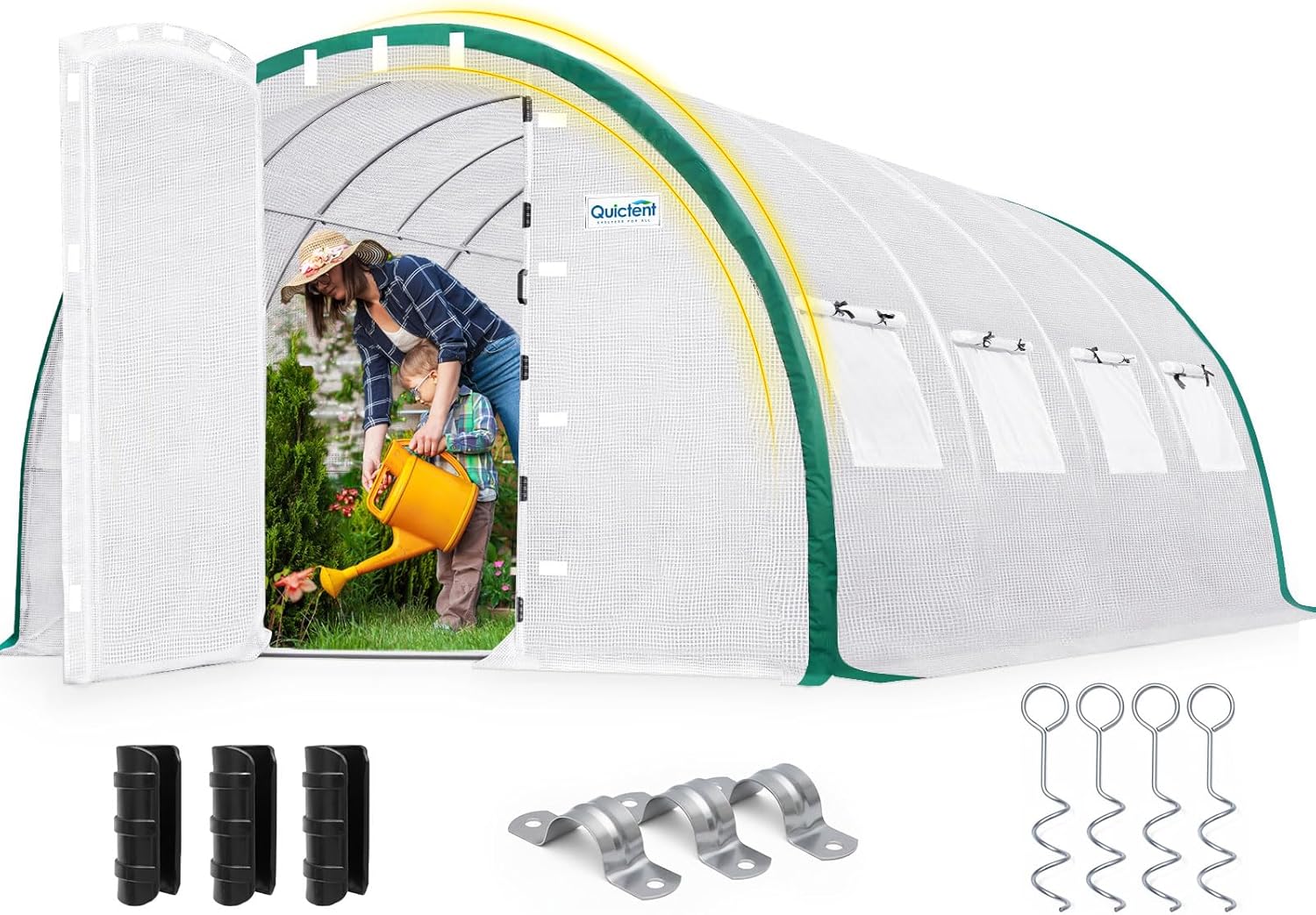
This Quictent tunnel greenhouse is built to extend the growing season through fall and winter while remaining useful in spring and summer. It uses a thickened galvanized steel frame with extra crossbars and spiral ground stakes to resist wind and reduce top sag under snow or water. The 150 GSM polyethylene cover has reinforced seams, mesh reinforcement, and high light transmission for seedlings and vegetable beds, while eight screened vents and two patented hinged door frames give reliable ventilation and easy entry with tools. Practical benefits include strong wind anchoring (buryable skirt), easier access than zipper doors, and solid structural support for winter loads. Expect straightforward assembly that requires two people and periodic tightening of fasteners. The cover and frame are durable for typical seasonal exposure but are not as rigid as permanent polycarbonate greenhouses and will need care in very heavy snow or hurricane-force winds. For balanced gardeners wanting a durable, larger walk-in tunnel greenhouse to protect crops across seasons, this model offers a robust mid-price option.
Best for: Gardeners who want a durable, walk-in tunnel greenhouse that reliably protects vegetables, seedlings, and potted plants through winter and extends the growing season without moving to a permanent structure.
Less Ideal for: Those who need a fully permanent, ultra-rigid greenhouse for year-round heavy-snow or hurricane-prone locations should consider framed polycarbonate or permanent buildings instead.
- Reinforced galvanized steel frame with extra crossbars for improved snow and water drainage
- 150 GSM tear-resistant PE cover with UV inhibitor and reinforced seams for higher light transmission and durability
- Patented dual hinged-door frames that open 180 degrees for easy access and better airflow
- Eight mesh screen vents and hook-and-loop full perimeter seals for controlled ventilation and heat retention
- Burial-capable 8-inch skirt and spiral ground stakes for stronger wind resistance
- Not as rigid or long-lasting as permanent polycarbonate greenhouses in extreme weather
- Assembly is manual and typically requires two people and time to tighten connections
Verdict: A sizable, reinforced tunnel greenhouse that balances winter protection, ventilation, and easy access for gardeners who want a robust seasonal shelter without a permanent build.
Outsunny 20' x 10' Walk-in Tunnel Greenhouse with Zippered Door

| Frame material | Galvanized steel |
|---|---|
| Cover material | PE plastic |
| Ventilation | 8 roll-up windows with netting |
| Entrance | Zippered roll-up door |
This Outsunny tunnel greenhouse delivers a large, no-frills shelter for season extension and protecting beds or containers. It uses a galvanized steel frame with added bracing and reinforced tubes to improve stability, and a tough PE plastic cover that transmits sunlight while shielding plants from light frost and wind. Eight roll-up side windows with insect netting let you control ventilation and reduce overheating, and the front zippered roll-up door makes access easy for moving pots and tools in and out. The cover attaches with tether balls and tape and the kit includes stakes and rods to anchor the structure to soil. Practical benefits are simple assembly, good internal access for planting and maintenance, and effective protection from birds and light weather. Important limitations are the PE cover and tunnel design, which are not as durable as rigid glass or polycarbonate greenhouses and require taking down before heavy snow, very strong wind, or prolonged severe weather.
Best for: Gardeners who need an affordable, roomy greenhouse to extend the growing season and protect multiple beds or large containers without the cost of a rigid structure.
Less Ideal for: Growers who need a permanent, year-round greenhouse capable of withstanding heavy snow loads or high winds should consider a framed polycarbonate or glass option instead.
- Galvanized steel frame with extra bracing for improved stability
- Large walk-in footprint that allows easy access and workspace
- PE cover lets in sunlight while protecting plants from birds and light frost
- Eight roll-up windows with netting for adjustable cross ventilation
- PE plastic cover is less durable than rigid glazing and needs removal in heavy snow or severe storms
- Tunnel-style frame can be more susceptible to wind uplift compared with anchored rigid greenhouses
Verdict: A cost-conscious choice for a large, walk-in tunnel greenhouse that provides roomy, effective seasonal protection and ventilation at a modest price.
JULY'S SONG 10×20 ft Polycarbonate Greenhouse with Aluminum Frame

| Size | 10×20 FT |
|---|---|
| Cover Material | Polycarbonate (PC) |
| Frame Material | Aluminum |
| Indoor Outdoor Usage | Outdoor |
This 10×20 ft JULY'S SONG greenhouse is designed as a roomy, all-season structure for gardeners who need reliable protection and easy assembly. The aluminum quick-connect frame and stainless steel fasteners reduce assembly time and resist corrosion, while the UV-stabilized polycarbonate panels are shatter-resistant and shed hail and heavy rain. Built-in gutters help channel water for collection, and two adjustable roof vents let you tune airflow to control temperature and humidity. The wide walk-in door with a convenient lock makes moving pots and tools in and out straightforward. Its modular panels mean damaged sheets can be replaced without rebuilding the frame. Expect a durable, wind-resistant shelter for vegetables, starts, and potted ornamentals, though like most large kit greenhouses it will need a solid anchoring system and periodic checks of fasteners in exposed locations. Setup is faster than bolt-together kits but still requires two people for best results and some basic tools.
Best for: Gardeners who prioritize a durable, low-maintenance greenhouse for year-round growing and want a structure that resists weather while simplifying assembly and maintenance.
Less Ideal for: People seeking a portable or very inexpensive temporary tunnel greenhouse or those who need a small footprint solution for patios or balconies.
- Quick-connect aluminum frame reduces assembly time and uses corrosion-resistant stainless steel fasteners
- UV-stabilized, shatter-resistant polycarbonate panels protect plants from hail and UV damage
- Adjustable roof vents provide control over temperature and humidity
- Built-in gutter system channels rainwater for collection or drainage
- Wide walk-in door with a single-hand lock eases moving plants and equipment
- Large kit requires at least two people and basic tools to assemble safely
- No included anchoring details so buyers must plan for a proper foundation or anchors
Verdict: Buy this if you want a large, weather-resistant greenhouse built for durability and faster assembly so you can focus on growing rather than constant repairs.
VEVOR Walk-In Tunnel Greenhouse, 14.6 x 6.4 x 6.3 ft, Galvanized Steel Frame

| Cover Material | Polyethylene (PE) |
|---|---|
| Frame Material | Alloy Steel |
| Number Of Vents | 8 |
| Closure Type | Zipper |
This VEVOR walk-in tunnel greenhouse is a sizeable, value-oriented hoop house built from galvanized steel pipes and a heavy-duty PE cover to protect plants from weather and extend the season. It assembles into a walk-in tunnel with a roll-up zippered door and eight mesh windows that use Velcro closures to balance ventilation with insect exclusion. The reinforced U-stakes, diagonal frame braces, and double-stitched seams improve stability and tear resistance compared with thinner hobby covers. Typical uses are starting seedlings, protecting tender vegetables and herbs, or fitting multiple shelving units for small-scale vegetable production. Expect practical benefits: easy access for watering and pruning, improved warmth in cooler months, and airflow control to reduce mildew. Limitations are typical for this price point: the thin-walled 0.02-inch tubing and PE cover will not perform like rigid polycarbonate or permanent greenhouses in very high winds or heavy snow, and periodic retightening and anchoring are required to maintain structure and cover tension.
Best for: Gardeners who want an inexpensive, easy-access greenhouse to start seedlings, protect vegetables, and extend the season without investing in a permanent structure.
Less Ideal for: People seeking a permanent, all-season greenhouse for heavy snow loads or commercial-scale production should consider rigid-frame polycarbonate or metal greenhouses instead.
- Large walk-in interior for easy access and multiple shelving options
- Galvanized steel frame with diagonal braces and U-stakes for improved stability
- Heavy-duty 140 g/m² PE cover with double-stitched seams for better tear resistance
- Eight mesh windows plus a roll-up zippered door for adjustable ventilation and pest control
- PE cover and 0.02-inch wall thickness tubing are vulnerable in prolonged extreme weather compared with rigid greenhouse materials
Verdict: A roomy, low-cost walk-in tunnel greenhouse that gives budget-focused gardeners a practical way to extend the growing season and protect plants.
Choosing the Right Large Greenhouse: Key Factors to Consider
Frame Strength and Anchoring
A large greenhouse must resist higher wind forces and greater snow loads than smaller structures. Look for frames with larger-diameter tubing, thicker wall sections, or truss-style reinforcement for longer spans. Anchoring method matters as much as raw frame strength; ground anchors, embedded concrete footings, or heavy-duty base rails dramatically reduce the risk of uplift and racking.
Inspect how connection points are made: bolted or mechanically fastened joints are usually more robust than purely slip-fit components. Consider how corrosion resistance and protective coatings affect longevity in your climate, especially in coastal or high-humidity locations.
Glazing Type and Light Performance
Glazing determines the quality and quantity of light plants receive and influences insulating performance. Polycarbonate panels offer impact resistance and decent insulation with diffused light that reduces hot spots. Glass gives excellent light transmission and longevity but can be heavier and breakable; it also requires stronger framing. Thin film or low-quality plastics may degrade in sunlight and reduce usable light over a few seasons.
Evaluate both visible light transmission percentages and whether the glazing diffuses light. Diffused light helps even canopy development in a large space, while clear glazing may create glare and localized heat. Also consider replacement availability and how panels are fixed to the frame for future repairs.
Ventilation and Climate Management
A roomy interior makes ventilation especially important because heat and humidity can build up quickly. Passive vents, roof vents, and large side vents provide natural airflow when located to encourage cross-ventilation. For hot seasons or intensive propagation, plan for fan and duct mounting points or for roll-up sidewalls that increase airflow.
Also think about shade options, thermal screens, and the ability to add heaters or thermostatic controls. Good ventilation paired with controllable shading helps avoid scorch during sunny spells while retaining heat during cool nights.
Interior Layout and Accessibility
Large greenhouses become functional or frustrating depending on how you organize benches, beds, and walkways. Consider clear span width and wall height for tall shelving or trellised crops. Central aisle width and door placement affect how easily you move wheelbarrows, potting benches, and carts.
Plan for utility runs such as electricity and water, and look for options that allow mounting of shelving and rails without compromising the frame. A flexible interior lets you reconfigure beds or staging areas as your season or crop plans change.
Durability and Maintenance
Durability reduces long-term costs and downtime. Assess corrosion resistance of metal parts, the UV life rating for plastics, and how exposed fasteners are protected from weather. Easy-to-replace panels and commonly sized hardware simplify repairs that inevitably arise in larger structures.
Routine maintenance tasks include checking anchors, clearing gutters or channels in glazing systems, and cleaning diffusing surfaces. A design that allows safe access to roof vents and higher panels will make maintenance less risky and more likely to be completed on schedule.
Assembly Complexity and Serviceability
Large greenhouses can be big projects to erect. Consider whether the structure is intended for two people or a crew, how well parts are labeled, and whether the manufacturer provides clear assembly guides. Modular designs with repeatable sub-assemblies typically speed construction and reduce errors.
Serviceability also includes access to spare panels, replacement seals, and compatible fasteners. Choosing a design with common part sizes and straightforward attachment details makes repairs faster and delays shorter when parts wear or break.
Sizing for Your Garden and Growing Goals
Think beyond the headline dimensions and consider how the greenhouse footprint fits into your garden layout. A large structure should allow for dedicated zones such as propagation, seedling staging, and production beds while still leaving room for aisle access. Measure around the planned site for equipment access and any required setbacks from property lines or fences.
Consider circulation and orientation. Positioning the long axis east-west maximizes morning and afternoon sun along the length during summer. Also factor in nearby trees or structures that will cast shade at different times of year; large greenhouses can sustain full-sun crops only if shading is minimal or managed with shading materials.
- Leave space for opening doors and moving carts.
- Plan for future expansions or modular add-ons.
- Check local rules for setbacks and permitted structure sizes.
Site Preparation and Foundations
A level, well-draining site extends the life of the greenhouse and simplifies assembly. Minor grading and the addition of compacted stone or a concrete perimeter can prevent standing water and reduce rust risk on base rails. Larger structures benefit from continuous footings or concrete pads at doorways to keep thresholds aligned and reduce settling.
Consider frost depth in your area when choosing anchor types. In colder climates, anchoring to frost-protected footings or using deep-embedded anchors reduces the chance of uplift or movement caused by freeze-thaw cycles.
- Check soil drainage and correct pooling issues before installation.
- Use a firm, level base to keep door seals working properly.
- Plan utilities access before final site surfacing.
Managing Snow and Wind Loads
Large spans collect more snow and act like sails in wind. Look at local historical snow and wind data when deciding glazing and frame strength. Roof pitch affects snow shedding; steeper slopes help snow slide off, while low-pitch roofs may require stronger framing and active snow removal.
Adopt a maintenance routine for winter: clear heavy snow safely from roof panels, monitor fasteners after storms, and tighten anchors if you notice movement. In high-wind areas, add cross-bracing or consider auxiliary anchoring systems for peace of mind.
- Choose glazing and framing rated for local maximum snow loads.
- Inspect and reinforce anchoring after severe weather.
- Use a safe method for removing snow from higher panels.
Organizing Interior Workflows
Design internal zones to minimize back-and-forth trips. Keep propagation benches near water and power outlets, place heavier production beds toward the center where support is strongest, and reserve peripheral shelving for tools and supplies. A clear central aisle helps move plants and equipment efficiently.
Label zones and plan bench heights to reduce bending and repetitive strain. Portable benches and modular shelving let you change layouts as the season progresses without structural changes.
- Map out daily workflows before installing benches.
- Include durable work surfaces near power and water.
- Plan routes for moving potted plants and soil bags.
Upgrading Climate Controls Over Time
Start with passive ventilation and add active systems as needs grow. Many gardeners begin with roof and side vents paired with shade cloth and later add thermostatically controlled fans, heaters, or evaporative cooling. Wiring conduits and mounting points set during installation make later upgrades much easier.
Consider integrating simple monitoring devices that track temperature and humidity so you can see how the space performs across seasons. This data helps you decide whether more insulation, shading, or active control is worth the investment.
- Install conduits for future electrical upgrades.
- Choose vent locations that support cross-ventilation.
- Plan for safe heater placement and exhaust routing.
How We Chose the Best Large Greenhouse
We prioritized features that matter for gardeners who need substantial growing area and a structure that stands up to seasonal weather. Key evaluation criteria included frame strength and anchoring because larger spans face higher wind and snow loads; glazing material and light transmission since plant growth depends on consistent, suitable light levels; ventilation options including passive vents and space for fans to prevent overheating; and usable interior layout so pathways, shelving, and bed placement work efficiently. We also assessed assembly complexity and access to replacement glazing or parts so upkeep is manageable over time. Products were excluded if they lacked clear structural specifications, were designed only for small patios, or used glazing that severely reduced light. We favored units with documented attachment and anchoring methods, multiple venting choices, and clear options for interior organization. Those dimensions and specs informed the scoring labels and guided our final shortlist.
FAQ
How much space do I need inside a large greenhouse for mixed crop production?
It depends on your crop mix and workflow, but allow room for at least one 3 to 4 foot central aisle plus benches or beds on either side. Factor in space for staging potting areas and access routes for equipment; larger growers often plan for multiple work zones rather than one continuous bed.
What glazing materials work best for year-round growing in a large greenhouse?
Polycarbonate panels offer a balance of light diffusion, impact resistance, and insulation, while glass provides superior long-term clarity but requires stronger framing. Choice often depends on local weather, the crops you grow, and whether you need extra insulation in colder months.
Do I need permits or inspections for installing a large greenhouse?
Permitting requirements vary by location and depend on structure size, setback rules, and whether a permanent foundation is used. Check local building codes and zoning rules before purchasing or siting a greenhouse to avoid unexpected compliance issues.
How should I prepare the site to reduce moisture and pest problems?
Choose a level, well-drained spot and consider a compacted stone or permeable paving base to prevent standing water. Keep plant debris cleared, use clean potting mixes in propagation areas, and design workflow zones to separate dirty tasks from clean staging to reduce pest pressure.
Can I expect to use heating in a large greenhouse during winter?
Heating needs depend on climate and crop sensitivity. Many growers rely on passive heat retention plus supplemental heaters during cold snaps. Insulating measures and thermal curtains can reduce heater run time, but plan for a safe, ventilated heater installation if you need reliable winter production.
Final Verdict
For gardeners who need extensive growing area, prioritize a structurally sound frame, glazing that balances light and insulation, and ventilation systems that prevent extremes. Plan the interior for efficient workflows and future upgrades so the greenhouse adapts as your operation grows. Weigh the tradeoffs between ease of assembly and long-term serviceability, and choose a design that matches the weather demands and maintenance effort you are willing to commit to.
