

Note: This article contains affiliate links. If you click on these links and make a purchase, I may earn a small commission at no extra cost to you. This helps support my research and content. Read my full affiliate disclosure here.
A neat bed edge frames flowers, keeps mulch in place, and makes maintenance faster. Choosing the right lawn edger for flower beds matters because garden beds are often tight, planted near fragile stems, and shaped with curves or irregular borders. The wrong tool can gouge roots, leave ragged cuts, or waste time reshaping edges. This guide shortlists seven top lawn edgers for flower beds and explains the practical differences that matter in the garden. We evaluate precision of the cut, maneuverability around plants, blade or wheel durability, and how each design affects cleanup and plant safety. Read on to find the style of edger that fits your bed shapes and daily workflow.
Top Picks at a Glance
| Best Overall The best all-around choice for most situations | Root Slayer 22611 Serrated Garden Edger |  |
| Best Quality Built to a higher standard if you want something more solid | Fiskars 38.5" Steel Long-Handled Garden Edger |  |
| Best Value The sweet spot between price and what you get | CKLT 40-inch One-Piece Manual Lawn Edger with Serrated Spring Steel Blade |  |
| Best Budget The cheapest option that still gets the job done reliably | Orcela Half Moon Lawn Edger with T-Grip Handle, 37 in |  |
| Highest Rated A top-rated pick with lots of positive feedback | Radius Garden Pro‑Lite Carbon Steel Half‑Moon Edger |  |
| Most Popular A crowd favorite that many people choose with confidence | WORX WG896 7.5" 12-Amp Corded Electric Lawn Edger & Trencher |  |
| Best Seller A high-volume bestseller chosen again and again | CKLT 41in One-Piece Manual Lawn Edger with Serrated Spring Steel Blade |  |
Root Slayer 22611 Serrated Garden Edger

| Material Type | Alloy Steel |
|---|---|
| Blade Material | Carbon Steel |
| Handle Material | Fiberglass |
| Grip Type | Ergonomic |
| Gauge | 13 |
The Root Slayer 22611 is a heavy-duty manual edger built to create crisp lawn and planting-bed borders without power tools. Its half-moon, powder-coated carbon steel blade uses an inverted V tip and serrated teeth to bite into compacted soil and small roots, while the resin-encased steel shaft and fiberglass handle give a stiff, controlled feel when you step into the blade. Typical use is standing edging along sidewalks, driveways, or beds where you want straight lines or smooth curves; the ergonomic O-style grip helps leverage each cut and reduces wrist strain. Notable features are the aggressive serrations for cutting through turf and the corrosion-resistant blade finish for durability. The tool saves time compared with a regular shovel for edging tasks and removes the need for noisy equipment. Important limitations are its single-purpose design and the physical effort required for deep roots or very rocky soil, where a powered trencher or heavier spade would be more efficient.
Best for: A practical gardener who wants a reliable, manual tool for neat lawn and bed edges and prefers a durable, ergonomic hand tool over powered equipment.
Less Ideal for: People who need to remove large tree roots, dig deep trenches, or work primarily in rocky terrain should consider a heavier spade or powered trencher instead.
- Serrated half-moon blade and V-shaped tip that cut turf and minor roots effectively
- Powder-coated carbon steel blade resists corrosion and stands up to edging tasks
- Resin-encased steel shaft with fiberglass handle provides stiffness and control
- Ergonomic O-handle improves leverage and reduces wrist strain during repeated cuts
- Not suited for very large roots or extremely rocky ground where more force or powered tools are needed
Verdict: Choose the Root Slayer edger when you want a durable, ergonomic manual tool that cuts clean landscape edges and handles minor roots without power.
Fiskars 38.5" Steel Long-Handled Garden Edger

| Material Type | Alloy Steel |
|---|---|
| Item Type Name | 38.5" Steel Edger |
| Power Source | manual |
| Operation Mode | Manual |
The Fiskars 38.5" Steel Edger is a heavy-duty manual tool built for performance-oriented gardeners who need clean, repeatable lawn borders. Its welded 14-gauge hardened steel blade and large foot platform let you drive the blade into compact or turf-covered soil with focused force while the sharpened edge slices through grass for a neat cut. The long steel handle and T-grip enable two-handed control so you can apply more power without kneeling or stooping. Powder-coated steel resists rust and is easy to wipe clean after use. Because it is a straightforward manual edger there is no motor or moving parts to maintain, but it does require physical effort on very hard ground and periodic blade sharpening to keep the best results. For routine edging along sidewalks, garden beds, and pathways it delivers precise, durable performance, though users working in rock-heavy soil may find a powered alternative easier to use.
Best for: Gardening homeowners who prioritize durable, precise manual edging and want a tool that delivers clean borders without power equipment.
Less Ideal for: People with limited upper-body strength or yards with frequent buried rocks who would benefit from a powered or motorized edger.
- Welded 14-gauge hardened steel blade for long-lasting cutting performance
- Large foot platform concentrates force for easier penetration of compacted turf
- Long handle with T-grip gives two-handed control and reduces bending
- Powder-coated steel finish resists rust and cleans easily
- Requires physical effort and blade sharpening for best results on very hard or rocky soil
Verdict: Choose this Fiskars steel edger for reliable, high-performance manual edging that produces clean, long-lasting lawn borders.
CKLT 40-inch One-Piece Manual Lawn Edger with Serrated Spring Steel Blade

| Blade type | Serrated spring steel blade |
|---|---|
| Construction | One-piece manganese steel tube |
| Handle | Rubber grip |
| Fasteners | 304 stainless steel screws |
The CKLT 40-inch hand edger is a straightforward one-piece tool built for clean lawn and garden edges. Its serrated spring steel blade cuts into soil and turf with less effort than a plain blade, and the 40-inch shaft reduces stooping so you can work longer with less strain. One-piece manganese steel construction and an inserted handle aim to resist bending during heavier use, while stainless fasteners and rust-resistant materials keep the tool low-maintenance. The rubber grip improves comfort and control when levering the half-moon blade along sidewalks, driveways, and flower beds. Because it is a manual edger, it is best for routine edging and light-duty trenching rather than large commercial jobs or very compacted ground where a powered tool or sharpened replacement blade would perform better. It ships ready to use with a protective strip for the blade, and its simple design makes storage and cleaning easy for typical homeowners.
Best for: Homeowners who want a durable, low-maintenance manual edger for regular borders, sidewalks, and flower beds and who value ease of use over mechanized speed.
Less Ideal for: Landscapers or users who need to edge large properties quickly or break up extremely compacted ground should choose powered or specialized heavy-duty equipment instead.
- Serrated spring steel blade designed to maintain sharpness and cut soil efficiently
- One-piece manganese steel construction for rigidity and reduced risk of bending
- 40-inch length reduces bending and improves leverage for extended use
- Rust-resistant materials and stainless steel screws simplify cleaning and upkeep
- Manual operation can be slow on large areas or very compacted soil
- Not suited for commercial heavy-duty edging where powered equipment is preferred
Verdict: A durable, low-maintenance manual edger that delivers precise, comfortable edging for typical home lawns and garden borders.
Orcela Half Moon Lawn Edger with T-Grip Handle, 37 in

| Handle length | 37in |
|---|---|
| Blade material | Manganese steel |
| Grip type | Rubber T-grip |
This Orcela half-moon edger is a straightforward, no-frills tool for creating clean borders around sidewalks, driveways, and flower beds. The 37-inch handle and rubber T-grip let you work standing up for less bending, while the serrated manganese-steel blade slices through turf, compacted soil, roots, and small weeds. A wide footplate gives even leverage so you can press the blade steadily into the ground and keep a controlled line. Assembly is simple with the included hardware and two small wrenches. Practical strengths are its lightweight feel and focused design that make short edging jobs quick and predictable. Expect to apply body weight for tougher cuts and to sharpen or replace the blade over time if you use it on rocky or rooty ground. It lacks adjustable handle length and advanced ergonomic features found on premium models, but for routine border maintenance on small to medium lawns this tool delivers the essential performance at a budget-friendly level.
Best for: Buyers who want an inexpensive, effective manual edger for routine border work and prefer a simple tool that is quick to assemble and use.
Less Ideal for: People who need a heavy-duty professional edger for frequent commercial use or those who want powered or highly adjustable edging tools.
- Serrated manganese-steel blade cuts through turf, compacted soil, roots, and weeds
- T-grip handle and 37-inch length allow upright use to reduce bending
- Wide footplate provides stable, even leverage for controlled edging
- Includes assembly hardware and small wrenches for quick setup
- No adjustable handle length or advanced ergonomics for taller or shorter users
- Blade may require sharpening or replacement with heavy or frequent use
Verdict: A budget-friendly manual edger that delivers reliable, upright edging performance for routine home lawn border maintenance.
Radius Garden Pro‑Lite Carbon Steel Half‑Moon Edger

| Material Type | Carbon Steel |
|---|---|
| Handle Material | Fiberglass |
| Grip Type | Ergonomic |
| Item Type Name | Carbon Steel Edger |
The Radius Garden Pro‑Lite is a straightforward manual half‑moon edger built for reliable, long‑term use. Its heat‑treated carbon steel blade slices a crisp turf edge without fuel, noise, or complicated maintenance, while the elevated step and ergonomic grip make it easy to apply body weight for leverage. The fiberglass shaft keeps the tool light and resists rot so it stays usable season after season, and the blade profile is well suited for irregular curves and beds where a powered edger would be clumsy. You will need to wipe the blade after use to prevent surface rust and it requires more physical effort than a gas or electric unit on heavy clay or very thick turf. For routine edging work on typical lawns and borders this edger delivers a predictable, durable performance and avoids the upkeep of powered options.
Best for: Buyers who prioritize a dependable, low‑maintenance tool for regular lawn and garden edging and who prefer a simple manual solution over powered equipment.
Less Ideal for: People who need to edge very large areas quickly or who have extremely compacted clay soils should consider a powered or more heavy‑duty option instead.
- Heat‑treated carbon steel blade provides durable, sharp cutting for clean edges
- Fiberglass handle resists rot and keeps the tool lighter than all‑metal shafts
- Elevated forward step and ergonomic grip improve leverage and balance during use
- Manual design is quiet and low maintenance compared with gas or electric edgers
- Requires manual physical effort and is slower than powered edgers on heavy or compacted turf
- Blade needs to be wiped after use to prevent surface corrosion
Verdict: A durable, low‑maintenance manual edger that delivers quiet, reliable crisp edges without the upkeep of powered equipment.
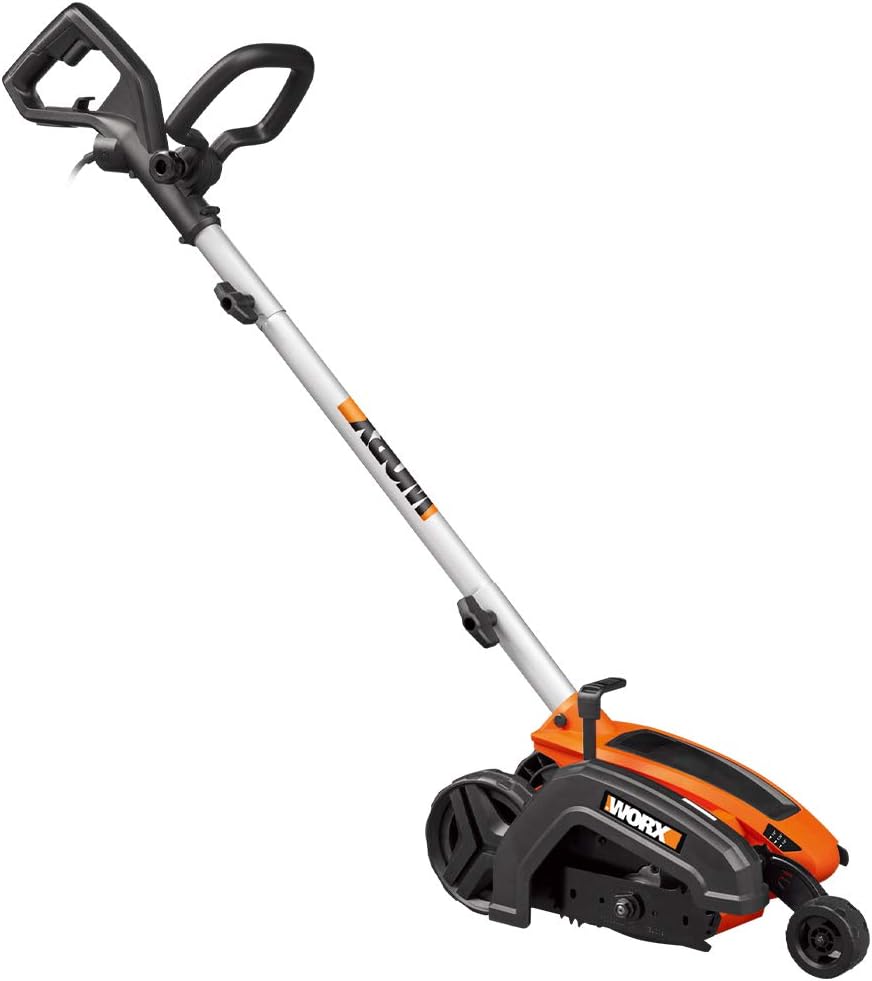
WORX WG896 7.5" 12-Amp Corded Electric Lawn Edger & Trencher
| Power Source | Corded Electric |
|---|---|
| Cutting width | 7.5 inches |
| Motor | 12 Amps |
| Depth settings | 1", 1-1/4", 1-1/2" |
| Included components | 7.5" blade |
The WORX WG896 is a corded electric edger that uses a 7.5" serrated steel blade driven by a 12‑amp motor to cut clean, deep edges around sidewalks, driveways, and planting beds or to trench for low‑voltage wire. It is typically used by walking the unit along the lawn edge while aligning the cutting line indicator for straight results; a three‑position depth selector (1", 1‑1/4", 1‑1/2") and an adjustable shaft make it comfortable for most users. Notable features include a high‑speed blade (about 4700 rpm), a wear indicator on the blade, and a relatively lightweight 14 lb body that is easier to maneuver than heavier gas machines. Because it is corded, you get consistent power for extended jobs without battery swaps, but you must use a proper outdoor extension cord and avoid wet conditions. The serrated blade delivers more defined edges than string trimmers, yet it requires occasional blade replacement and cannot be used in saturated soil. For buyers who prefer straightforward, powerful electric equipment, this model balances performance and ease of use for tidy, professional‑looking edges.
Best for: Buyers who want reliable, no‑surprises electric power and a tool that makes crisp, professional lawn edges with minimal fuss and maintenance.
Less Ideal for: Those who need cordless portability for large properties away from outlets or who frequently work in very wet conditions should consider battery or gas alternatives.
- Powerful 12‑amp motor for consistent cutting performance
- Three adjustable cutting depths for edging and shallow trenching
- 7.5" serrated steel blade with wear indicator for defined, professional edges
- Lightweight design and adjustable shaft improve maneuverability and user comfort
- Corded power requires an outdoor extension cord and limits mobility
- Not suitable for use in wet or saturated ground
Verdict: A dependable, corded electric edger that delivers professional, deeply defined lawn edges with simple controls and low maintenance.
CKLT 41in One-Piece Manual Lawn Edger with Serrated Spring Steel Blade

| Material Type | Manganese Steel |
|---|---|
| Blade Type | Spring Steel Serrated |
| Footplate Width | 8-Inch Wide |
| Handle | Rubber Handle |
The CKLT 41-inch one-piece lawn edger is a straightforward, heavy-duty hand tool for creating crisp borders around lawns and planting beds. Its welded one-piece manganese steel shaft removes assembly and adds strength so the shaft resists bending during frequent use. The serrated spring steel blade is rust-resistant and holds an edge well, which helps cut through turf and soil more cleanly than a plain shovel edge. An 8-inch footplate provides extra leverage for comfortable pressure with any shoe size, and the rubber handle improves grip during repetitive steps. Typical uses include trimming edges along sidewalks and driveways, cutting shallow grooves for planting or irrigation, and refreshing established borders. Limitations are that it is a manual tool so it requires physical effort for compacted soil or heavy clay and it lacks adjustable features found on multi-part or telescoping edgers. For homeowners who prefer a simple, durable hand tool this model balances durability and cutting performance, but those needing power or mechanized speed should consider alternatives.
Best for: Homeowners who want a low-maintenance, robust manual edger for regular yard upkeep and tidy borders without fussing with assembly or complex controls.
Less Ideal for: People who need fast mechanized edging across large properties or who cannot perform repetitive manual tasks should consider powered or assisted edging tools instead.
- One-piece manganese steel construction for durability and no assembly required
- Serrated spring steel blade resists bending and stays sharper for cleaner cuts
- 8-inch wide footplate for improved leverage and comfortable use with most shoe sizes
- Rust-resistant blade and water-resistant design for easier cleaning and low maintenance
- Manual operation can be strenuous in compacted or heavy clay soils
- No telescoping or adjustable length for users who prefer variable handle reach
Verdict: Choose this edger if you want a simple, sturdy, no-assembly hand tool that delivers reliable, clean lawn edges with low maintenance.
Choosing the Right Lawn Edger for Flower Beds: Key Factors to Consider
Cut Style and Precision
How the edger cuts affects how the finished bed looks and how close you can work to plant stems. Some edgers slice a clean vertical face that keeps soil and mulch separate, while others leave a softer slope. For flower beds you often want a precise vertical or slightly beveled cut to prevent soil from spilling into the lawn and to show off the planting edge.
Precision also determines how near to delicate roots you can cut without disturbing them. A narrow, sharp blade or wheel produces a cleaner incision than a broad, blunt contact surface, which matters when beds are densely planted or when ornamental bulbs sit close to the border.
Maneuverability and Turning Ability
Flower beds often have curves, corners, and tight radii that require an edger to pivot or turn smoothly. Lightweight, compact designs and those with articulated wheels or slim profiles make it easier to trace complicated shapes without stepping into the bed and damaging plants.
Consider how the handle length and turning radius affect control. A tool that forces you to lean over or make wide arcs will increase the chance of nicking stems. Tools with good steering feedback let you follow hand-dug or irregular borders precisely, saving touch-up time.
Plant Safety and Proximity Control
Edging near flower beds requires balancing soil removal with protecting nearby plants. Tools with depth adjustment let you control how deep the blade cuts so you avoid severing shallow roots. Guards or guides that keep blades slightly back from the blade tip can reduce accidental contact with stems and foliage.
Also consider how easily you can make small corrections; an aggressive cutter might remove too much soil with one pass, whereas a finer cutting action lets you take gradual passes for safer work around delicate perennials.
Durability of Cutting Components
Repeated contact with soil, gravel, and roots wears down edges. Blade or wheel material determines how long an edger holds a sharp profile and how often it needs replacement or sharpening. Hardened steel blades and replaceable cutting wheels typically last longer than softer metals, and corrosion-resistant finishes help if beds are irrigated or soils are damp.
Durability also affects maintenance time. A design with easy access to the cutting component for sharpening or swapping reduces downtime and keeps borders consistent season after season.
Operator Comfort and Fatigue
Garden edging can be physically demanding, especially when following long beds or staking out curved borders. Handle ergonomics, weight distribution, and vibration dampening influence how long you can work comfortably. Adjustable handle heights accommodate different gardener sizes and reduce back strain when pushing or pulling an edger along a bed.
Consider tools that allow both walking and static edging so you can switch methods. Reduced fatigue leads to more consistent edges and less accidental damage from hurried or strained movements.
Cleanup and Maintenance
Edging generates soil, roots, and debris that must be removed to show the final line. Some edger designs make it easy to lift out a clean strip of soil that is simple to bag or spread, while others leave loose material that needs additional raking. Ease of cleanup affects the time between finishing the cut and being ready to mulch or plant along the border.
Maintenance aspects include how accessible the blade is for cleaning sap or compacted soil, and whether common household tools can be used for adjustments. A design that is quick to rinse and reassemble reduces downtime between passes and seasons.
Types of Edgers and when to Use Them
There are several edger styles gardeners choose from depending on bed shape and planting density. Manual half-moon or spade-style edgers give precise control at low cost and work well for small beds or edging near delicate plants because you can use short, controlled motions. Wheeled mechanical edgers create consistent lines faster on longer runs but need more skill to use around tight curves.
Blade-wheel and oscillating designs balance speed and precision, producing repeatable edges with less physical strain. For very intricate borders, short-handled tools that let you kneel and trim by hand remain the safest option to avoid plant damage.
- Manual spades and half-moon edgers: best for tight, planted beds and infrequent touch-ups
- Wheeled mechanical edgers: efficient on long straight sections, less ideal for tight curves
- Blade-wheel and oscillating models: compromise between speed and precision for mixed bed shapes
Preparing Flower Beds Before Edging
Clear any loose mulch, fallen leaves, and exposed roots before you run an edger. Removing surface debris prevents clogging and gives a true line to follow so you do not accidentally undercut plant roots.
Mark the desired edge with a hose or string to act as a visual guide. For newly planted beds, wait until roots are established enough to tolerate shallow cutting. Adjust depth settings and practice on a small section before committing to a full pass.
- Remove surface debris to avoid blade clogging
- Use a hose or string to mark the target edge
- Start with shallow passes if plants are recently installed
Techniques for Edging Around Delicate Plants
Work slowly when approaching stems and clumps. Use shallow passes and shave a little soil at a time rather than trying to cut full depth in one go. This reduces root disturbance and allows you to control the edge profile.
When a tight curve brings the blade close to foliage, consider switching to a hand tool or kneeling edger for the final few inches. Support nearby stems with one hand while you guide the blade with the other to avoid accidental knocks or shearing.
- Make multiple shallow passes instead of one deep cut
- Switch to hand tools for the last few inches near stems
- Support nearby plants while trimming to prevent knocks
Maintaining Sharpness and Cleaning After Use
Regularly inspect the cutting edge for nicks, rust, and soil buildup. Light honing keeps blades slicing cleanly and reduces tearing of turf and roots. For wheel-style cutters, remove lodged stones or debris after each use to prevent uneven wear.
Rinse off soil and let metal components dry to limit corrosion. Lubricate moving parts according to the manufacturer's guidance and keep spare fasteners on hand so you can replace worn blades quickly during the season.
- Hone blades lightly between major seasons
- Remove embedded stones from cutting wheels
- Rinse, dry, and lubricate moving parts after heavy use
Edge Finishing and Aftercare
After edging, use a narrow rake or hand tool to remove loose soil and create a crisp line. Tamping the lawn side of the cut slightly can help maintain the edge and reduce soil migration back into the bed. Apply fresh mulch to the bed edge to highlight the new line and suppress weeds.
Monitor the edge for the first few weeks to catch any sections that slump or where roots push soil back into the lawn. Small touch-ups now prevent larger restorations later and keep the bed looking tidy through the season.
- Remove loose soil and lightly tamp the lawn side
- Top-dress with mulch to define the line and reduce weeds
- Check and touch up edges periodically during the season
How We Chose the Best Lawn Edger for Flower Beds
We focused on features that actually matter when edging around planted flower beds rather than broad claims. Key evaluation criteria included cutting accuracy for producing clean vertical or chamfered edges, the tool's ability to operate close to fragile stems without uprooting, and maneuverability for following curves and irregular borders. We also prioritized durability of the blade or cutting wheel materials, and how easy each design is to control for repeatable, neat lines. Ergonomics and operator fatigue were considered because edging often requires kneeling or walking along long beds; we assessed handle design, weight distribution, and vibration or kickback tendencies. We excluded tools designed only for heavy turf work where fine control is poor, and we left out edgers intended solely for very large, open expanses where precision is not required. The final picks balance crop- and plant-friendly cutting, handling in tight spaces, and long-term blade integrity. Our scoring and selection reflect those dimensions so gardeners can match an edger to the shape and planting density of their flower beds.
FAQ
Can I use a lawn edger right after planting new flowers?
It depends on how recently you planted. For newly set transplants or bulbs, wait until roots begin to establish. Use shallow passes to avoid cutting emerging roots and switch to hand tools close to plants until they are more established.
How deep should I set the blade when edging a flower bed?
A common approach is to start shallow and increase depth incrementally until you achieve a vertical face without disturbing root zones. Depth often ranges from one to three inches for routine maintenance, but adjust based on plant root depth and soil type.
Are wheel-style edgers safe near perennials and bulbs?
Wheel-style edgers can be safe if used carefully, but they tend to remove larger strips of soil and require steady handling. For beds with shallow bulbs or dense perennials, consider making final passes with a hand tool to avoid accidental removal of plants.
How often should I sharpen or replace the cutting edge?
Frequency depends on soil abrasiveness and how often you edge. Inspect edges seasonally and touch up blades or replace wheels when cuts become ragged or you notice increased effort. Regular light sharpening extends service life and keeps cuts cleaner.
What maintenance steps reduce plant damage while edging?
Work in short, controlled passes, mark the desired line beforehand, and use depth adjustments when possible. Switching to a hand tool for the last few inches and supporting nearby stems with your free hand also reduces accidental damage.
Final Verdict
Choose an edger that matches your bed shapes and planting style rather than defaulting to the fastest option. Prioritize cutting precision and maneuverability when beds are tight or densely planted, and favor durable cutting components if you edge frequently. Ergonomics and ease of cleanup influence how consistent your edges will be over time. Weigh tradeoffs between speed and plant safety: wheeled and power-assisted options speed up long, straight runs, while manual and small-profile tools give better control near delicate flowers. Select the style that fits your garden's layout and maintenance rhythm, and plan to maintain the cutting edge to keep bed borders crisp season after season.
