

Note: This article contains affiliate links. If you click on these links and make a purchase, I may earn a small commission at no extra cost to you. This helps support my research and content. Read my full affiliate disclosure here.
If your lawn struggles with pale green or yellowing blades, a fertilizer formulated with iron can correct chlorosis and give turf a richer, darker color. Choosing the right lawn fertilizer with iron matters because iron behaves differently from nitrogen and other macronutrients: it affects leaf color quickly but is subject to soil chemistry and application timing. This guide covers five shortlisted options chosen for proven nutrient balance, reliable iron availability, and homeowner-friendly application methods. We evaluate each product's feeding schedule, nutrient formulation, and ease of use so you can pick one that fits your lawn type and maintenance routine. Read on for practical guidance before the product listings.
Top Picks at a Glance
| Best Overall The best all-around choice for most situations | Yard Mastery Flagship Granular Lawn Fertilizer 24-0-6 with 3% Iron (18 lb) |  |
| Best Quality Built to a higher standard if you want something more solid | The Andersons PGF Balanced 10-10-10 Granular Fertilizer with Micronutrients and 2% Iron (18 lb, 5,000 sq ft) | 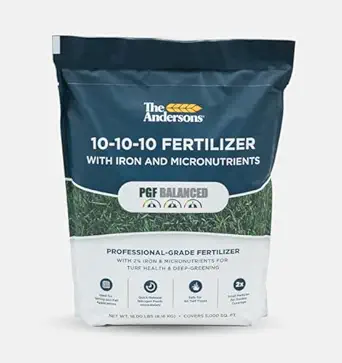 |
| Best Value The sweet spot between price and what you get | The Andersons Core 24-6-12 Professional All-Purpose Lawn Fertilizer (18 lb) |  |
| Highest Rated A top-rated pick with lots of positive feedback | Ferti-lome Slow Release Nitrogen Lawn Fertilizer 15-0-15 with Iron (2 Pack, 16 lb each) |  |
| Most Popular A crowd favorite that many people choose with confidence | Scotts Green Max Lawn Food (16.67 lb) |  |
Yard Mastery Flagship Granular Lawn Fertilizer 24-0-6 with 3% Iron (18 lb)

| NPK | 24-0-6 |
|---|---|
| Iron | 3% |
| Form | Granules |
| Coverage | 6000 |
This granular 24-0-6 fertilizer is designed for homeowners who want steady seasonal feeding and deeper green color without frequent applications. Applied with a broadcast spreader to a prepared lawn, it supplies slow-release nitrogen for sustained growth, potassium for stress tolerance, and 3% iron plus trace micronutrients to improve turf color. The 18 pound bag is labeled to cover 6,000 square feet, making it practical for typical suburban lawns. Notable features include the slow-release N formulation that reduces quick growth flushes and the added iron and micronutrient mix that targets color and plant health. It is straightforward to use: spread evenly, then water according to directions. Important limitations are that the product contains no phosphorus and the granular form requires a spreader for even distribution; spot treatments and small patches may need smaller packaging or a handheld applicator. Safety precautions and application timing matter to avoid runoff and to protect people and pets during application.
Best for: Buyers who want a single, balanced seasonal fertilizer that promotes steady growth and richer color across a typical yard and who plan to use a spreader for even application.
Less Ideal for: Gardeners needing a phosphorus boost for root establishment or those with very small lawns who prefer liquid or small-pack spot treatments.
- Slow-release nitrogen provides steady feeding over the season
- Includes 3% iron and multiple micronutrients to improve turf color
- Formulation adds potassium for improved stress tolerance
- Bag labeled to cover up to 6,000 square feet for easy planning
- No phosphorus in the NPK ratio, so not suited for phosphorus-deficient soils
- Granular form requires a spreader for even coverage and is less convenient for small spots
Verdict: Choose this fertilizer if you want a slow-release, iron-enriched granular formula that feeds and colors a standard lawn with minimal applications.
The Andersons PGF Balanced 10-10-10 Granular Fertilizer with Micronutrients and 2% Iron (18 lb, 5,000 sq ft)

| Item Form | Granules |
|---|---|
| Application Method | spreader |
| Coverage | 5000 square feet |
| Mixing Ratio | 10-10-10 |
| Target Species | Lawns and Gardens |
The Andersons PGF Balanced 10-10-10 is a fine-particle granular fertilizer designed for broad, even coverage across lawns and garden beds. It is typically applied with a broadcast spreader and then watered in to activate the quick-release nutrients. The unusually small particle size means a single 18 lb bag claims coverage up to 5,000 sq ft and helps reduce patchy feeding compared with coarse granules. The formula is balanced for nitrogen, phosphorus and potassium and includes micronutrients plus 2% iron for enhanced greening. It works well for spring and fall applications, for establishing new turf or boosting established lawns, and can be worked into soil for vegetable or flower beds. Users should sweep or blow product off paved surfaces to avoid iron staining and store any leftover in a dry area. Because the fertilizer is quick-release, expect faster visible response but shorter duration between applications than slow-release products.
Best for: Homeowners who prioritize consistent, dependable feeding and want a straightforward granular option that gives quick visible results across lawns and planting beds.
Less Ideal for: Gardeners seeking a long-duration, slow-release feeding program or those who need a no-iron product to avoid any risk of surface staining.
- Very fine particle size for more even coverage and less patchy feeding
- Balanced 10-10-10 formula with added micronutrients and 2% iron for deeper greening
- Suitable for lawns, gardens, trees and shrubs and can be applied at planting or during the season
- Covers up to 5,000 sq ft from a single 18 lb bag when applied as directed
- Quick-release nutrients mean results appear sooner but may require more frequent reapplication versus slow-release formulas
- Contains iron that can stain sidewalks and driveways if not cleaned off immediately
Verdict: Choose this fine-particle 10-10-10 if you want a reliable, fast-acting granular fertilizer that delivers even coverage and deeper greening for summer lawn care.
The Andersons Core 24-6-12 Professional All-Purpose Lawn Fertilizer (18 lb)

| Item Form | Granules |
|---|---|
| Coverage | 6200 sqft |
| Target Species | Lawn Grass |
| Mixing Ratio | 4:1:2 |
This Andersons Core 24-6-12 granular fertilizer delivers a high-nitrogen 4:1:2 blend with both quick- and slow-release nitrogen plus iron and micronutrients to green and thicken turf while feeding for up to six weeks. It is applied with a broadcast or drop spreader and is meant to be swept or blown off hard surfaces back into the lawn and watered in for best results. Super-fine particles increase particle count per square foot for more even distribution, and the package covers about 6,200 sq ft, making it suitable for medium-sized yards. Practical benefits include strong early greening and sustained feeding between applications, and the added iron helps correct pale or yellowing patches. Expect to reapply every four to six weeks during active growth to maintain results. Limitations are that timing and watering are important to avoid runoff, and the high nitrogen content may be more than centipede grass needs if used too frequently, so follow recommended rates for low-maintenance, slow-growing turf types.
Best for: Buyers who prioritize rapid, visible improvement in lawn color and vigor and who follow repeat feeding schedules to maintain performance.
Less Ideal for: Homeowners who prefer minimal-input, low-growth lawns or those unwilling to follow application timing and watering guidelines should consider lower-rate or specialized centipede formulations instead.
- High 24-6-12 NPK ratio provides strong greening and growth stimulus
- Includes iron and micronutrients for deeper greening and improved turf color
- Super-fine granules promote more even spread and soil contact
- Combination of quick and slow release nitrogen supplies immediate results and up to six weeks of feeding
- Covers up to 6,200 sq ft from a single 18 lb bag
- High nitrogen formulation can be too strong for low-maintenance or slow-growing turf if overapplied
- Requires careful timing and watering to prevent wash-off during heavy rain
Verdict: Choose this fertilizer if you want a high-performance, quick-plus-extended feeding formula that delivers noticeable greening and sustained turf feeding when applied correctly.
Ferti-lome Slow Release Nitrogen Lawn Fertilizer 15-0-15 with Iron (2 Pack, 16 lb each)

| N‑P‑K | 15-0-15 |
|---|---|
| Item Form | Granules |
| Target Uses | Lawn Care |
| Included Components | Lawn Fertilizer |
This two‑bag pack of Ferti-lome 15-0-15 delivers slow‑release nitrogen with added iron to maintain color and steady growth on warm and cool season lawns. Each 16 lb bag is intended to cover up to 4,000 sq ft, so the bundle is convenient for larger yards or for having a spare for the next application. Typical use is a spring and fall feeding at the recommended rate, applied with a broadcast or drop spreader; the slow‑release formulation reduces the need for frequent reapplication and helps avoid quick flushes of growth. The inclusion of iron and micronutrients improves leaf color without extra liquid treatments, and compatibility with many grasses makes this usable on Empire Zoysia. Limitations are that the blend has no phosphorus and is focused on nitrogen and potassium balance, so soils needing phosphorus will require a separate product, and precise coverage depends on correct spreader settings and uniform application. For homeowners prioritizing predictable, low‑maintenance feeding and improved lawn color, this pack is a practical choice.
Best for: Homeowners who want a dependable, low‑maintenance fertilizer regimen and need steady feeding and color improvement across a sizable Empire Zoysia lawn.
Less Ideal for: Gardeners whose soil tests show a phosphorus deficiency or who need a specialized nutrient program focused on establishing new turf should consider a different formula.
- Slow‑release nitrogen provides extended feeding and fewer applications
- Contains iron and micronutrients to enhance leaf color
- Two 16 lb bags cover large areas or allow for a follow-up application
- Suitable for a wide range of grass types including warm‑season Zoysia
- No phosphorus in the 15-0-15 formula so it will not correct phosphorus deficiencies
- Effective, even coverage requires correct spreader calibration and application technique
Verdict: Choose this two‑pack slow‑release 15-0-15 fertilizer when you want predictable, low‑frequency feeding and improved color for an established Empire Zoysia lawn.
Scotts Green Max Lawn Food (16.67 lb)

| Item Form | Granules |
|---|---|
| Coverage | 5000 square feet |
| Specific Uses For Product | Lawn |
| Target Species | lawn grass |
Scotts Green Max Lawn Food is a granular, all-purpose lawn fertilizer formulated to deliver fast greening with a 2-in-1 feed plus 5% iron supplement. It is applied with a broadcast or drop spreader to any grass type and is recommended for routine spring, summer, or fall applications. Notable features include a guaranteed nonstaining formula when used as directed and settings provided for Scotts spreaders to help get an even application across the advertised 5,000 sq ft coverage. The iron content speeds visible greening in as little as three days and the granules are ready to water in for faster uptake. For a risk-averse homeowner growing fescue in spring, the product is straightforward to use and safe to re-enter the lawn immediately after application. Limitations are that proper spreader settings and sweeping up excess product are important to avoid runoff and that it is a general lawn food rather than a specialized product for nutrient-deficient soils, so a soil test is still useful for targeted corrections.
Best for: Homeowners who want a low-risk, easy-to-apply lawn food that produces quick green results on fescue lawns in spring and prefer established brand guidance for application.
Less Ideal for: Gardeners seeking a product to correct a specific nutrient imbalance or those who prefer liquid or organic-only fertilizing approaches.
- Includes 5% iron for faster, deeper greening visible in about three days
- Premeasured granular form covers up to 5,000 sq ft from one bag
- Manufacturer provides spreader settings to simplify even application
- Formulated not to stain concrete or driveways when used as directed
- Not a tailored corrective fertilizer for specific soil deficiencies
- Requires correct spreader settings and cleanup to prevent runoff
Verdict: A simple, fast-acting granular lawn food with added iron that reliably greens fescue lawns when applied with a spreader.
Choosing the Right Lawn Fertilizer with Iron: Key Factors to Consider
Nutrient Ratio and Lawn Needs
The proportion of nitrogen, phosphorus, and potassium determines growth, root strength, and stress resistance. For most home lawns the nitrogen number matters most because it drives leaf growth and color, but phosphorus and potassium still support root development and winter hardiness.
Choosing a fertilizer with an N-P-K ratio suited to your lawn avoids overfeeding one aspect of turf health. If you only need to correct color, lower nitrogen with added iron can darken blades without excessive top growth. Conversely, newly established or thin lawns often benefit from a higher nitrogen formulation combined with iron to both thicken grass and improve color.
Form of Iron and Soil pH
Iron is supplied in different chemical forms, commonly chelated iron or iron sulfate. Chelated iron resists immediate binding to soil particles and stays plant-available longer, especially in neutral to alkaline soils. Iron sulfate can be effective in acid soils but may oxidize or bind quickly in high-pH conditions.
Soil pH strongly influences iron availability. In alkaline soils iron becomes less available to grass regardless of total iron content, so choose products labeled for your pH range or plan to acidify the soil if necessary. Understanding the iron form helps set realistic expectations for how quickly and how long greening will persist.
Application Method and Timing
Fertilizers with iron come as granular spreads, water-soluble powders, or liquid concentrates. Granular products are convenient for broadcast spreaders and offer slower release. Liquids and hose-end formulas deliver faster, often more uniform greening but require careful dilution and can stain hard surfaces if not rinsed.
Timing matters because turfgrass uptake varies with season and temperature. Apply iron-enriched products during active growth windows for your grass type, avoiding hot, dry spells that increase burn risk. Follow label guidance for interval timing to maintain color without causing nutrient lockup or excessive thatch buildup.
Staining Risk and Turf Safety
Iron, especially in sulfate or concentrated liquid forms, can stain concrete, decking, and clothing. Consider application practices that minimize contact with non-plant surfaces, such as watering in lightly after application or using targeted applications rather than broadcasting near walkways.
Safety to turf is also a concern: too much iron at once, or applying during drought, can cause leaf scorch. Products with clear dilution rates and conservative iron percentages reduce the chance of damage. Read labels for guidance on emergency rinsing and recommended mower-free windows after application.
Longevity and Feeding Schedule
Some formulations provide an immediate visual boost that fades after a week, while controlled-release or granular blends can maintain improved color for several weeks. Consider how often you want to feed the lawn and whether you prefer occasional touch-ups or a longer-term maintenance program.
A product's suggested interval should fit your maintenance rhythm. If you prefer less frequent attention, choose slower-release options with sustained iron availability. For quick repairs before an event, fast-acting liquids or soluble powders are more useful, but expect to reapply sooner.
Compatibility With Other Treatments
Home lawns often receive multiple treatments such as pre-emergent herbicides, weed-and-feed mixes, or soil amendments. Some iron formulations can interact with other products or with high-phosphorus fertilizers, reducing uptake or causing nutrient antagonism.
Plan application sequencing and check labels for compatibility. If you are applying herbicides, follow recommended wait times before or after iron-enriched fertilization to avoid reduced effectiveness or increased turf stress.
When to Use Iron Treatments
Use a fertilizer with iron when persistent yellowing appears between the veins of new leaves or when the lawn looks uniformly pale despite regular feeding. Those symptoms often indicate iron deficiency rather than a lack of nitrogen.
Also consider spot treatments for isolated patches showing chlorosis, which can save product and reduce staining risk on hard surfaces. Test small areas first if you are uncertain about how your grass will respond.
- Warm-season grasses show iron response faster in spring and early summer.
- Cool-season grasses may benefit from iron in early fall or spring during active growth.
- Spot-test on a small area before whole-lawn applications.
How Soil Tests Guide Iron Use
A basic soil test that reports pH and available iron can prevent wasted applications. If soil pH is above 7.0, iron is often present but tied up and unavailable to plants. In that case, chelated iron products or strategies to lower pH are more effective.
Soil tests also reveal high phosphorus or other nutrient imbalances that can interfere with iron uptake. Use test results to choose a product with a compatible nutrient profile and to set realistic expectations for recovery time.
- Collect soil samples from multiple spots for representative results.
- Retest after a season if you are making pH adjustments or ongoing treatments.
Application Safety Around Plants and Hardscapes
Protect ornamental beds and water features when applying iron-enriched fertilizers. Drift or runoff can discolor foliage or stain stone and concrete. Use guard rails or apply with care near edges, then water lightly to move nutrients into the root zone.
Clean application equipment and rinse any splashes off patios and walkways immediately. Wear gloves and appropriate clothing to avoid skin staining and wash garments separately if they contact concentrated liquid iron.
- Water in granular products lightly to reduce staining and move nutrients downward.
- Avoid applying before heavy rain to limit runoff into storm drains.
Managing Expectations: Color Vs Growth
Iron primarily affects leaf color rather than rooting or shoot density. Expect a visibly darker green without necessarily seeing an immediate increase in turf thickness. If the lawn also needs growth, select a formulation with a balanced nitrogen component.
Repeated iron applications can maintain color, but improving underlying soil conditions and correcting pH will produce longer-term health benefits than cosmetic treatments alone.
- Pair iron treatments with good cultural practices like proper mowing height and watering.
- Avoid relying on iron alone to correct thinning or patchy turf.
Seasonal Care and Scheduling
Plan iron applications around your grass species growth cycles. Warm-season grasses respond best to iron during their active summer growth, while cool-season species show more consistent results in spring and early fall. Avoid heavy iron feeding during dormancy.
Keep a calendar of feeding dates and any follow-up soil tests so you can track how color and vigor change over time. Staggered, lighter applications are often safer than infrequent heavy doses.
- Do not apply concentrated iron during drought stress or temperature extremes.
- Align iron feedings with other seasonal maintenance like aeration and overseeding when possible.
How We Chose the Best Lawn Fertilizer with Iron
We prioritized formulations that deliver soluble iron in a form accessible to turfgrass without forcing unrealistic application routines. Selection emphasized balanced N-P-K ratios appropriate for home lawns combined with added chelated or sulfate iron so the nutrient is plant-available even in varied pH conditions. Application practicality was a core filter: we favored products with clear spreader or hose-end instructions, predictable feeding intervals, and manageable odor and staining risk. Durability of results was assessed by looking for formulations that support sustained greening over multiple weeks rather than a transient surface tint. Safety and landscape compatibility were included, excluding products with high salt index or unclear runoff risks that could harm nearby plants or water features. Finally, we filtered out options that lack clear labeling on iron content or supply ambiguous directions for cool- versus warm-season turf. The criteria used here align with our scoring metrics that focus on nutrient balance, iron availability, application ease, longevity of effect, and landscape safety.
FAQ
How quickly will I see results after applying a fertilizer with iron?
You can see visible darkening within a few days with liquid or soluble iron formulas, while granular or chelated options may take one to three weeks. Speed depends on iron form, soil pH, and turf activity.
Can iron staining be prevented on sidewalks and patios?
Yes. Avoid applying directly over hardscapes, water in granular products lightly, and rinse any splashes immediately. Using targeted spot treatments reduces the chance of visible stains.
Will adding iron make my lawn grow faster?
Not necessarily. Iron enhances leaf color more than shoot proliferation. If you want thicker turf, use a product with an appropriate nitrogen level or combine iron treatments with other cultural improvements.
Is chelated iron always better than iron sulfate?
Chelated iron generally performs better in neutral to alkaline soils because it resists binding, but iron sulfate can be effective in acid soils and is often less expensive. The best choice depends on soil pH and how quickly you need results.
How often can I apply iron-enriched fertilizer safely?
Follow label instructions, but common practice is to apply slow-release or granular products every 6 to 8 weeks and fast-acting liquids at longer intervals to avoid buildup. Frequency depends on formulation, turf type, and observed response.
Will iron treatments harm nearby plants or water features?
Improper application and runoff can harm sensitive ornamentals and discolor water features. Take care to avoid drift, water in responsibly, and avoid applying before heavy rain to reduce runoff risk.
Final Verdict
Prioritize iron availability and a nutrient balance that matches what your lawn actually needs. Use soil tests and select the iron form that suits your pH conditions, then match application method and schedule to your maintenance preferences. For sustained color with minimal risk, favor conservative, labeled application rates and consider ongoing soil improvement alongside periodic iron treatments. Doing so will deliver noticeable greening without compromising turf safety or landscape features.
