

Note: This article contains affiliate links. If you click on these links and make a purchase, I may earn a small commission at no extra cost to you. This helps support my research and content. Read my full affiliate disclosure here.
Picking the right LED grow light for houseplants changes how well your indoor plants grow, flower, and resist stress. The wrong light can cause sparse growth, leggy stems, or burned leaf tips, while the right fixture gives consistent light intensity without excess heat or wasted energy. This guide covers seven shortlisted LED fixtures chosen specifically for houseplant setups, from small-shelf arrays to larger canopy-style panels. We evaluate spectrum quality, energy draw, heat management, and ease of use so you can match a light to your space, plant types, and daily routine. Read on to find the options that fit compact shelves, bright windowsill replacements, or multi-pot benches.
Top Picks at a Glance
| Best Overall The best all-around choice for most situations | GLOWRIUM G2 Floor LED Grow Light with Adjustable Stand | 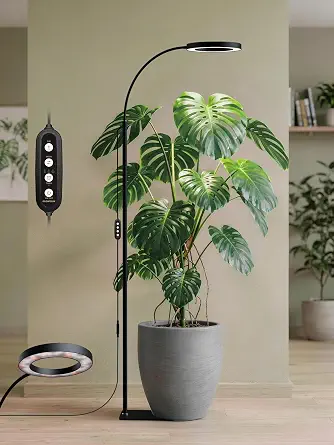 |
| Best Quality Built to a higher standard if you want something more solid | SANSI 36W Full-Spectrum LED Grow Light Bulb (E26) |  |
| Best Value The sweet spot between price and what you get | LEOTER 4-Head LED Grow Light with Full Spectrum, Timer and 10-Level Dimming |  |
| Best Budget The cheapest option that still gets the job done reliably | LORDEM Full Spectrum LED Grow Light for Indoor Plants |  |
| Highest Rated A top-rated pick with lots of positive feedback | GLOWRIUM Full-Spectrum Smart LED Grow Light (Freestanding Desk Lamp) |  |
| Most Popular A crowd favorite that many people choose with confidence | GooingTop HY-021 Clip-On Full Spectrum LED Grow Light (6000K) |  |
| Best Seller A high-volume bestseller chosen again and again | Briignite A19 Full-Spectrum LED Grow Light Bulb (2-Pack) |  |
GLOWRIUM G2 Floor LED Grow Light with Adjustable Stand

| Wattage | 20 watts |
|---|---|
| Number of Light Sources | 66 |
| Additional Features | Adjustable Height, Dimmable, Flexible, Full Spectrum, Timer |
| Controller Type | Remote Control |
| Power Source | Corded Electric |
The GLOWRIUM G2 is a floor-style full‑spectrum LED grow light built to support medium to large houseplants. It combines a three-section aluminum stand that adjusts to different heights with a 66‑LED lamp head that offers three light modes and seamless 6-level dimming so you can tune intensity for seedlings through flowering. A 3/9/12 hour auto-timer and remote control simplify daily schedules, and the long power cord plus anti-slip base make placement around living rooms or sunrooms straightforward. The aluminum construction helps dissipate heat, and the 360° adjustable lamp head lets you direct light across multiple pots. Limitations to note are the modest 20W power rating, which is fine for supplemental lighting but may be insufficient as the sole light for very light‑hungry plants, and the lamp is specified for indoor use only so it is not suitable for wet outdoor conditions. For buyers who want a stylish, easy-to-use lamp that doubles as room lighting while supporting a range of houseplants, the G2 offers a convenient, feature-packed option.
Best for: Houseplant owners who want an attractive, easy-to-use supplemental light for medium to large indoor plants and value adjustable height, dimming and timer features to simplify daily care.
Less Ideal for: Growers who need high-intensity lighting for large-scale or high-light crops or who require weatherproof fixtures for outdoor use should look for more powerful or outdoor-rated options.
- Adjustable three-section stand and 360° lamp head for directing light to plants at different heights
- Full spectrum LEDs with three modes and 6-level seamless dimming to match growth stages
- Built-in 3/9/12 hour auto-timer and remote control for hands-off daily scheduling
- Aluminum construction for improved heat dissipation and a stable anti-slip base
- Long 13-foot power cord allows flexible placement without extra extensions
- 20W total power is modest and may not supply enough PAR for very light-demanding species
Verdict: Choose the GLOWRIUM G2 if you want a stylish, user-friendly floor grow light that provides adjustable full‑spectrum illumination and automated scheduling for a variety of houseplants.
SANSI 36W Full-Spectrum LED Grow Light Bulb (E26)

| Wattage | 36 watts |
|---|---|
| Color Temperature | 4000 Kelvin |
| PPF | 65.6 μmol/s |
| Light Source Operating Life | 25000 hours |
| CRI | 95 |
The SANSI 36W full-spectrum grow bulb is a screw-in LED designed to replace a standard E26 bulb while delivering high PPFD for indoor plants. It produces a natural 4000K daylight with a high CRI (95+) and 3250 lumens, so foliage looks accurate and plants receive balanced light through the full visible spectrum. SANSI uses a ceramic Chip-on-Ceramic (COC) design and an optical lens to concentrate output, yielding PPF of 65.6 μmol/s and PPFD around 265 μmol/s/m² at 1 foot, which makes it suitable for seedlings, herbs, and compact houseplants. The bulb runs on AC mains, is ETL listed, and claims a 25,000-hour life and five-year protection, so it is built for extended use without extra fixtures. Trade-offs are that it is not dimmable and coverage remains limited compared with multi-LED panels, so larger setups will need multiple bulbs or different fixtures. The natural daylight color is easier on the eyes than red-blue grow lamps but you should still position bulbs to avoid hot spots and measure PPFD for precise lighting schedules.
Best for: Growers who want a performance-focused, plug-and-play solution to give seedlings, herbs, or single houseplants strong, natural-spectrum light without building a custom fixture.
Less Ideal for: People needing wide-area coverage for many plants or full tent setups should consider multi-LED panels or higher-output fixtures instead.
- Full-spectrum 4000K light with CRI 95+ gives accurate color rendering and broad-spectrum photosynthetic support
- High reported PPFD (≈265 μmol/s/m² @1ft) and PPF 65.6 μmol/s for effective light intensity at close range
- E26 screw-in form factor fits standard fixtures without extra hardware
- Ceramic COC construction and optical lens design improve heat dissipation and light utilization
- ETL listed and rated for 25,000 hours with a five-year protection plan
- Not dimmable, so you cannot fine-tune intensity without external controls
- Coverage is limited compared with panel-style grow lights, requiring multiples for larger plant groups
Verdict: A high-intensity, full-spectrum E26 grow bulb that delivers strong, natural daylight output for focused indoor plant growth without a dedicated fixture.
LEOTER 4-Head LED Grow Light with Full Spectrum, Timer and 10-Level Dimming

| Number of Light Sources | 80 |
|---|---|
| Wattage | 80 watts |
| Light Source Type | LED |
| Control Method | Remote |
| Connectivity Technology | USB |
This LEOTER 4-head grow light is designed for indoor houseplants that need supplemental light. It uses 80 LEDs arranged across red, blue, yellow and white chips to provide full-spectrum output, and offers three spectral modes (red+blue, yellow, or both) to match seedling, vegetative and flowering stages. The lamp mounts with a strong clip and has 360-degree flexible goosenecks so you can aim light at multiple pots or change heights without additional hardware. Controls include a memory timer with 3/9/12-hour auto-on cycles, a remote control and 10 dimming levels for fine brightness adjustment. Practical benefits include easy USB or adapter power, energy-efficient LEDs and a built-in heat sink for steady operation. Limitations are that the unit is a clip-on desk lamp style rather than a broad panel, so coverage is best for a few plants or close-placed seedlings rather than a large shelving setup, and the timer must be reset after power loss. For someone optimizing light schedules and placement, this lamp makes managing several houseplants simple and efficient.
Best for: Best for houseplant owners who prioritize efficient, adjustable lighting and want to fine-tune schedules and intensity for a handful of pots or seedlings.
Less Ideal for: Not a good fit for growers who need wide, uniform coverage for many plants or multi-tier shelving where a larger panel fixture is required.
- Full-spectrum LED array with dedicated red and blue diodes for different growth stages
- Adjustable 4-head design and 360-degree goosenecks for precise light placement
- 10 brightness levels plus 3 automatic timer settings for repeatable light schedules
- Strong clip mount and USB/adapter power make placement flexible and convenient
- Clip-on lamp format limits uniform coverage to a small cluster of plants
- Timer memory resets when the unit is fully powered off, requiring manual reprogramming
Verdict: A compact, energy-efficient clip-on grow light that gives practical, adjustable spectrum and scheduling controls for optimizing small-group houseplant growth.
LORDEM Full Spectrum LED Grow Light for Indoor Plants

| Light Source Type | LED |
|---|---|
| Power Source | Corded Electric |
| Voltage | 5 volts |
| Wattage | 10 watts |
| Light Source Special Features | Dimmable, Auto On/Off Timer (4/8/12H) |
This LORDEM grow light is a simple plug-in solution for supplementing sunlight to indoor houseplants. It uses full-spectrum LEDs with a 4500 K color temperature and higher PAR output to support plants at all growth stages, and the lamp sits on a slim telescoping pole that you push into potting soil and raise or lower to change intensity. Users can choose between four brightness settings and a 4/8/12 hour auto on/off timer so plants get consistent daily light without manual switching. The aluminum construction keeps the unit lightweight and the 10-watt lamp runs cool compared with older bulbs. Practical benefits include easy setup, a narrow footprint that fits on shelves or desks, and flexible timing for busy or away homeowners. Limitations are the modest 10-watt power and single light head, which make it best for individual pots or small clusters rather than a shelf of large plants, and the short 5 V corded power arrangement that may require a nearby USB outlet or extension for ideal placement.
Best for: A practical buyer who wants an affordable, low-effort light for one to a few houseplants and values ease of setup and a small footprint.
Less Ideal for: Not suited for growers who need high-output lighting for large collections, multi-tier shelving, or flowering and fruiting crops requiring intensive PAR across a wide area.
- Full-spectrum LED diodes provide broad wavelengths to support all growth stages
- Four brightness levels let you tailor light intensity for seedlings through mature plants
- Auto on/off timer (4/8/12H) keeps a consistent daily schedule without manual control
- Compact, soil-insert telescoping pole fits small pots and saves shelf space
- 10-watt single-head design limits coverage for multiple or large plants
- Requires a nearby 5 V power source which can restrict placement options
Verdict: A budget-friendly, easy-to-use full-spectrum lamp that reliably boosts light for one or a few potted houseplants with minimal setup.
GLOWRIUM Full-Spectrum Smart LED Grow Light (Freestanding Desk Lamp)

| Wattage | 12 watts |
|---|---|
| Power Source | Corded Electric |
| Control Method | App, Push Button |
| Connectivity Protocol | Bluetooth |
| Voltage | 24 volts_of_direct_current |
The GLOWRIUM full-spectrum smart grow light is a freestanding desk-style lamp designed to support seedlings through flowering with a 12 W LED array, stepless dimming, and app or button control. It is typically used beside a windowsill, on a plant stand, or next to larger pots where directed light is needed; the 360° flexible gooseneck and enlarged lamp head let you aim light across multiple leaves and plant heights. Notable features include Bluetooth app integration with plant care reminders and timers, a sunrise/sunset sync, and a low-voltage 24 V system for safer continuous use. Practical benefits are easy scheduling, fine brightness control to match growth stages, and a compact modern design that fits living spaces. Limitations are the modest 12 W power and single light source, which makes it best for individual houseplants or small groups rather than full shelving or dense seed trays, and it is not water resistant so it should be kept away from humidity and wet locations. The lamp’s aluminum build and advertised long LED life make it a low-maintenance option for growers who want dependable, smart-managed lighting for a few plants.
Best for: Houseplant owners who prioritize dependable, low-maintenance lighting and want smart scheduling and reminders to make plant care easier for a few pots or a small plant corner.
Less Ideal for: People building a large multi-shelf grow system, a seed-starting rack, or anyone needing high-output coverage for many plants should choose a higher-watt or multi-head fixture instead.
- Full-spectrum LED with stepless dimming supports all growth stages from seedling to flowering
- Bluetooth app control with timers, sunrise/sunset sync, and plant care reminders for automated management
- Adjustable 360° gooseneck and enlarged lamp head for targeted coverage and flexible positioning
- Low-voltage 24 V design and aluminum construction for safer, durable indoor use
- Only 12 watts and a single light head, so coverage is limited for larger setups or multiple shelves
- Not water resistant, so it must be kept away from humid environments or direct watering
Verdict: A user-friendly, durable smart grow lamp that reliably automates light schedules and fine brightness control for a few houseplants.
GooingTop HY-021 Clip-On Full Spectrum LED Grow Light (6000K)

| Power Source | Corded Electric |
|---|---|
| Color Temperature | 6000 Kelvin |
| Light Output Maximum | 2500 lumens |
| Number of Light Sources | 84 |
| Light Source Special Features | Dimmable |
The GooingTop HY-021 is a clip-on full-spectrum grow light designed for household plant care and seed starting. It uses 84 LEDs (a mix of white and red) to deliver a 6000 K daylight-balanced output with a high color-rendering index, and it includes a cord-mounted remote that controls two brightness levels and a repeating 4/8/12 hour timer. Typical use is clipping the lamp to a desk, shelf, or countertop, angling the adjustable goosenecks to focus light over seedlings, herbs or a few potted houseplants, and letting the timer run daily. Practical benefits are straightforward: the clamp and flexible arms make placement easy in crowded indoor spaces, the dim and timer settings simplify consistent photoperiods, and the mix of white plus 660 nm red LEDs supports both vegetative growth and flowering. Limitations to expect are that this unit targets small coverage zones rather than whole large racks, and its stated power draw and luminous range suit seedlings and individual plants more than wide-canopy gardens. Build materials are basic iron and plastic, so treat the clamp and joints gently for long life.
Best for: Buyers who want an inexpensive, easy-to-use light to keep a few houseplants, seedlings, or herbs healthy year-round and value simple timers and adjustable positioning over raw output.
Less Ideal for: Gardeners needing large-area coverage, multi-tier shelving farms, or commercial production should choose higher-output strip or panel fixtures instead.
- Full-spectrum 6000 K output with added 660 nm red LEDs to support both vegetative growth and flowering
- Attached remote with dimming and repeating 4/8/12 hour timer for easy, consistent light schedules
- Flexible dual goosenecks and strong clamp allow precise positioning on desks, shelves, or counters
- High color-rendering index and flicker-free light make it usable as a reading lamp as well as a grow light
- Designed for small coverage areas so not suitable for lighting multiple large plants or wide benches
- Plastic and basic clamp construction may wear faster under heavy daily adjustments
Verdict: A compact, user-friendly clip grow light with timer and dimming that is ideal for keeping a few houseplants or seedlings growing reliably indoors.
Briignite A19 Full-Spectrum LED Grow Light Bulb (2-Pack)

| Wattage | 12 watts |
|---|---|
| Bulb Base | E26 |
| Color Temperature | 3500 Kelvin |
| Light Output Maximum | 1000 lumens |
| Light Source Operating Life | 30000 hours |
The Briignite A19 full-spectrum grow bulbs are drop-in LED replacements for standard E26 fixtures designed to support all stages of indoor plant growth. They deliver about 1000 lumens at roughly 11–12 watts while presenting a natural 3500–4000K warm-white appearance rather than the purple look of many grow lights. Typical use is straightforward: screw the bulb into any standard lamp or ceiling fixture over individual pots, shelves, or small grow stations to supplement light for seedlings, herbs, leafy greens, and fruiting plants. Notable features include a full-spectrum output with a high CRI of 90, long rated life around 25,000–30,000 hours, and a wide 180 degree beam for even coverage. Practical benefits are low energy draw, more attractive ambient lighting in living spaces, and simple installation without special fixtures. Limitations are that an individual bulb produces modest PPF suitable for a few plants rather than a whole grow tent, and the product relies on household sockets so it lacks integrated mounting or targeted directional optics for high-density canopies.
Best for: Indoor plant owners who want a simple, low-effort way to add effective supplemental light to windowless corners, shelves, or individual pots while keeping normal room lighting aesthetics.
Less Ideal for: Growers who need high-intensity, canopy-wide lighting for multi-tier grow tents or commercial propagation should choose purpose-built high-PPFD fixtures instead.
- Full-spectrum output that mimics natural sunlight while appearing warm white in the room
- Low power consumption (~11–12W) with high lumen output (~1000 lm) for energy-efficient supplementary lighting
- Standard E26 base fits existing household fixtures for easy, tool-free installation
- High color rendering index (CRI 90) for accurate plant and room colors
- Long rated operating life (around 25,000–30,000 hours) reduces replacement frequency
- Single bulbs produce limited PPFD so multiple units are needed for larger setups or fruiting stages
Verdict: A convenient, energy-efficient full-spectrum A19 bulb that provides natural-looking supplemental light for houseplants with no special fixture required.
Choosing the Right LED Grow Light for Houseplants: Key Factors to Consider
Light Spectrum and PAR
Spectrum determines which wavelengths the fixture emits and how useful that light is to houseplants. Plants rely mainly on blue and red wavelengths for leaf growth and flowering, but a balanced spectrum that includes full-spectrum white light helps mimic natural daylight and supports overall plant health. PAR (photosynthetically active radiation) measures the light plants actually use. A fixture with clear spectral data and a steady PAR output across the coverage area lets you position the light confidently for seedlings, foliage plants, or flowering houseplants.
When evaluating spectrum, look for continuity across blue and red bands rather than isolated spikes. White LEDs with supplemental deep red often perform well for mixed collections because they render plant colors and help you see leaf condition while supplying useful wavelengths.
Energy Use and Running Cost
Wattage alone does not tell the full efficiency story. You should compare actual power draw at the wall and the light output per watt to estimate ongoing electricity costs. Fixtures with efficient drivers and high lumen or PAR per watt ratings will maintain brightness while using less energy, which matters if you run lights many hours each day for several plants.
Consider whether the fixture has dimming, schedules, or built-in timers. These features let you reduce output during low-demand periods or shorten daily run time without moving the fixture. For a houseplant setup where lights run usually 8 to 14 hours a day, even modest efficiency improvements add up over months.
Heat Management and Proximity
Houseplants are often placed close to lights on shelves or in compact rooms, so how a fixture handles heat is critical. Efficient LEDs still produce heat at the driver and diode level; housings, heat sinks, and active cooling reduce temperature at the plant canopy. Lower surface temperatures let you hang lights closer, improving intensity without burning leaves.
Check whether the fixture's design vents heat away from the canopy and whether fans are quiet enough for living spaces. Passive-cooled designs are preferable for small areas where noise or dust from fans could be an issue. Also consider how heat affects humidity around plants, since warm fixtures can dry soil faster.
Coverage Area and Light Intensity
Different houseplant setups need different coverage. A single-fabric pot or terrarium requires a focused, high-intensity footprint, while a shelf or bench with multiple pots needs even coverage over a wider area. Pay attention to recommended hanging heights and the light intensity delivered at those distances. PAR maps or manufacturer coverage charts are useful for deciding whether a fixture will serve seedlings, mature foliage plants, or bloom-phase needs.
Think about future expansion. If you may add more pots, choose a fixture with a broader even spread rather than one with a narrow hotspot. Some fixtures allow linking multiple units to scale coverage smoothly.
Form Factor and Mounting Options
Size and mounting flexibility determine how well the fixture fits your space. Slim, low-profile panels are convenient for narrow shelves, while bar-style lights and adjustable hangers make it easier to tune height and angle. Fixtures that include adjustable hangers, V-hooks, or magnetic mounts simplify installation on common indoor surfaces.
Also consider weight and cable management. Lighter fixtures are easier to reposition and safer for DIY shelving. Integrated controls and remotes reduce clutter from external timers or controllers.
Durability and Ease of Use
Look for reliable drivers and a solid build that resists dust and humidity from typical indoor plant care. Connectors, seals, and the finish should stand up to occasional watering splashes and humid microclimates. User-friendly controls, clear intensity markings, and accessible dimming make daily operation less fussy.
Consider warranty and replacement driver availability if you plan long-term use. Simple, repairable designs often outlast sealed units that require full replacement if a component fails.
Matching Lights to Common Houseplant Types
Different houseplants have different light demands. Succulents and flowering tropicals usually appreciate higher intensity and a fuller red spectrum, while foliage plants like philodendrons and pothos thrive under moderate intensity with balanced white light. Seedlings and cuttings need gentler, close-range illumination with even distribution to avoid stretching.
When planning, map each plant's placement under the intended fixture and consider moving lower-light species to the edges where intensity drops. Using multiple smaller fixtures can create zones with tailored intensity instead of one oversized light that overexposes some plants.
- High-intensity needs: succulents, cacti, blooming begonias
- Moderate intensity: snake plant, pothos, peace lily
- Low to gentle light: seedlings, young cuttings, ferns
Practical Setup and Placement Tips
Hang lights at the recommended height for your plant type and adjust gradually while watching leaf response. If new growth becomes stretched or pale, raise intensity or lower the light slightly. If leaf tips brown or curl, increase distance to reduce heat or intensity.
Use reflectors or light-colored backdrops to improve useful light distribution in narrow spaces. Maintain a consistent daily schedule with timers to mimic natural photoperiods, and adjust seasonally for flowering houseplants.
- Start with the manufacturer's recommended hanging distance and modify over 1 to 2 weeks
- Rotate pots periodically for even growth
- Combine ambient window light with LEDs to reduce run time when possible
Noise, Aesthetics, and Indoor Comfort
For houseplants, aesthetics and noise matter in living spaces. Choose fixtures with quiet cooling or passive heat sinks for bedrooms, living rooms, or workspaces. Low-profile panels and neutral finishes blend better with home decor than industrial-looking units.
Cable length and control placement affect usability. Lights with remote dimmers or built-in timers minimize trips to unplug or rewire, while long power cords help reach convenient outlets without extension cables.
- Passive cooling for quiet rooms
- Integrated controls reduce clutter
- Neutral finishes and slim profiles fit home decor
Scaling Your Setup Over Time
Begin with a single fixture sized for your current plants and leave room to expand. Modular or linkable lights let you add units to a bench or shelving as your collection grows. Assess electrical capacity and outlet placement before adding multiple fixtures to avoid overloaded circuits.
Keep spare hangers and mounting hardware on hand. As you add plants, you may need different height zones and additional fixtures to maintain even light across a larger footprint.
- Plan power outlets and circuit loads before adding more fixtures
- Use modular fixtures to build an even canopy
- Store spare mounting hardware for quick reconfiguration
Common Mistakes to Avoid
Avoid relying solely on wattage when choosing a fixture. High wattage without efficient light delivery can mean excess heat with little real benefit to plants. Also, do not place lights too close just to increase intensity; heat and spectral imbalance can damage leaves.
Do not ignore spectral information. Fixtures sold with vague 'full-spectrum' claims may vary widely. Look for transparent PAR or spectral charts. Finally, avoid overcomplicating control schemes for small setups; simple timers and dimming are usually all you need for healthy houseplants.
- Do not equate high wattage with plant performance
- Avoid placing fixtures too close without monitoring leaf response
- Do not ignore spectral or PAR data when available
How We Chose the Best LED Grow Light for Houseplants
We focused on attributes that matter in everyday indoor gardening. Key evaluation criteria included spectral output and PAR distribution to ensure the lights provide wavelengths houseplants use for vegetative growth and flowering. We measured power consumption and driver efficiency to compare running costs and thermal performance. Heat management and fixture design were assessed because excess heat affects leaf health and proximity to plants. Coverage and light intensity at typical hanging heights were considered so a light can suit a single pot or a small cluster. Build quality and ease of installation were weighed to favor durable, easy-to-adjust options that fit common home setups. We excluded fixtures designed only for large commercial grow rooms or high-intensity horticultural arrays that exceed typical indoor houseplant needs. Also excluded were lights lacking spectral data or reliable thermal management information. The final list balances practical spectrum, usable coverage, low heat, and energy efficiency for houseplant growers.
FAQ
How many hours a day should I run an LED grow light for houseplants?
Most houseplants do well with 8 to 12 hours of supplemental light per day, though light-loving species may need up to 14 hours during active growth. Use a timer and watch plant responses, adjusting hours up or down based on stretch, leaf color, and flowering.
Can I use regular LED bulbs instead of a dedicated grow light?
Regular LED bulbs can help with visibility but often lack the spectral balance and intensity houseplants need for healthy growth. Dedicated grow fixtures provide PAR and spectrum tailored to plant needs and distribute light more evenly over a canopy.
Will LED grow lights raise indoor temperature noticeably?
Efficient LED fixtures produce less heat than older technologies, but some heat is still generated at the driver and diode. In small, enclosed spaces heat can raise ambient temperature, so choose passive-cooled designs or place lights where heat disperses to avoid drying soil or stressing plants.
How close should an LED grow light be to my houseplants?
Recommended distance depends on fixture output and plant type. Low-intensity lights may sit 6 to 12 inches above foliage, while high-output panels often hang 12 to 24 inches or more. Start at the recommended height and move the light weekly while monitoring for stretch or leaf stress.
Do all houseplants need the same light spectrum?
No. While most benefit from a balanced white spectrum, flowering and fruiting plants respond well to additional red wavelengths, and seedlings prefer stronger blue light for compact growth. Choose a fixture with a flexible or broad spectrum when you care for mixed plant types.
Final Verdict
Choosing an LED grow light for houseplants means balancing spectrum, intensity, and heat management against the constraints of your indoor space. Prioritize fixtures that provide clear spectral data and usable PAR across the coverage area, while delivering efficient power use and reliable thermal design. For compact shelves and mixed collections, favor even coverage and adjustable mounting; for single high-light species, focus on intensity and red-enriched spectrum. With these tradeoffs in mind, you can match a fixture to your plants and grow confidently.
