

Note: This article contains affiliate links. If you click on these links and make a purchase, I may earn a small commission at no extra cost to you. This helps support my research and content. Read my full affiliate disclosure here.
Choosing the right liquid fertilizer matters because potted flowers live in a limited soil volume and need a steady, balanced feed to bloom well without salt buildup. The right liquid feed supports flower development, sustains root health in confined pots, and is easy to apply on a regular schedule. This guide covers seven shortlisted liquid fertilizer options chosen for container use and verandas, patios, and small indoor setups. We evaluate each option on nutrient balance, application ease, and container-specific safety so you can pick a feed that suits your watering routine and flowering goals.
Top Picks at a Glance
| Best Overall The best all-around choice for most situations | Neptune's Harvest Rose & Flowering Liquid Fertilizer (2-6-4), 36 oz |  |
| Best Quality Built to a higher standard if you want something more solid | FoxFarm Big Bloom Liquid Plant Food, 32 fl oz |  |
| Best Value The sweet spot between price and what you get | Purived All-Purpose Liquid Houseplant Fertilizer, 16 fl oz (Makes 50 Gallons) |  |
| Best Budget The cheapest option that still gets the job done reliably | Miracle-Gro Liquid All Purpose Plant Food Concentrate, 32 oz |  |
| Highest Rated A top-rated pick with lots of positive feedback | FoxFarm Tiger Bloom Liquid Plant Food (1 pint) |  |
| Most Popular A crowd favorite that many people choose with confidence | Miracle-Gro Indoor Plant Food for All Plants, Liquid, 8 fl. oz. (2-Pack) |  |
| Best Seller A high-volume bestseller chosen again and again | TPS NUTRIENTS Indoor Plant Food Liquid Fertilizer, 8 fl oz |  |
Neptune's Harvest Rose & Flowering Liquid Fertilizer (2-6-4), 36 oz

| Item Form | Liquid |
|---|---|
| Specific Uses For Product | Plant Growth, Root Development, Seed Development, Soil Conditioning |
| Application Method | Liquid |
| Target Species | Flowers |
| Mixing Ratio | 1 tbsp/gal (houseplants), 1/8 cup/gal (outdoor) |
Neptune's Harvest Rose & Flowering is a ready-to-mix organic liquid fertilizer with an NPK of 2-6-4 designed to encourage stronger roots and fuller blooms on roses and flowering plants. You mix the concentrate into water and apply as a soil drench or foliar feed; the label gives separate ratios for houseplants and outdoor use so it is easy to dose. The formula blends fish, seaweed, molasses, humic acids, yucca extract, microbes, and liquid calcium, which supports soil biology, improves nutrient uptake, and can deepen flower color and bud set. For gardeners focused on performance it helps increase bud density and can be used throughout the growing season without synthetic salts. Expect gradual, steady improvements in vigor rather than an instant flush; because the N is low this is a bloom-focused feed, so it is best paired with a more balanced fertilizer when larger vegetative growth is needed. The 36 ounce bottle covers repeated applications for a season on small to medium beds or containers, and the liquid format makes foliar feeding and quick nutrient delivery straightforward.
Best for: Gardeners who prioritize stronger bloom performance and healthier flower set on roses and other ornamentals and who prefer organic, soil-building feeds over high-salt synthetic boosters.
Less Ideal for: Growers seeking rapid leafy growth or a single all-purpose fertilizer for large landscapes should consider higher-nitrogen or bulk options instead.
- Bloom-focused 2-6-4 NPK encourages bud set and richer flower production
- Organic blend of fish and seaweed plus microbes supports soil biology and nutrient uptake
- Usable as soil drench or foliar feed with clear mixing ratios for different uses
- Liquid concentrate allows quick uptake and easy application to containers and beds
- Low nitrogen content means it will not drive rapid leafy growth on its own
- Smaller 36 oz bottle may require frequent repurchase for large gardens
Verdict: Choose this organic liquid if you want a performance-focused bloom booster that improves bud set and flower quality for roses while feeding soil biology.
FoxFarm Big Bloom Liquid Plant Food, 32 fl oz

| Item Form | Liquid |
|---|---|
| Specific Uses For Product | Plant Food |
| Coverage | Medium |
| Liquid Volume | 32 fluid ounces |
| Mixing Ratio | 4 tbsp per gallon of water |
FoxFarm Big Bloom is a concentrated liquid plant food designed to boost flowering and fruit development. It is typically mixed at 4 tablespoons per gallon of water and applied every other watering, or delivered via hose-end sprayer or drip systems for regular feeding. The formula relies on organic inputs such as earthworm castings and bat guano, which promote quick nutrient uptake and encourage bigger blooms, stronger seed set, and improved flavor in fruits and vegetables. Practical benefits include easy mixing, compatibility with common irrigation setups, and a medium coverage suitable for garden beds, containers, and small orchards. Because it is low in NPK numbers, Big Bloom performs best as a bloom/fruit booster rather than a complete base fertilizer, so gardeners should pair it with a higher-nitrogen feed during vigorous vegetative growth. Users should also observe local regulations about phosphorus use and take care to avoid runoff. For growers focused on enhancing flower size and fruit quality, this product provides a reliable, easy-to-use organic bloom feed.
Best for: Gardeners aiming to maximize flower size and fruit quality who want an easy-to-apply organic bloom booster for regular feeding.
Less Ideal for: Those seeking an all-in-one primary fertilizer for rapid vegetative growth or users in areas where phosphorus-containing fertilizers are restricted.
- Concentrated liquid that's easy to mix and apply with watering systems
- Contains organic inputs like earthworm castings and bat guano for nutrient-rich feeding
- Formulated specifically to support flowering and fruit development
- Suitable for use across beds, containers, and irrigation systems
- Low NPK numbers mean it is not a complete feed for heavy vegetative growth
- Contains phosphorus which may be restricted by some local regulations
Verdict: Choose Big Bloom when your priority is bigger, more abundant flowers and better-tasting fruit delivered in an easy-to-use organic liquid feed.
Purived All-Purpose Liquid Houseplant Fertilizer, 16 fl oz (Makes 50 Gallons)

| Item Form | Liquid |
|---|---|
| Application Method | soil drench, foliar feed, full & semi hydroponics |
| Target Species | Houseplants |
| Mixing Ratio | 320:1 |
Purived All-Purpose Liquid Houseplant Fertilizer is a concentrated 16 fl oz bottle that mixes 1 cap per gallon to treat up to 50 gallons of water. It is formulated for indoor potted plants and supports multiple application methods including soil drench, foliar spray, and full or semi-hydroponics, so you can use the same product whether you water, mist, or run nutrient solutions. The formula lists primary macronutrients and a range of micronutrients, which helps correct common deficiencies and supports steady growth when used at the recommended dilution. Practical benefits include an easy-to-follow mixing ratio, an odorless solution that is simple to store, and broad compatibility with different feeding routines. Important limits are that the label gives no N-P-K percentages, so precise nutrient planning for sensitive seedlings or specialty plants is not possible, and safety precautions mean you must handle and store it carefully. For new plants, start at or below the recommended dilution and observe growth before increasing frequency.
Best for: Buyers who want a versatile, no-fuss fertilizer for establishing and maintaining new houseplants and who value a single product that works across watering, misting, and basic hydroponic setups.
Less Ideal for: Growers who need exact N-P-K formulations for seedlings, specialty plants, or strict hydroponic nutrient regimens should consider a product with full nutrient breakdown and concentration details.
- Very concentrated so one bottle treats up to 50 gallons, reducing repurchase frequency
- Suitable for multiple application methods: soil drench, foliar feed, and hydroponics
- Includes a range of micronutrients in addition to primary NPK components
- Simple, clear mixing ratio (320:1) that is easy to follow
- No N-P-K ratio listed on the product information, limiting precise nutrient management
- Requires careful handling and storage due to safety warnings
Verdict: A concentrated, easy-to-use all-purpose fertilizer that covers feeding, foliar, and basic hydroponic needs for new houseplants.
Miracle-Gro Liquid All Purpose Plant Food Concentrate, 32 oz

| Item Form | Liquid |
|---|---|
| Specific Uses For Product | Plant Growth, Root Development |
| Application Method | Mix with water in a watering can |
| Mixing Ratio | 1:10 (concentrate to water, estimate) |
Miracle-Gro Liquid All Purpose is a water-soluble concentrate you mix into a watering can and apply every 1 to 2 weeks to container and in-ground plants. It is formulated for general plant growth and root development and is marketed for flowers, vegetables, shrubs and houseplants, so it works as a straightforward feed for flowering bulbs like calla lilies. The bottle’s mixing guidance (cap measures for garden application and 1 teaspoon per gallon for containers) makes it easy to dose for pots or small beds. Practical benefits include fast uptake through the soil when applied as directed and compatibility with routine watering schedules. Limitations to note are that it is an all-purpose formula rather than a bloom-focused or calcium-rich fertilizer tailored specifically to calla lilies, so growers seeking targeted bloom enhancement or specialty nutrition may want a supplement. Also, frequent use at higher-than-recommended strength can risk fertilizer burn, so follow the mixing directions and schedule.
Best for: Buyers who want an affordable, easy-to-use liquid fertilizer to keep calla lilies and other flowering plants regularly fed without fuss.
Less Ideal for: Growers seeking a specialist bloom-boost or a fertilizer formulated for specific micronutrient needs should consider a targeted or bloom-specific product instead.
- Concentrated liquid mixes easily with water for quick application
- Clear dosing instructions for both garden beds and container plants
- Suitable for a wide range of plant types including flowering bulbs and houseplants
- General all-purpose formula not specifically formulated for enhancing blooms of calla lilies
Verdict: A budget-friendly, easy-to-use liquid concentrate that reliably feeds calla lilies and other common garden plants on a regular schedule.
FoxFarm Tiger Bloom Liquid Plant Food (1 pint)
| Item Form | Liquid |
|---|---|
| Specific Uses For Product | Hydroponic |
| Application Method | Watering; Foliar spraying |
| Target Species | Flowering Plants |
| Mixing Ratio | 1:200 or 1:300 |
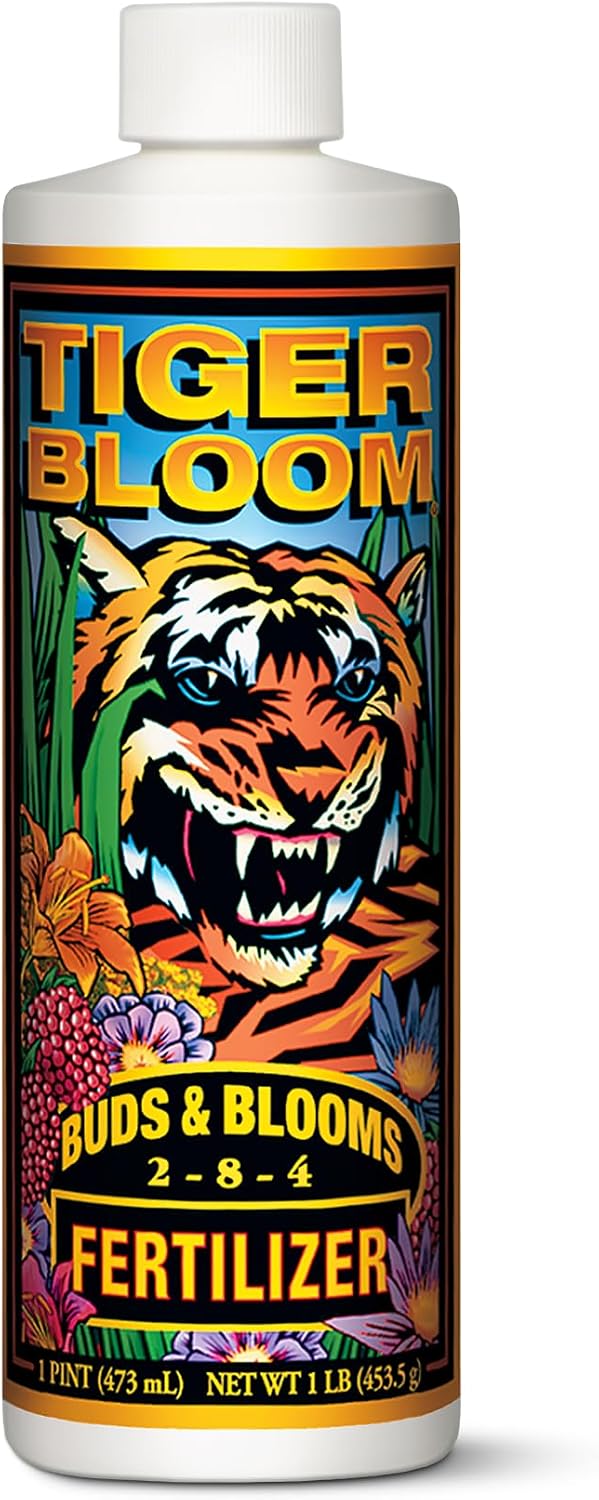
Tiger Bloom is a liquid, high-phosphorus fertilizer designed to push plants into a strong flowering and fruiting phase. You mix a small amount into the irrigation water or use it as a foliar spray and apply from first signs of flowering through harvest. The 2-8-4 formula and included micronutrients support bud set and larger blooms, and the concentrate mixes at 1:200 to 1:300 for routine feeding or 2 to 4 teaspoons per gallon for heavier feeding. It works in both soil and hydroponic setups and is formulated for quick nutrient uptake and stable micronutrient availability during storage. Practical benefits include flexible application methods, suitability for intensive flowering cycles, and a small bottle that lasts when used at recommended dilutions. Important limitations are that it is bloom-focused rather than an all-purpose feed so it may not meet vegetative needs, and the phosphorus content means users near waterways should follow local regulations to avoid runoff issues.
Best for: Serious growers who prioritize maximizing flower and bloom performance and want a concentrated, fast-acting bloom booster for soil or hydroponic environments.
Less Ideal for: Casual gardeners seeking a single all-purpose fertilizer for every growth stage or those managing turf or non-flowering lawns where phosphorus restrictions apply.
- High phosphorus NPK (2-8-4) concentrated for stronger bud development
- Works in soil and hydroponic systems for versatile use
- Liquid concentrate mixes easily for foliar or watering applications
- Formulated for quick nutrient uptake and stable micronutrient availability
- Focused on flowering so it is not a balanced all-stage fertilizer
- Contains phosphorus which may be restricted near waterways
Verdict: Choose Tiger Bloom when you need a concentrated, fast-acting bloom booster to maximize flower and fruit production.
Miracle-Gro Indoor Plant Food for All Plants, Liquid, 8 fl. oz. (2-Pack)

| Item Form | Liquid |
|---|---|
| Application Method | Apply directly to soil or mix with water |
| Target Species | Houseplants |
| Liquid Volume | 8 fluid ounces |
| Mixing Ratio | 4 pumps per 1 quart of water |
Miracle-Gro Indoor Plant Food is a ready-to-use liquid fertilizer for indoor potted plants that you apply either directly to soil or diluted in water. It is typically used every two weeks by mixing the recommended number of pumps into a quart of water or by applying a few pumps for larger pots, making it easy to add to a regular watering routine. The product feeds quickly because nutrients are water-soluble and the pump dispenser gives repeatable doses without measuring spoons. Practical benefits include broad compatibility with most houseplants and a compact bottle size that is convenient for small indoor gardens. Limitations are that the label lists only N, P, K without a full nutrient breakdown, so growers wanting precise NPK ratios or micronutrient profiles may prefer a more detailed formula. Also the 8 fl. oz. bottles are best for hobbyists or small collections rather than large indoor plantings because frequent repurchasing will be necessary for heavy users.
Best for: Buyers who want a simple, low-effort fertilizer to add to a regular watering routine and who prioritize straightforward dosing and broad houseplant compatibility.
Less Ideal for: Specialist growers who need exact NPK ratios, detailed micronutrient information, or bulk quantities for many plants should consider a different product.
- Liquid formula feeds instantly when mixed with water or applied to soil
- Pump dispenser provides simple, repeatable dosing without measuring
- Designed for use with a wide range of indoor plants including herbs, flowers and vegetables
- Full NPK ratio and micronutrient details are not shown on the product summary
- Small 8 fl. oz. bottle size may require frequent replacement for larger collections
Verdict: A convenient, pump-dosed liquid fertilizer that makes fortnightly feeding simple for casual indoor plant owners.
TPS NUTRIENTS Indoor Plant Food Liquid Fertilizer, 8 fl oz

| Item Form | Liquid |
|---|---|
| Specific Uses For Product | Plant Food |
| Application Method | Watering can |
| Mixing Ratio | 2:1 (oz/gallon) or 1:64 (tbsp/gallon) |
TPS NUTRIENTS Indoor Plant Food is a concentrated liquid fertilizer made for regular use with houseplants. You mix the measured dose into water and apply it with your usual watering can; the label gives an easy mixing ratio for household use. Its kelp-enriched formula is pitched at improving leaf color, encouraging steady new growth, and supporting root health, so expect glossier foliage and more frequent leaf production when plants are fed consistently. The 8 fl oz bottle is portable and fits on a plant shelf or utility area, and the liquid form dissolves readily for even application. It is intended for medium coverage and labeled as gentle for weekly feeding, which simplifies care for busy owners. Important limitations are that this is a small bottle meant for regular top-up feedings rather than long-term bulk use, and it assumes you will follow dilution directions to avoid overfeeding. Keep it away from children and pets and avoid skin or eye contact when handling.
Best for: Plant owners who want a simple, low-effort weekly fertilizer to keep indoor foliage vibrant and encourage steady new leaf growth. Good for people who prefer an easy liquid mix applied during regular watering routines.
Less Ideal for: Gardeners needing a bulk or multi-season fertilizer for outdoor beds or large collections should consider larger-capacity or specialized products instead.
- Liquid concentrate mixes easily for even application with a watering can
- Kelp-enriched formula aimed at improving foliage color and encouraging new growth
- Gentle enough for weekly feedings according to product guidance
- Clear mixing instructions for home use
- Small 8 fl oz volume limits how many plants you can feed before repurchasing
- Not formulated or labeled for outdoor or large-scale garden use
Verdict: A convenient kelp-enriched liquid concentrate that makes weekly feeding easy for anyone who wants healthier, more vibrant indoor foliage.
Choosing the Right Liquid Fertilizer for Potted Flowers: Key Factors to Consider
Nutrient Ratio and Bloom Focus
The N-P-K ratio and presence of micronutrients determine whether a liquid feed encourages flowers, foliage, or root growth. For potted flowering plants, a formula with a moderate nitrogen level, higher phosphorus or potassium balance during bloom, and added iron, magnesium, and trace elements will support consistent color and petal production.
Because containers hold limited soil, look for balanced formulations that specify bloom feeding phases or provide guidelines for flowering versus maintenance rates. Overconcentrated feeds can push foliage at the expense of blooms or cause tip burn, so clear bloom-focused labeling helps avoid guesswork.
Dilution Flexibility and Measuring
Potted plants range from tiny tabletop pots to large patio tubs, so a liquid fertilizer should allow easy dilution adjustments. A concentrate with clear, graduated dosing helps you scale from teaspoons for small pots to larger volumes for planters without risking overfeed.
Products that come with measuring caps or marked bottles reduce dosing errors. Also note whether the label provides separate dilution rates for weekly, biweekly, or monthly feeding, and whether it differentiates between young plants and mature bloomers.
Application Method and Convenience
Liquid fertilizers can be applied directly to the potting mix, used as a foliar spray, or added to irrigation systems. For container gardening, ease of application matters because many gardeners water frequently and need a simple routine. A fertilizer that mixes quickly in a watering can or bottle and rinses clean from measuring tools will make regular feeding more reliable.
Consider whether the product requires shaking, settling time, or special sprayers. Convenience also includes how forgiving the product is if you miss a feeding or accidentally double-dose once.
Salt Accumulation and Container Safety
Containers are prone to salt buildup because water drains through a small root zone and leaves mineral residues behind. Choose liquid fertilizers that advise flush schedules and offer lower-salt formulations for regular use. Water-soluble fertilizers with clear guidance on leaching frequency help prevent white crusts on pot rims and root tip damage.
Also consider whether the fertilizer is compatible with commonly used potting media, such as peat-based mixes, coir, or soil-less blends. Some concentrates can change substrate pH or become too concentrated in small pots, so follow label guidance for container safety.
Timing and Feeding Frequency
Feeding frequency influences bloom cycles and plant vigor. Some liquid feeds are designed for weekly use at low concentrations, while others are stronger and intended for biweekly or monthly application. Regular low-dose feeding often keeps nutrients available without spikes that stress roots.
Think about your watering rhythm and seasonality. Heavy bloomers in peak season may need more frequent low-dose feeds, while dormant or slow-growing plants need much less. The label should allow you to alter frequency without changing concentration drastically.
Compatibility With Ornamentals and Safety
Different flowering species have varying tolerances for salts and specific nutrient needs. A good liquid fertilizer will list compatibility with common ornamentals and note any plants to avoid. Safety information should explain pet or child exposure risks and first-aid steps.
Also consider organic versus synthetic formulations depending on your gardening style and whether you prefer a nutrient source that supports soil life and slow-release benefits or a quick-acting synthetic feed for immediate color boosts.
When To Feed Potted Flowers
The right feeding schedule depends on growth stage and season. During active spring and summer growth, most flowering containers benefit from regular low-dose liquid feeds every one to two weeks. Reduce or stop feeding as plants enter dormancy in late fall and winter.
Check new potting mixes carefully because many come pre-charged with starter nutrients. If the media is already fertilized, delay concentrated feeding for several weeks and use diluted maintenance rates until the initial nutrients are used.
- Feed weekly at light strength for heavy bloomers during peak season
- Use maintenance doses or skip feeding for potted plants indoors with low light
- Flush containers occasionally to prevent salt buildup
How To Apply Liquid Feed Safely
Always follow label dilution instructions and measure carefully. Mix the concentrate in a clean watering can and apply evenly to the potting mix, avoiding direct over-spraying of flowers unless the product is rated for foliar feeding.
For foliar applications, choose cooler parts of the day and avoid wetting flowers for long periods to reduce disease risk. After a feeding cycle, water thoroughly on a schedule that flushes accumulated minerals every few months.
- Use lukewarm water to avoid shocking roots
- Avoid feeding immediately after transplanting unless labeled safe for new roots
- Rinse measuring tools after use to prevent residue buildup
Adjusting Feed For Different Pot Sizes
Small pots need much less fertilizer because there is less soil to buffer salts. Reduce the suggested dose for tiny containers or dilute further and feed more frequently at low strength. For larger tubs, follow standard dilution but increase total volume applied so nutrients reach all roots.
Observe plant responses after adjusting dose. Pale leaves may indicate underfeeding or nutrient imbalance, while burned leaf tips point to overfeeding or poor drainage.
- Use half-strength mixes for pots under 4 inches
- Increase watering volume for large planters to move nutrients through the root zone
- Monitor runoff for visible salt crusts or discoloration
Organic Versus Synthetic Liquid Feeds
Organic liquid feeds release nutrients more slowly and support beneficial microbes in the potting mix. They are often gentler on roots but may smell and require more frequent applications to match the nutrient availability of synthetics.
Synthetic liquids act quickly and are useful for immediate bloom boosts or when correcting a specific deficiency. They demand careful dosing to avoid salt stress in containers and often recommend regular leaching to maintain safe salt levels.
- Choose organics for long-term soil health and slow-release benefits
- Choose synthetics for quick correction of deficiencies or fast bloom encouragement
- Combine approaches cautiously and avoid doubling active nutrient doses
Troubleshooting Feeding Problems
If flowers are sparse despite regular feeding, check light, water, and pot size first. Overfeeding can cause lush foliage with poor bloom set. Flush the potting mix and restart with a milder schedule if you suspect buildup.
Yellowing between veins often means a micronutrient shortage, while uniform yellowing can signal overwatering or root issues. Adjust feed composition or frequency based on symptoms rather than increasing dose blindly.
- Flush and repot if severe salt accumulation is visible
- Test pH if nutrient lockout is suspected
- Reduce feeding frequency before reducing concentration when plants show stress
How We Chose the Best Liquid Fertilizer for Potted Flowers
We selected products that specifically suit flowering plants grown in containers and small pots. Primary evaluation criteria included nutrient formulation targeting blooms and foliage, dilution flexibility for different pot sizes, and compatibility with common potting mixes. We also prioritized ease of application, including simple measuring, dilution instructions, and suitability for foliar or soil feeding. Stability and shelf life were considered because concentrated liquids that degrade quickly are less useful to casual gardeners. We looked for options that minimize risk of salt buildup or root burn when used at recommended rates in enclosed root volumes. Environmental and safety notes were another filter: products with clear dosing guidance and minimal hazardous additives scored higher. Excluded from the list were granular or slow-release fertilizers, products intended only for lawns or woody trees, and mixes requiring professional-grade equipment. The final picks balance bloom promotion with container safety and practical everyday handling for home gardeners.
FAQ
How often should I feed potted flowers with liquid fertilizer?
It often depends on the product and plant vigor. Many gardeners feed weekly at low strength during active growth, switch to biweekly in slower periods, and stop during dormancy.
Can I use a houseplant liquid fertilizer on outdoor container flowers?
Often you can, but check the nutrient ratio and dilution recommendations. Outdoor bloomers in bright sun may benefit from a formula with higher bloom-support nutrients or slightly different feeding frequency.
Will liquid fertilizer burn roots in small pots?
It can if overapplied. Small pots require reduced doses and more frequent light feedings. If you see burned tips or crusted rims, flush the container and reduce concentration.
Should I foliar-feed my flowering containers?
Foliar feeding can supply quick micronutrients and correct deficiencies, but it is not a substitute for root feeding. Use foliar sprays in cool parts of the day and avoid wetting open flowers for long periods to lower disease risk.
How do I prevent salt buildup when using liquid fertilizers?
Leach pots periodically by watering thoroughly until some runoff appears, then let them drain. Use lower-concentration feeds for frequent applications and repot with fresh mix every one to two years for long-term containerings.
Are organic liquid fertilizers as effective as synthetic ones for blooms?
Organic liquids are gentler and support soil biology but may act more slowly. Synthetics give a faster nutrient boost. Effectiveness depends on the plant's needs and how consistently you feed.
Final Verdict
For potted flowers, prioritize a liquid fertilizer that balances bloom-focused nutrients with low salt risk and easy dilution. Match feeding frequency to pot size and season, and prefer products with clear dosing instructions and guidance for leaching. Weigh the tradeoff between quick-acting synthetics and gentler organic options based on how urgently you need blooms. With conservative dilution and scheduled flushing, you can confidently boost flowering without harming roots or potting mix performance.
