

Note: This article contains affiliate links. If you click on these links and make a purchase, I may earn a small commission at no extra cost to you. This helps support my research and content. Read my full affiliate disclosure here.
If you need reliable control of unwanted plants across different parts of the yard, a liquid weed killer can deliver fast, targeted results. The right product makes it easier to treat lawn weeds, spot-spray broadleaf invaders in beds, or remove tough growth in cracks and gravel without harming nearby plants when used correctly. This guide shortlists the top liquid weed killer options gardeners choose for varied situations and walks through the practical factors that determine which product fits your garden. We evaluated these picks for real-garden priorities like application control, plant selectivity, and safety measures so you can pick an option that matches your site and skill level.
Top Picks at a Glance
| Best Overall The best all-around choice for most situations | Roundup Dual Action 365 Weed & Grass Killer Plus 12 Month Preventer, 1 gal |  |
| Best Quality Built to a higher standard if you want something more solid | Roundup Weed & Grass Killer with Comfort Wand, 1.33 gal |  |
| Best Value The sweet spot between price and what you get | Spectracide Weed & Grass Killer Concentrate, 64 oz | 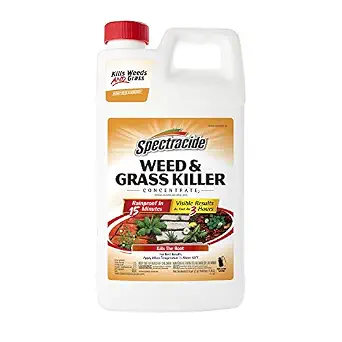 |
| Best Budget The cheapest option that still gets the job done reliably | Spectracide Weed Stop for Lawns Concentrate, 40 fl oz |  |
| Highest Rated A top-rated pick with lots of positive feedback | Roundup Pro Concentrate Herbicide, 2.5 Gallon |  |
| Most Popular A crowd favorite that many people choose with confidence | Spectracide Weed & Grass Killer with AccuShot Power Sprayer, 1.33 gal |  |
| Best Seller A high-volume bestseller chosen again and again | Roundup Weed & Grass Killer4 Refill, 1.25 gal. |  |
Roundup Dual Action 365 Weed & Grass Killer Plus 12 Month Preventer, 1 gal

| Unit Count | 128 Fluid Ounces |
|---|---|
| Item Form | Spray |
| Coverage | 300 square feet |
| Active Ingredients | Triclopyr, Fluazifop-P-butyl, Imazapic, Diquat Dibromide |
This ready-to-use Roundup Dual Action 365 combines fast-acting weed control with up to 12 months of prevention for non-lawn surfaces. It is applied with the Comfort Wand for one-touch continuous spray, making it practical for treating cracks, driveways, patios, gravel, and under decks where you want to both remove existing weeds and stop regrowth. The formula contains multiple active ingredients targeted at broadleaf and grassy weeds including crabgrass and dandelions and becomes rainproof in as little as 30 minutes with visible yellowing within hours. A single gallon treats about 300 square feet, so it is convenient for smaller to medium problem areas without mixing. Important limitations are that you must spray the entire area you want to keep weed-free rather than spot-treat emerging plants and that it is intended for non-lawn surfaces only; care is required to avoid drift onto desirable plants and to observe safety directions for people and pets. For a buyer who wants a straightforward, long-lasting liquid option, it is a strong, low-effort choice.
Best for: Gardeners and homeowners who want a simple, ready-to-use liquid that both removes visible weeds and prevents new growth in hardscape and gravel areas without mixing concentrates.
Less Ideal for: Large lawns or users who need selective spot treatments near desirable plants should look for a turf-safe or more targeted product instead.
- Kills existing broadleaf and grassy weeds and begins showing visible results in hours
- Provides up to 12 months of prevention by creating a soil barrier when applied over the whole area
- Comfort Wand with one-touch continuous spray reduces hand fatigue and simplifies application
- Rainproof in as fast as 30 minutes so treatment holds up quickly after application
- Formulation is for non-lawn areas only and should not be used where desirable plants may be exposed
- One-gallon coverage is about 300 sq ft which may require multiple containers for larger areas
Verdict: Choose this ready-to-use liquid if you want fast weed kill plus up to a year of prevention in non-lawn hardscape and gravel areas with minimal effort.
Roundup Weed & Grass Killer with Comfort Wand, 1.33 gal

| Item Form | Liquid |
|---|---|
| Coverage | 400 sq. ft. |
| Liquid Volume | 1.33 gallons |
This 1.33 gallon Roundup Weed & Grass Killer is a performance-focused, ready-to-use herbicide aimed at removing tough broadleaf weeds and grasses quickly and with minimal fuss. The integrated Comfort Wand offers one-touch continuous spray, making it easier to treat beds, walkways, driveways, and edges without repeatedly refilling a separate sprayer. The formula is fast acting with visible results in hours and becomes rainproof in about 30 minutes, so treatments hold up better if the weather changes. Use is straightforward: spray actively growing weeds on calm days and keep people and pets out until the spray dries. Practical benefits include targeted spot treatment to roots, convenience of the built-in wand, and coverage up to 400 sq. ft. Limitations to consider are standard herbicide precautions around desirable plants and the need to wait before replanting in treated areas according to the label. This product is not selective, so careful application is required when working near lawns or ornamentals.
Best for: Gardeners and homeowners who prioritize fast, reliable weed control and want a convenient ready-to-use product that handles tough weeds without needing a separate sprayer.
Less Ideal for: People who need a selective turf-safe solution or who frequently treat large acreage should consider alternative products or application methods better suited to those needs.
- Ready-to-use 1.33 gal container with integrated Comfort Wand for continuous one-touch spraying
- Fast visible results in hours and becomes rainproof in about 30 minutes
- Effective on a wide range of common weeds and grasses down to the root
- Covers up to 400 sq. ft., suitable for spot treatments and medium areas
- Non-selective formula requires careful application to avoid damaging desirable plants
- Label restrictions on when you can replant treated areas require following directions closely
Verdict: Choose this ready-to-use Roundup when you want fast, no-fuss weed and grass control with a built-in wand for easy spot treatments.
Spectracide Weed & Grass Killer Concentrate, 64 oz

| Unit Count | 64 Fluid Ounces |
|---|---|
| Coverage | 2742 square_feet |
| Item Form | Liquid |
| Active Ingredients | Herbicide |
Spectracide Weed & Grass Killer Concentrate is a tank-sprayer mix designed to kill broadleaf weeds and grasses down to the root on hardscapes and around plantings. You mix the concentrate with water and apply with a sprayer to thoroughly coat foliage; the formula is rainproof in 15 minutes and can show visible dying in as little as three hours. It is intended for spot treatment on driveways, walkways, along foundations and around shrubs where you want to remove unwanted vegetation and prepare areas for planting the next day. Practical features include concentrated dosing that extends coverage per bottle, rapid activity that reduces wait time before replanting, and clear label instructions for application rates and safety precautions. Important limitations are that it is non-selective so accidental drift or overspray will damage desirable plants, and it requires protective gear and careful handling. For large continuous areas a broadcast lawn herbicide or non-chemical option may be more appropriate.
Best for: Buyers who want a dependable, fast-acting spot treatment to clear weeds from hard surfaces or prepare small planting areas and who prefer a concentrate they can control via sprayer.
Less Ideal for: Those wanting a selective lawn-safe product or a non-chemical weed control method, or users who need to treat very large turf areas quickly.
- Concentrated formula stretches coverage when mixed according to label
- Fast-acting with visible results in about three hours and rainproof in 15 minutes
- Kills weeds and grasses down to the root for longer-lasting control
- Suitable for spot treatment around driveways, walkways and foundations
- Non-selective herbicide will damage desirable plants if contacted
- Requires careful mixing, protective equipment and safe handling
Verdict: A concentrated, fast-acting spot herbicide for people who need reliable, quick clearance of weeds and grass on driveways, walkways and around landscape features.
Spectracide Weed Stop for Lawns Concentrate, 40 fl oz

| Unit Count | 40 Fluid Ounces |
|---|---|
| Coverage | 20000 square_feet |
| Item Form | Liquid |
| Item Type Name | Lawn Weed Killer |
Spectracide Weed Stop for Lawns is a concentrated liquid herbicide designed for homeowners who want to control broadleaf weeds across a lawn. You mix the 40 fl oz bottle with water and apply it with a garden sprayer to spot-treat or cover large areas; one bottle treats up to 20,000 square feet. The formula kills over 200 listed weeds, including dandelion, chickweed and clover, working by contact and producing visible results within hours and root kill with follow-through. It is rainproof after six hours and is intended to be safe for lawns when applied according to label directions. Typical use is spring or fall treatments and repeat spot treatments for very tough weeds after a few weeks. Limitations to consider are that you must mix and spray with separate equipment, follow temperature and mowing guidance for best results, and repeat treatments may be necessary for persistent species.
Best for: Homeowners looking for an affordable, high-coverage liquid weed killer to manage common broadleaf weeds across medium to large lawns.
Less Ideal for: People who want a ready-to-use spray or who need a selective grass herbicide for non-broadleaf problems should consider other options.
- Concentrated formula covers up to 20,000 sq ft from one 40 fl oz bottle
- Kills 200+ listed broadleaf weeds including dandelion, chickweed and clover
- Visible results within hours and root control for longer term reduction
- Rainproof after six hours so light rain soon after application is less likely to reduce effectiveness
- Requires a separate garden sprayer and correct mixing for effective application
- May need repeat spot treatments for very stubborn weeds
Verdict: If you want a budget-friendly concentrated liquid that treats large lawns and controls a wide range of common broadleaf weeds, this bottle delivers strong coverage and fast visible results.
Roundup Pro Concentrate Herbicide, 2.5 Gallon

| Unit Count | 300 Fluid Ounces |
|---|---|
| Liquid Volume | 2.5 gallons |
| Coverage | Up to 435,600 sq. ft |
| Item Form | Liquid |
Roundup Pro Concentrate is a professional-strength, water-dilutable herbicide intended for broad weed and brush control over large areas. You mix the concentrate into a stainless steel or plastic sprayer at rates that vary by target species, then apply when weeds are actively growing and temperatures are above 60°F. The product advertises rapid rainfastness, meaning treated foliage can resist light rain in about an hour, and a single 2.5 gallon jug covers a substantial area for property-scale work. Practical benefits include flexible dilution for spot treatments or wide coverage and compatibility with standard sprayers. Important limitations are that it is a nonselective herbicide so it will damage desirable plants if oversprayed, and it must not be used near water or where runoff is likely. Users must follow safety directions to avoid skin and eye contact and keep people and pets away until spray has dried. If you need dependable, high-coverage weed control for large lawns, fence lines, or commercial sites this concentrate is purpose-built for that use.
Best for: Buyers who prioritize reliable, large-area weed control and want a professional-strength concentrate that can be diluted to match the scale of the job.
Less Ideal for: People with small ornamental gardens, container plants, or properties with sensitive waterways should choose a more selective or localized option.
- High coverage from a single 2.5 gallon jug suitable for property-scale treatments
- Concentrate form allows dilution flexibility for spot to wide-area applications
- Rainfast in about one hour so treatments are less likely to be washed off by light rain
- Works with standard stainless steel or plastic sprayers for easy field mixing and application
- Nonselective herbicide that will damage desirable plants if not applied carefully
- Not safe for use near water or in areas prone to runoff, limiting use in some sites
Verdict: Choose this concentrate when you need dependable, professional-strength weed control that scales from spot treatments to large properties.
Spectracide Weed & Grass Killer with AccuShot Power Sprayer, 1.33 gal

| Unit Count | 170 Fluid Ounces |
|---|---|
| Item Form | Spray |
| Coverage | 1 gallon |
| Active Ingredients | Diquat Dibromide (0.12%), Fluazifop-p-butyl (0.06%), Dicamba, Dimethylamine salt (0.04%) |
This Spectracide formula is a ready-to-use liquid herbicide designed for spot-treating unwanted weeds and grasses on driveways, walkways, patios and around plantings. It comes with a battery-powered AccuShot sprayer and extendable wand so you can aim and spray without manual pumping, which makes targeting and reach easier for edges, cracks and hard-to-reach spots. The product uses a nonselective blend that translocates through leaves to the root and claims visible results in as little as three hours and rainfast protection after about 15 minutes. Practical benefits include quick knockdown, the convenience of a continuous spray trigger and the ability to replant treated areas within a day. Important limitations are that it will kill any vegetation it contacts so careful aiming and PPE are required, and the sprayer requires four AA batteries and occasional maintenance to avoid leaks. Also avoid use near water as the formula is toxic to aquatic invertebrates.
Best for: Buyers who want a quick, easy-to-use liquid herbicide with a powered sprayer for targeted spot treatments and fast visible results.
Less Ideal for: People who need a selective turf-safe product or who frequently work near ponds, streams, or water features should consider alternatives.
- AccuShot battery-powered sprayer with extendable wand for accurate, continuous spraying
- Nonselective formula that moves from leaves to root for thorough weed kill
- Fast visible results in about three hours and rainfast protection after 15 minutes
- Ready-to-use 1.33 gallon container covers roughly 300 sq ft per gallon
- Will damage any desirable plants it contacts, so precise application is required
- Sprayer depends on four AA batteries and needs occasional inspection to prevent leaks
- Contains ingredients toxic to aquatic life so cannot be used near water
Verdict: Choose this product if you want a fast-acting, ready-to-use herbicide with a powered wand for accurate spot removal of weeds and grasses.
Roundup Weed & Grass Killer4 Refill, 1.25 gal.

| Unit Count | 160 Fluid Ounces |
|---|---|
| Item Form | Spray |
| Coverage | 375 square feet |
| Active Ingredients | Triclopyr; Fluazifop-P-Butyl; Diquat Dibromide |
This 1.25 gallon Roundup refill is designed to top up the brand's Comfort Wand sprayer so you can treat patches of weeds and grasses across hardscapes, beds, and around trees and shrubs. It contains a mix of active ingredients (triclopyr, fluazifop-p-butyl and diquat) aimed at broadleaf weeds and grasses and promises visible dieback within hours and rainproofing in about 30 minutes. Typical use is to pour the concentrate into an empty compatible sprayer and apply on calm, warm days above about 60°F for best results. Practical benefits include fast symptom visibility, root-killing control of common yard weeds such as dandelions and crabgrass, and the convenience of a refill jug that covers up to the listed area. Important limitations: this is a nonselective herbicide so care is needed to avoid desirable plants and to wait the recommended interval before replanting; it requires a separate sprayer and proper safety precautions when handling and applying. Follow label directions for safe, effective use.
Best for: Buyers who prioritize reliable, fast-acting weed control and want a ready refill for repeat outdoor treatments while following label safety guidance.
Less Ideal for: People who need a selective lawn-only product or who prefer nonchemical weed control methods should consider alternatives.
- Fast visible results in hours and becomes rainproof quickly
- Kills both broadleaf weeds and grasses down to the root
- Large refill volume covers a substantial area so fewer trips to refill
- Designed to refill a compatible sprayer for easier application
- Nonselective formula can damage desirable plants if it drifts or is misapplied
- Requires a separate spray container and careful handling due to concentrated actives
Verdict: Choose this refill if you want a fast, root-killing liquid herbicide that reliably treats broadleaf weeds and grasses and refills a standard sprayer for repeat use.
Choosing the Right Liquid Weed Killer: Key Factors to Consider
Target Weed Spectrum
Knowing which species you need to control changes the product choice. Some liquid herbicides are broad-spectrum, targeting both grasses and broadleaf weeds and working well for driveways, gravel, and large patch applications. Others are selective and formulated to kill only broadleaf species while leaving turf grasses or certain ornamentals untouched. Matching the product to the dominant weed types reduces wasted effort and prevents accidental damage to desirable plants.
If your garden has mixed weed populations, choose a product with a wider control spectrum or plan sequential treatments with selective formulas. For single-species problems like bindweed or crabgrass, a specialized active ingredient often gives faster, cleaner results.
Contact Versus Systemic Action
Contact herbicides destroy the parts of the plant they touch and often work rapidly, making them useful for visible, aboveground weed removal and cleanup in paved areas. They usually require thorough coverage of leaf surfaces and may need repeat treatments for regrowth. Systemic herbicides move inside the plant to reach roots and underground structures, which is essential for perennial weeds with deep roots.
Your choice depends on the weed biology and desired long-term outcome. For annual weeds, contact action can be enough. For perennial problems, favor products with systemic uptake to reduce regrowth and limit repeat spraying.
Application Method and Control
Liquid formulations give you several application options: handheld pump sprayers for spot treatment, hose-end sprayers for larger lawn zones, or professional spray rigs for bigger properties. The type of sprayer and nozzle affects droplet size and drift. Fine droplets increase coverage but also drift risk; coarse droplets reduce drift but may need better coverage technique.
Consider how precise you must be around desirable plants and structures. If you plan many spot treatments in beds or container gardens, products that are compatible with trigger sprayers or precision wands help avoid accidental contact with ornamentals.
Soil Residual and Replanting Intervals
Some liquid herbicides leave active residues in the soil and prevent seeds or newly planted ornamentals from establishing for a period. Residual activity can be an advantage in preventing re-infestation in driveways and mulched beds, but it is a drawback when you plan to reseed lawns or plant sensitive flowers soon after treatment.
Check how long the product persists and plan planting timelines accordingly. Short-residual products allow quicker replanting, while longer residuals are useful when you want extended weed-free windows in non-planting areas.
Safety, Label Instructions, and Environmental Considerations
Careful reading of the label is critical. Labels specify mixing rates, required personal protective equipment, allowed application sites, and reentry intervals. Proper handling reduces personal exposure and lowers risk to pets, wildlife, and pollinators. Consider formulations and additives that reduce drift or include surfactants; these affect both safety and effectiveness.
Also review runoff risk and local rules governing herbicide use. Where pollinator activity is high, target spot treatments and avoid blanket sprays during bloom periods. Safe disposal of leftover concentrate and rinsate is another practical concern for responsible gardeners.
Compatibility With Other Garden Practices
Think about how a liquid weed killer fits into your overall maintenance routine. Integration with mowing schedules, irrigation, mulching, and planting plans affects timing and results. For example, mowing too soon after application can reduce uptake; irrigating immediately after spraying can wash away contact materials or move residues.
Also check whether the product can be tank-mixed with fertilizer or adjuvants you normally use. Tank compatibility simplifies larger jobs, while strict no-mix labels require separate treatment steps and planning.
When to Use Spot Treatments Versus Broadcast Sprays
Spot treatments are the best choice when weeds are isolated or growing near desirable plants. They reduce product use and minimize risk to nearby ornamentals. Use a handheld sprayer with a narrow nozzle or a pump sprayer with a wand for precise delivery.
Broadcast spraying suits large, uniform areas like driveways, gravel beds, or neglected turf that you plan to renovate. For broadcast work, choose a formulation with clear application rates for large-area sprayers and follow label guidance for rate per square meter to avoid overapplication.
- Spot spraying: less chemical use, more precision, repeat as needed.
- Broadcast spraying: faster coverage, higher drift risk, follow label rates.
- Use coarse droplets near sensitive plants and fine droplets for dense leaf coverage.
Best Timing for Effective Control
Apply when weeds are actively growing, typically in spring for many annuals and in late spring to summer for deep-rooted perennials. Young, actively growing weeds absorb systemic herbicides faster and show better control with lower doses.
Avoid treating stressed weeds during drought or extreme heat because uptake can be reduced. Also avoid spraying just before heavy rain, which can wash away contact materials or dilute spray solutions.
- Target active growth periods for systemic products.
- Wait for dry weather with low wind for 24 hours when possible.
- Adjust timing based on weed species and local climate.
Minimizing Drift and Protecting Desirable Plants
Drift is one of the most common causes of accidental damage to non-target plants. Use low-drift nozzles, larger droplets, and lower boom heights where possible. Apply during calm parts of the day, usually early morning or late evening when winds are light.
Create physical barriers like cardboard shields or use a wiper applicator for narrow targets such as garden borders. When treating near vegetables or flowers, consider protective covers or choose products labeled safe for those planting zones.
- Check wind speed and avoid sprays above light breeze conditions.
- Use shields and spot applicators near sensitive plants.
- Follow label direction on buffer zones and setbacks.
Mixing, Storage, and Disposal Best Practices
Mix concentrates only at the recommended rates in a well-ventilated area and use the specified PPE. Always add herbicide to water unless the label instructs otherwise, and avoid overfilling the tank to reduce spills.
Store products in their original containers out of reach of children and pets and away from extreme temperatures. Rinse empty containers according to label instructions and dispose of rinsate safely; triple-rinsing is often recommended to reduce wasted product and environmental contamination.
- Measure carefully and mix in a dedicated container or sprayer.
- Label partially used containers with date and remaining volume.
- Follow local guidelines for hazardous waste disposal when needed.
Integrating Liquid Herbicides Into a Long-Term Weed Plan
Liquid weed killers are one tool among many. Combine chemical control with cultural practices like mulching, improving turf density, and targeted hand-pulling to reduce reliance on repeated sprays. Rotating active ingredients and combining mechanical methods lowers the chance of resistant weed populations developing.
Maintain records of where and when you applied herbicides. This helps track patterns of regrowth and informs whether a change in product type, timing, or non-chemical tactic is needed.
- Use herbicides as targeted interventions, not the sole long-term strategy.
- Keep an application log to guide future choices and avoid overuse.
- Pair treatments with cultural improvements for lasting control.
How We Chose the Best Liquid Weed Killer
We narrowed the shortlist by focusing on attributes that matter to gardeners who apply liquid herbicides themselves. Primary evaluation criteria included spectrum of weed control and speed of action, because fast knockdown and broad coverage matter when you are managing mixed weed populations. We also rated application control and spray options, since precise delivery reduces collateral damage to desirable plants. Persistence in soil and residual activity were evaluated to match products to use cases like driveways versus planting beds. Safety and user instructions were weighed heavily, covering reentry times, mixing clarity, and PPE recommendations. Finally, formulation and tank-compatibility were checked to ensure ease of mixing, tank-mate safety, and fit with common sprayers. We excluded granular-only or ready-to-use non-liquid formats, products lacking clear label directions, and any formulations intended solely for industrial or non-residential applications. The result is a set of liquid weed killers suited to home gardens, lawns, patios, and small-scale landscape tasks.
FAQ
Can I use liquid weed killer around newly planted flowers or vegetables?
It depends on the product and its soil residual. Many systemic and residual formulations advise waiting a defined replanting interval. Choose a short-residual, labeled-safe option or use physical barriers and spot treatments to avoid contact with new plantings.
How long after spraying will I see results?
Contact herbicides often show visible browning within hours to a few days, while systemic products may take several days to a few weeks to kill deep-rooted perennials. Weather, weed species, and product concentration influence visible response.
Will rain wash away a liquid application?
Rain shortly after spraying can reduce effectiveness, especially for contact herbicides. Most labels recommend a dry window after application, often 24 hours, to allow uptake. Check the product label for specific rainfast timing.
Are liquid weed killers safe to use around pets and children?
Safety varies by formulation and label instructions. Many products require that treated areas remain off-limits until dry or after a specified reentry interval. Use PPE during application and follow label directions for drying times and safe reentry to protect household members and pets.
Can I mix liquid weed killers with fertilizer or other sprays?
Only mix products when the label explicitly allows tank mixing. Some herbicides are incompatible with certain fertilizers or adjuvants and may reduce efficacy or increase plant injury. If in doubt, apply products separately and rinse the sprayer between uses.
How do I avoid drift when spraying near sensitive plants?
Use coarse droplets, low-drift nozzles, spray during calm weather, and consider physical shields. Spot-treating with a wand rather than broadcast spraying reduces the chance of off-target movement.
Final Verdict
Choose a liquid weed killer based on the weeds you need to control, the area you are treating, and how quickly you need results. Prioritize the kill spectrum and systemic versus contact action for the species you face, then factor in application control and soil residuals to match planting plans and safety needs. Balanced decisions come from matching product labels to real-world conditions and integrating chemical control with cultural practices. When you pick the right formulation for the situation and follow label directions, you will get reliable control while minimizing risk to desirable plants and the environment.
