

Note: This article contains affiliate links. If you click on these links and make a purchase, I may earn a small commission at no extra cost to you. This helps support my research and content. Read my full affiliate disclosure here.
If joint pain or reduced hand strength makes pruning a chore, the right loppers can restore comfort and control. This guide focuses specifically on loppers for arthritic hands and explains how different designs reduce wrist strain, lower required cutting force, and improve handling in busy garden beds or on steep slopes. We shortlisted seven top options that gardeners with limited grip strength commonly prefer and evaluated each for leverage, handle comfort, blade type, and durability. Read on to understand which features matter most for gentler pruning and how the shortlisted loppers compare on the practical criteria gardeners care about.
Top Picks at a Glance
| Best Overall The best all-around choice for most situations | Jardineer 16.5" Gear-Assist Anvil Lopper |  |
| Best Quality Built to a higher standard if you want something more solid | FELCO F221-80 32" Lightweight Swiss-Made Bypass Loppers |  |
| Best Value The sweet spot between price and what you get | YRTSH Heavy-Duty Extendable Loppers with Compound-Action Blade |  |
| Best Budget The cheapest option that still gets the job done reliably | WORKPRO 15-Inch Bypass Loppers with Gear System |  |
| Highest Rated A top-rated pick with lots of positive feedback | Berry&Bird 28" Bypass Loppers with Compound Action |  |
| Most Popular A crowd favorite that many people choose with confidence | Spear & Jackson Razorsharp Telescopic Ratchet Anvil Loppers (8290RS) |  |
| Best Seller A high-volume bestseller chosen again and again | Fiskars Extendable Bypass Loppers (24.5"–37") — 1.5" Cut Capacity |  |
Jardineer 16.5" Gear-Assist Anvil Lopper

| Blade Material | High Carbon Steel |
|---|---|
| Blade Type | Anvil |
| Hand Orientation | Ambidextrous |
| Cutting width | 1.2 inches |
| Size | 16.5 inches |
The Jardineer 16.5-inch anvil lopper is a lightweight, gear-assisted pruning tool that helps users cut small branches with less effort. It uses a mechanical gear system and a high-carbon manganese steel blade with a non-stick coating to reduce sticking and rust, letting the blade slice through dry wood and dead growth cleanly. The compact frame and ambidextrous rubber handles make it easy to reach tight forks and dense foliage where longer loppers cannot, and the ergonomic, pull-tested grips reduce hand strain during longer sessions. Practical benefits include portability for quick yard tasks and a cutting capacity rated up to 1.2 inches at maximum, with routine maintenance recommended to keep the blade performing well. Important limitations are that it is not intended for heavy-duty or professional tree work and the anvil-style cut can crush green wood rather than give the cleaner bypass cut some users prefer. Users should follow the maintenance guidance to avoid corrosion and prolong blade life.
Best for: Best for gardeners who need an easy-to-hold, low-effort lopper for regular shrub and small-tree maintenance and who prioritize reduced hand strain over heavy cutting power.
Less Ideal for: Not a good choice for professional arborists or anyone who needs to routinely cut large limbs or prefers bypass-style shears for live-wood pruning.
- Gear-assisted mechanism reduces the force needed for cuts
- Lightweight 16.5-inch frame is easy to maneuver and carry
- High-carbon manganese steel blade has a non-stick coating to resist resin and rust
- Ergonomic non-slip rubber handles for a steadier, more comfortable grip
- Compact head accesses tight branch forks and dense foliage
- Maximum cutting capacity is modest at 1.2 inches so not suitable for large limbs
- Anvil blade style can crush live green wood rather than provide the cleanest bypass cut
Verdict: If you want a lightweight, gear-assisted lopper that makes pruning easier for weaker or arthritic hands, this compact 16.5-inch model delivers noticeably lower effort for routine shrub and small-tree work.
FELCO F221-80 32" Lightweight Swiss-Made Bypass Loppers

| Blade Type | Bypass |
|---|---|
| Blade Material | Carbon Steel |
| Handle Material | Aluminum |
| Cutting width | 1.8 inches |
| Hand Orientation | Ambidextrous |
The FELCO F221-80 is a precision two-handed bypass lopper built for clean cuts on small to medium branches while keeping weight low. In use it feels noticeably lighter than traditional long-reach loppers thanks to aluminum I-beam handles, which reduces arm and shoulder strain during extended pruning sessions. The carbon steel beveled blades hold a sharp edge for repeated cuts and the micrometric adjustment mechanism makes blade alignment and replacement straightforward. Ambidextrous grips and a round-point blade profile make it easy to position on branches in orchards, hedges, and general garden maintenance. Because many parts are replaceable and maintainable, the tool is intended to be serviced rather than discarded when worn. Important limitations are that the cutting capacity is modest at under two inches and the tool relies on user strength for bigger cuts since it does not have compound gearing or ratcheting assistance. Users with severe hand weakness may still need an assisted or ratcheting model for the largest stems.
Best for: Gardeners who want a high-quality, lighter long-reach lopper for frequent pruning and clean cuts and who prefer tools that can be maintained and sharpened rather than replaced.
Less Ideal for: People with very limited hand strength or severe arthritis who need ratcheting or powered cutting assistance for thicker branches.
- Lightweight aluminum I-beam handles reduce fatigue during prolonged use
- Sharp carbon steel bypass blades provide clean, precise cuts and good edge retention
- Micrometric adjustment makes blade tension and replacement simple
- Ambidextrous design and replaceable parts extend service life and ease upkeep
- No compound leverage or ratchet mechanism, so larger diameter cuts require more user force
- Cutting capacity is limited to about 1.8 inches, not suited for thick trunks
Verdict: Choose the FELCO F221-80 if you want a durable, lightweight long-reach lopper that delivers precise, maintainable cuts for frequent pruning.
YRTSH Heavy-Duty Extendable Loppers with Compound-Action Blade
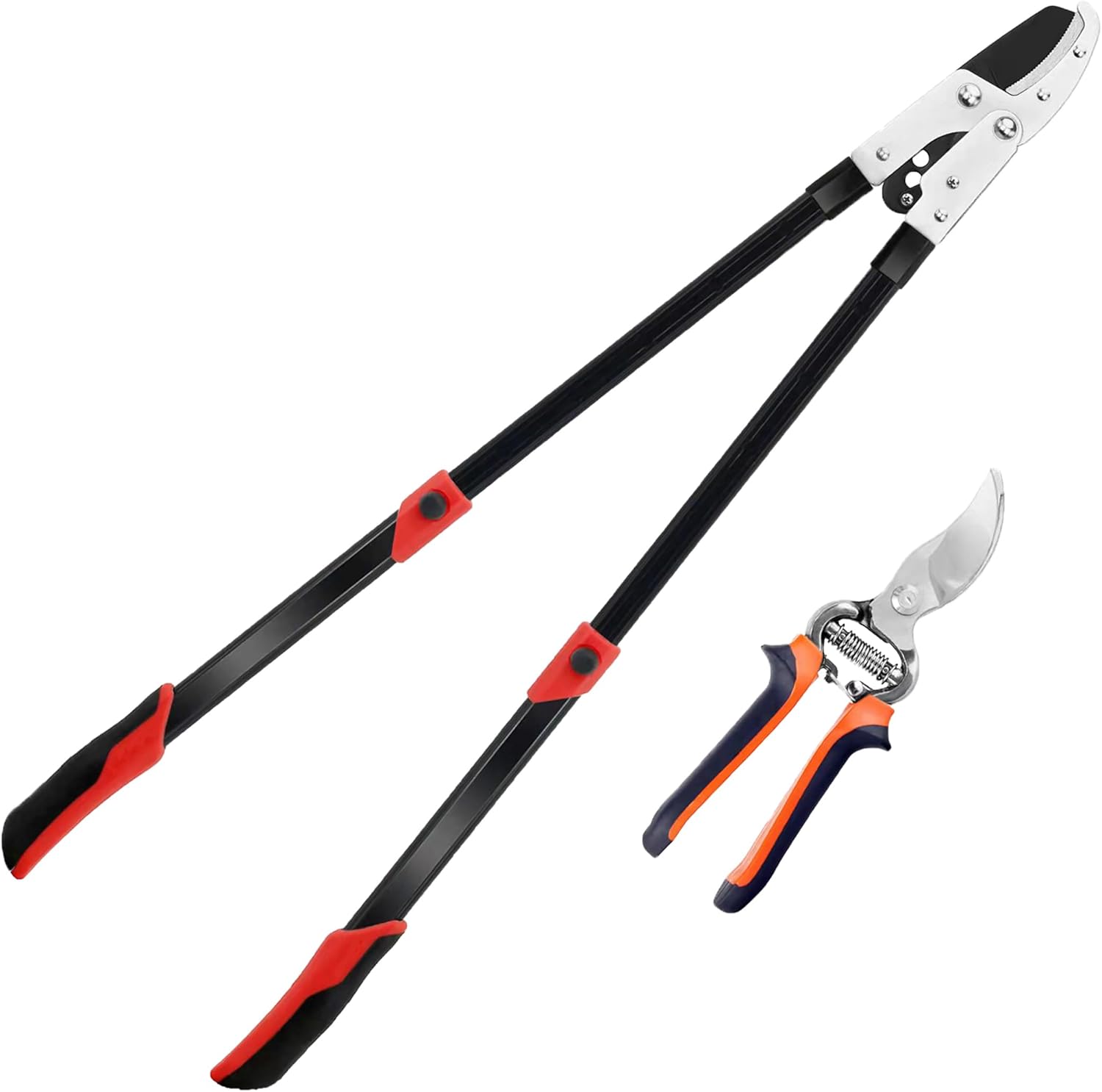
| Cutting width | 2 inches |
|---|---|
| Blade Edge | Compound Action Technology |
| Blade Type | Anvil |
| Blade Material | Alloy Steel |
| Handle Material | Aluminum |
These YRTSH loppers are built for heavy pruning tasks where reach and leverage matter. The tool combines a compound-action anvil blade made from alloy steel with a six-step telescoping aluminum handle so you can extend from about 28 to 41 inches to reach higher branches without a ladder. The compound-action mechanism multiplies hand force, which makes chopping through living and dry wood easier and reduces wrist strain during longer jobs. The blades have a low-friction Teflon-style coating to help preserve sharpness and slide through wood, and the ambidextrous design and soft, non-slip grips make the tool comfortable to use for extended sessions. Because it is an anvil-style cutter, it performs best on dead or hard wood and tougher branches; very fine, precision green pruning may feel less clean than bypass shears. The telescoping handle adds convenience but increases weight and can feel slightly less rigid at full extension. For homeowners or pros needing reach and power for medium-thick branches, these loppers are a practical, workhorse option.
Best for: Gardeners and homeowners who want a single, robust lopper for reaching and cutting medium-thick branches without using a ladder and who prioritize cutting power and convenience.
Less Ideal for: People who need very precise pruning on delicate living growth or those who prefer the lightest possible tool for frequent detailed trimming work.
- Compound-action mechanism increases cutting power and reduces effort
- Extendable 28–41 inch handle provides added reach for higher branches
- Alloy steel blade with low-friction coating helps maintain sharpness
- Soft, non-slip grips and ambidextrous design improve comfort and control
- Anvil blade style can crush live stems and gives less precise cuts than bypass loppers
- Telescoping handle can feel slightly less rigid when fully extended
Verdict: Choose these loppers when you need reach and extra cutting power for heavy-duty pruning of medium-thick branches.
WORKPRO 15-Inch Bypass Loppers with Gear System
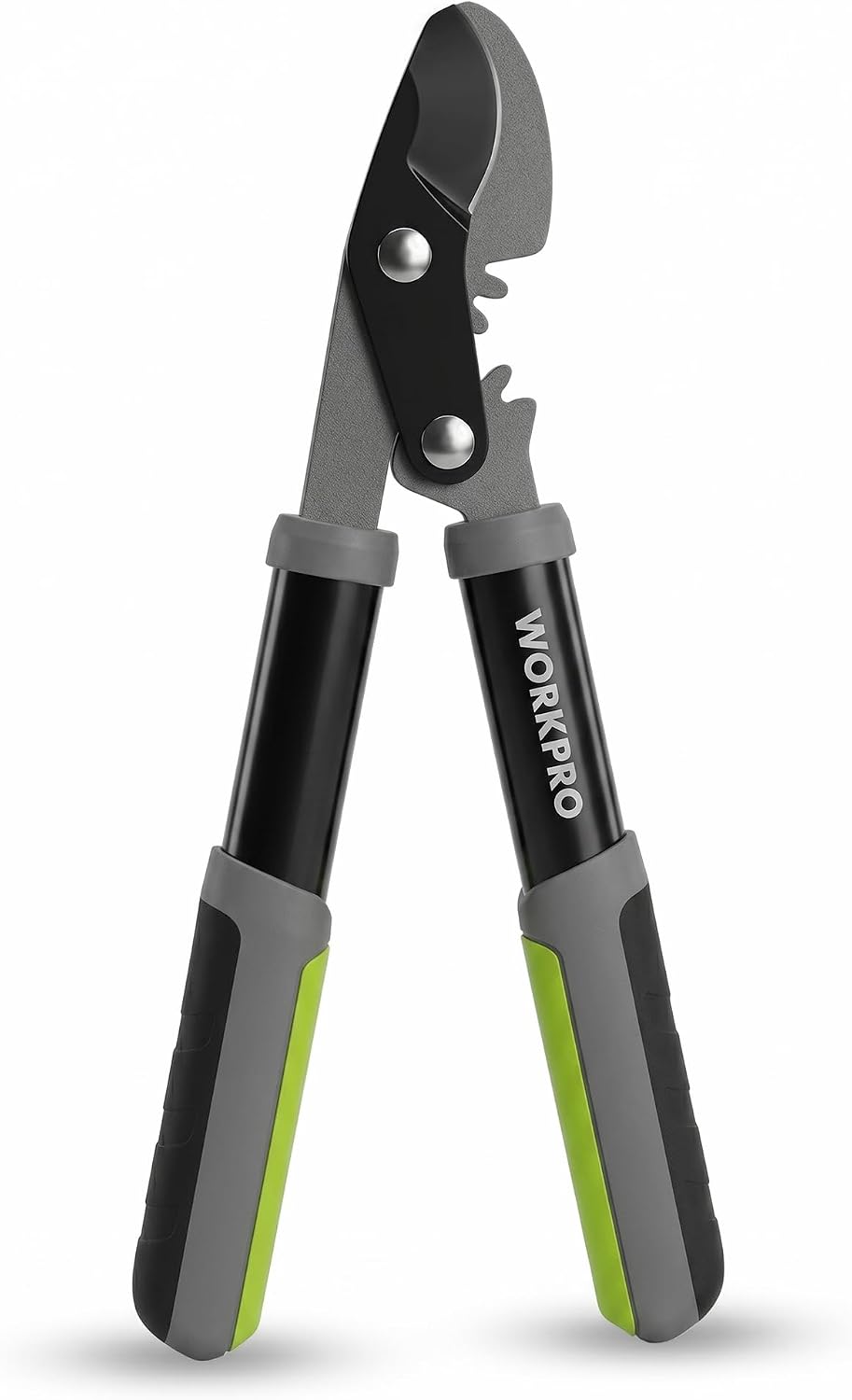
| Blade Material | 65MN, SK5 |
|---|---|
| Handle Material | PP+TPR |
| Blade Type | Bypass |
| Cutting width | 1 inches |
The WORKPRO 15-inch bypass loppers are a budget-friendly tool for routine pruning of shrubs and small trees. The SK-5 main blade with a low-friction coating makes clean cuts on live wood up to 1 inch thick while resisting rust and gumming. What sets this model apart for users with limited hand strength is the gear-assisted cutting mechanism, which multiplies hand force so you need less grip pressure to slice through thicker branches. The fixed 15-inch length keeps the tool compact and easy to maneuver around tight plantings and raised beds. Soft, non-slip PP+TPR handles add comfort during longer sessions but the fixed-length design means you cannot extend reach for higher limbs. The lopper is lightweight and straightforward to maintain, but heavier-duty or very large-diameter pruning tasks will exceed its capacity. For general garden maintenance and frequent light-to-medium pruning, this delivers solid performance at an affordable price.
Best for: Gardeners who want an affordable, easy-to-use lopper that reduces hand strain during regular pruning and prefers a compact tool for close-up trimming.
Less Ideal for: People who need to cut very large or hard old wood frequently or who require extended reach for high branches should consider more heavy-duty or telescoping models.
- Gear mechanism multiplies hand force to reduce grip effort
- SK-5 steel blade with low-friction coating for cleaner cuts and improved rust resistance
- Soft, non-slip PP+TPR handles for more comfortable gripping
- Compact 15-inch fixed length makes the tool easy to maneuver and store
- 1-inch cutting capacity limits use on larger or older branches
- Fixed-length design does not provide extended reach for higher pruning tasks
Verdict: If you need an inexpensive lopper that reduces grip effort for routine light-to-medium pruning, this geared 15-inch model is a practical choice.
Berry&Bird 28" Bypass Loppers with Compound Action

| Blade Material | High Carbon Steel |
|---|---|
| Handle Material | Ash Hardwood |
| Cutting width | 1.75 inches |
| Product Style | Bypass |
| Hand Orientation | Ambidextrous |
These Berry&Bird 28" bypass loppers are built for heavy garden use and make cutting small tree limbs and thick shrubs easier thanks to a compound action that multiplies hand force. In practice the double-gear mechanism and bearing-mounted pivot reduce effort per cut, so fewer squeezes are needed to slice through branches up to 1.75". The SK5/high carbon steel blades are Teflon-coated to resist gumming and hold an edge longer, which helps when pruning sap-bearing wood. Ash hardwood handles feel sturdy and offer a natural grip, and the ambidextrous design works for either hand. Important limitations are the fixed-length wooden handles, which lack shock-absorbing grips or telescoping reach, and the tool is heavier than light-duty bypass shears so it may still fatigue very weak hands over long sessions. Blade maintenance is required to keep cuts clean and prevent rust. For gardeners who need reliable mechanical advantage and a durable cutting head, these loppers deliver consistent performance.
Best for: Buyers who prioritize a durable, mechanically efficient lopper that minimizes squeezing effort and delivers reliable, repeatable cuts during regular pruning sessions.
Less Ideal for: People who need ultra-lightweight, cushioned-grip tools or adjustable-length handles for minimal wrist strain and extended reach should look elsewhere.
- Compound action with double-gear mechanism reduces hand force needed per cut
- Teflon-coated SK5/high carbon steel blades resist gumming and stay sharp longer
- Ambidextrous design and ergonomic ash hardwood handles provide a secure, natural grip
- 1.75 inch cut capacity handles most small tree limbs and thick shrubs
- Handles are fixed-length ash wood without padded or shock-absorbing grips
- Heavier than light pruning tools which can still tire very weak or severely arthritic hands
- No telescoping shafts for extended reach
Verdict: If you need a robust lopper that uses compound gearing to make cutting thicker branches noticeably easier, this Berry&Bird 28" bypass lopper is a reliable choice.
Spear & Jackson Razorsharp Telescopic Ratchet Anvil Loppers (8290RS)

| Cutting width | 2 inches |
|---|---|
| Blade Material | Carbon Steel (SK5) with PTFE coating |
| Handle Material | Aluminium, Steel |
| Product Style | Ratchet Anvil |
These Spear & Jackson Razorsharp ratchet anvil loppers are built for tackling thicker, harder branches with less effort. The ratchet mechanism advances the SK5 carbon steel cutting blade in short steps so you can finish a 2-inch cut using controlled squeezes rather than brute force, which is handy on dense or dead wood. The cutting blade is PTFE coated to reduce friction and resist rust while the anvil is serrated to stop branches twisting during the cut. Tubular aluminium handles keep the tool relatively light and the twist-and-lock telescopic system extends reach when needed and retracts for storage. Soft non-slip grips improve comfort during longer sessions and a locking catch secures the blades for safe transport. Expect this to be a reliable tool for occasional to regular garden pruning, especially where leverage and reach matter. Limitations are that anvil loppers can crush green stems rather than produce the cleanest pruning wound on live, sap-rich wood and the telescopic locking can require occasional tightening to stay rigid under heavy loads.
Best for: Buyers who prioritize reliable, low-effort cutting for thicker branches and want a proven tool with visible user approval and a manufacturer guarantee.
Less Ideal for: Those seeking the cleanest cuts for delicate live pruning or professional arborists who require bypass-style precision and maximum durability under continuous heavy use.
- Ratchet action reduces hand effort for cutting branches up to 2 inches in diameter
- SK5 carbon steel blade with PTFE coating for lasting sharpness and corrosion resistance
- Telescopic tubular aluminium handles provide additional reach while keeping weight down
- Soft non-slip grips and a locking catch improve comfort and safe storage
- Anvil cutting style can bruise live green wood and produce less clean cuts than bypass blades
- Telescopic twist-and-lock may need periodic tightening to remain stable under heavy pressure
Verdict: A dependable ratchet anvil lopper that makes cutting thick branches easier and extends your reach without adding much weight.
Fiskars Extendable Bypass Loppers (24.5"–37") — 1.5" Cut Capacity

| Cutting width | 1.5 inches |
|---|---|
| Handle length | 24.5" to 37" (extendable) |
| Blade material | Alloy Steel |
| Hand orientation | Ambidextrous |
These Fiskars extendable bypass loppers are built to reach and cut small tree branches while reducing effort and hand strain. The handles telescope from about 24.5 to 37 inches so you can add leverage for higher or thicker cuts without climbing. The fully hardened alloy steel bypass blades have a low‑friction coating to slice cleanly through up to 1.5 inch branches and resist gumming and rust. SoftGrip touchpoints and built‑in bumpers soften the impact on your hands when closing the blades, which helps reduce shock on sensitive joints. The single‑pivot design is simple and durable, but it does mean you rely on physical leverage rather than a ratchet or compound gearing, so very thick or fibrous wood near the 1.5 inch limit may require extra force. For gardeners who prioritize a reliable, well‑made tool that eases reach and comfort, these loppers deliver consistent, long‑lasting performance; users needing extreme mechanical advantage or cuts much thicker than 1.5 inches should consider models with compound action or a higher cut capacity.
Best for: Someone who wants a dependable, comfortable lopper that reduces reaching and softens impact on the hands while doing routine pruning and tree maintenance.
Less Ideal for: People who need maximum cutting power for very thick hardwoods or gardeners who require a compound‑action lopper to minimize hand strength for each cut.
- Extendable handles provide extra reach and leverage for cutting higher or awkward branches
- Hardened alloy steel bypass blades with low‑friction coating for cleaner cuts and rust resistance
- SoftGrip handles and bumpers reduce hand shock and improve comfort for extended use
- Single‑pivot design lacks compound gearing so heavier cuts near 1.5" require more user force
Verdict: A dependable, comfortable extendable bypass lopper that eases reach and reduces hand shock for everyday pruning.
Choosing the Right Loppers for Arthritic Hands: Key Factors to Consider
Leverage and Cutting Mechanism
A lopper's mechanical advantage determines how much force you must apply at the handles to slice through a branch. Compound or geared mechanisms multiply hand input so you can cut thicker stems with much less grip strength. For arthritic hands, look for clear leverage designs that allow a firm, steady squeeze rather than a high-force pinch.
In practice, leverage affects how many cuts you can make in a session before fatigue sets in. A tool that reduces peak hand force also reduces jolts and sudden pressure spikes that commonly cause pain in inflamed joints. Make sure the lever action is smooth and does not require excessive wrist twisting to engage.
Grip Shape, Diameter, and Padding
Handle shape is critical when finger joints are sensitive. Thicker, ergonomically contoured grips spread pressure across a larger surface so you do not have to curl your fingers as tightly. Soft but resilient padding or rubberized covers cushion contact points and reduce vibration transmitted into the hand.
Consider the grip diameter relative to your hand size. Very thin handles can force a tight pinch, while overly large grips may be hard to close. Look for grips with textured surfaces that help maintain control without demanding extra squeezing force. Non-slip materials also improve safety when working in wet conditions.
Blade Type and Cutting Action
Bypass blades cut like scissors and provide clean cuts that heal faster on living wood, which is useful when pruning shrubs and small trees. Anvil blades crush through material and can require less precise alignment but may need more downward force with some designs. For arthritic gardeners, sharp blades that slice cleanly reduce the number of heavy squeezes and sawing motions.
Blade angle and the presence of sap-clearing features influence how smoothly a cut completes. A well-ground blade with a reliable cutting bevel and a mechanism that resists binding makes each cut less of a strain.
Handle Length and Reach
Longer handles increase leverage and allow two-handed operation, which can be helpful when single-handed strength is limited. Extended reach also prevents excessive bending or stretching, protecting the back and shoulders while allowing you to use body weight to assist cuts.
However, excessively long or ungainly handles can feel awkward and increase swing weight. Find the balance between enough reach to access branches and a length that remains controllable for steady, deliberate cuts.
Weight, Balance, and Overall Ease of Use
A lightweight lopper reduces arm fatigue, but extreme lightness sometimes sacrifices durability or balance. Balanced tools that center mass near the handles are easier to control, which matters when precise cuts are required and hand stability is limited.
Consider how the tool feels when opening and closing as well as when holding it at full extension. Smooth pivoting action with minimal play reduces the need for brute force corrections and keeps repetitive motions gentle on joints.
Maintenance and Sharpening Needs
Sharp, well-maintained blades are easier on hands because each cut completes quickly. Some blade steels hold an edge longer and require less frequent sharpening; others are easier to sharpen at home. Ease of disassembly for cleaning and lubrication is also important since sticky sap or debris increases cutting resistance.
For gardeners with limited manual dexterity, choose tools with straightforward maintenance routines and accessible pivot bolts that can be serviced with common hand tools. Reduced maintenance complexity means the tool will stay easier to use over its lifetime.
How Low-Force Designs Change Pruning Sessions
Low-force loppers alter how you approach routine pruning. Instead of relying on raw hand strength, you use leverage and body positioning. That means you can tackle more branches without stopping frequently to rest aching joints.
Adopting low-force tools also shifts the goal from quick, forceful cuts to steady, controlled pruning. That change in technique reduces sudden stresses on inflamed joints and lowers the chance of accidental slips when finishing a stubborn cut.
- Use two hands or your body weight to engage long-handle leverage
- Position the tool so the blade does most of the work, not your fingers
- Take frequent short breaks and rotate grip positions to avoid repetitive strain
One-Handed Use and Adaptive Techniques
Many gardeners with arthritis still need to prune using one hand at times. Tools that allow comfortable one-handed operation-through low closing force and good balance-make that possible. You may also adopt adaptive techniques such as bracing the handle against your forearm or using a hook to hold a branch steady.
Simple accessories like padded gloves that increase grip area or a wrist strap can help transfer load away from painful joints. Test a tool for one-handed control before committing to long sessions.
- Practice slow, deliberate cuts to maintain control
- Use gloves with thin padding to increase grip without losing tactile feedback
Pruning Different Plant Types with Sensitive Hands
Woody shrubs, rose canes, and small saplings each demand slightly different approaches. For flexible stems and green growth, sharp bypass blades and a smooth cutting action are most efficient. For deadwood and brittle branches, a strong, steady closing action avoids repeated sawing and reduces hand strain.
Match blade choice and cutting capacity to the plants you handle most often. In mixed beds, favor tools that handle the widest range of stems with the least effort so you do not need to swap tools mid-session.
- Use bypass-style action for live wood to promote healthy healing
- Reserve anvil-style cuts for very hard, dry branches if they require less force in your preferred tool
Storage and Care to Keep Loppers Easy to Use
Storing loppers properly keeps pivot joints turning freely and reduces the grip force needed. Clean blades after use to prevent sap buildup, lightly oil the pivot, and store in a dry place. These small habits maintain smooth action and keep each cut lower in effort.
Regularly inspect cushioning on grips and replace worn covers if possible. Damaged grips can increase pressure points and negate the ergonomic benefits of a low-force design.
- Wipe blades with a damp cloth, dry thoroughly, and apply a light oil
- Check pivot bolts for tightness and serviceability to maintain smooth leverage
Complementary Tools and Assistive Gear
Pair loppers for arthritic hands with complementary gear to reduce overall strain. A telescoping pruner or saw can help with higher branches so you avoid awkward reaches. A pruning saw with a comfortable handle can take over for branches beyond the lopper's capacity.
Consider supportive gloves, wrist braces, and knee pads to stabilize body posture while pruning. These small supports can dramatically reduce compensatory strain elsewhere in the body.
- Use extension tools to avoid overreaching and awkward grips
- Select gloves that add cushioning but retain dexterity for blade engagement
How We Chose the Best Loppers for Arthritic Hands
We prioritized tools that demonstrably reduce the physical effort needed to cut woody stems and branches. Our selection filters looked for loppers with high mechanical advantage or compound leverage, long enough handles to allow two-handed operation when needed, and handle geometry that supports neutral wrist positioning. Grip design was another key filter: we favored models with thick, contoured, or cushioned grips that distribute pressure and minimize pinch points. Blade construction and sharpness retention were considered because a sharper blade reduces repeated sawing motions that aggravate joints. We also evaluated overall weight and balance so a lighter, well-balanced tool does not require additional compensating effort. We excluded very short-handled bypass loppers intended for precision only, as well as heavy professional-grade anvil tools that trade ease of use for extreme durability. Tools with unclear leverage mechanisms or poor access for one- or two-handed operation were removed from consideration. The criteria we applied translate directly into the scoring metrics used across the shortlist: leverage and cutting effort, grip comfort, blade effectiveness, handle length and reach, and overall weight and balance.
FAQ
Are bypass or anvil loppers better for arthritic hands?
It depends on your typical cutting tasks. Bypass loppers give cleaner cuts on living wood and often require fewer sawing motions, which is gentler on joints. Anvil loppers can be easier for very dry or dead branches in some designs, but blade alignment and closing force matter more than type alone.
How long should the handles be for easier cutting?
Longer handles increase leverage and reduce required hand force, but they should still feel controllable. Handles that let you use both hands or apply body weight without awkward balance are preferable. Aim for a length that improves mechanical advantage while remaining manageable when extended.
Can I modify existing loppers to make them easier on my hands?
Minor adjustments can help, such as adding padded grip covers, lubricating the pivot, or replacing worn bushings. Upgrading to thicker, ergonomically shaped grips can reduce pinch forces. Major structural changes that alter leverage are less practical and may reduce tool safety.
How often should I sharpen or service loppers used in a garden?
Sharpening frequency depends on use, but a quick edge touch-up after a few heavy sessions keeps cuts smooth and reduces effort. Clean and lubricate the pivot regularly and inspect for sap buildup. Consistent maintenance keeps cutting force low and preserves grip comfort.
Is lighter always better for someone with arthritis?
Not always. Lighter tools reduce arm fatigue, but a very light lopper that lacks balance or leverage can demand more hand force. Look for a balance between light weight and effective mechanical advantage so each cut requires minimal effort.
What glove features help when using loppers with sore hands?
Gloves with thin padding, a snug fit, and textured palms improve grip without making hands work harder. Too much bulk reduces dexterity and can increase the force needed to close handles. Breathable materials also prevent slipping from sweat.
Final Verdict
Focus on tools that reduce required hand force through smart leverage and supportive grips. Prioritize easy-to-squeeze handles, sharp blades, and a comfortable handle length that lets you use two hands or body weight when necessary. Balance weight against leverage so the tool feels stable rather than twitchy. By concentrating on leverage, grip comfort, and maintenance, you can choose loppers that make pruning less painful and more productive. Aim for the combination of features that matches your typical plants and physical needs to prune confidently and with less strain.
