

Note: This article contains affiliate links. If you click on these links and make a purchase, I may earn a small commission at no extra cost to you. This helps support my research and content. Read my full affiliate disclosure here.
Choosing the right manure for fertilizer makes a big difference in how your soil holds water, feeds plants, and supports beneficial life. Whether you are building new beds, top-dressing established perennials, or amending containers, the manure you use affects nutrient release rate, salt levels, and odor. This guide walks through the top shortlisted manures for fertilizer and explains the practical tradeoffs you will face in the garden. We evaluated each option for nutrient balance, ease of application, and how it behaves in typical garden situations to help you pick the best fit.
Top Picks at a Glance
| Best Overall The best all-around choice for most situations | BRUT Worm Farms Cow Compost — 10 Quart Bag |  |
| Best Quality Built to a higher standard if you want something more solid | Charlie's Compost Concentrated Organic Plant Fertilizer (10 lb) |  |
| Best Value The sweet spot between price and what you get | Back to the Roots Organic Worm Castings, 5 lb |  |
| Best Budget The cheapest option that still gets the job done reliably | Hoffman Dehydrated Super Manure Pellets 4-2-3, 5 lb |  |
| Highest Rated A top-rated pick with lots of positive feedback | Brut Worm Farms Organic Worm Castings, 30 lb |  |
| Most Popular A crowd favorite that many people choose with confidence | Wiggle Worm Worm Castings Plus Worm Egg Material, 40 lb |  |
| Best Seller A high-volume bestseller chosen again and again | Espoma Organic Chicken Manure Granules, 3.75 lb |  |
BRUT Worm Farms Cow Compost — 10 Quart Bag

| Unit Count | 192 Ounce |
|---|---|
| Volume | 10 quarts |
| Brand Name | BRUT WORM FARMS |
| UPC | 860000284295 |
Brut Cow Compost is a ready‑to‑use bagged cow manure compost aimed at improving soil fertility and structure. It is made from 100% composted cow manure that has been finely sifted, which makes it easy to mix into potting mixes, top‑dress containers, or incorporate into garden beds. Notable features include an OMRI listing for organic use, a nutrient profile with nitrogen, calcium and iron, and a low‑odor, non‑burning formula that is safe around seedlings and houseplants. In practice the compost increases microbial activity and helps retain moisture, so plants show healthier foliage and better growth when used regularly. The 10 quart bag is convenient for small gardens, potted plants, or spot treatments without handling bulk loads. Limitations are the modest volume per bag for larger beds and the product is a general amendment rather than a complete, balanced fertilizer, so heavier feeding or specific NPK management may still be needed for high‑demand crops.
Best for: Gardeners who want an easy, certified organic soil amendment to boost soil life and moisture retention in containers, small beds, or targeted spots without handling raw manure.
Less Ideal for: People establishing large garden plots or those seeking a complete NPK fertilizer for heavy feeding crops should consider bulk compost or supplemental fertilizers instead.
- OMRI‑listed organic compost safe for edible and ornamental plants
- Finely sifted, low‑odor formula suitable for indoor use and seedlings
- Adds organic matter and beneficial microbes to improve moisture retention and soil structure
- Versatile application as top dressing, mix‑in amendment, or container soil enhancer
- Small 10 quart volume requires multiple bags for larger garden projects
- Not formulated as a balanced complete fertilizer for high‑demand crops
Verdict: A compact, OMRI‑listed bag of finely composted cow manure that reliably adds organic matter and microbial life to containers and small garden beds.
Charlie's Compost Concentrated Organic Plant Fertilizer (10 lb)

| Net weight | 10 pounds |
|---|---|
| Manufacturer | Charlie's Compost |
| Ingredients | Vegetarian chicken manure, biochar, organic grasses, crop residue |
| Certification | OMRI listed organic |
Charlie’s Compost is a concentrated, OMRI-listed organic compost intended to boost soil biology and nutrient content for vegetables, ornamentals and container plants. You apply it by working small amounts into garden soil or mixing with potting media to add organic matter, microorganisms and slow-release nutrients rather than relying on synthetic fertilizers. Notable features include a vegetarian, antibiotic-free chicken manure base, added biochar and crop-residue organics, and organic certification that makes it suitable for organic vegetable production. In practice a little goes a long way, so it is useful for improving tired beds, prepping new vegetable rows, or topdressing containers; the concentrated nature reduces the volume you need to handle compared with loose compost. Limitations are that this is a bagged, concentrated product so it will not replace large volumes of finished compost for major soil building and may require additional application or mixing for even distribution in large beds.
Best for: Gardeners who prioritize organic, low-risk inputs and want a ready-to-use concentrated amendment to improve vegetable beds or containers without synthetic chemicals.
Less Ideal for: Those needing large quantities of finished compost to rebuild soil structure across many beds or landscapers who prefer bulk, loose compost for large-scale projects.
- OMRI-listed organic formulation safe for certified organic vegetable production
- Concentrated formula delivers nutrients and microbes with smaller application volumes
- Contains biochar and diverse organic inputs to improve soil structure and biology
- Suitable for both in-ground beds and containers when mixed appropriately
- Not a bulk finished compost so larger soil-building projects will still need more volume
- Bagged form requires mixing or spreading to avoid uneven application
Verdict: Choose this concentrated, OMRI-listed compost when you want an organic, low-volume soil amendment to boost biology and nutrients in veggie beds and containers.
Back to the Roots Organic Worm Castings, 5 lb

| Item Form | Granules |
|---|---|
| Specific Uses For Product | Plant Growth, Root Development, Seed Development, Soil Conditioning |
| Target Species | all plants |
| Included Components | Resealable Bag |
| Ingredients | Vermicompost |
These worm castings are a straightforward organic soil amendment you sprinkle into flower beds, potting mixes, or around established plants to boost soil life and root development. The product is pure vermicompost in granules, so it adds beneficial microbes and organic matter without burning seedlings or producing strong odors. Use it as a top dressing, mix a light amount into planting holes, or blend with potting soil for container-grown flowers; directions are simply to sprinkle and water. The resealable bag keeps the granules dry between uses and the ingredient list is just vermicompost, which makes this an easy, low-maintenance way to improve soil structure and long-term fertility. Limitations are that it is not a complete fertilizer with measurable NPK values, so for rapid nutrient correction or specific feed schedules you will still need a balanced fertilizer. Also the five pound bag covers modest area, so larger beds will require multiple bags or bulk sourcing.
Best for: Gardeners who want a low-effort, organic way to improve soil biology and structure in flower beds or containers without strong smells or risk of burning plants.
Less Ideal for: People needing a precise, high-nitrogen feed or immediate nutrient correction for large-scale beds should consider formulated fertilizers or bulk amendments instead.
- Pure vermicompost adds beneficial microbes and improves soil structure
- Odor-free, non-burning formula safe for seedlings and established plants
- Versatile use as top dressing, soil mix amendment, or in containers
- Resealable bag preserves product between uses
- Does not list NPK or act as a standalone, fast-acting fertilizer
- Five pound bag provides limited coverage for larger flower beds
Verdict: A simple, odor-free organic amendment that boosts soil life and is ideal for gardeners wanting an easy way to improve flower bed and container soil health.
Hoffman Dehydrated Super Manure Pellets 4-2-3, 5 lb

| Item Form | Pelletized |
|---|---|
| Specific Uses For Product | gardening, lawn care |
| Application Method | Sprinkle |
| Target Species | Flowers, Vegetables, Lawn Grass |
| Mixing Ratio | 4-2-3 |
Hoffman Dehydrated Super Manure is a pelletized poultry manure formulated for easy application around garden plants, including tomatoes. You sprinkle the pellets into beds or incorporate them into the topsoil where they slowly release nutrients and help build humus and soil structure. The 4-2-3 N-P-K makes it a moderate feeding source that supports leafy growth and fruiting without the intensity of high-nitrogen fertilizers, and the pellet form reduces odor and handling mess compared with raw manures. The product also promotes earthworm activity and improves water retention over time. Limitations to note are the relatively small 5 pound unit for larger gardens and the moderate nutrient levels, which may require reapplication or supplementation for heavy-feeding tomato varieties. As with any manure product, follow application guidance and allow time for integration into the soil before transplanting seedlings to avoid salt or ammonia stress.
Best for: Home gardeners who prefer a low-mess, gentle organic soil amendment for tomatoes and want to improve soil structure gradually without aggressive feeding.
Less Ideal for: Commercial growers or gardeners with large beds who need concentrated, fast-acting fertilizer or high rates in a single application.
- Pelletized form for easy, low-mess application
- Moderate 4-2-3 N-P-K suitable for steady vegetable growth
- Improves soil texture and encourages earthworm activity
- Gentler feeding profile that reduces risk of burning plants if used as directed
- Small 5 pound package may be insufficient for larger tomato beds
- Nutrient analysis is moderate so heavier-feeding varieties may need additional fertilization
Verdict: A convenient pelletized poultry manure that gently builds soil and feeds tomatoes without the mess or burn risk of raw manures.
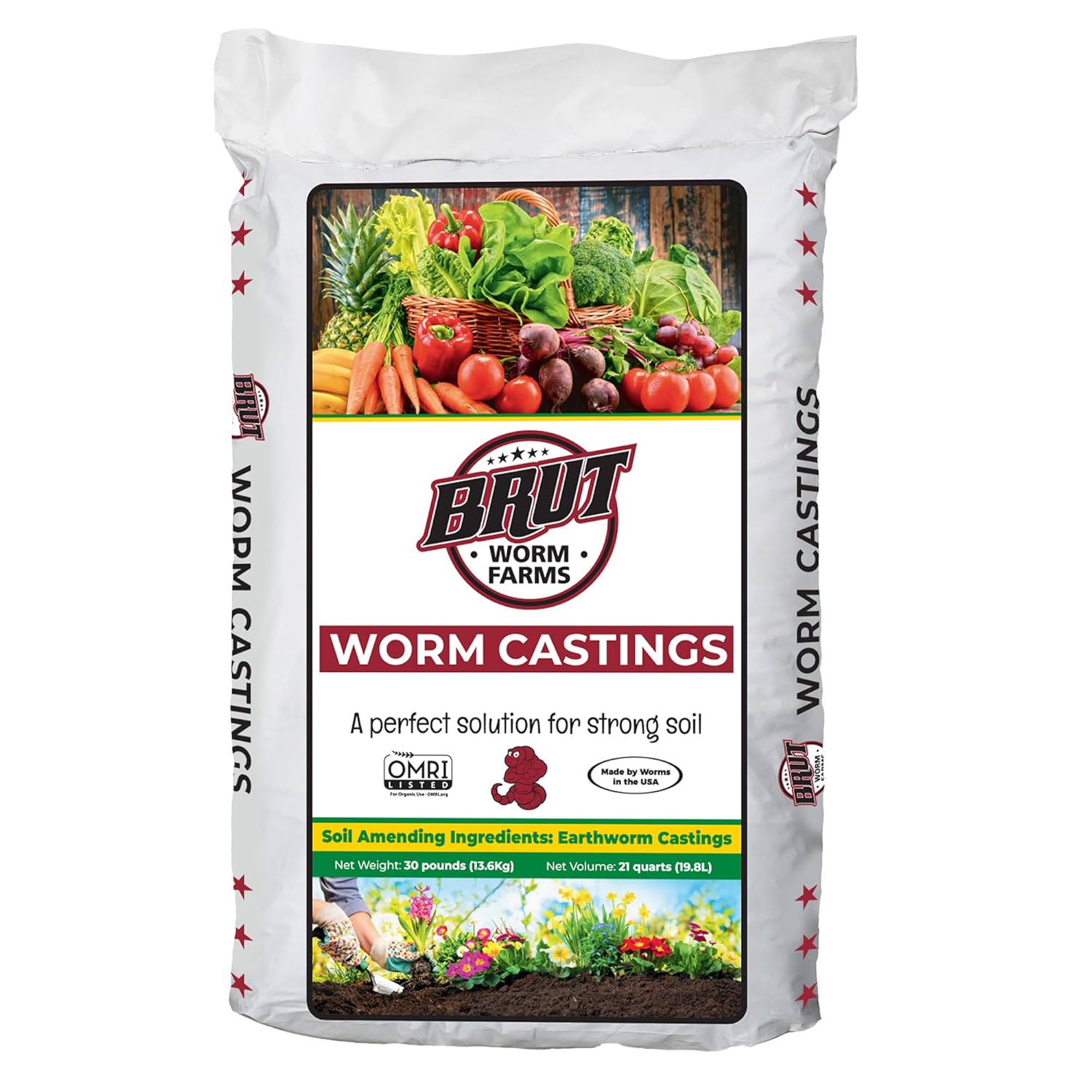
Brut Worm Farms Organic Worm Castings, 30 lb
| Item Form | bag |
|---|---|
| Specific Uses For Product | Gardening,Potting |
| Coverage | 30 |
| Target Species | houseplants, plants, shrubs, vegetables |
| Mixing Ratio | 1:5 |
Brut Worm Farms Organic Worm Castings are a ready-to-use soil amendment sold in a large 30 lb bag for gardeners who want to add nutrient-dense organic matter to potting mixes, containers, and garden beds. Use it as a top dressing, mix into potting soil at the recommended 1:5 ratio, or work a light amount into existing garden soil to improve aeration and water retention. The product is made from earthworm-processed organic material, so it delivers beneficial microbes and soluble nutrients without the risk of burning plants. Practical benefits include improved seedling vigor, healthier root development, and better moisture management in both indoor houseplants and outdoor vegetables or shrubs. Limitations are mostly logistical: a 30 lb bag is bulky to store and handle, and results are gradual since castings release nutrients slowly rather than providing a quick NPK spike. Also, users should follow handling guidance to avoid inhaling dust and keep the bag dry to preserve microbial life.
Best for: Gardeners seeking a reliable, organic soil amendment to steadily improve soil health and support a wide range of plants in containers and beds.
Less Ideal for: People who need a fast-acting chemical fertilizer for immediate greening or those who prefer small, easy-to-handle packages for occasional houseplant use.
- High in beneficial microbes and soluble nutrients that support root health
- Versatile application as a mix-in, top dressing, or soil amendment for indoor and outdoor plants
- Organic, slow-release nutrient profile that reduces risk of fertilizer burn
- Large 30 lb bag covers multiple containers or garden beds for season-long use
- Large bag can be heavy and awkward to move or store
- Nutrient delivery is gradual, so it is not a quick fix for severely deficient plants
Verdict: A large, organic worm-casting product that steadily builds healthier soil and stronger plants across indoor and outdoor gardens.
Wiggle Worm Worm Castings Plus Worm Egg Material, 40 lb

| Item Form | Granules |
|---|---|
| Specific Uses For Product | Soil Conditioning |
| Target Species | houseplants, vegetables |
| Unit Count | 640 Ounce |
Wiggle Worm Worm Castings Plus Worm Egg Material is an organic soil amendment intended as a gentle, slow-release fertilizer and soil builder for raised beds, garden rows, and containers. You use it by mixing it into new bed mixes, top-dressing existing soil, or lining transplant holes as directed. The product combines nutrient-rich worm castings with worm cocoons to boost microbial life and encourage earthworm activity over time, which improves aeration, drainage, and nutrient cycling. Its granulated form is easy to work with and safe for vegetables, flowers, and houseplants because it will not burn roots. Practical gardeners will appreciate that the bag is aimed at both establishing living soil and maintaining it—add it liberally when building beds or apply thinner layers for maintenance. Limitations to note are the coarse nature of the blend, which can include small debris, and that any benefit from worm eggs requires suitable soil conditions for hatching so results are gradual rather than instant.
Best for: Gardeners who prioritize improving long-term soil health and want a low-risk, organic amendment for building or maintaining raised beds and containers.
Less Ideal for: People who need a fast-acting synthetic fertilizer for immediate green-up or users who require a fully sifted, debris-free potting mix.
- Contains nutrient-rich worm castings that provide slow-release N-P-K and trace minerals
- Includes worm egg material to encourage microbial diversity and potential earthworm colonization
- Granular form is easy to mix into soil, top-dress, or use when transplanting
- Safe for vegetables, houseplants, and seedlings because it is non-burning
- May contain small debris or stones due to the nature of the product
- Benefits from worm eggs are dependent on favorable soil conditions and develop slowly
Verdict: Choose this 40 lb worm-castings blend when you want an organic, low-risk amendment that builds living soil and boosts long-term garden health.
Espoma Organic Chicken Manure Granules, 3.75 lb

| Item Form | Granules |
|---|---|
| Application Method | Scatter around plants |
| Target Species | Flowers, Vegetables, Trees, Shrubs |
| Specific Uses For Product | Gardening, Organic, Plant Food |
Espoma Organic Chicken Manure is a ready-to-use, granulated poultry manure fertilizer aimed at home gardeners who want an organic nitrogen-rich soil amendment. With a 5-3-2 NPK analysis and added calcium, it is scattered around the plant drip line and watered in to release nutrients; the granulated, heat-treated form makes application tidy and eliminates the need for mixing. It is labeled for monthly use on vegetables and for seasonal use on trees and shrubs, which makes it practical for routine feeding of tomatoes, peppers and other vegetable beds. The product is registered for organic production and contains no fillers, so you get mostly poultry manure rather than blended proprietary mixes. Because it is dehydrated and granulated there is minimal odor and easier storage than fresh manure, but nutrient levels are moderate so heavy-feeding crops may need larger or repeated applications. Also it does not supply specific micronutrient balances or slow-release polymers, so pairing it with a balanced organic program will give best results.
Best for: Gardeners who prioritize certified organic inputs and want a simple, easy-to-apply manure fertilizer for regular feeding of vegetable beds and common garden plants.
Less Ideal for: Growers seeking a single-product, high-analysis or slow-release fertilizer for intensive commercial production should consider concentrated or formulated alternatives.
- Certified for organic gardening and made from dehydrated poultry manure
- Granulated, heat-treated form is easy to apply and has lower odor than fresh manure
- Straightforward 5-3-2 NPK plus calcium provides usable nitrogen for vegetables
- Ready-to-use with no mixing required and simple scatter-and-water application
- Moderate nutrient analysis may require more frequent applications for heavy feeders
- Does not list a full micronutrient profile or slow-release formulation
Verdict: A simple, certified organic chicken manure in granule form that makes monthly feeding of vegetable beds easy and low-odor.
Choosing the Right Manure for Fertilizer: Key Factors to Consider
Nutrient Profile and Release Rate
Manure varies widely in nitrogen, phosphorus, and potassium content as well as micronutrients. A higher nitrogen content can support leafy growth but can also burn seedlings if the manure is fresh or uncomposted. Consider whether you need a quick nutrient boost or a slow-release amendment; composted manures tend to release nutrients more gradually, feeding plants over weeks to months.
Matching the manure's nutrient profile to the planting plan matters. For example, heavy feeders like corn and brassicas benefit from higher available nitrogen, while flowering and fruiting plants may need a more balanced or phosphorus-lean mix. If you rely on manure as a primary fertility source, plan to monitor soil tests and top-dress or supplement as seasonal needs change.
Maturity and Composting
How well a manure is composted affects safety and performance. Mature, well-rotted manure has lower ammonia and fewer pathogens, reduced weed seeds, and is less likely to scorch plant roots. Immature or raw manure can suppress seed germination, create nitrogen imbalance, and produce unpleasant odors.
For direct soil incorporation or use around seedlings, choose thoroughly composted material. If you prefer to compost raw manure at home, allow sufficient time at proper temperatures to kill weed seeds and stabilize nutrients before application.
Salt Content and Weed Seed Load
Salt levels in some manures, especially when bedding or feed contains salt, can be harmful to salt-sensitive plants and seedlings. Elevated soluble salts also limit water uptake and can accumulate with repeated applications. Likewise, some manure sources carry viable weed seeds if not heated adequately during composting, which can introduce persistent weeds into beds.
Gardeners should consider soil testing for electrical conductivity when applying manure regularly and prefer products certified as screened or composted to reduce weed seed risk. When in doubt, mix manure into the soil rather than using it as a surface mulch for new seedings.
Texture and Application Practicality
Texture determines how easy manure is to spread, mix, or incorporate. Fine, crumbly composted manure blends readily with existing soil and potting mixes, while chunky or strawy material may require extra effort to break down. For container gardens and seed-starting mixes, a fine texture is preferable to avoid air pockets and uneven moisture retention.
Think about how much handling you are willing to do. Bulk garden beds may accept coarser material if tilled in and allowed to settle, while small raised beds or containers benefit from screened, bagged, or well-sifted products.
Odor and Pest Considerations
Some manures have strong odors that can be unpleasant in small yards, patios, or near living spaces. Strong-smelling material may also attract flies and rodents if left exposed. Composting reduces odors, but storage and timing of application still matter.
If you garden in a mixed-use yard or urban setting, prioritize low-odor, well-aged manure and avoid large uncovered piles. Apply and incorporate manure before planting where possible to minimize attraction and smell during the growing season.
Source and Traceability
Knowing the source of manure helps you assess risks like chemical residues, medication traces, or contaminated bedding. Manure from animals treated with certain medications can contain residues that persist in soil. Bedding material and feed composition also affect nutrient and salt content.
Prefer manure with clear sourcing information or from suppliers who screen for contaminants. If using manure from an unknown or mixed source, apply more conservatively and monitor plant response, or compost further to reduce risk.
Best Uses for Different Garden Situations
Different garden situations call for different manure choices. In established vegetable beds, composted manure worked into the planting zone adds steady fertility and improves soil tilth without shocking plants. For perennial flower beds or new lawn topdressings, a more stable, well-rotted product reduces the risk of nutrient surges and seed germination issues.
In containers and seed mixes, fine-textured, screened manure should be used sparingly and often mixed with other components like compost and soilless media. For heavy clay soils, chunky manures with straw can help add structure but should be composted first and incorporated deeply to avoid creating a dense layer that repels water.
- Established beds: use composted, balanced manure incorporated before planting
- Seedlings and containers: use finely screened, well-aged material at low rates
- Soil building on poor sites: combine manure with carbon-rich amendments and allow time for integration
Timing Applications and Seasonal Considerations
Timing manure applications to the gardening calendar improves safety and results. Fall or late-season applications give microbes time to stabilize and reduce the chance of nitrogen loss before spring growth. Incorporating manure in autumn also allows for further breakdown over winter.
Avoid heavy applications right before planting shallow-rooted seedlings. Instead, incorporate manure several weeks earlier or use a lighter top-dress and supplement with controlled-release inputs if early growth demands quick nutrition.
- Fall incorporation for long-term soil building
- Spring side-dressing for active growth but use composted sources
- Avoid raw manure within a few weeks of seeding or transplanting
Simple Tests and Soil Checks Before Applying
Run a basic soil test to check pH, nutrient status, and salt levels before committing to large manure applications. This lets you match the manure type to what the soil actually needs and prevents over-application of nitrogen or phosphorus.
Perform a small germination test if you suspect weed seeds in a manure source: place a thin layer in a seed tray and monitor for unwanted sprouts over a few weeks. If many weeds appear, compost longer or choose a screened product.
- Soil test for nutrients and salinity
- Germination test to screen for weed seeds
- Start with a small trial application and observe plant response
Storing and Handling Manure Safely
Store manure in a dry, covered location away from water sources to avoid runoff and nuisance odors. If you must keep a pile on-site, cover it and keep it compact to limit pest access. Rotate stock so older material is used first and avoid long-term exposure of fresh manure near living spaces.
Wear gloves and practice basic hygiene when handling manure, especially raw material. Composting reduces pathogen risk, but safe handling limits cross-contamination to tools, clothing, and produce areas.
- Keep piles covered and away from wells or drainage
- Use gloves and wash hands after handling
- Rotate and use older composted material first
How We Chose the Best Manure for Fertilizer
We evaluated candidates for this list using concrete, garden-focused criteria that reflect how manures perform in real planting situations. Key evaluation areas included nutrient profile and balance to estimate starter fertility and ongoing feed, and maturity or composting level because immature manure can burn plants or suppress germination. We tested ease of application in beds and containers, looking at texture and handling for spreading or mixing into potting mixes. Odor and pest attraction were assessed because strong smells or fly issues affect where manure can be used. We also considered salt content and weed seed load since both determine suitability for seedlings and salt-sensitive plants. We excluded any materials that are primarily synthetic fertilizers, raw industrial byproducts, or obviously inappropriate for food gardens. Products that require heavy on-site processing were not included unless they are commonly sold ready-to-use. The scoring emphasizes real-world safety and usability in home gardens rather than lab-only metrics.
FAQ
Can I use fresh manure directly in my vegetable beds?
Fresh manure is often too high in ammonia and can burn plants or inhibit seed germination. It is usually best to compost fresh manure until it is well-rotted before applying it to vegetable beds, or apply sparingly and well in advance of planting.
How much manure should I add when preparing a new garden bed?
A common approach is to mix a moderate layer of composted manure, about 1 to 2 inches, into the top 6 to 8 inches of soil. Exact needs depend on your existing soil tests; heavier applications are not always better and can create nutrient imbalances.
Will manure change my soil pH?
Many manures are near neutral and have only a small effect on pH, but repeated applications can shift soil chemistry over time. Check pH periodically and amend with lime or sulfur if needed based on test results rather than assuming manure will correct pH.
Is manure safe to use around edible plants?
Composted, well-aged manure is commonly used in edible gardens because the composting process reduces pathogens and weed seeds. Avoid using raw manure on surfaces where produce will contact it unless it has been composted to safe temperatures and handled carefully.
How often should I reapply manure to maintain fertility?
Frequency depends on the manure type and garden needs. Well-composted manure might be applied once or twice per season as a top-dress or annually when renovating beds. Use soil tests and plant performance to guide reapplication rather than a fixed schedule.
Final Verdict
When choosing manure for fertilizer, prioritize maturity, nutrient balance, and handling needs for your specific garden. Composted, screened manures reduce weed seeds, odor, and salt risks, while coarser material can help structure poor soils if given time to break down. Balance the tradeoffs between quick nutrient availability and long-term soil building, and use soil tests and small trials to refine application rates. Focus on fit for purpose: use fine, well-aged products for containers and seedlings, stable composted material for vegetable beds, and bulk structural amendments for larger soil improvement projects. With the right choice and timing, manure is an effective tool for healthier, more resilient garden soil.
