

Note: This article contains affiliate links. If you click on these links and make a purchase, I may earn a small commission at no extra cost to you. This helps support my research and content. Read my full affiliate disclosure here.
If you manage a medium-sized yard, picking the right mid riding lawn mower affects cut quality, maneuverability around obstacles, and how often routine maintenance interrupts your spring and summer work. A good mid riding mower balances deck width for efficient passes with engine torque for hills and wet grass, while staying easy to service and store. This guide covers six shortlisted mid riding lawn mowers that fit medium properties, and explains the practical criteria we used to evaluate them. You will get clear, gardener-focused guidance on handling, cutting performance, and upkeep to help you choose the machine that matches your yard and time budget.
Top Picks at a Glance
| Best Overall The best all-around choice for most situations | EGO Power+ TR4204 42" Electric Riding Lawn Tractor |  |
| Best Quality Built to a higher standard if you want something more solid | Husqvarna TS 140X 48" Riding Lawn Tractor with 24 HP Briggs V-Twin |  |
| Best Value The sweet spot between price and what you get | Husqvarna TS 120 42" 19HP Briggs Lawn Tractor |  |
| Best Budget The cheapest option that still gets the job done reliably | GIYI Electric Riding Lawn Mower with 42" Deck and (6) 40V 6.0Ah Batteries |  |
| Highest Rated A top-rated pick with lots of positive feedback | Husqvarna Z242F 42" Zero Turn Riding Mower (Special Edition) |  |
| Most Popular A crowd favorite that many people choose with confidence | Husqvarna Z254F 54 in. Zero-Turn Riding Mower, 23 HP Kawasaki |  |
EGO Power+ TR4204 42" Electric Riding Lawn Tractor

| Power Source | Battery Powered |
|---|---|
| Cutting width | 42 inches |
| Battery Average Life | 60 minutes |
| Maximum Adjustable Cutting Height | 4 inches |
| Number of Positions | 12 |
The EGO Power+ TR4204 is a cordless riding lawn tractor built to replace small gas tractors for yards up to about 1.5 acres. It combines up to six 56V ARC Lithium batteries to produce the equivalent of a 21-horsepower gas engine and runs dual brushless, belt-free cutting motors under a 42-inch stamped steel deck. Typical use is straightforward: charge the included batteries, set one of three blade speeds and one of three drive speeds on the digital display, and mow with cruise control engaged for consistent passes. Notable features include LED lights, USB charging, Bluetooth, anti-scalp wheels, and a rear tow hitch for light hauling. Practical benefits are quiet operation, reduced maintenance from no belts or gas engine upkeep, and modular battery compatibility with other EGO tools. Important limitations are the runtime ceiling—advertised at up to 1.5 acres with six 6.0Ah batteries—which means larger properties will require additional batteries or more frequent charging, and the tractor’s heavier weight and battery system make it less suitable for tight, steep, or highly maneuvered lawn work compared with compact zero-turns.
Best for: Buyers who want to replace a small gas tractor with a low-maintenance, quiet electric riding mower for regular care of roughly one to one and a half acre lawns and who value battery ecosystem flexibility.
Less Ideal for: Those with larger properties well over 1.5 acres or who need high-speed, tight-turning commercial zero-turn capability should consider other options.
- Battery platform compatibility with all EGO 56V ARC Lithium batteries for flexibility and tool ecosystem sharing
- Dual brushless cutting motors and a stamped steel 42-inch deck for gas-like cutting performance with lower maintenance
- Customizable digital controls including three blade settings, three drive speeds, and cruise control for consistent results
- Premium conveniences such as LED lights, USB charging port, Bluetooth, and rear tow hitch for utility beyond mowing
- Advertised single-charge coverage tops out at about 1.5 acres with the included batteries, limiting use on larger properties without extra batteries
- Heavier battery package increases vehicle weight and may be less nimble in very tight or steep yards
Verdict: A practical electric alternative to small gas tractors that delivers gas-like power and low maintenance for lawns up to about 1.5 acres.
Husqvarna TS 140X 48" Riding Lawn Tractor with 24 HP Briggs V-Twin

| Cutting width | 48 inches |
|---|---|
| Power Source | Gas Powered |
| Operation Mode | Manual |
The Husqvarna TS 140X is built for homeowners who need a robust, straightforward riding tractor for mowing roughly an acre, including moderate slopes. It pairs a 24 HP Briggs & Stratton V-twin engine with a 48-inch stamped steel deck and pedal-operated transmission so you can keep both hands on the wheel while changing speed. The reinforced deck and Air Induction technology aim to improve cut quality and reduce clumping, while an upgraded seat and ergonomic steering wheel increase comfort during longer jobs. Typical use will be regular property maintenance: striping driveways, cutting large open areas, and handling rolling terrain where a wider deck reduces passes. The tractor’s strengths are engine power, simple mechanical controls, and a roomy cutting width that shortens mowing time. Important limitations are its manual operation and gas power, which require fuel and routine engine maintenance, and the stamped deck is durable but less serviceable than heavier fabricated decks for extreme commercial use. For homeowners seeking a capable, no-frills machine, this balances performance and ease of use.
Best for: Homeowners with about an acre of lawn who want a powerful, easy-to-operate riding tractor that speeds up mowing and handles modest hills while prioritizing comfort during longer jobs.
Less Ideal for: Users who need a commercial-grade mower for daily heavy use or those seeking a zero-emission electric option should look elsewhere.
- Powerful 24 HP Briggs & Stratton V-twin engine provides strong performance on hills and larger lawns
- 48-inch stamped steel cutting deck reduces mowing time on an acre-sized property
- Pedal-operated transmission lets you keep both hands on the wheel for better control
- Ergonomic seat and steering wheel improve comfort for longer mowing sessions
- Gas engine requires regular fuel, oil changes, and tune-ups
- Stamped deck is less heavy-duty than fabricated commercial decks for extreme, frequent use
Verdict: A practical, comfortable gas tractor that cuts large yards quickly and handles modest hills for homeowners who want dependable performance and simple controls.
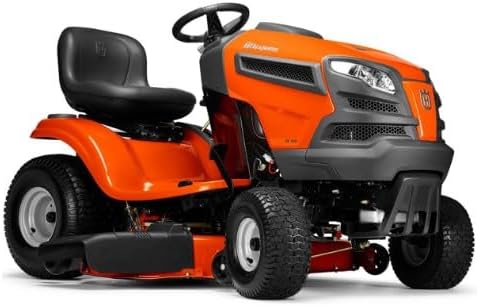
Husqvarna TS 120 42" 19HP Briggs Lawn Tractor
| Cutting width | 42 inches |
|---|---|
| Power Source | Gas Powered |
| Operation Mode | Manual |
The Husqvarna TS 120 is a straightforward, homeowner-oriented riding tractor built around a 19 HP Briggs & Stratton engine and a 42-inch twin-blade stamped deck. It is used like a conventional lawn tractor: sit in the ergonomic seat, use the pedal-operated transmission for smooth speed control, and choose side ejection or add optional mulching or collection accessories. Notable features include the proven gas engine, pedal-operated hydrostatic transmission that keeps both hands free for steering, and a deck width that balances cut speed with maneuverability. In practice the TS 120 will make quick work of small to mid-size properties while offering a comfortable ride and simple controls that reduce operator fatigue. Limitations are its basic stamped deck and homeowner-focused equipment level, which mean it is not targeted at heavy commercial use or extremely large properties where wider decks and commercial-grade components would be preferable.
Best for: Buyers who prioritize a reliable, easy-to-operate gas riding mower for maintaining small to mid-size lawns and who value straightforward controls and proven engine performance.
Less Ideal for: Not a good fit for commercial operators or homeowners with very large properties who need wider decks and more heavy-duty, commercial-grade components.
- Proven 19 HP Briggs & Stratton gas engine for reliable power
- Pedal-operated hydrostatic transmission for easy, hands-on steering and smooth speed changes
- 42-inch twin-blade deck balances cutting efficiency and maneuverability
- Ergonomic seating and intuitive controls reduce operator fatigue during longer mows
- Designed for homeowner use rather than commercial or heavy-duty applications
- Stamped mower deck is less durable than heavier fabricated decks
Verdict: A reliable, easy-to-use gas riding tractor that delivers proven Briggs & Stratton power and simple hydrostatic controls for homeowners with small to mid-size lawns.
GIYI Electric Riding Lawn Mower with 42" Deck and (6) 40V 6.0Ah Batteries

| Power Source | Battery Powered |
|---|---|
| Cutting width | 42 inches |
| Number of Positions | 9 |
| Maximum Adjustable Cutting Height | 4.52 inches |
| Minimum Adjustable Cutting Height | 1.37 inches |
This GIYI electric riding mower is a cordless lawn tractor built to cover roughly an acre per charge using six 40V 6.0Ah lithium-ion batteries and a brushless, belt-free drive. It is typically used for medium to large residential yards where a 42-inch deck and nine cutting-height positions (about 1.5 to 4.5 inches) speed up mowing runs. Notable features include a stamped steel 42" deck, an ergonomically designed low-back seat, a brushless motor that lowers maintenance compared with gas models, and claimed run times of 60 to 80 minutes. In practice the combination of multiple batteries and a 6 mph top mowing speed makes it effective for rolling lawns and modest slopes up to about 15 degrees. Important limitations are its large footprint and weight that require storage space and may complicate transport, and the reliance on multiple battery packs means replacement cost and charging setup should be considered. For buyers prioritizing quiet, low-maintenance cordless operation, it delivers strong coverage; buyers needing commercial runtime or tight zero-turn maneuverability will want different platforms.
Best for: Homeowners with roughly one-acre lawns who want a quiet, low-maintenance cordless riding mower that covers ground quickly and tolerates mild slopes.
Less Ideal for: Commercial users, owners of very steep or tightly contoured properties, or buyers who need tight zero-turn maneuverability and extended continuous runtime.
- Large 42-inch stamped steel deck for faster passes across medium to large yards
- Includes six 40V 6.0Ah batteries providing 60–80 minutes of runtime on a full charge
- Brushless, belt-free motor design reduces routine maintenance and increases durability
- Nine adjustable cutting heights to handle different grass conditions and seasons
- Heavy and bulky unit that needs significant storage space and may be difficult to transport
- Dependence on multiple battery packs increases long-term replacement costs and charging logistics
Verdict: If you want a quiet, low-maintenance cordless riding mower that can cover about an acre per charge, this 42" GIYI model delivers strong residential performance.
Husqvarna Z242F 42" Zero Turn Riding Mower (Special Edition)

| Power Source | Gas Powered |
|---|---|
| Cutting width | 42 |
| Maximum Adjustable Cutting Height | 4 inches |
| Number of Positions | 9 |
The Husqvarna Z242F is a mid-size zero-turn mower built for homeowners who want faster, more confident mowing than a garden tractor. It pairs a 21.5 HP Kawasaki V-twin with a fabricated 42-inch welded deck and Hydro-Gear EZT transmission to deliver responsive acceleration, tight turning, and a clean cut over medium to large lawns. The machine is typically used for weekly mowing of lawns where speed and maneuverability matter; the zero-turn chassis and rugged tires make it easy to work around beds and obstacles. Notable features include a durable metal fabricated deck, a comfortable premium seat, and a 3.5 gallon fuel tank that reduces refueling stops. Practical benefits are quicker job completion, improved cut quality versus smaller deck mowers, and a sturdy build for frequent use. Limitations are the mower's substantial weight and footprint, which require a compatible trailer or garage space and basic mechanical comfort for maintenance, and its gas powertrain that needs fuel and seasonal upkeep.
Best for: Buyers who want a durable, faster-cutting zero-turn that handles medium to large lawns efficiently and value a balance of power, comfort, and maneuverability for regular yard maintenance.
Less Ideal for: People with very small yards, limited storage or towing capacity, or those seeking emission-free electric operation should consider smaller mowers or electric/hybrid alternatives.
- Powerful 21.5 HP Kawasaki V-twin engine for consistent torque and performance
- Fabricated 42-inch welded cutting deck for durable, professional-style cut quality
- Hydro-Gear EZT transmission enables smooth zero-turn maneuverability
- 3.5 gallon fuel capacity reduces frequency of refilling during large jobs
- Heavy and large footprint makes storage and transport more demanding
- Gas engine requires regular maintenance and seasonal servicing
Verdict: A powerful, well-built zero-turn that balances speed, cut quality, and comfort for homeowners with medium to large lawns.
Husqvarna Z254F 54 in. Zero-Turn Riding Mower, 23 HP Kawasaki

| Power Source | gasoline |
|---|---|
| Engine Power | 23 HP |
| Cutting width | 54 inches |
| Operation Mode | Automatic |
| Number of Positions | 6 |
The Husqvarna Z254F is a purpose-built zero-turn mower for homeowners who need wide cutting coverage and reliable power. It uses a 23 HP Kawasaki engine and a hydrostatic, no-maintenance transmission to deliver smooth, variable speed control and a reported top speed around 6.5 MPH. The 54 inch ClearCut deck is designed for good airflow and a clean cut, and it supports discharge, mulching or bagging with optional attachments. Operator comfort and usability are addressed with an ergonomic control panel, comfortable seat and anti-slip foot area, while a simple deck lift and outward parking of the steering levers make daily use straightforward. Practical limitations include the mower's large footprint and weight, which make it best suited to medium to large lawns with clear access rather than tight, obstacle-dense yards, and optional mulching and bagging hardware must be bought separately. For buyers prioritizing proven components and ease of operation, the Z254F provides a dependable mowing platform.
Best for: Homeowners with medium to large lawns who value reliable components and efficient, fast mowing and who prefer a low-maintenance hydrostatic drive.
Less Ideal for: If your property is small, has many tight turns, steep slopes, or requires frequent trailer transport, a compact zero-turn or walk-behind mower will be a better fit.
- Powerful 23 HP Kawasaki gasoline engine for reliable starts and consistent turf performance
- Hydrostatic transmission requires no regular maintenance and provides smooth speed control
- 54 in. ClearCut deck covers large areas quickly and is designed for good airflow and cutting quality
- Comfort-focused operator station with ergonomic controls and anti-slip foot area for longer mowing sessions
- Large weight and footprint limit maneuverability in tight yards and make transport more difficult
- Mulching kit and bagger are sold separately rather than included
Verdict: Choose the Z254F if you want a dependable, wide-cut hydrostatic zero-turn that speeds up mowing on medium to large lawns with proven engine and transmission components.
Choosing the Right Mid Riding Lawn Mower: Key Factors to Consider
Cutting Deck Width and Construction
Deck width determines how many passes you make across a medium lawn and affects trimming time. Wider decks finish jobs faster but can be harder to navigate around beds, trees, and narrow gates. Consider a deck size that matches your yard layout so you balance efficiency with maneuvering needs.
Construction quality matters for straightness of cut and long-term resistance to dents and corrosion. Look for thicker stamped steel or reinforced fabricated decks if you expect frequent heavy-duty use. Deck reinforcement and well-designed discharge or mulching systems also affect clipping management and finish.
Engine Power and Torque
A mid riding mower needs enough horsepower and, more importantly, torque to move through damp or tall grass and to climb moderate slopes without bogging down. Higher torque helps when you engage attachments or when the deck load increases in heavy growth.
Evaluate whether the engine has good low-end pull and check how the driveline is specified for towing or accessory use. Real-world performance depends on gearing, blade load capacity, and how power is transferred to the deck and wheels.
Maneuverability and Turning Radius
Maneuverability affects how quickly you can mow around landscape features and how much trimming will be required afterward. A tighter turning radius reduces overlap and time spent reversing to reposition for narrow passes.
Steering responsiveness, wheelbase length, and weight distribution all influence handling. Consider whether the mower will need to pass through narrow gates or navigate steep or uneven ground when judging turning and control characteristics.
Ease of Maintenance and Service Access
Routine maintenance keeps a mid riding mower reliable and safe. Easy access to air filters, oil drains, spark plugs, grease points, and battery terminals reduces time and frustration for regular upkeep.
Consider how simple it is to remove the deck for blade sharpening or belt inspection, and whether routine parts are commonly available. Designs that minimize tools required for basic service or that use top-access filters and drains make seasonal maintenance faster and more likely to be done on schedule.
Operator Comfort and Controls
Comfort matters on machines used for multiple hours. Seat design, adjustability, vibration isolation, and logical control placement reduce fatigue and improve mowing accuracy. A comfortable operator makes steadier passes and can maintain a more consistent cutting height.
Also weigh visibility from the operator position for seeing obstacles and deck edges. Controls that are easy to reach and intuitive help with frequent operations like engaging the blades, adjusting speed, or using a cruise setting when available.
Attachment Compatibility and Durability
Attachment options expand a mid riding mower's usefulness beyond mowing. Consider whether the frame and PTO or attachment points support common accessories like baggers, snow removal tools, carts, or spreaders.
Durability of attachment mounts and the strength of hitch points matter if you plan heavier pull tasks. Also think about how quickly attachments can be fitted and removed if you switch roles with the same machine seasonally.
Best Deck Types for Medium Yards
Two main deck constructions suit medium yards: stamped steel decks and fabricated decks. Stamped decks are lighter and typically less expensive while providing a good balance of cut quality for most homeowners. Fabricated decks are stronger and resist warping and can deliver tighter cut consistency under heavy use.
For most medium properties a well-built stamped deck with reinforcement ribs is sufficient. If your yard routinely has heavy, wet grass or you will use attachments that place more load on the deck, a fabricated deck is worth considering despite the added weight and maintenance considerations.
- Stamped deck: lighter, adequate for typical homeowner use
- Fabricated deck: heavier, more durable for tough conditions
- Look for reinforced spindles and replaceable shell panels for long life
Drive Systems and Traction
Hydrostatic drives offer smooth speed variation and simple control, which is useful on properties with slopes or frequent stop-start trimming. Manual or gear-driven transmissions can be more efficient under steady loads and sometimes allow for easier towing capacity.
Consider traction aids such as turf-friendly tires or differential locks if your yard has wet spots or steep grades. Tire width and tread affect ground compaction and stability; wider tires distribute weight better and reduce rutting.
- Hydrostatic: smooth control, easy to use
- Gear drive: simple, sometimes more efficient at constant speeds
- Tire choice affects compaction and grip
Storage, Winter Care, and Longevity
Where you store the mower affects its longevity. A dry, ventilated space reduces corrosion and keeps belts and rubber parts from degrading. Before winter, drain or stabilize fuel, clean grass build-up from the deck, and lift or block the machine to relieve tires if it will sit for months.
Routine seasonal checks prolong useful life. Confirming belt tension, sharpening blades, and inspecting spindles each season prevents premature wear and helps keep cutting performance consistent year after year.
- Store indoors when possible to protect paint and electronics
- Perform end-of-season cleaning and preventative maintenance
- Rotate tires and inspect belts annually
Noise and Vibration Considerations
Noise levels and vibration affect comfort and may determine when you can mow in residential areas. Engines tuned for smooth idle and seats with good isolation reduce operator fatigue. Consider machines with anti-vibration mounts and ergonomic grips.
If you live close to neighbors, check local ordinances about acceptable mowing hours and pick a machine that allows efficient work within allowed times without excessive noise complaints.
- Look for vibration-dampening seat mounts
- Higher displacement engines may run smoother at lower RPM
- Muffler location and shielding can affect perceived noise
Common Upgrades and Useful Accessories
Accessories extend functionality. Baggers and mulching kits manage clippings, while tow carts and spreaders let you repurpose the mower for garden maintenance. Snow blades or blowers can turn a summer mower into a year-round tool in mild winter zones.
Be realistic about attachment weight and mounting systems. Heavier accessories increase load on the drivetrain and affect ground contact. Choose upgrades that match the mower's capacity and your seasonal needs.
- Mulching kits improve lawn health and reduce cleanup
- Bagger systems for neat yards and easier disposal
- Tow carts for hauling tools, soil, or garden waste
How We Chose the Best Mid Riding Lawn Mower
We prioritized attributes that matter for everyday use on medium lawns and included products that meet real gardener needs. Key evaluation criteria included cutting deck construction and deck width because that determines cut consistency and how many passes you need. Engine power and torque were considered to ensure reliable speed up slopes and through thicker grass. Maneuverability and turning radius were measured for work around beds, trees, and tight gates. Ease of maintenance was judged by access to filters, drains, and simple service points gardeners perform most often. Operator comfort and ergonomics were scored because longer mowing sessions demand good seating, control layout, and vibration reduction. Durability and available attachments rounded out the assessment, focusing on how long common wear items last and whether common implements fit the mid riding format. We excluded machines that are oversized for medium properties or those clearly intended for commercial turf work. Lawn tractors with incompatible frames or nonstandard decks were filtered out. The final selections represent a balance of deck performance, drivetrain reliability, operator comfort, and routine serviceability, which are the core factors that make a mid riding mower a practical choice for homeowners with mid-size yards.
FAQ
How wide should a mid riding mower deck be for a medium yard?
For most medium yards a deck between 42 and 54 inches balances efficiency and maneuverability. Narrower decks help with tight spaces, while wider decks reduce mowing time at the cost of turning ease.
Is a hydrostatic transmission worth it on a mid riding mower?
Often yes. Hydrostatic drives provide smooth speed control and easier operation on slopes and around obstacles. They can be more convenient for homeowners who value ease of use over the slightly higher complexity compared with gear drives.
What maintenance should I perform each season?
Seasonal maintenance usually includes sharpening or replacing blades, checking belt condition and tension, changing engine oil and filters, cleaning the deck of grass buildup, and inspecting tires and spindles. Doing these tasks once a year prevents most common failures.
Can I use a mid riding mower for light towing and attachments?
Usually yes. Many mid riding mowers support light towing tasks and common attachments like baggers, carts, and spreaders. Check the mower's hitch capacity and PTO or attachment options to ensure compatibility with heavier accessories.
How do I store a mid riding mower over winter?
Store the mower in a dry, sheltered space. Stabilize or drain fuel, clean the deck and engine area, disconnect the battery if storing long-term, and consider lifting or supporting tires to avoid flat spots. Regularly check for rodent damage if stored in an unsealed building.
Final Verdict
For medium-size yards, prioritize deck construction and engine torque first because they most directly affect cut quality and the ability to handle thicker grass or slopes. Balance that with maneuverability and ease of maintenance so routine tasks are quicker and less of a hassle. Operator comfort and attachment compatibility are secondary but important if you use the mower for more than just mowing. Choosing a mid riding mower that matches your yard geometry, storage situation, and seasonal needs will give the best long-term value and fewer surprises in ownership.
