

Note: This article contains affiliate links. If you click on these links and make a purchase, I may earn a small commission at no extra cost to you. This helps support my research and content. Read my full affiliate disclosure here.
If you garden in small plots, raised beds, or on a patio, the right mini tiller cultivator saves hours of hand labor by loosening compacted soil and incorporating amendments. These lighter, easier-to-maneuver machines behave differently from full-size tillers: they excel at quick surface cultivation, seedbed finishing, and working narrow rows where a larger machine would be awkward. This guide covers the top shortlisted mini tiller cultivators suited to small-space vegetable and flower gardens. We evaluate their maneuverability, power to break soil, ease of maintenance, and how well they protect fragile plants during use. Read on to see which features matter most for compact gardens and which tools earned a place on our list.
Top Picks at a Glance
| Best Overall The best all-around choice for most situations | BILT HARD Electric Tiller Cultivator, 14-inch Corded 10 Amp with Foldable Handle |  |
| Best Quality Built to a higher standard if you want something more solid | Mantis 7940 4-Cycle Tiller/Cultivator with Honda Engine |  |
| Best Value The sweet spot between price and what you get | SOARFLY Cordless Mini Tiller Cultivator with 2×4.0Ah Batteries |  |
| Best Budget The cheapest option that still gets the job done reliably | Muylux 20V Cordless Hand Tiller Cultivator with Battery |  |
| Highest Rated A top-rated pick with lots of positive feedback | Towiac Cordless Mini Tiller Cultivator (Tool Only) — Compatible with DeWalt 20V Batteries |  |
| Most Popular A crowd favorite that many people choose with confidence | Sun Joe Corded Electric Garden Tiller & Cultivator TJ604E |  |
| Best Seller A high-volume bestseller chosen again and again | HEINPRO Cordless Tiller Cultivator (compatible with DEWALT 20V MAX) |  |
BILT HARD Electric Tiller Cultivator, 14-inch Corded 10 Amp with Foldable Handle

| Power Source | Corded Electric |
|---|---|
| Motor/Engine Power | 10 Amp |
| Working Width | 14" |
| Working Depth | 8.7" |
| Tines | 4 rust-resistant steel blades |
The BILT HARD 14-inch electric tiller is a straightforward corded cultivator intended for prepping small to medium vegetable patches, flower beds, and lawn edges. It uses a 10 amp AC motor that spins four rust-resistant steel tines to a working depth of about 8.7 inches and a 14-inch width, which is wide enough to make quick passes while still fitting between planted rows. The foldable H-handle and two-position transport wheels make it easy to move, store, and set up without heavy lifting. Practical features include a safety lock to prevent accidental starts and a lightweight alloy-steel frame that keeps the unit manageable for most users. Expect reliable performance in lightly compacted or previously worked soil and good results when mixing compost or removing shallow weeds. This is not a machine for heavy clay, large sod removal, or repeated deep tilling tasks, and being corded means you need a proper outdoor extension cable and dry conditions for safe operation. For gardeners who want a usable, portable mini tiller for seasonal bed prep, it covers the essentials well.
Best for: Gardeners who need a manageable, easy-to-store cultivator for prepping and maintaining small to medium beds and who prioritize simplicity and portability over heavy-duty power.
Less Ideal for: Users with large plots, hard-packed clay, or frequent deep tilling needs should look at larger gas or higher-power electric tillers instead.
- Lightweight and foldable handle simplifies transport and storage
- Four rust-resistant steel tines deliver a 14-inch working width and up to 8.7-inch depth for effective bed preparation
- Two-position wheels make moving and positioning the tiller easy
- Built-in safety lock reduces the chance of accidental starts during handling
- Corded power limits range and requires a correctly rated outdoor extension lead
- Not suited for heavy clay, large sod, or very compacted ground
Verdict: A compact, easy-to-use electric tiller that delivers convenient bed prep and storage for small to medium garden plots.
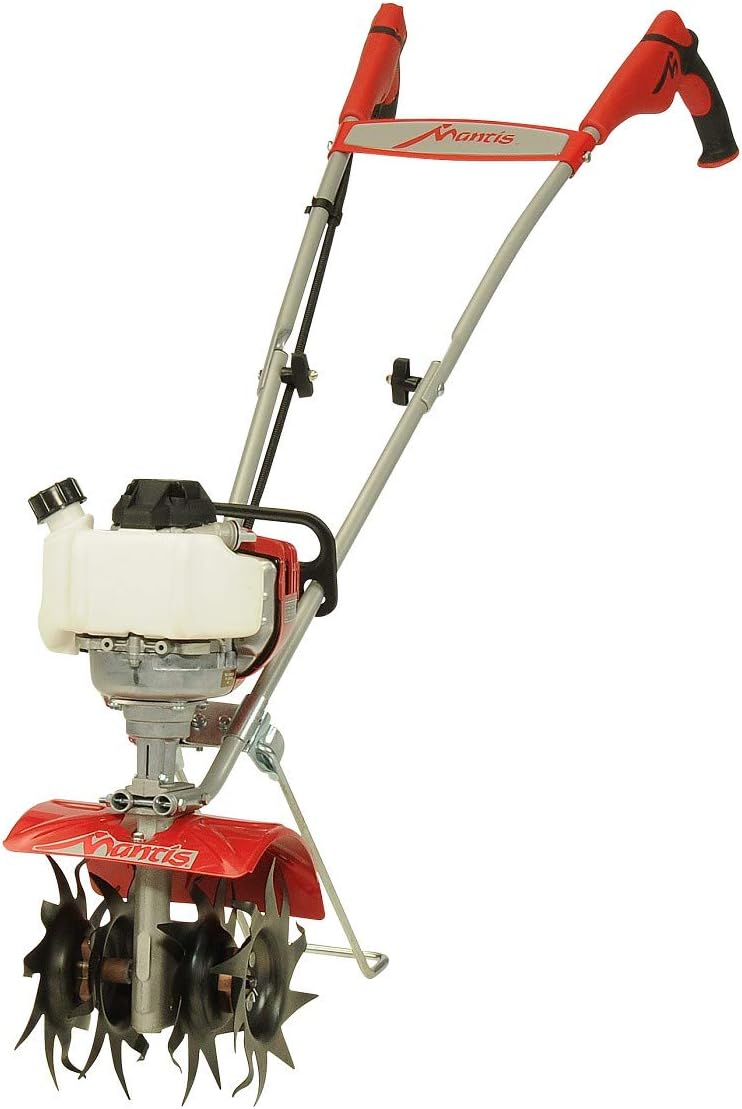
Mantis 7940 4-Cycle Tiller/Cultivator with Honda Engine
| Power Source | gas-powered |
|---|---|
| Material Type | Metal |
| Manufacturer Warranty Description | 2-year limited |
The Mantis 7940 is a compact, performance-focused mini tiller that uses a Honda 4-cycle engine to deliver strong tilling power without the need for fuel mixing. It is typically used to break sod, loosen compacted soil, and prepare planting beds where a full-size tiller would be overkill. Notable features include a high-tine speed (up to 240 rpm), finger-controlled throttle for infinite speed adjustment, ergonomic sure-grip handles, folding handlebars for storage, and a standard kickstand for easy staging. In practice the machine is easy to start and maneuver thanks to its light 24-pound build, yet the transmission and tine design let it dig deeply—claims note up to 10 inches—so you can tackle tougher ground and precision-weed around plants by flipping the tines. The main trade-offs are that it is a small, single-purpose tool: it is ideal for garden beds and rows but not intended to replace larger tillers for very large acreage or heavy-duty landscaping, and being gas-powered it requires routine engine maintenance and hearing/eye protection during use.
Best for: Gardeners who prioritize tilling performance in small to medium beds and want a compact, easy-to-handle machine that still delivers strong digging power for sod and compacted soil.
Less Ideal for: Landscapers or homeowners who need to cultivate large acreages or who prefer zero-emission electric tools for frequent, heavy-duty work.
- Honda 4-cycle engine provides reliable, no-mix gas power and strong tine speed.
- Lightweight 24 lb design makes it easy to carry, maneuver, and store.
- Finger-controlled throttle offers infinite speed control for delicate or aggressive work.
- Folding handlebars and a kickstand improve storage and on-site handling.
- Small, single-tine design is not suited for very large areas or heavy landscaping jobs.
- As a gas engine tool it requires regular maintenance and produces noise and emissions.
Verdict: If you want a lightweight mini tiller that punches above its size for serious bed preparation, the Mantis 7940 delivers reliable Honda-powered performance in a compact package.
SOARFLY Cordless Mini Tiller Cultivator with 2×4.0Ah Batteries

| Power Source | Battery Powered |
|---|---|
| Operation Mode | Electric |
| Item Highlight | 48 Steel Tines, 360RPM |
| Unit Count | 2 Count |
The SOARFLY cordless mini tiller is a compact electric cultivator built for small beds, raised planters, and light-duty soil prep. It uses a brushless-feel motor running at about 360 RPM and 48 steel tines to break up, aerate, and weed normal garden soil and lightly compacted clay. The unit ships with two 4.0Ah batteries that the brand says provide up to 120 minutes of operation when swapped, so you can cover several raised beds or a small plot without frequent charging. Adjustable height and an auxiliary handle make it easier to steer and reduce operator fatigue while the dual safety lock system helps prevent accidental starts. Practical limitations are its light-duty nature: it is not meant for large acreage or very rocky, heavily compacted ground, and tines can clog on roots or sticky clay requiring manual clearing. For typical backyard gardeners who need an easy-to-handle, cordless option for bed prep and weeding, it speeds up repetitive tasks and avoids the hassle of gas engines or extension cords.
Best for: Gardeners who want a compact, easy-to-use electric tiller to speed up prep and weeding of small beds, raised planters, and vegetable patches while minimizing effort and maintenance.
Less Ideal for: Do not choose this if you need a machine for large acreage, deep primary tilling, or frequent work in rocky or heavily compacted soils.
- Cordless design with included batteries removes need for cords or gas
- Two 4.0Ah batteries extend runtime for multi-bed sessions
- Adjustable handle and height improve comfort and maneuverability
- 48 steel tines provide effective surface loosening and weeding
- Safety lock plus start switch reduces accidental activation
- Not suitable for heavy-duty tilling or large plots
- Tines can clog with roots, dense clay, or debris requiring clearing
- Limited torque compared with full-size gas tillers for deep turning
Verdict: A portable, user-friendly cordless mini tiller that delivers extended runtime and adjustable comfort for efficient small-plot soil preparation.
Muylux 20V Cordless Hand Tiller Cultivator with Battery

| Power Source | Battery Powered |
|---|---|
| Operation Mode | Electric |
| Material Type | Alloy Steel |
This Muylux 20V cordless hand tiller is a compact cultivator aimed at quick soil preparation in small beds and tight spaces. It uses two steel tines that rotate up to 240 RPM to loosen soil to about 4 inches, which makes it useful for planting rows, aerating lawn edges, and breaking up compacted patches without a full-size tiller. The ergonomic grip and lightweight build reduce user fatigue and make the tool easy to maneuver around plants and raised beds. It ships with a rechargeable 20V battery system so you can swap cells to extend runtime and avoid cords while working. Practical benefits include fast spot tilling, portability, and straightforward maintenance compared with heavier gas machines. Important limitations are modest tine depth and power compared with full-size tillers, so it is meant for light-duty garden tasks rather than breaking new ground or handling heavy clay. Battery runtime and replacement availability will determine how much continuous area you can cover in one session.
Best for: Gardeners on a budget who need an affordable, portable tool for light-duty soil work in small plots, raised beds, or around established plants and who value ease of use over heavy excavation power.
Less Ideal for: People preparing large new garden areas, working heavy compacted clay, or needing deep tillage should choose a larger gas or electric rear-tine tiller instead.
- Lightweight, ergonomic design reduces fatigue and is easy to maneuver in tight beds
- Two steel tines rotating up to 240 RPM quickly loosen soil to a shallow 4-inch depth
- Cordless 20V battery power gives freedom of movement and allows battery swapping for longer use
- Compact size is convenient for small gardens, raised beds, and spot cultivation
- Limited tine depth and power compared with full-size tillers, not suited for heavy clay or breaking new ground
- Battery runtime may limit coverage per charge depending on included battery capacity
Verdict: A compact, battery-powered hand tiller that delivers convenient, lightweight spot cultivation for small gardens and raised beds.
Towiac Cordless Mini Tiller Cultivator (Tool Only) — Compatible with DeWalt 20V Batteries

| Power Source | Battery Powered |
|---|---|
| Operation Mode | Electric |
| Working Width | 9 inches |
| Working Depth | 6.3 inches |
This compact cordless tiller is a practical mini cultivator for preparing small beds, loosening soil, and mixing in compost. It runs on compatible DeWalt 20V batteries (battery and charger sold separately) and uses a 360 RPM motor driving 48 steel tines to work a 9 inch wide by 6.3 inch deep swath. The telescoping, foldable shaft extends for comfortable use and collapses for storage, and the detachable tines make cleaning and maintenance straightforward. A dual safety switch requires two actions to start the unit, which reduces accidental engagement during handling or transport. Expect it to handle light to medium garden tasks quickly and with minimal fuss, though it is not intended for heavy sod or deep excavation. Buying the tool-only version saves cost if you already own compatible batteries, but you will need to supply a DeWalt 20V pack for operation. For homeowners who value predictable, low-maintenance performance in small spaces, this model delivers reliable, easy-to-store cultivation power.
Best for: Buyers who need a dependable, low-maintenance mini tiller for small vegetable beds, raised planters, or patch repairs and who prefer tools that use existing 20V battery packs.
Less Ideal for: Gardeners planning large-scale tilling, breaking new ground with heavy roots, or frequent deep cultivation should choose a full-size gas or heavy-duty electric tiller instead.
- Compatible with common DeWalt 20V batteries so you can reuse existing batteries
- 48 heavy-duty steel tines that loosen soil and mix amendments effectively for small beds
- Telescoping, foldable shaft for ergonomic use and compact storage
- Detachable tines simplify cleaning and maintenance after use
- Not suitable for heavy sod, large areas, or deep primary tilling
Verdict: If you already own DeWalt 20V batteries and need a compact, reliable mini tiller for small beds, this tool delivers efficient, low-maintenance performance.
Sun Joe Corded Electric Garden Tiller & Cultivator TJ604E

| Power Source | Corded Electric |
|---|---|
| Motor | 13.5-Amp |
| Tines | 6 steel-angled tines |
The Sun Joe TJ604E is a compact corded electric tiller built to break and cultivate soil in small gardens and tight spaces. Its 13.5-amp motor drives six angled steel tines to till up to about 16 inches wide and 8 inches deep, so it handles light to moderate soil preparation like turning over vegetable beds, mixing in compost, and refreshing planting rows. The folding handle and three-position adjustable wheel make it straightforward to transport, store, and control working depth. Being electric means quieter operation and no gas maintenance, and the corded power ensures continuous runtime for longer tasks. Practical limitations are its modest digging depth and reliance on a power cord, which make it less suited to very compacted ground or large acreage. For routine prep of raised beds, small lawns, and garden rows it is an efficient, low-maintenance choice that performs much of the work of a hand tool in a fraction of the time.
Best for: Gardeners who want a reliable, low-maintenance electric tool to speed up soil prep in raised beds, small yards, or vegetable plots and who value proven performance over experimental gear.
Less Ideal for: People who need to break heavy, compacted ground, work large areas, or who require cordless portability for remote sites should look at heavier petrol or battery-powered models.
- 13.5-amp motor provides steady power for tilling small beds
- Six steel-angled tines are durable and effective for mixing soil and compost
- Folding handle and compact design make storage and transport easy
- Three-position adjustable wheel lets you control tilling depth and maneuverability
- Corded power limits range and requires access to an outdoor outlet
- Not designed for very compacted or rocky soil where heavier tillers are needed
Verdict: A compact, dependable corded tiller that makes soil prep fast and low-maintenance for small gardens and raised beds.
HEINPRO Cordless Tiller Cultivator (compatible with DEWALT 20V MAX)

| Power Source | Battery Powered (battery and charger not included) |
|---|---|
| Working Width | 9 in |
| Working Depth | 7 in |
| Motor Speed | 360 RPM |
| Material Type | Alloy Steel |
The HEINPRO cordless tiller is a compact electric cultivator built for light soil prep in small vegetable patches, flower beds, and raised planters. It runs on DEWALT 20V MAX-style batteries (battery and charger not included) and uses a 360 RPM motor with four hardened steel blades to cultivate a 9-inch width and about 7-inch depth per pass. Typical use is straightforward: assemble the three-piece shaft, attach a compatible battery, and use the dual-safety switch plus trigger to controllably turn soil, aerate, and mix compost without fumes or extension cords. At about 9.4 pounds with an adjustable handle and soft grip, it is easy to maneuver and causes less fatigue than heavier gas models. Practical benefits include cordless freedom, a battery charge indicator on the handle, compact breakdown for storage, and a safety interlock to reduce accidental starts. Important limitations are modest power and working width, so it is not suited for heavy sod, dense grass, or large acreage; long grass can tangle the tines and requires prior clearing.
Best for: A cautious homeowner who wants a safe, easy-to-use electric tiller for small gardens, raised beds, and routine soil mixing without the maintenance of gas equipment.
Less Ideal for: Landscapers or gardeners who need to tackle large areas, heavy sod, or stubborn roots should choose a larger, gas-powered or commercial-grade tiller instead.
- Cordless operation compatible with common DEWALT 20V MAX batteries for plug-and-play convenience
- Lightweight and ergonomic design reduces operator fatigue and is easy to maneuver in tight beds
- Integrated battery charge indicator so you can monitor runtime at a glance
- Breaks down into three sections for compact storage
- Dual-safety switch prevents accidental starts for safer use around family
- Designed for light-duty tasks only and will struggle with thick sod or very rocky soil
- Battery and charger are not included so runtime depends on the battery you already own or buy
Verdict: If you want a lightweight, safe cordless tiller for prepping small beds and raised gardens, this HEINPRO cultivator delivers simple, fume-free performance with DEWALT 20V MAX battery compatibility.
Choosing the Right Mini Tiller Cultivator: Key Factors to Consider
Power Source and Torque
Whether electric or small gas, the power source determines how the cultivator performs in heavy or compacted soils. Electric models deliver instant throttle control and quieter operation, but battery life or cord reach limit continuous work. Small gas engines usually offer stronger low-end torque for breaking slightly compacted beds and working through light roots.
Torque matters more than peak horsepower for mini tillers because you are often trying to break through a compact crust or lift small clods without creating overly fine dust. Consider the type of soil you work most often and choose a power source that provides steady pulling force rather than short bursts of high revs.
Tine Design and Working Width
Tine shape, diameter, number, and arrangement control how deeply and evenly the cultivator tills. Narrow, closely spaced tines are better for shallow, precise seedbed prep and for working close to existing plants. Wider or staggered tine patterns cover more ground per pass but can be harder to control near borders.
Working width should match your garden layout. A compact tiller that can pass between raised-bed supports or through narrow rows avoids extra trimming and makes repeat passes faster. Look for adjustable width or modular tine options if you plan to switch between narrow and wider beds.
Weight, Balance, and Maneuvering Control
Weight influences traction and how hard the tines bite, but too much mass makes a mini tiller difficult to pivot in tight spaces. Balance between the front tine assembly and rear handle matters more than raw weight. A well-balanced unit tracks straight and requires less corrective steering while you guide it along planting rows.
Check how the machine feels when you lift slightly to turn or when climbing a small berm. Lightweight models can be easier for one person to handle, while midweight units may offer steadier tine engagement in loamy or slightly compacted soils.
Depth Control and Adjustability
Effective mini tilling depends on controlling how deep the tines dig. Depth adjustability prevents damage to underlying irrigation lines, plant roots, or bed edging, and it lets you choose between light surface cultivation and deeper mixing of compost.
Look for clear, tool-free depth adjustments or simple mechanical stops. The ability to fine-tune depth on the fly saves time and avoids repeated passes that could compact soil or create uneven seedbeds.
Maintenance Accessibility and Durability
A small tiller that is easy to service will perform reliably season after season. Common maintenance tasks include cleaning tines, tightening or replacing fasteners, checking belts or drive components, and storing the machine to avoid corrosion.
Inspect how accessible tines and drive components are for cleaning and replacement. Durable materials and replaceable wear parts extend useful life for gardeners who use a machine across multiple seasons and soil types.
Operator Comfort and Vibration Control
You will spend several minutes to hours guiding a mini tiller, so handle ergonomics and vibration damping matter. Handles that are too narrow or set at awkward angles increase wrist and shoulder fatigue. Excess vibration transfers to the hands and accelerates tiredness, which affects steering accuracy in small beds.
Look for adjustable handle height, vibration-isolating grips, and reachable controls. Comfortable operators make more precise passes and are less likely to accidentally nick plant roots or bed edges.
Best Uses for Mini Tiller Cultivators
Mini tiller cultivators excel at surface preparation, reworking compost into topsoil, and loosening the top few inches of compacted beds. They are ideal for prepping small vegetable plots, refreshing flower beds, and cultivating around existing plants where a full-size tiller would be too aggressive.
Use them for seedbed finishing, mixing in amendments, and managing weeds between rows. For heavy initial break-up of virgin ground with deep sod or large roots, a more powerful machine or initial hand work may be required before a mini tiller is effective.
- Surface aeration and light mixing
- Narrow-row cultivation and raised beds
- Seedbed finishing and weed control
Preparing Soil for Planting with a Mini Tiller
Start with slightly moist soil; overly wet ground clumps and creates compaction when worked. Run the mini tiller at a steady walking pace and make shallow passes, increasing depth only after inspecting how the soil responds. Multiple shallow passes often produce a better seedbed than one deep pass.
After tilling, rake the surface to level and remove large debris. Allow very loose soil to settle a day if possible before sowing fine-seeded crops to avoid burying seeds too deep.
- Work when soil is crumbly but not soggy
- Make several shallow passes rather than one deep pass
- Rake and level before planting
Using Mini Tillers Near Established Plants
Mini tillers allow you to cultivate close to established plants without uprooting them, but care is required. Use the narrowest tine setting and shallow depth to avoid damaging root zones. Move slowly and keep the machine angled so the tines pass away from the plant trunk or crown.
For delicate perennials, consider removing nearby mulch first and set depth to barely scratch the topsoil. Hand tools can finish the edge tight to root crowns when extra precision is needed.
- Reduce depth and use narrow tine settings near roots
- Angle passes away from plant crowns
- Finish edges by hand for delicate plants
Routine Care and Seasonal Storage
After each use, remove soil and plant debris from tines and inspect for bent or broken parts. Tighten fasteners and lubricate pivot points as recommended by the manufacturer. For battery models, store batteries at recommended charge levels in a cool, dry place.
Before seasonal storage, check for fuel or oil residues on gas engines and follow safe winterization procedures. Store the unit off the ground on blocks or a shelf to reduce moisture exposure and speed seasonal re-commissioning.
- Clean tines and inspect fasteners after each use
- Lubricate moving parts and follow engine winterization steps
- Store batteries and gas-powered machines per manufacturer guidance
Common Attachments and Modifications
Some mini tiller cultivators accept optional shields, narrow adapters, or edging attachments that improve control along bed sides. Quick-change tine kits can adapt a unit for seedbed finishing versus deeper mixing. Wheel or gauge kits help maintain consistent depth on uneven ground.
Evaluate attachments for ease of installation and whether they add meaningful functionality for your typical tasks. Simple accessories that reduce operator effort often provide more utility than complex, rarely used add-ons.
- Narrow adapters for tight rows
- Wheel or gauge kits for consistent depth
- Replaceable tine kits for different soil tasks
How We Chose the Best Mini Tiller Cultivator
We focused on machines sized and powered for small plots and raised beds, not full-size garden tractors. Selection prioritized metrics gardeners can observe and measure in real use: engine or motor responsiveness for low-rpm torque, tine configuration and clearance for effective soil penetration, overall maneuverability in tight rows and around plants, and build durability for seasonal outdoor storage. We also evaluated ease of maintenance and common serviceability points like belt or tine access, and operator comfort including handle design and vibration dampening. Products were excluded if their power output was clearly intended for large acreage cultivation, if they lacked user-accessible maintenance, or if they were strictly novelty items without real soil-working capacity. The final shortlist balances compact footprint, reliable soil-break performance, and practical controls so small-plot gardeners get consistent results without overbuying.
FAQ
Can I use a mini tiller cultivator in clay soil?
Often, yes, but clay responds best when slightly moist rather than wet. Use multiple shallow passes and avoid working when the soil is saturated to prevent clumping and compaction. In very hard clay, initial loosening by hand or with a heavier tool may be needed before a mini tiller is effective.
How deep do mini tiller cultivators usually work?
Mini tillers commonly work in the top 2 to 6 inches of soil, with depth controlled by tines and gauge settings. They are designed for surface cultivation and mixing amendments rather than deep turning of virgin ground.
Are electric mini tillers as capable as gas models?
It depends on the job. Electric models are quieter and require less maintenance and are often fine for light to moderate tasks. Gas models generally provide stronger low-end torque for tougher soils and longer continuous use, but they are heavier and require fuel maintenance.
How often should I service the tines and drive components?
Inspect tines and drive parts after each season and after heavy use. Clean debris after every use, tighten fasteners regularly, and replace worn tines when they lose shape or strength. Regular checks prevent failures and maintain consistent soil performance.
Can a mini tiller damage my raised bed edges or irrigation lines?
It can if depth and working width are not set appropriately. Use shallow depth settings near bed edges and mark the location of subsurface irrigation lines before tilling. When in doubt, make a shallow pass and finish closer to edges by hand.
Final Verdict
For small plots, raised beds, and tight garden spaces, prioritize maneuverability, tine configuration, and depth control when choosing a mini tiller cultivator. Expect tradeoffs between weight and traction, and between electric convenience and gas torque. Focus on machines that match the soil types and bed widths you most often work, and value easy maintenance and comfortable controls to preserve accuracy and longevity. Choose a unit that lets you make shallow, controlled passes and that offers straightforward adjustments for depth and tine pattern. Those priorities will give consistent seedbeds, less plant disturbance, and a tool that pays back its effort across seasons.
