

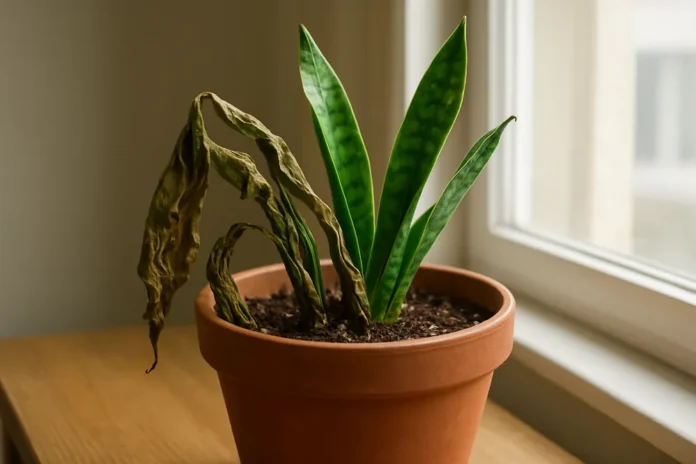
Snake plant leaves usually shrivel because the plant is not moving water properly, most often from underwatering, overwatering with root damage, or temperature stress. Damaged roots, compacted soil, and pests can also leave the leaves looking wrinkled, thin, or collapsed.
A healthy snake plant should have firm, upright leaves with a smooth surface. When snake plant leaves shrivel instead, the plant is telling you that something is interfering with its ability to hold and move moisture.
In most homes, the biggest causes are watering mistakes, root problems, and environmental stress. The tricky part is that underwatering and overwatering can both lead to wrinkled or collapsing leaves, so it helps to look at the whole plant before assuming it just needs a drink.
I usually start with the potting mix, the roots, and the texture of the affected leaves. Once you know whether the plant is dry, rotting, chilled, or rootbound, the fix becomes much clearer.
What Shriveling Looks Like on a Snake Plant
Shriveling can show up in a few different ways. Some leaves develop shallow wrinkles or vertical grooves. Others feel thinner than usual, fold inward, or begin to flop near the base. In more advanced cases, the leaves may look puckered, soft, and partially collapsed.
That appearance matters because it gives clues about the cause. A plant that is simply too dry often has firm but wrinkled leaves. A plant with root rot may have shriveled leaves that also feel soft or mushy near the bottom. Cold damage can make leaves look water-soaked before they wrinkle and fail.
- Wrinkled but still fairly firm leaves often point to underwatering or a rootbound plant.
- Shriveled leaves with yellowing, soft bases, or a sour smell often point to overwatering and root rot.
- Leaves damaged after a cold draft or chilly move may shrivel after the tissue has already been injured.
- Localized shriveling on one side of the plant can sometimes be tied to root damage, sun scorch, or pest feeding.
Underwatering Is a Common Cause
Snake plants are drought tolerant, but they are not indestructible. If the potting mix stays bone dry for too long, the leaves start using stored moisture. That is when you begin to see wrinkles, thinning, and a slightly deflated look.
This is especially common in small terra cotta pots, very fast-draining mixes, heated winter rooms, and plants that have put out new roots and pups without getting a little more water to support that growth. A neglected plant may not yellow first. It often just looks tired, puckered, and less rigid.
- The mix pulls away from the sides of the pot
- Leaves feel dry, not mushy
- The plant looks lighter in weight than usual
- Older leaves wrinkle first, though severe dryness can affect several at once
- The soil may resist water at first if it has become extremely dry
When I suspect underwatering, I pay attention to leaf texture more than color. A thirsty snake plant often stays green longer than people expect, but the surface starts to look pleated and the leaf loses that heavy, solid feel.
If drought is the issue, a deep watering usually helps stop further collapse. The plant may not fully plump up every damaged leaf, but new growth should come in stronger once moisture levels are more consistent.
Overwatering and Root Rot Can Cause the Same Symptom
This is the part that confuses many growers. A snake plant with too much water can also look shriveled, because rotted roots can no longer absorb moisture. The leaves are technically surrounded by wet soil, but the plant is still functionally dehydrated.
If the roots or rhizomes begin to rot, leaves may wrinkle, lean, soften, or detach at the base. The pot may feel heavy for days after watering. In severe cases, the base of the plant smells sour, and the underground rhizomes turn mushy instead of staying pale and firm.
Signs Shriveling Is Coming From Too Much Water
- Soil stays wet for a week or longer
- Leaves shrivel but also feel soft in places
- Yellowing appears along with wrinkles
- The plant is unstable or wobbly in the pot
- Brown, black, or mushy roots are present
- The pot has poor drainage or no drainage hole
Overwatering is not only about frequency. It can also come from using a dense potting mix, keeping the plant in low light where it uses less water, or planting it in a pot that is too large for the root system.
Root Problems Beyond Rot Can Leave Leaves Wrinkled
Sometimes the roots are not rotting, but they are still unable to support the leaves well. A heavily rootbound snake plant may dry out so quickly that moisture never stays available long enough. Compacted soil can also shed water down the pot edges while the root ball stays dry inside.
Damage during repotting is another possibility. If a large portion of the roots was broken, disturbed, or cut away, the leaves may begin to wrinkle because the reduced root system cannot keep up with the foliage above it.
- Roots circling densely with very little soil left in the pot
- Water running straight through without soaking the root ball
- A hard, compacted root mass that is difficult to wet
- Shriveling that starts shortly after dividing or repotting
In these cases, the solution is usually a better-sized pot and a gritty, well-aerated mix that actually absorbs water without staying soggy.
Cold Temperatures and Drafts Can Injure the Leaves
Snake plants tolerate a lot indoors, but they do not like cold stress. Exposure to chilly windows, uninsulated porches, car rides in winter, or HVAC drafts can damage leaf tissue and roots. Once that tissue is injured, the leaves may wrinkle, collapse, or take on a translucent look before turning mushy or scarred.
Cold stress often shows up fast after a weather event or a move. One side of the plant may be worse than the other if only part of it was exposed. Unlike a simple dry spell, cold damage usually does not reverse much in the affected leaf tissue.
- Recent exposure to temperatures below about 50°F
- Leaves near glass or vents are affected first
- Tissue looks water-soaked before it shrivels
- Damage appears suddenly rather than gradually
Too Much Harsh Sun Can Dry and Weaken Leaves
Snake plants handle bright light well, but a plant moved suddenly into intense direct afternoon sun can scorch. Sun-stressed leaves may bleach, develop dry patches, or begin to wrinkle if the roots cannot replace moisture quickly enough.
This is more likely outdoors, in south- or west-facing windows during hot weather, or after moving a low-light plant directly into strong sun. The shriveling is often paired with faded color, crispy patches, or a flattened, stressed look on the sun-facing side.
Pests Can Cause a Deflated or Puckered Look
Pests are not the most common reason for shriveling on snake plants, but they do happen. Mealybugs, spider mites, and sometimes scale can feed on plant sap, leaving leaves looking weakened, dull, and slightly wrinkled over time.
Spider mites are especially easy to miss at first because the damage starts subtly. The leaves may lose some gloss, show fine stippling, and gradually look less full. Mealybugs often hide down in leaf creases and around the base.
- Fine webbing or speckled leaf surfaces
- Cottony white clusters near the base or leaf joints
- Sticky residue or scale bumps
- Shriveling that does not match obvious watering issues
How to Tell Which Cause Is Most Likely
Because several problems can produce similar wrinkles, it helps to work through a short diagnosis instead of reacting with more water right away. The goal is to figure out whether the plant has too little moisture, too much moisture, damaged roots, or damaged leaf tissue.
Start with the Potting Mix
If the mix is dusty dry all the way down and the pot feels unusually light, thirst is likely. If it is still wet several days after watering, especially in a low-light room, overwatering is more likely.
Check the Leaf Base
Firm but wrinkled leaves often point to dehydration. Soft, yellow, or mushy bases point toward rot. Damage from cold may feel oddly limp or translucent before drying into scars.
Look at the Roots if the Picture Is Unclear
Healthy roots are light-colored and firm. Rotten roots are dark, mushy, and may slip apart. A rootbound plant will have very dense roots with little loose mix left.
If the symptom is confusing, do not keep switching between soaking the plant and letting it sit dry for weeks. I get the best results by inspecting the roots once, correcting the real issue, and then judging recovery by the condition of new growth, not by expecting damaged leaves to become perfect again.
How to Fix a Shriveling Snake Plant
If the Plant Is Too Dry
Water deeply until excess drains out, then let the pot drain completely. If the soil has become hydrophobic and water rushes through, soak the pot briefly in a basin so the root ball can rehydrate evenly. After that, resume watering only when the mix is mostly dry, not on a rigid calendar.
If the Plant Is Overwatered or Rotting
Remove the plant from the pot and inspect the roots and rhizomes. Trim away mushy or blackened parts with clean scissors, let cuts dry briefly, and repot into fresh, fast-draining mix in a container with a drainage hole. Hold off on watering for a few days if substantial rot was removed.
If the Plant Is Rootbound or in Compacted Soil
Repot one size up or divide the plant if it has become very crowded. Use a loose indoor succulent-style mix or regular houseplant mix amended with extra pumice, perlite, or coarse bark to improve airflow and prevent soggy pockets.
If Cold or Sun Stress Is Involved
Move the plant to a stable spot with bright, indirect light and moderate indoor temperatures. Avoid placing it against freezing glass, near heat vents, or in blasting afternoon sun right after a move.
If Pests Are Present
Isolate the plant and wipe visible pests off with a damp cloth or cotton swab. Follow with insecticidal soap or another houseplant-safe treatment as needed, repeating as directed until activity stops.
Will Shriveled Leaves Recover
Sometimes slightly wrinkled leaves improve once the moisture issue is corrected, especially if the tissue is still firm and green. But severely shriveled, creased, mushy, or scarred leaves usually do not return to a smooth, full appearance.
That does not mean the plant is lost. Snake plants often recover by producing healthy new leaves once conditions improve. If an old leaf is badly collapsed or rotten at the base, you can remove it cleanly. If it is only cosmetic damage, I often leave it in place until new growth fills in.
How to Prevent Shriveling in the Future
Prevention comes down to matching the plant's slow, steady growth habit. Snake plants want a pot that drains well, soil that does not stay soggy, and watering that is thorough but infrequent.
- Use a pot with a drainage hole
- Choose a loose, fast-draining mix
- Water when the mix is mostly dry, not just when the surface looks dry
- Reduce watering in winter and in low light
- Keep the plant away from freezing windows and strong HVAC blasts
- Inspect the roots if the plant suddenly starts collapsing without an obvious reason
- Check occasionally for mealybugs and mites near the base and leaf grooves
Most long-term snake plant problems I see are really pot and soil problems, not plant problems. A healthy plant in the right mix forgives occasional missed waterings far better than a plant trapped in dense, wet soil.
FAQ
Can a Shriveled Snake Plant Leaf Become Firm Again?
Mildly wrinkled leaves may improve some after the plant is rehydrated or the roots recover. Severely shriveled, bent, mushy, or scarred leaves usually stay damaged even if the plant itself recovers.
Should I Cut Off Shriveled Snake Plant Leaves?
Remove leaves that are rotten, mushy at the base, badly collapsed, or clearly dead. If a leaf is only a little wrinkled but still green and stable, you can leave it until the plant puts out stronger new growth.
How Often Should I Water a Snake Plant with Wrinkled Leaves?
There is no fixed schedule that works in every home. Water based on how dry the potting mix is, because wrinkled leaves can come from either drought or root rot caused by staying too wet.
Why Are Only One or Two Snake Plant Leaves Shriveling?
That can happen when those leaves are older, have localized root damage, were injured by cold or sun, or are being affected by pests at the base. If the rest of the plant looks healthy, the problem may not be system-wide.
Can Overwatering Really Make Snake Plant Leaves Look Dehydrated?
Yes. When roots rot, they stop taking up water properly, so the leaves can wrinkle and collapse even though the soil is wet.
Do Snake Plants Wrinkle when They Need a Bigger Pot?
They can. A very rootbound snake plant may dry out too fast or struggle to absorb water evenly, which can leave the leaves looking thin and wrinkled.
What Kind of Soil Helps Prevent Snake Plant Leaves From Shriveling?
A fast-draining mix works best, such as a succulent mix or a houseplant mix amended with perlite, pumice, or bark. The goal is to hold some moisture while still allowing plenty of air around the roots.
Still troubleshooting your plant setup? Read our guide to the best soil mixes and pots for snake plants so you can fix root problems fast and prevent shriveled leaves from coming back.
