

Note: This article contains affiliate links. If you click on these links and make a purchase, I may earn a small commission at no extra cost to you. This helps support my research and content. Read my full affiliate disclosure here.
Basements bring unique pest challenges: cooler temperatures, cluttered storage, and hidden access points make rodent control different from the rest of the house. Picking the right mouse trap for basement use matters because capture method, placement flexibility, and durability determine whether you actually stop activity without disturbing stored items or finished areas. This guide shortlists six top options specifically suited for basements and explains the practical tradeoffs-bait types, mounting and anchoring, moisture resistance, and ongoing maintenance-that matter in real-world basements. Read on to understand which features matter most for your situation before you inspect layouts and set traps.
Top Picks at a Glance
| Best Overall The best all-around choice for most situations | OWLTRA Indoor Electric Mouse Trap (Small) |  |
| Best Quality Built to a higher standard if you want something more solid | Catchmaster Rat & Mouse Glue Traps, 6-Pack (Large Heavy Duty) |  |
| Best Value The sweet spot between price and what you get | Tomcat Glue Traps Mouse Size with Eugenol, 6 Pack |  |
| Best Budget The cheapest option that still gets the job done reliably | Tomcat Wooden Mouse Traps, 4 Pack |  |
| Highest Rated A top-rated pick with lots of positive feedback | AyaChuu 5-Gallon Bucket Flip-Lid Mouse Trap Kit (4-Pack) |  |
| Most Popular A crowd favorite that many people choose with confidence | Victor Metal Pedal Mouse Traps, 12-Pack (Wood Snap Traps) |  |
OWLTRA Indoor Electric Mouse Trap (Small)
| Target Species | Mouse, Rat |
|---|---|
| Power Source | Battery Powered |
| Material Type | Plastic |
| Unit Count | 1 Count |
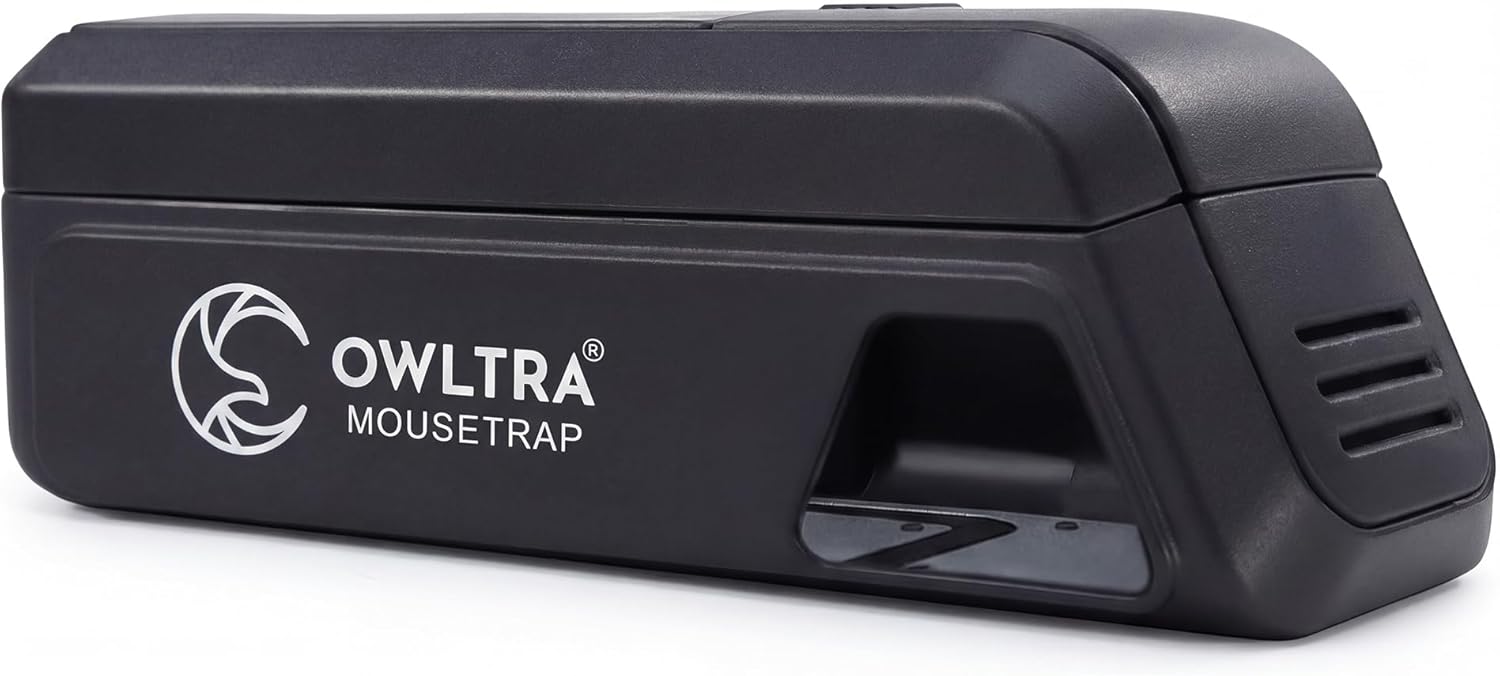
The OWLTRA Indoor Electric Mouse Trap is a compact, battery-powered unit designed to catch and kill mice and small rodents inside the home. It lures animals into a side-entry chamber where dual infrared sensors ensure the high-voltage zap only fires when a rodent is fully inside, reducing false triggers and helping protect curious pets or children. The no-escape internal design and strong shock make kills quick, and magnetic latches let you remove the top for touch-free disposal. Typical use is simple: insert four AA batteries, bait the back of the chamber with a small amount of peanut butter or similar bait, place the trap along walls or in corners of basements, and check periodically. Practical benefits include clean disposal, reduced need for poisons or messy glue traps, and portability to move to problem spots. Limitations are that it is sized for mice and smaller rodents only and requires fresh batteries and occasional cleaning; it also does not provide a reusable electric grid without replacing batteries over time.
Best for: Homeowners who want a sanitary, non-chemical way to remove mice from indoor spaces like basements and value an easy-to-use, contained disposal system.
Less Ideal for: People dealing primarily with large rats or heavy infestations should choose a larger or commercial-grade solution; those who prefer nonlethal live-capture methods should look elsewhere.
- Dual infrared sensors reduce false triggers and help protect children and pets
- No-escape chamber and strong high-voltage zap deliver quick kills
- Magnetic latch top allows touch-free, hygienic disposal
- Battery powered for easy placement without cords
- Designed for mice and smaller rodents only, not for larger rats
- Requires 4 AA batteries which must be replaced periodically
- Plastic construction may wear faster than metal alternatives
Verdict: A compact, battery-powered indoor trap that delivers quick, contained kills and hygienic disposal for mouse problems in basements.
Catchmaster Rat & Mouse Glue Traps, 6-Pack (Large Heavy Duty)

| Unit Count | 6 Count |
|---|---|
| Target Species | Rat, Mouse, Snake |
| Material Type | Plastic |
| Power Source | manual |
| Number of Pieces | 6 |
Catchmaster large glue traps are ready‑to‑use sticky trays that capture rats, mice, and snakes without baiting. You peel the trays apart, set them along runways such as baseboards, under sinks, or in closets, and check them daily; the manufacturer recommends spacing traps about 4 to 6 feet apart. The product uses an extra‑strength adhesive formulated to stay tacky in cool, damp areas and can last up to a year in normal conditions. Because the trays are disposable plastic, they are simple to deploy and stack for storage. They require no poison or spring mechanism, so they are a lower‑mess option for homeowners who want to avoid killing methods that need cleanup. Limitations are that stuck animals remain alive and require humane disposal, and the traps must be kept out of reach of children and pets or used inside enclosed placements. Also these are single‑use trays, so recurrent infestations will need repeated purchases.
Best for: Homeowners who prefer a low‑contact, chemical‑free indoor rodent control method and want simple, ready‑to‑set traps for monitoring and containing infestations.
Less Ideal for: People who need quick lethal control without handling trapped animals or those with young children or pets at frequent risk of accessing unset areas should consider enclosed or alternative solutions.
- Ready to use with no baiting required
- Extra‑strength adhesive that stays effective in cool or humid indoor spots
- Large tray surface covers common rodent pathways
- Disposable plastic trays are easy to store and stack
- Works without poisons or spring mechanisms
- Single‑use design means ongoing replacement for persistent problems
- Does not humanely kill trapped animals and requires removal and disposal
Verdict: A simple, chemical‑free ready‑to‑use glue tray that offers discreet indoor rodent monitoring and containment for cautious homeowners.
Tomcat Glue Traps Mouse Size with Eugenol, 6 Pack

| Unit Count | 6 Count |
|---|---|
| Target Species | Cockroach, Mouse, Scorpion, Spider |
| Number of Pieces | 6 |
| Power Source | Air Powered |
Tomcat Glue Traps are ready-to-use sticky pads formulated for strong immediate grip and sustained hold to catch mice and other crawling pests such as cockroaches, spiders, and scorpions. You place the disposable boards along walls, in cupboards, basements, garages, or other areas where rodents run; no bait is required because the adhesive and eugenol attract and immobilize pests. The package contains six traps and the manufacturer recommends checking and relocating traps after 2 to 3 days if there is no catch. Practical benefits include simple setup, pesticide-free operation, and versatility against multiple pest types. Important limitations are that glue traps can leave live animals stuck to the board, require careful placement to avoid pets or wildlife contact, and are not suitable for wet areas. Disposal requires handling of the caught rodent and adhesive, so they work best for buyers prepared for that hands-on step.
Best for: Buyers who want a low-visibility, pesticide-free way to suppress indoor mouse activity and value a ready-made, professional-strength adhesive solution they can place and monitor themselves.
Less Ideal for: People who prefer quick-kill traps, hands-off removal methods, or who cannot or will not handle disposal of trapped animals should consider alternative control options.
- Professional-strength adhesive provides immediate grip and long hold
- Ready to use out of the box with no bait required
- Effective against multiple crawling pests, not just mice
- Compact mouse-size pads suit placement along walls and in tight spaces
- May trap animals alive which requires disposal handling
- Not safe for use in areas accessible to pets, birds, or non-target wildlife
- Ineffective in wet locations or outdoors where moisture is present
Verdict: Choose these glue traps if you want a ready-to-use, pesticide-free adhesive solution for catching mice and other crawling pests along indoor runways.
Tomcat Wooden Mouse Traps, 4 Pack

| Unit Count | 4 Count |
|---|---|
| Target Species | Mouse |
| Power Source | manual |
| Material Type | Wooden,Gel |
These Tomcat wooden mouse traps are a basic, low-cost snap-trap intended for quick, single-capture mouse control in garages, basements, kitchens, and other sheltered spots. Use is straightforward: bait the trigger with peanut butter or attractant gel, set the U-shaped bar, and place the trap against walls where mice travel. The kit contains four ready-to-use traps with a traditional mechanical trigger so no electricity or bait stations are required. Practical benefits include a low per-trap cost, compact flat profile for tucking into tight gaps, and a familiar, easy-to-set design that most people find intuitive. Limitations are that they are single-use disposable traps and require safe handling and disposal after a catch, and they do not provide ongoing protection like enclosed bait stations or glue boards. For garage use they work best in sheltered, dry areas along baseboards or near entry points rather than out in open wet environments.
Best for: Garage owners who want an inexpensive, no-frills way to catch individual mice in sheltered areas and prefer quick setup over long-term containment.
Less Ideal for: People seeking continuous protection, tamper-resistant solutions around pets or children, or methods that avoid handling trapped rodents should consider enclosed stations or reusable traps instead.
- Low cost and simple design makes them economical for occasional problems
- Mechanical snap action requires no power source or special tools
- Compact and flat profile fits along walls, in cupboards, and tight garage spaces
- Ready to bait and set out of the package
- Single-use disposable design means recurring purchase if you have ongoing activity
- Requires manual handling and disposal after catching a mouse
Verdict: A very affordable, easy-to-use disposable snap trap that is well suited to catching individual mice in sheltered garage spots.
AyaChuu 5-Gallon Bucket Flip-Lid Mouse Trap Kit (4-Pack)

| Unit Count | 4 Count |
|---|---|
| Power Source | manual |
| Manufacturer | AyaChuu |
This kit converts a standard 5-gallon bucket into a reusable flip-lid rodent trap that catches mice and rats without poisons or snap mechanisms. Installation is straightforward: mount the flip-lid mechanism and ramp on a bucket (bucket not included), add a smear of bait on the lid, and place the ramp against walls or entry points. The lightweight lid and gravity-driven reset make captures fast and allow multiple catches before emptying, which is useful for heavy infestations outdoors. Notable features include the sensitive flip-lid, reusable construction, and simple manual power source that requires no batteries. The humane live-capture approach reduces odor and safety concerns around children and pets compared with lethal methods. Important limitations are that you must supply a compatible 5-gallon bucket and set up multiple kits for broad coverage; success also depends on bait choice and proper placement, and very large rodents may be harder to contain depending on bucket strength. For someone who values reliable, low-maintenance outdoor control, this kit is a practical, long-term option.
Best for: Buyers who need a dependable, low-maintenance outdoor rodent solution and prefer reusable, non-chemical methods for ongoing infestations.
Less Ideal for: People seeking a self-contained, instant-use trap without sourcing a bucket or those who prefer lethal control methods for single, isolated rodents.
- Reusable flip-lid mechanism for repeated catches without replacing parts
- Gravity-triggered design is manual and needs no batteries or power
- High-capacity when paired with a 5-gallon bucket, reducing emptying frequency
- Humane live-capture reduces odor and avoids poisons around people and pets
- 5-gallon bucket is not included so you must provide a compatible bucket
- Effectiveness depends on proper bait choice and placement which can require trial and error
Verdict: A reliable, reusable flip-lid kit for turning a 5-gallon bucket into a high-capacity, humane outdoor rat and mouse trap.
Victor Metal Pedal Mouse Traps, 12-Pack (Wood Snap Traps)

| Unit Count | 12 Count |
|---|---|
| Material Type | Metal, Wood |
| Target Species | Mouse |
| Power Source | manual |
The Victor Metal Pedal Mouse Traps are straightforward wooden snap traps built around a metal pedal trigger for quick activation and a decisive kill. They are typically used indoors along baseboards, in attics, basements, and near entry points where mice travel; bait with peanut butter on the pedal and set the arm bar per the instructions. Notable features include the metal pedal trigger for sensitive, instant snapping and sustainably sourced FSC wood construction. Practical benefits are immediate results when a rodent contacts the pedal, the option to dispose of the whole trap for fast cleanup or remove the catch and reset the trap for reuse, and a 12-pack quantity that lets you cover multiple hotspots. Limitations are the manual setting which requires care to avoid pinching, and these traps are single-catch devices that require resetting or replacement after each use. They are also designed specifically for mice rather than larger rodents, so placement and baiting technique matter for consistent success.
Best for: Buyers who prioritize decisive performance and want proven, no-frills indoor rodent control across multiple hotspots and prefer traps that deliver instant results.
Less Ideal for: People seeking a hands-off or multi-catch electronic solution or those who need traps sized for rats and larger rodents should consider different options.
- Metal pedal trigger provides sensitive, instant activation for fast kills
- Reusable or disposable use gives flexibility for cleanup and cost control
- Comes in a 12-pack so you can cover multiple infestation points
- Made from FSC certified wood for responsibly sourced materials
- Requires careful manual setting which can risk pinched fingers
- Designed for mice only and not effective for larger rodents
Verdict: Choose these traps when you want a proven, performance-focused snap trap that delivers quick, reliable kills for indoor mouse control.
Choosing the Right Mouse Trap for Basement: Key Factors to Consider
Capture Method and Mechanism
Different capture mechanisms perform differently in basement conditions. Snap traps give quick kills and are compact enough to fit behind boxes and on shelving, but they require careful placement to avoid accidental triggers when moving stored items.
Live-catch traps let you release animals but need frequent checking to avoid stress to captured rodents and potential odor in enclosed basements. Enclosed stations hide bait and reduce non-target access, which helps in homes with pets, but their bulk can make them harder to tuck into narrow gaps.
Placement Versatility
Basements often have varied surfaces and cluttered layouts, so a trap that can be freestanding, wall-mounted, or anchored to structural members is more useful. Traps with flat, low profiles slide under storage bins and along foundation walls, while models with mounting slots or tie-down points attach to pipes or joists to prevent dragging.
Think about where mice travel in your basement-along edges, near utility lines, or through holes in drywall-and choose traps that fit those travel paths without creating hazards for people moving through the space.
Moisture Resistance and Durability
Basements are prone to higher humidity, occasional damp patches, and dust. Traps made from rust-resistant metals or durable plastics will last longer and stay reliable through seasonal humidity swings. Electronic components and adhesives are vulnerable in moist basements, so weather-resistant housings are important.
Durability also covers mechanical reliability: spring tension and latch designs should hold up to repeated resets, and plastics should resist becoming brittle in cooler basement temperatures.
Bait Compatibility and Attractants
Basement mice may prefer foodstuffs different from pantry-invading mice. Peanut butter, chocolate, and high-fat baits are commonly effective, but some traps work better with dry bait like cereal or seed. Choose traps that allow secure bait placement so mice must engage the trigger to access it.
Scented lures and commercial attractants can help in large spaces, but strong odors may dissipate more quickly in open basements, requiring more frequent rebaiting.
Safety Around People and Pets
If your basement is accessed by children, pets, or frequent household traffic, safety features matter. Enclosed stations and trap designs that shield snap mechanisms reduce accidental exposure. Consider traps that can be locked or secured to limit handling when checking or resetting.
Also plan placement to avoid tripping hazards and to keep traps out of reach of curious hands or paws. For live-capture options, prepare a humane release plan and check traps often to prevent stress to animals.
Ease Of Monitoring And Maintenance
Basements are checked less frequently than kitchens, so choose traps that are easy to inspect from a distance or have visible indicators showing a capture. Simple reset mechanisms reduce the time you spend maintaining a trap run.
Low-maintenance traps with washable components or replaceable bait pods simplify long-term use. Consider how easy it is to clean up after a capture and whether the trap design minimizes unpleasant exposure during disposal or release.
Where Mice Hide And How That Affects Trap Placement
Mice in basements use edges, utility runs, and low-light gaps under shelving or behind stored boxes. Track signs include droppings, gnaw marks, and runways along walls. Use these indicators to map likely paths before placing traps so you do not randomly scatter devices in open areas where catches are unlikely.
- Place traps parallel to walls and along baseboards where mice naturally travel.
- Target corners, behind stacked boxes, and near appliances that provide warmth or food scent.
- Avoid placing traps in high-traffic walkways to reduce accidental disturbance.
Preparing The Basement For More Effective Control
Decluttering and reducing food sources are essential early steps. Seal obvious entry points such as gaps around pipes, unfinished sill plates, and holes in foundation walls. Store food and pet supplies in sealed containers and minimize cardboard and paper piles that attract nesting material.
Removing hiding spots makes monitoring easier and increases trap encounters. Sweep and vacuum to remove debris that can mask droppings and to expose runways where mice move, then place traps along those visible corridors.
- Inspect utility penetrations and use caulk or steel wool to block small gaps.
- Elevate stored items off the floor where possible to reduce understory pathways.
- Keep a weekly check schedule to rebait and reposition traps based on new activity.
Humane Considerations And Local Disposal Practices
If you prefer live-capture, check traps at least once or twice a day in summer and more frequently in cold weather to avoid heat or cold stress. Understand local ordinances regarding release; moving wildlife long distances can be illegal or environmentally risky.
For lethal methods, follow local guidelines for disposal and sanitation to reduce disease risk. Wear gloves when handling traps and wash hands after contact. Consider placing used traps in a dedicated container until you can clean and sanitize them properly.
- Plan a daily or every-other-day inspection routine for live traps.
- Keep disposable bags and disinfectant on hand for sanitary handling.
- Learn local wildlife regulations before relocating captured animals.
Integrating Traps With Ongoing Basement Maintenance
Treat trap maintenance as part of routine basement checks. When you inspect sump pumps, water heaters, or HVAC equipment, glance at trap locations and note any fresh activity. Rotate trap placement after a few days if captures are not occurring.
Seasonal changes affect mouse activity: they move indoors more in colder months, so increase monitoring frequency in fall. Replace bait regularly and test spring tension occasionally to ensure traps remain responsive.
- Set reminders tied to other basement tasks to keep checks consistent.
- Swap bait types if activity slows to overcome learned avoidance.
- Inspect traps after any damp events and move them to drier locations if corrosion risk is present.
How We Chose the Best Mouse Trap for Basement
We selected six mouse traps that suit basement environments by applying practical, gardener-style filters that matter in a low-light, potentially damp, cluttered space. First, we prioritized capture method relevance for basements, including snap, live-catch, and enclosed bait stations that work in narrow crawlspaces and finished basements. Second, we evaluated material durability and moisture resistance because basements often have higher humidity and occasional spills. Third, we checked placement versatility: ease of anchoring to joists, baseboards, shelving, and inside boxes or gaps without creating tripping hazards. We also considered bait and lure compatibility with common household attractants, plus how easy traps are to check and reset during routine basement inspections. Safety for pets and children in multi-level homes was an editorial exclusion filter: traps that required complex professional-only setups were excluded. For transparency, we did not include specialty commercial-grade systems intended only for technicians. The criteria above guided which products made the shortlist and informed the scoring metrics used across each entry.
FAQ
How many traps should I set in a typical basement?
It depends on observed activity and layout. Start with multiple traps spaced along suspected runways-often three to six in a medium basement-then adjust placement based on where you see droppings or gnaw marks. More traps increase the chance of intercepting travel paths without relying on a single device.
Will traps work in an unfinished, damp basement?
Yes, but choose moisture-resistant materials and models with protected mechanisms. Place traps off the floor on shelving or anchored to joists when possible to reduce exposure to dampness and prolong effectiveness.
Are enclosed bait stations necessary if I have pets?
Enclosed stations reduce the chance pets or children accessing bait and reduce accidental exposure to trigger mechanisms. They are a good choice in multi-use basements, though they may be bulkier and require strategic placement to fit travel paths.
How often should I rebait traps in a large basement?
Check traps every few days and rebait when bait looks depleted or dry. In large, open basements odors disperse faster, so you may need to refresh attractants more often than in confined rooms.
Can I use household food as bait in these traps?
Common household baits like peanut butter, chocolate, and cured meats are often effective. Use small amounts secured to the bait area so mice must interact with the trigger. Avoid strong-smelling baits near food storage to prevent contamination risks.
Final Verdict
Choosing the right mouse trap for basement use comes down to matching capture method, placement flexibility, and durability to the specifics of your space. Prioritize traps that can be tucked into travel paths, resist moisture, and minimize non-target risk if pets or children access the area. Balance frequent monitoring and sanitation with the trap style you prefer. That approach helps you stop activity efficiently while keeping your basement organized and safe.
