

Note: This article contains affiliate links. If you click on these links and make a purchase, I may earn a small commission at no extra cost to you. This helps support my research and content. Read my full affiliate disclosure here.
Choosing the right mulch for cherry trees matters because the wrong material can hold too much moisture, harbor disease, or starve feeder roots of oxygen. In a home orchard or backyard setting you want mulch that moderates soil temperature, conserves moisture through dry spells, and improves soil structure over time. This guide covers six shortlisted mulches chosen for typical cherry tree needs, and it explains the performance traits that matter in real garden conditions. Below we review how each option handles moisture retention, weed control, and soil health so you can pick the best fit for your trees.
Top Picks at a Glance
| Best Overall The best all-around choice for most situations | CountryMax Natural Shredded Hardwood Mulch, 2 cu ft |  |
| Best Quality Built to a higher standard if you want something more solid | Plantonix Coco Chips Mulch Brick (10 lb) – Compressed Coconut Husk Chips |  |
| Best Value The sweet spot between price and what you get | Wood Smith USA 100% Natural Cedar Chips, 4 Quart Bag |  |
| Best Budget The cheapest option that still gets the job done reliably | SuperMoss Coco Mulch Small Bale (200 cu in), Natural |  |
| Most Popular A crowd favorite that many people choose with confidence | HealthiStraw GardenStraw Premium Garden Mulch, 3 cu ft |  |
| Best Seller A high-volume bestseller chosen again and again | Back to the Roots Organic Mulch, 1 Cubic Foot |  |
CountryMax Natural Shredded Hardwood Mulch, 2 cu ft
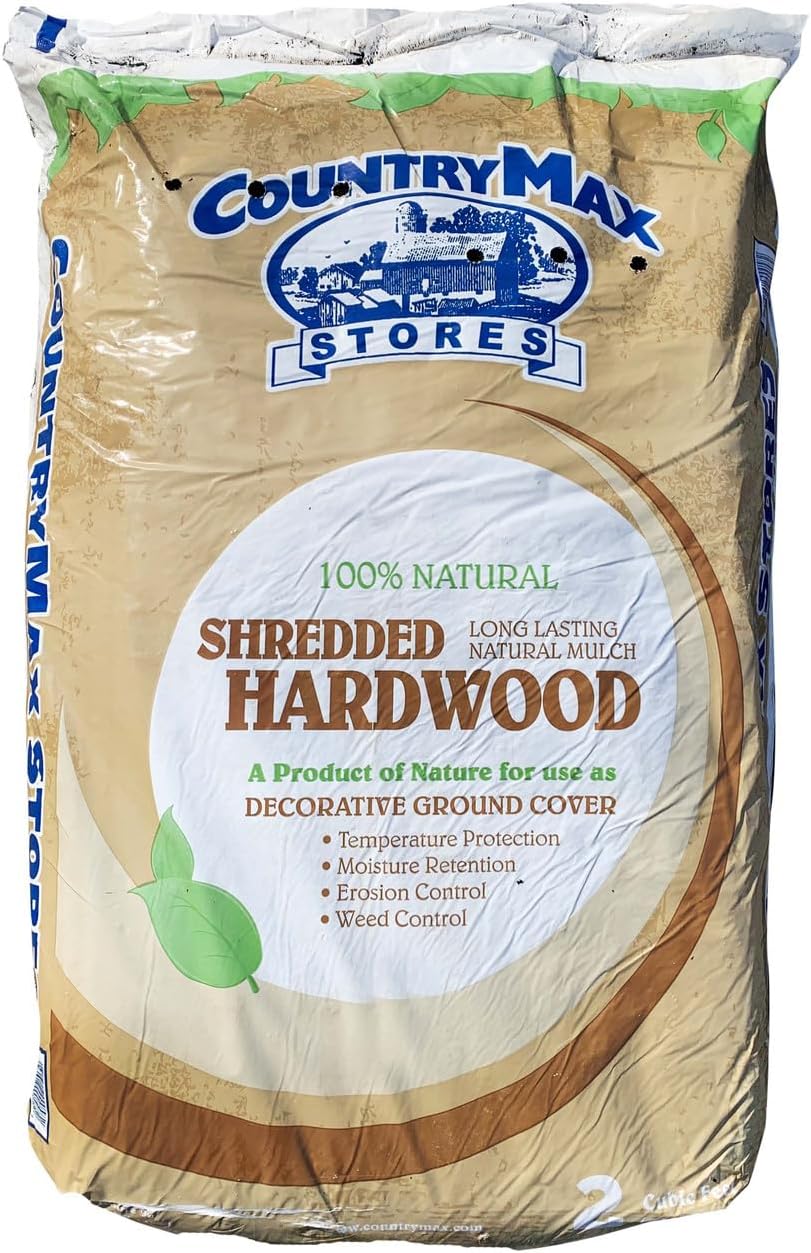
| Manufacturer | CountryMax |
|---|---|
| ASIN | B072YXFMCW |
| Product type | Natural Shredded Hardwood Mulch |
| Volume | 2 Cu. Ft. |
CountryMax Natural Shredded Hardwood Mulch is a basic hardwood mulch sold in 2 cubic foot bags for garden beds, borders, and around trees. It is typically spread 2–4 inches deep to conserve moisture, suppress weeds, and moderate soil temperature around plants like cherry trees. The shredded hardwood texture creates a tidy, natural look and breaks down over time to contribute organic matter to the soil. Practical benefits include good coverage per bag for small to medium beds and a neutral wood tone that complements most landscapes. Limitations are that it is a generic hardwood product so particle size and decomposition rate will vary, and like all organic mulches it requires periodic replenishing and careful placement to avoid piling against tree trunks. For cherry trees use a donut-shaped ring leaving a few inches of clear trunk to prevent rot while still keeping roots insulated and moist.
Best for: Gardeners who want a simple, natural mulch to protect roots and conserve moisture for fruit trees and beds while improving soil over seasons.
Less Ideal for: Growers looking for a long-lasting inorganic option or a specifically graded mulch product for heavy clay or highly acidic soils should consider alternatives.
- Natural hardwood provides organic matter as it decomposes
- Shredded texture lays flat for even coverage and tidy appearance
- Helps retain soil moisture and suppress weeds when applied at recommended depth
- Requires periodic replenishing as it decomposes
- No specification on particle size or processing grade provided
Verdict: A straightforward natural hardwood mulch that reliably conserves moisture and improves soil, making it a solid choice for mulching cherry trees.
Plantonix Coco Chips Mulch Brick (10 lb) – Compressed Coconut Husk Chips

| Unit Count | 160 Ounce |
|---|---|
| Item Type Name | Soil and Soil Amendments |
| Brand Name | plantonix |
| Volume | 15 gallons |
Plantonix Coco Chips arrive as a compact 10 pound brick that hydrates and expands into lightweight coconut husk chips for use as mulch, soil amendment, or terrarium bedding. You soak or wet the block to break it apart, then spread the chips over garden beds, containers, orchid pots, or raised beds to reduce evaporation and moderate soil temperature. The product is pre-screened, washed, and aged to remove dirt and rocks, and the low electrical conductivity and near-neutral pH make it safe to mix with potting mixes. Practical benefits include improved drainage and aeration compared with heavy wood mulches, long-lasting moisture retention that can reduce watering frequency, and an attractive tropical look. Important limitations are that you must rehydrate and break up the compressed brick before use which adds prep time, and coco chips do not supply nutrients so you will still need to fertilize regularly. Also note the safety warning about dust and keeping it away from children and pets during handling.
Best for: Buyers who prioritize reliable, consistent mulch performance and want a sustainable, low-maintenance material that retains moisture and improves soil structure for beds and containers.
Less Ideal for: Gardeners who need a nutrient-rich soil amendment or who prefer a no-prep, ready-to-spread loose mulch should consider alternatives.
- Made from 100% recycled coconut husks, a renewable alternative to peat and wood mulches
- Pre-screened and washed to remove dirt, rocks, and excess fiber
- Excellent at retaining moisture while maintaining airflow and drainage
- Lightweight and long-lasting so it does not compact like some organic mulches
- Requires soaking and manual breakup of the compressed brick before use
- Does not provide plant nutrients and should be used with a fertilizer plan
Verdict: A dependable, renewable mulch solution that holds moisture and improves aeration without compacting, ideal for gardeners who want consistent performance.
Wood Smith USA 100% Natural Cedar Chips, 4 Quart Bag

| Brand Name | Wood Smith USA |
|---|---|
| Unit Count | 148.92 Ounce |
| Number of Packs | 1 |
| Volume | 1 |
These 100% natural cedar chips are a lightweight, aromatic mulch sold in a 4-quart bag that works best as a top dressing for potted plants, hanging baskets, and small garden patches. The cedar scent helps deter some insects and can freshen indoor potting mixes, while the chips also help retain surface moisture and reduce light reaching weed seeds. Because the bags are hand sifted and packed, quality is generally consistent for small jobs, and the product is easy to spread with minimal tools. The obvious limitation is the small volume — a single 4-quart bag covers only a very small area, so multiple bags are required for beds or larger weed-control projects. The chips are also coarse compared with fine mulches, so they are better for decorative surface cover than for forming a dense, weed-suppressing mat. Handle the product carefully to avoid inhaling dust and follow guidance if using around animals.
Best for: Buyers looking for an inexpensive, small-quantity mulch to refresh pots, hanging planters, or to try cedar for insect control in limited areas.
Less Ideal for: Gardeners who need to cover large beds or who want a fine-textured mulch for dense weed-smothering should choose larger bulk bags or finer mulches instead.
- Natural cedar composition that repels some insects and adds a pleasant scent
- Small 4-quart bag useful for potted plants, hanging baskets, and spot treatments
- Helps retain surface moisture and reduces light to surface weed seeds
- Hand-sifted and hand-packed for generally consistent small-batch quality
- Very small volume so not cost-effective for large beds
- Coarse chip size offers less dense weed suppression than finer mulches
Verdict: A handy, low-cost 4-quart cedar chip bag for small-scale potting and spot weed control where you want a natural scent and insect-repellent benefits.
SuperMoss Coco Mulch Small Bale (200 cu in), Natural

| Brand Name | SuperMoss |
|---|---|
| Number of Packs | 4 |
| Volume | 200 cubic inches |
| pH | 5.7 – 6.24 |
SuperMoss Coco Mulch is a small bale of coconut-based soil amendment marketed for garden beds and containers. It hydrates quickly and holds more water than many peat-based mixes, which helps keep roots moist in raised beds between waterings. Because it is pH neutral and free of common soil-borne diseases, it can be blended into existing bed soil or used as a top layer to improve aeration and crumb structure. The mini-sizes make it easy to carry and store, and the product is described as long lasting when kept dry. It is not a complete potting mix on its own for larger plantings, so plan to amend with compost or fertilizer for nutrients. Also handle with care to avoid dust inhalation during mixing. For gardeners looking for a renewable, tidy alternative to peat, this coco mulch is convenient and effective for improving moisture retention in raised beds and containers.
Best for: Gardeners who need an affordable, renewable amendment to improve moisture retention and aeration in raised beds or containers and prefer something easy to carry and store.
Less Ideal for: Large-scale vegetable growers or those who want an all-in-one potting mix without additional amendments should consider bulk coir or ready-mixed soils instead.
- High water retention compared with peat, reducing watering frequency
- pH neutral and free from common soil-borne diseases
- Compact, easy-to-store bale format suitable for small jobs and containers
- Improves aeration and root vigor when mixed into bed soil
- Not a complete, nutrient-rich potting mix and needs compost or fertilizer for feeding plants
- Small volume per bale may require multiple bales for larger raised beds
- Can produce dust during handling so light respiratory caution is advised
Verdict: A compact, renewable coco mulch that boosts moisture retention and aeration in raised beds and containers, ideal for budget-conscious gardeners who want a tidy, easy-to-store amendment.
HealthiStraw GardenStraw Premium Garden Mulch, 3 cu ft

| Net volume | 3 cu ft |
|---|---|
| Intended use | Garden mulch, lawn seeding, compost-friendly |
| Material | 100% wheat straw |
| Source | Sustainably sourced, non-GMO |
HealthiStraw GardenStraw is a 3 cubic foot compressed bale of cleaned wheat straw formulated for use as garden mulch and seed protection. It is designed for vegetable, herb, flower and shrub beds where you want a lightweight, compostable mulch that retains soil moisture and suppresses weeds. The straw is processed to reduce dust and stray seeds and the short, specially cut fibers interlock when watered so the mulch stays in place without chemical tackifiers. For bushes you can apply a 2 to 3 inch layer around the drip line to cut evaporation, reduce compaction and gradually add organic matter as it breaks down. Practical benefits include easy spreading from a compressed bale, fast composting into the soil, and reduced watering needs. Limitations are that straw is less decorative than bark or wood chips and will decompose faster, so it requires periodic replenishing; it also provides less long-term weed barrier than heavier mulches. For gardeners focused on soil health and moisture conservation, it is a straightforward, low-risk choice.
Best for: Gardeners who prioritize soil health and want an easy-to-apply, compostable mulch for shrubs and mixed beds that reduces watering and improves organic matter over time.
Less Ideal for: People seeking a long-lasting, decorative mulch or a heavy-duty weed barrier for high-traffic beds should consider wood chips or stone instead.
- Cleaned, non-GMO wheat straw with reduced dust and seeds
- Fibers interlock when wetted so the mulch stays in place without binders
- Helps retain soil moisture and can reduce watering needs substantially
- Composts quickly and adds organic carbon to improve soil structure
- Decomposes faster than wood mulches so it needs topping up more often
- Less decorative and provides a lighter-duty weed barrier compared with heavier bark or rock mulches
Verdict: A clean, fast-composting straw mulch that conserves moisture and improves soil health, making it a safe, practical choice for mulching bushes.
Back to the Roots Organic Mulch, 1 Cubic Foot

| Brand Name | Back to the Roots |
|---|---|
| Item Highlight | Premium organic garden mulch; peat-free; 25.7 quart bag |
| Unit Count | 16 Ounce |
| Volume | 23 cubic centimeters |
This organic mulch from Back to the Roots is a peat-free, upcycled plant-matter blend intended for beds, containers, and around shrubs and trees. It includes dolomitic limestone to help balance pH, yucca extract to improve moisture control, and gypsum to aid water absorption, so it both conserves moisture around root zones and contributes modest nutrients. Typical use is spreading a 2–3 inch layer around bushes, avoiding direct trunk contact, or mixing into the topsoil when planting. Its organic base and added plant food make it a good choice for supporting healthy growth and reducing watering frequency. Limitations to keep in mind are the bag size and volume relative to larger beds and that it is formulated as a general mulch rather than a heavy-duty long-lasting bark product, so it may break down faster and need replenishing more often.
Best for: Gardeners who want an eco-conscious, peat-free mulch that improves moisture retention and supports plant health around bushes and in raised beds.
Less Ideal for: People looking for a coarse, long-lasting decorative bark mulch or a single large bag solution for extensive shrub beds.
- Peat-free organic blend made from upcycled plant matter and wood fines
- Contains yucca extract for improved moisture retention and gypsum for better water absorption
- Includes dolomitic limestone to help adjust and stabilize soil pH
- Formulated with all-purpose plant food to support growth of vegetables, herbs, and shrubs
- Bag volume is relatively small for large or multiple bush beds so more bags may be needed
- Breaks down faster than coarse bark mulches and will require periodic replenishment
Verdict: Choose this peat-free organic mulch when you want an eco-friendly, moisture-saving soil cover that also supplies mild nutrients to bushes and raised beds.
Choosing the Right Mulch for Cherry Trees: Key Factors to Consider
Moisture Retention and Drainage Balance
Mulch moderates the water available to cherry tree roots. Materials that hold moisture well can reduce irrigation frequency during dry spells, but excessive retention next to the trunk can cause root rot and crown disease. Choose a mulch that retains moisture in the root zone without creating a saturated layer against the trunk. In heavy clay soils prioritize mulches that improve surface infiltration and reduce puddling, while in sandy soils favor mulches that increase water-holding capacity.
How you apply mulch also affects moisture balance. Keep a gap of a few inches around the trunk and limit mulch depth to avoid creating a continuously wet microclimate. Top up in thin layers rather than deep reapplications to maintain a steady balance between moisture conservation and aeration.
Soil Improvement and Nutrient Release
Some mulches break down and add organic matter, improving soil structure and feeding beneficial microbes. These materials can gradually increase cation exchange capacity, water-holding capacity, and rooting depth over multiple seasons. Consider the rate at which a mulch decomposes: faster-breaking mulches enrich soil quickly but require more frequent replenishment, while slow-decomposing mulches provide longer-lasting cover but add organic matter more slowly.
Think about the tree's age and planting goals. Young orchard trees benefit from mulches that build soil fertility and encourage feeder-root development, while established trees may need mulches that mainly stabilize moisture and suppress weeds with minimal nutrient turnover.
Disease and Pest Considerations
Mulch choice can influence disease pressure and pest habitat. Fine or compacted materials can trap moisture against the trunk and create favorable conditions for fungal pathogens. Wood-based mulches may attract wood-boring insects or provide habitat for rodents if piled deeply near the trunk. Conversely, well-structured organic mulches can foster predatory insects and soil organisms that suppress pests.
To reduce risk, avoid mulch that contains known pathogen-prone material or compost that was not fully heated. Maintain a mulch-free ring around the trunk and keep mulch depth moderate to discourage pests and limit disease-promoting humidity.
Physical Protection and Weed Suppression
Mulch acts as a mechanical barrier that reduces weed emergence and protects shallow feeder roots from mechanical damage and temperature swings. Effective weed suppression reduces competition for water and nutrients, which is especially important for fruiting trees. Denser, coarser mulches often perform better at smothering perennial weeds, while fine-textured mulches can be readier to incorporate into the soil.
Consider how long you want the mulch to suppress weeds before needing replenishment, and whether you prefer a material you can easily rake aside for planting cover crops or underplantings in the tree dripline.
Practicality and Maintenance
Practical concerns determine whether a mulch works for your routine. Factors like local availability, hauling weight, dust, odor during decomposition, and how often you must top up affect long-term suitability. Lightweight mulches are easier to spread but may blow away on exposed sites; heavy mulches stay put but require more labor to install.
Also consider compatibility with your irrigation and mowing habits. Some mulches resist breakdown and stay visually tidy, while others require seasonal refresh. Choose a material whose upkeep fits your maintenance schedule and the scale of your orchard or yard.
Environmental and Sourcing Considerations
Where mulch comes from and how it was produced can matter for sustainability and potential contaminants. Recycled or locally sourced organic materials reduce transport footprint and support circular garden systems. Some commercially processed mulches may contain additives or colorants; if you prioritize organic fruit production, prefer untreated, natural materials.
Also weigh weed-seed content and potential chemical residues. Certified or well-composted products typically carry lower risk of weed seeds and volatile compounds than unprocessed green waste.
Best Mulch Depth and Placement Around Cherry Trees
Correct depth and placement are as important as the mulch material itself. For most cherry trees, a 2 to 4 inch layer of mulch over the dripline area gives good moisture conservation and weed suppression without smothering feeder roots. Keep mulch pulled back several inches from the trunk to prevent moisture and decay at the collar.
When spreading mulch, form a flat layer rather than a volcano mound. Extending mulch out to the dripline or slightly beyond protects shallow roots and moderates soil temperature across the active root zone.
- Maintain a mulch-free ring of 2 to 6 inches around the trunk base
- Avoid piling mulch against the trunk to prevent collar rot
- Refresh in thin layers annually instead of deep reapplications
Timing Mulch Applications for Tree Health
Apply mulch in late spring after soils warm and the risk of prolonged soggy conditions has passed. In colder climates a spring application prevents trapping winter moisture against the trunk and gives roots time to benefit during the growing season. Avoid heavy fresh applications in late fall in poorly drained sites where slow winter drying could increase disease risk.
If you use fast-decomposing organic mulch, plan for periodic top-ups during the growing season to maintain a consistent cover and nutrient supply.
- Best initial application: late spring
- Top up as needed during the growing season
- Thin fresh layers when soil is saturated or during prolonged wet periods
Mulch and Irrigation Compatibility
Match your mulch to your irrigation method. Drip irrigation works well with both organic and inorganic mulches because it delivers water under the mulch into the root zone. Coarse mulches allow better surface evaporation and are suited to overhead irrigation, while very fine mulches can impede water entry if not managed properly.
Check that mulch does not block emitters or clog drip lines. When installing irrigation under a thick organic mulch, place emitters so moisture penetrates the root zone rather than pooling on top of the mulch layer.
- Place drip lines beneath mulch for efficient watering
- Monitor soil moisture under mulch with a probe
- Adjust irrigation frequency if mulch increases water retention
Using Mulch to Support Soil Biology
Mulch feeds the soil food web as it decomposes, supporting earthworms, mycorrhizae, and microbes that help trees access nutrients. Choosing a diverse organic mulch or rotating types over seasons supports a broader soil community. Avoid sterile or chemically treated products if your goal is to build living soil.
Incorporate small amounts of compost around the outer dripline occasionally to boost nutrient cycling rather than relying solely on surface-applied mulch.
- Use natural, untreated materials to encourage beneficial organisms
- Add compost in thin layers to stimulate microbial activity
- Avoid over-application that can create anaerobic zones
Managing Mulch in Small Yards and Containers
In confined spaces or container-grown cherry trees choose lighter, cleaner mulches that do not attract pests or create excess moisture near structures. Fine bark or well-composted materials are easier to handle in small quantities and allow precise placement. For patio or balcony trees, keep mulch depth shallow and monitor drainage closely to avoid waterlogging.
Container trees often need more frequent refreshes because potting mixes and mulch decompose faster than in-ground soils. Use mulch primarily to stabilize temperature and reduce surface evaporation, not as a long-term nutrient source without regular compost additions.
- Use shallow layers in containers
- Monitor drainage closely after mulching
- Refresh more frequently in container settings
How We Chose the Best Mulch for Cherry Trees
We selected mulches for cherry trees by focusing on horticultural traits that directly affect tree health and orchard management. Primary evaluation criteria included moisture retention, because cherries are sensitive to both drought and waterlogged roots; soil improvement potential, since mulches that break down can feed soil biology and change structure over seasons; disease and pest risk, recognizing that some organic mulches can harbor pathogens or insects; and application practicality, covering ease of spreading, longevity, and the frequency of top-up required. We excluded materials known to create severe drainage problems or persistent toxicity to fruit trees. We also filtered out options that are impractical for typical backyard gardeners due to rare availability or complex installation needs. The final list emphasizes mulches that balance water management, soil health benefits, and low maintenance, with additional attention to how each option behaves near the trunk and beneath the scaffold root zone.
FAQ
How close to the trunk should I put mulch around a cherry tree?
Keep mulch pulled back a few inches from the trunk to prevent moisture accumulation at the collar. A small mulch-free ring reduces risk of bark rot and pest hiding places while still protecting feeder roots further out.
Can I use fresh wood chips as mulch for cherry trees?
Fresh wood chips can be used but they may immobilize nitrogen temporarily as they decompose and can retain moisture next to the trunk if piled deeply. Using a modest depth and keeping chips away from the trunk reduces these risks, and occasional compost additions can offset short-term nitrogen drawdown.
When should I remove old mulch and replace it?
Refresh mulch annually or as needed when it becomes compacted or decomposed. Rake out overly dense layers and replace with a thinner fresh covering to restore aeration and weed suppression without disturbing roots.
Does mulch attract pests that damage cherry trees?
Some mulches can provide habitat for rodents or insects if piled close to the trunk. Maintaining a proper mulch depth and a clearance around the trunk greatly reduces pest attraction. Choosing well-processed and dry materials also lowers the chance of pest problems.
Will mulch change the soil pH around my cherry trees?
Most organic mulches have minimal short-term impact on soil pH. Over many seasons, large amounts of certain acidic materials can slightly lower pH. If pH is a concern, test soil periodically and choose mulch types that align with your soil management goals.
How thick should mulch be to suppress weeds but not harm roots?
A 2 to 4 inch layer typically balances weed suppression with adequate gas exchange for roots. Thinner layers may not suppress tough weeds, while deeper layers increase the risk of collar moisture and anaerobic conditions.
Final Verdict
For cherry trees, prioritize mulches that conserve moisture without creating persistent wet conditions at the trunk and that contribute to long-term soil health. Balance short-term needs like weed suppression and moisture retention with longer-term goals such as building organic matter and supporting beneficial soil life. Choose a material you can apply at the recommended depth, maintain with modest annual refreshes, and keep clear spacing around the trunk. That approach will reduce disease and pest risk while giving cherry trees the stable root environment they need to thrive.
