

Note: This article contains affiliate links. If you click on these links and make a purchase, I may earn a small commission at no extra cost to you. This helps support my research and content. Read my full affiliate disclosure here.
If you want to cut back on weeding and keep beds tidy, the right mulch for garden weed control makes a big difference. Good mulch suppresses seedlings by blocking light, reduces soil moisture swings that stress plants, and slowly contributes organic matter as it breaks down. This guide shortlists seven top options suited to controlling weeds in beds, borders, raised planters, and around shrubs. We evaluated products for how well they prevent weed germination, how long they last in the landscape, and how they affect soil health and moisture. Read on to see the types that perform best for heavy weed pressure and which traits matter most when picking a long-term groundcover solution.
Top Picks at a Glance
| Best Overall The best all-around choice for most situations | OLDCASTLE Lawn & Garden Pine Spruce Mulch, 2 cu. ft. |  |
| Best Quality Built to a higher standard if you want something more solid | Organic Mechanics Pure Rice Hulls, 2 cu ft |  |
| Best Value The sweet spot between price and what you get | PlantBest Coco Mulch Compressed Block (expands to 2.5 cu ft) |  |
| Best Budget The cheapest option that still gets the job done reliably | SGTM Living Mulch Organic, 4 Quart |  |
| Highest Rated A top-rated pick with lots of positive feedback | Hazel Shell Mulch 1.5 cu ft — Natural Hazelnut Shell Mulch |  |
| Most Popular A crowd favorite that many people choose with confidence | USA PINESTRAW Long Needle Pine Straw Mulch – 100 sq ft Coverage |  |
| Best Seller A high-volume bestseller chosen again and again | Back to the Roots Organic Coconut Husk Mulch Block (Expands to 2 cu ft) |  |
OLDCASTLE Lawn & Garden Pine Spruce Mulch, 2 cu. ft.

| Manufacturer | OLDCASTLE LAWN & GARDEN |
|---|---|
| Item model number | 52058067 |
| Item Weight | 30 pounds |
| Product Description | Aromatic blend from northern pine and spruce |
This pine spruce mulch is an aromatic, natural wood blend intended for use in garden beds and around shrubs to suppress weeds and conserve soil moisture. It is typically spread in a 2 to 3 inch layer over soil after planting or bed cleanup; the coarse wood pieces break down slowly, so it provides season-long coverage before needing replenishment. Notable features include its pine and spruce composition that gives a rich brown tone and a scent that some gardeners find pleasant. Practically, the mulch shades soil to slow weed germination and reduces evaporation, which can cut down on watering frequency. Important limitations are that wood mulches can temporarily tie up nitrogen as they decompose if mixed into the soil and they will thin out over time requiring yearly top-ups to maintain weed control. Also, this product is sold in 2 cu ft bags, so larger areas will need multiple bags and handling.
Best for: Gardeners who want a natural-looking, moisture-retaining wood mulch that provides season-long weed suppression with minimal upkeep.
Less Ideal for: Those who need an immediate, long-term weed barrier without annual replenishment or gardeners who prefer inorganic mulches like rubber or stone.
- Aromatic pine and spruce blend provides natural brown color and pleasant scent
- Retains soil moisture to reduce watering frequency
- Coarse wood pieces decompose slowly for longer-lasting weed coverage
- Suitable for standard garden bed applications and around shrubs
- Requires periodic replenishing as material settles and breaks down
- Can temporarily immobilize soil nitrogen if incorporated into planting holes
Verdict: Choose this pine and spruce mulch if you want a natural, aromatic wood mulch that helps retain moisture and suppress weeds across standard garden beds.
Organic Mechanics Pure Rice Hulls, 2 cu ft

| Unit Count | 224 Ounce |
|---|---|
| Volume | 2 cubic feet |
| Ingredients | Rice Hulls |
These rice hulls are a lightweight, sustainable alternative to perlite and conventional mulches that gardeners can mix into potting or in-ground soils or use as a top dressing. Typical uses include improving drainage and aeration when blended into planting mixes, creating a shallow mulch layer to discourage fungus gnats, or applying a thicker layer to suppress weeds. The product is OMRI-friendly in presentation and is sourced and packaged in the United States, which supports consistent quality and traceability. Practical benefits for raspberry beds include better surface drying and reduced weed pressure without adding peat or synthetic materials. Limitations to consider are that rice hulls eventually break down and will need replenishing, and they do not supply nutrients like compost. For heavy moisture retention in sandy sites you may still need to pair them with organic matter that holds water. For gardeners prioritizing reliable, repeatable results this bag provides a predictable, easy-to-apply option for drainage and mulch tasks.
Best for: Gardeners who want a reliable, sustainable soil amendment or mulch to improve drainage and reduce surface pests and weeds in berry beds and container plantings.
Less Ideal for: Growers who need a long-term nutrient source or strong water retention on its own should choose compost or moisture-retentive amendments instead.
- Improves drainage and porosity when mixed into soil as a perlite substitute
- Lightweight and easy to spread as a mulch layer to discourage gnats and reduce weeds
- Made from 100% rice hulls sourced and packaged in the United States
- Peat-free, sustainable option that fits organic gardening practices
- Breaks down over time and requires periodic replenishment
- Does not add significant nutrients or water retention compared with compost
Verdict: Choose these rice hulls if you need a dependable, peat-free mulch or perlite substitute to improve drainage and suppress weeds in raspberry plantings.
PlantBest Coco Mulch Compressed Block (expands to 2.5 cu ft)

| Item Form | Block |
|---|---|
| Coverage | 2.5 cubic feet |
| Specific Uses For Product | gardening and landscaping |
| Mixing Ratio | 6 fold in 5 minutes |
| Target Species | plants |
This compressed coco mulch block is designed to expand quickly with water into a lightweight, easy-to-spread mulch for flower beds and borders. One 9.1 lb block soaks up water and expands to roughly 2.5 cubic feet, making it simple to store and handle compared with bulky bags. The coconut fibers form a cohesive layer that helps retain soil moisture, reduce watering frequency, and suppress weed growth while resisting mild washout on slopes. It is peat-free and made from renewable coconut coir, so it avoids dyes and chemicals and can last through up to two seasons in typical garden use. Mixing and expansion are fast using the provided water ratio, and the material is useful around plants, trees, and walkways. Limitations are that coverage claims assume a 1.5-inch depth so you may need more than one block for larger beds, and it will gradually decompose over time so expect to top up after a season or two.
Best for: Gardeners who want an easy-to-store, peat-free mulch for flower beds and borders that conserves water and reduces weed pressure without heavy bags.
Less Ideal for: People needing permanent, decorative bark that lasts many years or those covering very large beds where buying in bulk loose mulch is more economical.
- Expands with water to a usable mulch, reducing storage bulk and handling weight
- Made from renewable coconut coir with no dyes or chemicals
- Helps retain soil moisture and can reduce how often you need to water
- Fibrous structure suppresses weeds and resists minor erosion on slopes
- Coverage is calculated at a 1.5-inch depth so larger beds may require multiple blocks
- Will break down over time and typically needs replenishing after one to two seasons
Verdict: A compact, peat-free coco mulch that expands with water to give flower beds moisture-retaining, weed-suppressing coverage with easy storage and handling.
SGTM Living Mulch Organic, 4 Quart

| Brand Name | SGTM |
|---|---|
| Unit Count | 128 Ounce |
| Volume | 4 quarts |
This living mulch is a small-batch organic ground cover intended to establish among plants and act as a low-maintenance weed barrier. It is typically used by spreading over bare soil or between rows so the cover can root and reduce light reaching weed seedlings. Notable features listed include moisture retention, weed suppression, erosion control, and soil-building benefits from added organic matter. In practice that means less frequent watering, fewer hand-weed sessions, and gradual improvement to soil structure as the material breaks down. It also attracts beneficial insects and helps moderate soil temperature, which can support plant health in both hot and cool periods. Because this is a living approach rather than an instant physical barrier, it takes time to establish and will not give immediate perfection against persistent annual weeds. Coverage per 4 quart container is limited, so plan to use multiple units for larger beds or to reapply while the mulch becomes established.
Best for: Gardeners working on a tight budget who want a low-maintenance, organic way to reduce weeds and improve soil over time in small beds or focused planting areas.
Less Ideal for: People who need instant, broad-scale weed eradication across large landscapes or who prefer nonliving hard barriers for immediate weed control.
- Suppresses weeds by crowding seedlings once established
- Helps retain soil moisture and reduce watering frequency
- Adds organic matter to improve soil fertility and structure
- Stabilizes soil to reduce erosion on slopes
- Attracts beneficial insects and supports biodiversity
- Requires time to establish and will not block all established weeds immediately
- Small 4 quart volume limits coverage for larger beds
- Not a quick-clean solution for heavily infested weed areas
Verdict: Choose this living mulch if you want an affordable, organic ground cover that steadily suppresses weeds while improving soil health in small to medium garden areas.
Hazel Shell Mulch 1.5 cu ft — Natural Hazelnut Shell Mulch

| Item Type | Mulch |
|---|---|
| Volume | 1.5 cubic feet |
| Ingredients | Hazelnut Shells |
This hazelnut-shell mulch is a 100% natural, recycled option that serves as a decorative ground cover for garden beds, raised beds, containers, and pathways. It lays down like conventional mulch to suppress weed growth and reduce moisture loss while offering a distinctive texture and rich natural color. Because hazelnut shells break down more slowly than many wood mulches, a single application will maintain appearance and coverage for longer, which reduces how often you need to refresh beds. It is lightweight to move in small bags and works well around ornamental plants and vegetable containers, but the shell texture can be a bit coarse for direct seedbeds or very fine root zones. Note the product is a by-product of tree nuts and may contain hazelnut residue, so it is not appropriate where nut allergens are a concern. For gardeners prioritizing a tidy, longer-lasting organic top layer in raised vegetable beds and pots, this mulch is an attractive, low-maintenance choice.
Best for: Gardeners who want a low-maintenance, natural top dressing for raised beds and containers that holds moisture and stays looking good longer between refreshes.
Less Ideal for: Do not choose this if you need a mulch for direct seed germination beds or if you must avoid any material with tree-nut residues.
- Slow decomposition compared with many wood mulches, so it needs less frequent replacement
- Helps retain soil moisture and suppress weeds when applied as a top layer
- 100% natural recycled hazelnut shells without artificial dyes
- Attractive, unique texture and rich natural color for decorative beds and containers
- Coarse shell texture may be less suitable for direct seeding or very fine-rooted transplants
- May contain hazelnut residue so it is unsuitable where nut allergens are a concern
Verdict: Choose this hazelnut-shell mulch when you want a natural, longer-lasting decorative mulch that reduces watering and weeding effort in raised beds and containers.
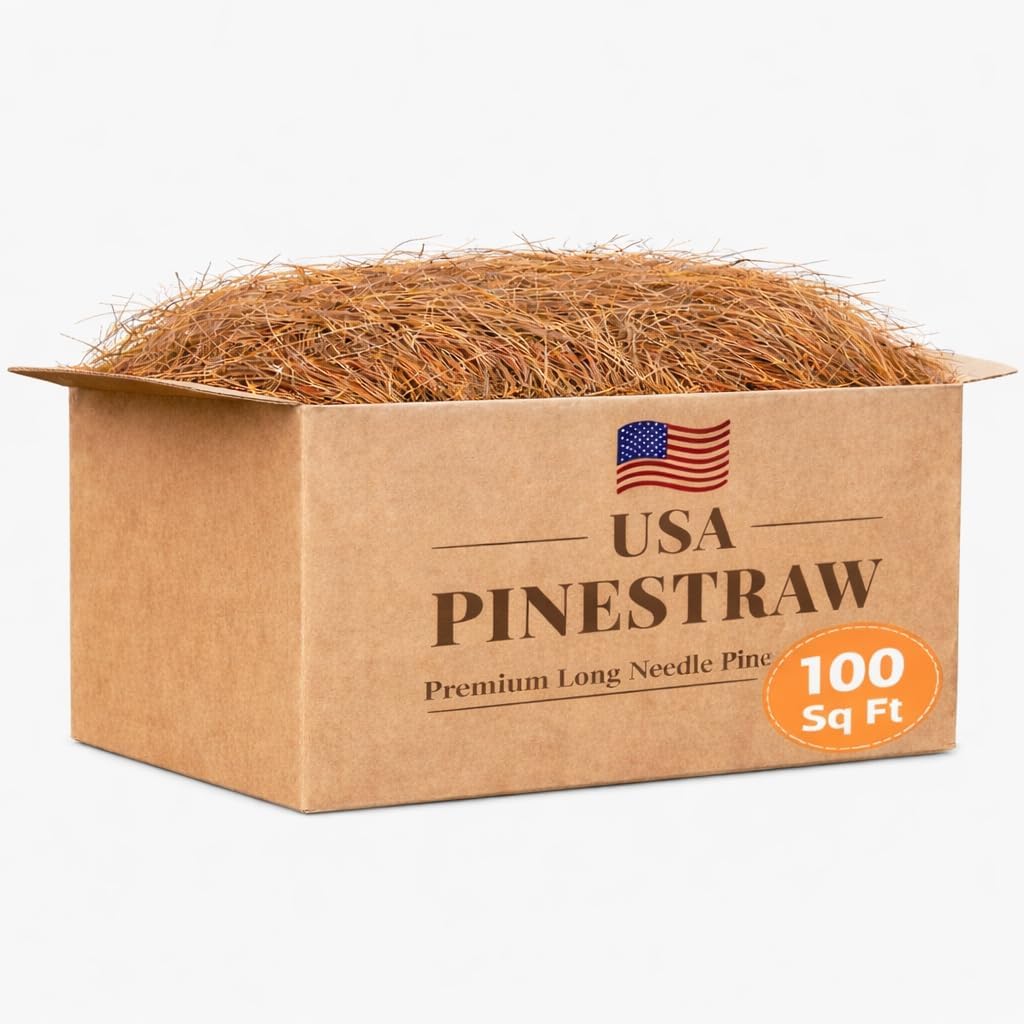
USA PINESTRAW Long Needle Pine Straw Mulch – 100 sq ft Coverage
| Coverage | 100 Sqft |
|---|---|
| Material | 100% Pine Straw |
| Origin | USA harvested |
This pine straw mulch is a simple, natural option for suppressing weeds and conserving soil moisture in flower beds, around shrubs, and under trees. Sold as a compressed bale that covers roughly 100 square feet, the long needles form a breathable, interlocking layer that helps block sunlight to weed seeds while still allowing water to reach roots. It is lightweight to spread and stays in place better than loose fines, making it suitable for slopes and pathways where erosion control matters. Because it is 100% organic and USA harvested, it also adds organic matter as it slowly breaks down and helps improve soil structure over time. Limitations to expect are seasonal settling and gradual decomposition, so periodic topping up is needed to keep coverage and depth effective, and it may not form as compact a barrier as rubber or inorganic mulches for long-term weed exclusion in very high-weed-pressure areas.
Best for: Home gardeners who want a low-maintenance, natural mulch that improves soil health while controlling weeds and conserving moisture in beds and around shrubs.
Less Ideal for: People seeking a permanent, zero-maintenance weed barrier or those who prefer inorganic mulches that never decompose.
- Effective natural weed suppression by forming a dense, light-blocking layer
- Helps retain soil moisture and reduce watering frequency
- Breathable structure allows water and air to reach roots while reducing erosion
- Sustainably sourced 100% organic pine straw from the USA
- Breaks down over time and requires periodic replenishing to maintain depth
- May shift or thin out in very windy conditions without edging or staples
Verdict: Choose this pine straw bale if you want an eco-friendly mulch that suppresses weeds, retains moisture, and improves soil with regular replenishment.
Back to the Roots Organic Coconut Husk Mulch Block (Expands to 2 cu ft)

| Item Highlight | Compressed 10 lb coco husk mulch expands to 58 qt; peat-free; OMRI Listed |
|---|---|
| Item Type Name | Mulch |
| Brand Name | Back to the Roots |
| Volume | 2 cubic feet |
This compressed coconut husk mulch block arrives as a compact 10 lb brick that expands to roughly 2 cubic feet after adding water, making it easy to store and handle compared with bulky bags. It is OMRI listed and peat free, so gardeners can use it in vegetable beds, flower borders, and raised planters without adding peat-based material. The coarse husk chips improve surface moisture retention and aeration on the soil, which helps reduce watering frequency and supports root health. Setup is simple: break the block apart, soak, let it fluff, then spread a shallow layer around plants. Because it is lightweight when dry and made from an upcycled byproduct of coconut processing, it is a sustainable alternative to some other mulches. Limitations to note are that coconut husk mulch can float or wash away on steep slopes and may need occasional top-ups as it slowly breaks down, and its coarser texture may not form as uniform a surface as shredded bark for ornamental beds.
Best for: Gardeners who want a compact, easy-to-store organic mulch that improves moisture retention and soil aeration in vegetable beds and raised planters while prioritizing sustainable materials.
Less Ideal for: People needing a heavy, erosion-resistant mulch for steep slopes or those who want a very fine, decorative mulch finish for formal ornamental beds.
- Expands from a compact 10 lb block to about 2 cubic feet, saving storage space
- OMRI listed and peat free for organic gardening use
- Improves moisture retention and soil aeration when applied to beds and raised planters
- Made from upcycled coconut husk, offering a more sustainable option than peat
- Coarse chips can be prone to washing away on steep or exposed slopes
- Breaks down over time and requires periodic replenishing in high-traffic beds
Verdict: A space-saving, OMRI-listed coconut husk mulch block that delivers sustainable moisture retention and aeration for productive garden beds.
Choosing the Right Mulch for Garden Weed Control: Key Factors to Consider
Weed Suppression Ability
Effective weed control depends on how well a mulch stops light from reaching weed seeds and physically prevents seedlings from pushing up. Dense, nonporous layers or large, interlocking pieces create a barrier that inhibits germination and emergence. Thin or loosely laid materials allow light patches and gaps where weeds will reestablish.
Evaluate the expected thickness and coverage pattern for the mulch you choose. Some materials need deeper application to work well, while others provide immediate suppression at modest depths. Consider whether you will maintain consistent coverage through the season and the ease of topping up where needed.
Durability in Local Conditions
Longevity matters when limiting maintenance. Materials that resist rapid breakdown maintain a weed barrier longer and reduce the need to replenish. Sun exposure, rainfall, and foot traffic all affect how quickly a mulch degrades or disperses.
Think about seasonal durability and whether you prefer a one-time installation that lasts multiple seasons versus an organic option that must be refreshed annually. Durability also affects aesthetics, since broken-down mulch can wash into paths or expose soil and invite weeds.
Effect on Soil Health and Biology
Mulch is more than a weed barrier; it changes the root zone environment. Organic mulches gradually add carbon and nutrients as they decompose, supporting beneficial microbes and improving soil structure. In contrast, inert inorganic covers do not contribute organic matter and can alter soil temperature and moisture dynamics differently.
Consider whether you want the mulch to actively build soil health over time or act purely as a physical barrier. Also weigh potential problems such as nitrogen tie-up from high-carbon materials and the need to avoid mulches that harbor pests or disease.
Moisture Retention and Temperature Moderation
A good mulch moderates soil moisture and temperature, which can suppress weeds by reducing fluctuating conditions that favor opportunistic seedlings. Mulch reduces evaporation, keeps roots cooler in summer and warmer in winter, and can reduce watering frequency.
Different mulches vary in how much water they hold at the surface versus letting rain into the soil. Choose a material suited to your local rainfall pattern and the water needs of the plants being protected.
Installation and Maintenance Effort
The easiest mulch to maintain is one you will actually install correctly. Some options require equipment or careful layering and edging to prevent migration, while others can be spread with a rake and topped up by hand. Consider how accessible bed edges are and whether you will need weed barrier fabric or edging to keep the mulch contained.
Maintenance includes periodic topping, weeding beneath the layer, and monitoring for pests or unwanted seedlings. Select a mulch whose labor requirements match your available time and gardening rhythm.
Suitability for Plant Types and Locations
Not all mulches are appropriate around tender seedlings, shallow-rooted plants, or edible beds. Fine mulches can settle and compact around crowns, while coarse mulches leave air spaces and are safer near stems. Some materials may alter soil pH or temporarily affect nutrient availability.
Match the mulch to the planting context: choose gentle, nutrient-contributing options for young vegetables and perennials, and more robust, long-lasting covers for ornamental beds and paths where frequent disturbance is expected.
How Different Mulch Types Suppress Weeds
Mulch suppresses weeds through light exclusion, physical obstruction, and altering the microenvironment so seeds do not germinate. Dense, continuous covers are most effective at blocking sunlight, while chunky materials impede seedling growth by creating a physical hurdle. In some cases a combination of a fabric layer with a coarse topcoat provides reliable suppression.
Consider how the mulch behaves when wet. Some organic mulches mat down and form a tighter barrier, improving weed suppression, while others stay loose and allow seedlings through. Inorganic mulches can provide consistent coverage but do not improve soil biology.
- Continuous, light-blocking layers prevent germination
- Chunky mulches physically block small seedlings
- Matting behaviour when wet increases suppression
Seasonal Timing and Application Depth
Apply mulch after thoroughly removing existing weeds and watering transplants to avoid trapping pests or moisture against crowns. Timing in spring or fall influences how much maintenance you will do during the growing season.
Depth matters. Lighter mulches may need two to three inches to be effective, while heavier or coarser materials may require three to four inches. Avoid piling mulch against stems or trunks to prevent rot.
- Remove weeds before mulching to reduce seed bank activation
- Follow recommended depth for the material to ensure suppression
- Leave space around stems to prevent collar rot
Combining Mulches With Cultural Practices
Mulch works best as part of an integrated approach. Regular mulching combined with hand-pulling early weeds, spot treatments, and correct plant spacing reduces long-term weed pressure. Improving soil fertility and drainage also helps desired plants outcompete weeds.
Use mulches as a tool to reduce maintenance rather than a complete replacement for routine garden care. Inspect mulched beds periodically to remove seedlings that establish in gaps and to replenish thinning areas.
- Use mulches with good bed preparation and plant spacing
- Spot-weed early to prevent seed set
- Top up mulch annually or as the material breaks down
Safety and Environmental Considerations
Some mulches come from recycled materials or contain additives. Confirm that a chosen material is free from contaminants if it will be used around edibles. Also consider local sourcing to reduce transport impacts and to choose materials adapted to your climate.
Avoid types that can introduce persistent weed seeds or harbor plant disease organisms. Properly composted organic mulch is safer for garden health than raw green waste that may contain seeds.
- Verify composting standards for recycled organic mulches
- Avoid mulches with persistent weed seeds or contaminants
- Consider local availability and environmental footprint
Practical Tips for Long-Term Bed Management
Track how quickly a mulch breaks down in your beds and schedule topping before bare soil shows. Use edging to keep loose materials contained and prevent migration into paths or waterways.
When refreshing mulch, remove large weed seedlings first and consider a light cultivation if soil surface compaction has occurred. Rotate mulch types over years if you want to balance long-term soil-building with robust weed control.
- Edge beds to contain loose mulch
- Top up before bare patches appear
- Rotate materials to balance soil health and durability
How We Chose the Best Mulch for Garden Weed Control
We screened mulches intended for garden weed control by focusing on attributes gardeners can verify or measure in the landscape. Key evaluation criteria included weed suppression effectiveness based on light-blocking and physical coverage, longevity under sun and rainfall, and how the material interacts with soil biology and plant roots. We also assessed moisture retention properties, since good mulch reduces watering needs and prevents shallow-rooted weed establishment, and ease of application or topping up during the season. We excluded products aimed primarily at decorative use with minimal weed-blocking mass, and materials that require specialized installation or heavy equipment. We favored options that are safe to use around ornamentals, edibles, and young plantings. Each shortlisted mulch type was judged on measurable, gardener-relevant dimensions so readers can match a material to site conditions and maintenance preferences.
FAQ
How deep should mulch be to control weeds effectively?
Depth depends on the material but typically ranges from two to four inches. Finer materials need at least two to three inches to form a continuous cover, while coarse or heavier mulches may require three to four inches for consistent suppression.
Will mulch prevent perennial weeds with deep roots?
Mulch reduces seed germination and suppresses new seedlings but is less effective against established perennials with deep root systems. For those, combine mulching with targeted removal or root-focused control methods before applying a long-term mulch.
Can I use mulch in vegetable beds without harming crops?
Yes, many organic mulches are safe in vegetable beds and can improve moisture retention and soil structure. Keep mulch a short distance from stems to avoid crown moisture buildup and use well-composted materials to reduce the risk of introducing weed seeds.
How often do I need to replenish mulch?
Replenishment frequency depends on the material and local climate. Organic mulches often need topping yearly or every other year, while more durable inorganic covers can last several seasons before needing attention.
Will mulch attract pests or rodents?
Some mulches can provide cover for small animals if piled too deep or placed adjacent to structures. Using moderate depths, maintaining clear zones near buildings, and avoiding piles against trunks reduces the likelihood of pest sheltering.
Final Verdict
For effective garden weed control, prioritize a mulch that offers reliable light exclusion and sufficient durability to match your maintenance tempo. Balance suppression with the effect you want on soil health: organic mulches feed the soil as they break down while inorganic options often provide longer-lasting physical barriers. Decide based on site conditions, plant types, and how much time you want to spend topping up beds. Focus on correct depth, clean installation, and periodic maintenance to keep weeds from reestablishing and to get the best long-term results.
