

Note: This article contains affiliate links. If you click on these links and make a purchase, I may earn a small commission at no extra cost to you. This helps support my research and content. Read my full affiliate disclosure here.
Dealing with a sloped garden or yard brings specific challenges: runoff, exposed roots, and thin topsoil that can wash away during storms. The right mulch for slope helps slow water, anchor soil, and give new plantings a better chance to establish. This guide covers six top mulch options suitable for sloped sites and explains the practical tradeoffs gardeners face. We shortlisted mulches that perform well for erosion control, installation on an incline, and long-term maintenance. Below you will find the key factors we used to evaluate them and practical guidance for choosing and installing mulch on slopes.
Top Picks at a Glance
| Best Overall The best all-around choice for most situations | American Excelsior QuickGrass Pro Curlex Erosion Control Blanket Roll |  |
| Best Quality Built to a higher standard if you want something more solid | DeWitt Curlex I Single Net Excelsior Erosion Control Blanket, 4 x 112.5 ft |  |
| Best Budget The cheapest option that still gets the job done reliably | SGTM Living Mulch Organic, 4 Quart |  |
| Highest Rated A top-rated pick with lots of positive feedback | Farm Plastic Supply Coconut Erosion Control Blanket (7 ft x 112.5 ft) |  |
| Most Popular A crowd favorite that many people choose with confidence | HealthiStraw GardenStraw Premium Garden Mulch, 3 cu ft |  |
| Best Seller A high-volume bestseller chosen again and again | EZ-Straw Seeding Mulch with Tackifier, 2.5 cu ft Bale |  |
American Excelsior QuickGrass Pro Curlex Erosion Control Blanket Roll

| Material Features | Natural |
|---|---|
| Indoor Outdoor Usage | Outdoor |
| Other Special Features of the Product | High Germination Rate |
| Moisture Needs | Moderate Watering |
The QuickGrass Pro Curlex erosion control blanket is a natural-fiber roll meant for stabilizing slopes and improving grass seed establishment. Install it over prepared soil and seed, anchor with staples, and water according to the seed type; the barbed excelsior fibers cling to soil and to each other so the mat resists displacement and protects seed from sun and birds. Its water-retentive matrix creates a mini greenhouse effect that supports germination while the biodegradable fibers break down as vegetation establishes, so you do not need to remove it before mowing. The product includes a single plastic net for durability and comes in a narrow roll that is easy to handle for smaller slopes or patch repairs. Limitations are that it does not include seed and the 2.5 by 50 foot roll is best suited to short runs or spot applications rather than very large projects without multiple rolls and overlap planning.
Best for: Homeowners and landscapers needing a practical, biodegradable solution to stabilize short slopes or repair erosion patches while prioritizing seed establishment and easy installation.
Less Ideal for: Large commercial projects or very long continuous slopes where wider or longer blankets and bulk materials would be more efficient.
- Natural excelsior fibers cling to soil and each other to reduce erosion and hold seed in place
- Superior water retention promotes higher seed germination rates
- Biodegradable material eliminates the need for removal after establishment
- Includes a durable single plastic net and is supplied with staples for easy installation
- Does not include grass seed so seeding must be purchased and applied separately
- Roll size is relatively narrow, requiring multiple rolls for large slopes
Verdict: A simple, biodegradable excelsior blanket that helps retain moisture and protect seed on short slopes to speed grass establishment.
DeWitt Curlex I Single Net Excelsior Erosion Control Blanket, 4 x 112.5 ft

| Material | Aspen wood fiber (excelsior) |
|---|---|
| Netting | Photodegradable single top net |
| Coverage | 4 ft x 112.5 ft roll |
This DeWitt Curlex I excelsior blanket uses curled aspen fibers held by a photodegradable single net to control surface erosion on slopes, banks, drainage channels, and roadside edges. It is typically rolled out over prepared seedbeds or exposed soil, anchored with staples or stakes, and overlaps at seams to provide continuous coverage. The long, evenly distributed fibers trap sediment and slow surface flow so seed and topsoil remain in place while vegetation takes root. The green-dyed surface helps the installation blend into the landscape during establishment. Because the top net is photodegradable, it holds fibers during installation and the first growing season then breaks down, leaving the organic blanket to continue supporting vegetation. This product is sized for long runs, so it reduces seams on extended slopes but requires manual anchoring and careful overlap to perform well. It is intended as a temporary stabilization measure while plants establish rather than a permanent hard armor solution.
Best for: Gardeners, landscapers, and contractors who need a performance-oriented, temporary erosion control solution for seeding and stabilizing slopes and channels during establishment.
Less Ideal for: Property owners seeking permanent rock or concrete stabilization or users who need an immediately durable surface on high-velocity drainage without plant establishment.
- Made from natural aspen excelsior fibers that retain seed and soil while vegetation establishes
- Photodegradable single net holds fibers in place during installation and then breaks down
- Long 4 x 112.5 ft roll minimizes seams on extended slopes and channels
- Green dye provides a more finished, camouflaged appearance during establishment
- Requires mechanical anchoring and proper overlap for effective performance on steep or high-flow slopes
- Not a permanent erosion armor; effectiveness depends on successful vegetation establishment
Verdict: Choose this excelsior blanket when you need a performance-focused, temporary erosion control product to hold seed and soil on long slopes while vegetation establishes.
SGTM Living Mulch Organic, 4 Quart

| Brand Name | SGTM |
|---|---|
| Unit Count | 128 Ounce |
| Volume | 4 quarts |
This living mulch is a small-batch organic ground cover intended to establish among plants and act as a low-maintenance weed barrier. It is typically used by spreading over bare soil or between rows so the cover can root and reduce light reaching weed seedlings. Notable features listed include moisture retention, weed suppression, erosion control, and soil-building benefits from added organic matter. In practice that means less frequent watering, fewer hand-weed sessions, and gradual improvement to soil structure as the material breaks down. It also attracts beneficial insects and helps moderate soil temperature, which can support plant health in both hot and cool periods. Because this is a living approach rather than an instant physical barrier, it takes time to establish and will not give immediate perfection against persistent annual weeds. Coverage per 4 quart container is limited, so plan to use multiple units for larger beds or to reapply while the mulch becomes established.
Best for: Gardeners working on a tight budget who want a low-maintenance, organic way to reduce weeds and improve soil over time in small beds or focused planting areas.
Less Ideal for: People who need instant, broad-scale weed eradication across large landscapes or who prefer nonliving hard barriers for immediate weed control.
- Suppresses weeds by crowding seedlings once established
- Helps retain soil moisture and reduce watering frequency
- Adds organic matter to improve soil fertility and structure
- Stabilizes soil to reduce erosion on slopes
- Attracts beneficial insects and supports biodiversity
- Requires time to establish and will not block all established weeds immediately
- Small 4 quart volume limits coverage for larger beds
- Not a quick-clean solution for heavily infested weed areas
Verdict: Choose this living mulch if you want an affordable, organic ground cover that steadily suppresses weeds while improving soil health in small to medium garden areas.
Farm Plastic Supply Coconut Erosion Control Blanket (7 ft x 112.5 ft)
| Material | 100% coconut fibers |
|---|---|
| Construction | Mechanically stitch-bonded |
| Primary use | Erosion control and seed protection |
| Pack coverage | 7 ft x 112.5 ft |
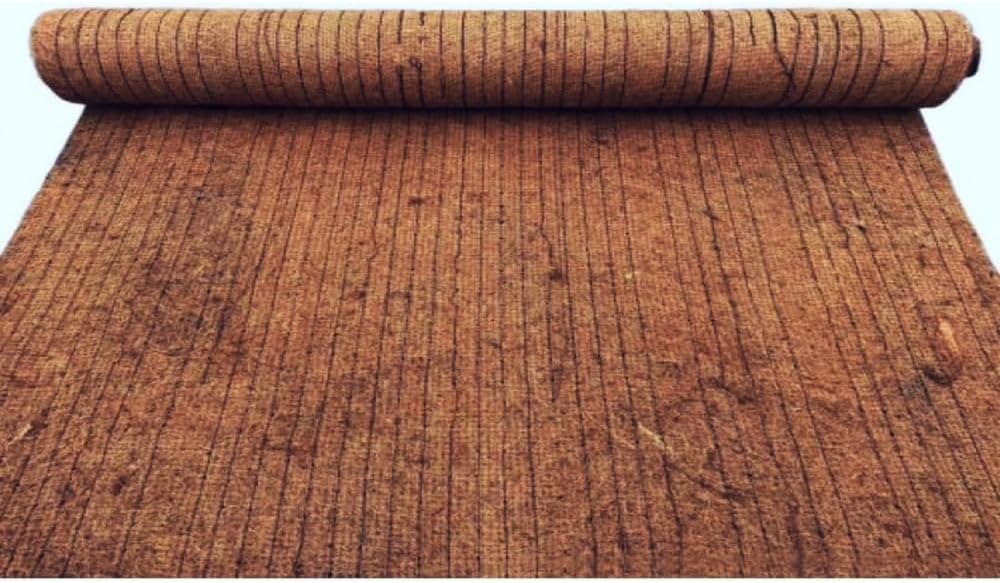
This coconut erosion control blanket is built for heavy-duty slope protection and long-term reliability. Made from 100% coconut fibers that are mechanically stitch-bonded, it is laid over seeded or bare soil to reduce surface runoff, shield seeds from washout, and hold moisture to improve germination. Typical uses include stabilizing hillsides, ditch linings, culvert inlets, and riverbanks where maintaining vegetation and preventing rill formation matter most. Notable features are natural fibers that biodegrade as vegetation establishes and a construction intended to resist weathering until plants take hold. Practical benefits are reduced erosion after storms, better seed-to-soil contact for faster establishment, and a low-profile, natural appearance that integrates into the landscape. Limitations are that coconut blankets will eventually decompose so they are not a permanent hard-armoring solution and they require proper anchoring and installation on steep or highly erosive sites to perform as intended.
Best for: Buyers who need a reliable, natural temporary solution to stabilize slopes and establish vegetation, especially where long-lasting seed protection and moisture retention are priorities.
Less Ideal for: Those who need a permanent, non-biodegrading hard-armored solution or who cannot install or anchor a blanket properly on very steep, high-velocity sites.
- 100% coconut fiber construction for natural biodegradation and good soil contact
- Mechanically stitch-bonded for stronger, longer-lasting temporary erosion control
- Designed to retain moisture and protect seeds to improve germination rates
- Suitable for a range of slope stabilization uses including ditches, riverbanks, and hillsides
- Not a permanent erosion control method since fibers biodegrade over time
- Requires correct anchoring and installation on steep or high-flow slopes to be effective
Verdict: Choose this coconut blanket when you want a reliable, natural temporary barrier that preserves moisture and protects seed on slopes while vegetation establishes.
HealthiStraw GardenStraw Premium Garden Mulch, 3 cu ft

| Net volume | 3 cu ft |
|---|---|
| Intended use | Garden mulch, lawn seeding, compost-friendly |
| Material | 100% wheat straw |
| Source | Sustainably sourced, non-GMO |
HealthiStraw GardenStraw is a 3 cubic foot compressed bale of cleaned wheat straw formulated for use as garden mulch and seed protection. It is designed for vegetable, herb, flower and shrub beds where you want a lightweight, compostable mulch that retains soil moisture and suppresses weeds. The straw is processed to reduce dust and stray seeds and the short, specially cut fibers interlock when watered so the mulch stays in place without chemical tackifiers. For bushes you can apply a 2 to 3 inch layer around the drip line to cut evaporation, reduce compaction and gradually add organic matter as it breaks down. Practical benefits include easy spreading from a compressed bale, fast composting into the soil, and reduced watering needs. Limitations are that straw is less decorative than bark or wood chips and will decompose faster, so it requires periodic replenishing; it also provides less long-term weed barrier than heavier mulches. For gardeners focused on soil health and moisture conservation, it is a straightforward, low-risk choice.
Best for: Gardeners who prioritize soil health and want an easy-to-apply, compostable mulch for shrubs and mixed beds that reduces watering and improves organic matter over time.
Less Ideal for: People seeking a long-lasting, decorative mulch or a heavy-duty weed barrier for high-traffic beds should consider wood chips or stone instead.
- Cleaned, non-GMO wheat straw with reduced dust and seeds
- Fibers interlock when wetted so the mulch stays in place without binders
- Helps retain soil moisture and can reduce watering needs substantially
- Composts quickly and adds organic carbon to improve soil structure
- Decomposes faster than wood mulches so it needs topping up more often
- Less decorative and provides a lighter-duty weed barrier compared with heavier bark or rock mulches
Verdict: A clean, fast-composting straw mulch that conserves moisture and improves soil health, making it a safe, practical choice for mulching bushes.
EZ-Straw Seeding Mulch with Tackifier, 2.5 cu ft Bale

| Volume | 2.5 cu ft |
|---|---|
| Coverage | Covers up to 500 sq. ft. |
| Material | Processed straw with tackifier |
| Weed content | 99% weed free |
EZ-Straw Seeding Mulch is a processed straw bale treated with a natural tackifier that makes the fibers cling together when activated with water. You lay the straw over newly seeded or bare soil, spray it to activate the tackifier, and the bonded mat resists wind and washout so seed and young plants stay covered. The straw is marketed as 99% weed free, UV‑protected in its packaging for easier outdoor storage, and biodegradable so you can leave it in place as plants establish. For strawberry beds it provides good protection from soil splash, conserves moisture to reduce watering frequency, and helps deter birds and erosion on sloped rows. Expect easy handling compared with loose straw because the tackifier keeps the material from blowing around, but note the bale size and packaging mean you will need space to store at least one bale and some effort to spread it evenly between plants. The natural tackifier is described as food‑safe, and the product is intended to break down without a cleanup step once plants are established.
Best for: Gardeners who want a low‑maintenance, natural mulch that protects seed and young strawberry plants while reducing watering and erosion risk.
Less Ideal for: Those with very small balconies or container strawberry setups where large bales are impractical or for gardeners who need a sterile, rock‑free inorganic mulch option.
- Tackifier bonds straw so it resists wind and washout after watering
- Biodegradable so it can be left in place as plants establish
- Processed and 99% weed free to reduce unwanted weed introduction
- UV‑protected packaging for outdoor storage and easier handling
- Large bale requires storage space and manual spreading to cover beds evenly
Verdict: Choose this straw mulch if you want a biodegradable, tackified cover that stays put to protect strawberry plants and speed establishment.
Choosing the Right Mulch for Slope: Key Factors to Consider
Erosion Control Effectiveness
The primary job of mulch on a slope is to reduce soil movement during rain events. Materials that form a dense mat or that interlock with each other slow water flow and trap sediment. Loose, lightweight mulches can wash away quickly, while denser or fibrous products tend to absorb energy from raindrops and hold soil in place.
When evaluating erosion control, consider how the mulch behaves during initial storms and how it performs after settling. Some mulches need mechanical anchoring or an initial layer of netting to remain effective on steeper grades.
Resistance to Movement
Stability on an incline depends on particle size, shape, and how well the material binds together. Long strands or fibrous materials can tangle and resist sliding, while chips and gravel rely on weight and interlocking to stay put. The steeper the slope, the more important a mulch's ability to resist downhill migration becomes.
Think about whether the mulch will be walked on or mowed over time. Materials that compact or lock in place are better where foot traffic and erosion combine to destabilize a slope.
Decomposition and Soil Impact
How fast a mulch breaks down matters for maintenance and soil health. Fast-decomposing organic mulches add organic matter and improve structure, but they need replenishing more often and may leave soil exposed between applications. Slow-decomposing mulches provide longer-lasting protection but can form a barrier to planting or water infiltration if overapplied.
Also consider nutrient tie-up potential. Some high-carbon mulches can temporarily immobilize nitrogen as they decompose, which affects nearby plant growth unless accounted for with fertilization or compost incorporation.
Water Infiltration and Moisture Retention
Mulch can either help rain soak into soil or channel water across the surface depending on its structure. Open, chunky mulches allow more direct rainfall penetration, while dense mats slow surface flow and encourage infiltration behind them. On slopes, a balance is important: you want to slow runoff without creating a barrier that encourages sheet flow or channeling.
Consider the local rainfall patterns and soil type. On clay slopes, mulches that promote infiltration help prevent surface crusting. On sandy slopes, mulches that retain moisture reduce drought stress for newly established plants.
Installation Practicalities
How easy a mulch is to place and secure on a slope influences whether you can implement erosion control effectively. Light loose materials may require additional anchoring like biodegradable netting or stakes. Heavy gravels and rocks are simpler to keep in place but require labor to transport and spread on sloped terrain.
Also account for accessibility: steep or narrow slopes may prevent the use of wheelbarrows, so plan for manual carrying and spreading. The time and tools needed to install a mulch system are an important practical consideration for many gardeners.
Compatibility with Planting and Maintenance
Mulch on slopes often coexists with groundcovers, shrubs, or newly planted seedlings. Choose materials that allow for easy planting, mulching around stems, and routine maintenance like weeding and watering. Some mulches are easy to pull back for planting, while others require cutting or removal.
Think about long-term upkeep: how often you will top up the mulch, whether it interferes with mowing or trimming, and whether it creates hiding places for pests or a fire hazard in dry climates.
Preparing a Slope Before Mulching
Preparing the slope reduces the chance of early mulch failure. Start by grading minor rills and removing large clumps of loose soil. If erosion has already carved channels, fill and lightly tamp those areas so the mulch lies evenly and contacts the soil.
Establishing vegetation first where possible is helpful. Even sparse plantings or temporary cover crops slow flow and help hold mulch in place. For steep or highly erodible slopes, combine mulching with erosion-control fabrics or wattles placed along contour lines.
- Clear debris and non-viable plant material before spreading mulch
- Smooth shallow channels and break up crusted surfaces
- Install contour barriers or fabric on very steep or damaged slopes
Anchoring and Securing Mulch
Many mulches perform much better when anchored. Biodegradable netting, stakes, or landscape pins keep loose materials from slipping downhill. For fibrous or straw mulches, a light spray of natural tackifier can help hold fibers together until roots or plants establish.
Place anchors at regular intervals depending on slope steepness and mulch type. For critical areas consider combining mulching with temporary erosion control mats that biodegrade over time while plants get established.
- Use pins or staples for netted mulch blankets
- Install wattles at intervals to interrupt runoff
- Tackify lightweight straw or fiber mulches on steeper grades
Combining Mulch with Vegetation
Mulch and plants work together to stabilize slopes. Mulch reduces immediate runoff while groundcovers and roots provide long-term anchoring. Choose plant species with fibrous roots for rapid soil binding and pair them with a mulch that allows seedlings to access light and water.
When planting into a mulched slope, create planting pockets by moving mulch aside rather than burying stems. Keep a thin mulch layer around emerging plants to retain moisture while avoiding smothering.
- Select low-growing, spreading species for initial stabilization
- Dig small planting pockets through the mulch for each plant
- Reapply mulch carefully after plants have taken root
Seasonal Maintenance and Reapplication
Regular checks after major storms are essential. Look for areas where mulch has thinned or washed away and repair them quickly to prevent progressive erosion. Plan to reapply or top-up mulches according to their decomposition rate and how much movement they experience.
In colder regions consider how freeze-thaw cycles affect mulch adhesion. Some materials compact and form a crust that reduces infiltration. Annual spring inspections let you refresh mulch before the growing season and address bare spots.
- Inspect slopes after heavy rain or rapid melt
- Top up fast-decomposing materials every season
- Replace or reinforce anchoring where movement is evident
Safety and Environmental Considerations
Choose mulches that do not introduce invasive seeds or contaminants to sensitive slopes, especially near waterways. Natural, biodegradable mulches are usually preferable for environmentally sensitive areas. Avoid using materials that will create long-term runoff barriers or change drainage patterns.
Consider fire risk on dry slopes. Some organic mulches can become fuel in hot, dry climates. In those areas, gravel or mineral mulches may be safer choices for reducing wildfire hazard while still protecting soil.
- Avoid mulches with invasive plant seeds near natural areas
- Consider mineral mulches where fire risk is high
- Use biodegradable anchoring products to reduce plastic waste
How We Chose the Best Mulch for Slope
We focused on attributes that matter for sloped sites where runoff, soil stability, and plant establishment are primary concerns. Selection criteria emphasized erosion control performance under moderate to heavy rainfall, the material's ability to interlock or adhere on an incline, and how it affects soil moisture retention and plant root health. Durability and decomposition rate were considered because a mulch that breaks down too quickly leaves soil exposed, while one that persists too long can impede planting. We also checked ease of installation on a slope and whether the material integrates with common erosion-control practices like staking, netting, or planting groundcovers. Excluded from consideration were materials intended only for decorative flat beds or those that pose a high fire risk in slope-prone areas. We avoided single-use, short-lived products and anything that requires heavy mechanized installation unsuitable for typical homeowner slopes. The final shortlist reflects a balance of erosion resistance, longevity, ease of placement, and soil-health impacts that gardeners will encounter on sloped terrain.
FAQ
Can I use straw mulch on a steep slope?
Straw can work on mild slopes if anchored with netting or tackifier, but it may wash away on steeper grades. Straw is lightweight and decomposes quickly, so plan for frequent replenishment and additional stabilization measures.
Is rock or gravel better than organic mulch for erosion control?
Rocks and gravels are heavy and resist movement, making them effective at preventing washout. They do not improve soil organic matter, so combine them with planting strategies if soil health is a concern. On steep or fire-prone slopes mineral mulches are often preferred.
How thick should I apply mulch on a slope?
Aim for a moderate layer that provides coverage without creating a sliding mass. Typically two to four inches is effective for many organic mulches. Avoid overly deep layers that can slough off or smother plantings and adjust thickness for material type and slope steepness.
Will mulch prevent all erosion on a slope?
Mulch reduces surface erosion but rarely eliminates it entirely on very steep or unstable slopes. For severe erosion issues combine mulch with contour barriers, erosion-control blankets, and vegetation to achieve greater stability.
How soon can I plant after mulching a slope?
You can plant immediately if you create planting pockets by moving mulch aside. For seed establishment, light mulch layers or straw mixed with netting help protect seeds while still allowing germination. Choose mulch types that allow seed-soil contact for best results.
Are there environmental risks from using certain mulches near waterways?
Yes. Mulches that contain fines, seeds, or non-biodegradable fibers can wash into streams and affect water quality or introduce invasive species. Use clean, certified products and extra containment measures on slopes above waterways.
Final Verdict
On sloped sites prioritize mulch options that reduce runoff and stay anchored while supporting plant establishment. Balance short-term coverage with long-term soil health by choosing materials that match slope steepness, local climate, and maintenance capacity. For steep or highly erodible slopes combine mulch with anchoring techniques and vegetation for the most reliable results. Focus on the tradeoffs: heavier, mineral mulches provide immediate stability but do not add organic matter, while organic, fibrous mulches improve soil but need more upkeep. Choose the approach that fits your slope conditions and how much ongoing maintenance you can commit to.
