

Note: This article contains affiliate links. If you click on these links and make a purchase, I may earn a small commission at no extra cost to you. This helps support my research and content. Read my full affiliate disclosure here.
Picking the right mulch for tomatoes has a big effect on yield, plant health, and how much time you spend watering and weeding. The wrong material can hold too much moisture, harbor pathogens, or blow away in wind. This guide covers six shortlisted mulches chosen for common tomato garden situations, from containers and raised beds to in-ground rows and small urban plots. We evaluated options based on how well they retain water, suppress weeds, limit soil splash and disease risk, and how they behave through the growing season. Read on to see the practical strengths and tradeoffs of each mulch type before the product rundown.
Top Picks at a Glance
| Best Quality Built to a higher standard if you want something more solid | Hull Farm Cocoa Bean Shell Mulch, 2 Cubic Feet |  |
| Best Value The sweet spot between price and what you get | Riare Organic Coco Coir Chips, 2-Pack Compressed Bricks |  |
| Best Budget The cheapest option that still gets the job done reliably | Legigo Coco Coir Chips Organic Coconut Husk Potting Mix |  |
| Highest Rated A top-rated pick with lots of positive feedback | Plantonix Coco Chips Coconut Husk Mulch (10 lb brick) |  |
| Most Popular A crowd favorite that many people choose with confidence | HealthiStraw GardenStraw Premium Wheat Straw Mulch, 3 cu ft |  |
| Best Seller A high-volume bestseller chosen again and again | NRWRTY 4 Mil Red Plastic Mulch, 4 x 50 ft with Drainage Holes and Cable Ties |  |
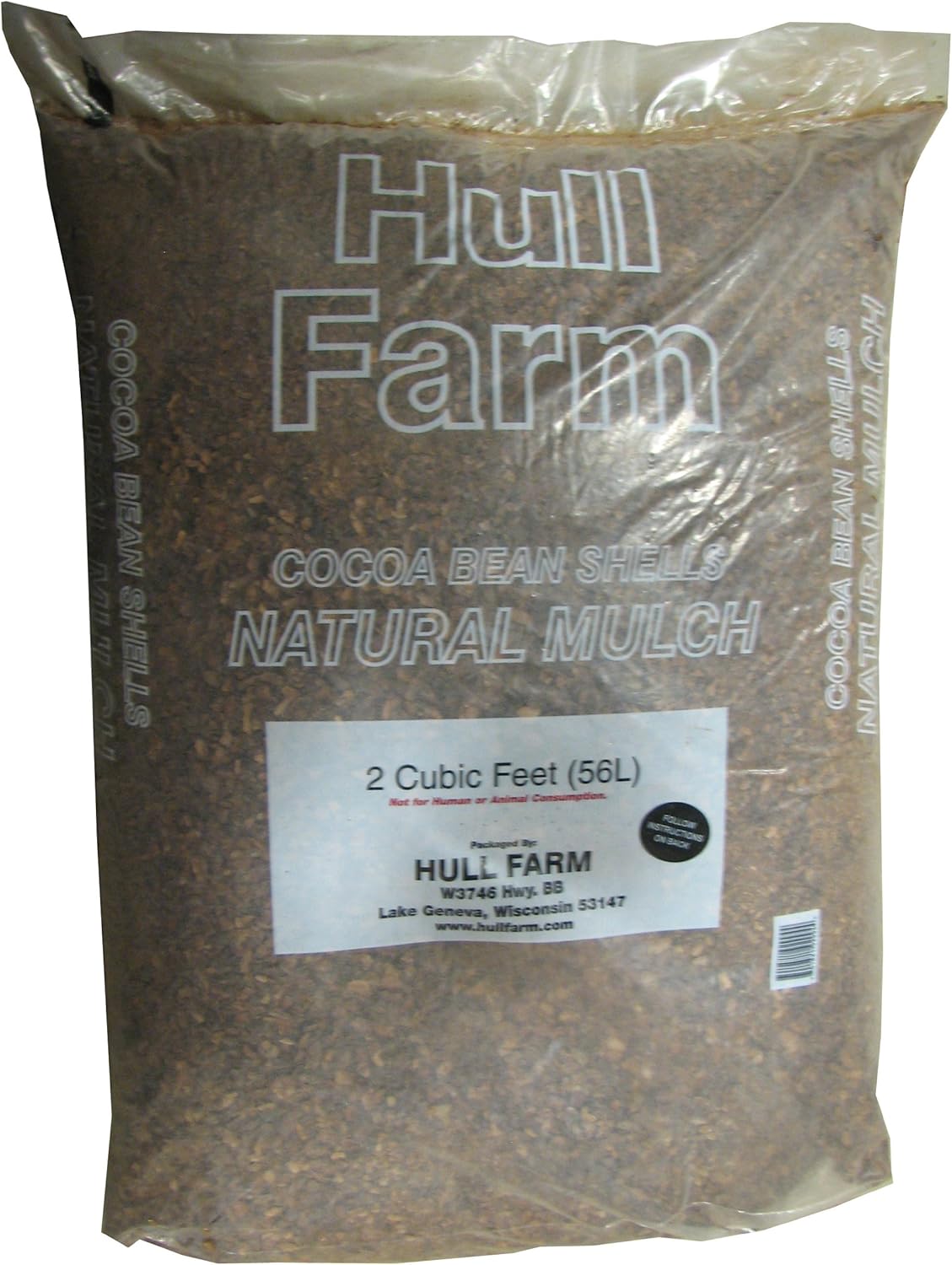
Hull Farm Cocoa Bean Shell Mulch, 2 Cubic Feet
| Brand Name | Hull Farm |
|---|---|
| Model Name | 50150 |
| Material | Plastic |
| Package Weight | 12.72 kg |
Hull Farm Cocoa Bean Shell Mulch is a bagged organic mulch made from cocoa bean shells marketed for landscape beds. It is typically applied as a 1 to 3 inch layer around ornamentals or edibles to suppress weeds, conserve soil moisture, and improve appearance; the shells also slowly break down and provide a small nutrient contribution with an approximate analysis near 2.5-1-3. The product is easy to spread from the 2 cubic foot bag and leaves a fine, attractive textured surface that is less likely to mat than some other fine mulches. Because it is organic it will decompose over time, so plan to replenish annually or as needed. Note that cocoa shell mulch can attract pets if they are tempted to eat it and should be used with care around animals and children; also its small particle size means it can compact in heavy rain and may require light fluffing. For gardeners looking for an attractive, nutrient-contributing mulch that supports moisture retention and weed suppression, this is a practical option for tomato beds when used correctly.
Best for: Gardeners who prioritize plant performance and want a decorative organic mulch that also contributes modest nutrients and conserves moisture for productive beds such as tomatoes.
Less Ideal for: Those with pets that scavenge mulch or gardeners who prefer an inert, longlasting inorganic mulch that will not decompose over a season.
- Adds a mild, slow-release nutrient contribution (approx. 2.5-1-3) as it breaks down
- Fine, attractive texture that spreads evenly and helps retain soil moisture
- Sold in a manageable 2 cubic foot bag for easy handling and targeted application
- Less likely to mat compared with very fine composts, maintaining surface airflow
- Can attract pets or wildlife that may chew or eat the shells
- Small particles can compact after heavy rain and may need occasional fluffing
Verdict: Choose this cocoa shell mulch when you want an attractive organic mulch that helps retain moisture and gives tomatoes a light nutrient boost as it decomposes.
Riare Organic Coco Coir Chips, 2-Pack Compressed Bricks

| Number of Packs | 2 |
|---|---|
| Item Type Name | Garden Soil |
| Volume | 7 gallons |
| Item Weight | 2.2 pounds |
These compressed coco coir chips expand into a loose, airy growing medium when soaked and are intended for use as a soil amendment, potting substrate, or mulch. Each pack includes two compressed bricks that hydrate to about 7 quarts each, making them convenient to store and mix into existing garden soil or container mixes. The product is pH-balanced with low electrical conductivity so it will not burn roots and supports good aeration and drainage while retaining moisture to cut down on frequent watering. For tomato beds you can work the coir into planting rows to improve crumb structure, mix it with compost or perlite for faster drainage in containers, or spread a thin mulched layer to help retain soil moisture and suppress weeds. Limitations to note are that coir is an inert medium so it does not supply nutrients on its own and will perform best when combined with compost or fertilizer. Also the compressed bricks require soaking and squeezing, which adds a prep step compared with bagged loose mulch.
Best for: Gardeners who prioritize efficient, soil-improving amendments and want a moisture-retentive, airy mulch they can store compactly and mix into tomato beds or container mixes.
Less Ideal for: Buyers who need an all-in-one fertilizing mulch or those who prefer ready-to-use loose mulch with no prep steps.
- Low EC and pH balanced to reduce risk of root burn
- High water retention while still providing good drainage and aeration
- Compresses to a small brick for easy storage and expands to usable volume after soaking
- Versatile: usable as potting mix ingredient, soil conditioner, or surface mulch
- Inert medium that supplies little to no nutrients by itself
- Requires soaking and manual squeezing to expand before use
Verdict: A compact, pH-balanced coco coir option that improves soil structure and conserves moisture for healthier tomato plants when combined with compost or fertilizer.
Legigo Coco Coir Chips Organic Coconut Husk Potting Mix

| Unit Count | 17.64 Ounce |
|---|---|
| Volume | 7 quarts |
| Material | Coconut Coir |
| Style Name | Coco Coir, Aerated, Drainage |
Legigo coco coir chips are compressed coco husk pieces intended as a lightweight, organic soil amendment and potting substrate. The brick expands when soaked and yields a chunky coir mix that improves drainage and root aeration while holding 4–6 times its weight in water to provide steady moisture. Use it mixed into potting soil for containers or as a mulch layer around tomato plants to reduce evaporation and suppress weeds. Notable features are the screened, desalted coir with a stable pH around 5.5–6.5 and high cation exchange capacity which helps nutrient availability when blended with compost or fertilizer. Practical benefits include cleaner handling compared with loose bark, resistance to compaction, and suitability as a component in soilless mixes or for orchids and seed starting. Limitations are that coco chips alone do not supply nutrients so you must amend or feed tomatoes regularly, and the chunky texture means they work best mixed with finer soil or compost rather than as a single-potting medium for heavy-feeding crops.
Best for: Home gardeners on a budget who want an affordable, tidy soil amendment to improve container mixes or use as mulch for tomatoes and other vegetable beds.
Less Ideal for: Gardeners wanting an all-in-one potting soil with built-in fertilizer or those who prefer a very fine, soil-like texture without mixing.
- Improves drainage and root aeration due to chunky, porous husk pieces
- High moisture retention releases water slowly to reduce frequent watering
- Low EC and pH of about 5.5–6.5 reduces risk of root burn and suits most plants
- Compressed brick format expands with water for compact storage and cleaner handling
- No nutrients provided so regular fertilization is required for fruiting crops
- Chunky texture should be mixed with finer soil or compost for best support of tomato seedlings
Verdict: A low-cost, low-EC coco coir amendment that conserves moisture and improves drainage, making it a practical mulch or mix component for tomato growers.
Plantonix Coco Chips Coconut Husk Mulch (10 lb brick)

| Brand | plantonix |
|---|---|
| Unit Count | 160 Ounce |
| Item Type Name | Soil and Soil Amendments |
| Volume | 15 gallons |
Plantonix Coco Chips arrive as a compressed 10 pound brick that hydrates into loose coconut husk chips used as mulch or a soil amendment. For tomatoes you would soak or break up the block, spread a 1–2 inch layer around plants or in containers, and top up seasonally. The product is pre-screened, washed, and aged to reduce dust and debris, and it has neutral pH and low soluble salts so it will not stress young roots. Coco chips hold moisture well while remaining airy, which helps prevent surface crusting and improves aeration compared with heavy wood mulches. They are lightweight and long lasting so you do not need frequent replacement, and they give beds a clean, tropical look. Important limitations are that chips do not supply nutrients the way compost does and they can float or shift if you overwater or use very heavy irrigation; they are best paired with regular feeding and occasional reapplication. Also the compressed format requires time and space to hydrate before use.
Best for: Gardeners who prioritize a dependable, low-maintenance mulch that holds moisture and improves soil airflow for reliable tomato production in beds and containers.
Less Ideal for: Growers who want a nutrient-rich soil amendment or need a mulch that resists heavy irrigation runoff without shifting should consider alternatives.
- Excellent moisture retention while maintaining good aeration around roots
- Pre-screened and washed to reduce dirt, rocks, and dust
- Lightweight and long lasting so it does not compact like some wood mulches
- Expands from a compact brick for easy storage and transport
- Does not provide nutrients like compost or well-rotted organic matter
- Requires soaking and breaking up the compressed brick before use
Verdict: If you want a reliable, long-lasting mulch that keeps tomato roots moist and well aerated with minimal maintenance, these coco chips are an effective choice.
HealthiStraw GardenStraw Premium Wheat Straw Mulch, 3 cu ft

| Volume | 3 cu ft |
|---|---|
| Cut length | Approximate 2 inches |
| Ideal use | Edible gardens & lawn seeding |
| Sustainably sourced | Yes |
| All-natural | 100% non-GMO |
HealthiStraw GardenStraw is a compressed 3 cubic foot bale of cleaned, non-GMO wheat straw intended for use as garden mulch, seed cover, and compostable soil amendment. It is filtered to reduce dust and seeds, then cut into short fibers that interlock when wetted so the mulch stays put without chemical binders. Typical uses include mulching tomato beds to retain moisture, suppress weeds, and moderate soil temperature, or light lawn seeding at thin coverage. Practical benefits are quick decomposition that adds carbon to soil and improved moisture retention that can reduce watering needs substantially. The product covers a large area when fluffed and watered, and its low-dust processing is helpful around young plants and seedlings. Important limitations are that the compressed bale is fairly heavy to handle by one person and placement requires breaking up the bale and spreading the straw by hand or with a rake, so it is less convenient than bagged wood-mulch or landscape fabric for very large jobs. Also, while many seeds are removed, complete seed elimination is not guaranteed for all uses where zero weed seed is required.
Best for: Gardeners who prioritize proven, low-impact mulches for vegetable beds and want a product with visible user approval and reduced dust for safer handling around seedlings. It suits buyers who value sustainability and measurable water savings when mulching tomatoes and other edible plants.
Less Ideal for: People who need a ready-to-use, lightweight bagged mulch or those who require absolutely seed-free material for sterile propagation environments.
- Made from 100% non-GMO wheat straw with reduced dust and seed content
- Fibers interlock when watered so the mulch stays in place without binders
- Composts quickly and adds carbon to soil, improving soil structure and microbial activity
- High coverage: 3 cu ft bale expands to cover seedings or bed mulch effectively
- Helps retain soil moisture and keeps soil cooler, reducing watering frequency
- Compressed bale is heavy and requires effort to break up and distribute
- Not completely seed-free so some weed seeds may remain
Verdict: A practical, sustainably sourced straw mulch that holds in place when watered and conserves moisture, making it a strong choice for mulching tomato beds.
NRWRTY 4 Mil Red Plastic Mulch, 4 x 50 ft with Drainage Holes and Cable Ties

| Material thickness | 4 mil |
|---|---|
| UV resistance | Yes |
| Drainage | 2.5 cm spaced holes |
| Size | 4 ft x 50 ft |
This red plastic mulch is made from a heavier 4 mil UV-stabilized material intended for season-to-season use in raised beds and small gardens. It is laid over beds and secured with the included cable ties or landscape staples; pre-spaced drainage holes let rain and irrigation pass through while helping the surface retain warmth and reduce weeds. The manufacturer cites USDA-based research that red plastic can boost tomato yields by reflecting far-red light and accelerating ripening, which matches how tomato phytochrome responds to light. In practice the product is useful for gardeners who want earlier harvests and reduced hand-weeding without daily watering changes. Expect reliable weed suppression and soil warming for heat-loving crops, though plastic mulch does not add organic matter and needs to be removed or recycled at season end. Installation requires some care to get a tight fit and to avoid trapping excess water in heavy storms despite the drainage holes.
Best for: A gardener who prioritizes predictable, low-maintenance tomato production and wants a durable plastic mulch to reduce weeds and speed ripening in raised beds or small plots.
Less Ideal for: Growers who prefer building soil health with organic mulches or who want fully biodegradable options should consider compost or straw instead.
- Heavier 4 mil construction and UV resistance for longer life than thinner films
- Pre-spaced drainage holes balance water penetration with moisture retention
- Designed color effect to promote earlier flowering and higher tomato yields according to cited research
- Large 4 x 50 ft sheet covers multiple raised beds and can be trimmed to fit
- Does not improve soil organic matter or nutrient content
- Must be removed or recycled after use which adds end-of-season work
- Can require careful anchoring and trimming to avoid flapping or pooling in strong wind and heavy rain
Verdict: Choose this durable red plastic mulch when you want a proven way to warm soil, cut weeds, and help tomatoes ripen and yield earlier.
Choosing the Right Mulch for Tomatoes: Key Factors to Consider
Water Retention and Evaporation Control
Tomatoes need steady moisture at the root zone without long periods of drought stress. Mulch reduces surface evaporation by shading soil and creating a barrier between warm air and the soil surface. The best mulches hold moisture long enough to extend time between irrigations but still allow rainfall and applied water to move down into the root zone.
Different materials vary widely: organic mulches like straw or composted bark release moisture slowly as they decompose, while inorganic options such as landscape fabric or plastic can dramatically cut evaporation but may require careful irrigation management. Consider how often you want to water and whether you rely on rainfall or drip irrigation when selecting a mulch for water control.
Disease Suppression and Soil Splash Reduction
Many tomato diseases are spread when soil particles splash onto leaves or fruit. A good mulch limits that splash, keeping foliage and fruit cleaner and lowering inoculum transfer. Mulch that provides a continuous barrier between soil and lower foliage is particularly effective in heavy rain or overhead watering situations.
Porous mulches also influence humidity at plant bases. Extremely impermeable coverings can trap moisture against stems, potentially increasing disease pressure in humid climates. Choose materials that block splash but still allow adequate air exchange around stems to reduce fungal risks.
Seasonal Durability and Decomposition
Gardeners need to know whether a mulch will last a single season or require midseason topping. Organic mulches break down over time, adding organic matter to the bed but thinning out and needing replenishment. Inorganic mulches often persist longer but must be removed after the season or left in place according to garden plans.
How a mulch decomposes also affects soil nitrogen dynamics. Fresh high-carbon materials can temporarily tie up nitrogen near the surface as microbes break them down, so placement and timing matter. Consider whether you want a mulch that improves soil structure by decomposing or one that is intended primarily as a temporary barrier.
Soil Temperature Moderation
Tomatoes are warm-season crops, but extreme soil heat can stress roots and reduce fruit set. Mulch moderates daily soil temperature swings by insulating the surface. Light-colored mulches reflect heat and can keep shallow soil cooler, which is helpful in very hot climates. Dark mulches absorb heat and can warm the soil earlier in spring in cooler regions.
Think about local climate and planting schedule. If you start transplants early, a darker mulch that warms soil may encourage growth. In midsummer heat, switching to a more reflective or breathable mulch can protect roots and maintain steady development.
Weed Suppression and Maintenance Time
Effective weed control lowers competition for water and nutrients and reduces time spent hand-weeding around vulnerable tomato stems. Thick mulches that form an even cover reduce light reaching weed seeds and seedlings. Some mulches, like woven fabrics or multiple inches of organic material, are highly suppressive, while thinner layers or coarse materials allow more weed emergence.
Also consider how often you are willing to replenish mulch or pull through weeds. High-maintenance beds may benefit from denser, longer-lasting mulches; low-maintenance plots may accept periodic topping and lighter materials.
Planting and Irrigation Compatibility
Mulch should work with how you plant and irrigate tomatoes. If you use drip irrigation, choose mulches that let water pass through or position drip lines above or under the mulch. With overhead watering, prioritize mulches that minimize soil splash and dry quickly to lower disease risk. For container-grown tomatoes, select materials that do not compact or block drainage.
Also think about staking, tying, and harvesting access. Thick or heavy mulches can make working at the base of the plant harder, while loose materials may blow away or migrate into walkways.
Mulch Choices by Growing Situation
Different mulches perform better depending on whether tomatoes are in containers, raised beds, in-ground rows, or small urban plots. Containers need light, free-draining materials that will not restrict drainage ports or compact. Raised beds tolerate a wider range of organic mulches because of improved drainage and easier renewal. In-ground plantings often benefit from denser ground cover to reduce weeds and soil splash.
Match the mulch to how you manage water and access plants for pruning and harvest. For example, garden paths and aisles can use heavier, more stable materials that would be inconvenient between tightly spaced tomato plants.
- Containers: prioritize breathability and drainage
- Raised beds: balance organic matter return with seasonal durability
- In-ground rows: focus on splash reduction and weed control
- Small urban plots: favor tidy, low-tracking materials
Managing Mulch Through the Season
Apply mulch after soil has warmed and after transplants have established to avoid keeping the soil too cool early in the season. Observe mulch thickness and top up as needed when decomposition or wind reduces coverage. Maintain a small gap around the main stem to prevent direct contact between mulch and the stem base.
Midseason inspection helps catch problems early. Pull back a small area to check soil moisture and root health. If mulch has compacted or smells sour, remove and replace with a drier material to restore aeration.
- Apply after soil warming in spring
- Leave a 1 to 2 inch gap at the stem
- Top up organic mulches midseason as needed
Integrating Mulch with Irrigation Systems
Drip irrigation pairs well with most mulches when emitters are placed at the root zone and covered lightly. For impermeable mulches, run drip lines beneath or place emitters so they are not blocked. If you rely on overhead watering, choose mulches that dry quickly and limit splash to reduce foliar disease.
Test irrigation after applying mulch to ensure water reaches the soil. Adjust run times if mulch reduces evaporation significantly, as overwatering under impermeable mulch can lead to root problems.
- Place drip lines to ensure water reaches roots
- Check soil moisture under mulch before increasing run times
- Avoid overwatering under impermeable coverings
Compost and Soil Health Considerations
Organic mulches add organic matter as they break down, feeding soil life and improving structure over time. That benefit is valuable in tired garden beds where building soil is a goal. However, freshly applied high-carbon materials may temporarily immobilize nitrogen near the surface, so integrate compost or side-dress with balanced nutrients when needed.
If improving long-term soil health is a priority, choose mulches that decompose into fine, stable humus. If immediate season-long performance is the priority, select materials that strike the right balance between durability and contribution to soil organic matter.
- Organic mulches feed soil biology as they decompose
- Balance high-carbon mulches with nitrogen sources if needed
- Consider seasonal goals: soil building versus immediate barrier
Practical Tips for Application and Cleanup
Use a uniform layer of appropriate thickness for the material chosen. For most organic mulches, a depth of 2 to 4 inches is effective for weed suppression without suffocating soil life. Inorganic covers may require anchoring to prevent wind movement.
At season end, remove non-decomposing materials or redistribute organic mulch into compost if healthy. Clean up walking paths and storage areas to prevent tracking mulch into living spaces. Store unused mulch dry to preserve its properties for the next season.
- Apply 2 to 4 inches for most organic mulches
- Anchor or weigh down lightweight mulches
- Remove or compost remaining material after season
How We Chose the Best Mulch for Tomatoes
We focused on real gardening performance factors that matter to tomato growers across typical backyard, raised bed, and container situations. Selection began with materials commonly used by gardeners and pros, then filtered for those that consistently help maintain root-zone moisture and keep soil contact off fruit and foliage. Key evaluation criteria included water retention and evaporation reduction, which affects irrigation frequency; disease suppression through reduction of soil splash and breathability; durability and tendency to break down during a single season; and ease of application and cleanup for typical garden tasks. We excluded materials that are primarily decorative or designed only for long-term landscaping without benefits for annual tomato production. We also screened out mulches that introduce contaminants or known phytotoxic residues. Final picks emphasize practical balance between moisture management, disease mitigation, and seasonal behavior in tomato beds.
FAQ
When should I apply mulch for tomatoes?
Apply mulch after soil has warmed and plants are established, usually a couple of weeks after transplanting. Early application while soil is still cold can delay warming and slow early growth.
How thick should mulch be around tomato plants?
Most organic mulches work well at 2 to 4 inches deep. Keep a small gap of about 1 to 2 inches at the main stem to reduce rot risk and allow inspection of the crown.
Can mulch increase disease on tomato plants?
Mulch can reduce disease by blocking soil splash, but impermeable or overly wet mulches can trap moisture against stems. Choose mulches that block splash while allowing air movement, and avoid piling material directly against stems.
Is mulch necessary for container-grown tomatoes?
Mulch is helpful in containers to reduce surface drying and moderate soil temperature, but choose light, noncompacting materials and maintain good drainage to avoid waterlogging.
How often should I replace or top up mulch?
Replace or top up organic mulches as they decompose or thin out, often once or twice during the growing season. Inorganic mulches may need only repositioning or removal at season end.
Will mulch affect soil nutrients for tomatoes?
Some high-carbon mulches can temporarily draw down surface nitrogen during decomposition. To avoid short-term nutrient stress, incorporate compost or side-dress with fertilizer as needed.
Final Verdict
Choose the mulch that fits your tomato growing style and the local climate. Prioritize materials that reduce soil splash and retain steady moisture without keeping crown tissues wet. Expect tradeoffs between seasonal durability and soil-building benefits; organic mulches improve soil over time but need topping, while inorganic options offer longer-term barriers but less contribution to soil life. Decide based on irrigation method, disease pressure, and how much seasonal maintenance you want. With the right mulch in place, you will spend less time watering and weeding and more time harvesting healthy tomatoes.
