

Note: This article contains affiliate links. If you click on these links and make a purchase, I may earn a small commission at no extra cost to you. This helps support my research and content. Read my full affiliate disclosure here.
Picking the right natural fertilizer matters because it affects soil life, nutrient availability, and how your vegetables respond over the season. Whether you grow in beds, containers, or a small plot, the fertilizer you choose should match your soil needs and the crops you grow. This guide covers seven shortlisted natural fertilizers for garden vegetables, chosen for their nutrient profiles, ease of use, and suitability for common home growing situations. We'll outline the practical pros and cons you should weigh and explain the evaluation criteria used to compare options before the product list.
Top Picks at a Glance
| Best Overall The best all-around choice for most situations | Dr. Earth Organic Tomato, Vegetable & Herb Fertilizer (64 oz) |  |
| Best Quality Built to a higher standard if you want something more solid | Sustane All Natural Flower and Vegetable Plant Food, 20 lb |  |
| Best Value The sweet spot between price and what you get | Jobe's Organics Granular Tomato & Vegetable Fertilizer, 4 lb |  |
| Best Budget The cheapest option that still gets the job done reliably | Down To Earth Organic Vegetable Garden Fertilizer, 4-4-4, 1 lb |  |
| Highest Rated A top-rated pick with lots of positive feedback | Earth Science Premium Earthworm Castings, 3 lb |  |
| Most Popular A crowd favorite that many people choose with confidence | Miracle-Gro Shake 'N Feed Tomato, Fruit & Vegetable Plant Food (1 lb) |  |
| Best Seller A high-volume bestseller chosen again and again | Burpee All-Purpose Organic Granular Plant Food, 4 lb |  |
Dr. Earth Organic Tomato, Vegetable & Herb Fertilizer (64 oz)

| Unit Count | 64 Ounce |
|---|---|
| Item Form | Granules |
| Specific Uses For Product | Organic |
| Target Species | Herb |
| Coverage | Medium |
This granular organic fertilizer is designed to boost vegetable and herb production by supplying balanced nutrients and soil biology support. It is typically broadcast into beds, mixed into potting mixes, or applied at planting and midseason for a nutritional lift; the manufacturer recommends reapplying every six weeks for containers. Notable features include a fully organic ingredient list, fast but sustained nutrient release, and a blend of probiotic microbes plus ecto and endo mycorrhizae intended to improve nutrient uptake and drought tolerance. In practice that means healthier root systems and potentially better yields and flavor in crops like cucumbers when used as part of an organic program. Limitations are that it is a medium coverage product in a 64 ounce bag so larger plots will need more frequent purchases, and it contains phosphorus so local runoff rules should be checked before use. Follow the directions for pH and application timing to avoid overapplication in small containers.
Best for: Gardeners who prioritize organic soil health and want a single, biology‑focused fertilizer to support vegetables like cucumbers in beds or containers.
Less Ideal for: Large‑scale growers seeking a bulk, high‑coverage fertilizer or those who must avoid phosphorus due to local regulations should consider other options.
- 100 percent organic formula suitable for certified organic gardens
- Contains beneficial microbes and eight strains of mycorrhizae to support root health and nutrient uptake
- Granular form releases nutrients quickly and continues feeding for several months
- Works for beds, raised planters and containers and can be used at planting, transplanting or midseason
- Bag is medium coverage so not economical for very large vegetable plots
- Includes phosphorus which may be restricted in some local jurisdictions
Verdict: Choose this product if you want an organic, microbe‑rich granular fertilizer that supports root health and steady feeding for cucumber and other vegetable plantings.
Sustane All Natural Flower and Vegetable Plant Food, 20 lb

| Item Form | Granules |
|---|---|
| Specific Uses For Product | Organic |
| Coverage | 20 |
| Target Species | vegetables, flowers, plants |
| Mixing Ratio | 4:6:4 |
Sustane All Natural Flower and Vegetable Plant Food is a compost‑based granular fertilizer formulated to feed vegetables and flowering plants while improving soil structure. It is typically worked into beds before planting at the recommended rate or applied lightly around established plants and watered in. Notable features include a complete nutrient profile with macro and micronutrients, an organic 4-6-4 mixing ratio for balanced N-P-K, and a high organic matter base that promotes microbial diversity. In practice this means better soil tilth, longer‑lasting nutrient release compared with soluble synthetics, and visible improvements in fruiting and bloom when used as directed. Important limitations are that it is slower acting than chemical fertilizers and requires incorporation into the soil for best results, so gardeners expecting immediate greenup will need to plan ahead. Also the 20 pound bag is aimed at bed prep and small to medium plots rather than single potted plants.
Best for: Gardeners focused on improving long‑term vegetable bed productivity and soil health who plan applications ahead of the growing season and prefer organic inputs.
Less Ideal for: Gardeners who need rapid, short‑term correction of nutrient deficiencies or who primarily grow container plants that need fast‑acting soluble feeds.
- Compost‑based formula that builds soil structure and supports microbial life
- Complete nutrient profile including micronutrients for balanced plant nutrition
- Suitable for both pre‑plant bed preparation and feedings to established plants
- Organic formulation appropriate for certified organic vegetable gardens
- Slower nutrient release than soluble synthetic fertilizers so effects are not immediate
- Requires mixing into the topsoil for full benefit which adds labor
Verdict: Choose this product if you want an organic, soil‑building granular fertilizer that delivers balanced nutrients and improves long‑term vegetable garden productivity.
Jobe's Organics Granular Tomato & Vegetable Fertilizer, 4 lb

| NPK | 2-5-3 |
|---|---|
| Item Form | Granules |
| Target Species | Vegetable and tomato |
| Unit Count | 64 Ounce |
Jobe's Organics granular fertilizer is a simple, slow-release feed designed specifically for tomato and vegetable beds. You apply the granules around plants every 4 to 6 weeks during the growing season to supply roots with nitrogen, phosphorus, and potassium in a 2-5-3 ratio aimed at fruiting and root development. The formula derives nutrients from bone meal and processed poultry manure and includes calcium and other micronutrients, which helps reduce blossom end rot and supports solid fruit set. Because it is OMRI listed it fits into organic vegetable production and is safe to use around children and pets when applied as directed. Practical gardeners will appreciate the measured, low-mess granular format and the moderate coverage for small to medium plots. Limitations are that it is not a fast-acting soluble feed for immediate correction and the 4 lb bag covers only a modest area, so larger vegetable gardens will need larger or repeated purchases.
Best for: Gardeners who prioritize organic, low-maintenance feeding for home vegetable and tomato beds and who want a measured, slow-release product for steady crop development.
Less Ideal for: Growers who need rapid correction of nutrient deficiencies or who manage large-scale vegetable plots and prefer concentrated or high-coverage fertilizers.
- OMRI listed for use in certified organic vegetable production
- Balanced 2-5-3 NPK with added calcium and micronutrients to support fruiting and root health
- Slow-release granular form feeds roots over time and reduces risk of over-fertilizing
- Easy to measure and apply for small to medium garden beds
- Not a quick soluble feed for immediate nutrient correction
- 4 lb bag provides only moderate coverage for larger vegetable gardens
Verdict: A reliable OMRI-listed granular feed that delivers balanced, slow-release nutrition ideal for home tomato and vegetable gardens.
Down To Earth Organic Vegetable Garden Fertilizer, 4-4-4, 1 lb

| Item Form | Granules |
|---|---|
| Specific Uses For Product | Organic Gardening, Transplating, Vegetable Gardens |
| Coverage | Full |
| Target Species | vegetable gardens |
| Mixing Ratio | 4-4-4 |
This is a compact, all-natural granular fertilizer designed for vegetable beds, herbs and container-grown edibles. It supplies a balanced 4-4-4 NPK from ingredients like fish bone meal, alfalfa meal, feather meal and seaweed, so it feeds plants gradually and helps build soil biology rather than forcing fast leaf growth. Typical use is top-dressing or incorporating into planting holes and mixing at the suggested ratio for transplants and ongoing feedings. The slow-release nature reduces the chance of nutrient burn and limits leaching, which is practical for small to medium gardens and raised beds. Because it is OMRI-listed and made from recognizable organic inputs it is suitable for gardeners who prioritize natural approaches and pollinator safety. The 1 lb size is convenient to store and reduces waste for hobby plots, but gardeners with larger plots will need larger bags or frequent replenishment. There is no synthetic quick-release boost for urgent corrections, so expect steady improvements over weeks rather than immediate greening.
Best for: Practical home vegetable gardeners on a budget who grow in raised beds, containers, or small plots and prefer an organic, slow-release feed that supports steady, healthy growth.
Less Ideal for: Large-scale growers or anyone needing fast corrective feeding for nutrient-deficient soil should consider bulk or quick-release alternatives.
- Balanced 4-4-4 NPK tailored for vegetables and herbs
- Made from natural ingredients and listed for organic use
- Slow-release granules reduce risk of burn and nutrient leaching
- Small 1 lb package is easy to store and minimizes waste for small gardens
- 1 lb size is too small for larger gardens and requires frequent repurchasing
- Not formulated for rapid nutrient corrections or instant greening
Verdict: A small, organic slow-release fertilizer that fits budget-minded home vegetable gardeners who want steady, natural feeding rather than instant fixes.
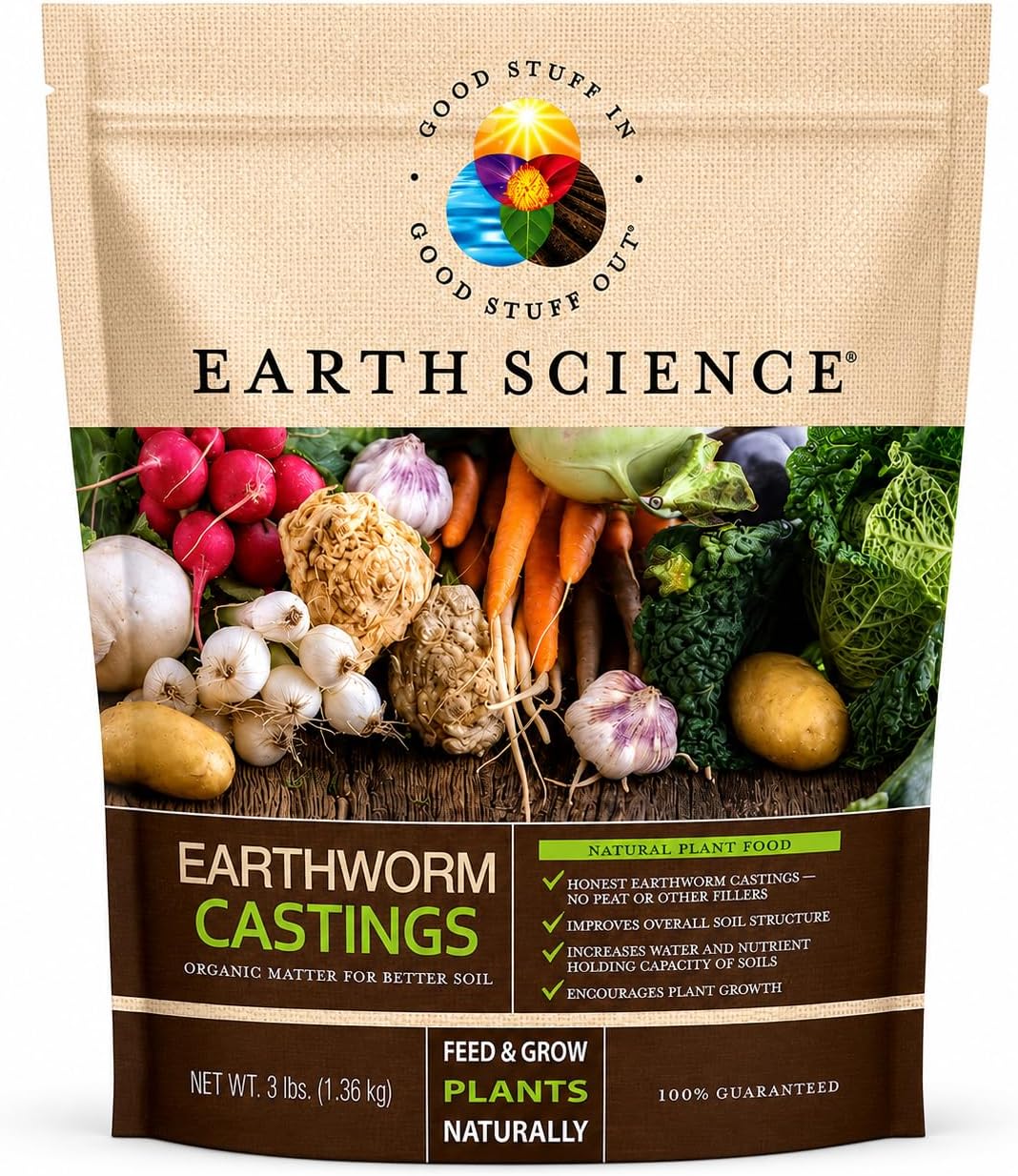
Earth Science Premium Earthworm Castings, 3 lb
| Item Form | Granules |
|---|---|
| Specific Uses For Product | Organic,Plant Food,Plant Growth |
| Coverage | Medium |
| Target Species | gardens, flower beds, fruits, trees, shrubs |
| Mixing Ratio | 1:4 |
Earth Science Premium Earthworm Castings are a pure vermicompost product intended to enrich garden and potting soils. Gardeners typically use it as a top dressing, mixed into potting mixes at about 1:4 castings to soil, or incorporated into garden beds at 1/4 to 1/2 inch and watered in; it can also be brewed as compost tea. The castings add organic matter that helps soil retain moisture, supports beneficial microbes, and can reduce compaction by improving aggregation. Practical benefits include a straightforward application for vegetables, flower beds, trees, and shrubs and the flexibility to use in pots, compost piles, or on lawns. The product is free of fillers and presented as a slow-release, natural fertilizer rather than a quick synthetic boost, so expect gradual improvements over weeks to months rather than immediate greening. Because this is a small, concentrated pouch, frequent reapplication during the growing season is recommended for larger beds or heavy-feeding crops.
Best for: Gardeners who prioritize dependable, natural soil improvement for organic vegetable beds and potted edibles and prefer steady, biology-driven results over quick chemical fixes.
Less Ideal for: Growers who need rapid, high-N fertilizer responses for a single fast-growing crop or who require large-volume amendments for extensive beds without frequent reapplication.
- 100% vermicompost with no peat or fillers
- Versatile uses: top dressing, potting mix amendment, compost tea, and compost layering
- Improves soil structure and water retention while feeding beneficial microbes
- Slow-acting nutrient release not suited for immediate greening or fast corrective feeding
Verdict: Use this pure earthworm castings product when you want a reliable, natural soil conditioner that builds long-term fertility for an organic vegetable garden.
Miracle-Gro Shake 'N Feed Tomato, Fruit & Vegetable Plant Food (1 lb)

| Item Form | Granules |
|---|---|
| Target Species | Tomato, Fruit & Vegetable Plant Food |
| Unit Count | 16 Ounce |
| Item Type Name | Continuous Release Plant Food Plus Calcium |
| Coverage | Full |
Miracle-Gro Shake 'N Feed Tomato, Fruit & Vegetable is a granular, continuous-release fertilizer aimed at vegetable gardens and container-grown edibles. You apply it dry to the soil surface or mix it into potting mix at planting, then water to activate feeding that lasts up to three months. The formula includes natural ingredients that feed soil microbes and added calcium to strengthen cell walls and reduce common calcium-related disorders in fruiting crops. For container cucumbers this product provides steady nutrition without weekly liquid feeding and is simple to dose at planting or between seasons. Limitations include the fixed N-P-K profile and that it is not water-soluble for immediate foliar feeding, so rapid correction of major nutrient deficiencies will require a soluble supplement. It also requires correct incorporation or surface application and watering to avoid uneven distribution in small pots. Overall it is a low-effort option to keep container cucumbers producing through a season when used alongside regular watering and good potting mix.
Best for: Gardeners who want a low-maintenance fertilizing routine for container-grown cucumbers and value steady month-to-month feeding over frequent liquid feeds.
Less Ideal for: Growers who need rapid correction of a diagnosed nutrient deficiency or who prefer precise, water-soluble dosing for each watering cycle.
- Continuous-release granules feed plants for up to three months reducing application frequency
- Contains calcium to help prevent blossom end rot and improve fruit quality
- Formulated for fruits and vegetables and suitable for both in-ground and container use
- Feeds soil microbes via natural ingredients which can improve root health and nutrient availability
- Not water-soluble so it will not correct acute nutrient deficiencies quickly
- Fixed formulation may not match specific soil test recommendations for containers
Verdict: A convenient, slow-release granular feed that keeps container cucumbers nourished for months with minimal fuss.
Burpee All-Purpose Organic Granular Plant Food, 4 lb

| Item Form | Granules |
|---|---|
| Specific Uses For Product | Gardening,Plant Growth,Root Development |
| Coverage | 213 Square Feet |
| Target Species | Herba |
Burpee All-Purpose Organic Granular Plant Food is a ready-to-use organic fertilizer designed for vegetable gardens, flower beds, herbs and container plants. The granules supply major and minor nutrients plus calcium and beneficial microbes that begin releasing nutrients quickly and continue feeding plants for up to three months, so you can apply less frequently during the growing season. It is OMRI-listed, which makes it suitable for gardeners who prefer organic-approved inputs, and the coverage figure on the package helps plan application for small to medium beds. Typical use is a surface application worked lightly into the soil or mixed into potting media for containers and seed starting. Practical advantages include straightforward application, multi-month nutrient release, and compatibility with a wide range of garden plants. Limitations are the small bag size for larger plots and the lack of detailed N-P-K numbers on the listing, which means gardeners wanting precise nutrient ratios or high- rate corrective feeding may need a supplemental product.
Best for: Gardeners who prefer low-risk, organic-approved inputs and want a simple, multi-purpose fertilizer that reduces the need for frequent feeding in small to medium vegetable beds and container gardens.
Less Ideal for: Large-scale vegetable growers or gardeners who need exact N-P-K values and high-strength corrective applications should consider more concentrated or bulk fertilizers.
- OMRI-listed organic formula suitable for certified-organic and home organic gardens
- Granular form releases nutrients immediately and continues feeding for up to three months
- Suitable for seed starting, vegetables, herbs, flowers, trees, shrubs and containers
- Clear coverage guidance provided for planning applications to small and medium beds
- Bag is only 4 lb so not economical for large vegetable plots
- Product listing does not show explicit N-P-K ratio for precision nutrient planning
Verdict: A small, OMRI-listed granular fertilizer that gives low-risk, multi-month feeding for home vegetable beds and container gardens.
Choosing the Right Natural Fertilizer for Garden Vegetables: Key Factors to Consider
Nutrient Balance and Release Pattern
Vegetables need different nutrients through germination, leafy growth, flowering, and fruiting. A natural fertilizer should list its N-P-K profile and indicate whether nutrients are fast-available or slow-release. Fast-release sources feed quick leafy growth but can burn seedlings or push foliage over fruiting if overapplied. Slow-release organic forms provide steadier nutrition and reduce the risk of nutrient shock, but they may not correct a sudden deficiency quickly.
Understanding release pattern helps you match the fertilizer to your crop phase and watering schedule. It also affects how often you apply product across a season and whether you need supplementary foliar feeds for short-term fixes.
Soil Biology and Organic Matter Benefits
Natural fertilizers differ in how much they feed soil microbes and contribute organic matter. Inputs like compost and well-aged manures improve structure, water retention, and microbial activity as they break down. Mineral-rich amendments supply trace elements and can correct specific deficiencies without adding much bulk.
For long-term garden health, choose fertilizers that encourage a living soil. That will improve nutrient cycling and reduce dependency on frequent reapplications. Consider how a fertilizer integrates with composting and mulching practices to build soil over multiple seasons.
Application Method and Labor
Ease of application matters for busy gardeners and those with limited mobility. Some natural fertilizers come as powders or granules that you broadcast and lightly incorporate. Others are concentrated extracts or teas that require dilution and regular foliar or soil drench applications. Pelleted or slow-release granules are convenient for seasonal top-dressing, while liquids deliver nutrients quickly but mean more frequent handling.
Also account for how the fertilizer behaves in containers versus in-ground beds. Heavy granular materials can be cumbersome to mix into potting mixes, whereas soluble options let you feed container plants without repotting.
Safety and Suitability for Edible Crops
When growing vegetables you should choose fertilizers with clear guidance on pre-harvest intervals, composting maturity, and safe application rates. Some organic inputs can contain pathogens or excessive salts if not properly processed. Look for products that provide instructions for edible plant use and safe timing between application and harvest.
Safety also covers salt index and potential for nutrient runoff. Overapplication of high-nitrogen materials can damage roots and reduce fruit set, while excessive phosphorus risks persistent buildup. Proper guidance helps avoid these problems.
Compatibility With Soil Tests and Amendments
A soil test gives the baseline you need to choose the right natural fertilizer. Different products correct different deficiencies. For example, rock minerals may add trace elements but little nitrogen, while seed meals supply nitrogen and organic matter. Match the amendment to test results rather than relying on a one-size-fits-all product.
Compatibility also means the fertilizer should not antagonize other amendments. Some high-calcium inputs change pH and can lock up micronutrients. Plan applications so organic matter, lime, and mineral supplements work together to improve fertility rather than competing.
Seasonal Timing and Crop Stage Fit
Timing influences effectiveness. Bulky organic materials incorporated in fall give months to break down and feed the soil, while soluble feeds are useful during active growth. Heavy feeders like brassicas and cucurbits need steady nitrogen early, then balanced phosphorus and potassium as they set fruit. Root crops often prefer lower nitrogen and steady potassium for root development.
Consider how often you can apply product and whether its release curve coincides with your planting schedule. That will reduce waste and produce healthier, more productive plants.
Using Natural Fertilizers in Raised Beds and Containers
Raised beds and containers have smaller soil volumes, so nutrient supply changes faster than in-ground plots. Choose natural fertilizers with predictable release or plan more frequent, lighter feedings to avoid spikes that can harm roots.
In containers, soluble or liquid fertilizers are often the easiest to use because they mix into potting media without heavy incorporation. For raised beds, integrate bulky amendments during bed preparation and use top-dressed slow-release options during the season.
- Mix small amounts of granular organics into potting mixes before planting.
- Use diluted liquid feeds for quick correction in containers.
- Top-dress raised beds with compost or slow-release granules early in the season.
Balancing Fast-Acting Feeds and Soil Builders
You can pair a quick-acting natural source with a longer-term soil builder to meet both immediate crop demand and long-term fertility goals. For example, apply a mild liquid feed at transplanting while adding compost or well-aged manure to the bed to mineralize over weeks.
This combination reduces the risk of short-term deficiency while steadily improving soil structure and biology for future seasons.
- Use liquids for transplant shock or early leaf development.
- Reserve bulk organics for building soil and retaining moisture.
Adjusting Applications Based on Crop Type
Different vegetables have distinct nutrient priorities. Leafy greens often need more nitrogen for lush growth, while fruiting crops require steady potassium and phosphorus for blooms and fruit set. Root crops benefit from moderate nitrogen and adequate potassium to develop firm roots.
Tailor the frequency and strength of applications to the crop class and check foliage and growth habit for signs of imbalance rather than assuming one schedule fits all.
- Leafy crops: focus on balanced, slightly higher nitrogen.
- Fruiting crops: reduce nitrogen late season to encourage fruiting.
- Root crops: avoid excess nitrogen to prevent forked or hairy roots.
Integrating Natural Fertilizers With Composting
Compost is the foundational soil amendment for vegetable gardens. Layering natural fertilizers with regular compost applications keeps nutrient availability steady and feeds the soil food web. Use compost as the base and add targeted natural fertilizers when a soil test or plant symptoms show specific needs.
Compost also buffers nutrient release and reduces the chances of burning or overfeeding, especially when using stronger organic concentrates like seed meals.
- Apply compost annually to maintain structure and microbial health.
- Use targeted inputs only when compost and soil tests indicate a gap.
Environmental Considerations and Runoff Prevention
Natural does not automatically mean low environmental impact. Overapplication of any fertilizer can cause nutrient runoff that harms nearby waterways. Apply product at recommended rates, avoid applying before heavy rain, and use mulches to retain nutrients in the root zone.
In small gardens, incorporate slow-release materials and maintain healthy soil biology to reduce the need for frequent applications that could lead to leaching.
- Follow label or package guidance for rates and timing.
- Avoid working fertilizers into compacted or saturated soil.
How We Chose the Best Natural Fertilizer for Garden Vegetables
We focused on attributes that matter for home vegetable gardens and excluded blends or inputs aimed primarily at lawns, ornamentals, or large-scale agriculture. Selection began with products and formulations commonly recommended for edible beds, then narrowed by factors that affect real-world gardening outcomes. Key evaluation criteria included nutrient balance and release pattern, since vegetables need predictable nitrogen, phosphorus, and potassium at different stages. We assessed soil biology support, favoring fertilizers that feed microbes and improve structure rather than only supplying salts. Application practicality was another filter, covering how easy a gardener can spread, dilute, or incorporate the fertilizer in beds or containers. Availability of clear usage guidance and safety for food crops was considered to ensure gardeners can use products without complex adjustments. Sturdiness of results and consistency across different soil types were tested conceptually from ingredient lists and manufacturer directions. We excluded inputs with poorly defined nutrient content, unverified food-safety claims, or those primarily marketed for non-edible landscaping. The final picks balance predictable nutrition, soil-building benefits, and straightforward application for vegetable gardeners.
FAQ
How often should I apply natural fertilizer to my vegetable garden?
Frequency depends on the product. Slow-release organics and compost applied once per season often suffice for established beds, while liquid or soluble feeds may be needed every two to four weeks during active growth. Check plants for nutrient signs and follow product instructions for safe intervals.
Can I use natural fertilizers on seedlings and transplants?
Yes, but use milder concentrations for seedlings. Strong, high-nitrogen organic concentrates can burn young roots. Start with a light application or a diluted liquid feed and increase strength as plants mature.
Will natural fertilizers change my soil pH?
Some natural amendments can affect pH over time. Lime or wood-ash raises pH, while sulfur-containing inputs can lower it. Most organic fertilizers change pH slowly through decomposition. When pH shifts are a concern, rely on a soil test and choose amendments that correct the specific issue.
Are natural fertilizers safe for edible crops right before harvest?
Safety depends on the product. Many soluble natural fertilizers are safe when used according to guidelines, but bulky manures or unprocessed amendments may require a waiting period before harvest. Follow product directions regarding pre-harvest intervals and compost maturity.
How do I correct a specific nutrient deficiency naturally?
Start with a soil test to identify the deficiency. Use targeted natural inputs that supply the needed element, such as rock minerals for trace elements or seed meals for nitrogen. Apply at recommended rates and monitor plant response, adjusting future applications based on results.
Final Verdict
Choose a natural fertilizer that matches your soil test results, crop types, and how much time you have for feeding. Prioritize materials that support soil biology if long-term soil health is a goal, and use quick-acting options sparingly to correct short-term deficiencies. Balance convenience, safety, and release pattern when deciding. By matching fertilizer type to containers or beds and following application guidance, you can improve yields while building healthier, more resilient vegetable soil.
