

Note: This article contains affiliate links. If you click on these links and make a purchase, I may earn a small commission at no extra cost to you. This helps support my research and content. Read my full affiliate disclosure here.
Picking the right organic fertilizer for azaleas matters because these acid-loving shrubs respond to the wrong feed with poor flowering, yellowing leaves, or slow growth. In a garden or container, the correct formulation supports bright blooms, maintains the low pH these plants prefer, and protects shallow root systems. This guide covers six top organic fertilizer options shortlisted for azalea care. We evaluate each by nutrient balance, pH impact, and ease of use so you can pick a feeding strategy that fits your planting situation and maintenance style.
Top Picks at a Glance
| Best Overall The best all-around choice for most situations | Espoma Holly-Tone Organic 4-3-4 Fertilizer for Acid-Loving Plants, 36 lb Bag |  |
| Best Quality Built to a higher standard if you want something more solid | Coast of Maine Organic Fertilizer for Rhodies, Azaleas & Berries, 12 lb |  |
| Best Budget The cheapest option that still gets the job done reliably | Jobe's Organics Azalea, Camellia & Rhododendron Fertilizer Spikes, 10 Count |  |
| Highest Rated A top-rated pick with lots of positive feedback | Down To Earth Organic Acid Mix Fertilizer 4-3-6, 40 lb |  |
| Most Popular A crowd favorite that many people choose with confidence | Espoma Organic Holly-Tone 4-3-4 Evergreen & Acid-Loving Plant Food, 4 lb. Bag (Pack of 2) |  |
| Best Seller A high-volume bestseller chosen again and again | Down To Earth Acid Mix Organic Fertilizer 4-3-6, 1 lb |  |
Espoma Holly-Tone Organic 4-3-4 Fertilizer for Acid-Loving Plants, 36 lb Bag

| Item Form | Granules |
|---|---|
| Specific Uses For Product | Acid-loving plants |
| Application Method | Sprinkle around the drip line and water thoroughly |
| Coverage | Acid-loving plants (hollies, azaleas, camellias, evergreens, dogwoods, rhododendrons) |
Espoma Holly-Tone is an organic, granular plant food designed specifically for acid-loving plants and evergreens. You apply it by sprinkling around the drip line and watering it in, typically in spring and fall for flowering and evergreen shrubs; it is also recommended for blueberries and other acid-preferring species. The 4-3-4 NPK formulation with added sulfur and Bio-tone microbes provides a steady nutrient release that supports leaf color and flowering while improving soil biology over time. Because it is organic and approved for organic gardening, it suits gardeners who prefer natural inputs and want to avoid synthetic quick-release fertilizers. The product comes ready to use with no mixing required and covers multiple shrubs per bag, making it practical for yards and small landscapes. Limitations are that results build gradually rather than immediately and the large 36 lb bag may be bulky to handle for some users; detailed application rates by plant size are not provided on the product page, so careful dosing is needed to avoid over-application.
Best for: Gardeners who want a reliable, organic fertilizer for hollies, rhododendrons and other evergreens and prefer steady feeding and improved soil biology over instant results.
Less Ideal for: People who need fast, visible green-up within days or who only have tiny container plants where a smaller, more concentrated product would be easier to manage.
- Formulated specifically for acid-loving plants and broad evergreen coverage
- Organic granular formula with Bio-tone microbes supports soil health
- Slow-release nutrients provide longer-lasting feeding than quick-release products
- Ready-to-use granules require no mixing and are easy to apply around the drip line
- Large 36 lb bag can be heavy and awkward to handle for one person
- Nutrient uptake is gradual so visible improvement may take time
Verdict: Choose Espoma Holly-Tone when you want an organic, slow-release fertilizer tailored to acid-loving evergreens that improves plant health and soil life over time.
Coast of Maine Organic Fertilizer for Rhodies, Azaleas & Berries, 12 lb

| Item Form | Granules |
|---|---|
| Specific Uses For Product | Plant Growth, Soil Conditioning |
| Application Method | Manual |
| Target Species | Rhodies, Azaleas & Berries |
This Coast of Maine formula is a performance-focused organic granular fertilizer designed specifically for acid-loving plants. It supplies a balanced slow-release NPK of 4-5-2 plus 4% sulfur and is made from land and ocean ingredients like fish bone meal, kelp, lobster and crab shell meal, and worm castings to feed plants while building living soil. Typical use is as a top-dress or soil mix: sprinkle around the root zone, lightly work into the top couple inches of soil, then water to move nutrients toward feeder roots; package directions give rates for containers, new beds, and top-dressing. The product is OMRI listed so it fits organic gardening systems and provides long-lasting nutrition without synthetic salts. Expect improved bloom and steady growth in azaleas and blueberries when applied at the recommended times. Limitations are that results are slower than soluble chemical feeds and you must follow application rates to avoid overfeeding; gardeners seeking immediate, fast green-up will notice a lag while the organic materials mineralize.
Best for: Gardeners who prioritize plant performance using organic methods and want a targeted fertilizer to improve blooms and long-term soil health in acid-loving shrubs and berries.
Less Ideal for: Growers who need rapid, immediate greening or those managing very large landscapes who prefer high-concentration synthetic fertilizers for quick correction.
- OMRI listed organic formula suitable for certified organic gardens
- Slow-release 4-5-2 NPK with 4% sulfur tailored to acid-loving plants
- Made from diverse land and ocean ingredients that build soil biology
- Clear application guidance for containers, new beds, and top-dressing
- Slower visible results compared with soluble synthetic fertilizers
- Single 12 lb bag may be small for large beds or multiple established shrubs
Verdict: Choose this organic slow-release formula when you want targeted, long-lasting nutrition that improves blooms and builds soil health for azaleas and other acid-loving plants.
Jobe's Organics Azalea, Camellia & Rhododendron Fertilizer Spikes, 10 Count

| Item Form | Sticks |
|---|---|
| Application Method | Spikes |
| Specific Uses For Product | Plant Growth, Root Development, Soil Conditioning |
| Target Species | Azalea, Camellia, Rhododendron |
| Mixing Ratio | 9-8-7 |
These Jobe's Organics spikes are designed to feed acid-loving shrubs like azaleas, camellias, rhododendrons and other similar plants by inserting premeasured sticks into the root zone. Each spike contains a 9-8-7 NPK mix that releases nutrients slowly, which reduces surface runoff and the need for frequent granular or liquid feeding. They are simple to use: push the spikes into the soil around shrubs every 4 to 6 weeks during the growing season, and the waterproof resealable pouch keeps unused spikes dry. Practical benefits include mess-free application, reduced risk of overfertilizing because each spike is portioned, and targeted root delivery that supports bloom production. Limitations are that spikes cover a medium area so larger or densely planted shrubs may need several spikes per plant, and they are specific to acid-loving species so they are not a one-stop fertilizer for mixed beds. Also the spike format is less flexible than a granular or soluble feed if you prefer custom dosing or foliar feeding.
Best for: Ideal for gardeners who want a low-effort, no-mess way to maintain flowering acid-loving shrubs and prefer straightforward, premeasured applications.
Less Ideal for: Not a good fit for gardeners needing a single fertilizer for mixed plantings or those who want precise custom dosing or foliar/soil drench applications.
- Premeasured spikes reduce mess and make dosing straightforward
- Slow-release 9-8-7 NPK delivers nutrients at the roots to support blooms
- Waterproof resealable pouch preserves unused spikes
- Formulated specifically for acid-loving shrubs to match nutrient needs
- Medium coverage per spike means multiple spikes needed for large shrubs
Verdict: A simple, low-mess slow-release spike feed that makes keeping holly and other acid-loving shrubs blooming easy for budget-minded gardeners.
Down To Earth Organic Acid Mix Fertilizer 4-3-6, 40 lb

| Item Form | Granules |
|---|---|
| Specific Uses For Product | Acid-loving plants (blueberries, rhododendrons, azaleas, hydrangeas, evergreen trees and shrubs, raspberries) |
| Coverage | 800 square feet |
| Mixing Ratio | 4-3-6 |
This 40 lb Down To Earth Acid Mix is a granular, slow‑release organic fertilizer aimed at acid‑loving shrubs and fruiting plants. It is typically broadcast over the root zone or worked into soil at planting and should be watered in after application. The 4-3-6 mixing ratio supplies nitrogen, phosphorus, and potassium from organic sources such as cottonseed meal, fish bone meal, rock phosphate, langbeinite, humates, and seaweed meal, which supports steady growth and improved soil biology rather than a quick synthetic spike. Coverage is listed at about 800 sq ft for the bag, so a single bag suits small to medium shrub beds. It will not change soil pH, so you must manage acidity separately if your holly needs a lower pH. Safety guidance notes handling precautions like gloves and a dust mask. If you want a reliable, OMRI‑listed organic feed that builds long‑term soil health for hollies, this product is a practical choice, though results appear more gradual compared with water‑soluble fertilizers.
Best for: Gardeners who prioritize dependable, long‑term nutrition and organic practices for acid‑loving shrubs and want a set‑and‑forget granular feed for seasonal applications.
Less Ideal for: People who need immediate greening or rapid correction of nutrient deficiencies or who require a product that also adjusts soil pH for their plants.
- Formulated specifically for acid‑loving plants such as hollies and rhododendrons.
- Slow‑release organic nutrient sources that support soil biology and steady feeding.
- Large 40 lb bag covers approximately 800 square feet, reducing frequent repurchases.
- Made from diverse natural ingredients including fish bone meal, rock phosphate, humates, and seaweed meal.
- Does not alter soil pH so additional amendments are required to lower pH for acidification.
- Granular form delivers nutrients slowly so visible effects can take weeks to months.
Verdict: A reliable organic slow‑release fertilizer tailored to acid‑loving shrubs that builds soil health and provides steady seasonal nutrition.
Espoma Organic Holly-Tone 4-3-4 Evergreen & Acid-Loving Plant Food, 4 lb. Bag (Pack of 2)

| Item Form | Powder |
|---|---|
| Specific Uses For Product | Organic,Plant Food |
| Application Method | Sprinkle over the root zone and water in |
| Coverage | Medium |
| Target Species | Acid-loving Plants |
Espoma Holly-Tone is a ready-to-use organic fertilizer made for acid-loving plants such as blueberries and raspberries. Supplied as a powder/granular form with an N-P-K of 4-3-4 and added sulfur, it is intended to be sprinkled around the root zone and watered in, providing a slow-release nutrient reservoir that supports blooms and fruiting over the growing season. Its organic ingredients and Bio-tone inoculant are designed to feed plants while improving soil biology, which suits gardeners who prefer low-chemical approaches. Practical benefits include simple application with no mixing, suitability for spring and fall feedings, and certification for organic gardening. Limitations are that it delivers modest nutrient levels per application, so heavy-feeding situations may need more frequent use or supplementary fertilizer, and the medium coverage means larger plantings require multiple bags. For cautious gardeners wanting predictable, organic nutrition for blueberries and raspberries, Holly-Tone offers a reliable, low-risk option that integrates easily into standard care routines.
Best for: Gardeners who prioritize organic, low-risk feeding for acid-loving fruit shrubs and want a simple, no-mix fertilizer to maintain soil health and steady fruiting.
Less Ideal for: Growers managing large commercial patches or plants that need high immediate nutrient boosts should consider higher-analysis or concentrated products instead.
- Organic formula with Bio-tone to support soil biology and gradual nutrient release
- Formulated specifically for acid-loving plants like blueberries and raspberries
- Ready-to-use granular powder that requires no mixing and is simple to apply
- Contains sulfur to help maintain acidic soil conditions favored by target plants
- Low N-P-K ratio means heavier feeders may need additional applications or supplements
- Medium coverage requires multiple bags for larger patches or rows
Verdict: A dependable organic, ready-to-use fertilizer that makes feeding blueberries and raspberries simple while supporting soil biology.
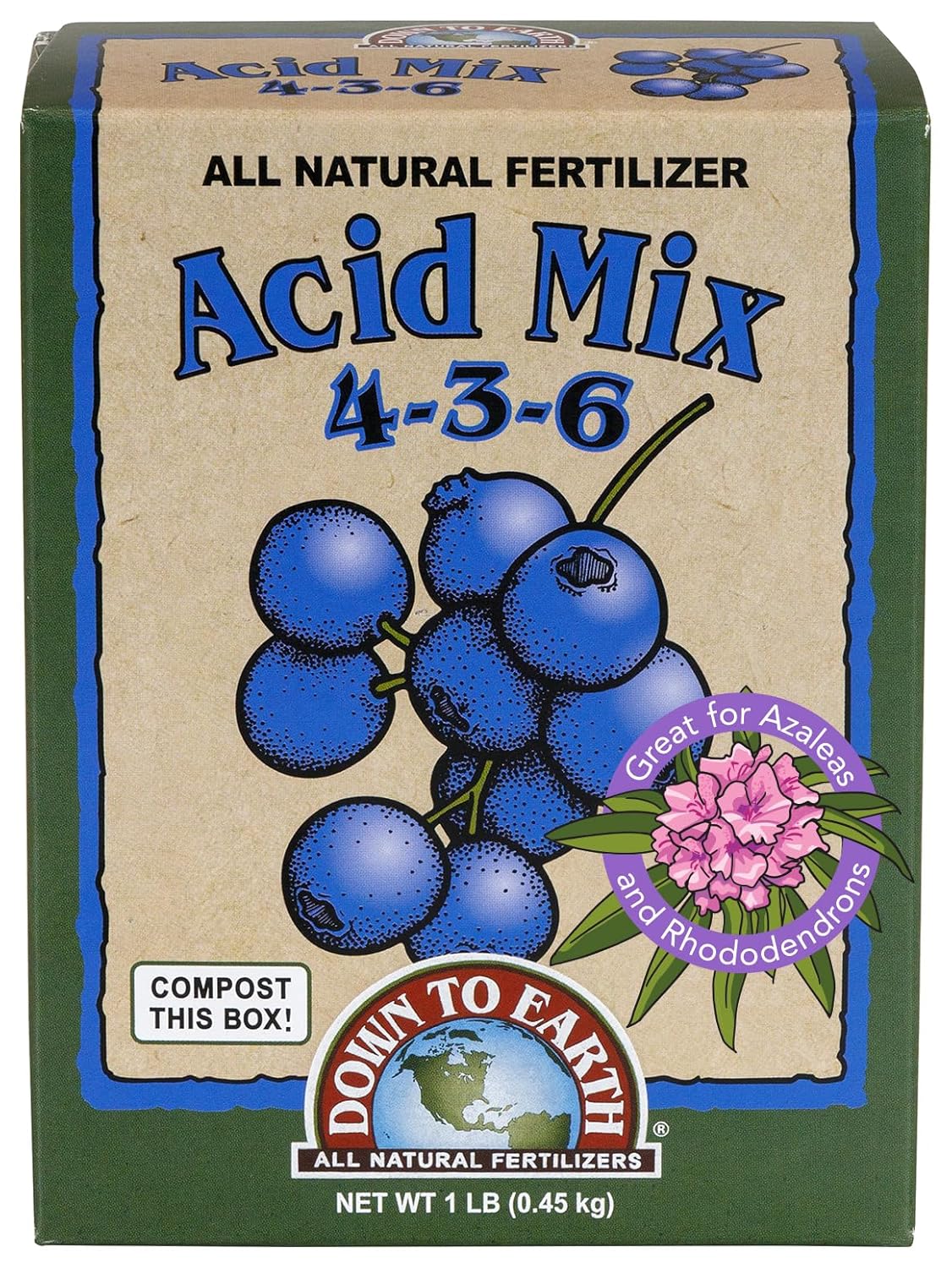
Down To Earth Acid Mix Organic Fertilizer 4-3-6, 1 lb
| Item Form | Granules |
|---|---|
| Specific Uses For Product | Acid-loving plants |
| Target Species | rhododendrons, azaleas, hydrangeas, evergreen trees and shrubs, blueberries, raspberries |
| Mixing Ratio | 4:3:6 |
Down To Earth Acid Mix is an organic granular fertilizer designed to feed acid-loving plants such as blueberries, azaleas, rhododendrons and other shrubs. You can broadcast it on the soil surface or mix it into planting holes, then water it in; the manufacturer recommends applications in early spring, at bloom and again in fall to support vegetative growth, flowering and root development. The 4-3-6 formula delivers a higher potassium ratio to help fruiting and overall plant vigor, while slow-release materials like feather meal, fish bone meal and kelp provide longer-lasting nutrition so you do not need to feed frequently. It is shelf stable and OMRI-listed ingredients support organic gardening practices. Limitations to note are the small 1 lb unit size, which means frequent repurchase for larger beds, and that this product is a fertilizer rather than a soil pH fixer so you will still need sulfur or lime to significantly change soil acidity. For gardeners feeding a few blueberry plants or refreshening planting holes, it is an effective, low-fuss organic option.
Best for: Gardeners with a few blueberry plants or small acid-loving beds who want an easy-to-use organic fertilizer and prefer low-maintenance, sustained feeding.
Less Ideal for: Large-scale blueberry plantings or growers who need to change soil pH significantly without using separate amendments.
- Formulated specifically for acid-loving plants including blueberries and azaleas
- Slow-release organic ingredients provide sustained feeding and reduce application frequency
- Can be applied on the soil surface or mixed into planting holes for flexible use
- OMRI-friendly ingredient sources support organic gardening practices
- Small 1 lb package limits coverage for larger beds or multiple bushes
Verdict: A compact, slow-release organic fertilizer tailored for small blueberry plantings and other acid-loving plants to provide steady, low-maintenance nutrition.
Choosing the Right Organic Fertilizer for Azaleas: Key Factors to Consider
Nutrient Balance and N-P-K Ratio
Azaleas need a fertilizer that supports flowering with an emphasis on moderate nitrogen, adequate phosphorus, and potassium for overall vigor. A balanced N-P-K ratio tailored toward bloom production helps avoid excessive leafy growth at the expense of flowers.
When evaluating organic options, look for sources that supply steady amounts of all three primary macronutrients rather than a heavy single-nutrient boost. Because organic fertilizers release nutrients more slowly, the labeled analysis should indicate usable phosphorus and potassium levels over time rather than a high upfront nitrogen spike.
Soil pH Compatibility and Acidifying Effect
Azaleas prefer slightly to moderately acidic soil. The right organic feed will either be neutral to mildly acidifying or will work alongside supplemental acidifiers like elemental sulfur or acidifying mulches. Avoid materials that tend to raise pH or rely on alkaline fillers.
Assess how a fertilizer interacts with your existing soil. In containers or alkaline garden beds, choose a feed that helps maintain low pH or plan to amend the soil separately. Test soil pH periodically after feeding to confirm the combined effect of fertilizer and other cultural practices.
Release Rate and Seasonal Timing
Organic fertilizers release nutrients gradually as microbes break them down. That slow-release behavior reduces burn risk but requires thinking about timing. Apply feeds so peak nutrient availability coincides with bud set and bloom development.
Consider whether a product is best applied in spring, before bloom, or as a light summer feed. Some organic formulas include both quick-acting components for immediate uptake and longer-lasting materials for sustained feeding. Match release characteristics to your pruning and flowering calendar.
Impact on Roots and Soil Biology
Azaleas have relatively shallow, fibrous root systems sensitive to salt and heat. Choose fertilizers that are gentle on roots and support beneficial soil organisms like mycorrhizae and decomposer microbes. Organic feeds that improve soil structure and microbial life help azaleas access nutrients and moisture.
Avoid high-salt or high-ammonium formulations that can stress roots. Look for ingredient transparency and the presence of composted organics, kelp, or bio-stimulants that encourage healthy soil biology without chemical stressors.
Application Method and Ease of Use
Consider how the fertilizer is applied in your typical gardening setup. Granular spreads, slow-release spikes, liquid concentrates, and water-soluble powders each fit different gardener routines. Granular products are easy to work into beds or spread over mulch, while liquids let you target containers and newly planted specimens quickly.
Choose a format that matches your maintenance habits and the size of the planting. If you have many container azaleas, a water-soluble or liquid option may be more efficient. For established beds, a broadcast granular or top-dress approach is often the most practical.
Safety, Certification, and Ingredient Transparency
Look for clear ingredient lists and, when relevant, certifications that verify organic sourcing. Transparency helps you avoid unexpected additives that could affect soil pH or microbial life. Certifications and batch testing are useful but not the only mark of safety; readable ingredient labels are essential.
For home gardeners, avoid mystery blends with ambiguous filler materials. Ingredients such as composted plant matter, bone meal, blood meal, feather meal, kelp, and rock phosphate are common organic sources with known behaviors and impacts on soil chemistry.
Feeding Schedule for Healthy Bloom Cycles
Plan feedings around the azalea life cycle. A light application in early spring encourages bud development, a smaller follow-up after peak bloom supports leaf growth, and a modest late-summer feeding can help plants recover without promoting late-season tender growth.
Adjust timing for container plants, which often need more frequent, lighter feeds because potting mixes hold fewer nutrients. Always water plants before applying granular feeds so nutrients begin to dissolve and reach roots.
- Early spring: main feed before bud break
- After bloom: light follow-up to sustain foliage
- Late summer: small maintenance feed, avoid heavy fall applications
Adjusting Fertilizer Use by Soil and Plant Condition
Test soil pH and nutrient status before committing to a feeding plan. If pH is too high, pair your organic fertilizer with acidifying practices like applying acidic mulch or elemental sulfur rather than relying on fertilizer alone.
For yellowing leaves that indicate iron chlorosis, check pH first; many cases are pH-related rather than nitrogen deficiency. In that situation, choose acidifying approaches and avoid large nitrogen-heavy applications that mask the underlying issue.
- Use a pH meter or test kit for spot checks
- Leaf discoloration often signals pH or nutrient lock-up
- Match feed strength to plant vigor and root depth
Best Practices for Containers and Small-Space Gardens
Containers dry and leach nutrients faster than in-ground beds. Use lighter, more frequent organic feeds in pots and choose mixes designed for container use. Consider water-soluble or liquid organics for easy, even distribution.
Repotting every few years with fresh acidic potting mix reduces the need for heavy feeding. Top-dress containers with composted organic matter in spring to maintain a steady nutrient supply.
- Top-dress containers in spring with compost
- Prefer water-soluble organics for quick correction
- Repot periodically to refresh soil acidity and structure
Combining Fertilizer with Mulch and Soil Amendments
Mulch helps conserve moisture and gradually contributes organic matter as it breaks down. When applying granular fertilizer, spread it under the mulch or work it lightly into the top layer so nutrients can reach roots without direct contact that risks burn.
If you use acidifying mulches such as pine needles, coordinate that practice with your fertilizer schedule to avoid over-acidifying. Monitor soil pH annually to keep levels in the ideal range for azaleas.
- Place fertilizer beneath mulch to reduce volatilization
- Coordinate mulching and feeding to maintain stable pH
- Avoid burying fertilizer too deep; azalea roots are shallow
Organic Sources That Support Acid Conditions
Certain organic ingredients naturally promote lower soil pH or at least do not counteract acidity. Composted pine fines, sphagnum peat amendments, and some chelated micronutrient blends can help maintain the acidic environment azaleas require.
When choosing a product, consider whether its base ingredients will nudge pH in the desired direction over repeated applications. If not, be prepared to use supplemental acidifying amendments alongside regular feeding.
- Composted pine material contributes organic acid as it breaks down
- Peat and certain composts help maintain lower pH in containers
- Chelated iron supplies can address micronutrient deficiencies without raising pH
How We Chose the Best Organic Fertilizer for Azaleas
We prioritized fertilizers that deliver nutrients in forms azaleas readily use while preserving the acidic soil conditions these shrubs need. Key evaluation criteria included nutrient profile and balance, acidifying effect and pH compatibility, release rate and timing of nutrients, and impact on soil biology and root safety. We also assessed ease of application for garden beds and containers, and compatibility with common azalea maintenance practices such as mulching and light pruning. Products were excluded if they relied on synthetic quick-release salts that can raise soil salts or if their formulations were clearly aimed at alkaline-loving plants. We filtered out items lacking clear nutrient labels or those that depend heavily on high nitrogen without supporting phosphorus and potassium for blooms. The final shortlist focuses on balanced, plant-safe organic sources that support flowering, root health, and the low-pH conditions azaleas prefer.
FAQ
How often should I feed azaleas with an organic fertilizer?
Often the rhythm is a main application in early spring and a lighter follow-up after bloom, with an optional small feed in late summer. Containers may need lighter, more frequent applications because potting mix holds fewer available nutrients.
Can I use generic organic fertilizer meant for shrubs on azaleas?
Usually you can, but check the nutrient balance and pH effect. Generic shrub fertilizers that do not support acid conditions or that are very high in quick-release nitrogen can encourage leafy growth over flowers and may not suit azaleas.
Will organic fertilizer change my soil pH quickly?
Organic fertilizers generally change pH slowly as they break down. For a faster correction, pair feeding with specific acidifying amendments such as elemental sulfur or acidic mulch. Retest soil pH periodically to track changes.
Are liquid organic feeds better for container azaleas?
Liquid organics are often a good choice in containers because they deliver nutrients evenly and can be applied more frequently in smaller doses. They let you correct deficiencies quickly without disturbing roots, but they require a consistent application schedule.
How do I avoid burning azalea roots with organic feed?
Organic feeds are less likely to burn than synthetic salts, but you should still follow label application rates and water before or after applying granular materials. Avoid placing concentrated granules against stems or collars and distribute evenly under the canopy.
Should I feed newly planted azaleas right away?
Wait until new transplants have started to establish and show active root growth before applying a full-strength feed. A light starter dressing of gentle organic matter is fine at planting, but heavy feeding right away can stress young roots.
Final Verdict
When choosing an organic fertilizer for azaleas, prioritize nutrient balance that favors bloom development, a formula that supports or does not counteract acidic soil, and a release profile that matches your seasonal care routine. Consider root sensitivity and soil biology so the feed improves long-term vigor rather than forcing quick leafy growth. Match the product format to how you garden: liquids and water-soluble organics for containers and quick corrections, granular and compost top-dresses for beds. Follow pH testing and adjust practices as needed to keep azaleas blooming reliably.
