

Note: This article contains affiliate links. If you click on these links and make a purchase, I may earn a small commission at no extra cost to you. This helps support my research and content. Read my full affiliate disclosure here.
Daylilies respond well to steady, balanced nutrition and soil that drains but holds nutrients. The right organic fertilizer feeds flower production, strengthens crowns and roots, and improves the soil structure that keeps clumps thriving year after year. This guide covers five shortlisted organic fertilizer options chosen for home and small-scale perennial borders, comparing how they deliver nutrients, how easy they are to use, and how they affect bloom performance. Below you will find practical notes on application, feeding schedules, and the tradeoffs between quick bloom boosts and slow-building soil improvements. Read on to match a fertilizer to your planting style and maintenance routine.
Top Picks at a Glance
| Best Quality Built to a higher standard if you want something more solid | Espoma Plant-Tone Organic All-Purpose Plant Food, 36 lb Bag |  |
| Best Value The sweet spot between price and what you get | True Organic All Purpose Plant Food, 4 lb |  |
| Best Budget The cheapest option that still gets the job done reliably | Miracle-Gro Organic Liquid Plant Food, 32 fl. oz. |  |
| Highest Rated A top-rated pick with lots of positive feedback | Ocean's Bounty Organic Seaweed Liquid Kelp Concentrate, 16 oz |  |
| Most Popular A crowd favorite that many people choose with confidence | Jobe's Organics Granular All Purpose Fertilizer, 4 lb |  |
Espoma Plant-Tone Organic All-Purpose Plant Food, 36 lb Bag

| Item Form | Bagged |
|---|---|
| Application Method | Apply to soil |
| Target Species | flowers, vegetables, trees, shrubs |
| Mixing Ratio | No mixing ratio required |
Espoma Plant-Tone is a granular, ready-to-use organic fertilizer that releases nutrients slowly through microbial activity, making it suitable for routine feeding of perennial flowers like daylilies. You apply it around the plant drip line and water in; no mixing is required. The 5-3-3 N-P-K balance with added calcium supports steady leaf and flower production without the rapid flush typical of high nitrogen synthetics. Its formulation is approved for organic gardening and contains a blend of natural ingredients plus Espoma’s Bio-tone to encourage soil life. For a daylily program you can use it in spring and again in fall, or monthly for heavy bloomers, to maintain consistent vigor and improved flowering over the season. Limitations are its slower action compared with soluble fertilizers and the need to apply by hand around each plant, which can be less convenient for very large beds. Also the large 36 lb bag is economical but heavy to handle for a single application if you garden alone.
Best for: Gardeners who want a dependable organic feed to sustain daylilies and other perennials across the growing season and who prioritize soil health and steady bloom rather than instant results.
Less Ideal for: Growers who need quick corrective feeding or have very large commercial beds that require mechanized application should consider fast-acting or bulk-distribution alternatives.
- Ready-to-use granular formula requires no mixing and is simple to apply around the drip line
- Slow-release organic nutrients promote steady growth and longer-lasting feeding
- Contains Bio-tone and calcium to support soil biology and reduce tip burn in sensitive plants
- Approved for organic gardening, so safe for certified or home organic beds
- Acts more slowly than soluble synthetic fertilizers, so not ideal when an immediate green-up is needed
Verdict: A dependable slow-release organic fertilizer that keeps daylilies healthy and flowering while building soil biology.
True Organic All Purpose Plant Food, 4 lb

| Item Form | Granules |
|---|---|
| Specific Uses For Product | Agriculture, Gardening |
| Coverage | Full |
| Target Species | Plants |
True Organic All Purpose Plant Food is a granular, all‑natural fertilizer designed for monthly application to in‑ground beds and containers. It supplies a balanced nutrient mix (5% N, 4% P, 5% K) with 3.75% slow‑release nitrogen and supplemental calcium and sulfur, using organic inputs such as seabird guano, fish bone meal, and shell meals. For daylilies this means steady vegetative growth, improved bloom potential, and a boost to soil microbial activity when used as directed. The granular form is easy to broadcast or work into the topsoil and is appropriate for repeat applications through the growing season. Practical benefits include its organic ingredient list and slow‑release nitrogen that reduces the risk of burn and cutbacks in frequent feeding. Limitations are that the nutrient analysis is modest compared with synthetic bloom boosters, so gardeners seeking rapid, high‑octane flowering may need to supplement with a bloom‑focused product, and the small 4 lb bag covers a limited area so larger beds will require larger sizes or multiple purchases.
Best for: Gardeners who prioritize soil health and steady, safe feeding for perennials and mixed plantings and who prefer organic inputs for long‑term bed improvement.
Less Ideal for: Growers who need an immediate, high‑nitrogen or bloom‑boosting effect for large display flower beds or who prefer concentrated synthetic fertilizers for quick results.
- Balanced N‑P‑K with slow‑release nitrogen to support steady growth without burning roots
- Made from recognizable organic ingredients that support soil biology
- Suitable for both in‑ground beds and container plantings
- Includes secondary nutrients like calcium and sulfur that help overall plant health
- Lower nutrient concentrations than many synthetic bloom fertilizers, so blooms may not respond as quickly
- 4 lb bag covers a relatively small area, requiring larger sizes for bigger gardens
Verdict: Choose this product if you want an organic, soil‑building granular fertilizer that feeds daylilies steadily and supports long‑term garden health.
Miracle-Gro Organic Liquid Plant Food, 32 fl. oz.

| Item Form | Liquid |
|---|---|
| Application Method | Soak the soil around each plant |
| Liquid Volume | 32 |
| Mixing Ratio | 2:1 |
| Ingredients | 1(N)-0.5(P)-1(K) |
Miracle-Gro Organic Liquid Plant Food is a ready-to-mix, plant-based fertilizer designed for regular feeding of houseplants, container plants and in-ground garden beds. The concentrate is diluted with water (manufacturer directions call for 2 capfuls per gallon for outdoor use and 1 capful per gallon for some indoor uses) and applied by soaking the soil around each plant. It is OMRI listed and made from about 94% plant-based ingredients, which makes it suitable for gardeners looking for an organic option that acts quickly. Practical benefits include easy mixing, clear dosing lines on the cap, and broad compatibility with flowers, vegetables, herbs and potted plants. Because it is a liquid feed you can see effects faster than slow-release granules and it is convenient for regular fortnightly or weekly feedings during the growing season. Limitations are that you must mix and apply frequently to maintain results and a single 32 fl. oz. bottle yields a finite amount of diluted solution, so heavier feeders or larger plots may need multiple bottles over a season.
Best for: Gardeners who want an affordable, certified organic liquid fertilizer that is simple to mix and use regularly on houseplants, containers, and small vegetable or flower beds.
Less Ideal for: People managing large landscape areas or heavy-feeding vegetable plots who prefer low-maintenance, slow-release options that require fewer applications.
- OMRI listed and made with about 94% plant-based ingredients
- Liquid concentrate mixes easily and feeds plants quickly when watered in
- Clear dosing instructions and cap markings simplify dilution
- Suitable for indoor and outdoor use across flowers, vegetables, herbs and shrubs
- Requires frequent reapplication compared with slow-release fertilizers
- A single 32 fl. oz. bottle may not be economical for large gardens
Verdict: A practical, OMRI-listed liquid concentrate that delivers plant-based nutrition quickly and is best for gardeners who will feed regularly on containers and small beds.
Ocean's Bounty Organic Seaweed Liquid Kelp Concentrate, 16 oz

| Item Form | Liquid |
|---|---|
| Target Species | plants |
| Liquid Volume | 16 fluid ounces |
This organic liquid kelp concentrate is a seaweed-based fertilizer meant to give plants a nutrient-rich tonic that supports deeper roots and stronger stems. It is typically diluted and applied as a drench or foliar feed for container plants, garden beds, lawns, and indoor plants to encourage greener leaves and improved vigor. Notable features include OMRI certification and a blend of tropical red and brown seaweeds harvested for micronutrients, which makes it appealing for growers who prefer organic inputs. Practical benefits for potato growers include improved root development and stress resilience during tuber formation when used as a supplement to a balanced NPK program. Limitations are that it is not a complete fertilizer by itself and provides primarily micronutrients and biostimulants rather than the higher nitrogen or potassium potatoes need for vigorous foliage and tuber bulking. Expect to use it regularly as a complementary treatment rather than a sole source of fertility.
Best for: Gardeners who prioritize reliable organic inputs and want a consistent, certified seaweed biostimulant to support root health and plant resilience alongside their regular potato fertilization routine.
Less Ideal for: Growers looking for a single product to meet primary nitrogen or potassium needs for high-yield potato production should choose a balanced NPK fertilizer instead.
- OMRI certified organic seaweed concentrate suitable for organic gardening
- Formulated to stimulate root development and strengthen stems
- Works as a foliar spray or soil drench for versatile application
- Sustainably sourced seaweed with community support in harvesting regions
- Not a complete NPK fertilizer so additional fertilization is required for crops like potatoes
- 16 oz bottle may require frequent repurchases for larger gardens
Verdict: Use this OMRI‑certified liquid kelp as a dependable organic root and vigor booster alongside a proper NPK program for healthier potato plants.
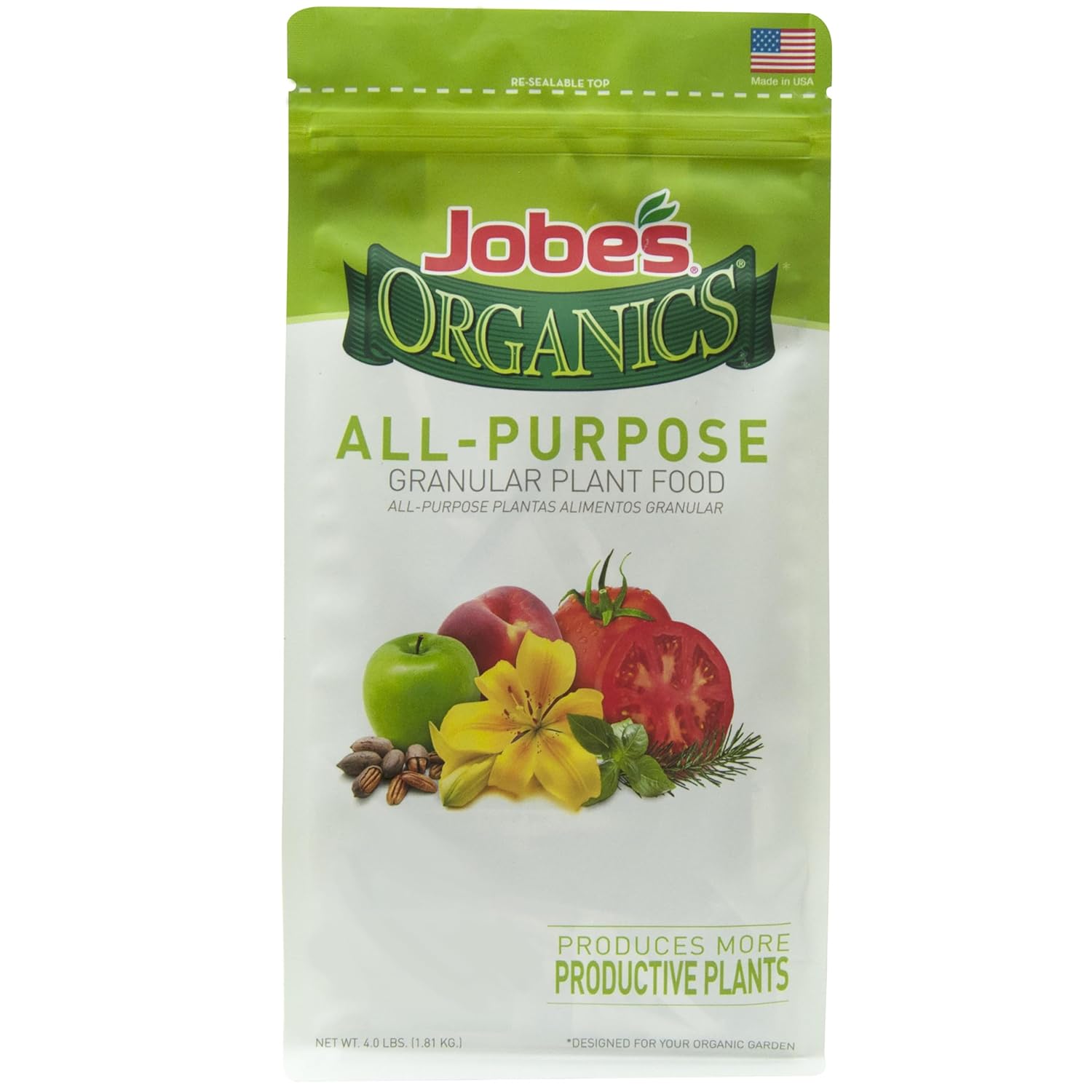
Jobe's Organics Granular All Purpose Fertilizer, 4 lb
| Item Form | Granules |
|---|---|
| Specific Uses For Product | Gardening |
| Coverage | Resealable |
| Mixing Ratio | 4-4-4 |
Jobe's Organics Granular All Purpose Fertilizer is a slow-release, OMRI-listed granular fertilizer designed for routine feeding of garden plants including young trees. You apply measured amounts around the root zone, water it in, and repeat every 2 to 3 weeks during the growing season. The 4-4-4 NPK balance with added calcium, magnesium, and sulfur supplies steady, mild nourishment without the burn risk of high-strength synthetic feeds, and the organic feedstocks encourage soil microbial activity that helps young root systems access nutrients. The resealable bag and granular form make it easy to portion and store, and directions are straightforward for gardeners who prefer repeat, low-effort applications. Limitations are that it is a light-strength general feed, so very nutrient-deficient soils or trees with established nutrient needs may require supplemental feeding or a specialized tree formula for faster correction. Also, granular organics act more slowly than soluble fertilizers, so expect gradual improvement rather than immediate greening.
Best for: Gardeners who prioritize safe, repeatable organic feeding and want a low-risk, easy-to-use fertilizer to support establishing root systems in young trees and mixed garden beds.
Less Ideal for: Users seeking fast, dramatic nutrient correction or a tree-specific high-nitrogen formulation for rapid canopy growth should consider more targeted or soluble products.
- USDA OMRI-listed organic formula suitable for organic gardening
- Balanced 4-4-4 NPK plus calcium, magnesium, and sulfur for steady, mild feeding
- Granular slow-release form reduces burn risk and supports soil microbes
- Resealable bag and simple application instructions make dosing and storage easy
- Lower NPK strength means slower visible results compared with soluble or high-N fertilizers
- Not targeted specifically to young trees so may need supplemental fertilization for deficient soils
Verdict: A gentle OMRI-listed granular fertilizer that is a practical, low-risk choice for regularly feeding young trees and maintaining soil health.
Choosing the Right Organic Fertilizer for Daylilies: Key Factors to Consider
Nutrient Ratio and Balance
Daylilies generally perform best with a balanced fertilizer that offers modest nitrogen, adequate phosphorus for blooms, and potassium for overall vigor. Choosing a formula with clear N-P-K values helps you avoid excessive nitrogen that produces lots of foliage but fewer flowers. Look for products that list secondary nutrients such as calcium and magnesium because they support healthy tissue and reduce tip burn in hot weather.
For organic fertilizers the ratio may be lower and slower to act than synthetic feeds, so match the ratio to your goals. If you want larger or more frequent blooms, select a mix with slightly higher phosphorus in spring and early bud set. For maintenance feeding, a balanced or slightly lowered phosphorus mix encourages steady clump growth without forcing soft tissue.
Release Mechanism and Timing
Organic fertilizers release nutrients through microbial activity and weather-dependent breakdown. This makes them gentle but also variable in speed. Consider whether you need a quick bloom boost-such as a soluble seaweed or fish emulsion you can apply a few weeks before peak bloom-or a slow-release granular that feeds for several months.
Release timing affects how often you must reapply. Slow-release organic granules reduce labor and lower risk of crown scorch, while liquid organics let you correct deficiencies fast during the growing season. Plan applications to coincide with new growth and bud formation to get the most flower response.
Soil Building and Organic Matter
One of the main advantages of organic fertilizers is their contribution to soil structure and biology. Ingredients like composted poultry manure, humates, kelp, and well-composted plant matter feed soil microbes and increase water-holding capacity. Over time this supports healthier crowns and deeper root systems in daylilies, improving drought resilience and winter survival.
If your soil is poor or very sandy, prioritize fertilizers with higher organic matter content or pair feeding with a top dressing of compost. In heavier clay soils, choose products that help aggregate particles and encourage drainage rather than compaction.
Application Method and Labor
Consider how you prefer to garden. Granular organics are good for spreading around established clumps and for less frequent feeding, but they may require more precise measurement to avoid over-application. Liquid feeds and water-soluble organics work well for foliar feeding or targeted root drench and are useful when you want quick correction.
Think about tools and timing. If you have many clumps, wide-aperture spreaders or hose-end applicators save time. For a few specimens, hand-broadcasting or a shake-on granular makes more sense. Also weigh how weather affects application windows: avoid granular application right before heavy rain that could leach nutrients.
Crown Safety and Salt Content
Daylily crowns are sensitive to salt concentration and direct contact with concentrated fertilizers can cause burn. Organic fertilizers tend to be lower in soluble salts, but you should still avoid placing undiluted granules in direct contact with crowns. Look for products with low-salt profiles and follow label guidance to keep material several inches from the crown and water in after application.
For newly divided or recently planted daylilies, use milder feeds or delay strong applications until the plants are reestablished. Salt-sensitive soils or irrigation with saline water increase the importance of choosing low-salt formulas and monitoring plant response.
Environmental Impact and Sourcing
Organic fertilizers vary in their environmental footprint and ingredient sourcing. Products derived from sustainable seaweed or certified compost often pose lower risk of nutrient runoff and support local soil life. Conversely, some organics use mined minerals or poorly processed manures that can contain contaminants if not handled properly.
Check for responsibly sourced ingredients and certification where applicable. For gardeners near waterways, prefer formulations that adhere to slow-release principles and avoid high-solubility inputs to reduce nutrient loss during heavy rains.
When to Feed Daylilies During the Season
Timing feeds around the daylily growth cycle gives the best return. Apply a slow-release organic in early spring as shoots emerge to support root and crown development. A light follow-up at late spring or early bud set encourages more and larger blooms without pushing excessive foliage growth.
After the main bloom period, a low-strength organic feed or a top dressing of compost supports recovery and stores carbohydrates in the crown for next year. Avoid heavy late-season nitrogen that stimulates tender late growth that can be damaged by frost.
- Early spring: apply slow-release granular or compost
- Pre-bud set: use higher phosphorus or soluble bloom booster if desired
- After bloom: light soil-building feed or compost top dressing
How to Apply Organic Fertilizer Safely
Always keep fertilizer granules and concentrated liquids away from the crown. Spread material evenly around the dripline rather than at the stem base, then water thoroughly to move nutrients into the root zone. For foliar feeds, apply during cooler parts of the day to avoid leaf scorch and wash off any residue if rain is expected shortly after application.
Measure carefully. Many organic products are concentrated in nutrients despite being 'natural,' so follow label rates and adjust for soil test results. Use gloves and wash hands after handling manures or fish-based fertilizers.
- Broadcast granules around the plant, not on crowns
- Water in granular applications to start microbial breakdown
- Apply foliar feeds in morning or evening
Pairing Feeding with Soil Amendments
Feeding and soil improvement go hand in hand. If your soil is compacted or lacks organic matter, top dressing with compost and incorporating it lightly into the top few inches will amplify the benefits of any organic fertilizer. Compost acts as a slow nutrient bank and improves moisture retention around roots.
If a soil test shows specific micronutrient deficiencies, choose amendments that address those needs directly. For example, lime can correct low pH and improve calcium availability, while magnesium sulfate can supply quick magnesium without altering soil structure dramatically.
- Use compost to increase organic matter and buffer nutrient release
- Correct pH and micronutrient gaps based on soil testing
- Avoid burying fresh high-nitrogen manures directly against crowns
Dealing with Overfeeding and Nutrient Burn
Even organic fertilizers can cause stress if overapplied. Signs include browned leaf tips, wilting despite adequate water, or stunted bloom. If you suspect overfeeding, flush the soil with generous irrigation to leach excess soluble salts and hold off on further feeding until growth normalizes.
For newly divided plants or those showing stress, reduce application rates and focus on rebuilding soil health with compost and gentle feeds. Regular observation after application helps catch problems early and prevents long-term crown damage.
- Look for brown leaf tips and poor bloom as signs of overfeeding
- Flush with water to reduce soluble salts
- Use gentler feeds for stressed or newly planted clumps
Organic Options for Different Garden Styles
Small cottage borders benefit from hand-applied granular blends and occasional liquid boosts because they allow targeted feeding without disturbing companion plants. In larger perennial beds or mass plantings, bulk granular organics and broadcast spreading save time and provide even nutrition.
For container-grown daylilies, use water-soluble organics at reduced strength and feed more frequently because potting mixes have limited nutrient-holding capacity. Raised beds with good drainage respond well to combined compost and slow-release granular programs.
- Containers: dilute liquid organics and feed regularly
- Borders: hand-apply granules near dripline
- Large beds: use spreaders and plan for seasonal top dressings
How We Chose the Best Organic Fertilizer for Daylilies
We focused on attributes that matter to gardeners growing daylilies in beds, borders, and mixed perennial plantings. Selection criteria emphasized nutrient ratio and release type because daylilies favor a predictable supply of nitrogen, phosphorus, and potassium rather than abrupt spikes. We prioritized fertilizers that supply beneficial secondary nutrients and organic matter to support crown and root health over multiple seasons. Application practicality was evaluated, including spreadability, solubility for liquid feeds, and whether packaging and granule size suit small garden tasks. We also considered soil-improving ingredients such as composted organics, kelp, or bone meal that contribute to long-term structure and microbial life. Products were excluded if they relied on synthetic salts or high-salt formulations that can damage crowns, or if a product's labeling lacked clear nutrient information. We did not include blends intended only for lawns or high-nitrogen vegetable feeds because those use patterns differ from perennial ornamental needs. The final list balances immediate bloom support and ongoing soil health, reflecting what gardeners actually need to maintain vigorous daylily clumps.
FAQ
How often should I feed daylilies with an organic fertilizer?
Often it depends on the release type. Slow-release granular organics are typically applied once in spring and possibly a light repeat midseason. Soluble organic feeds can be used every 3 to 6 weeks during active growth at reduced strength.
Can I use compost instead of a commercial organic fertilizer?
Yes. Compost supplies slow-release nutrients and improves soil structure, making it a good alternative. For bloom stimulation you may still want a targeted organic source of phosphorus or a liquid bloom feed at bud set.
Will organic fertilizer prevent pests and diseases on daylilies?
Organic fertilizers improve plant vigor and soil biology, which can increase resilience, but they are not pest or disease controls. Good nutrition helps plants recover from stress, but integrate cultural practices and specific treatments for pest or disease issues.
Is it safe to use manure-based organic fertilizers around daylilies?
Manure-based products can be effective if well-composted. Fresh or undercomposted manure may burn roots or introduce pathogens. Use finished composted manures and keep material away from direct crown contact.
Should I change fertilizer strategy after dividing daylilies?
Yes. Newly divided plants need gentler feeding and care until roots reestablish. Use low-strength organics or rely on compost for the first growing season and wait to apply stronger bloom-focused feeds until plants show robust new growth.
Final Verdict
Choose an organic fertilizer based on the balance between immediate bloom goals and long-term soil improvement. If you want quick bud support, include a soluble organic feed timed for bud set. If your priority is lasting vigor and improved soil structure, favor higher-organic-matter granular blends or regular compost top dressings. Prioritize low-salt, crown-safe formulations and match application method to the scale of your planting. With a plan that combines seasonal timing, measured application, and soil-building practices, you can maintain healthy, floriferous daylily clumps year after year.
