

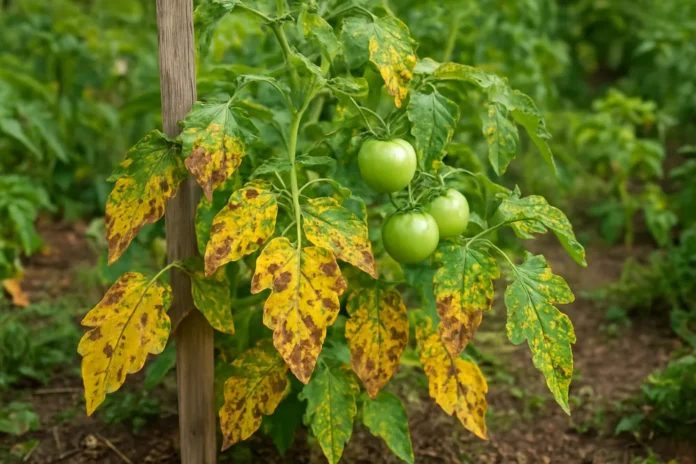
Tomato leaf discoloration is usually caused by watering stress, nutrient deficiencies, disease, pests, temperature extremes, or normal aging on older leaves. The color and pattern often point to the specific problem.
Seeing tomato leaves change from healthy green to yellow, purple, brown, white, or spotted can be alarming, especially when the plant looked fine just days earlier. Leaf discoloration is one of the earliest signs that a tomato plant is dealing with stress, but the cause is not always serious.
In many home gardens, discoloration starts because of uneven watering, nutrient imbalances, heat, cold, or root stress. In other cases, pests and diseases are to blame. The key is to look at the color change, where it appears on the plant, and whether the leaves are also curling, wilting, or developing spots.
This guide breaks down the most common reasons tomato plants develop discolored foliage, what each symptom usually means, and when the problem is mostly cosmetic versus a sign that your harvest may be at risk.
What the Color Change Can Tell You
Leaf discoloration is easier to diagnose when you pay attention to both color and pattern. A tomato with pale yellow lower leaves points to a different issue than one with dark brown spots, purple veins, or bleached upper foliage.
- Yellow leaves often suggest overwatering, underwatering, nitrogen deficiency, root stress, or early disease.
- Purple or reddish leaves can point to phosphorus stress, cold soil, or genetic coloring in some varieties.
- Brown, black, or tan spots often indicate fungal or bacterial leaf diseases, sunscald, or fertilizer burn.
- White or bleached patches are commonly linked to sunscald, chemical injury, or severe disease damage.
- Interveinal chlorosis, where tissue between veins turns yellow while veins stay greener, often suggests magnesium or iron issues.
Where the discoloration begins matters too. Problems that show up first on older, lower leaves are often tied to mobile nutrients like nitrogen or magnesium, or to soil-borne splash diseases. Symptoms on the newest growth more often suggest iron deficiency, herbicide exposure, or severe environmental stress.
Watering Problems Are a Leading Cause
Overwatering and Poor Drainage
Tomatoes need steady moisture, but roots also need oxygen. When the soil stays soggy, roots cannot function well, and leaves may turn dull green, pale yellow, or blotchy. Lower leaves often discolor first, and the plant may look limp even when the soil is wet.
Raised beds usually drain better than heavy clay ground, but containers can also stay too wet if drainage holes are limited or potting mix is compacted. Waterlogged roots are more likely to develop rot, which can worsen leaf yellowing and browning.
Underwatering and Drought Stress
Dry soil can also discolor tomato foliage. Leaves may yellow, develop crispy brown edges, or look gray-green before curling and drying. In hot weather, inconsistent watering causes repeated stress cycles that weaken the plant and affect fruit set too.
- Water deeply rather than lightly and often.
- Let the top inch of soil dry slightly, but do not allow plants to stay bone dry for long.
- Use mulch to slow evaporation and keep soil moisture more even.
- For containers, expect more frequent watering during heat waves.
Uneven moisture is especially common when tomatoes are planted in small containers, sandy soil, or beds exposed to reflected heat from patios and walls.
Nutrient Deficiencies and Imbalances
Nitrogen Deficiency
A lack of nitrogen usually causes older leaves to fade from medium green to pale green and then yellow. The entire plant may look less vigorous, with slower growth and thinner stems. Because nitrogen is mobile in the plant, tomatoes move it from older leaves to support new growth.
Magnesium Deficiency
Magnesium shortages often appear as yellowing between veins on older leaves while the veins stay greener. In time, affected leaves may develop brown patches and drop. This issue is more common in containers, sandy soil, and gardens where potassium or calcium has been overapplied.
Iron Deficiency
Iron problems typically show on the youngest leaves first. New growth turns yellow while veins remain relatively green. This can happen when soil pH is too high, roots are cold, or the soil is so wet that nutrient uptake is impaired.
Phosphorus Stress
Purple or reddish leaf undersides and stems are sometimes blamed on phosphorus deficiency, but cool spring weather is a more common trigger. Tomato roots absorb phosphorus poorly in cold soil, so young plants may show temporary purpling even when the nutrient is present.
- Use a balanced tomato fertilizer instead of repeated high-nitrogen feeding.
- Avoid fertilizing dry plants, which can burn roots and worsen discoloration.
- Test soil if symptoms persist across multiple plants.
- Keep soil pH in a tomato-friendly range, usually about 6.0 to 6.8.
Disease Can Cause Spots, Yellowing, and Blotches
Early Blight
Early blight often begins on lower leaves as dark brown spots with concentric rings, creating a target-like look. Surrounding tissue may yellow, and badly affected leaves eventually dry up and drop. This disease often appears during warm, humid weather and spreads upward from the bottom of the plant.
Septoria Leaf Spot
Septoria usually causes many small circular spots with gray or tan centers and darker borders. The lower leaves turn yellow and then brown as the spotting increases. It rarely attacks fruit directly, but severe defoliation exposes fruit to sunscald and weakens overall production.
Late Blight
Late blight can cause irregular dark, water-soaked patches that quickly expand. In humid weather, a pale fuzzy growth may appear on the undersides of infected leaves. This disease is fast-moving and more serious than common leaf spot problems.
Bacterial Spot and Speck
Bacterial diseases often create small dark lesions with yellow halos. Leaves may look peppered, ragged, or scorched over time. Splashing water, wet foliage, and crowded plants make spread more likely.
Many common tomato diseases begin on lower leaves because spores splash up from the soil during rain or overhead watering. If the pattern starts low and moves upward, disease becomes more likely than a simple nutrient issue.
Pests May Discolor Leaves Before You Notice the Insects
Spider Mites
Spider mites often cause fine yellow stippling that makes leaves look dusty, bronzed, or faded. In hot, dry weather, damage can spread quickly. Fine webbing may appear on the undersides of leaves when populations are high.
Aphids and Whiteflies
These sap-feeding pests can cause yellowing, curling, and sticky residue called honeydew. Leaves may become blotchy or distorted rather than evenly discolored. Whiteflies also stress plants enough to increase susceptibility to disease.
Thrips
Thrips can leave silvery, bleached, or scarred patches on tomato leaves. Their feeding also helps spread certain plant viruses, so discoloration paired with distorted new growth deserves close attention.
- Check leaf undersides where pests often hide.
- Look for stippling, sticky residue, webbing, or tiny moving insects.
- Rinse small infestations with a strong stream of water.
- Use insecticidal soap or horticultural oil when needed and when temperatures allow safe application.
Heat, Cold, and Sun Exposure Can Change Leaf Color
Tomatoes are warm-season plants, but extreme weather still stresses them. Prolonged high heat can cause yellowing, leaf scorch, and faded foliage, especially when roots dry out quickly. Reflected heat from fences, stone, and containers can intensify the problem.
Cold nights and cool soil in spring often trigger purpling, dull green coloration, or temporary yellowing. Young transplants are especially sensitive. Once temperatures warm and roots establish, the color often improves on new growth even if older leaves stay marked.
Sunscald on leaves is less discussed than sunscald on fruit, but it happens. Leaves exposed suddenly after pruning or disease-related leaf loss can develop bleached or papery patches. Hardening off transplants gradually before planting helps reduce this kind of stress.
Herbicide Drift and Chemical Injury Are Often Overlooked
Tomatoes are highly sensitive to herbicides, especially drift from lawn weed killers or nearby broadleaf sprays. Injury can show up as yellowing, bleaching, twisting, narrow strap-like leaves, and odd patchy discoloration that does not match typical nutrient or disease symptoms.
Chemical burn can also happen when foliar sprays, insecticidal soaps, neem products, or fertilizers are applied during hot sunny weather. Damaged leaves may develop white, bronze, or brown scorched patches soon after treatment.
- Avoid using weed-and-feed products anywhere near vegetable gardens.
- Do not spray when temperatures are high or plants are drought stressed.
- Always follow label rates for foliar products.
- Keep drift in mind if only one side of the plant is affected.
Sometimes the Discoloration Is Normal Aging
Not every yellow leaf means a major problem. As tomato plants grow, older lower leaves naturally age, especially once the canopy thickens and the plant redirects energy toward flowers and fruit. A few fading bottom leaves on an otherwise vigorous plant are usually not a crisis.
Natural aging is more likely when the discoloration is limited to the oldest leaves, new growth looks healthy, and there are no unusual spots, holes, or widespread wilt. Removing a few tired lower leaves can improve airflow, but heavy pruning is not necessary.
How to Tell Which Cause Is Most Likely
The fastest way to narrow down tomato leaf discoloration is to combine the symptom pattern with recent weather and care habits. A simple review often points you in the right direction.
- Look at which leaves changed color first. Lower leaves suggest aging, splash diseases, or mobile nutrient issues. New leaves suggest iron stress, chemical injury, or virus problems.
- Note the color and shape. Uniform yellowing differs from spotted lesions, purple tinting, or bleached patches.
- Think about watering patterns over the last week. Soggy and bone-dry cycles commonly trigger discoloration.
- Check for pests underneath leaves and along stems.
- Review recent products or weather events such as fertilizer, herbicide use, a cold snap, heavy rain, or extreme heat.
When symptoms spread rapidly across the whole plant or move to fruit and stems, disease or root injury becomes more likely than a simple shortage of fertilizer.
What Helps Tomatoes Recover
Tomatoes recover best when the underlying stress is corrected early. Damaged leaves may not turn green again, but healthy new growth is a good sign that the plant is stabilizing.
- Water deeply and consistently instead of shallow daily sprinkling.
- Mulch around plants to keep roots cooler and moisture steadier.
- Fertilize moderately with a product formulated for vegetables or tomatoes.
- Remove badly diseased lower leaves and avoid wetting foliage when possible.
- Improve spacing and airflow to reduce fungal pressure.
- Protect plants from cold snaps and harden off transplants gradually.
- Monitor for mites, aphids, whiteflies, and thrips before infestations build.
If a plant has severe disease, extensive stem damage, or widespread collapse, replacement may be more practical than trying to nurse it through the season. For minor issues, though, tomatoes are often resilient once conditions improve.
FAQ
Why Are My Tomato Leaves Turning Yellow From the Bottom Up?
Yellowing that starts on lower leaves is often caused by normal aging, nitrogen deficiency, overwatering, or common fungal diseases like early blight and Septoria. If the leaves also have spots, disease is more likely.
Can Overwatering Cause Tomato Leaf Discoloration?
Yes. Overwatering can make leaves turn pale green or yellow because roots struggle to take up oxygen and nutrients in soggy soil. It can also lead to root rot and more serious decline.
Why Are My Tomato Leaves Purple?
Purple or reddish leaves usually point to phosphorus stress, especially in cool soil or after transplanting. Some tomato varieties also show natural purpling, but stunted growth suggests a real stress issue.
Do Diseased Tomato Leaves Ever Turn Green Again?
Usually no. Once leaves are badly spotted, yellowed, or scorched, they rarely recover their normal color. Improvement is seen when new growth emerges healthy after the cause is addressed.
Should I Remove Discolored Tomato Leaves?
Remove leaves that are heavily diseased, dried out, or touching the soil. If only a few older leaves are fading naturally, you can leave them or prune lightly to improve airflow.
Why Are My Tomato Leaves White or Bleached?
White or bleached patches are often caused by sunscald, spray injury, or sudden exposure to intense sun after transplanting. In some cases, severe disease damage can also leave pale dead tissue.
Can a Nutrient Deficiency Look Like a Disease?
Yes. Nutrient deficiencies often cause yellowing patterns that can be mistaken for infection. Diseases are more likely when leaves have distinct spots, rings, halos, or rapidly spreading blotches.
Need the right fix fast? Explore our tomato care guides and recommended fertilizers, fungicides, and pest controls to restore healthy growth and protect your harvest.
