

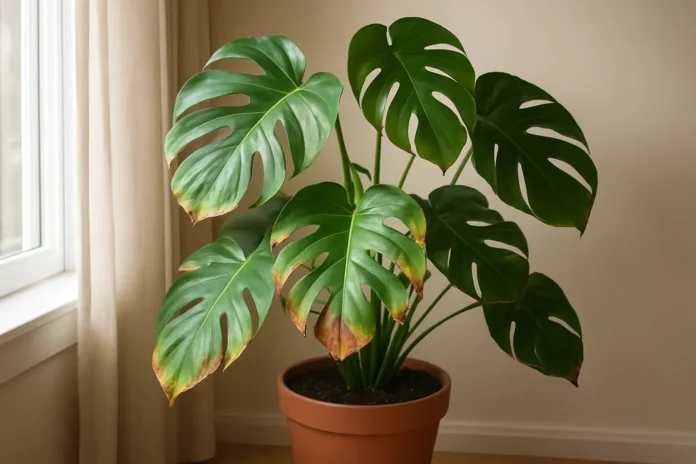
Monstera leaves usually turn brown because of watering stress, dry air, too much direct sun, fertilizer salt buildup, or damaged roots. Brown areas can also appear naturally on very old leaves as the plant replaces aging growth.
If your Monstera leaves turning brown has you worried, you are not alone. Browning can show up as crispy edges, dry tips, blotchy patches, or entire leaves that slowly fade from green to brown, and each pattern points to a different kind of stress.
In many homes, Monstera problems start with a mismatch between watering, humidity, and light. Brown leaves do not always mean the plant is dying, but they do mean something in its environment or care routine needs attention.
The good news is that turning brown is often fixable once you match the symptoms to the cause. Looking at where the browning starts, how fast it spreads, and what the soil feels like will usually narrow it down quickly.
What Brown Monstera Leaves Are Telling You
Brown tissue is dead tissue, so the goal is to stop the problem before more of the leaf is damaged. The exact pattern matters. Crispy tips often point to dry air, inconsistent watering, or fertilizer salts. Large tan or brown patches can suggest sunburn. Dark, soft browning with yellowing may mean overwatering or root trouble.
- Brown tips often come from dry air, missed watering, or salt buildup.
- Brown edges commonly appear when the plant dries out too far between waterings.
- Bleached or tan patches usually suggest too much direct sun.
- Dark brown soft spots may indicate overwatering, rot, or cold damage.
- A whole lower leaf turning brown slowly can simply be normal aging.
A single damaged leaf is not always a crisis. Widespread browning on several leaves, especially if new growth is affected, usually means the plant is under ongoing stress.
Watering Problems Are the Most Common Cause
Underwatering and Inconsistent Moisture
Monsteras like evenly moist soil that dries slightly between waterings. If the potting mix becomes bone dry for too long, the leaf margins and tips often turn crispy brown. This is especially common in warm rooms, near vents, or during summer when the plant uses water faster.
Inconsistent watering can cause similar symptoms even if you water heavily each time. When the plant swings from very dry to very wet, the roots struggle to supply moisture steadily, and the leaves show stress first.
Overwatering and Root Stress
Overwatering does not just mean watering too often. It also includes soil that stays wet too long because the pot has poor drainage, the mix is too dense, or the plant is sitting in a low-light spot where water evaporates slowly. In these cases, roots can suffocate or rot, and leaves may develop dark brown patches along with yellowing.
- Soil feels dry several inches down and leaves have crisp edges: more likely underwatering.
- Soil stays soggy, leaf tissue turns soft or dark, and yellowing appears: more likely overwatering.
- Leaves droop in both cases, so always check the soil before assuming the cause.
The best watering routine is based on the soil, not the calendar. Water thoroughly when the top 2 inches of soil feel dry, then let excess water drain away completely.
Low Humidity Can Cause Crispy Brown Tips and Edges
Monstera is a tropical plant, so it tolerates average indoor air better than some houseplants, but very dry conditions can still cause brown margins and tips. This is common in winter when heating systems lower humidity, or in arid climates where indoor air stays dry year-round.
Humidity-related browning usually looks dry and papery rather than wet or mushy. The rest of the leaf may still look healthy, especially at first. New leaves may also unfurl with slight damage if the air is too dry during development.
- Keep the plant away from heating vents, radiators, and strong air conditioning drafts.
- Group houseplants together to create a more humid microclimate.
- Use a humidifier if your indoor humidity regularly falls below about 40 percent.
- Choose a room with naturally higher humidity, such as a bright bathroom, if conditions allow.
Misting may give a temporary boost, but it does not raise humidity for long enough to solve ongoing browning. Consistent room humidity is much more effective.
Too Much Direct Sun Can Scorch Monstera Leaves
Monsteras prefer bright, indirect light. A little gentle morning sun may be fine, but strong direct afternoon sun can burn the leaves, especially if the plant was moved suddenly from a dimmer location. Sunburn often shows up as pale, tan, or medium-brown patches on the parts of the leaf facing the window.
These scorched areas are usually dry and irregular rather than soft. Once the tissue is burned, it will not turn green again, but the damage should stop spreading after the plant is moved to better light.
- East-facing windows often work well.
- South- or west-facing windows may need a sheer curtain.
- Move plants gradually when increasing light exposure.
- Rotate the pot occasionally for more even growth, but avoid constant repositioning.
Mineral Buildup and Fertilizer Burn Can Brown the Tips
If you fertilize often, use a strong mix, or water with very hard tap water, salts and minerals can build up in the soil. This pulls moisture away from the roots and frequently causes brown leaf tips and edges. The damage can look similar to underwatering, which is why this cause is easy to miss.
You may also notice a white crust on the soil surface or around the pot rim. Browning from salt buildup often appears even when your watering schedule seems reasonable.
- Fertilize only during active growth, usually spring through summer.
- Use a balanced houseplant fertilizer at reduced strength unless the label states otherwise.
- Flush the pot with water occasionally to wash excess salts through the drainage holes.
- If your tap water is very hard, filtered or distilled water may help prevent repeat problems.
Rootbound Plants and Poor Soil Can Lead to Browning
A Monstera that has outgrown its pot can dry out too quickly, struggle to absorb nutrients evenly, and develop browning at the tips or edges. On the other hand, a heavy compacted mix can stay wet too long and stress the roots in the opposite way.
Healthy Monstera roots need both moisture and air. If the soil is packed tight, old, or broken down, the root zone stays unstable. That often shows up as slow growth, drooping, and browning that does not improve even when watering seems correct.
A chunky, well-draining mix is usually best. Many growers use a blend that includes potting soil plus bark, perlite, coco coir, or similar materials that improve airflow and drainage.
Temperature Stress, Drafts, and Cold Damage
Monsteras do best in warm indoor temperatures. Cold drafts from doors, air conditioners, or chilly windows can damage leaf tissue, leading to brown or blackened patches. Sudden temperature swings can also stress the plant enough to trigger browning.
- Keep the plant away from exterior doors that open often in winter.
- Do not let leaves press against cold window glass.
- Avoid placing the pot directly under an AC vent.
- Aim for steady indoor temperatures rather than sharp day-to-night swings.
Cold damage is more likely to appear suddenly after a draft or transport event. If the browning followed a move, a delivery, or an overnight chill, temperature stress may be the main cause.
Pests and Disease Are Less Common but Still Possible
Spider mites, thrips, and scale can weaken Monstera leaves and contribute to browning. Pest damage may begin as stippling, silvery scars, or distorted new growth before brown areas develop. Dry indoor air often makes spider mite problems worse.
Leaf spot diseases can also create brown lesions, sometimes with yellow halos. These are more likely when leaves stay wet for long periods and airflow is poor.
- Check the undersides of leaves for tiny insects, webbing, or sticky residue.
- Isolate infested plants from other houseplants.
- Remove badly damaged leaves if needed and clean the plant carefully.
- Improve air circulation and avoid soaking the foliage late in the day.
When Brown Leaves Are Just Part of Normal Aging
Not every brown leaf means something is wrong. Older, lower leaves naturally decline as the plant puts energy into new growth. If one of the oldest leaves slowly yellows, then browns while the rest of the plant looks healthy, that is usually normal.
This type of browning is gradual and limited. It does not spread quickly across the plant, and new leaves should still emerge normally. In that case, you can prune the old leaf for appearance once it has mostly declined.
How to Fix Brown Monstera Leaves and Prevent More Damage
Damaged brown tissue will not recover, so focus on improving conditions for healthy new growth. The right fix depends on the cause, but prevention usually comes down to stable moisture, bright indirect light, moderate humidity, and healthy roots.
- Check soil moisture before watering and avoid both bone-dry soil and constantly soggy soil.
- Move the plant to bright, indirect light if it is getting harsh direct sun or sitting in a very dim corner.
- Raise humidity if edges are crispy and your indoor air is dry.
- Flush the soil if fertilizer or hard water salts may be building up.
- Inspect roots if the plant stays wilted or continues browning despite care adjustments.
- Trim fully brown sections or remove badly damaged leaves with clean scissors if you want a tidier look.
When pruning, avoid removing too much healthy foliage at once. Leaves still provide energy even if they have a few brown tips.
A Quick Pattern Guide to Diagnose the Problem
If you are still unsure, use the browning pattern as your shortcut.
- Crispy tips and edges: dry air, underwatering, or salt buildup.
- Soft dark brown areas with yellowing: overwatering or root rot.
- Tan or bleached patches on exposed leaves: sun scorch.
- Sudden black-brown patches after a cold event: temperature damage.
- Small brown lesions with visible pests or halos: insect or disease issues.
- One old bottom leaf fading slowly: normal leaf aging.
FAQ
Should I Cut Off Brown Parts of My Monstera Leaves?
You can trim brown tips or edges for appearance, but only the dead tissue. Use clean scissors and follow the natural shape of the leaf. If a leaf is mostly brown, remove the whole leaf at the base of its stem.
Can Brown Monstera Leaves Turn Green Again?
No. Brown tissue is permanently damaged. Once you correct the cause, the goal is to protect the remaining green tissue and encourage healthy new leaves.
How Often Should I Water a Monstera to Prevent Browning?
There is no fixed schedule that works in every home. Water when the top 2 inches of soil feel dry, then let excess water drain fully. Light, temperature, pot size, and season all change how often that happens.
Do Brown Tips Mean My Monstera Needs More Humidity?
Sometimes, yes, especially if the tips are dry and crispy while the rest of the leaf looks healthy. But brown tips can also come from underwatering or fertilizer salts, so humidity is not the only possible cause.
Why Are Only the Older Leaves on My Monstera Turning Brown?
If only the oldest lower leaves are browning slowly and the rest of the plant looks healthy, it may just be normal aging. If several leaves are affected or new growth is struggling, look for care or root problems instead.
Can Tap Water Make Monstera Leaves Brown?
Yes, in some homes. Hard water or water high in minerals can contribute to salt buildup in the soil, which often shows up as brown tips and edges. Flushing the soil or using filtered water may help.
Is Direct Sun Bad for Monstera Leaves?
Strong direct afternoon sun can scorch Monstera leaves and leave tan or brown patches. Bright, indirect light is usually the safest and most productive placement indoors.
Still troubleshooting your plant? Read our Monstera care guide and top soil and humidifier picks to fix browning faster and keep new leaves lush.
