

Note: This article contains affiliate links. If you click on these links and make a purchase, I may earn a small commission at no extra cost to you. This helps support my research and content. Read my full affiliate disclosure here.
If you grow ginger in pots, raised beds, or a small garden patch, the right organic fertilizer makes the difference between a thin crop and robust, aromatic rhizomes. Ginger responds to steady, balanced nutrition and improved soil life rather than heavy, fast-release feeding. This guide shortlists five top organic fertilizer options suited for ginger growing situations, from containers to in-ground beds. We evaluated each option for nutrient balance, how it affects soil structure and microbial activity, and how easy it is to apply during ginger's growth cycle. Read on to see which types of organic fertilizer fit your planting method and production goals.
Top Picks at a Glance
| Best Overall The best all-around choice for most situations | Down To Earth Organic Vegetable Garden Fertilizer 4-4-4, 5 lb |  |
| Best Quality Built to a higher standard if you want something more solid | Espoma Organic Plant-Tone All-Purpose 5-3-3 Organic Plant Food, 50 lb Bag |  |
| Best Value The sweet spot between price and what you get | Back to the Roots Organic All-Purpose Plant Food, 5 lb |  |
| Highest Rated A top-rated pick with lots of positive feedback | Wiggle Worm 100% Pure Organic Worm Castings Fertilizer, 30 lb |  |
| Most Popular A crowd favorite that many people choose with confidence | FoxFarm Soil Liquid Trio Pack (Big Bloom, Grow Big, Tiger Bloom) |  |
Down To Earth Organic Vegetable Garden Fertilizer 4-4-4, 5 lb

| Item Form | Granules |
|---|---|
| Specific Uses For Product | Vegetables, greens, tomatoes, herbs |
| Application Method | Apply directly to the soil or mix into garden beds |
| Mixing Ratio | 4-4-4 |
This granular fertilizer is formulated to feed vegetables, herbs and greens with a balanced 4-4-4 NPK and a slow-release profile that supplies nutrients over time. It is applied by distributing into the planting hole, mixing into topsoil, or working into raised beds at planting and during the season for maintenance. Notable features include all-natural ingredients sourced from plant, marine and mineral resources and OMRI-friendly formulation that supports organic gardening and beneficial soil life. Practically, the slow-release granules reduce the need for frequent feeding and help avoid nutrient spikes that can stress plants. The 5 lb unit is convenient for small to medium beds but means frequent repurchasing for larger plots. While it is versatile across vegetables and herbs, gardeners who need rapid corrective feeding for a specific deficiency will still need a targeted amendment or foliar feed in addition to this product.
Best for: Gardeners who prioritize steady, reliable plant performance and want an organic, low-maintenance fertilizer for raised beds and small plot vegetable production.
Less Ideal for: Growers managing large acreage or those needing immediate corrective nutrient treatments should look for bulk or fast-acting specialty products instead.
- Balanced 4-4-4 NPK suitable for overall vegetable development
- Slow-release granular formula for sustained feeding
- Made from all-natural ingredients and compatible with organic systems
- Easy to apply directly to soil or mix into raised beds
- Small 5 lb size may require frequent replacement for larger gardens
- Not formulated for quick correction of specific nutrient deficiencies
Verdict: Choose this product when you want an organic, slow-release 4-4-4 fertilizer that delivers steady nourishment for productive vegetable beds.
Espoma Organic Plant-Tone All-Purpose 5-3-3 Organic Plant Food, 50 lb Bag

| Item Form | Fertilizer |
|---|---|
| Specific Uses For Product | Gardening |
| Target Species | all flowers, vegetables, trees and shrubs |
| Mixing Ratio | 1:1:1 |
Plant-Tone is designed to feed a range of garden plants by releasing nutrients slowly from natural ingredients and a proprietary Bio-tone microbial formula. In practice you apply it around the drip line of flowers, vegetable plants, shrubs or trees in spring and fall, and for annuals and vegetables you can top-dress monthly during the season. The 5-3-3 analysis with 5% calcium supports balanced growth and blossom set while the organic base builds soil biology over time rather than giving an immediate synthetic spike. A 50 lb bag covers large beds and landscape plantings so it is convenient for serious flower-bed upkeep. Limits are that it is not a quick-fix for severe nutrient deficiency and results accumulate over weeks to months, so impatient gardeners may need a faster-acting supplement for rescue feeding. Also being granular, it requires spreading and watering in rather than foliar application.
Best for: Gardeners focused on steady, reliable performance who maintain multiple flower beds or mixed plantings and prefer improving soil health while feeding blooms and foliage.
Less Ideal for: People needing immediate corrective feeding for yellowing or severely deficient plants or those who only want small-quantity, single-plant solutions.
- Organic, slow-release formula that builds soil biology over time
- Broadly suitable for flowers, vegetables, trees and shrubs
- Includes 5% calcium to support bloom and fruit development
- Large 50 lb bag is practical for maintaining multiple flower beds or landscape areas
- Not a rapid corrective feed for acute nutrient deficiencies
- Requires spreading and watering in; not suitable for foliar feeding
Verdict: Choose this if you want a proven organic, slow-release fertilizer that steadily feeds flower beds and builds soil health while supporting blooms.
Back to the Roots Organic All-Purpose Plant Food, 5 lb

| Unit Count | 80 Ounce |
|---|---|
| Item Type | Organic All-Purpose Plant Food |
| Item Highlight | Vegan organic fertilizer with kelp, alfalfa meal, mycorrhizae, rock phosphate |
| NPK | 2-3-3 |
This 5 lb bag of Back to the Roots All-Purpose Plant Food is a plant- and mineral-based granular fertilizer designed for routine feeding of houseplants, herbs and edible container crops. It mixes easily with water (directions recommend 1 tablespoon per gallon applied every 2 to 4 weeks) and uses kelp, alfalfa meal, rock phosphate and mycorrhizae to supply slow-release nutrients and support stronger root growth. The no-burn formulation makes it forgiving for indoor use and for beginners who might overapply synthetic feeds. Because it is organic and free of synthetic chemicals and animal byproducts, it fits gardens where sustainable inputs are a priority. Limitations are that the NPK is relatively low at 2-3-3, so heavy-feeding or fast-growing plants may need more frequent applications or a complementary feed for quick nitrogen response. Also being a granular/tea-style feed it requires mixing and regular application rather than a one-and-done slow-release stake.
Best for: Practical indoor gardeners who want an easy-to-use, sustainable organic feed for houseplants, herbs and mixed container plantings and who prefer predictable, repeatable feedings over complex regimens.
Less Ideal for: People seeking a single-application slow-release fertilizer or those who need high-nitrogen quick-growth boosts for heavy-feeding vegetables.
- 100% plant and mineral based formula without synthetic chemicals
- Includes kelp, alfalfa meal and mycorrhizae to support root health and sustained nutrition
- No-burn recipe suitable for indoor plants and beginner-friendly application
- Value-sized 5 lb bag reduces trips to replenish supply for multiple pots
- Relatively low NPK (2-3-3) may not satisfy heavy-feeding or very fast-growing plants
- Requires regular mixing and application rather than a single long-term release product
Verdict: A practical, beginner-friendly organic feed that reliably supports indoor plants and herbs with plant-based nutrients and root-supporting mycorrhizae.
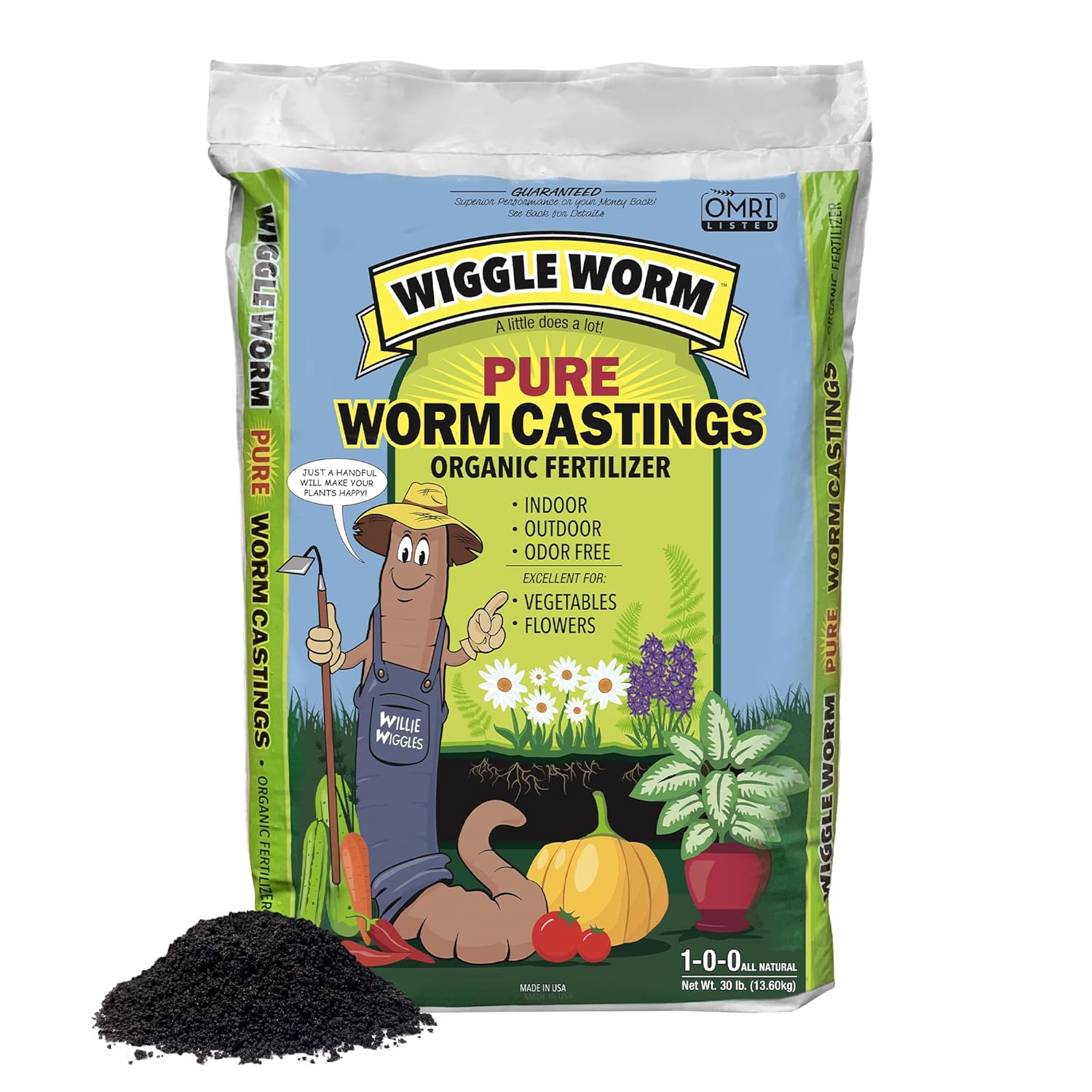
Wiggle Worm 100% Pure Organic Worm Castings Fertilizer, 30 lb
| Item Form | Granules |
|---|---|
| Specific Uses For Product | Soil Conditioning |
| Unit Count | 480 Ounce |
| OMRI Listed | Yes |
Wiggle Worm Pure Worm Castings are a straightforward organic soil amendment designed to strengthen soil biology and feed vegetable beds without risk of burning roots. Typically used as a top dressing, mixed into potting mixes, or added to planting holes, the product supplies water-soluble nutrients plus slow-release minerals and beneficial microbes that support root development and improved water retention. Notable features include OMRI listing for organic use, a screened product free of bedding and eggs, and clear application guidance for containers, raised beds, lawns, and transplanting. Practical benefits for a vegetable garden are faster nutrient uptake, better soil aeration, and reduced need for frequent synthetic feedings. The main limitations are that it is a low-NPK, gentle amendment rather than a complete, high-nitrogen fertilizer and you need to apply periodically or combine with higher-nutrient feeds for heavy-feeding crops. For gardeners focused on building long-term soil health it is a reliable, low-risk addition but expect incremental improvements rather than instant, dramatic growth spurts.
Best for: Gardeners who prioritize dependable, organic soil-building products for vegetables and want a safe, no-risk amendment to improve long-term fertility and plant health.
Less Ideal for: Growers who need a quick, high-nitrogen boost for leafy heavy feeders or those seeking a single-product, complete fertilizer solution should look elsewhere.
- OMRI listed and made from 100% screened worm castings suitable for organic vegetable gardens
- Boosts soil microbial activity and improves aeration and water retention
- Odorless and non-burning so safe for direct use around roots and in containers
- Versatile application: top dress, mix into potting soil, use in planting holes, or brew as tea
- Not a high-NPK fertilizer so may not meet immediate nutrient demands of heavy-feeding crops
Verdict: A reliably safe, OMRI-listed soil builder that steadily improves soil biology and structure for healthier vegetable gardens.
FoxFarm Soil Liquid Trio Pack (Big Bloom, Grow Big, Tiger Bloom)

| Brand | FoxFarm |
|---|---|
| Item Form | Liquid |
| Unit Count | 48 Fluid Ounces |
| Specific Uses For Product | Plant Food |
| Coverage | Organic |
The FoxFarm Soil Liquid Trio Pack combines Big Bloom, Grow Big, and Tiger Bloom into a simple program for indoor gardeners who want strong vegetative growth followed by bigger blooms and fruit. Typical use is stage-based: Grow Big during vegetative growth to push leafy development, Big Bloom as an all-purpose supplement across cycles, and Tiger Bloom once buds form to encourage multiple bud sites and fuller flowers. The liquids are concentrated and greenhouse-tested for consistency, so measured feedings integrate easily with regular watering schedules. Practical benefits include a complete, complementary nutrient progression and formulations designed to keep micronutrients available in storage. Important limitations are that these are general-purpose concentrates rather than precision NPK formulations for specialty crops, and users who want exact nutrient ratios or automated dosing systems will need extra equipment and testing. Safety precautions such as keeping away from children and pets and wearing protective clothing are required when handling concentrated liquids.
Best for: Indoor growers who prioritize measurable performance and want a simple, stage-based feeding plan to push vigorous growth and larger blooms without building their own nutrient lineup.
Less Ideal for: Growers seeking exact NPK control, automated dosing integration, or a fertilizer tailored to a single specialist crop should consider lab-formulated or hydroponic-specific options instead.
- Three complementary formulas cover vegetative growth, bloom support, and fruiting in one kit
- Concentrated liquid form mixes readily for regular indoor feedings
- Greenhouse-tested formulations deliver consistent performance across batches
- Suitable for a wide range of indoor plants including houseplants, herbs, and vegetables
- Not a precision nutrient program for specialty or hydroponic crops
- Concentrated liquids require careful measuring and handling to avoid overfeeding
Verdict: For indoor gardeners who want a proven, stage-based liquid feeding program to boost vegetative growth and maximize blooms, this trio delivers a ready-made performance pathway.
Choosing the Right Organic Fertilizer for Ginger: Key Factors to Consider
Nutrient Balance and Timing
Ginger benefits from a nutrient profile that supports strong root and rhizome development without excessive leafy growth. That usually means moderate nitrogen, available phosphorus during early rhizome formation, and steady potassium through the growth season. Slow-release organic sources feed over weeks to months and reduce the risk of burning delicate roots.
Timing matters because ginger has distinct growth phases. Apply starter nutrition at planting to encourage early root establishment, then follow with low-dose maintenance feeds while rhizomes expand. Avoid heavy, late-season high-nitrogen feeds that encourage foliage at the expense of rhizome size.
Organic Matter and Soil Structure
Organic fertilizers that add carbon and humus improve drainage, aeration, and moisture-holding capacity-critical for ginger which prefers loose, well-drained, moisture-retentive soils. Materials like compost, well-aged manure, and leaf mold gradually increase soil tilth and make nutrients more accessible to roots.
In containers, amending potting mix with organic matter helps prevent compaction and reduces the need for frequent watering. In garden beds, regular topdressings or incorporating compost each season rebuilds structure and supports successive ginger crops.
Solubility, Salt Levels, and Container Safety
Some organic fertilizers release salts as they break down. In pots, salt buildup can stress ginger roots and reduce uptake of water and nutrients. Choose low-salt organic amendments or use them at reduced rates for container-grown ginger, and flush pots periodically if you notice salt crusts on the soil surface.
Granular amendments that release slowly pose less immediate salt risk than concentrated liquid feeds. If you rely on compost teas or liquid manures, dilute appropriately and monitor electrical conductivity if possible, especially in small containers.
Soil Biology and Microbial Activity
Ginger thrives in biologically active soils where microbes help mineralize nutrients and suppress root pathogens. Fertilizers that include or encourage beneficial microbes-through compost, humates, or specific microbial inoculants-can enhance nutrient cycling and root health over time.
Avoid sterile, highly processed amendments that do not contribute to soil life when long-term soil health is a priority. For new beds, initial inoculation with finished compost and steady organic feeds will build a resilient biological community.
Application Method and Labor
Different organic fertilizers demand different labor inputs. Bulk compost or well-rotted manure requires mixing or topdressing, while granular organic blends are easy to broadcast or side-dress. Liquid teas provide quick foliar or soil feeds but need more frequent preparation and application.
Consider how much time you can spend feeding ginger each season. For container growers, simpler, lower-maintenance amendments that release nutrients slowly are often more practical. Garden bed growers may prefer periodic topdressings and compost incorporation during seasonal maintenance.
Availability and Sourcing
Access to local organic materials influences what is practical. Home-composted material is an excellent, low-cost option if properly matured. Organic commercial blends offer predictable nutrient profiles and are useful when compost is limited or when you need defined nutrient ratios.
Also consider certification or source transparency if you avoid certain animal manures or need specific input origins. Local sourcing reduces transport-related carbon and ensures fresher amendments for your soil.
How Ginger Uses Nutrients During Its Growth Cycle
Ginger puts energy into roots and rhizomes rather than tall stems. Early in the season the plant needs nutrients that fuel root establishment and the initial swelling of rhizomes. As leaves develop, steady potassium supports carbohydrate transport into the rhizomes, while phosphorus supports root growth and initiation.
Understanding this sequence helps with choosing fertilizer forms and timing. Slow-release organics feed continuously through those phases, while targeted early phosphorus or starter amendments can give a useful boost at planting.
- Starter phase: focus on phosphorus and balanced nitrogen to establish roots
- Growth phase: steady potassium and moderate nitrogen to expand rhizomes
- Late season: reduce high nitrogen to encourage final rhizome maturation
Container Growing Versus In-Ground Beds
Containers concentrate both nutrients and salts, so choose low-salt, slow-release organic fertilizers and use well-aerated potting mixes with added compost. Containers also dry faster, so organic matter that retains moisture without becoming waterlogged is valuable.
In-ground beds have greater buffering capacity and can accept larger volumes of bulk compost or well-rotted manure. Incorporating organic matter into beds before planting helps create a stable environment for multiple seasons of ginger.
- Container tip: topdress lightly and avoid high-rate raw manures
- Bed tip: incorporate compost a few weeks before planting for even nutrient release
Using Compost and Organic Amendments Effectively
Well-matured compost is a cornerstone amendment for ginger because it supplies a broad spectrum of nutrients, improves structure, and feeds soil life. Apply compost as a pre-plant soil conditioner and as periodic topdressings during the season.
When using raw manures or green-sand style materials, ensure they are well-aged or processed to avoid ammonia spikes or excessive salts. Layering thin applications over time is better than large single doses that can disrupt root activity.
- Aim for compost that is crumbly, dark, and odor-free
- Avoid fresh manures directly in contact with planting material
Liquid Feeds and Foliar Applications
Liquid organic feeds and compost teas can correct short-term nutrient gaps and stimulate microbial activity when used correctly. They are especially useful for container plants that show early deficiency signs.
Use liquids as a supplement rather than the main fertility program. Dilute appropriately to avoid salts and apply during cooler parts of the day to reduce foliar burn risk.
- Dilute compost tea to a weak strength for regular use
- Use foliar sprays primarily to address quick deficiencies, not as sole nutrition
Managing Disease Risk Through Nutrition
Healthy ginger plants grown in biologically active, well-drained soils are less prone to root rot and other soil-borne troubles. Overly wet soils combined with heavy, high-nitrogen feeds can invite disease. Balance fertility with good drainage and microbial support.
Incorporating organic matter and avoiding waterlogged conditions are both cultural controls that work alongside fertilizer choices to maintain plant health.
- Improve drainage with coarse organic matter in heavy soils
- Avoid high-rate nitrogen that promotes soft, disease-prone tissue
How We Chose the Best Organic Fertilizer for Ginger
We focused on practical performance for ginger growers and selected products that support steady rhizome development and healthy foliage. Evaluation emphasized nutrient balance tailored to ginger, organic matter contribution for soil structure, and modes of application suited to both container and in-ground growing. We also considered how each option influences soil biology and moisture retention, plus ease of use for hobby and small-scale growers. Our filters excluded fast-release synthetic fertilizers and blends formulated specifically for high-nitrogen turf or non-edible ornamentals. We prioritized sources that supply slow-available phosphorus and potassium, modest but steady nitrogen, and measurable amounts of organic matter or beneficial microbes. Finally, we favored fertilizers that allow flexible application timing through ginger's growth cycle and that pose low risk of salt buildup in confined containers.
FAQ
How often should I feed ginger with organic fertilizer?
Often depends on the product, but many organic options are applied at planting and then every 4 to 8 weeks as a light topdressing or diluted liquid feed. Slow-release materials may only need two or three applications per season.
Can I use compost alone to grow ginger successfully?
Yes. Well-matured compost can supply most nutrients and improves soil structure and biology. You may need occasional supplementation for phosphorus or potassium depending on compost quality and soil tests.
Is there a risk of burning ginger roots with organic fertilizers?
Organic fertilizers are generally lower burn risk than synthetic ones, but concentrated manures or undiluted liquids can still stress roots. Use well-aged products and follow recommended application rates, especially in containers.
What signs indicate nutrient deficiency in ginger?
Slow leaf growth, pale or yellowing leaves, and poor rhizome expansion are common signs. Specific patterns can indicate particular deficiencies, such as stunted roots from low phosphorus or weak shoot growth from low nitrogen.
Should I test my soil before choosing an organic fertilizer?
A soil test is useful because it shows existing nutrient levels and pH, helping you choose the right amendments. Testing is especially helpful if you plan repeated ginger crops or are unsure about past amendments.
Final Verdict
Prioritize fertilizers that deliver steady, balanced nutrition and that improve soil structure and biology. For containers, emphasize low-salt, slow-release options and monitor moisture closely. In beds, focus on building organic matter and timing phosphorus and potassium to support rhizome formation. Balance ease of application with long-term soil health when choosing an organic fertilizer for ginger. Focus on the criteria discussed here to select an approach that fits your planting method and seasonal routine so you get healthy leaves and well-developed rhizomes.
