

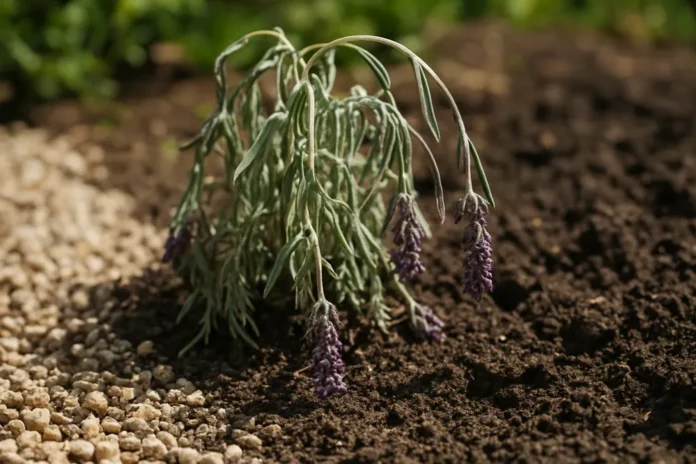
Lavender usually wilts because its roots are stressed, most often from soggy soil, poor drainage, or watering that stays too frequent. Heat, transplant shock, cold injury, and root damage can also make it droop.
When lavender is wilting, it is usually reacting to root stress rather than asking for more water. That surprises a lot of gardeners, because a droopy plant looks thirsty, but lavender is one of those plants that often suffers more from wet conditions than from brief dryness.
I have found that wilting in lavender makes the most sense when you look at the whole picture: the soil, the weather, the container or planting site, and how the foliage looks beyond just the droop. A plant that flops after a week of rain points to a different problem than one that wilts in a black nursery pot during a heat wave.
The good news is that wilting lavender often gives clues early. If you catch the cause quickly, especially before stems blacken or roots rot, you usually have a decent chance of turning it around.
What Wilting Means in Lavender
Wilting means the plant is not keeping enough pressure in its tissues to hold stems and leaves firm. In lavender, that can happen because the roots are too dry to supply moisture, or because the roots are so stressed, damaged, or oxygen-starved that they cannot move water properly even when the soil is wet.
That is why lavender can wilt in two opposite situations: bone-dry soil and waterlogged soil. The visual symptom looks similar at first, but the fix is very different. If you water a lavender that is wilting from root rot, the plant usually declines faster.
- Mild midday droop that improves by evening often points to temporary heat stress.
- Whole-plant collapse with wet soil often suggests overwatering or poor drainage.
- Wilting after planting commonly suggests transplant shock or root disturbance.
- Wilt paired with yellowing, blackened stems, or a sour-smelling potting mix often signals root trouble.
Overwatering and Poor Drainage Are the Most Common Causes
If I had to bet on one cause of wilting lavender in a home garden, I would start with excess moisture around the roots. Lavender is native to dry, lean, fast-draining conditions. In heavy clay, overly rich potting mixes, or containers without strong drainage, the roots stay wet too long and begin to suffocate.
Once roots lose access to oxygen, they stop functioning well. The plant may droop even though the soil feels damp. Many gardeners see wilt and water again, which makes the problem worse. Over time, leaves may turn dull gray-green, yellow, or brown, and stems near the base may soften or darken.
Signs Your Lavender Is Too Wet
- Soil stays moist for several days after watering
- The plant wilts but the root zone is still wet
- Lower foliage yellows before it crisps
- Stems near the crown look brown, mushy, or blackened
- The plant is growing in clay soil, a low spot, or a decorative pot without enough drainage
When I diagnose lavender, I care more about soil stay-wet time than about how much water went in on one day. A single deep watering in gritty soil is rarely the issue. Repeated moisture that lingers around the crown is what usually pushes lavender into decline.
In garden beds, poor drainage is often a site problem rather than a watering problem. Sprinkler systems, compacted soil, and mulch piled against the crown can all trap moisture. In containers, the issue is often a dense mix with too much peat or compost, or a pot that is simply too large for the root ball and stays wet for too long.
Underwatering and Extreme Dryness Can Also Cause Drooping
Lavender is drought tolerant once established, but that does not mean it is impossible to underwater. Newly planted lavender, small container plants, and specimens growing in sandy soil during intense heat can dry out enough to wilt. This is especially common in the first growing season, before roots spread into surrounding soil.
A thirsty lavender usually looks dry rather than soft. Leaves may curl slightly, tips may crisp, and the soil will feel dry several inches down. In pots, the root ball can become so dry that it pulls away from the sides of the container and sheds water instead of absorbing it.
When Underwatering Is More Likely
- The plant was recently planted and has not rooted in yet
- It is growing in a small terra-cotta pot that dries fast
- There has been intense sun, wind, and heat for several days
- The foliage feels dry and brittle rather than limp and soft
- The soil is dry both at the surface and below the root zone
Established in-ground lavender usually prefers a soak followed by time to dry out. Shallow, frequent watering can leave roots near the surface and make the plant less resilient during hot spells. A well-rooted plant should not need constant moisture.
Heat Stress Can Make Lavender Wilt Even when Watering Is Reasonable
Lavender loves sun, but extreme heat can still cause temporary wilting, especially in containers, reflected heat areas, and places with hot afternoon wind. The roots may simply not move water quickly enough to match what the foliage is losing through transpiration.
This kind of wilt often shows up in late afternoon and improves when temperatures drop. The plant may perk back up by evening or the next morning. If it stays collapsed overnight, something more serious is usually going on.
How Heat Wilt Differs From Root Rot Wilt
- Heat wilt is often worst in the hottest part of the day
- The soil may be only moderately dry, not soggy
- New growth may still look healthy overall
- The plant may recover quickly once temperatures ease
- There is usually no blackening or mushiness at the base
If lavender droops only in late afternoon, I do not rush to water unless the root zone is actually dry. I wait to see whether it rebounds after sunset, because some sun-loving plants show temporary stress in brutal heat without needing extra irrigation.
Transplant Shock and Root Disturbance
Lavender can wilt soon after planting if the roots were disturbed, packed tightly in the nursery pot, or moved during hot weather. Transplant shock is common when a plant goes from sheltered nursery conditions into full sun, wind, and drier soil with no transition period.
A rootbound lavender may also struggle because water runs around the outer soil instead of penetrating the old root ball. In that case, the surrounding bed might be damp while the center of the root mass stays dry. The top wilts, and it looks confusingly like a drainage issue.
Clues That Point to Transplant Stress
- Wilting started within days of planting
- The weather turned hot, sunny, or windy right after transplanting
- Roots were circling tightly in the pot
- The plant looked fine in the container but declined after going into the ground
- There is little discoloration, but the plant seems stalled
Transplant shock is usually temporary if the roots are still healthy and the site drains well. The plant needs time to settle, but it also needs careful watering. Keeping the soil lightly and evenly moist during establishment is not the same as keeping it constantly wet.
Root Rot and Crown Rot Are Serious Warning Signs
Lavender is highly vulnerable to rot when moisture sits around the crown and roots. Crown rot often starts where stems meet the soil line. Root rot affects the underground system first, so the top of the plant may wilt before obvious stem damage appears.
As rot progresses, you may see sudden collapse in one section or the whole plant. Leaves can lose color, stems can turn brown at the base, and the plant may never fully recover after watering. In advanced cases, roots appear dark, soft, and sparse instead of pale and firm.
Conditions That Encourage Rot
- Heavy soil with slow drainage
- Frequent irrigation or automatic sprinklers
- Mulch packed tightly against the crown
- Cool, wet weather that lasts for days
- Containers without large drainage holes
Once a large portion of the root system has rotted, recovery is difficult. Mild cases can improve if drainage is corrected quickly, but badly affected plants often continue declining because the damaged roots cannot support the top growth.
Pests and Diseases That Can Trigger Wilting
Lavender is not usually the most pest-prone plant in the yard, but a few problems can cause wilt or make a stressed plant collapse faster. Spittlebugs, aphids, and whiteflies may weaken growth, though they are rarely the sole cause of dramatic wilting. More serious trouble can come from fungal diseases, stem infections, or root pathogens favored by wet conditions.
Stem cankers, bacterial issues, and fungal blights may cause one branch or side of the plant to droop first. If a single stem wilts while the rest looks acceptable, inspect that stem closely for discoloration, cracking, or damage near the base.
Look for These Added Symptoms
- Sticky residue or distorted new growth from sap-feeding insects
- Webbing or stippled leaves from mite activity during hot dry weather
- Dark lesions on stems
- Patchy decline in just one side of the plant
- A plant that wilts despite correct watering and good drainage
When only one branch wilts, I stop thinking about watering first and start thinking about localized damage. A snapped stem, crown injury, or infection often shows up in one section before the rest of the plant reacts.
Cold Injury, Winter Wet, and Seasonal Stress
Lavender can also wilt after cold snaps, freeze-thaw cycles, or winter wet. In many U.S. gardens, the real problem is not just cold air but cold, saturated soil that lingers around the roots. Plants may emerge from winter looking gray, droopy, or partly dead at the tips.
Spring wilting can be confusing because gardeners expect fresh growth, yet winter damage may have injured roots or stems months earlier. Tender varieties are more prone to this than hardy English lavender types. Exposed sites with icy wind can worsen stem dieback.
Common Seasonal Scenarios
- A container lavender left outside through repeated freezes
- Winter rain in poorly drained beds
- Early spring warmth followed by a hard freeze
- Cold wind damage on exposed plants
- Dieback after pruning too late in the season
How to Tell Which Cause Is Most Likely
Lavender wilt is easiest to diagnose when you compare the symptom pattern with the recent conditions. Instead of asking only whether the plant is drooping, ask when it droops, how the soil feels, and whether leaves are yellowing, crisping, or blackening.
Use This Quick Comparison
- Wet soil + limp wilt + yellowing or dark stems usually points to overwatering, poor drainage, or rot.
- Dry soil + crispy tips + lightweight pot usually points to underwatering.
- Afternoon wilt + evening recovery usually points to heat stress.
- Wilting right after planting often points to transplant shock or a dry root ball.
- One-sided wilt or one dead branch may point to stem damage, localized disease, or root injury.
If the plant is in a pot, lift it. Weight tells you a lot. A saturated pot stays heavy, while a truly dry root ball feels surprisingly light. In the ground, check moisture below the surface rather than judging only by the top inch.
What to Do Next to Help a Wilting Lavender Recover
The right response depends on the cause, but the main goal is to restore root function without adding new stress. Lavender recovers best when conditions become drier, brighter, and better drained rather than richer or more pampered.
If the Soil Is Too Wet
- Stop watering until the root zone begins to dry
- Move container plants out of saucers or cachepots that trap water
- Improve drainage if possible by replanting in a raised, gritty area
- Pull mulch back from the crown
- Trim only clearly dead stems, not healthy wood under stress
If the Plant Is Too Dry
- Water deeply enough to moisten the full root zone
- Make sure dry root balls actually absorb water instead of shedding it
- Give newly planted lavender more consistent moisture while it establishes
- Avoid turning that correction into constant dampness
If Heat or Transplant Shock Is the Issue
- Give the plant time to settle if roots are healthy
- Water thoroughly but only when needed
- Protect newly planted specimens from the harshest late-day stress if your climate is extreme
- Do not fertilize heavily in an attempt to force recovery
I treat stressed lavender by changing as little as possible at once. If you water more, repot, prune hard, and fertilize all in the same week, it becomes much harder to tell what helped and what caused more stress.
If root rot is advanced, replacement may be more realistic than rescue. Lavender does not always bounce back from severe crown damage, and struggling plants often continue to decline even after conditions improve.
How to Prevent Lavender From Wilting Again
Prevention comes down to matching lavender to the right conditions. This plant wants abundant sun, lean soil, sharp drainage, and air flow around the crown. Once those basics are in place, it is usually easier to keep healthy than many gardeners expect.
- Plant lavender in full sun with excellent drainage
- Use raised beds or mounded planting areas if your soil is heavy
- Choose containers with generous drainage holes and a fast-draining mix
- Water deeply but infrequently once plants are established
- Keep mulch and dense organic matter away from the crown
- Avoid overcrowding plants so foliage dries quickly after rain
- Select hardy varieties suited to your climate
In my experience, lavender problems are often site problems in disguise. When the plant is placed where water moves through quickly and the crown stays dry, wilting becomes much less common.
FAQ
Should I Water Lavender Immediately when It Wilts?
Not always. Lavender often wilts from overly wet roots as well as from dryness. Check the root zone first, because adding water to a soggy plant can worsen the problem.
Can Lavender Recover From Overwatering?
Yes, mild cases can recover if the roots have not rotted badly and the soil dries out quickly afterward. Severe root or crown rot is much harder to reverse.
Why Is My Potted Lavender Wilting More than the One in the Ground?
Containers heat up and dry out faster, but they can also stay wet too long if the mix is dense or drainage is poor. Pot size, material, and drainage holes all affect how quickly roots become stressed.
Does Lavender Wilt After Transplanting?
It can. Transplant shock, root disturbance, and sudden exposure to stronger sun or wind often cause temporary drooping, especially in the first week or two after planting.
What Does Root Rot in Lavender Look Like?
The plant may wilt even when the soil is wet, and leaves may yellow or brown rather than just crisp. Stems near the base can darken, soften, or look blackened, and roots may appear mushy instead of firm.
Can Too Much Sun Make Lavender Wilt?
Lavender likes full sun, but extreme heat and reflected afternoon sun can still cause temporary wilt. If the plant recovers by evening, heat stress is more likely than a serious root problem.
Will Fertilizer Help a Wilting Lavender?
Usually not. Wilting lavender is more often dealing with root stress, drainage issues, or environmental shock than a lack of nutrients. Fertilizer can add stress if the plant is already struggling.
Need the right setup for healthier lavender? Read our guide to the best soils, pots, and watering tools for Mediterranean herbs so you can fix the root cause and keep plants thriving.
