

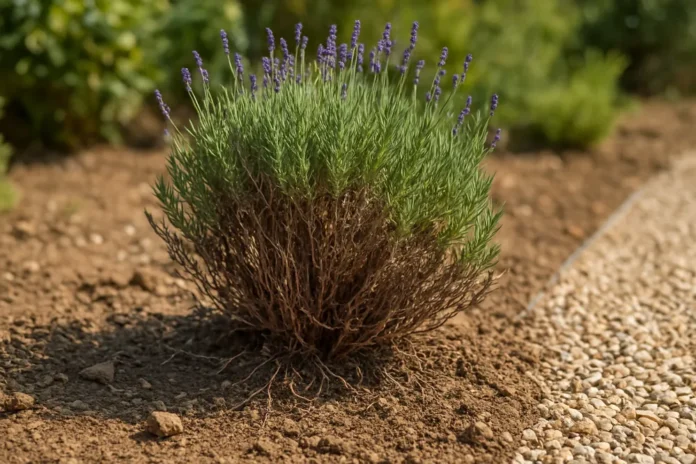
Lavender usually dies from the bottom up because the crown and roots are staying too wet, which leads to rot and gradual lower stem decline. It can also happen when an older plant becomes overly woody and shaded at the base.
When lavender dying from the bottom up shows up in the garden, it often starts subtly. The lower stems turn brown, leaves near the base dry out or drop, and the plant begins to look thin underneath even while the top still has some green growth. Many gardeners assume the plant needs more water, but with lavender, extra moisture is often exactly the wrong move.
In my experience, bottom-up decline usually means the trouble started where lavender is most vulnerable: at the crown, roots, and older woody stems. This Mediterranean herb likes lean soil, strong sun, and quick drainage. When any of those conditions slip, the base of the plant is usually the first place to show stress.
The good news is that lavender sometimes gives you a window to act before the whole plant collapses. If you can tell whether the issue is wet soil, age, crowding, winter damage, or disease, you have a much better chance of saving it or at least preventing the same problem in the next planting.
What Bottom-up Decline Usually Means in Lavender
Lavender does not usually fail from the top first unless there has been severe drought, freeze injury, or major physical damage. When the lower part of the plant declines first, that pattern points to stress concentrated around the crown and root zone. The crown is the point where stems meet the soil, and in lavender, it is especially vulnerable to staying damp.
You may notice lower leaves yellowing, browning, or crisping before the upper canopy changes much. The oldest stems may also look gray, brittle, hollow, or blackened near the base. Sometimes the plant develops a skirt of dead growth underneath while the top still flowers lightly. That combination often means the plant has been under stress for a while, not just for a few days.
- Brown or gray stems near the soil line
- Lower leaves drying out and dropping first
- A woody, bare center with green tips only on the outside
- Soft, dark, or mushy tissue at the crown
- Patchy dieback after wet weather or winter
When I diagnose lavender, I look at the base before I look at the flowers. If the lower stems are brittle and bare but dry, age and woody growth are often involved. If they are dark, soft, or easy to snap off near the crown, I suspect excess moisture and root damage first.
Overwatering and Poor Drainage Are the Most Common Causes
The single most common reason lavender dies from the bottom up is too much moisture around the roots. That can come from frequent watering, heavy clay soil, a low spot in the yard, or mulch piled too close to the crown. Lavender roots need oxygen as much as they need water. When soil stays wet, roots weaken, beneficial microbes shift, and rot organisms gain the advantage.
This problem is especially common when lavender is planted like a thirstier perennial. Gardeners often water nearby flowers, shrubs, or vegetables on a regular schedule, and the lavender gets caught in the same pattern. In rich, moisture-retentive soil, even a moderate watering routine can be too much.
Signs the Root Zone Is Too Wet
- Soil stays damp for days after rain or irrigation
- The plant wilts even though the soil is wet
- Lower stems darken before upper growth declines
- Leaves may yellow before turning brown
- The crown smells sour or looks blackened
Wet-root stress is deceptive because the plant can look dry aboveground. Damaged roots cannot take up water properly, so the foliage may wilt or crisp even while the soil is still too moist. That is why watering a struggling lavender without checking the soil first often makes the problem worse.
How Drainage Problems Develop
Drainage issues are not always obvious. Some garden beds look dry on the surface but hold water a few inches down. Dense clay, compacted subsoil, edging that traps runoff, or drip emitters placed too close to the crown can all create a constant damp zone around the roots. Containers can do the same thing if the potting mix is too rich or the drainage holes are blocked.
Root Rot and Crown Rot Often Follow Wet Conditions
Once lavender sits too wet for too long, crown rot and root rot can move in. These are not always visible at first, but the lower stems begin to die because the plant is losing its foundation. The roots may turn brown and stringy instead of firm and pale. The crown can become dark, soft, or shriveled depending on the pathogen and how far the damage has progressed.
Fungal and fungus-like diseases take advantage of stressed roots. You may see sudden collapse after rain, a general thinning of the plant, or one side dying first if rot began in a localized wet pocket. In severe cases, the lavender can no longer support new growth and the entire plant fails quickly.
- Blackened crown tissue at soil level
- Roots that break apart easily when lifted
- One branch or one side dying while the rest weakens
- Rapid decline after a rainy spell
- No healthy white feeder roots visible
If you pull a failing lavender and the roots are dark and sparse, replanting another lavender in the exact same soggy spot usually ends the same way. I would fix the drainage first or move the replacement to a raised, grittier site.
Woody Age and Lack of Pruning Can Leave the Base Bare
Not every lavender that dies back underneath is rotting. Older plants naturally become woody at the base, especially if they are not pruned regularly. Over time, the green outer shell of growth moves farther from the center, and the lower interior gets less light and airflow. The result is a plant that looks alive on the tips but dead, sparse, or brittle below.
This is very common in English lavender and other shrubby types after a few years in the ground. A little woodiness is normal. Trouble begins when the plant has a thick, leafless framework and only a small amount of soft new growth each year. At that point, the older lower stems may never leaf out again.
How Pruning Affects Lower Growth
Lavender responds best to light annual shaping while it still has plenty of green growth. If it is left untrimmed for years, it becomes leggy and woody. Then gardeners often try to cut it back hard into old wood, which lavender does not reliably regrow from. That can make a bottom-bare plant look even worse.
- Older lower stems are dry and hard rather than soft or black
- The plant still smells healthy and has some firm green tips
- The center is open, twiggy, and leafless
- Decline is gradual over seasons rather than sudden after rain
Poor Airflow and Overcrowding Can Weaken the Lower Stems
Lavender likes space. When it is crowded by neighboring plants, pressed against foundation walls, or packed too tightly in a border, the base stays shadier and more humid. That encourages lower leaf drop and raises the risk of fungal problems around the crown.
Overcrowding often works together with overwatering. A bed filled with mulch, groundcovers, and closely planted perennials may look lush, but it creates the opposite conditions lavender wants. I often see the worst bottom-up decline in mixed beds where lavender is sharing space with plants that prefer richer soil and more regular irrigation.
When Crowding Is Part of the Problem
- The lower stems stay hidden under neighboring foliage
- Morning dew dries slowly on the plant
- The inside of the shrub is thin and weak
- Mildew, spotting, or general browning is worse after humid weather
Winter Damage Can Start at the Crown and Lower Stems
In colder parts of the U.S., lavender sometimes dies from the bottom up after winter even if it looked fine in fall. The issue is not always pure cold. More often it is a combination of freeze-thaw cycles, wet soil, ice, and winter sun stress on a plant that was already marginally hardy for the site.
The lower stems and crown may be damaged first, especially if water sat around the plant during winter. By spring, the tips can remain green briefly while the base has already been compromised. Then the plant slowly browns out from below as temperatures warm.
- Damage appears after winter rather than during summer
- Lower stems are brittle and gray, not mushy
- One side facing wind or reflected sun is worse
- Soil around the plant stayed wet through cold weather
Soil That Is Too Rich Can Shorten Lavender's Life
Lavender is often happier in modest soil than in heavily amended garden beds. Rich compost, moisture-holding mixes, and high-nitrogen fertilizer can push lush top growth that the roots and crown cannot support long term. The plant looks good for a while, then begins to split open, flop, or thin out from below.
This happens because fast, soft growth tends to be less durable and the denser canopy shades the lower stems. Rich soil also tends to stay wetter longer, which circles back to the root problems lavender hates. In many home landscapes, kindness is the problem. Lavender often suffers from conditions that are too comfortable.
I have seen lavender grow bigger in fertile beds, but not necessarily better. The longest-lived plants I know are usually in sunny, gritty spots where other perennials might complain a little.
How to Tell Whether Your Lavender Can Be Saved
Before you decide what to do, inspect the plant carefully. Scratch a few stems with your fingernail. Green tissue under the bark means that stem is still alive. Brown, dry, hollow, or black tissue means that section is gone. Then check the soil moisture several inches down and look closely at the crown.
A Lavender May Recover If
- At least part of the crown is still firm
- There is healthy green growth low on some stems
- The roots are not fully blackened or rotten
- The decline is limited to one side or to older woody growth
- Drainage and watering can be corrected quickly
Replacement Is Usually Smarter If
- The crown is soft, black, or collapsing
- Most roots are rotten or absent
- More than half the plant is dead wood with no green buds low down
- The base split open years ago and now only a few tips remain alive
- The planting site stays wet no matter what you do
Lavender is not one of those plants that reliably rebounds from severe crown damage. If the center is gone and only a few outer twigs remain, replacing it is often less frustrating than trying to nurse it along.
What to Do Right Now for a Struggling Plant
If your lavender still has living growth, focus on removing the stress rather than forcing new growth. Stop routine watering unless the plant is in a very fast-draining container and truly dry. Pull mulch and dense debris away from the crown. If nearby plants are crowding it, open up the space so air can move around the base.
Prune off clearly dead stems, but avoid cutting deeply into bare, old wood that shows no green tissue. If the plant is in heavy soil and only mildly affected, gently mounding gravel around the base can help reduce moisture contact at the crown. In severe drainage situations, though, the real fix is transplanting to a better site or rebuilding the bed.
Immediate Recovery Steps
- Check whether the soil is actually wet before adding any water.
- Remove mulch, fallen leaves, and weeds from around the crown.
- Trim out dead stems back to living tissue only.
- Improve airflow by thinning nearby plants or moving containers apart.
- Hold fertilizer. Lavender under stress rarely benefits from feeding.
- If the site stays soggy, plan to replant in a raised or grittier location.
If the plant is in a pot, repotting into a faster-draining mix may help if rot has not gone too far. Use a container with generous drainage holes and avoid oversized pots that hold moisture longer than the root ball needs.
How to Prevent Bottom-up Dieback in Future Lavender Plantings
Prevention mostly comes down to matching lavender to the right conditions from the start. Give it full sun, lean soil, and drainage that dries out quickly after rain. If your native soil is heavy clay, raised beds, berms, or gravelly amendments often work better than planting directly into a flat, dense bed.
Water young plants enough to establish, then taper off. Mature in-ground lavender usually needs far less irrigation than surrounding ornamentals. Keep mulch light and pulled back from the crown. Prune lightly after flowering or in the appropriate season for your climate so the plant stays compact and produces fresh green growth each year.
Best Preventive Habits
- Plant in full sun with at least six hours of direct light
- Use sharply drained soil or a raised planting area
- Avoid heavy compost and frequent fertilizer
- Keep the crown exposed rather than buried in mulch
- Space plants so air can circulate freely
- Prune regularly while the plant is still producing green outer growth
- Choose lavender varieties suited to your climate
FAQ
Can Lavender Come Back After Turning Brown at the Base?
Sometimes, but it depends on whether living tissue remains near the crown and lower stems. If the browning is just old woody growth with healthy green shoots above or beside it, the plant may continue growing. If the crown is black, mushy, or mostly dead, recovery is unlikely.
Does Lavender Die From Underwatering From the Bottom Up?
Usually not. Drought stress more often causes overall wilting, crisp leaves, and tip dieback, especially in containers or very sandy soil. Bottom-up decline in lavender more often points to wet roots, crown stress, or aging woody stems.
Should I Cut All the Dead Wood Off My Lavender?
Remove clearly dead stems, but do not shear deeply into bare old wood unless you can confirm there is live green tissue below. Lavender does not reliably resprout from very old, leafless wood, so harsh pruning can leave you with an even weaker plant.
Is Mulch Bad for Lavender?
Heavy mulch packed around the base can be a problem because it traps moisture at the crown. A light layer of gravel or a thin mulch kept away from the stem base is usually safer than thick organic mulch touching the plant.
Why Does My Lavender Look Green on Top but Dead Underneath?
That pattern often happens when the plant has become woody with age, is not getting enough light or airflow inside the canopy, or has early crown and root stress. The top can stay alive for a while even as the lower interior declines.
Can I Save Lavender with Root Rot?
Mild cases may improve if you correct the drainage quickly and remove the moisture stress, but severe root rot is hard to reverse. If most of the roots and crown are damaged, replacing the plant is usually the better choice.
What Is the Best Soil for Lavender to Prevent Dieback?
Lavender does best in lean, fast-draining soil that does not stay soggy after rain. Sandy, gravelly, or raised planting conditions are generally better than heavy clay or rich, moisture-retentive beds.
Still deciding whether to rescue or replace your plant? Read our lavender care and planting guide to choose the best soil, watering routine, and varieties for longer-lived, healthier shrubs.
