

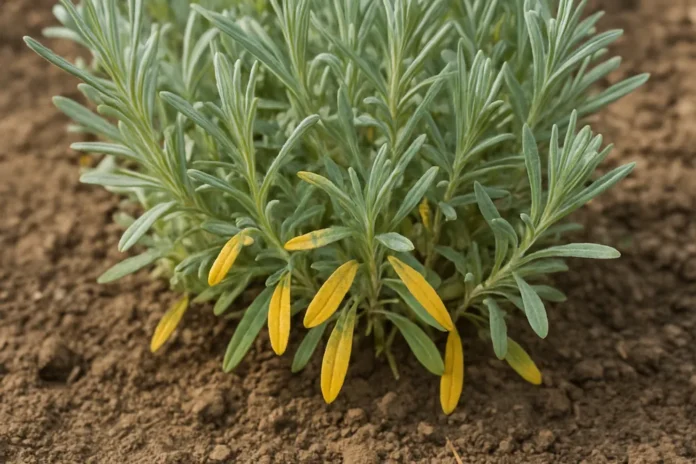
Lavender leaves usually turn yellow because the plant is staying too wet, growing in poorly drained soil, or struggling with root stress. In some cases, older inner leaves yellow naturally, but widespread yellowing usually means a care problem.
Lavender is one of those plants that looks tough because it thrives in dry, sunny spots, but it can react quickly when conditions are off. If your lavender leaves are turning yellow, the plant is usually telling you that something about water, soil, or roots is not working the way lavender prefers.
In my experience, yellowing lavender is most often tied to moisture problems rather than a dramatic disease outbreak. This plant wants lean, fast-draining soil and plenty of air around its roots. When it sits in damp ground or gets watered like a thirstier perennial, the foliage often fades from gray-green to pale yellow before the plant declines further.
The good news is that yellow leaves do not always mean your plant is doomed. Once you match the symptom pattern to the cause, you can usually tell whether the issue is harmless aging, temporary stress, or something that needs fast correction.
What Yellow Lavender Leaves Usually Mean
Lavender is adapted to dry, rocky conditions. Because of that, yellow leaves often mean the roots are under stress, not that the plant simply needs more fertilizer or more water. The exact shade and pattern matter. A few yellow leaves buried inside the plant can be normal aging, while widespread yellowing on outer stems points to a bigger care issue.
Start by noticing whether the leaves are turning solid yellow, yellow with brown tips, or yellow and limp. Also look at where the problem began. Yellowing at the base often suggests root or drainage trouble. Yellow new growth may point more toward nutrient imbalance, pH issues, or root damage that is limiting nutrient uptake.
- A few older, shaded inner leaves turning yellow can be normal.
- Soft yellow foliage with drooping stems often points to overwatering or root rot.
- Yellow leaves in heavy clay or a low spot usually suggest poor drainage.
- Pale yellow growth after heavy feeding can indicate fertilizer stress or root disruption.
- Yellowing after winter may be temporary cold or moisture stress rather than permanent damage.
When I diagnose lavender, I look at the plant’s base before I look at the leaves. If the crown area feels damp for days or the soil looks dark and compacted, I assume moisture stress first because lavender rarely complains about too little pampering, but it often complains about too much.
Overwatering Is the Most Common Cause
If I had to pick the single most common reason lavender turns yellow in home gardens, it would be overwatering. Lavender does not like constantly moist soil. In beds with frequent irrigation or in containers that stay wet for too long, the roots cannot breathe properly. The plant responds with faded color, yellow leaves, and sometimes floppy stems.
How Overwatered Lavender Looks
Overwatered lavender often looks dull rather than crisp and silvery. Leaves may turn light yellow or yellow-green before they brown. The plant can look limp even though the soil is wet, which confuses gardeners into watering again. In more advanced cases, the lower stems may darken and the crown can become soft.
- Leaves yellow across much of the plant, not just a few old leaves.
- Foliage feels soft instead of dry and firm.
- The soil stays wet several inches down.
- The plant wilts even though it has been watered recently.
- There may be a sour smell near the root zone in severe cases.
How to Fix It
Let the soil dry more deeply between waterings. If the plant is in the ground, reduce irrigation and make sure nearby lawn sprinklers are not hitting it. If it is in a container, empty saucers promptly and move the pot where it gets strong sun and airflow. Lavender should usually be watered thoroughly and then left alone until the soil dries well again, especially once established.
Do not judge recovery by the old yellow leaves. I watch for healthy new growth at the tips. Lavender often keeps some damaged foliage for a while even after the watering routine is corrected.
Poor Drainage and Heavy Soil Can Suffocate the Roots
Even if you are not watering too often, lavender can still yellow if the soil drains slowly. This is especially common in clay soil, raised beds filled with dense compost-heavy mixes, or planting holes that act like little bathtubs in the ground. Lavender roots need air spaces as much as they need moisture.
A plant growing in heavy soil may yellow after rain, during humid weather, or in spring when the ground stays cool and wet. In these cases, the problem is less about how much water you gave and more about how long the roots are forced to sit in it.
Clues That Drainage Is the Real Problem
- Water puddles near the plant after rain.
- Soil feels sticky or compacted rather than crumbly.
- Yellowing gets worse during wet spells.
- The plant declines even when you water sparingly.
- Lower stems may brown or die back from the base.
If drainage is poor, changing the watering schedule alone may not be enough. You may need to replant lavender in a raised mound, a gritty bed, or a container with a very fast-draining mix. In many home landscapes, site selection matters more than routine care. A lavender planted in the wrong soil often struggles no matter how attentive the gardener is.
Root Rot and Crown Rot Can Follow Prolonged Wetness
When yellowing is paired with dieback, mushy stems near the soil line, or a plant that collapses quickly, root rot or crown rot may already be developing. These problems are usually caused by fungi or fungus-like organisms that take advantage of wet, oxygen-poor conditions. Lavender is especially vulnerable when its crown stays damp.
Root rot usually starts below the surface, so the first visible sign may simply be yellow leaves and weak growth. By the time stems blacken at the base, the damage can be advanced. If you gently unpot a container plant and the roots are dark, sparse, or slimy instead of pale and fibrous, rot is likely involved.
Can the Plant Be Saved?
Mild cases can sometimes recover if you improve drainage immediately and remove obviously rotted roots when repotting. Severe crown rot is much harder to reverse. If most of the base is soft or brown, replacement is often more realistic than rescue. If you do replace it, do not put the new lavender back into the same soggy conditions.
- Trim off dead stems and avoid shearing into bare woody sections.
- Repot container plants into a gritty, sharply drained mix.
- Keep mulch away from the crown so moisture does not sit against the stems.
- Water only when the root zone has dried substantially.
- Improve the planting site before replacing a lost plant.
Too Much Fertilizer Can Make Lavender Unhappy
Lavender is not a heavy feeder. In fact, rich soil and frequent fertilizer can create weak, lush growth that this Mediterranean plant does not handle well. Sometimes overfed lavender turns pale yellow because the roots are stressed by excess salts, or because rapid soft growth is more vulnerable to moisture issues and disease.
Gardeners often assume yellow leaves mean a nutrient deficiency, but with lavender, too much fertility is at least as common as too little. This is especially true in containers fed regularly with general-purpose plant food or in flower beds amended with lots of manure or high-nitrogen compost.
What Fertilizer Stress Looks Like
- Pale or yellowing leaves after a recent feeding.
- Fast, floppy growth that lacks the usual compact form.
- Brown leaf tips combined with yellowing.
- Less fragrance and fewer flowers than expected.
- Salt crust on the surface of container soil.
If you suspect fertilizer stress, stop feeding for a while. For potted plants, flushing the container thoroughly can help wash out excess salts, but only if the pot drains freely. In the ground, avoid adding more fertilizer unless a soil test shows a true deficiency.
Nutrient Deficiencies and pH Problems Are Possible, but Less Common
Although moisture issues are more likely, nutrient deficiencies can sometimes cause lavender to yellow. Iron deficiency, for example, may show up as yellow leaves with greener veins, especially in alkaline or otherwise imbalanced soil where nutrients are present but less available. Nitrogen deficiency can also cause overall pale growth, though it is not the first thing I suspect with lavender.
Lavender generally prefers slightly alkaline to neutral conditions and does best in lean soil. Problems tend to show up when roots are damaged, potting mix is exhausted, or the soil chemistry prevents normal uptake. If your plant has been in the same container for years, yellowing may reflect a worn-out root environment more than a dramatic deficiency.
When to Consider a Soil Issue
- New growth is yellow while older leaves remain somewhat greener.
- Leaf veins stay green but the tissue between them turns pale.
- The plant is in a long-used potting mix.
- Drainage seems fine, but growth is still weak and discolored.
- You have ruled out overwatering and rot.
I am cautious about chasing deficiencies one bottle at a time. When lavender yellows, poor roots often mimic nutrient problems. If the root zone is staying wet or compacted, feeding the plant usually adds one more stress instead of solving the first one.
Not Enough Sun Can Weaken Color and Vigor
Lavender needs full sun to keep its compact shape, strong fragrance, and healthy foliage color. In too much shade, leaves can fade, yellow lightly, and drop from the interior. The plant may also stretch, lean, or bloom poorly. This is usually a slow decline rather than a sudden crisis.
A location that gets bright morning light but deep afternoon shade can work in hotter regions, but dense shade usually does not. If your lavender is surrounded by larger perennials, shrubs, or a fence that blocks airflow and sun, the yellowing may be part of a broader stress pattern.
- Sparse growth and leggy stems.
- Reduced flowering.
- More yellowing inside the plant where light cannot reach.
- Slower drying after watering or rain.
- A generally tired, open shape.
Seasonal Stress, Transplant Shock, and Natural Aging
Not every yellow leaf signals a major problem. Lavender can shed some older inner foliage as it matures, especially in dense plants where light does not reach the center well. Newly planted lavender may also yellow temporarily while it adjusts to a new site, especially if roots were disturbed or if weather swings from cool and wet to hot and dry.
Winter and early spring can cause yellowing too. In colder parts of the U.S., lavender may emerge from winter with faded foliage after frozen soil, wind, or wet conditions. If the stems are still firm and you see fresh buds or silvery new growth, the plant may simply be recovering from seasonal stress.
Signs the Yellowing May Be Temporary
- Only a small amount of interior foliage is yellow.
- New outer growth looks healthy.
- The plant was recently planted or moved.
- Yellowing followed a cold snap or prolonged rain.
- Stems remain woody and firm rather than mushy.
In these cases, avoid overreacting. Do not drown the plant, overfertilize it, or prune it hard all at once. Give it stable conditions, good sun, and time to show whether fresh growth is coming in healthy.
How to Tell Which Cause Is Most Likely
The fastest way to narrow this down is to combine three clues: soil moisture, plant location, and symptom pattern. Lavender problems are usually easier to diagnose from the growing conditions than from leaf color alone.
- Feel the soil several inches down. If it is still wet long after watering or rain, start with moisture stress.
- Look at the planting site. Heavy clay, low spots, crowded beds, and shaded areas all raise the odds of yellowing.
- Check the base of the plant. Soft, dark, or collapsing stems suggest rot rather than a simple deficiency.
- Think about recent changes. New fertilizer, recent transplanting, and weather swings can explain otherwise sudden symptoms.
- Compare old leaves and new leaves. Older inner leaf yellowing is often less serious than yellow new growth across the whole plant.
If you are unsure, correct the most likely environmental problem first rather than piling on multiple treatments. Lavender often responds best when you simplify care instead of adding more inputs.
How to Help Yellowing Lavender Recover
Recovery depends on the cause, but the general goal is the same: give the roots a drier, airier environment and avoid stressing the plant further. Lavender bounces back best when the underlying issue is corrected early.
- Cut back on watering and let the soil dry more deeply between soakings.
- Move potted lavender into a container with strong drainage if needed.
- Replant in a raised area or gritty mix if your garden soil stays wet.
- Stop routine fertilizing unless a real deficiency is confirmed.
- Increase sun exposure and airflow when possible.
- Remove obviously dead growth, but avoid heavy pruning into old bare wood.
- Keep mulch, compost, and dense organic matter away from the crown.
Once conditions improve, watch the newest growth. Existing yellow leaves may not turn green again, but healthy fresh tips are a good sign that the plant is stabilizing. If the base continues to blacken or the whole plant collapses, replacement may be the more practical option.
How to Prevent Yellow Leaves in the Future
Prevention with lavender is mostly about restraint. It likes more sun, less water, and leaner soil than many flowering plants. Gardeners often lose lavender by treating it too generously.
- Plant lavender in full sun with excellent drainage.
- Choose raised beds, slopes, or mounded planting spots in heavy soil.
- Use a gritty potting mix for containers rather than moisture-retentive blends.
- Water deeply but infrequently once the plant is established.
- Skip rich fertilizers and heavy mulches.
- Space plants so air can move around them.
- Avoid placing lavender where lawn or drip irrigation keeps the area constantly damp.
When lavender is matched to the right site, yellow leaves become much less common. A dry, bright, breezy spot solves more lavender problems than any product on the shelf.
FAQ
Should I Remove Yellow Leaves From Lavender?
You can remove fully yellow or dead leaves if they come away easily, but do not strip the plant aggressively. I usually leave lightly damaged foliage alone until I can see whether new growth is improving.
Can Yellow Lavender Leaves Turn Green Again?
Usually no. Once a lavender leaf has turned fully yellow, it often stays that way or drops. The better sign of recovery is healthy new growth.
How Often Should I Water Lavender if the Leaves Are Yellow?
There is no one schedule that fits every plant, but yellowing lavender usually needs less frequent watering, not more. Let the soil dry well between waterings, especially for established plants.
Is Coffee Grounds Good for Yellowing Lavender?
No, coffee grounds are usually not a good fix for lavender. They can hold moisture and add organic matter that this plant often does not appreciate, especially in already heavy soil.
Why Is My Potted Lavender Turning Yellow Faster than Garden Lavender?
Containers can trap moisture if the potting mix is too dense or the drainage is poor. Potted lavender also experiences salt buildup from fertilizer more easily than plants growing in the ground.
Can Too Much Rain Make Lavender Leaves Yellow?
Yes. Prolonged rain can keep the root zone too wet, especially in clay soil or crowded beds. That often leads to yellowing and can progress to root or crown rot.
Does Yellow Lavender Mean It Is Dying?
Not always. A few yellow inner leaves can be normal aging or mild seasonal stress. Widespread yellowing with soft stems or a rotting base is more serious.
Need the right soil mix, pot, or plant treatment for struggling lavender? Read our recommended lavender care and drainage solutions so you can choose fixes that actually match this plant's dry-loving habits.
