

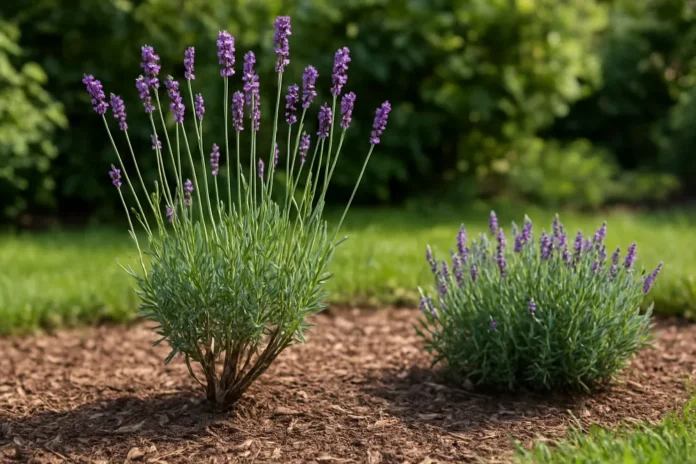
Lavender gets leggy when it is not getting enough direct sun, has aged into woody growth, or has been pruned too lightly or at the wrong time. Warm, low-light conditions and overly rich care can also make stems stretch and thin out.
If your lavender is getting leggy, you are usually looking at a plant that has started stretching for better light or has developed too much old woody growth to stay full. Lavender naturally wants to be a compact, sun-loving shrub, so when it gets sparse in the middle, flops outward, or sends up long bare stems, something in its growing conditions or pruning routine is off.
In my experience, leggy lavender is rarely caused by just one thing. It is often a mix of age, not enough sun, and pruning that happened too late, too lightly, or not at all. Once you know which pattern your plant is showing, it gets much easier to decide whether you can reshape it, improve its conditions, or replace it with a healthier start.
The good news is that leggy lavender does not always mean a dead-end plant. Some can be improved quite a bit with better care, while others are simply old and woody enough that starting over is the smarter move.
What Leggy Lavender Looks Like
A leggy lavender plant usually looks stretched, open, and uneven instead of tight and mounded. You may notice long stems with leaves and flowers mostly at the tips, bare lower branches, a split-open center, or lots of gray-brown wood with very little fresh green growth.
- Long stems that lean outward or flop over
- Sparse leaves on the lower half of the plant
- A woody base with little new growth near the center
- Flowers held far above the main body of the plant
- An uneven or lopsided shape instead of a rounded mound
Some legginess is normal as lavender matures, especially after a few years in the ground. The question is whether the plant is only slightly open from age or whether it is actively stretching because of poor conditions. That difference matters because a mature but healthy plant can still bloom well, while a stressed plant usually keeps getting thinner.
When I assess a leggy lavender, I look first at where the green growth actually starts. If the plant is green only at the very tips and the rest is hard brown wood, recovery is limited. If there is still soft green growth lower down on the stems, you usually have more options.
The Most Common Reasons Lavender Gets Leggy
Not Enough Direct Sun
Lavender needs full sun to stay dense. In most of the U.S., that means at least 6 to 8 hours of direct light, and more is often better. When lavender is planted where it gets only partial sun, filtered tree shade, or heavy afternoon shade, stems stretch toward the light and the plant loses that neat, compact form.
This is especially common near fences, under trees, along the north side of a house, or in mixed beds where taller plants slowly crowd it over time. Even if the spot looked bright when you planted it, a growing shrub nearby can change the light pattern enough to make lavender thin out.
Old Woody Growth
Lavender becomes woodier with age. As the base hardens, the plant loses some ability to push fresh leafy shoots from that older interior wood. The result is a shrub that keeps extending outward from the ends while the center becomes bare and stiff.
This is one of the biggest reasons older plants look rangy even if you have done many other things right. Lavender is not a long-lived shrub in every garden, and after several years, some plants naturally start to decline into a more open shape.
Improper Pruning
Pruning affects shape more than many gardeners realize. If you never trim lavender, or only snip off spent flower spikes, stems keep lengthening and the plant gets top-heavy. On the other hand, if you cut too far back into old brown wood, some varieties may not resprout well at all.
The healthiest approach is regular shaping while there is still green growth to work with. Lavender responds best when you prune enough to encourage branching but not so harshly that you remove all of the active foliage.
Too Much Nitrogen or Overly Rich Soil
Lavender is adapted to lean, well-drained soil. In rich beds that get frequent feeding, compost-heavy amendments, or runoff from a lawn fertilizer program, plants may produce soft, fast growth that stretches instead of staying compact. You might see lots of green stems but a weaker overall structure.
This is one reason lavender often looks better in a dry herb border than in a pampered flower bed. Too much fertility can make it grow quickly in ways that do not support a tidy, sturdy plant.
Overwatering and Poor Drainage
While overwatering does not always cause classic legginess by itself, it weakens lavender and encourages loose, floppy growth. Roots sitting in wet soil struggle to support strong top growth, and the plant often becomes thin, open, and more likely to collapse from the center.
Soggy soil also increases the risk of root and crown problems, which can mimic or worsen a leggy appearance. If the plant looks stretched and also seems pale, limp, or patchy, excess moisture may be part of the problem.
How to Tell Which Cause Is Affecting Your Plant
Before you try to fix leggy lavender, it helps to match the symptom pattern to the likely cause. A plant in shade behaves differently from a plant that is simply old, and a plant growing in heavy wet soil often shows more stress than one that just missed a pruning cycle.
- If the stems lean strongly toward one direction, lack of sun is a likely driver.
- If the base is thick, brown, and bare but the tips still bloom, age and woody growth are likely involved.
- If the plant is huge, loose, and soft with lots of leafy growth, rich soil or excess nitrogen may be contributing.
- If the center is dying out and the plant feels weak or collapses easily, poor drainage or root stress may be part of the problem.
- If the plant has never been cut back beyond the flower stalks, missed pruning is probably a major cause.
Also consider the variety. English lavender types often stay a bit denser than some lavandin types, which can become larger and more open with age. That does not mean one is unhealthy and the other is not, but it can explain why two plants in similar conditions age differently.
Do not judge success by the old woody parts filling back in quickly. I focus on whether new growth is coming in lower and more densely on the plant. That tells you the care changes are working, even if the older framework never looks perfect again.
How to Fix Leggy Lavender
Give It More Sun if Possible
If the plant is in a location with too little direct light, more sun is the most important fix. For lavender in containers, move the pot to a brighter spot. For in-ground plants, trim back nearby shade sources if that is realistic. If the plant is simply in the wrong place, transplanting or replacing it in a sunnier site may be the only way to get compact growth again.
Keep in mind that a long-established plant may not transplant well if it has a large woody base. In those cases, I often find it easier to start fresh in a better location rather than trying to rescue a struggling mature plant.
Prune at the Right Time and Depth
Pruning is the best tool for improving shape, but it has to be done carefully. After flowering, or in early spring once new growth begins, trim the plant back into a rounded mound. Remove spent flower stems and shorten green growth enough to encourage branching.
Avoid cutting deep into leafless brown wood unless you can clearly see active buds or fresh shoots below the cut. Lavender often struggles to break from old wood, especially if the stems are very hard and bare. The goal is to leave some green growth on the plant while reducing length and encouraging a fuller outline.
- Shape the plant while it still has plenty of green growth
- Cut back soft stems rather than hacking into bare woody trunks
- Maintain a mounded form to reduce splitting and flopping
- Repeat light annual pruning rather than waiting for severe legginess
Dial Back Rich Amendments and Fertilizer
If your lavender is in heavily improved soil or near regularly fertilized turf, stop feeding it unless there is a clear deficiency. Most lavender grows best without much fertilizer. Too much nutrition often pushes fast, weak growth that makes legginess worse.
Do not keep top-dressing with rich compost year after year around the crown. A leaner soil mix with sharp drainage usually produces sturdier stems and better overall structure.
Improve Drainage and Watering Habits
Let the soil dry appropriately between waterings. Lavender prefers to avoid constant moisture, especially once established. If the ground stays wet, improve drainage with a raised bed, a gravelly planting area, or a different location altogether.
Container lavender should be grown in a fast-draining mix and a pot with drainage holes. If the root zone stays soggy, the top of the plant rarely looks compact and healthy for long.
I would rather see lavender a little dry than chronically damp. In many home gardens, people care for it like a thirsty perennial, but it behaves more like a small Mediterranean shrub that wants bright light, airflow, and restraint.
When to Rejuvenate and when to Replace the Plant
Not every leggy lavender can be restored to a neat, dense mound. If most of the plant is old woody framework with only a little green at the tips, you may be able to improve it somewhat, but you are unlikely to turn it back into a young-looking specimen. That is especially true if the center has died out or the plant has split apart.
Try rejuvenation if the plant still has healthy green growth lower on the stems, the roots are sound, and the overall structure is not too far gone. In that case, correct the sun and watering issues, then prune gradually over one or two seasons rather than all at once.
Replace the plant if it has a large dead center, severe woodiness with no lower shoots, repeated winter damage, or a site that will never provide enough sun and drainage. Starting over is not failure. With lavender, it is often the fastest route to a better-looking border.
- Keep and reshape it if there is still meaningful green growth low on the plant
- Replace it if the plant is mostly brown wood with sparse tip growth
- Replace it if the site stays shady or wet no matter what you do
- Choose a compact variety if you want a tidier look long term
How to Prevent Lavender From Getting Leggy Again
Preventing legginess is much easier than fixing it later. Lavender does best when you treat it as a sun-loving shrub instead of a lush bedding plant. Give it the conditions it naturally prefers, and stay consistent with yearly shaping.
- Plant it in full sun with strong airflow
- Use well-drained soil and avoid low wet spots
- Skip heavy feeding and rich organic buildup around the crown
- Prune lightly every year after bloom or in spring where appropriate for your climate
- Avoid waiting until the plant is tall, hollow, and woody before cutting it back
- Space plants well so they do not shade each other as they mature
If you are planting new lavender, think ahead about mature size. A plant that begins crowded may stretch outward as it competes for light and air. Proper spacing helps the whole shrub stay rounded and reduces disease pressure too.
I also like to watch the plant right after flowering. That is usually when its future shape is easiest to manage. A modest trim at that stage prevents a lot of the woody, sprawling growth that becomes frustrating a year or two later.
FAQ
Can Leggy Lavender Become Bushy Again?
Sometimes. If there is still plenty of green growth low on the stems, better light and proper pruning can encourage a fuller plant. If it is mostly old brown wood, it may improve only a little and never become truly dense again.
Should I Cut Lavender Back Hard if It Is Leggy?
Only with caution. Lavender often does not recover well from cuts deep into leafless woody stems. It is safer to prune back into green growth and reshape it gradually unless you can clearly see active shoots lower down.
Does Shade Make Lavender Leggy?
Yes. Too little direct sun is one of the most common reasons lavender stretches and becomes sparse. In shadier sites, stems grow longer and the plant loses its compact mound.
Will Fertilizer Help a Leggy Lavender Plant?
Usually not. Lavender generally prefers lean soil, and extra fertilizer can make growth softer and more stretched. Unless the plant has a clear nutrient problem, feeding is more likely to worsen shape than improve it.
Why Is My Lavender Woody at the Bottom?
That is a normal aging pattern to a point. As lavender matures, the base becomes more woody and less able to produce fresh shoots. Regular annual pruning helps slow that process, but older plants often develop bare wood over time.
Is It Better to Replace Old Lavender than Try to Save It?
In many cases, yes. If the center is dead, the plant is mostly bare wood, or the site is too shady or wet, replacing it is often easier and gives better long-term results than trying to force a recovery.
Can Overwatering Make Lavender Look Leggy?
Yes, indirectly. Constantly wet soil weakens roots and often leads to loose, floppy, stressed growth. A plant in soggy conditions rarely holds a dense, sturdy shape.
Want a healthier, fuller plant next season? Read our lavender care and pruning guides to choose the right routine, tools, and soil setup before legginess gets worse.
